
Tag: solar energy

  • Lumio Solar Raises US$900,000 for Plug-and-Play Solar Appliances

    Lumio Solar Raises US$900,000 for Plug-and-Play Solar Appliances

    Lumio Solar raised US$900,000 in pre-seed funding in August 2026 to build a distribution and service network for solar-powered appliances across the Philippines.

    The investment round was led by 100×100, the Southeast Asia climate venture builder formerly known as Wavemaker Impact, to back the Pampanga-based startup’s rollout of solar fans, lights, freezers, and portable power stations.

    Replacing Rooftop Panels with Standalone Units

    Lumio sells appliances that generate and store their own electricity without requiring roof installation, property ownership, or utility permits. The company targets households, micro, small and medium enterprises, and agribusinesses that are often priced out of rooftop solar. According to Lumio, its equipment cuts operating costs between 10 per cent and 90 per cent compared to standard alternatives while reducing electricity-related emissions by at least 50 per cent.

    Rey Sunglao, founder and chief executive officer of Lumio Solar, leads the venture after more than two decades in Philippine retail and commercial operations, including senior roles at SM Malls Online. Capital from the funding round will go toward widening the startup’s product range, strengthening regional hubs, and establishing localized after-sales repair points.

    The Retail Distribution Hurdle

    The operational test for Lumio lies in logistics and servicing rather than basic hardware manufacturing. Portable power stations from global brands like EcoFlow, Bluetti, and Jackery already sell across Southeast Asia, but they target affluent consumers and outdoor enthusiasts through digital storefronts. Lumio is attempting a traditional retail route, placing inventory and technician support into secondary cities and agricultural areas where power grids remain unstable and diesel generators drive up overhead.

    For independent shopkeepers and food vendors in provincial markets, energy costs represent a daily margin calculation. Commercial rooftop installers such as Solar Philippines, Buskowitz Energy, and Solaric focus heavily on large commercial roofs, industrial compounds, and high-income residential properties. By shrinking the hardware transaction to the size of a single chest freezer or shop fan, Lumio avoids long financing approvals, though it assumes the operational burden of warranty claims and replacement parts across an archipelago.

    Expanding from Central Luzon

    High retail power tariffs in the Philippines have accelerated private generation projects, with national solar capacity projected to expand 17.4 per cent annually through 2050. Lead investor 100×100 launched a US$100 million second fund in 2026 to back 50 climate enterprises across Southeast Asia and India, targeting scalable businesses in high-emission sectors.

    Initial commercial rollouts will concentrate on Central Luzon and Metro Manila before expanding into provincial hubs in the Visayas and Mindanao, where Lumio plans to deploy its first batch of regional service centers.
  • Construction of $52 million solar power plant starts in central Vietnam

    Construction of $52 million solar power plant starts in central Vietnam

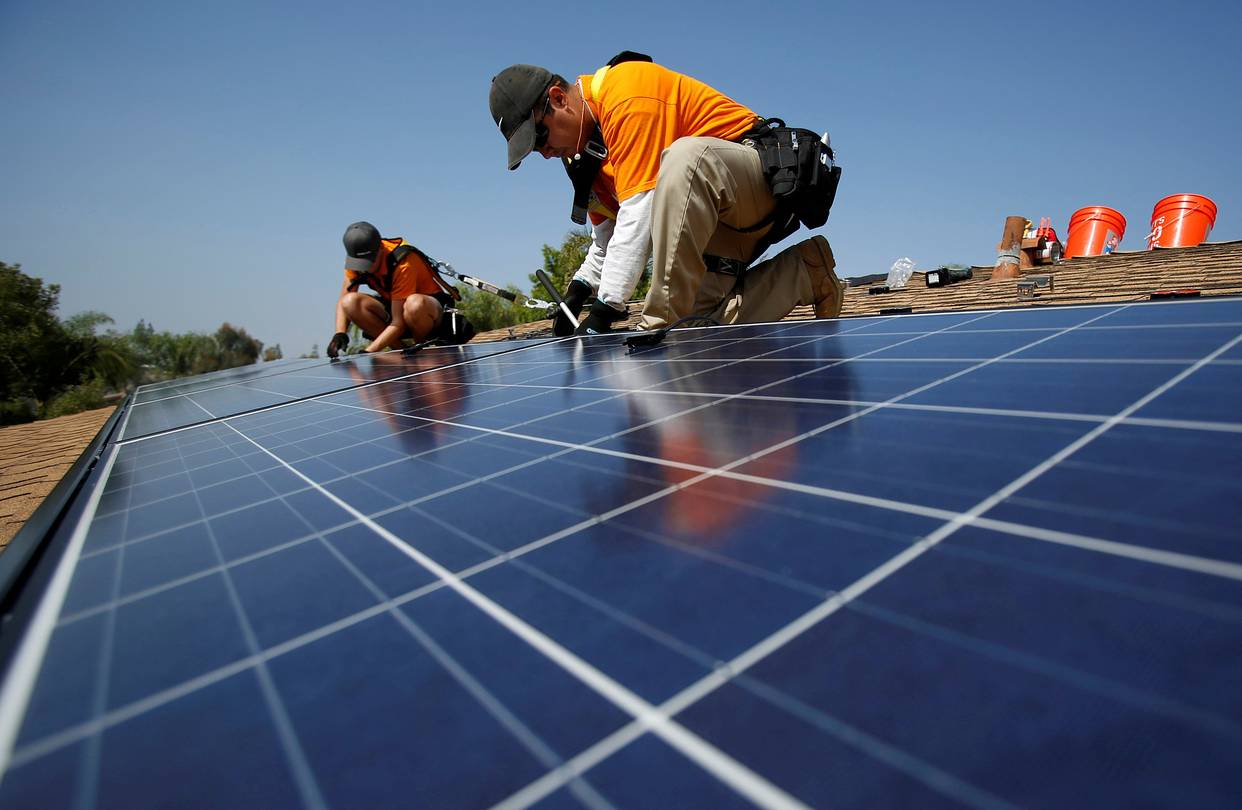
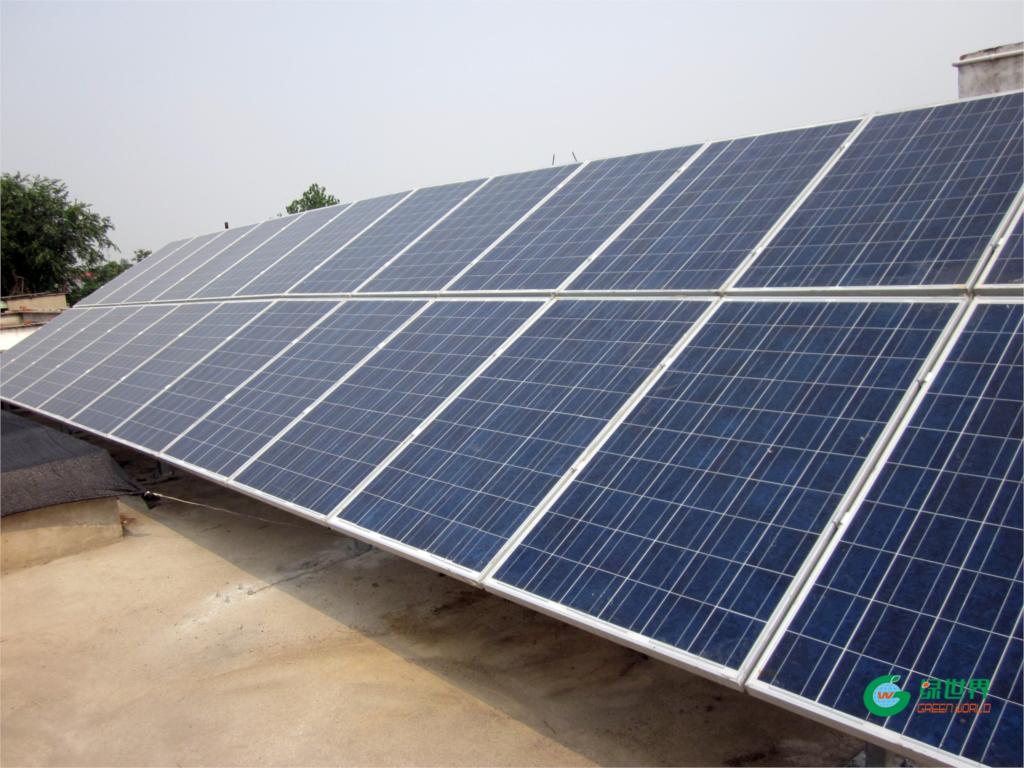
    Work has begun on a $52 million solar power plant in the south central province of Ninh Thuan.

    Project representatives said that of the total investment of VND1.2 trillion ($52.2 million), VND900 billion ($39.1 million) will go towards equipment costs; and the rest for land clearance and construction.

    “The Phuoc Huu solar plant project will supply clean energy to the national electricity system and cater to power demand in the whole country in general and Ninh Thuan Province in particular,” said a representative of Nha Trang Bay Investment and Construction JSC, the project investor.

    In the first year of operation, the power plant is expected to generate about 104.1 million kWh.

    “The construction of Phuoc Huu solar power plant aligns with directions from the government, the Ministry of Industry and Trade and the Vietnam Electricity’s orientation to develop clean energy,” the representative said.

    Vietnam currently relies largely on hydropower and thermal power plants for its electricity demands, but these projects have drawn frequent domestic and international criticism for their social and environmental impacts.

    Solar power currently accounts for just 0.01 percent of the country’s total power output, but the government plans to increase the ratio to 3.3 percent by 2030 and 20 percent by 2050.

    Vietnam aims to produce 10.7 percent of its electricity from renewable energy sources by 2030, mainly through solar and wind power projects.

  • Renewable project facing criticism in Korea

    Renewable project facing criticism in Korea

    The government’s plan to build a renewable energy complex at Saemangeum, North Jeolla, is generating controversy as it deviates from plans to develop the reclaimed tidal flat into a regional economic hub and is being pursued without public approval.

    The controversy flared up as President Moon Jae-in announced Tuesday that the government will construct a solar and wind energy complex at Saemangeum.

    The government argues that around 10 trillion won ($8.7 billion) in private investment will flow into the project and that two million workers will be employed annually in the building of the facility.

    Despite the optimistic forecasts, the move is being criticized as an abrupt policy shift.

    When President Moon Jae-in visited Saemangeum last year, he mentioned developing the area into an economic hub for the Yellow Sea region but said nothing of solar or wind power. Opposition lawmakers have raised concerns about the projects.

    “The government’s plan to make Saemangeum, previously touted to be developed into an economic center for the Yellow Sea, into a mecca of renewable energy means a policy change,” said Chung Dong-young, a lawmaker for the Jeolla-based Party for Democracy and Peace. “This is the same as abandoning plans to expedite the development of Saemangeum.”

    The Party for Democracy and Peace, with 14 lawmakers from the Honam region, is especially angry about being bypassed.

    In light of such concerns, the government has explained that plans for Saemangeum’s renewable energy complex, which will cover an area comparable to the size of four nuclear power plants, will not interfere with existing initiatives.

    “The government’s determination to develop Saemangeum into an economic hub of the Yellow Sea area remains unchanged,” Minister of Land, Infrastructure and Transport Kim Hyun-mee said during the annual audit by lawmakers on Monday.

    A spokesman for the state-run Saemangeum Development and Investment Agency explained that it was not the right time for consultations with local residents and the general public.

    “Taking comments from local residents is done during the construction approval process. We are not yet at the development stage, so we haven’t asked for [comments], but we are obviously planning to do so,” he said.

    Opposition lawmakers and energy experts are suspicious that the plans for Saemangeum were changed to accommodate the Moon administration’s pledge to reduce nuclear power dependency.

    The new Saemangeum initiative is part of the government’s 3020 renewable energy plan, which established a renewable target of 20 percent by 2030. With current renewable energy output at just 8 percent of the total, the government is in need of more solar and wind power plants.

    “[The government] seems to be developing Saemangeum as there aren’t vast plots of land in the country suitable for solar or wind power complexes,” said a professor of nuclear energy who requested anonymity.

    Questions regarding the feasibility of the energy project have also been raised.

    “The electrical output produced by the energy complex will be little, at around 60 percent of a nuclear power plant,” said Kim Sam-hwa, a lawmaker for minor opposition Bareunmirae Party. “If it means building six-tenths of a nuclear power plant by spending 10 trillion won, wouldn’t it just be better to continue operating the Wolsong 1 plant?”

    Wolsong 1 is a nuclear plant set to be decommissioned.

    At the moment, renewable energy is less economical when compared with nuclear energy, explained Roh Dong-seok, a senior researcher at the Korea Energy Economics Institute. As the efficiency rate for solar power is about 15 percent, the actual production output of solar power plants is much lower than their rated capacity.

    The government’s promise to return the plots of land to their original state after operating solar and wind power plants at the location for 20 years is in doubt as the energy produced will have to be replaced.

    Local residents remain divided over the new project.

    “Even if it’s a government project, I can’t accept something that is pushed without prior notice,” said Ko Yoon-seok, a local leader of a town adjacent to the tidal flat. “There isn’t enough information to determine whether it’s right or wrong, but it’s difficult to say that everyone is against it.”