Tag: solar panel

  • Construction of $52 million solar power plant starts in central Vietnam

    Construction of $52 million solar power plant starts in central Vietnam

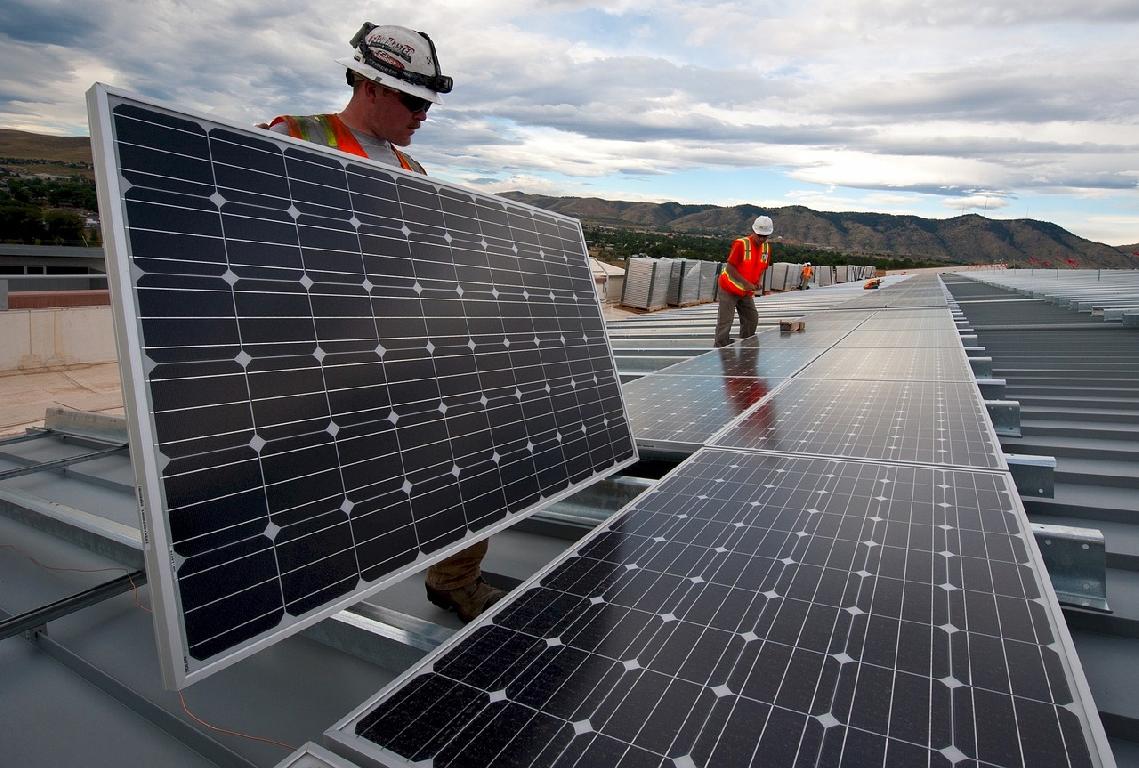
    Work has begun on a $52 million solar power plant in the south central province of Ninh Thuan.

    Project representatives said that of the total investment of VND1.2 trillion ($52.2 million), VND900 billion ($39.1 million) will go towards equipment costs; and the rest for land clearance and construction.

    “The Phuoc Huu solar plant project will supply clean energy to the national electricity system and cater to power demand in the whole country in general and Ninh Thuan Province in particular,” said a representative of Nha Trang Bay Investment and Construction JSC, the project investor.

    In the first year of operation, the power plant is expected to generate about 104.1 million kWh.

    “The construction of Phuoc Huu solar power plant aligns with directions from the government, the Ministry of Industry and Trade and the Vietnam Electricity’s orientation to develop clean energy,” the representative said.

    Vietnam currently relies largely on hydropower and thermal power plants for its electricity demands, but these projects have drawn frequent domestic and international criticism for their social and environmental impacts.

    Solar power currently accounts for just 0.01 percent of the country’s total power output, but the government plans to increase the ratio to 3.3 percent by 2030 and 20 percent by 2050.

    Vietnam aims to produce 10.7 percent of its electricity from renewable energy sources by 2030, mainly through solar and wind power projects.

  • Renewable project facing criticism in Korea

    Renewable project facing criticism in Korea

    The government’s plan to build a renewable energy complex at Saemangeum, North Jeolla, is generating controversy as it deviates from plans to develop the reclaimed tidal flat into a regional economic hub and is being pursued without public approval.

    The controversy flared up as President Moon Jae-in announced Tuesday that the government will construct a solar and wind energy complex at Saemangeum.

    The government argues that around 10 trillion won ($8.7 billion) in private investment will flow into the project and that two million workers will be employed annually in the building of the facility.

    Despite the optimistic forecasts, the move is being criticized as an abrupt policy shift.

    When President Moon Jae-in visited Saemangeum last year, he mentioned developing the area into an economic hub for the Yellow Sea region but said nothing of solar or wind power. Opposition lawmakers have raised concerns about the projects.

    “The government’s plan to make Saemangeum, previously touted to be developed into an economic center for the Yellow Sea, into a mecca of renewable energy means a policy change,” said Chung Dong-young, a lawmaker for the Jeolla-based Party for Democracy and Peace. “This is the same as abandoning plans to expedite the development of Saemangeum.”

    The Party for Democracy and Peace, with 14 lawmakers from the Honam region, is especially angry about being bypassed.

    In light of such concerns, the government has explained that plans for Saemangeum’s renewable energy complex, which will cover an area comparable to the size of four nuclear power plants, will not interfere with existing initiatives.

    “The government’s determination to develop Saemangeum into an economic hub of the Yellow Sea area remains unchanged,” Minister of Land, Infrastructure and Transport Kim Hyun-mee said during the annual audit by lawmakers on Monday.

    A spokesman for the state-run Saemangeum Development and Investment Agency explained that it was not the right time for consultations with local residents and the general public.

    “Taking comments from local residents is done during the construction approval process. We are not yet at the development stage, so we haven’t asked for [comments], but we are obviously planning to do so,” he said.

    Opposition lawmakers and energy experts are suspicious that the plans for Saemangeum were changed to accommodate the Moon administration’s pledge to reduce nuclear power dependency.

    The new Saemangeum initiative is part of the government’s 3020 renewable energy plan, which established a renewable target of 20 percent by 2030. With current renewable energy output at just 8 percent of the total, the government is in need of more solar and wind power plants.

    “[The government] seems to be developing Saemangeum as there aren’t vast plots of land in the country suitable for solar or wind power complexes,” said a professor of nuclear energy who requested anonymity.

    Questions regarding the feasibility of the energy project have also been raised.

    “The electrical output produced by the energy complex will be little, at around 60 percent of a nuclear power plant,” said Kim Sam-hwa, a lawmaker for minor opposition Bareunmirae Party. “If it means building six-tenths of a nuclear power plant by spending 10 trillion won, wouldn’t it just be better to continue operating the Wolsong 1 plant?”

    Wolsong 1 is a nuclear plant set to be decommissioned.

    At the moment, renewable energy is less economical when compared with nuclear energy, explained Roh Dong-seok, a senior researcher at the Korea Energy Economics Institute. As the efficiency rate for solar power is about 15 percent, the actual production output of solar power plants is much lower than their rated capacity.

    The government’s promise to return the plots of land to their original state after operating solar and wind power plants at the location for 20 years is in doubt as the energy produced will have to be replaced.

    Local residents remain divided over the new project.

    “Even if it’s a government project, I can’t accept something that is pushed without prior notice,” said Ko Yoon-seok, a local leader of a town adjacent to the tidal flat. “There isn’t enough information to determine whether it’s right or wrong, but it’s difficult to say that everyone is against it.”
  • Pricing incentive for Vietnam solar power projects extended

    Pricing incentive for Vietnam solar power projects extended

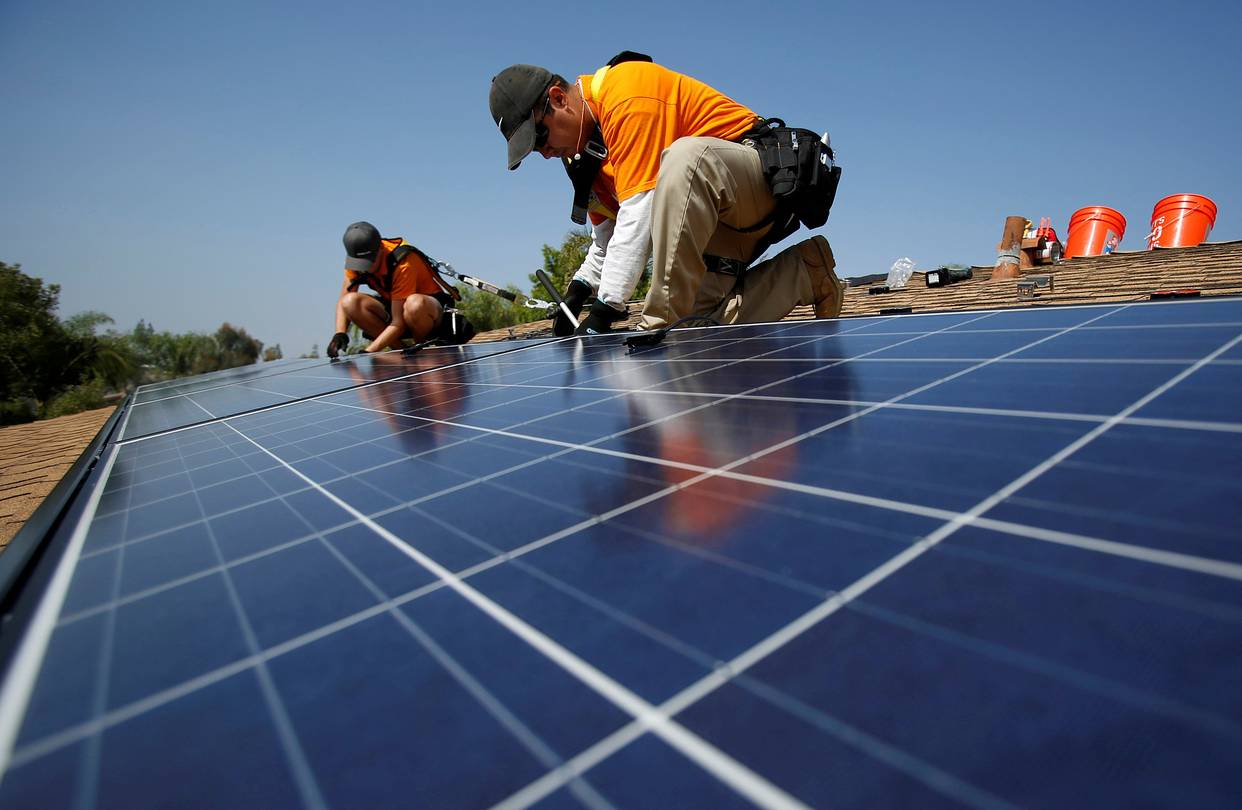
    A long-awaited proposal to extend a key pricing incentive for solar power projects in Ninh Thuan Province has been approved.

    The Government has issued Resolution No. 115/NQ-CP that allows solar power projects in the central province of Ninh Thuan to enjoy a feed-in tariff (FIT) of 9.35 cents per kilowatt-hour for a period of 20 years as long as they begin commercial operations by the end of 2020.

    This is an extension of the earlier commercial operation date (COD) deadline of June 30, 2019, applying to all localities, which was set by the Prime Minister’s Decision No.11/2017/QD-TTg.

    The extension of COD for Ninh Thuan, as specified in the new resolution, will hold good until projects that were approved by the Prime Minister reach a combined capacity of 2,000MW.

    The FIT for subsequent projects has not been finalized yet.

    Ninh Thuan and Binh Thuan are central provinces that have the greatest potential for renewable energy in the country.

    The COD extension is part of a package of incentives the Government is offering Ninh Thuan to support its 2018-2023 development, based on a proposal by the Ministry of Planning and Investment (MPI).

    The MPI first submitted to the Government a COD extension proposal for Ninh Thuan in early July, but later in the month, the Government Office issued Official Letter No. 7108 stating that the deadline remains unchanged.

    The new resolution has given investors hope that the COD deadline would also be extended to other localities later this year, an industry expert said.

    FITs are payments made for supplying renewable energy to the national grid.

    Recent innovations in solar power technology that have helped bring down production costs dramatically have made Vietnam’s 9.35 cents per kilowatt hour tariff attractive to private investors.

    Hundreds of private investors have submitted proposals to set up solar farms, but the June 30, 2019 deadline was too tight, energy experts had said.

    The projects can get entangled in land acquisition hiccups, procedural lags and a lack of master zoning plans for solar power development at the national and provincial levels, they added.

    There were also concerns over infrastructure needed for the solar power projects to connect to the national grid.

    There are no definitive answers now to questions about pricing for solar power connected to the grid after the end of 2020 in Ninh Thuan and after June 30, 2019 in other provinces.

    How the FITs are decided after June 30, 2019 could depend on what technology prices will be at a specific period of time, according to the Electricity Regulatory Authority of Vietnam (ERAV).

    Meanwhile, power authorities are considering piloting auctions as an alternative option to FITs after June 2019.

    ERAV has sought World Bank assistance and hired consultants to study auction mechanisms.

    Bidders offering the lowest prices to the Electricity of Vietnam (EVN), the country’s sole power distributor, will be awarded development contracts.

    MoIT has approved around 70 solar projects with a total capacity of over 3,000 megawatts to be commissioned before June 30, 2019.

    Vietnam currently relies largely on hydropower and thermal power plants for its electricity demands, but these have drawn frequent domestic and international criticism for their social and environmental impacts.

    Solar accounts for just 0.01 percent of the power output, but the government plans to increase this ratio to 3.3 percent by 2030 and 20 percent by 2050.

    By 2030 Vietnam aims to produce 10.7 percent of its electricity from renewable sources, with wind energy being the other main option.

  • Cypark awarded RM260.51 million solar plant project

    Cypark awarded RM260.51 million solar plant project

    Cypark Resources Bhd has bagged a RM260.51 million contract for the construction of a 30MW large scale solar photovoltaic plant at Empangan Kelinchi, Negeri Sembilan.

    The company told Bursa Malaysia it had on January 26 accepted the conditional letter of award dated January 26, 2018 from Cove Suria Sdn Bhd.

    The engineering, procurement, construction and commissioning of the plant is for a period of 24 months, while operation and maintenance will last for 21 years.

    At 2.31pm, Cypark’s share price was unchanged at RM2.52 on some 227,300 shares done.