Retail News CRM

Tag: solar panels

  • Sabeco to install rooftop solar panels at 9 breweries

    Sabeco to install rooftop solar panels at 9 breweries

    Sabeco has partnered with SP Group, a leading utilities group in the Asia Pacific, for the second phase of its rooftop solar energy system installation and operation.

    Saigon Beer-Alcohol-Beverage Corporation (Sabeco) and SP Group signed a Memorandum of Understanding on Thursday to carry out rooftop solar energy system installation and operation with a maximum output of 10.44 MWp (Megawatt-peak) at nine Sabeco’s breweries.

    This will bring the number of Sabeco breweries adopting solar energy by the end of 2023 to 17.

    “This partnership demonstrates our commitment to facilitating the clean energy transition of manufacturing facilities. Leveraging our comprehensive range of sustainable energy solutions, we look forward to supporting Sabeco towards their energy efficiency goals and co-creating a more sustainable future for Vietnam,” Brandon Chia, Managing Director, Sustainable Energy Solutions (Southeast Asia & Australia), SP Group, said.

    The first phase kickstarted in 2020, receiving VND107 billion ($4,7 million) investment from Sabeco with a maximum output of 9 MWp at Cu Chi, Dak Lak, Phu Yen, Quy Nhon, Song Lam, Khanh Hoa, Can Tho, Soc Trang and Ben Tre breweries.

    Under the new MoU, SP has been commissioned to install and operate the rooftop solar panels at nine breweries in Lam Dong, Ha Tinh, Ha Noi, Tay Do, Vinh Long, Nguyen Chi Thanh, Bac Lieu, and Quang Ngai, and expand the system in Cu Chi.

    The installment is scheduled to be completed and operational by the end of Q3. The system of 17 breweries is estimated to provide almost 23% of electricity consumed at the breweries, or 25 million kWh, equivalent to a reduction of 18,000 tons of CO2 emitted annually.

    “The company has sought to implement initiatives and solutions that support sustainable business over the past few years. We have already embarked on various ESG (Environment, Society and Governance) initiatives through our 4C corporate social responsibility pillars (Consumption, Conservation, Culture and Country). We also have implemented Best Brewery Awards to encourage our breweries to embed sustainability mindset,” Bennett Neo, General Director of Sabeco, said.

    Apart from energy usage, Sabeco has implemented other initiatives to mitigate environmental impacts. The company reduced waste used per liter of beer from 5 liters in 2018 to below 3 liters in 2022.

    Sabeco has embarked on plant-based biomass fuel (rice hulls, sawdust, cashew shell, and leaves) usage instead of using fossil fuel-powered boiler, applying the CIP wastewater treatment system; using sustainable packaging (downgauged cans, lightweighted carton boxes and bottles) and reusing beer glasses and cans.

    Sabeco also promotes other sustainability initiatives which focus on local communities where it operates. The recent project “Light up the Rural”, a part of the three-year strategic partnership between Sabeco and the Central Committee of the Ho Chi Minh Communist Youth Union, has constructed 34km of street lighting that uses solar power in 34 rural areas in 34 provinces across the country.

    This initiative aims to improve socio-economic infrastructure to more than 210,000 households. The project will be expanded in 2023 with more than 39 km of solar street lights to be installed.

    Sabeco operates 26 breweries, 11 member trading companies and a network of hundreds of thousands of selling points across the country.

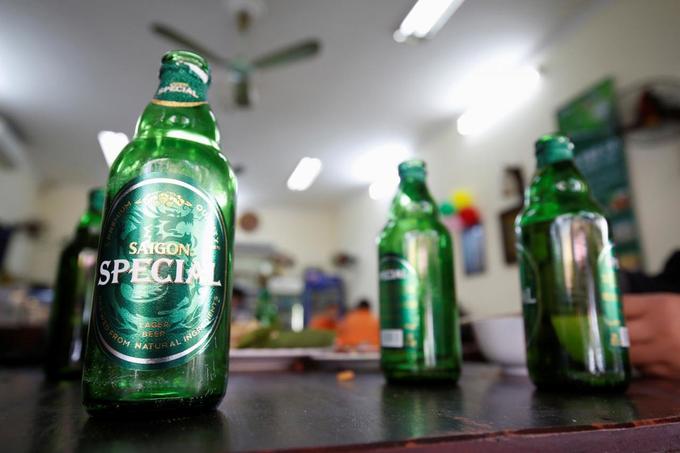
    Sabeco has a wide portfolio of beer brands that are beloved by the people of Vietnam, which includes Bia Lac Viet, Bia Saigon Chill, Bia 333, Bia Saigon Special, Bia Saigon Export, Bia Saigon Lager and Bia Saigon Gold.
  • US to consider tariffs on solar panels made in Southeast Asia

    US to consider tariffs on solar panels made in Southeast Asia

    U.S. trade officials on Monday said they will launch an investigation that could result in tariffs on solar panels imported from four Southeast Asian nations, a blow to clean energy project developers that rely on cheap imports to keep costs down.

    The Commerce Department’s decision regarding imports from Malaysia, Thailand, Vietnam and Cambodia was a victory for Auxin Solar. The San Jose, California-based solar manufacturer this year requested the probe, arguing that Chinese manufacturers shifted production to those nations to avoid paying U.S. duties in place for nearly a decade on Chinese-made solar goods.

    Auxin’s petition is the latest in a string of efforts by U.S. solar producers to stem the flow of cheap Asian panels that they argue make their products unable to compete in the market.

    Solar industry trade groups said the investigation alone would immediately hamstring project development and harm U.S. progress in addressing climate change. President Joe Biden has set a goal of weaning the U.S. electricity sector off of fossil fuels by 2035, a target that could propel solar to supply up to 40% of the nation’s electricity needs – up from 3% currently.

    Imports from the four countries account for about 80% of the panels expected to be installed in the United States this year, according to the American Clean Power Association industry group.

    “This decision effectively freezes development in the U.S. solar industry,” association CEO Heather Zichal said on a conference call with reporters. “Frankly, the Commerce Department’s action to initiate this investigation is a disaster for our industry.”

    In a statement, a Commerce Department spokesperson said the department would “conduct an open and transparent investigation.”

    “This inquiry is just a first step – there has been no determination one way or the other on the merits, and no additional duties will be imposed at this time,” the spokesperson said.

    In a memo posted on a Commerce Department website earlier in the day, officials said Auxin had provided information indicating that solar companies operating in the four countries are subsidiaries of large Chinese producers and that products made there would be subject to U.S. countervailing and anti-dumping duties if made in China.

    “Auxin properly alleged the elements necessary for a circumvention determination,” the memo said.

    The Commerce Department said it will issue a preliminary determination within 150 days. Auxin welcomed the decision.

    “We are grateful Commerce officials recognized the need to investigate this pervasive backdoor dumping and how it continues to injure American solar producers,” Auxin Chief Executive Mamun Rashid said in a statement.

    U.S. solar trade groups lobbied heavily against the Commerce Department taking up the petition.

  • Chinese solar panel producer invests $500 mln in Vietnam

    Chinese solar panel producer invests $500 mln in Vietnam

    Chinese solar panel maker JinkoSolar Holding Co. has announced a $500 million investment into Vietnam to build a manufacturing facility in the northern province of Quang Ninh.

    The new facility is set to be operational in the first quarter of next year and has an annual capacity of 7 gigawatts, the company stated Monday.

    It will produce panel components including ingots and wafers.

    “The decision to build a facility in Vietnam is one component of our strategy to ensure the long-term stability of our global supply chain,” said Nigel Cockroft, general manager of JinkoSolar U.S. Inc.

    The company has nine manufacturing facilities globally and 22 overseas subsidiaries.

  • Malaysian firm to buy stake in five solar farms in Vietnam

    Malaysian firm to buy stake in five solar farms in Vietnam

    A subsidiary of Malaysia’s largest power utility, Tenaga Nasional Berhad, plans to acquire a 39 percent stake in five Vietnamese solar power projects from Singapore’s Sunseap Group.

    The farms were built last December in southern Vietnam and have a total capacity of 21.6 MW.

    After selling 39 percent to TNB Renewables, likely this month, Sunseap will own a 51 percent stake in them.

    President and CEO of TNB, Datuk Bahrain Din, said the deal would mark TNB’s entry into Vietnam’s fast-growing renewable energy and utility market.

    Sunseap Group owns projects in Singapore, Australia, Vietnam, China, Taiwan, and Cambodia.

    In 2019, it completed the $150-million solar farm, the solar power plant CMX Renewable Energy Vietnam, one of the country’s largest in central Ninh Thuan Province.

    TNB has projects in the UK, Kuwait, Turkey, Saudi Arabia, Pakistan, India, and Indonesia, and expects to have 8.3 GW of renewable energy by 2025.

    Of the foreign investors in Vietnam’s renewables sector, the majority are from Thailand.

    In 2020 Thailand’s Super Energy Corporation Public Company invested $456.7 million to build four solar plants in southern Vietnam, Loc Ninh 1, 2, 3, and 4.

    Gulf Group increased its ownership of two solar farms in the southern province of Tay Ninh from 49 percent to 90 percent in the second quarter of last year.

    In 2019, AC Energy, a subsidiary of the Philippines’ Ayala company, and Vietnam’s BIM Group established BIM/AC Renewables to develop projects in the central Ninh Thuan Province.