Tag: Solomon Lew

  • Premier Investments Eyes Health And Beauty Sector Amid Retail Shift: Challenges And Strategies Unveiled

    Premier Investments Eyes Health And Beauty Sector Amid Retail Shift: Challenges And Strategies Unveiled

    In the wake of Premier Investment’s FY25 results, Chairman Solomon Lew highlighted the company’s robust balance sheet and hinted at impending merger and acquisition ventures. Despite navigating decades of fluctuating retail cycles under Lew’s guidance, Premier continues to see itself as a potential buyer in a market where others are struggling. The challenge lies in leveraging their financial power to diversify into new categories during a time of significant change in the retail sector.

    Prospects in Health and Beauty

    Lew has previously expressed interest in expanding into the health, beauty, and cosmetics sector, given its resilience through economic cycles and the sector’s strong emphasis on branding. However, this sector is highly competitive, with global giants such as L’Oreal and Estee Lauder dominating the market. Companies looking to compete in this space must be prepared to either purchase established equity or heavily invest in marketing and product development.

    According to retail consultant Danny Lattouf, the health and beauty sector is particularly attractive to investors due to its high profit margins, frequent purchase cycles, and emotional appeal. However, he cautions that Premier’s success would hinge on identifying a unique brand with potential for growth, rather than becoming just another competitor in an already saturated market.

    A Tale of Contrasting Fortunes

    Premier’s primary brands – Smiggle and Peter Alexander – are experiencing markedly different trajectories. Smiggle, once a global growth story, is now under pressure due to leadership instability and an ongoing investigation into workplace misconduct. This has resulted in a 22.5% decline in group profit to $144 million in FY25. On the other hand, Peter Alexander saw sales increase by 7.7% to $548 million in FY25 due in part to its broad appeal across demographics and strong giftability.

    Legacy and Leadership

    Few individuals have had as significant an impact on Australian retail as Solomon Lew. He is known for his resilience, adaptability, and ability to navigate changes in the retail landscape. However, Lew’s leadership style and legacy of opportunistic deals may also pose challenges, particularly for brands in need of reinvention, not just resilience.

    Lew’s fiscal conservativism, illustrated by his aversion to debt, has safeguarded the company during economic downturns. However, as he prepares to join the Myer board as a non-executive director, it remains to be seen how his leadership style will continue to shape Premier’s direction and influence broader department store strategies.

    The Future of Premier in Retail Landscape

    As Premier evolves, it faces the question of whether it remains a leader in Australian retail or has become a niche portfolio business. Premier’s cash reserves and agility set it apart from many of its listed peers, but the company also risks over-reliance on a few brands.

    The future of Premier may be characterized by expansion into new categories, possibly the beauty sector. However, such a pivot would require a balancing act of financial discipline and creative brand building.

    Questions & Answers

    What challenges does Premier Investments face in diversifying into new categories like health and beauty?
    Ans: The health and beauty sector is highly competitive, dominated by global brands and fast-growing disruptors. Therefore, Premier would need to identify a unique brand with growth potential or be prepared to heavily invest in marketing and product development.

    How are Premier’s primary brands, Smiggle and Peter Alexander, performing?
    Ans: Smiggle is facing challenges due to leadership instability and an ongoing investigation into workplace misconduct, resulting in a decline in group profit. Conversely, Peter Alexander is experiencing growth, with a 7.7% increase in sales in FY25.

    What potential risks does Solomon Lew’s leadership style pose for Premier?
    Ans: Lew’s legacy of opportunistic deals and his preference for control could pose challenges for brands that need reinvention rather than just resilience. His aversion to debt, while offering protection in downturns, may also limit the company’s ability to seize new opportunities.
  • Solomon Lew’s plan to take Hong Kong’s shopping centres with Smiggle

    Solomon Lew’s plan to take Hong Kong’s shopping centres with Smiggle

    Solomon Lew is renowned for driving a hard bargain and that’s exactly what he has been doing in Hong Kong this week.

    Australia’s most strategic billionaire and the man running his fast-growing stationery empire – John Cheston – spent Friday in a van visiting dozens of shopping malls in the former British colony. They will do the same again on Saturday.

    It is not Hong Kong’s glitzy designer stores that interest Lew. He and Cheston are personally inspecting the sites identified by Premier Investments’ property team as locations for a chain of Smiggle stores due to open in the territory early next year.

    “We walk every centre. We walk every store. We are there in the morning, in the afternoon, in the evening and we go back in the evening. We want to see different times of the day. We go early in the morning and then it revs up. The kids finish school and then … bingo!” Lew says in an interview with AFR Weekend.

    “This is a business that caters to six to 14 years of age, 75 per cent female. You are getting a new crop growing every year. As they fall out at the older end, the younger ones are coming in. When you see them walking in and they bring their piggy bank and turn it upside down and say what can I get for this, it’s just amazing. ”

    We are sitting in Lew’s hotel room in the Mandarin Oriental Hotel overlooking Hong Kong’s busy harbour. It is a sight Lew is familiar with.

    He has been travelling to Hong Kong since the 1960s, up to 11 times a year. But instead of importing goods made in China to Australia, he now plans to sell stationery to the Chinese – and a lot of it.

    After a reconnaissance trip to Hong Kong in June, Lew and his team are getting serious this week. Premier chief Mark McInnes is joining them in the van before flying to Kuala Lumpur on Saturday for the next leg of the tour.

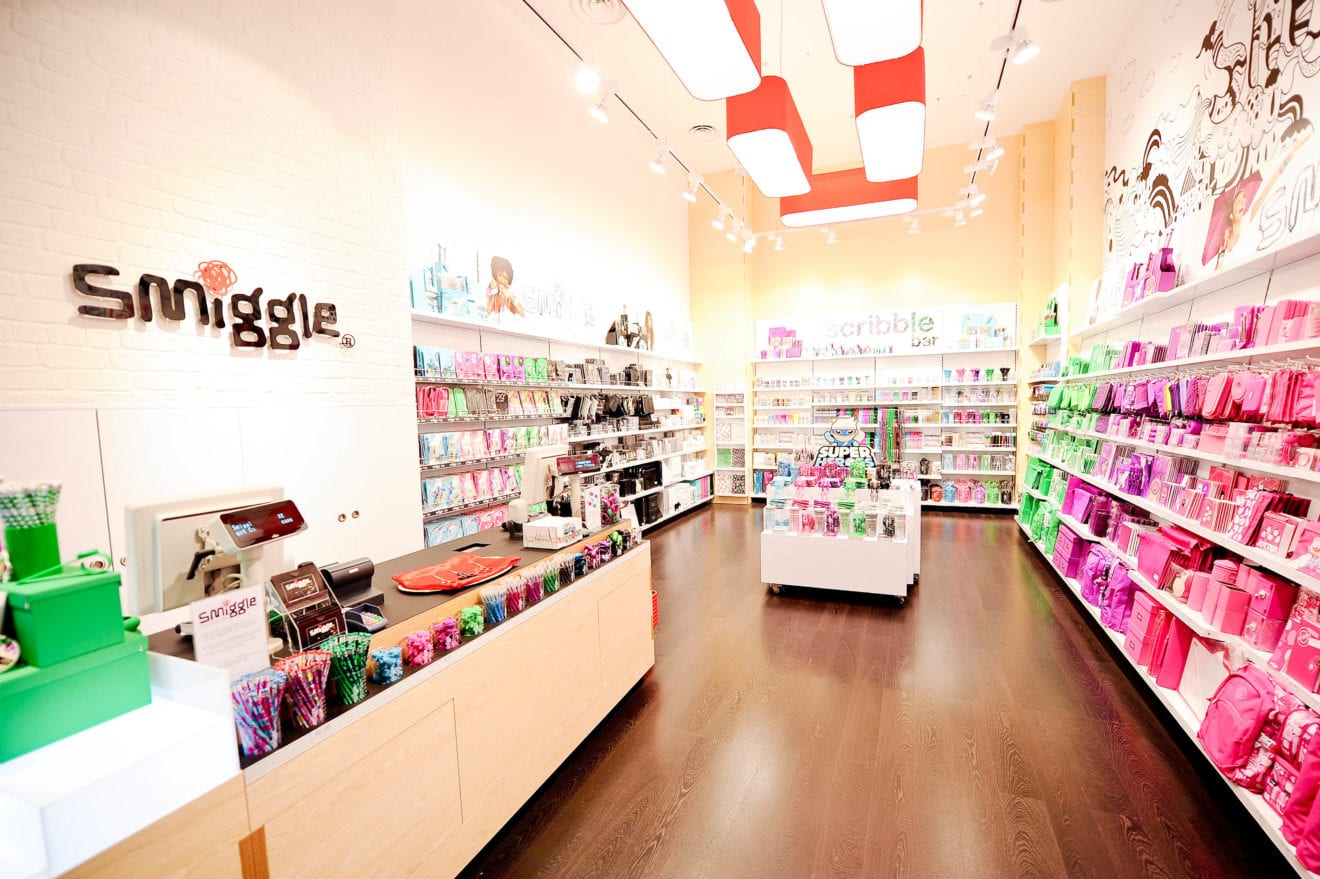
    Smiggle, the stationery chain which has become the fastest-growing business in Lew’s Premier Investments apparel empire, is planning to open 50 stores in Hong Kong and Malaysia over the next five years. It is the next phase in his plans to take the brand global after breaking into the United Kingdom, where 200 stores are planned.

    Lew wants Cheston to do most of the talking. He is the Asia expert after all after running Marks & Spencer’s Hong Kong operations and listed Singapore retailer Robinson & Co before moving to Australia to run Smiggle.

    The perfect market

    Cheston says densely-populated Hong Kong is perfect for Smiggle, which is making millions selling brightly-coloured lunch boxes, backpacks, water bottles, and pencil cases to six to 14-year olds in Australia, New Zealand and Singapore.

    “There is a predominance of shopping centres here and that is our fertile ground, limited competition. From what we do there is not a lot of competition. We have well established contacts through Sol,” he says.

    “In Hong Kong if you are hot they want you and if you are cold they don’t. We are in demand from the landlords over here. We need to leverage that business with the agents who represent us and get good locations and get good deals. The biggest challenge is getting the space and the rents,” Cheston says.

    That is something Lew has plenty of experience at. Rather than being deterred by China’s slowing economy, which is hitting high-end luxury retail sales in places like Hong Kong, Lew says it is an opportunity to negotiate better deals from landlords. He also sees it as a gateway to China, a country he has had plenty of experience with over the decades building his apparel empire, because 41 million mainland tourists visit Hong Kong each year.

    The plan now is to take Smiggle global. Cheston says he has had inquiries from literally every country on the planet to franchise the brand but, for now, Premier plans to keep the stores wholly-owned. Lew says it’s better than the McDonald’s model.

    “The international business in a very short period of time will be much larger than the Australian business and there are not too many Australian retailers who have been successful offshore,” Lew says.

    “This is going to be world-class operation and there is no reason it shouldn’t work in any country in the world where there is moderate income.”

    Lew’s focus on overseas expansion stands in stark contrast to some of the other big names in Australian retail.

    Myer, for example, is embarking on a $600 million revival plan under new chief executive Richard Umbers. The company has been described as a possible takeover target for Premier Investments, but Lew would not comment on the seemingly perennial speculation about such a tilt.

    Nor would he comment on the progress of David Jones. Last year, Lew grabbed a windfall of about $400 million when South African retailer Woolworths Holdings bought David Jones and Country Road; Lew had stakes in both. David Jones looked to be riding high until recent weeks when chief executive Ian Nairn stepped down suddenly.

    Singapore experience being applied

    Cheston says the success of Smiggle’s Orchid Road operations in Singapore are now being used as leverage to negotiate good deals with landlords in Hong Kong because it drives traffic to shopping malls.

    Like the UK operations, he expects Hong Kong to be profitable in the first year.  The plan is to open 50 stores across Hong Kong and Malaysia which will make $55 million in revenue. In Hong Kong, Lew would like to firm up 10 stores initially but says he will probably start with five or six.

    Australia has almost peaked with around 10 additional stores on top of the existing 124 planned. The Hong Kong target is around 25 to 35 stores and 20 in Malaysia, mainly in Kuala Lumpur.

    As well as lower taxes, Cheston says Asia is attractive for the “kidult” market, where older people who live in small apartments with their families like to adorn their office workstations with stationery.

    Premier Investments posted record full-year results last month and is expected to hit sales of more than $1 billion this year. Double-digit growth at Smiggle and its designer pyjama business, Peter Alexander, are outstripping the company’s core apparel brands such as Just Jeans and Dotti.