Tag: sourcing

  • Decathlon Aims To Double Indian Procurement, Boosting Local Manufacturing

    Decathlon Aims To Double Indian Procurement, Boosting Local Manufacturing

    Decathlon, the renowned French sports goods company, has disclosed its ambitious plans to double its procurement of goods from India, aiming to reach a monetary value of $3 billion in the next five years. This strategic move will enhance India’s contribution to the company’s global sourcing to 15 per cent by 2030.

    Driving Expansion with High-Potential Categories

    The intended increase in sourcing from India is set to be propelled by categories of high potential, such as fitness equipment, footwear, and clothing. As of now, India accounts for 8 per cent of Decathlon’s global sourcing volumes.

    Decathlon boasts a long-standing sourcing relationship with India, spanning over 25 years. The company predicts that by 2030, locally sourced products will constitute 90 per cent of its sales in the Indian market, marking a significant rise from the current rate of over 70 per cent.

    Strong Support from Domestic Operations

    Decathlon’s operations within India are robust, supported by 113 manufacturing sites, 83 suppliers, and seven production offices. The company also showcases solo categories like yoga and cricket, which are designed and manufactured domestically.

    Frederic Merlevede, the head of Decathlon production, expressed confidence in the company’s strategic investment in India. He said, “Our long-term investment in India reflects the profound trust we have established with our partners.” Merlevede also stated their clear ambition to position India as one of Decathlon’s leading global manufacturing hubs as the company continues to grow.

    At present, Decathlon runs 132 retail stores across 55 cities in India.

    Questions & Answers

    What are Decathlon’s expansion plans in India?
    Decathlon plans to double its sourcing of goods from India, aiming for a monetary value of $3 billion over the next five years.

    Which categories are expected to drive this expansion?
    The expansion is expected to be driven by high-potential categories such as fitness equipment, footwear, and clothing.

    What is Decathlon’s future vision for its operations in India?
    Decathlon aims to increase the representation of domestic products in its sales to 90% by 2030. Furthermore, the company aims to make India one of its main global manufacturing hubs.

  • RangeMe opens 200,000 suppliers to Australasian retailers

    RangeMe opens 200,000 suppliers to Australasian retailers

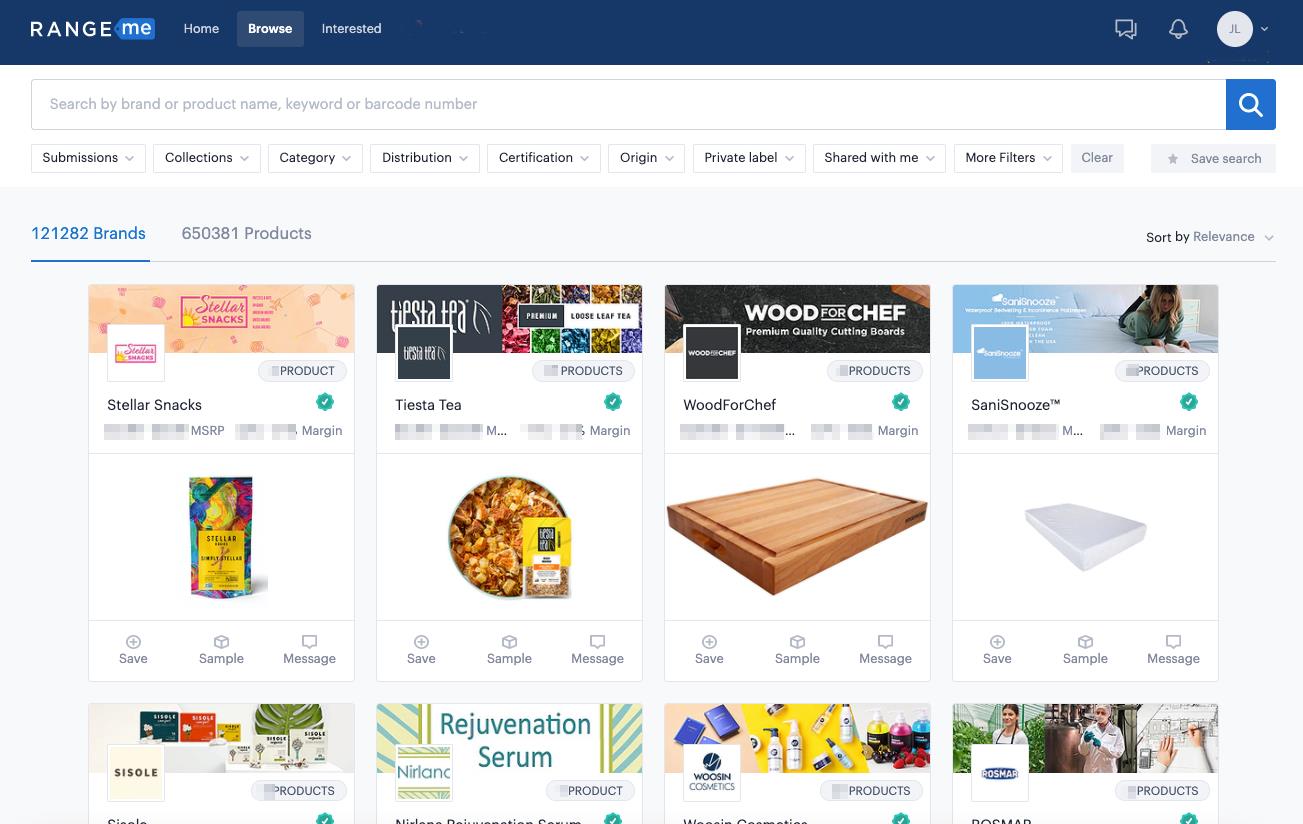
    Product discovery and sourcing platform RangeMe has fully launched its global service to retailers in Australia, New Zealand, and the wider APAC region, allowing businesses to access 200,000 international suppliers.

    A number of businesses are already using the service, such as Blooms the Chemist, Good Price Pharmacy Warehouse, Pet Circle and Pet Culture, and are now able to source new products at a time demand for a wider range of products is growing.

    “This will be a transformative experience for these retailers’ buyers,” said RangeMe chief executive Nicky Jackson.

    “Our mission has always been to empower retailers and suppliers to be productive and successful. The world has become a smaller place, but it remains distant for forging strong cross-border buyer and seller relationships

    “We built RangeMe to connect buyers and suppliers anywhere in the world.”

    RangeMe allows businesses to search and filter for products they want to sell, creating a more specific and intentional supplier relationship. The business is also open for Australian suppliers, which can sign up to be a part of the service and potentially gain new buyers from over 12,000 overseas clients – including Walmart, Sephora, Walgreens and Albertsons.

  • Adidas sees ongoing shift from China to Vietnam

    Adidas sees ongoing shift from China to Vietnam

    Factories in Vietnam produced 44 percent of Adidas footwear volume in 2017, up from 31 percent in 2012.

    The chief executive of Adidas expects a shift in its sourcing of footwear from China to Vietnam to continue although he shrugged off concerns on Wednesday about the possible imposition of U.S. tariffs on Chinese-made shoe.

    Factories in Vietnam produced 44 percent of Adidas footwear volume in 2017, up from 31 percent in 2012, while Chinese suppliers made 19 percent, down from more than 30 percent in 2012, Kasper Rorsted told a annual meeting of shareholders.

    “I’m not going to rule out that this trend is going to continue,” he said, adding: “China is still an important procurement market, irrespective of trade duties.”

    Rorsted noted that there was still a lot of uncertainty over what sectors could face new U.S. tariffs. “We might be hit by import duties but it will also apply to our competitors.”

    German rival Puma, which makes about a third of its products in China, said last month that it is working on contingency plans to move some production from China to other Asian markets if U.S. tariffs are imposed.

  • Global sourcing has stuffed fashion – globally

    Global sourcing has stuffed fashion – globally

    Like all good things, global sourcing was a seductive morsel that led to a kind of economic gluttony that has had huge ramifications. Most of them for the worse.

    While the idea of sourcing at a lower cost than a business could make themselves on paper looks like an obvious endeavour to exploit, taken to the level that has now occurred, the only sustainable benefits have been achieved by the owners of the factories and supply chain providers to which production and distribution has been outsourced.

    Global fashion for the mass market has denigrated to the lowest common denominator. “Disposable fashion” is no longer an option but pretty much all you can buy at mass market and has led to the destruction of quality, embellishment, differentiation and true innovation.

    The fashion industry – globally – is caught in a deflationary cycle of its own making, producing an endlessly recycled ‘play-book’ of looks from mass-produced fabrics, made to standard blocks and production techniques in order to hit buy-sell prices and margins that are creating nothing but increasing volumes and decreasing profits.

    On top of that, the customers are bored.

    Even Zara – arguably the master of ‘cheap chic’ disposable fashion – has dulled its armoury. Once upon a time, Zara made its goods in Spain – when Spain was a country that had a low labour cost. Thanks to European equalisation laws, Spain’s minimum wage compliance destroyed that advantage. Zara now produces most of its products outside the European Union in cheap labour zones like China and Vietnam. As a result, both quality and an important part of the DNA of the product have evaporated leaving scale and stock turn as its primary weapons. But Zara is lucky that it still sustains those two weapons.

    For those without the armoury of global reach and massive scale, the allure of global sourcing has left them exposed as peddlers of the ‘emperor’s new clothes’. Forced to choose the same fabrics, the same trends, the same blocks and the same factories, the outcome is (you guessed it)…sameness.

    Fashion is about design and look. Without new ideas, individual personality and real choice every season it becomes functional at best. Functional fashion is not what excites customers to spend up. Instead they shop down. And ‘bagging bargains’ favours the few who have and can maintain scale advantage. Everybody else needs to seduce customers to buy with something they can’t get everywhere else. The current cycle of formulaic trend to factory source will not survive the next decade without massive casualties.

    And don’t blame the customer. That is a cop-out. Time for the fashion industry – outside the scale monsters – to rediscover how to design again. How to create original looks. How to invest in monetising quality. How to find a manufacturing advantage outside pure cost. How to create real differentiation and real integrity.

    That – and only that – will save the fashion industry from the massive failure that global sourcing is going to deliver.