Tag: South China Morning Post

  • Xiaomi continues quest for quality

    Xiaomi continues quest for quality

    Smartphone giant Xiaomi continues to distance itself from the lower end of the market, as Chinese buyers shift their attention mainly to device upgrades.

    Xiaomi international VP Hugo Barra says the company continues to direct its efforts at becoming a premium brand, reports the South China Morning Post.

    “Our customers are demanding premium products from us, so we are delivering higher quality with more premium components.”

    Research company IDC has forecast just 2 per cent growth this year for smartphone sales as more users chose to upgrade their handsets.

    Meanwhile, Xiaomi may expand its Mi Home experience centre across Hong Kong. Opened a year ago so customers can try out different products, it has been a successful retail experiment, says Barra.

    “Part of the strategy here is to think about how we can reinvent the retail experience to make it much more experience-focused … which helps the online business as well.”

    Xiaomi has just launched its latest 6.44in. Mi Max phablet and the Mi Air Purifier 2. The phablet, which will cost from HK$1799 (US$230), is considered one of the largest smartphones on the market.

    IDC estimates 20 per cent of smartphone sales last year were phablets, and by 2020 they are expected to account for 32 per cent of the market.

  • Why Alibaba bought the South China Morning Post

    Why Alibaba bought the South China Morning Post

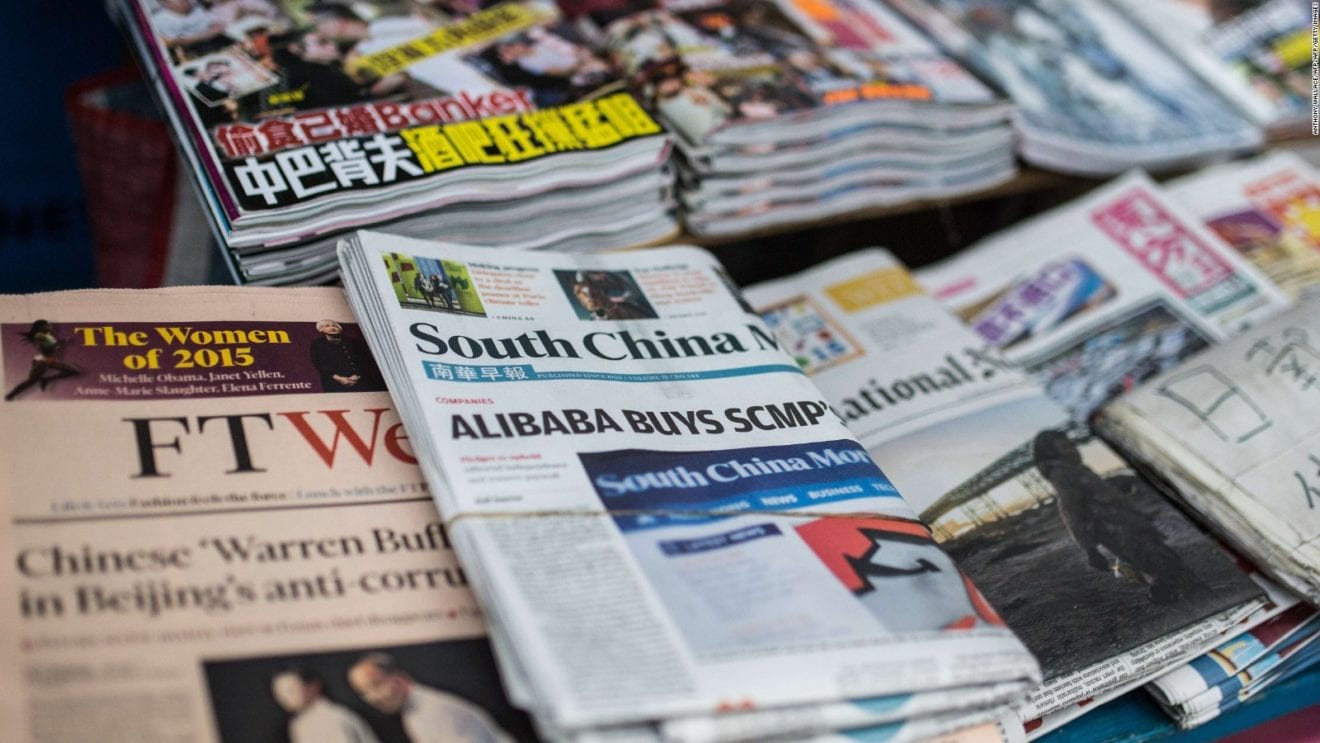
    Alibaba Group has struck a deal to buy Hong Kong’s venerable English-language newspaper, the South China Morning Post, adding a relatively small but influential content provider as the Chinese eCommerce giant expands into online entertainment and information.

    The agreement calls for Alibaba to purchase the media assets of Hong Kong-listed SCMP Group for an undisclosed amount. In addition to the daily newspaper, Alibaba is acquiring other SCMP operations including magazines, outdoor media, recruitment, events and conferences, and education and digital media businesses. Publications involved in the deal include the Sunday Morning Post; SCMP.com and related mobile apps; Chinese websites Nanzao.com and Nanzaozhinan.com; and a portfolio of magazine titles such as Esquire, Elle, Cosmopolitan, The PEAK and Harper’s Bazaar.

    Through the acquisition, Alibaba said it will “combine the heritage and editorial excellence” of the SCMP, which was founded in Hong Kong in 1903, with Alibaba’s digital capabilities “to provide comprehensive and insightful news and analysis of the big stories” in Hong Kong and China. The company plans to use technology to create content more efficiently, and provide resources to expand the SCMP’s audience beyond Hong Kong through digital distribution.

    “The South China Morning Post is unique because it focuses on coverage of China in the English language,” said Joe Tsai, executive vice chairman of Alibaba Group, in a statement. “This is a proposition that is in high demand by readers around the world who care to understand the world’s second-largest economy.”

    With the rise of the Internet, newspapers and magazines have suffered steep declines in readership and advertising revenue while struggling to make a profitable transition from print to digital distribution. In an open letter to the SCMP’s readers, Tsai said some may ask why Alibaba is buying into traditional media “considered by some (to be) a sunset industry.”

    “The simple answer is that we don’t see it that way,” Tsai wrote, calling the acquisition “the perfect opportunity to marry our technology with the deep heritage of the SCMP to create a vision of news for the digital age.”

    To enable greater access to SCMP content on computers and mobile devices anywhere in the world, Tsai said Alibaba intended to make all digital content available for free, eliminating the newspaper’s “pay wall” that requires readers to subscribe to get access to stories posted on the Internet. This change would occur “with enough preparation time after we take over operations,” Tsai wrote.

    SCMP CEO Robin Hu said Alibaba’s “proven expertise especially in mobile Internet” placed the company “in an excellent position to leverage technology to create content more efficiently and reach a global audience”.

    “We welcome Alibaba’s commitment to invest additional resources in its editorial and business operations to make the SCMP even stronger,” Hu said in a statement.

    Alibaba has been pursuing a media strategy that builds on its extensive eCommerce assets and consumer connections – the company’s China marketplaces have 386 million annual active buyers – to bring content to China’s entertainment-hungry masses. Alibaba has rapidly expanded in this area through investments in a variety of traditional and Internet businesses, including film production (Alibaba Pictures), sports (Alibaba Sports Group) and streaming video. Last month Alibaba agreed to buy Youku Tudou, A Chinese version of YouTube, in a multibillion-dollar deal.

    Tsai’s letter to SCMP readers:

    Marrying Heritage and New Technology: a Vision for the Digital Age

    Dear Readers,

    By the time you read this, you will have heard the news that Alibaba Group is acquiring the South China Morning Post.

    With an age difference between the two companies of nearly one hundred years, this is truly a mix of the old and the new. The SCMP is resonant with the history, heritage and culture of the region, just as Alibaba has its place in the new age of digital technology.

    We at Alibaba are both humbled and excited to be the new owner.

    Our Business Case

    So, you’re probably wondering why. Why is Alibaba buying into traditional media, considered by some a sunset industry? The simple answer is that we don’t see it that way.

    The SCMP has iconic status in the region, with a strong reputation internationally for the quality and credibility of its journalism over the years, thanks to its reporters and editors who have worked hard to build this heritage.  Like many print media, however, the SCMP faces challenges amid the dramatic changes in the way news is reported and distributed. But these changes play to Alibaba’s strengths, which is why we believe the two companies complement each other well.

    We see a compelling business case for the acquisition because we believe that Alibaba is best positioned to take the SCMP to the next level. The foundation for this work must be the quality of the content. And what underpins this will be editorial excellence: a clear prerequisite to maintaining readers’ trust and, ultimately, achieving commercial success. Be assured, we get that.

    Yet, the news business is in a state of flux. It has already gone digital and is now moving from online destination to other forms of distribution, in particular social media and mobile. Media now has a global audience and the challenge is to reach it in the most efficient and reader-friendly way. With proven expertise in digital distribution, especially on mobile devices, Alibaba is in an excellent position to leverage technology to create content more efficiently and expand distribution without borders.

    In other words, we see the perfect opportunity to marry our technology with the deep heritage of the SCMP to create a vision of news for the digital age.

    Our Vision

    Our vision is to grow the readership globally. We believe we can do this because the SCMP, from its base in Hong Kong, is uniquely positioned to report on China with objectivity, depth and insight, a proposition that is in high demand by readers around the English-speaking world – from New York to London to its home in Hong Kong – who care to better understand the world’s second largest economy.

    To help achieve our vision, we plan to make the SCMP more readily available. In this spirit, with enough preparation time after we take over operations, the pay wall on SCMP.com will come down, and you will be able to access its content for free on the Internet and on your mobile device.

    We will also invest to strengthen the foundation of editorial excellence. Only through additional resources will the SCMP be able to stay true to its core values of quality, integrity and trust. Further, the SCMP will stay close to its roots, with a strong China focus offering distinctive and informed analysis on trade, business, economy and society while maintaining its status as the paper of record for Hong Kong.

    Editorial Independence

    Some have suggested that ownership by Alibaba will compromise the SCMP’s editorial independence. This criticism reflects a bias of its own, as if to say newspaper owners must espouse certain views, while those that hold opposing views are “unfit.”

    In fact, that is exactly why we think the world needs a plurality of views when it comes to China coverage. China’s rise as an economic power and its importance to world stability is too important for there to be a singular thesis.

    In reporting the news, the SCMP will be objective, accurate and fair. This means having the courage to go against conventional wisdom, and taking care to verify stories, check sources and seek all viewpoints. These day-to-day editorial decisions will be driven by editors in the newsroom, not in the corporate boardroom.

    It’s humbling to assume the responsibility of ownership of such a storied newspaper. We thank the Kuok family who have been tremendous stewards of your trust; we hope Alibaba will have an opportunity to earn your trust.

    Sincerely,

    Joseph C. Tsai

    Executive Vice Chairman

    Alibaba Group Holding Limited

  • Alibaba acquires Hong Kong’s South China Morning Post

    Alibaba acquires Hong Kong’s South China Morning Post

    Chinese e-commerce giant Alibaba Group announced on Friday that it is acquiring Hong Kong’s English language newspaper South China Morning Post (SCMP) and its other media assets.

    It said the agreement will see Alibaba’s digital expertise being merged with SCMP’s heritage and editorial excellence.

    “This is a proposition that is in high demand by readers around the world who care to understand the world’s second largest economy,” said Joseph Tsai, Executive Vice Chairman of Alibaba Group. “Our vision is to expand the SCMP’s readership globally through digital distribution and easier access to content.”

    Robin Hu, Chief Executive Officer of SCMP, said in a news release that the company welcomes Alibaba’s commitment to invest additional resources in its editorial and business operations to make the SCMP even stronger.

    Apart from the flagship SCMP newspaper, the agreement also includes the acquisition of the magazine, recruitment, outdoor media, events & conferences, education and digital media businesses of SCMP Group Limited.

    Other SCMP titles include the Sunday Morning Post, its digital platforms SCMP.com and related mobile apps, and the two Chinese websites Nanzao.com and Nanzaozhinan.com.

    The acquisition also includes a portfolio of magazine titles, including the Hong Kong editions of Esquire, Elle, Cosmopolitan, The PEAK and Harper’s Bazaar.

    In a letter addressed to SCMP readers, penned by Tsai, the company sought to answer questions on why the e-commerce company is buying into traditional media which many consider as a sunset industry.

    “The simple answer is that we don’t see it that way,” the letter read. “We see a compelling business case for the acquisition because we believe that Alibaba is best positioned to take the SCMP to the next level. The foundation for this work must be the quality of the content. And what underpins this will be editorial excellence: a clear pre-requisite to maintaining readers’ trust and, ultimately, achieving commercial success. Be assured, we get that.”

    The letter also addressed issues on the possible compromise that SCMP’s editorial independence may be compromised by the acquisition and the commercial interest of the new owners.

    “In reporting the news, the SCMP will be objective, accurate and fair,” Tsai assured. “This means having the courage to go against conventional wisdom and taking care to verify stories, check sources and seek all viewpoints. These day-to-day editorial decisions will be driven by editors in the newsroom, not in the corporate boardroom.”

  • Alibaba Group Acquires Major Hong Kong Newspaper

    Alibaba Group Acquires Major Hong Kong Newspaper

    The Alibaba Group has announced that will acquire the South China Morning Post, one of Hong Kong’s most influential English language newspapers, and other media assets of SCMP Group Limited.

    The move is reportedly part of an effort to improve China’s image in the West and combat what company executives call the “negative” portrayal of China in the Western media.

    “The South China Morning Post is unique because it focuses on coverage of China in the English language. This is a proposition that is in high demand by readers around the world who care to understand the world’s second largest economy,” said Joseph Tsai, executive vice chairman of Alibaba Group.

    The South China Morning Post has long reported on subjects that state-run publications have been forbidden to cover, such as political scandals and human-rights violations. The paper has a relatively small circulation (at about 100,000). Despite the paper’s size, it has significant influence in the West because of its proximity to China and English language format. However, critics have recently taken aim at the paper, claiming that it has become increasingly pro-Beijing.

    The acquisition is an ambitious move that sees Alibaba taking a significant stake in print journalism, with an eye to developing its digital potential.

    “Like many print media the SCMP faces challenges amid the dramatic changes in the way news is reported and distributed. But these changes play to Alibaba’s strengths, which is why we believe the two companies complement each other well,” said Tsai in an open letter to the readers of the South China Morning Post.

    As part of the changes, Alibaba will remove the pay wall on SCMP.com, allowing readers to access content for free on the internet and mobile.

    Other assets included in the acquisition are SCMP’s magazine, recruitment, outdoor media, events and conferences, education and digital media businesses. Besides the flagship South China Morning Post, other titles include SCMP.com and related apps, and Nanzao.com and Nanzaohinan.com, as well as the Hong Kong editions of Esquire, Elle, Cosmopolitan, The PEAK and Harper’s Bazaar.

    The acquisition represents a relatively minor investment on the part of Alibaba, with SCMP valued at an estimated US$100 million, a drop in the ocean compared with Alibaba’s multi-billion yearly revenue.

    It’s unclear at this point what degree of editorial control Alibaba will exercise over the controversial publication. While Hong Kong operates with a relatively free press, at least compared with mainland China, some are concerned that Alibaba will seek to water down the paper’s political stance to curry favour with Chinese leadership and advance its (Alibaba’s) own agenda, which is reportedly closely aligned with the Communist Party.

    Willy Lam, a political commentator and former editor at the South China Morning Post, said an Alibaba takeover would most likely exacerbate a trend at the paper toward self-censorship on sensitive political issues, reported the New York Times.

    The company has been quick to address this. “Some have suggested that ownership by Alibaba will compromise the SCMP’s editorial independence,” said Tsai. “This criticism reflects a bias of its own, as if to say newspaper owners must espouse certain views, while those that hold opposing views are ‘unfit’.

    “In fact, that is exactly why we think the world needs a plurality of views when it comes to China coverage. China’s rise as an economic power and its importance to world stability is too important for there to be a singular thesis.

    “In reporting the news, the SCMP will be objective, accurate and fair. This means having the courage to go against conventional wisdom, and taking care to verify stories, check sources and seek all viewpoints. These day-to-day editorial decisions will be driven by editors in the newsroom, not in the corporate boardroom,” said Tsai.

    “Alibaba and Jack Ma have done a good job maintaining good relations with the power structure and not getting involved in politics,” Orville Schell, a director at the Asia Society, told the New York Times.

    “But buying a newspaper, particularly in Hong Kong, could be hazardous,” he said, adding, “China is always tempted when things go wrong to take control.”