Tag: space

  • The We Company Debuts Made by We

    The We Company Debuts Made by We

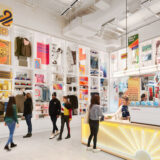
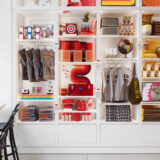
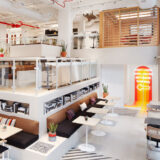
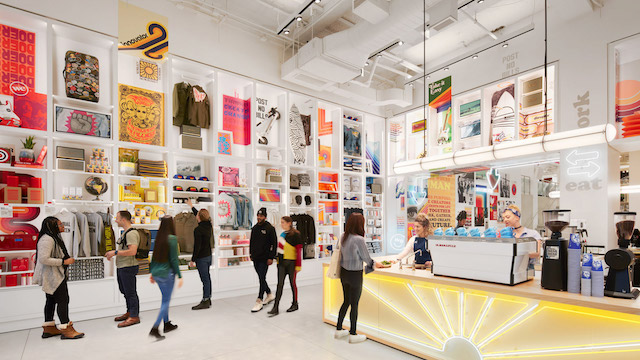
    Co-working firm The We Company (previously WeWork) has opened a retail venture and public workspace in New York. The Made by We retail space, cafe and workplace can be used by anyone without the need for a membership, with workstations and meeting rooms available for rent by the minute. The work space features products made by current WeWork member companies available for sale, from apparel to snacks to audiotech gear. It also houses a Bluestone Lane cafe.

    While headquartered in New York City, The We Company has WeWork shared office spaces in major cities across Mainland China, Japan and India, as well as in Ho Chi Minh City, Singapore, Jakarta, Kuala Lumpur, Manila, Busan, Seoul and Bangkok.

    “Made by We was launched with a vision to connect the We community with the rest of the world, and provide people with the best on-demand workspace, services and products, no membership required”, said company partner Julie Rice.

    “Everything we do at The We Company, from the spaces we curate to the service offerings we provide, is intended to create meaningful human connections.”

    View the gallery below for pictures (7 images) :


  • Chinese co-working space operator opens second Singapore hub

    Chinese co-working space operator opens second Singapore hub

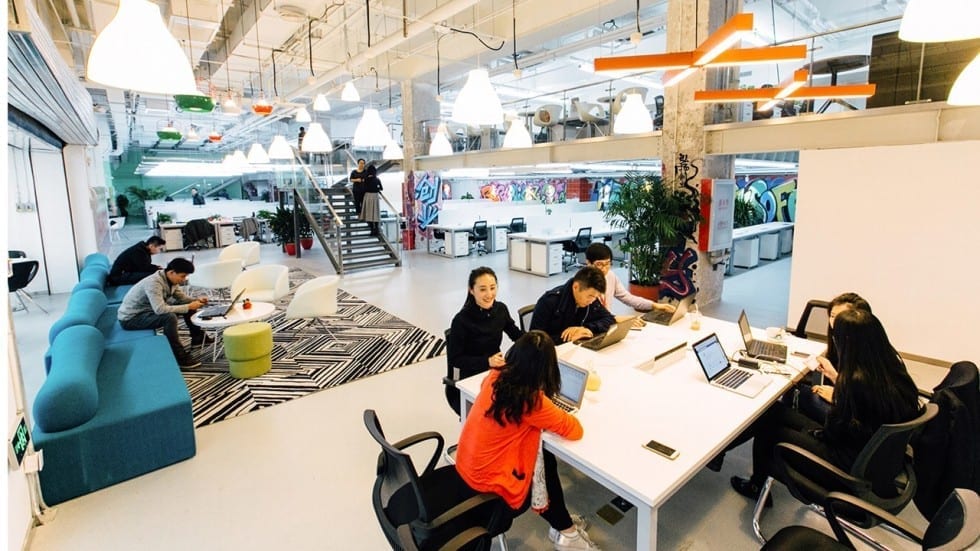
    Prominent Chinese co-working space operator UrWork is opening a second Singapore location in the first quarter of next year. The company, which is backed by Alibaba’s Ant Financial and Sequoia Capital among others, launched its first overseas branch at Ayer Rajah Crescent in July. Its new outlet will be at Suntec City and is part of the firm’s efforts to become a bridge between South-east Asia and China, founder and chief executive Mao Daqing said.

    Beijing-based UrWork, which has been billed as China’s answer to Silicon Valley co-working giant WeWork, has been valued at about US$1.5 billion (S$2 billion).

    It has 100 co-working sites in 33 Chinese cities and is the country’s largest co-working space operator.

    The company plans to expand globally into 35 cities with 160 locations over the next three years.

    To stand out in the increasingly crowded co-working market, UrWork positions itself as a provider of key services to start-ups looking for global growth.

    It runs a series of acceleration programmes to help new firms scale, and has also developed a proprietary scheme partnering Chinese government agencies and service suppliers to help foreign start-ups enter the Chinese market.

    Its second location in Singapore will span 1,300 sq m in Suntec City and will take in South-east Asian start-ups looking to expand into China, as well as Chinese firms keen on growing in the region.

    UrWork also invested in Jakarta-based co-working space Rework earlier this year as part of its regional strategy.

    The company signed a memorandum of understanding with trade agency IE Singapore and property giant CapitaLand last December to help Singapore firms break into the China market by offering co-working spaces as well as business advisory services.

    South-east Asia has become a market with plenty of opportunities for investors in China “due to a strong supply of high-potential tech start-ups, big market volume, surging amount of freelancers, low operational cost and high rate of digital penetration”, said Mr Mao.

    “As a Chinese home-grown company, we know the needs of Chinese entrepreneurs in China and overseas, laying a solid foundation for our fast-scaling and service integration,” he added.

    Key sectors of interest for UrWork in Singapore and South-east Asia include artificial intelligence, the Internet of Things and fintech, Mr Mao said.

  • Supply of Bangkok retail space keeps growing

    Supply of Bangkok retail space keeps growing

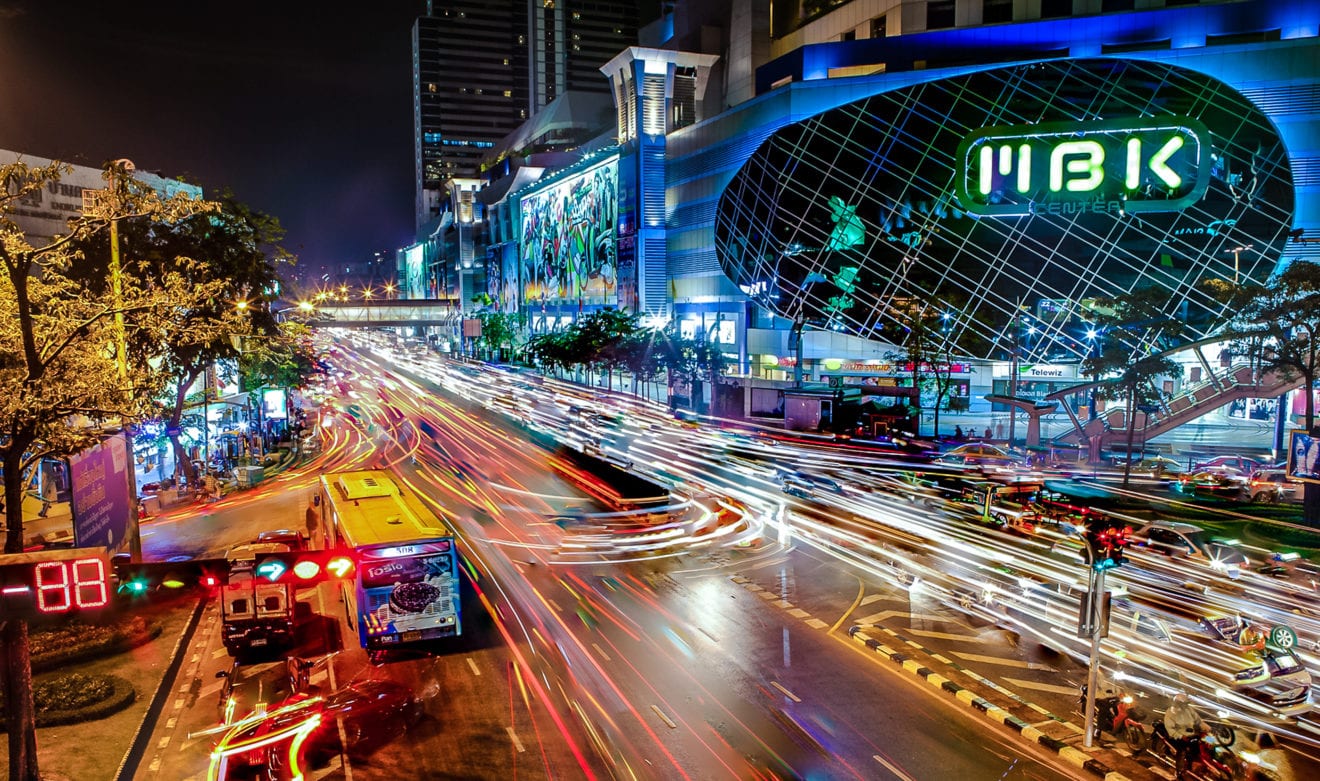
    Despite the challenges of low consumer purchasing power and the growth of online shopping, the supply of Bangkok retail space is continuing to grow.

    Colliers International Research expects about 300,000 sqm of new retail space to enter the Thai market this year.

    “Shopping malls have multiplied in numbers over the past few years, currently occupying the highest share in retail supply,” says Colliers International associate director Surachat Kongcheep.

    Around 114,350 sqm of new retail space opened in the first half of this year, pushing the total retail area in Bangkok to more than 7.6 million sqm. The new space mostly involves malls and office buildings in outer Bangkok, which comprises more than 60 per cent of total retail supply.

    Although Thailand’s economy has not fully recovered, many developers are still launching retail projects as long-term investments.

    Show DC shopping complex is the only large retail project to have opened so far this year.

    A source at IconSiam says the developer has postponed this year’s opening of the IconSiam Project, a 750,000 sqm retail space by the Chao Phraya River. Luxury Japanese department store Takashimaya is one of the project’s main anchors.

    Surachat says the growth of community malls, which boomed in Bangkok’s retail sector three years ago, started to slow down last year because of the developers’ lack of expertise in the retail business.

    As of the second quarter of this year, shopping malls in Bangkok and surrounding areas covered 4.4 million sqm, or 58 per cent of the capital’s total retail supply, which is about 7.6 million sqm.

    Even more malls

    Colliers’ research shows the major players in the retail sector will continue to increase the number of shopping malls in Thailand, especially in major cities, while other retailers will focus on expanding their portfolios internationally.

    Despite weak spending power, most hypermarkets, speciality stores and large shopping malls in Bangkok’s suburban areas are at 100 per cent occupancy level, says Surachat. Occupancy rates in all retail categories in the second quarter were nearly the same as those in the previous quarter, at rates above 96 per cent. Most of these areas are occupied by hypermarkets and surrounded by speciality stores and entertainment complexes.

    Meanwhile, shopping malls also show high occupancy rates as they are popular for local and international brands.
    “Bangkok’s total retail area has quickly risen within the past quarter through the addition of many new office buildings,” says Surachat. Office buildings have added retail space for tour and travel services, convenience stores and dessert cafes.

    Average rental rates of all locations in Bangkok in the first half of the year have risen by 5 to 10 per cent. Large shopping malls have the highest rents, says Colliers.

    Rental space in Bangkok’s city area can add up to more than THB3000 (US$88) a sqm per month, especially in central malls with direct access to BTS stations. Meanwhile, monthly rents in community malls beyond the main roads start at around THB800 a sqm.

    Despite the increasing average rental rate, Bangkok’s suburban community malls are not likely to raise their rents in the next two quarters because of their decreasing popularity, says Colliers.

  • Australian spies to disrupt cybercrime groups

    Australian spies to disrupt cybercrime groups

    Citing the growing cost of cybercrime in the economy, the Australian government has directed the Australian Signals Directorate (ASD) intelligence agency to utilize its offensive cyber capabilities to disrupt, degrade, deny and deter organized offshore cyber criminals.

    Currently used to help target, disrupt and defeat terrorist organizations such as Daesh, the offense capability is subject to stringent legal oversight and is consistent with Australia’s obligations under international law, the government announced.

    It will function as part of the Government’s crime-fighting arsenal and contribute to the broader strategy of preventing and shutting down safe havens for offshore cyber criminals. However, cyber security and law enforcement measures will continue to sit at the forefront of Australia’s response to cybercrime threats.

    This directive follows the Government’s public acknowledgement of ASD’s offensive cyber-capabilities when Australia’s Cyber Security Strategy was launched in April 2016, for which the Government contributed A$230 million.

    Additionally, the Defence White Paper contains up to A$400 million to enhance the cyber-capabilities of Australia’s defence forces.

    Cybercrime is conservatively estimated to cost the Australian economy A$1 billion ($766.1 million) annually. The recent WannaCry and Petya ransomware attacks have affected governments, businesses and individuals around the world. With constantly evolving strategies, cyber-criminals are increasingly targeting businesses directly.

  • Unilever Foundry launches co-working space in Singapore

    Unilever Foundry launches co-working space in Singapore

    Unilever Foundry, a Unilever-lead initiative for start-ups and innovators, has opened a collaborative working space at the firm’s regional office in Singapore – the first of its kind for Unilever.

    Dubbed Level3, the new collaborative space was launched by the Unilever Foundry to provide startups with the opportunity to interact and partner with Unilever and other ecosystem partners to solve business challenges. This ranges from marketing to finance, logistics, supply chain and customer development.

    “Level3 offers our business a direct connection with disruptive technologies and changemakers to shape the way we work — ultimately impacting people’s lives,” said Pier Luigi Sigismondi, president, South East Asia and Australasia. “Level3 is the springboard for startups to scale and build successful businesses.”

    Opening February 14, within the Unilever regional headquarters in Singapore, the 22,000 square foot workspace aims to connect startups to Unilever brands, and give them access to existing Unilever Foundry programs.

    Fifteen international and local startups are taking part, including Adludio, ConnectedLife, Datacraftt, EcoHub, GetCraft, Next Billion, Olapic, Snapcart, TaskSpotting and Try and Review.

    It comes at a time when industry experts are attempting to foster relations in Singapore between big multinationals and innovators.

    “The set-up of Level3 in Singapore — a global first for Unilever — is a strong testament to the growing vibrancy of Singapore’s startup ecosystem,” said Dr Beh Swan Gin, Chairman, Singapore Economic Development Board. “Level3 represents an emerging corporate innovation model that is aligned with EDB’s efforts to encourage collaborations between multinational companies and other enterprises such as startups.”

    Unilever tapped Padang & Co to design the building and manage all programs within the space. The innovation experts will host learning and networking opportunities, such as fireside chats, sharing sessions, mentoring programs and access to training and resources offered by technology partners.

    “We envision Level3 as a vibrant workspace offering global opportunities for entrepreneurs. We are passionate about connecting members of the startup ecosystem to spark collaboration and ignite innovation,” said Derrick Chiang, CEO, Padang & Co.

  • Startup dreams bring real money to Vietnam’s office market

    Startup dreams bring real money to Vietnam’s office market

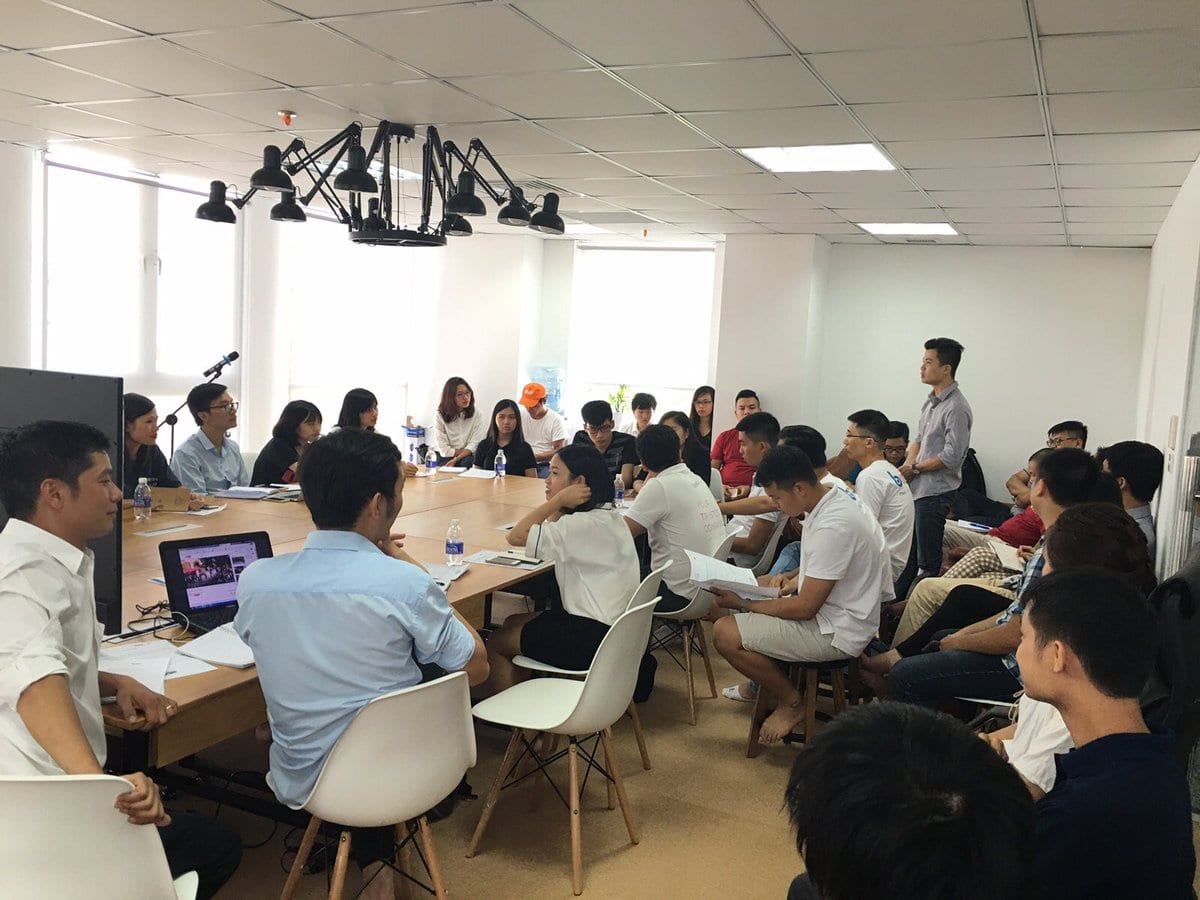
    Young companies looking for their first home are spiking the demand for small-sized office space. Tan, a self-employed real estate broker, paid $5,000 per month for the use of a six-story building in downtown Ho Chi Minh City. He then turned it into 15 office rooms with polished tiled floors, private bathrooms and internet connections.

    The offices, ranging from 25 to 40 square meters, are now rented out to startups at between VND5 million and VND10 million ($220 – $440) per month, said Tam, who asked to be identified by his first name only.

    For fledgling startups, which try to make every penny count, these small-sized offices with good locations fit their budget.

    Tan said currently 10 companies are his tenants, claiming a return of 20-25 percent.

    Local brokers said some estates in the city’s downtown areas are becoming mini-hubs for startups. These young companies give the office market in Ho Chi Minh City and Hanoi a much-needed boost as many landlords struggle to fill space, they said.

    However, according to Le Huu Dung, chief executive at brokerage Weland Investment, not just any space will do.

    “We have seen a strong growth in mini-office rentals in Ho Chi Minh City in the past two years following the recent startup boom,” Dung said. “While some investors have earned decent profits, others are losing money.”

    No one who starts out in such a tiny office expects to stay there for long, Dung said, referring to the fact that when startups become bigger, they will move to larger offices.

    Another flip side of the business is that this segment mainly relies on idea-stage companies, which may not even last longer than just a few months.

    Dung warned that if the occupancy rate is lower than 80 percent, the investor will start losing money.

  • MManila 53rd most expensive retail property location in the world

    MManila 53rd most expensive retail property location in the world

    The Philippines has slipped by a notch on the list of most expensive retail property locations this world due to lower-than-expected sales volume so far in the year, a global real estate services firm said.

    In a report, Cushman and Wakefield said in Metro Manila dropped from the 52nd spot last year. It cited a slowdown in the sales of luxury properties.

    “The luxury segment experienced a slowdown as lower-than-expected sales volumes in existing stores led to upscale brands re-evaluating expansion plans,” the report said.

    In spite of the slowdown, Cushman and Wakefield noted the Philippine market continues to enjoy the support of international brands.

    “International brands continue to drive the Philippine retail sector, supported by the rising disposable income of a growing middle class population,” the report noted.

    Global mid-tier brands accounted for a significant volume of leasing activity in recent quarters.

    “In particular, fast fashion retailers and F&B operators are leading the growth of the segment as brands such as Uniqlo and H&M continue to aggressively expand their footprints within and outside Metro Manila,” Cushman and Wakefield said.

    Growing competition among mall developers has led to the formation of new retail concepts as a way of expanding market share.

    “There is also a shift in the tenant mix, where mall operators are increasing the share of F&B in their retail developments,” the report said.

    By region, the Asia Pacific retail market has been seeing a cautious 2016.

    “Overall, retailers continued to be cautious in their store expansion across the region due to a number of concerns including continued global economic instability, and we see this trend continuing well into 2017, said Cushman and Wakefield Asia Pacific Head of Retail Theodore Knipfing.

    Once retailers start expanding, the focus would be on high-performing malls and high streets with strong pedestrian traffic, Knipfing noted.

    “All in all, despite the cautious outlook across the region, major international and regional retailers will have to eye overseas growth, as their respective domestic markets reach saturation point and investors demand results,” Knipfing said.

    Moreover, Upper 5th Avenue encompassing 49th—60th Streets in New York, USA remains number one on the list of most expensive shopping locations in the world at $3,000 per square feet.

    This is followed by Causeway Bay in Hong Kong at $2,878 per square feet and Avenue des Champs Élysée in Paris France at $1,368.

    Retail rent in Philippines, particularly Rockwell and Century City in Makati, is at $57 dollars per square feet.
  • Struggling Vietnam mall offers free space

    Struggling Vietnam mall offers free space

    Retailers are being offered free rent at a Vietnam mall to help the struggling landlord fill space.

    The Hoa Binh Company says it has “reserved” 25,000sqm of space in its Hoa Binh Green City shopping mall in Hanoi, Vietnam’s capital, to lease free for Vietnamese retailers.

    But the deal comes with a catch: the retailers must specialise in trading Vietnamese goods and have a profit margin of no more than 15 per cent. And foreign retailers are not eligible.

    Local players in the Vietnam mall industry are struggling to find tenants for the fast-growing ranks of modern format shopping centres, while more experienced international players, like Japan’s Aeon, are fully tenanted and trading well.

    The Hoa Binh Green City centre is on Minh Khai St in Hanoi. Qualifying retailers are being offered lease contracts ranging from one to five years.

    Nguyen Huu Duong, general director of Hoa Binh Company, told VietNamNet Bridge

    the company wants to help Vietnamese businesses boost sales of their products before foreign retailers have easier access to the Vietnam market through the Asian Economic Community alliance.

    One retailer considering the opportunity said if stores could get space for free they could afford to lower their prices and compete better with goods imported from China or Thailand.

    VietNamNet Bridge quoted Dr Pham Tat Thang, “a renowned trade expert” praising the proposal, saying it would “benefit consumers, manufacturers and the developer as well”.

    He said it is difficult for mall developers to find tenants right now because the real estate market remains “stagnant and gloomy and the economy (is) still sluggish”.

    The Hoa Binh Company believes that offering retailers free space will attract more shoppers to the centre, and encourage people to consider buying apartments constructed above the shopping mall.