Tag: SpaceX

  • Singapore Exchange Broadens Horizons with SpaceX and Grab Depository Receipts Launch

    Singapore Exchange Broadens Horizons with SpaceX and Grab Depository Receipts Launch

    Singapore Exchange (SGX), the country’s stock exchange, has announced that it will introduce depository receipts for three major tech companies: SpaceX, Grab, and Sea. This announcement was made on Tuesday, with the trading of the depository receipts set to commence the following day. The addition of these companies allows investors to trade in Singapore Dollars during local trading hours.

    The introduction of these three businesses expands the SGX’s offering to a total of 38 depository receipts, adding to those already available from companies across Thailand, Indonesia, Hong Kong, and the United States. This expansion serves to further diversify and enhance the offerings available to investors in the local market.

    The Impact on Retail Investors

    The SGX highlights that the inclusion of these companies, especially the launch of SpaceX’s depository receipts following its historic IPO last month, provides retail investors with unprecedented access to these equities. The depository receipts offer a simplified and convenient method for investors to gain exposure to these equities, using local currency.

    Grab and Sea, while both listed in the U.S., are headquartered in Singapore, further solidifying the SGX’s position as a global hub for investment. Bernice Tan, a representative from the Securities Market & Depository with SGX, expressed that the new addition mitigates traditional challenges such as foreign exchange friction and the complexities of overseas markets. She added that this allows investors to build a globally diversified portfolio in the Singapore Dollar, within a familiar trading environment.

    Questions & Answers

    What is the significance of introducing depository receipts for SpaceX, Grab, and Sea to the Singapore Exchange?
    Introducing depository receipts for these companies provides investors with more diversification options. It allows them to invest in these companies using local currency and during local trading hours.

    How does the introduction of these companies impact the SGX’s portfolio?
    The addition of SpaceX, Grab, and Sea expands the SGX’s portfolio to a total of 38 depository receipts, alongside those from Thailand, Indonesia, Hong Kong, and the U.S., enhancing its offerings.

    What advantages do these new additions offer to retail investors?
    The new additions provide a simplified and convenient way for retail investors to gain exposure to these equities, mitigating challenges such as foreign exchange friction and overseas market complexities.
  • SpaceX, Netflix, Boeing to join ‘biggest-ever’ US business mission to Vietnam

    SpaceX, Netflix, Boeing to join ‘biggest-ever’ US business mission to Vietnam

    SpaceX, Netflix and Boeing are among the companies joining the “biggest-ever” U.S. business mission to Vietnam next week to discuss investment and sales opportunities in the booming Southeast Asian nation, the organizer said.

    More than 50 companies, including defense, pharmaceutical and tech firms, will participate in the mission organized by the US-ASEAN Business Council, an industry body, according to a list seen by Reuters.

    The delegation is a sign of rising interest in the global manufacturing hub, which is benefiting from a shift away from China amid Sino-U.S. trade friction.

    Vietnam, with a population of 100 million people, also has a rapidly-growing consumer market as its middle class expands.

    “This is the biggest-ever mission in Vietnam,” said Vu Tu Thanh, the US-ASEAN Business Council’s representative in the country, noting that the body had been organizing these events for three decades.

    Streaming giant Netflix, which Reuters last month reported was planning to open an office in Vietnam, is among the companies joining the trip. Netflix did not respond to a request for comment.

    Aerospace manufacturers Boeing, Lockheed Martin and Bell will hold meetings with state-owned Vietnamese defense procurement companies, Thanh told Reuters, adding that it was the first time in about a decade that security firms had decided to join the annual mission to Vietnam.

    In December, the same companies held talks with Vietnamese government officials about the possible sale of helicopters and drones, as the country seeks new suppliers.

    “Helicopters is one of the things the companies hope to sell to the Vietnamese,” Thanh said, although he cautioned that defense deals took time to be completed and no immediate breakthrough was expected.

    Boeing said in a statement that its discussions with officials would focus on its growing partnership with Vietnam and ways to strengthen the country’s aviation and defense capabilities.

    Lockheed Martin and Bell did not respond to requests for comment.

    The majority of the companies joining the business mission already have a business or manufacturing presence in Vietnam, including Apple, Coca-Cola and PepsiCo, Thanh said, with some planning to expand it.

    Participants will have meetings with Vietnam’s top political and regulatory leadership, including with Prime Minister Pham Minh Chinh.

    Thanh said some companies were interested in Vietnam as a manufacturing hub and in providing services to increasingly wealthy consumers at a time when economic growth reached more than 8% last year.

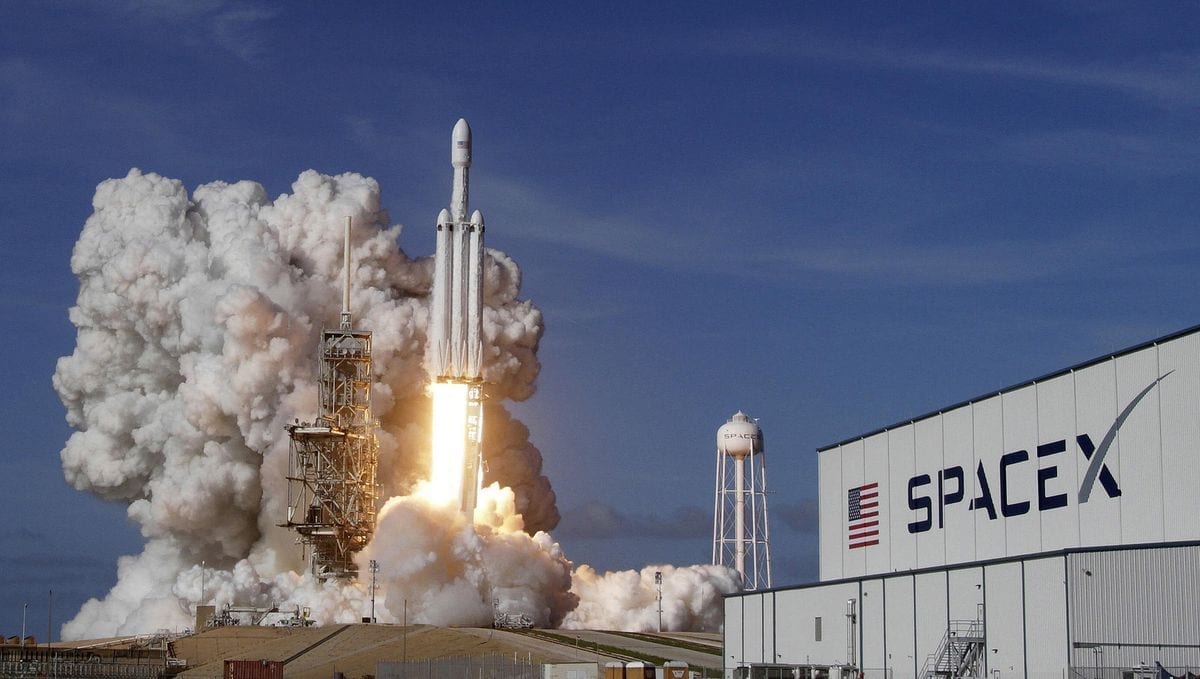
    Among them is SpaceX, which is looking to sell its satellite internet services to Vietnam and other countries in the region, Thanh said. SpaceX did not respond to a request for comment.

    The mission will also include semiconductors companies, pharmaceutical giants Pfizer and Johnson & Johnson, medical device maker Abbott, financial firms Visa and Citibank, internet and cloud companies Meta and Amazon Web Services, the list showed.

  • SpaceX To Roll Out Starink Satellite Internet Services by Year-End

    SpaceX To Roll Out Starink Satellite Internet Services by Year-End

    The Philippines’ Department of Information and Communications Technology (DICT) has announced that SpaceX’s Starlink satellite internet services will start to be available by the end of this year.

    A press conference was held to update the media on the latest developments in this much-anticipated project to address the digital gap in the country.

    In a press release, DICT chief Ivan John Uy said, “The DICT is closely following the directives of President Ferdinand Marcos Jr., that is to provide digital connectivity across the many islands of the Philippines by building the country’s digital infrastructure, that will also lead to effective e-governance.”

    He added, “This will bridge the digital divide in the country especially in an archipelagic country like the Philippines where laying fiber cables or establishing cell towers in mountainous areas can be challenging.”

    Starlink is expected to connect the rural and remote communities in the country, which are underserved by major telecom operators. This breakthrough is a response to the new government’s call for digitalization of the country, wherein Filipinos from remote areas can have access to education, health services and online banking, among other digital needs.

    SpaceX Executive Rebecca Hunter said that Starlink’s entry to the country does not mean competition with existing telecom players, but rather it will be a complementary connectivity solution to bridge the digital divide in the country.


  • Tesla and SpaceX billionaire Elon Musk buys a 9.2% stake in Twitter

    Tesla and SpaceX billionaire Elon Musk buys a 9.2% stake in Twitter

    Billionaire Elon Musk, CEO of SpaceX and Tesla, has recently acquired a three billion dollar Twitter stake, which equates to about 9.2% of the social media company, or 73,486,938 Twitter shares.

    The news comes from a US securities filing, and according to the BBC, the acquisition, which reportedly happened on March 14, has now resulted in Twitter’s shares jumping up 25% in pre-market trading. With his acquisition, Musk now owns a larger Twitter share than the site’s original co-founder and until recently CEO Jack Dorsey, who currently owns 2.25%.

    Being a regular and prolific Twitter user, Elon Musk’s official profile currently has over 80 million followers. He’s used the platform to not only share his views on current events and update people on what his companies are up to, but to interact with fans, often Tesla users, and has been known to regularly share witty memes.

    This has created an image of being a different and fun, relatable “kind of billionaire,” as opposed to the likes of Microsoft co-founder Bill Gates and Amazon founder Jeff Bezos.

    Notably, the billionaire has used Twitter to share his views on the subject of free speech, and has been critical of social media sites, Twitter included, in regards to it.

    The 50-year-old billionaire’s first breakthrough was through co-founding x.com, which was later renamed to PayPal and sold to eBay for $1.5 billion. Currently Musk is most well-known as the CEO of electric car company Tesla and aerospace manufacturer SpaceX.

  • Former SpaceX Engineers Are Making Electric & Self-Driving Railway Vehicles

    Former SpaceX Engineers Are Making Electric & Self-Driving Railway Vehicles

    Tesla is not the only company that’s run by Elon Musk. In fact, Musk used some of the money he made with SpaceX to invest in Tesla to eventually gain control of the electric car maker. And SpaceX has also been categorized by Musk as some of the most important work he is doing in his life. But as it happens some of his former SpaceX engineers have quit and formed a startup that’s looking to reinvent the railway industry.

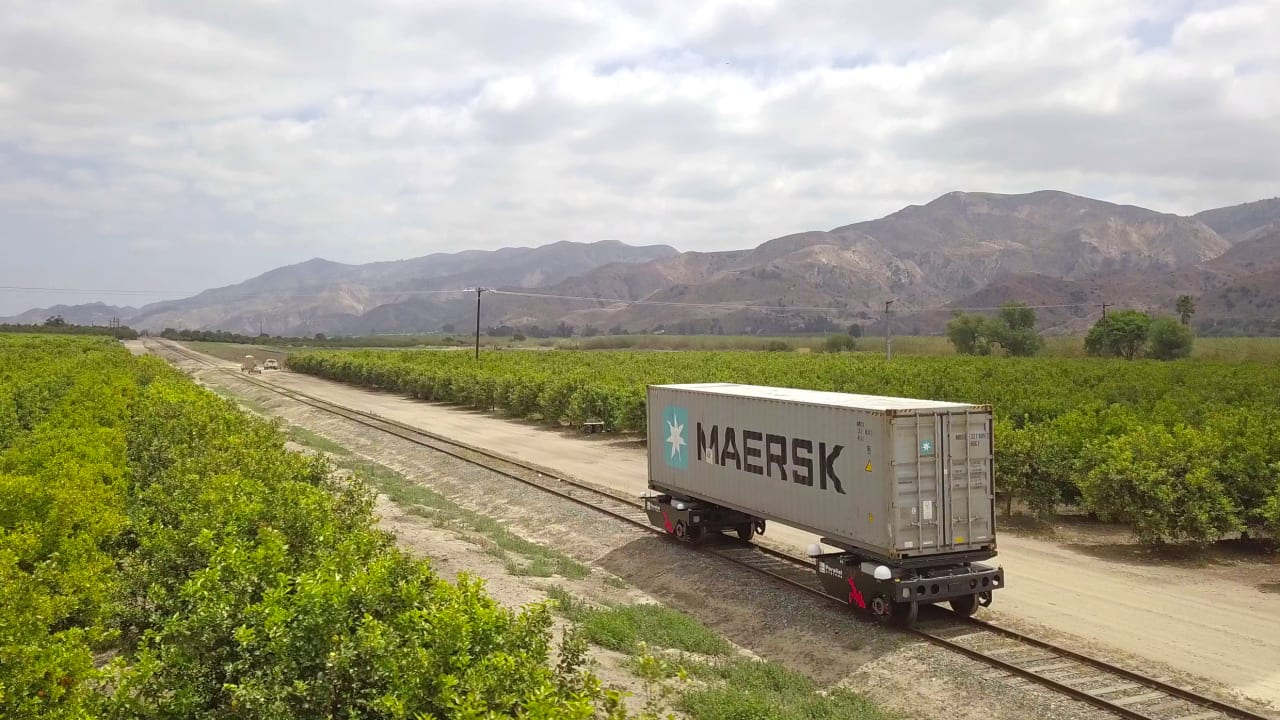
    Parallel Systems, founded by former SpaceX engineer, Matt Soule who partnered with a bunch of his former SpaceX colleagues, intends to disrupt the railway industry with electric powertrains and autonomous vehicle technology that’s taking over the consumer automotive space. The company has received $50 million in a Series A funding round and only recently came out of stealth

    Their idea is to create a small autonomous electric-powered rail vehicle. The idea is for a cargo vehicle that enables one to drop the cargo on a Parallel Systems vehicle and have it move without the need for the entire train to be unloaded. Each container can do individually move 800 km or band together to be even more efficient.

    This would allow smaller railroads to be reopened and new ones to be built to deliver cargo closer to customers and take some market away from trucks. These vehicles in question can also take in an impressive payload of 128,000 pounds which is twice the capacity of a semi-truck. So far though, their prototype vehicle can only do 80 km.

  • Lyre’s latest fundraising round values company at $500 million

    Lyre’s latest fundraising round values company at $500 million

    Fast-growing non-alcoholic spirits brand Lyre’s, has raised $37 million in a round that values the business at A$500 million less than three years after it launched. The funding round was led by a new investor, D Squared Capital, alongside existing investor, Morgan Creek Capital Management, which has also backed Alibaba, SpaceX, Lyft, and Allbirds). Other previous investors joining the fresh round include DLF Venture, VRD Ventures, and Maropost Ventures.

    The Sydney-based business previously raised $16 million in a seed round in September 2020.

    Co-founders Mark Livings and Carl Hartmann launched Lyre’s in April 2019 with the goal of creating non-alcoholic versions of the world’s most popular spirits. It now produces 14 non-alcoholic spirits with the distinct flavors of gin, whisky, vermouth, amaretto, absinthe, rum, and others, as well as a range of ready-to-drink pre-mixed non-alcoholic cocktails, from an Amalfi spritz to and rum and cola and G&T.

    With around 20% of the population not drinking alcohol, consumption trends heading down among existing drinkers, and an emerging, liberated middle class in Muslim countries looking to have fun and socialize while eschewing alcohol.

    CEO Mark Livings said the latest capital injection will be used predominantly for marketing, and create more than 50 new jobs in sales and marketing, production, logistics, finance, and e-commerce.

    Lyre’s products are now available in more than 60 countries, up 50% in 2021, including in the Middle East and China. This year also saw the business manufacture its one-millionth bottle, and develop six new product variations including Classico, their first no-alcohol Prosecco-style sparkling which launched to market in early November. The company now has production facilities in the UK, Germany, Australia, and the US.

    The drinks startup has also established an R&D division in partnership with beverage technology giant Döhler.

    Livings said range now covers more than 90% of the world’s best-selling cocktails.

    “Millennials and older Gen Zs are drinking less alcohol than any generation before them, but the mindful drinking movement transcends generations and cultural borders. We’re not only growing our business – we’re expanding the whole category, entering territories like the Middle East and Far East virtually uncontested,” he said.

    “The pace of growth we’re seeing is exceptional. We sold our first bottle in 2019 and today we’re selling one at least every 30 seconds. On our current trajectory, Lyre’s is set to become the fastest independent beverage brand to reach Unicorn status.”

    Off-premise sales of low-alcoholic and non-alcoholic drinks have jumped in 12 months from $291 million to $3.1 billion. In Australia, the category is expected to grow by 16% over four years to 2024.

    D Squared Capital Managing Director Daniel Grossman said the company is forging a new path in a critical category.

    “The no/low alcohol beverage market is one of the fastest-growing markets in F&B and is showing similar characteristics to plant-based milks, meats, and other mindful consumer categories,” he said.

    “Lyre’s leading product, brand, and range of award-winning SKUs have proven that they are the industry leader and we are excited to be backing the best in class company.”

  • Elon Musk Sells $5 Billion In Tesla Shares After Twitter Poll

    Elon Musk Sells $5 Billion In Tesla Shares After Twitter Poll

    Tesla Chief Executive Elon Musk sold about $5 billion in shares, the billionaire reported in filings on Wednesday, just days after he polled Twitter users about selling 10% of his stake. In his first share sale since 2016, Musk’s trust sold nearly 3.6 million shares in Tesla, worth around $4 billion, while he also sold another 934,000 shares for $1.1 billion after exercising options to acquire nearly 2.2 million shares. The 4.5 million shares equate to about 3% of his total holdings in the electric vehicle manufacturer, which makes up the vast part of his estimated $281.6 billion fortune, according to Forbes.

    Musk on Saturday polled Twitter users about selling 10% of his stake, helping to push down Tesla’s share price after a majority on Twitter said they agreed with the sale. The stock sank 12% on Tuesday in a multi-day selloff that endangered the company’s position in the $1 trillion club, but recovered 4.3% on Wednesday.

    The options-related sales were set up in September through a trading plan that allows corporate insiders to establish preplanned transactions on a schedule, the filing said. The sales of the option-related shares paid for associated taxes. It was not clear how or whether the trading plan related to Musk’s Twitter poll. Tesla did not respond to a request for comment.

    The additional share sales were separate and provide Musk with sizeable reserves of cash, given his wealth is largely tied to his stakes in Tesla and SpaceX. Musk has more than 20 million further stock options that are due to expire in August of next year. If Musk carried out the 10% stock sale plan, it would be a slight negative near term, said Mark Arnold, chief investment officer at Hyperion Asset Management in Brisbane where Tesla is the top holding in its global fund. “But the stock is pretty liquid and its not a huge percentage of total issued shares, so it shouldn’t have that much of an impact … we’re quite comfortable with the outlook for the business,” he said.

    While Tesla has lost close to $150 billion in market value this week, retail investors have been net buyers of the stock. Some 58% of Tesla trade orders on Fidelity’s brokerage website on Wednesday were for purchases, rather than sales. Retail investors made net purchases of $157 million on Monday and Tuesday, according to Vanda Research. Tesla is now up more than 51% in 2021, thanks largely to an October rally that was fueled by an agreement to sell 100,000 vehicles to rental car company Hertz.

    “The company itself is on fire, with strong results,” said Tim Ghriskey, a senior portfolio strategist at New York-based investment management firm Ingalls and Snyder. Bullish sentiment returned to Tesla’s options on Wednesday, with about 1.1 calls traded for every put. Calls are typically used for bullish trades, while buying puts shows a bearish bias. The company’s options accounted for about $109 billion in premium changing hands over the last two weeks, or about one in every three dollars traded in the U.S.-listed options market, according to a Reuters analysis of Trade Alert data.

  • SpaceX satellite Internet faces regulatory hurdles in Vietnam

    SpaceX satellite Internet faces regulatory hurdles in Vietnam

    U.S. aerospace company SpaceX can only launch its satellite Internet service Starlink in Vietnam if it ties up with a local partner, Vietnam’s Department of Telecommunications said.

    SpaceX, owned by South African-American billionaire Elon Musk, recently announced that Starlink, now in its beta testing phase, would be launched in Vietnam next year and customers could preorder it for $99.

    However, telecommunications and Internet companies are in the list of conditional businesses, which requires the foreign enterprises to partner with a Vietnamese enterprise that is licensed to provide telecom services or establish a joint venture.

    According to the Department of Telecommunications, foreign enterprises are not allowed to independently provide internet and telecommunication services in Vietnam.

    The Department of Telecommunications told VnExpress that the company has yet to apply to launch the service in Vietnam.

    The department said prospective subscribers should consider carefully before making the pre-order since “it is unsure if Starlink can provide satellite Internet services in Vietnam.”

    The pre-order is currently available in 15 countries, according to its website.