Retail News CRM

Tag: spain

  • Polene Infuses Local Heritage into Design of First Flagship Store in China: Sustainable Luxury in Beijing’s Taikoo Li Sanlitun

    Polene Infuses Local Heritage into Design of First Flagship Store in China: Sustainable Luxury in Beijing’s Taikoo Li Sanlitun

    Polene, a luxury brand hailing from Spain, has inaugurated its first-ever flagship store in China. The new establishment is situated in Taikoo Li Sanlitun, located in Beijing.

    Store Design and Features

    Visitors to the store are initially greeted by a large magnolia installation at the entrance, serving as an attraction for anyone entering the location. The store’s interior design showcases a harmony of modern aesthetics with elements of traditional Chinese craftsmanship.

    The store displays a blend of walnut wood, leather, and Xuan paper, which is a traditional Chinese paper made from Blue Sandalwood tree fibres and rice straw. This incorporation of local elements is a nod to the Chinese culture and heritage.

    Polene has also demonstrated its commitment to sustainability through its innovative use of materials. The brand has upcycled 12 tonnes of leather scraps, transforming them into compressed leather bricks that are extensively used in the store’s interior. This usage of recycled leather offers a distinctive, mineral-like texture, while simultaneously promoting sustainable practices.

    A Three-Level Journey

    The flagship store also houses a unique, three-storey experiential area named “Craft at Work – A Theatre of Artisanship”.

    The journey begins with a representation of a Paris workshop, complete with patacabras, small hammers used for leather crafting. The journey continues with a scene that pays homage to Ubrique, the Spanish town known for Polene’s leather production. The final stage of this experiential journey is a unique setting that transforms a leather atelier into a theatrical environment. Here, miniature bags traverse overhead conveyors, providing a fascinating spectacle alongside larger sculptural pieces.

    New Brand Ambassador

    In tandem with the flagship store’s launch, Polene has announced the appointment of actress and singer Zhu Zhu as its new brand ambassador. The brand praises Zhu Zhu for her confidence and effortless poise, which beautifully encapsulate Polene’s refined, minimalist aesthetic.

    Questions & Answers

    What is unique about the design of Polene’s flagship store in Beijing?
    Polene’s flagship store incorporates traditional Chinese elements such as walnut wood and Xuan paper into its contemporary design, alongside recycled leather bricks made from upcycled leather offcuts.

    What is the “Craft at Work – A Theatre of Artisanship” at Polene’s flagship store?
    This is a three-storey experiential area that guides visitors through a journey of craftsmanship, from a depiction of a Paris workshop to a tableau that transforms a leather atelier into a theatrical setting.

    Who is the new brand ambassador for Polene?
    The new brand ambassador for Polene is actress and singer Zhu Zhu, chosen for her confidence and poise that embody Polene’s refined, minimalist aesthetic.

  • Spain’s Mango plans U.S. expansion after China retreat

    Spain’s Mango plans U.S. expansion after China retreat

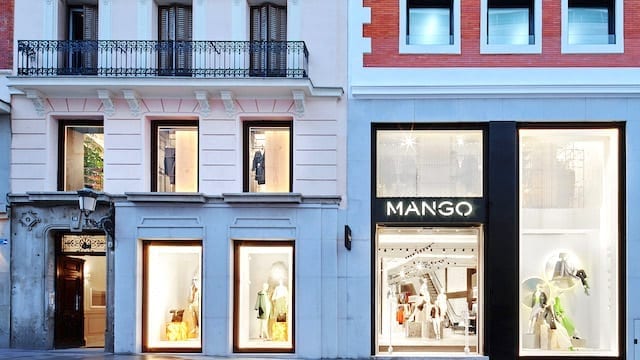
    Chief Executive Officer Toni Ruiz said that Spanish fashion retailer Mango is focusing on U.S. expansion after turning its back on China.

    After two previous attempts failed, mango is returning to the United States to offer higher-priced clothes meant for special occasions and parties. It will target states where online sales are already strong.

    The brand is already gaining more recognition in the U.S., dressed actress Amber Valletta for the Oscars after-party on Sunday, Ruiz told Reuters.

    “Something has changed,” he said in an interview at the company’s headquarters near Barcelona. “They now have a different and better perception of European brands.”

    Mango’s U.S. relaunch began with opening a flagship store on New York’s Fifth Avenue in May 2022. That was followed by expansion in Florida. This year, it will open stores in Texas, Georgia and California.

    The company hopes to have 40 stores in the U.S. by 2024, compared with 10 at present. That would place the U.S. in its top five global markets.

    Growth will be supported by the extension of a logistics centre in Catalonia, allowing it to shift 160 million items a year to serve shops and online customers globally, the company said.

    In contrast, Mango closed its remaining two stores in China last year. It maintains four franchise outlets and online sales through Alibaba’s Tmall e-commerce platform.

    “We are divesting in China,” said Ruiz. “We find it unattractive and have decided that it is not the priority for the next three years.”

    Mango reported record sales last year, helped by selling more items at higher prices. Its biggest rival, Inditex-owned label Zara, is expected to report record sales on Wednesday, partly due to its aggressive U.S. expansion.

    The recent aggressive entry of Chinese fast-fashion brands Shein and Temu into the same market is not a concern for Mango, said Ruiz.

    “It’s not our war,” he said. “If you were fighting with these brands you would be constantly lowering prices.”

  • UBS Bankers in Spain Jumping Ship

    UBS Bankers in Spain Jumping Ship

    UBS sees bankers and managers depart from its Spanish unit prior to its sale to a local competitor. A decision by UBS last year to sell its Spanish unit to Singular bank appears to have led to an exodus of at least eight private bankers and managers, Bloomberg reported Wednesday.

    Two of the departing bankers are said to handle very wealthy clients, while another investment manager with over 16 years experience is joining them.

    The departures add to those who left since UBS announced the sale in October. They include Jose Maria Abril Taboada, who joined Spain’s Bankinter in February, and Jose Maria Gil de Santivanes who in January left for Credit Suisse, the report adds.

    UBS’s European bank led by manager Christine Novakovic, is selling its Spanish branch to Singular Bank, which specializes in digital solutions. Investment banking and fund sales activities in the country are not part of the sale, however.

    The sale, which is expected to be concluded in the third quarter of this year, was to include all client assets and the UBS team in Madrid. In that respect, some new calculations might be due.

  • Revolut Expands as a Bank

    Revolut Expands as a Bank

    Europe’s most valuable fintech has already amassed 18 million app users worldwide. Some of those are about to become bank customers.

    The London-headquartered neobank is launching as a bank in ten additional European markets, lifting the number of countries it operates in to 28, it said in a statement. The challenger bank can now protect client deposits up to 100,000 euros in Belgium, Denmark, Finland, Germany, Iceland, Lichtenstein, Luxembourg, Netherlands, Spain, and Sweden, using its European specialized banking license.

    In a few clicks clients from these countries will be able to upgrade to Revolut Bank from within the app, it said.

    Deposits will be secured by the Lithuanian State company deposit and investment insurance, it added.

    Over the past few years, Revolut’s rapid level of growth has added pressure on Swiss banks to boost their digital services. Since its inception in 2015 the company has attracted more than 18 million customers globally, it says on its website.

  • UBS Selling Onshore Business in Spain

    UBS Selling Onshore Business in Spain

    Switzerland’s largest bank is giving up its business with its Spanish onshore clients. This follows a similar move in Austria less than a year ago.

    UBS is selling its Spanish office to Singular Bank according to an emailed statement Monday. This comes after months of speculation that many European markets simply aren’t large enough to warrant a presence.

    Without disclosing the deal amount, the Swiss bank writes in its statement that all client assets, as well as the UBS team in Madrid, are included in the transaction. Investment banking and fund sales activities in Spain will remain with UBS.

    The deal is expected to be completed by the third quarter of 2022.

    Last December UBS Europe sold its business with Austria’s onshore wealth to Vaduz-based LGT Bank. The Spanish onshore business holds an estimated 9 to 12 billion euros ($9.8 billion to $13 billion) in assets under management.

    The Austrian business managed 4 billion euros in assets at the time it announced the sale. Under its three-year plan for 2021 to 2023, UBS Europe is making staying profitable despite the turbulent economic backdrop its top priority.

  • Papa John’s launches in Cambodia

    Papa John’s launches in Cambodia

    US pizza chain Papa John’s is launching in Cambodia with 15 restaurants scheduled to open during the next three years. The company opened its flagship store in Phnom Penh last month.

    “Papa John’s Cambodia team is truly passionate about pizza,” said Peter Xu, Papa John’s Cambodia franchisee.

    “With our ‘Better ingredients – Better pizza’ promise, we look forward to providing local pizza lovers with quality products and outstanding services.”

    Xu also owns a Papa John’s franchise in New York and other business ventures in Cambodia.

    Jack Swaysland, Papa John’s COO, international, said that following a record year of sales and growth, Papa John’s is well-positioned to accelerate international development, a key pillar for the brand’s long-term growth.

    Papa John’s has restaurants in 48 countries, with the latest new openings in France, Spain, Tunisia, Iraq, the Netherlands, Morocco, Kazakhstan, Kyrgyzstan, Poland, the Bahamas, Pakistan, and Portugal. The company is eyeing expansion in Brazil, Japan, and Southeast Asia.

  • Steel industry expected to recover this year

    Steel industry expected to recover this year

    Vietnam’s steel industry is expected to recover this year with rising export orders, thanks to improved global demand and surging domestic consumption.

    Market leader Hoa Phat Group last month exported over 12,000 tonnes of products, mostly cold-galvanized steel, to North and South America.

    This followed an export of 10,000 tonnes in January to Belgium and Spain.

    The company targets producing 300,000-400,000 tonnes of steel products this year, 30-40 percent of which are likely to be exported.

    Its competitor Hoa Sen Group last month set a new export record of 121,000 tonnes of galvanized steel worth more than $100 million. The group has a network of over 85 countries and territories, with main markets being the U.S, Mexico, Europe, and Southeast Asia.

    Vietnam’s steel industry is expected to see growth of 5-6 percent this year, with global demand set to rise by 4.1 percent thanks to a recovery in developed markets, according to the Vietnam Steel Association (VSA).

    Other drivers for growth include expectations of rising public investment in infrastructure, the recovery of the real estate market and more foreign direct investment, said VSA deputy chairman Trinh Khoi Nguyen.

    The industry started 2021 strongly, with a 61 percent year-on-year rise in production volume to 2.65 million tonnes.

    Domestic sales in the period rose 55 percent to 2.12 million tonnes, while exports rose 53 percent in value to $553 million.

    These figures indicate robust recovery prospects this year after VSA saw half of its members reporting plunging revenues last year, especially in the first and second quarter, due to Covid-19 impacts.

    However, trade officials have warned that rising safeguard measures could hurt the industry.

    Last month, Indonesia imposed an anti-dumping duty of 3.01-49.2 percent on Vietnam cold steel sheets.

    In January, Malaysia revised duties on cold-rolled coils of alloy and non-alloy steel from Vietnam to 7.42-33.7 percent for the period between January 24 and May 23.

    The U.S. and Canada have also slapped anti-dumping duties on Vietnam’s steel products in recent years.

    The Trade Remedies Authorities of Vietnam has advised local steelmakers to diversify their markets to avoid being punished with such duties.

    Nguyen Thi Thu Trang, director of the Vietnam Chamber of Commerce and Industry’s (VCCI) WTO Center, said that steel producers need to prepare themselves with knowledge of regulations on international safeguard measures and cooperate with other countries’ trade authorities to resolve issues.

  • Ecoalf opens first Japanese flagship

    Ecoalf opens first Japanese flagship

    Spanish fashion brand Ecoalf has opened its first Japanese flagship store, in Tokyo.

    Located in Shibuya district, the Ecoalf store spans two floors and offers a wide selection of products including the label’s latest collection.

    Designed by Japanese architect Yohei Sakamaki, the store features a sustainability concept ‘Sharing Ecology’, using natural materials such as Japanese bamboo, stone and sand. Interior features include a giant rock named “Date-Kanmuri-Ishi” and wooden panels to create a warm yet modern ambiance.

    A black staircase leads customers to the upper floor which is dedicated to #Actnows, a monthly event held by the brand to raise awareness of sustainability issues.

    “Our aim is to raise awareness of the need to protect the planet and we will continue to accelerate this message,” said Javier Goyenechem, president and founder of Ecoalf.

  • Spanish fashion label Desigual set for India launch

    Spanish fashion label Desigual set for India launch

    Spanish fashion label Desigual is set to launch in India. The firm is being introduced to the territory by local retail group Tablez, which is first taking the brand online via Myntra before nationwide openings of physical stores next year. Six stores are planned for top-category cities before openings in multiple tier-2 cities.

    “It gives us immense pleasure to bring the international fashion brand Desigual to India,” said Tablez MD Adeeb Ahamed in a Fibre2Fashion report “The brand’s clothing exudes a character that is unique, which helps people express themselves and be the most authentic.

    “Desigual’s characteristic vibrant designs with a flamboyant splash of colors has a huge potential in the Indian market,.”

    “India is a market whose values are very similar to Desigual’s,” said US and CEEMEA VP Asia Pacific Jordi Balsells. “It’s also a young market that is growing and displays great potential. We believe very strongly in India’s potential in the coming years.”

    Desigual operates in nearly 90 countries via 10 sales channels. It is among several leading global brands being introduced to the territory by Tablez, which currently operates more than 70 outlets globally, with plans to expand to 300 outlets by next year.

  • El Corte Ingles inked global distribution deal with Alibaba

    El Corte Ingles inked global distribution deal with Alibaba

    Spanish department store operator El Corte Ingles is to open a flagship store on Alibaba’s Tmall as part of a broad collaborative approach to reaching Chinese consumers. In a wide-ranging agreement, El Corte Ingles and Alibaba will enable a raft of Spanish and international brands commonly sold in El Corte Ingles department stores, to be sold worldwide via both AliExpress and Tmall.

    AliExpress will consider opening a number of physical stores at El Corte Ingles shopping centres in Spain to create a unique and engaging shopping experience while promoting some of its latest products available to Spanish shoppers. This follows a trial pop-up store in the El Corte Ingles Sanchinarro shopping centre in Madrid earlier this month during Alibaba’s 11.11 Global Shopping Festival.

    El Corte Ingles and Alibaba say they will also explore closer cooperation in delivery and supply-chain infrastructure and channels, allowing Alibaba to benefit from the Spanish company’s logistics knowledge and capabilities in the country, and explore the use of its distribution centres as collection points for online purchases made through AliExpress.

    Smart payments

    El Corte Ingles signed an agreement with Alibaba’s Alipay in March to bring seamless payment experience to Chinese tourists visiting Spain. This may now be expanded, as El Corte Ingles and Alibaba will work on creating new shopping experiences for Chinese visitors.

    El Corte Ingles CEO Victor del Pozo said the agreement will allow the two companies to combine both the physical and online worlds to offer the best shopping experience to its customers.

    “Together, we are writing the future and placing ourselves at the forefront of trade and technology. El Corte Ingles owns department stores in the best locations of the main cities of Spain and Portugal, and is granted with the confidence and trust of national and international customers. All of this, joined to Alibaba’s technology, will allow us to offer a proposal of unbeatable value.”

    Alibaba Group MD for Italy, Spain, Portugal and Greece, and BDM for Tmall in Europe, Rodrigo Cipriani Foresio, said digital transformation and innovation in all fields are fundamental drivers of Alibaba’s mission of making it easy to do business anywhere, with the ultimate goal of better serving consumers and stakeholders worldwide.

    “Hence, we are confident that the expertise and skills brought by both companies will generate incredible value and opportunities as the cooperation takes shape.”

    El Corte Ingles, which opened in 1940, is Europe’s largest chain of department stores.

  • Apple Piazza Liberty now open in Milan

    Apple Piazza Liberty now open in Milan

    Apple Piazza Liberty has opened in Milan, the latest significant global flagship for the tech retailer.

    The store is an ensemble of two fundamental elements: a stepped plaza and a fountain. Located just off the Corso Vittorio Emanuele – one of the most popular pedestrian streets in Milan – visitors are drawn towards the piazza by the sight of the dramatic new fountain.

    Designed by London-based Foster + Partners, which has an ongoing relationship with Apple to design flagships globally, the store is described as “a celebration of the joys of city life” and embodying Milan’s dynamic nature with a signature water feature which is an “interactive, multisensory experience”.

    Visitors enter the fountain through a glass-covered entrance enveloped by the sights and sounds of vertical jets of water that splash against the 26-foot (8-metre) high glass walls.

    A Foster + Partners spokesperson likens the experience as “an immersive recreation of the childhood game of running through fountains” with an experience which changes throughout the day as sunlight filters through the water. At night, the glass ceiling creates a kaleidoscopic effect, with the water falling down the walls, its reflections travelling infinitely up into the sky.

    The fountain flows down into the base of the amphitheatre, a new social hub and an outdoor extension of ‘Today at Apple’. The amphitheatre is defined by broad and sun-soaked stone steps descending below street level and opening up to a stage, backed by a second fountain’s wall of water. The entire plaza is newly created and paved with Beola Grigia – a typical local stone from Lombardy, and surrounded by 21 new Gleditsia Sunburst trees.

    “The interior is a bright, monolithic space, metaphorically carved out of the same stone as the plaza above,” says Foster + Partners. “The ceiling follows the stepped profile of the amphitheatre, with skylights and backlit ceiling panels that innovatively combine artificial and natural light. Through the roof and stairs, warm shafts of sun penetrate deep into the sunken store, connecting the interior with the light and rhythm of Milan and giving it a feel of a spacious daylight-filled art gallery.”

    The stairs leading into the store consist of polished stainless-steel clad cantilevering treads that also become a sculptural light installation, the designers say creates a theatrical and exciting experience.

    View the full gallery below (7 images) :

  • Spanish wine made for Asia

    Spanish wine made for Asia

    The practice of dining together and sharing plates is something Asian and Spanish cultures have in common.

    So Spanish winemaker Alejandro Garcia Lopez, director of Rioja winery Vina Pomal, wanted to make a wine to suit the shared dining experience in Asia. He created the Vina Pomal Edicion Limitada 2012, which will be sold exclusively in Asian markets, including Singapore, China, Japan and Indonesia.

    “In Asia, you have different profiles of food with spices, flavours and aromas, so to complement that, I wanted to make a special-edition wine with a good structure and body, and the potential to age,” he tells The Sunday Times during a promotional trip in Singapore last week. “We also wanted the wine to be easy to pair with food.”

    Vina Pomal is the flagship label of Bodegas Bilbainas, one of Rioja’s oldest wine estates. Only 10,000 bottles of the Edicion Limitada – made of 100 per cent Tempranillo grapes – have been produced.

    The grapes are sourced from only old vines that are between 45 and 55 years old and planted in the clay and limestone soil typical of the region. Some of the land on which they are grown has been worked by the winery since 1904.

    The climate of the Riojan capital of Haro, where the winery is located, is also influenced by the Atlantic Ocean, which lies 160km to the north.

    “So the grapes have a really long ripening process because of the climate, which makes the tannins very soft,” Mr Lopez, 40, says.

    The grapes are handpicked from three different vineyards – they add up to no more than 2ha of land – within the 250ha property. Each vineyard contributes a different quality, including fruitiness and minerality, to the blend.

    Even the ageing process had to be tailored to these grapes. Since the grapes were from old vines, Mr Lopez decided to age the wine in French oak barrels instead of American ones that are typically used for Rioja wines. For Edicion Limitada, 70 per cent of the wine is aged in new oak barrels and the remainder in barrels that have been used for a year.

    French oak, Mr Lopez notes, results in a wine “with more structure and flavours like tobacco, wood and spices”.

    After 18 months in the barrel, the wine spends another year ageing in the bottle.

    The result is a deeply aromatic Rioja with black fruits and spiced flavours on the nose, and a velvety soft texture and long finish on the palate. Even though Edicion Limitada has spent six years ageing, the wine still tastes fresh.

    It also does not adhere strictly to Rioja’s wine classification, which is based on how long the wine spends in the barrel. One that is labelled Rioja spends only a few months in oak before it is bottled, while Gran Reserva must be aged in oak for at least two years and then spend three more years in the bottle.

    But Mr Lopez did not want to feel restricted when creating the Edicion Limitada.

    “We wanted to feel free as winemakers to do what the wine needs, not what the rules require,” he says.

    While the wine can be drunk immediately, he adds that it also has great ageing potential.

    “It is made of a selection from our best vineyards and, because it spends such a long time in the barrel and bottle, it can also be opened in the next 10 to 20 years,” he says.

    Vina Pomal Edicion Limitada 2012 has a recommended retail price of $85 and can be ordered from its distributor, Singapore Beverages, or at Cellarbration stores in Circular Road, Seletar Mall, Ubi Road and Marina Square.

  • Sephora concept stores debut in France and Spain

    Sephora concept stores debut in France and Spain

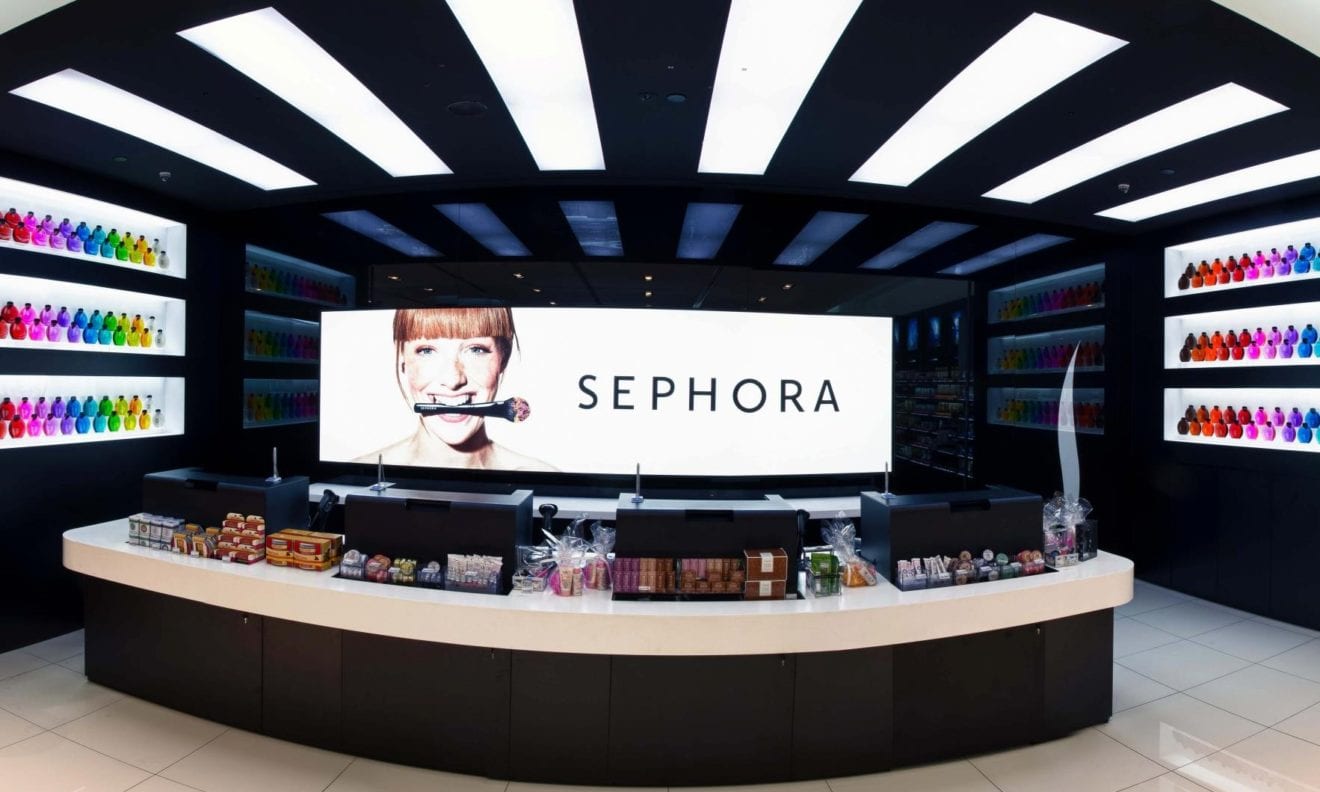
    New Sephora concept stores have opened in Spain and France, hinting at the LVMH-owned cosmetics retailer’s future design direction.

    Unashamedly targeting millennials, the brand is trying to increase dwell time in-store and encourage younger shoppers to buy into perfume.

    First introduced in France, the hyper-connected stores bring customers what Sephora describes as “a unique beauty experience in an unprecedented service-driven environment, perfectly expressing the beauty retailer’s play, share and shop philosophy”.

    “Following the tremendous success of two pilot stores opened in March in Nantes and Val d’Europe in France, Sephora has brought its new store concept to Spain. This new concept revolves around a fascinating variety of services, letting Sephora offer a groundbreaking beauty experience, transforming beauty shopping in Spain, where the brand has been present since 1998,” the company said in a statement.

    The new design engages customers right from the entrance, with a giant slide for shoppers who are happy to eschew escalators or the piano stairway.

    “As at the two French pilot stores, these newest concept stores include a trend zone with a selection of hot new products, a beauty hub for personalised advice and beauty classes to learn about specific makeup topics. With four distinct experience spaces – compared with one or two at classic stores – the new concept stores give customers access to an expanded range of brands, from the latest on-trend products from South Korea to para-pharmaceutical products, and engage with a broader audience, especially millennials.”

    New services include the Dry Bar by Rizos for a 15-minute hairstyle touch-up and the Drops fragrance experience, designed to introduce younger customers to perfume by letting them personalise the bottle of their chosen fragrance in a fun, interactive way.

    “With these two new concept stores Sephora introduces a groundbreaking shopping experience in Spain, as the brand continues to expand the concept throughout Europe, adapting it to each country for an even more exclusive experience,” the company said.

  • Capacity and demand grows on Asia routes from Spain

    Capacity and demand grows on Asia routes from Spain

    International outbound flights from Spain were up by 2.7% last year with the biggest increase seen from countries in Asia Pacific; a trend that looks like it will continue in 2017, says travel analyst ForwardKeys.

    Passengers to Asia Pacific destinations were up by 15.7% on the previous year with many countries seeing double-digit growth, including China (up 13%), Japan (+16%), India (+17%) and Vietnam (+32%). This is clearly good news for the dominant travel retailer at Spanish airports, Dufry (World Duty Free). 

    Much of the increase can be attributed to certain airlines dramatically increasing their capacity to the region (up 38%) in 2016.

    “The growth in capacity is partly due to the Chinese seeing Spain as a safe and attractive destination and as a result creating capacity on return flights, creating the opportunity for Spanish consumers to travel on new direct routes to Asia,” says the travel analyst.

    Growth started in the second half of last year helped by Cathay Pacific (Hong Kong – Madrid), Iberia (connecting Madrid with Shanghai and Tokyo) and China Eastern (Madrid –Shanghai). However, it is important to note that Singapore Airlines and Thai Airways dropped routes.