Tag: speakers

  • Chinese speakers in demand as factories expand

    Chinese speakers in demand as factories expand

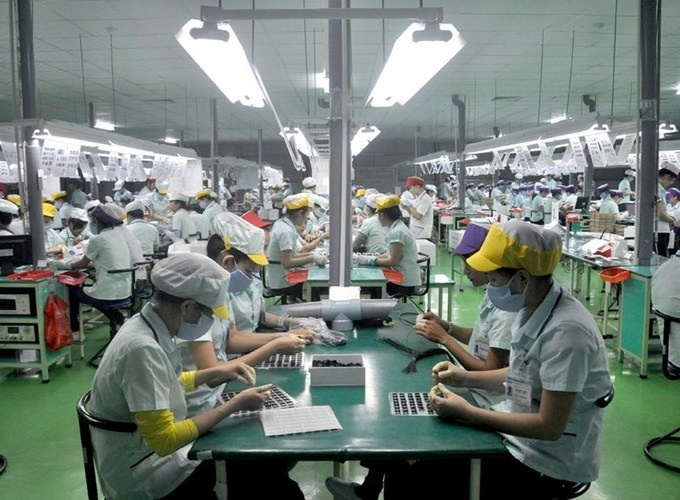
    Solar panel manufacturer Jinko Solar Vietnam in the northern province of Quang Ninh is looking for 5,000-8,000 workers, with most of them required to have basic Chinese communication skills. So far, less than 1,000 have been hired.

    “Manufacturing workers, technicians, quality control managers, we need them all. But not many suitable candidates are available,” said Dang Tran Hoang Anh, an HR officer with the company.

    As one of the world’s largest solar panel manufacturers, Shanghai-based Jinko entered Vietnam in 2020, and is looking for people in 40 different job categories to make high-quality products that are shipped to Europe.

    Anh said that Jinko pays well above average wages to secure the best talents in Vietnam. He just hired a worker who can speak Chinese fluently for a monthly salary of VND29 million ($1,263), 70 percent higher than what she was being paid at her old company.

    “We want the best Vietnamese workers who can communicate in Chinese to complete many projects.”

    Jinko is one of many companies that are scrambling to find Chinese-speaking Vietnamese workers as they set up factories in Vietnam to take advantage of the country’s low labor cost and export potential. Higher costs and risks in China, including its trade war with the U.S., motivated companies from many countries to make a shift to Vietnam.

    Taipei-based electronics manufacturer Wistron Infocomm in the northern province of Ha Nam is recruiting people for 10 job categories including project management consultants, procurement officers and engineers, with most of them required to have basic or fluent Chinese language skills. Car tire manufacturer Jinyu Tires in the southern province of Tay Ninh is looking for 50 students who can speak Chinese for a training program to find the best future employees.

    Popular recruitment platforms VietnamWorks and JobStreet have 140-200 job postings for Chinese-speaking candidates, mostly as procurement officers, quality control managers and engineers. The recruitment rush for Chinese-speaking workers began at the end of last year and grew stronger in the first quarter, with strong demand seen in northern industrial hubs, said Ngo Thi Ngoc Lan, northern region director at recruitment firm Navigos Search.

    The provinces of Bac Ninh and Bac Giang have a large supply of workers who can speak Chinese, but companies are seeing strong competition for them, she said. In the provinces of Phu Tho and Quang Ninh, there is less competition but it is more difficult to recruit high-skilled workers, she added. China has consistently been among the top 10 foreign direct investors in Vietnam in recent years.

    Mainland China ranked fourth in registered capital in the first four months at over $1.07 billion, while Hong Kong and Taiwan secured the seventh and eighth places. Together, the three territories registered $2.1 billion in capital, second only to Singapore at $3.1 billion. China’s Goertek Vina, one of the key suppliers for Apple, increased its investment in Vietnam by $306 million to over $565 million this March.

    The company had nearly 28,000 workers in its plant in the northern province of Bac Ninh as of February, up from an average 23,000 last year. Another 5,000 jobs will be added when its plant in the central province of Nghe An begins operations in June, and by 2023, it will have 30,000 employees. Another Apple supplier, Foxconn, said last year that it would pour an additional $700 million into its Vietnam operations on top of its $1.5 billion investment.

    Lan said that U.S.-China tensions, which began several years ago, have pushed many Chinese companies to move to Vietnam, generating a large demand for local employees. Chinese employees have higher requirements than Vietnamese peers in terms of salary and benefits, so it is more cost-effective to hire Vietnamese, she added.

    She predicted that the trend of recruiting Chinese-speaking Vietnamese in factories will keep rising for at least five more years.

    “This will surely encourage workers and students to learn Chinese as they see the career potential.”

    At present, however, finding Chinese-speaking Vietnamese people is not easy. Anh of Jinko said it was difficult to find suitable Chinese-speaking candidates because many do not want to move from Hanoi to Quang Ninh to work.

    “We have to train most candidates, either in Chinese or in their professional skills, to get the people we need.”

    Lan said that companies are also seeing challenges in recruiting because candidates either have the professional skills and lack language fluency or vice versa. Some companies also want employees to be able to speak English, she added.

    Chinese firms offer salaries that are 40-50 percent lower than European and American companies, while requiring employees to work on Saturdays. These are some drawbacks that discourage candidates, she said.

    Jinko Solar Vietnam used to have Chinese nationals account for 70 percent of its employees in Vietnam, but the company has reduced the ratio to 50 percent now, because Chinese staff often work for six to 12 months and return to home. The factory, meanwhile, needs long-term personnel.

    “We are offering salary of up to VND70 million a month for some directors’ jobs, and we only want Vietnamese candidates.”

  • More Spotify users can now stream their music on popular Sonos sound systems

    More Spotify users can now stream their music on popular Sonos sound systems

    Unlike arch-rival Apple Music, Spotify has both free and paid service tiers, which explains why the industry-leading streaming platform jumped to a mind-blowing 248 million monthly active users at the latest quarterly count while racking up “only” 113 million premium subscribers.

    Of course, it can be profitable to get people to use Spotify without paying a $9.99 standard monthly fee too, both because those users are likely to be inclined to upgrade to a Premium subscription in the long run and because one of the downsides of not paying for unlimited music streaming is being served the occasional ad, which naturally makes the company quite a bit of moolah.

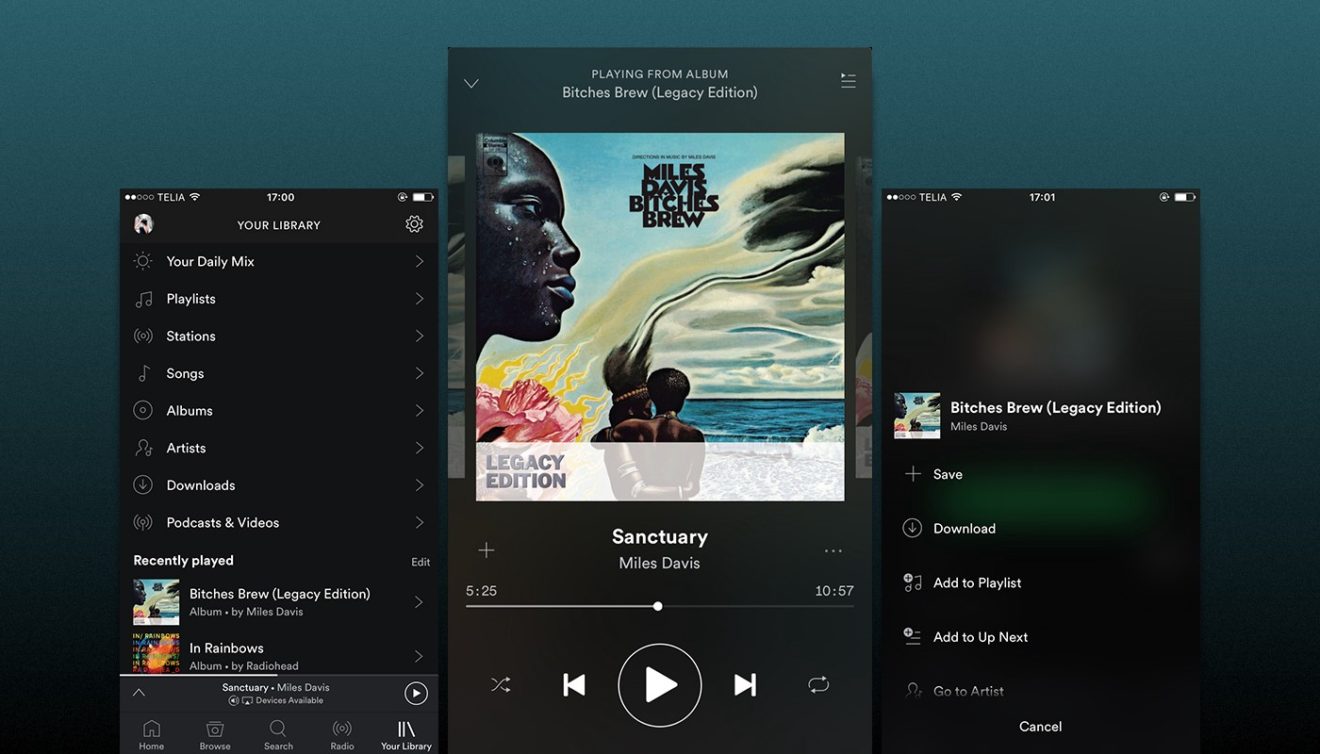
    As such, it shouldn’t come as a big surprise that a basic feature previously offered exclusively with Spotify Premium accounts is finally extending to Free users. Starting now, you can play your tunes on Sonos sound systems without having to sign up for a premium Spotify subscription. All you need to do after updating the Sonos app to its latest version is head to its Settings menu, then Services, and finally, tap the Spotify option to link your free account.

    Apart from having to learn to live with ads constantly interrupting your jam sessions, opting for free Spotify access means listening to (most) tracks on shuffle and being unable to skip songs at will.

    Like Spotify, Sonos has been taking a number of steps meant to further widen the appeal and reach of its high-quality but often expensive speakers and soundbars recently, adding Google Assistant support at long last and releasing the company’s first portable model that’s unsurprisingly costly.

  • Sonos to bring Google Assistant to its smart speakers

    Sonos to bring Google Assistant to its smart speakers

    The neverending saga regarding Sonos connected speakers and Google Assistant is about to end next week if the American company keeps its most recent promise. After a few years of uncertainty, the situation is about to get out of limbo with Sonos finally delivering Google Assistant support to its high-end speakers.

    As the company announced back in January, the Sonos One and Sonos Beam will receive an update that will make Google Assistant available to users. The information has been confirmed by Sonos in a shareholder letter released ahead of the company’s quarterly earnings call.

    The update that will add Google Assistant support will be available next week in the United States, but Sonos plans to bring it to other markets as well in the “next few months.” Although Sonos’ previous statement confirmed Google Assistant will be added to older speakers as well, the shareholder letter doesn’t include any mentions to these devices.

    We’ll update the story once Google Assistant support hits the Sonos One and Sonos Beam, but if what the US company says it’s true, you should be able to start using Google’s personal digital assistant no later than next week.

  • Google Assistant brings its bedtime stories to Smartphones

    Google Assistant brings its bedtime stories to Smartphones

    One of the major Google Assistant features aimed at children, the ability to tell them stories, made its way to Google Home smart speakers about two years ago. Starting this weekend, the so-called Tell Me a Story feature, which is available in English, will be coming to Android and iOS phones in the US, UK, Canada, Australia and India.

    To activate the feature, simply say “Hey Google, tell me a story,” but you can also use the “Hey Google, tell me a bedtime story” if you want to get your kids ready for bed. Before you’ll be able to do that, make sure that you have the latest version of Google Play Books for Android or iOS installed.

    In addition to being able to listen to bedtime stories, families in the United States will be given access to a feature called read along, which is available on all Google Home smart speakers, including Home, Mini, Max, and Hub. Thanks to this feature, your bedtime stories will be more immersive since Google Assistant will add sound effects as you read select Disney Little Golden Books aloud, such as Coco, The Three Little Pigs, Alice in Wonderland, and many more.

    If you want to use read along, you’ll have to use a different command: “Hey Google, let’s read along.” You’ll also be able to ask Google Assistant to read an audiobook on Google Play by saying “Hey Google,” and you’ll hear a free sample if you don’t already own the audiobook.

    Keep in mind that audiobooks are available on Google Assistant in English in the US, Australia, Canada and Great Britain, in addition to German and Japanese.

  • YouTube Music free on Google Home smart speakers

    YouTube Music free on Google Home smart speakers

    Google has just announced that its YouTube Music service is now available on all Google Home smart speakers. Starting today, those who own a Google Home smart speaker will be able to enjoy all the benefits offered by the music streaming service, but there’s a catch.

    Only the first tier YouTube Music experience is available on Google Home smart speakers, which means you you’ll have to put up with ads. Still, if you don’t mind getting a free, ad-supported music experience on your Google Home, you just need to say “Hey Google, play techno vibes,” and your smart speaker should do the rest.

    But that’s not all, if you upgrade to YouTube Music Premium for $9.99/month, you’ll be getting even more control when listening music on smart speakers in the YouTube Music mobile app. For example, you’ll be able to request specific albums, songs, artists, and playlists on-demand.

    Also, you get access to easy-to-use player controls, including unlimited skips and song replay.Besides the benefits mentioned above, a YouTube Music Premium tier will also let you background play music through the YouTube Music app while using other apps, and allows downloads for offline listening when you’re on the move.

    To start using YouTube Music on your Google Home smart speaker, simply open Account Settings in your Google Home app, go to Services and select Music. Then, choose YouTube Music as the default music service, or you can choose YouTube Music as the default music service during the setup process.

    Now, the free service is available not available everywhere yet, so here are the first countries that will get it starting today: United States, Canada, Mexico, Australia, Great Britain, Ireland, Germany, France, Italy, Spain, Sweden, Norway, Denmark, Japan, Netherlands, and Austria. The good news is Google will bring it to more countries soon, so there’s that.

  • Scootch, display speakers and finger scanners

    Scootch, display speakers and finger scanners

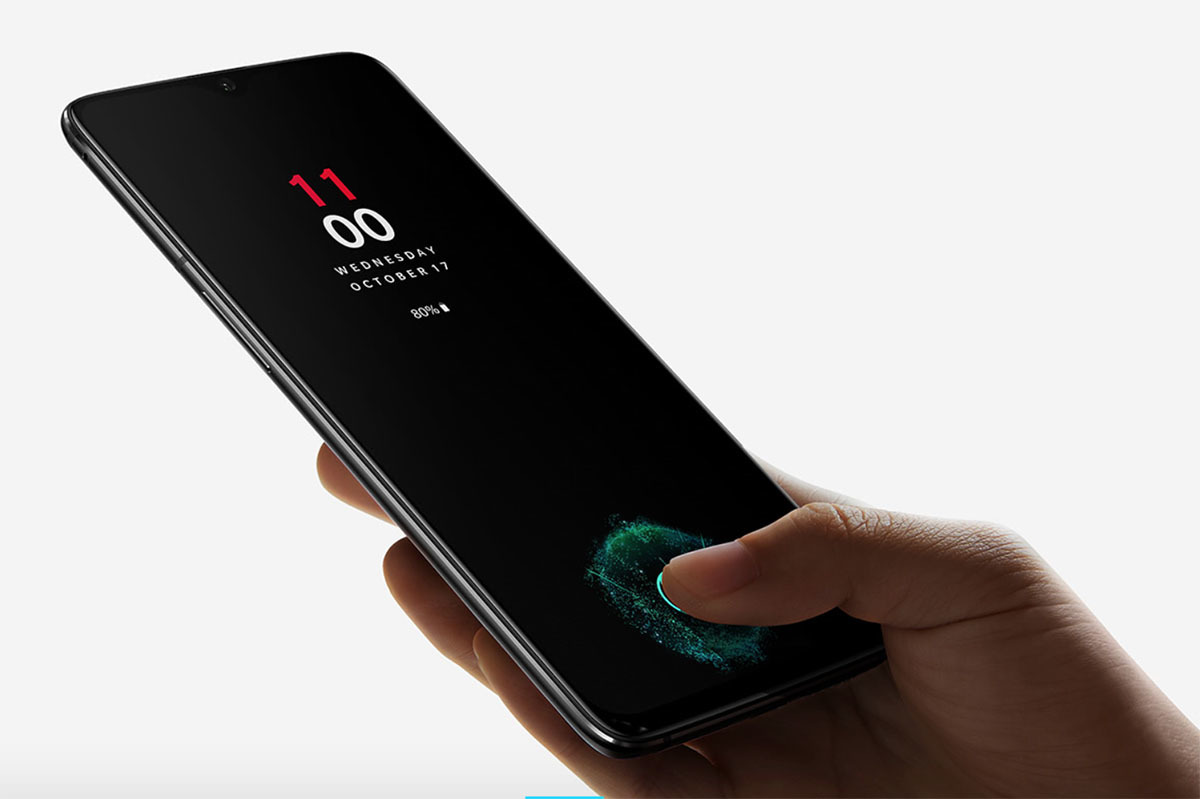
    We shudder to think how expensive a screen replacement is going to get once manufacturers stuff everything they are intent on stuffing in there. In the last few years alone they fused the touch layer into the display itself, increased the resolutions, moved to the more expensive OLED variety, started bending, folding or piercing them to fit various design trends, tacked in-display fingerprint readers on, started using them as sound emitters instead of the good ol’ earpiece, etc.

    Now, what else can we slap into the display package, wondered LG, and came up with an idea. The phone maker has reportedly managed to save precious space inside phones by integrating… wait for it… 5G antenna in the display itself. Well, integrating is not the right word, as it looks like the LG engineers simply slapped thin antenna films on the back side of the screen, but still.

    Given that the current number of antennas needed for grabbing 5G coverage borders on 30, and that adds significant bulk to the usual phone antenna design, being able to move the 5G antenna to the display package sounds like a practical space-saving solution, especially if it improved the coverage as well.

    LG said it can also apply the 5G antenna films on the back of the phone, and again improve reception by using the vast surface but, come to think of it, space there may be needed for all those wireless charging coils that are becoming the norm, too.

    In any case, LG seems to have circled the wagons around its 5G-in-display invention with patents, but apparently, we won’t see the technology applied to the V50 in May. That one will still have the current bulky 5G antenna design.

  • Qualcomm’s new line of chips will make smart speakers better than ever

    Qualcomm’s new line of chips will make smart speakers better than ever

    Qualcomm, manufacturer of the popular Snapdragon chips that power billions of devices, is now aiming to dominate another segment of smart products: speakers and displays with voice assistant support. To do that, the company announced today a new family of chips called the QCD400 Series Smart Audio SoCs. The new chips are designed specifically for the needs of smart speakers like the Google HomePod and Home mini, Amazon’s Echo lineup and others. That is why Qualcomm has focused on two main aspects: sound reproduction and voice recognition.

    The QCS400 line promises “truly superior audio performance” that should come not only from Qualcomm’s own technologies, but support for Dolby Atmos and DTS:X as well. The chips will be capable of supporting up to 32 audio channels.

    To make your communication with the voice assistant better, Qualcomm is once again putting AI to use. The AI should help with voice recognition so you can expect fewer misheard words and phrases in the future. The new chips should also allow the device to better separate voices from background noises or music and detect trigger words easier.

    Besides those main capabilities, Qualcomm is also looking to improve a couple more things that are also quite important.The first one is an improvement in power consumption which will come handy for portable Bluetooth speakers and other battery-powered devices. Devices with the new chips are expected to have a significantly longer standby time during which voice wakeup will be available.

    And finally, the new chips will ensure that your smart device is always well connected. Whether that is to the internet via Wi-Fi or to your phone through Bluetooth, Qualcomm has made improvements in any aspect of the smart speaker connectivity.

    The QCD400 chips are four in total, two of them are for audio only. The least powerful is the dual-core QCS 403, followed by a quad-core QCS404. The two chips that come with video capabilities have the Adreno 306 GPU and support HDMI. Only the highest tier chip, the QCS407 supports 32 channel audio, while the rest top up at 12 channels.

    If you’re a frequent user of smart speakers these new developments are good news for you. And if not, well, you’re probably concerned about the fact that soon these pesky always-listening devices will be able to hear you even better. Like them or not, it seems they’re here to stay!

  • Amazon’s first-gen Echo well priced for Launch

    Amazon’s first-gen Echo well priced for Launch

    Smart speakers have become a global phenomenon less than five years after the limited release of Amazon’s original Echo, with an estimated installed base of 66 million units in the US alone as of December 2018, and around 100 million devices in use worldwide, according to a slightly older market report. Naturally, there are now more options than ever for smart speaker buyers, ranging from the ultra-affordable Echo Dot and Google Home Mini to premium Echo Show models with screens.

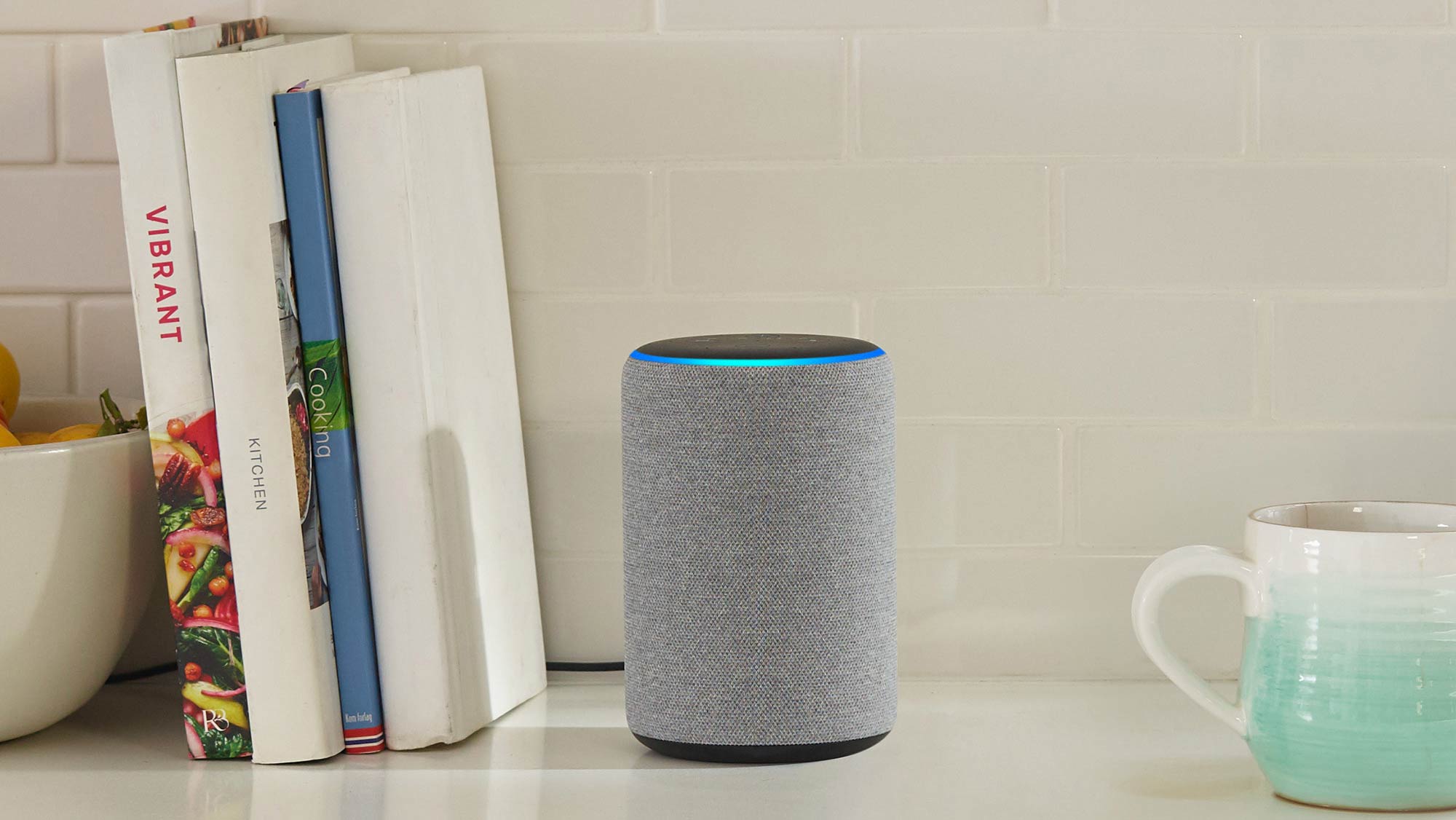
    But if you can find it, the first-generation Amazon Echo is still a pretty great choice, fetching a significantly lower price than back in the day. We’ve seen this tall and handsome cylinder cost as little as $30 in refurbished condition with a 90-day warranty included last month, and although the newest deal may not look quite as irresistible at first glance, it’s actually better in a way.

    That’s because AT&T appears to sell brand-new Echo units at $50 apiece right now, no doubt throwing in a standard one-year manufacturer warranty. That’s a whopping $129 off the smart speaker’s original list price, as well as $50 less than what the second-gen Echo usually fetches. It’s also pretty much on par with the typical price of a third-gen Echo Dot, which obviously packs significantly less power in a diminutive body.

    Despite its advanced age, the OG “regular” Amazon Echo is largely capable of the same things as all the new Alexa-controlled smart speakers, including hands-free music streaming, smart home management (with compatible accessories), setting alarms, timers, and reminders, reading the news, answering the most diverse and complex questions, and even making voice calls, as well as sending and receiving messages. There are also loads of new Alexa skills added every day, all of which are supported on the full range of Echo devices.

  • Kakao takes its leap into the smart speaker market

    Kakao takes its leap into the smart speaker market

    Kakao on 5 September 2017 unveiled its smart speaker, Kakao Mini, which will officially hit shelves by the end of September this year.

    Kakao, which operates the country’s most popular messaging app Kakao Talk, said the Kakao Mini will work on its artificial intelligence platform called Kakao I. It can be controlled by voice commands.

    The Kakao Mini has a square design with fabric on the sides, which has a minimalist, familiar design that can fit well with the surroundings in small sizes.There are four buttons at the top that let users adjust the volume and turn the microphone on and off.

    The Kakao Friends figure, which is released together, has a magnet and can be easily attached to the top of the Kakao Mini. The figures are provided to the initial purchaser on a first come, first served basis.

    The Kakao Mini is equipped with four high-end microphones to accurately capture users’ speech. As the device can connect to other speakers via Bluetooth, users can utilize features of the Kakao Mini through other premium audio systems as well.

    The speaker also connects to KakaoTalk, allowing users to check and send messages verbally.

    The device automatically updates software to continuously provide users with new features, the company said.

    The Kakao Mini offer users convenience by being linked to portal site such as daum as well as Kakao Talk. Kakao Mini will evolve to reflect new features with automatic update method.

    Pre-orders for the Kakao Mini will start later in September 2017.