Tag: specialty coffee

  • Temasek and ChrysCapital Compete to Buy 33 per Cent Stake in India’s Blue Tokai

    Temasek and ChrysCapital Compete to Buy 33 per Cent Stake in India’s Blue Tokai

    Singapore’s Temasek Holdings and private equity firm ChrysCapital are competing to invest up to 1,200 crore rupees in Indian specialty roaster Blue Tokai Coffee Roasters. The transaction values the 13-year-old chain at up to 3,700 crore rupees and will hand the winning bidder a stake of between 30 and 33 per cent.

    The deal structure involves both primary capital to finance retail expansion and secondary sales to provide exits for early seed backers. Existing shareholders include A91 Emerging Fund, which holds 21.72 per cent, alongside Verlinvest, Waterfield Fund and 12 Flags. The three founders, Matt Chitharanjan, Namrata Asthana and Shivam Shahi, currently hold an aggregate 15.27 per cent stake.

    Funding store targets across Asia and the Gulf

    Blue Tokai currently runs 240 outlets across India through parent company Muhavra Enterprises. The roaster plans to open 120 locations during the current financial year, pushing into secondary markets including Ahmedabad and Lucknow, before reaching an 800-store target by fiscal 2030.

    Overseas expansion is also underway. The chain partnered with UAE-based Ambrosia Gulf last year to build a regional store footprint, while setting up plans for an entry into Japan. It also acquired bakery operator Suchali’s Artisan Bakehouse in 2024 to support food service across its cafe network.

    Financial performance has shifted after Blue Tokai turned Ebitda-positive on a monthly basis for six consecutive months. Revenue climbed 50 per cent to 325 crore rupees in fiscal 2025, while net losses narrowed by 20.6 per cent to 50 crore rupees.

    Competition intensifies in India’s cafe sector

    Specialty coffee operators across Asia are racing to scale before high real estate overheads catch up with unit economics. In India, Tata Starbucks remains the market leader with more than 500 outlets and a plan to add 100 locations annually, while international entrants such as Canada’s Tim Hortons and Britain’s Pret a Manger compete against domestic rivals including Third Wave Coffee, Barista and Cafe Coffee Day.

    For ChrysCapital, a deal would follow its acquisition of patisserie chain Theobroma in August 2025 for roughly 2,410 crore rupees, opening opportunities to combine bakery and beverage operations. Temasek brings its own food service portfolio to the table, with holdings in Rebel Foods, Haldiram’s, Licious and Chinese coffee operator Luckin Coffee.

    Blue Tokai has not yet filed its fiscal 2026 accounts, though projections reviewed by investors point to revenue reaching between 750 crore and 775 crore rupees in fiscal 2027.
  • Every Half Coffee Roasters Secures $8 Million in Series A Funding

    Every Half Coffee Roasters Secures $8 Million in Series A Funding

    Vietnamese specialty coffee chain Every Half Coffee Roasters has secured $8 million in a Series A funding round to expand its retail footprint and supply operations.

    The capital injection provides the Ho Chi Minh City-based roaster with fresh resources to scale its cafe network and upgrade processing facilities across domestic markets.

    Expanding Roastery and Store Footprint

    Founded to champion Vietnamese specialty beans alongside international varieties, Every Half operates a growing roster of cafe locations alongside its roasting business. The new financing enables the company to accelerate new outlet openings in key urban centers, while bolstering direct sourcing partnerships with domestic coffee farmers.

    Operating in an increasingly sophisticated domestic cafe market, the brand focuses on single-origin offerings, specialized brewing methods, and modern retail store formats designed for urban consumers.

    Shifting Dynamics in Vietnam’s Coffee Market

    Vietnam remains the world’s second-largest coffee producer, yet its retail landscape has long been dominated by traditional robusta street stalls and large domestic chains like Highlands Coffee and Phuc Long. Over the past five years, consumer preferences in major cities have shifted toward premium arabica, specialty roasters, and traceable sourcing.

    Independent chains across Southeast Asia are tapping institutional capital to challenge both legacy domestic operators and global giants such as Starbucks. For RetailNews Asia readers tracking regional food and beverage investments, the round confirms sustained venture interest in premium cafe concepts that control both roasting and retail touchpoints.

    Every Half now turns to executing its multi-city rollout schedule as competitors race for prime commercial real estate in Hanoi and Ho Chi Minh City.

  • Blue Bottle Coffee Enters Thailand with Two Bangkok Cafes

    Blue Bottle Coffee Enters Thailand with Two Bangkok Cafes

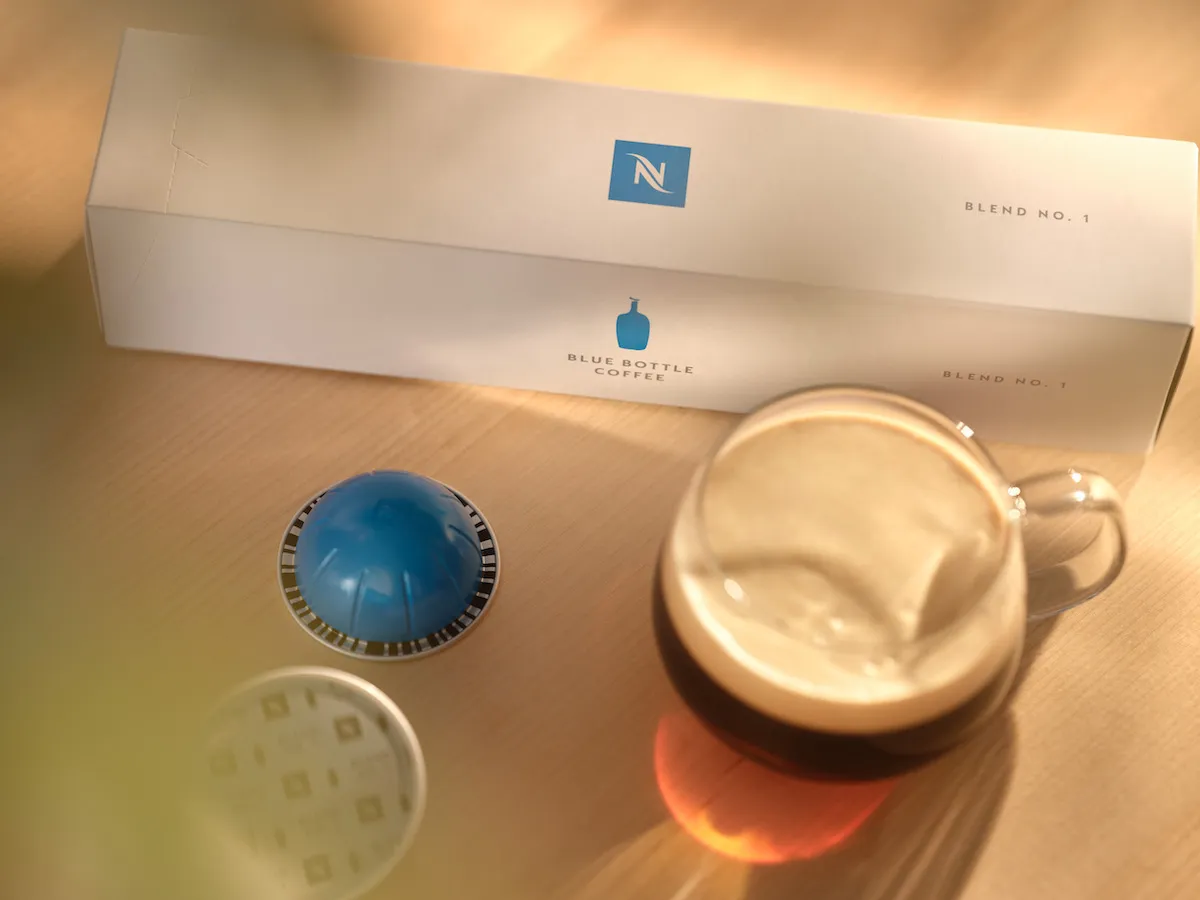
    Blue Bottle Coffee will enter Thailand with two Bangkok locations developed alongside regional retail operator Valiram. The rollout at Dusit Central Park and the EmQuartier shopping mall follows the brand’s acquisition from Nestle by Chinese private equity firm Centurium Capital for less than $400 million earlier in 2026.

    Valiram is managing the Thai rollout after steering Blue Bottle Coffee’s entry into Singapore in 2024. The two companies are dividing the Bangkok launch across two distinct retail formats.

    Two Formats for Bangkok

    The Dusit Central Park cafe will operate as an open-format unit geared toward everyday foot traffic and core espresso drinks. The second site, at EmQuartier in the Sukhumvit commercial district, will serve as the brand’s flagship cafe in Thailand.

    That flagship will feature hand-brewed pour-overs, single-origin coffees and rotating seasonal menus. Both stores put the California-founded brand into direct competition with established specialty operators and international chains in Bangkok’s crowded cafe scene.

    Valiram Partnership and Centurium Ownership

    Blue Bottle Coffee already runs stores across Japan, South Korea, mainland China, Hong Kong and Singapore. Adding Bangkok extends its push into Southeast Asia under Centurium Capital, the private equity group that built Luckin Coffee into China’s largest coffee chain by store count.

    Valiram provides local operational muscle, bringing real estate relationships across luxury malls and transit hubs in the region. The group continues to handle store buildouts and staffing as the chain prepares to open doors at Dusit Central Park first before launching the EmQuartier flagship.

  • Freshly brewed coffee is rising in China

    Freshly brewed coffee is rising in China

    Although Luckin Coffee, a chain of coffee shops in China,  disclosed a loss of 857 million yuan (RMB) last year, they are still positive about the potential for growth in China. Meanwhile, a Canadian coffee brand, Tim Hortons, announced its expansion into the country, planing to open more than 1,500 stores in China in ten years.

    Convenience store’s brewed coffee stand out in a crowded market

    Coffee brand giants are everywhere, but  coffee sales from convenience store never falls behind, occupying the lower level consumer market. According to the FamilyMart Co., Ltd., there are more than 2,000 stores in the country now selling freshly brewed coffee and the annual revenue in 2018 has exceeded 50 million cups. FamilyMart  revealed that their goal is to sell 100 million cups of coffee in 2019.

    Food plus coffee combo drives sales

    Another profitable coffee sales business people usually neglected is the Western-style fast food restaurant. Since KFC, also known as Kentucky Fried Chicken, upgraded the coffee products in 2015, their coffee sales has grown rapidly. In the first three quarters of 2018, KFC sold more than 63 million cups of coffee at an average rate of 2.5 cups per second.

    “The growth of coffee market among convenience store and western restaurant reflects the characteristics of current Chinese coffee market, a market with multi-level, multi-channel and multi-consumer profile.” China food industry analyst Zhu Danpeng said that this also proves the Chinese coffee market still have a big room to invest and develop.

    The current high profit of the coffee industry leads to competition

    Some industry consulting companies predict that the sales of the Chinese coffee shop will grow at a compound annual growth rate of 15% from 2017 to 2025, and will reach more than 100 billion yuan (RMB) by 2025. The number of coffee shops in China is expected to reach more than 80 thousand in the near future.

    However, the competition between freshly ground coffee market cannot be avoided. Zhu believes that one of the fundamental reasons for tight competition is that the profit of the this particular beverage industry is extremely high.

    Recently, Zhu went to Yunnan for site visit and he communicated with the local farmers. He said that the coffee bean purchase price of the famous coffee brand is about 12-16 yuan/kg, which can be used to brew 10-12 cups of coffee. In other words, the cost of coffee beans is less than 2 yuan (RMB) per cup. “It is obvious that the gross profit of this industry has reached several hundred percent.”


  • Indonesia’s Growing Thirst for Coffee Drains Premium Bean Supplies

    Indonesia’s Growing Thirst for Coffee Drains Premium Bean Supplies

    For decades, Indonesia has supplied coffee roasters worldwide with prized beans that give a distinctive taste to brews favored by connoisseurs. Most locals, however, preferred tea.

    But now, as younger generations switch to coffee and hundreds of independent coffee shops and roasters pop up across the archipelago, Indonesia’s consumption of beans is rising. That’s left less coffee for export and forced up prices for foreign buyers.

    A small harvest in Sumatra has eaten further into tightening supplies of that region’s unique arabica beans, which are sought for the heavy, earthy notes they give to roasted blends.

    Sumatran beans are a key component in Starbucks Corp’s Christmas Blend, which has been sold for more than 30 years.

    Sumatra’s lower production caused some exporters to delay and even default on deliveries, sources at importing companies said, forcing some US importers to pay more to secure supplies.

    Inventories in the United States have dwindled, with many importers saying they have enough to meet contracts with roasters but nothing left for the spot market.

    Major roasters Starbucks and Keurig Green Mountain are the biggest buyers of Sumatran arabicas, importers say, and smaller companies appeared to be facing the biggest challenges sourcing those beans.

    A Starbucks spokeswoman said the company has not been impacted by the region’s tight supplies this year. Keurig did not respond to requests for comment.

    Java Sales Rise in Java

    Coffee consumption in Indonesia has nearly doubled in the past 10 years, as many young Indonesians were influenced by coffee habits in countries such as Australia and the United States where a lot of them went to study.

    “We’re seeing very strong coffee expansion in many markets but Indonesia is very much a market where demand is growing heavily,” said Michael Schaefer, global lead of Food and Beverage at Euromonitor International.

    While major producing countries such as Brazil, Vietnam, Colombia and Indonesia have historically exported their best coffee, rising interest in premium beans from local coffee shops is changing this, Schaefer said.

    Many new roasters are offering farmers significantly higher prices for their arabica beans, said Pranoto Soenarto, vice president of the Association of Indonesia Coffee Exporters and Industries.

    “Farmers are wooed,” Pranoto said. “They will keep their beans for these micro-roasters, who only buy in small amounts.”

    Irvan Helmi, co-founder of local roaster and cafe Anomali in Jakarta, said local buyers’ close proximity to farmers enabled them to pay higher prices while selling directly to consumers at better profit margins.

    Wildan Mustofa, an arabica coffee farmer with a mill in Pangalengan, West Java, said his domestic sales are rising fast.

    “The local purchases grow by almost 100 percent every year,” said Wildan, while helping workers spread out coffee cherries to be dried under the sun.

    Output, Export Down

    Compounding the shortage of beans for overseas buyers is a fall in output.

    Indonesia’s annual coffee bean output has fallen by around 8 percent over the past five years, Indonesian Agriculture Ministry data shows. Farmers say unpredictable weather, poor crop maintenance and switching to other crops is responsible for lower yields.

    Exports from the world’s fourth largest-coffee growing nation have dropped by around 20 percent over the past five years, according to data from the US Department of Agriculture (USDA).

    The country’s tight supplies are already reflected in first-quarter 2018 shipping data, with coffee exports down 26 percent from the same period in 2017, Indonesia’s Statistics Agency data show.

    Sought After Sumatran Arabicas

    In Sumatra, a large and mountainous island west of the capital Jakarta, limited availability of arabica coffee sent prices to a record high in April.

    Arabica is a higher quality bean that is typically roasted and brewed. Its cousin robusta, known for its more bitter taste, is processed into instant coffee or used as a lower cost component in roasted blends. Robusta makes up nearly 90 percent of Indonesia’s coffee harvest.

    The arabica grown in Sumatra is unique, in part due to the unusual bean drying process employed there. While farmers in other countries have tried to replicate it, importers said results are unreliable and only on a small scale.

    “Competition to buy coffee from producers has been pretty fierce,” said Robert Babington Smith, a senior trader for California-based importer InterContinental Coffee Trading Inc.

    Prices of unprocessed or partially dried Sumatran arabicas purchased at farms rose to a record $5.90 per kilogram in April, while arabica beans already in US warehouses fetched premiums of$2.20/lb or more over the global benchmark price, nearly double last year’s price, Babington Smith said.

    Babington Smith said one his suppliers defaulted on a planned delivery due to that exporter’s lack of funds to purchase the increasingly expensive coffee.

    Another importer said five of his containers were defaulted on after his company refused to pay more than the contracted price.

    “We get calls every day from roasters asking if we have any Sumatrans, spot or on the water,” the importer said.

  • Thai specialty coffee growers tip cafe boom

    Thai specialty coffee growers tip cafe boom

    Despite many cafes closing in the past year, the Thai coffee-shop business is expected to grow 15 to 20 per cent this year.

    According to specialty coffee growers, the growth will be driven by the country’s economic improvement and higher demand from coffee drinkers.

    Specialty Coffee Association of Thailand (SCATH) president Apicha Yaemkesorn says coffee shops can be easily opened on every corner in Bangkok and major provinces, and more will be seen as there are many new offices and condo buildings.

    “The growth can also be expected to spread into small provinces and towns in the near future.”

    Fewer than 10 per cent of Thais drink coffee, and those who do drink about 1.2 cups a day on average, compared with three cups a day for American coffee drinkers.

    While about 30 to 40 per cent of coffee shops closed last year, the number of new entrants increases every year.

    Apicha says that opening a coffee shop is not hard in Thailand as only a small budget is needed and coffee makers are inexpensive. “It is an ideal business for new entrepreneurs, but many of them have lack knowledge about coffee and cafe management skills.”

    This year Thailand is projected to have a 15 per cent rise in arabica coffee planting areas in the north and a 5 per cent increase in robusta planting areas in the south. Rubber and palm growers in the south have turned to growing coffee because of low prices for rubber and palm oil.

    Coffee beans can be harvested about three or four years after planting, says the Office of Agricultural Economics.

    Apicha estimates the longer droughts in Thailand will reduce the supply of local arabica coffee beans to 7000 tonnes this year from 9000 tonnes last year, while robusta coffee beans will total 15,000 tonnes, down from 17,800 tonnes.

    Arabica coffee beans are priced at about 180 baht (US$5.10) a kilo in Thailand and 80 to 90 baht/kg for robusta.

    Volatile climate change and longer droughts are pushing Thai coffee bean prices higher than in Cambodia, Laos, Myanmar and Vietnam, which see prices around 95 to 105 baht/kg.