Tag: sportscar

  • Ferrari Signs Deal With Tech Firm Velas To Create Digital Products For Fans

    Ferrari Signs Deal With Tech Firm Velas To Create Digital Products For Fans

    Ferrari has signed a multi-year accord with Swiss technology firm Velas Network to create digital content for its fans, the luxury sports car maker said on Monday.

    From next season, Velas, a provider of digital products and services, will become a partner of Ferrari’s Formula 1 racing team.

    “In addition, Velas will be Title Sponsor of the Ferrari Esports Series, the online mono-brand series of the Prancing Horse, and of the Esports team that will compete in the F1 Esports Series, the official digital championship competed in by all teams participating in the FIA Formula 1 World Championship,” Ferrari said in a statement.

    Velas is a leading provider of blockchain technology and non-fungible tokens (NFTs), cryptographic assets stored on a blockchain that have an identification code that makes them unique and has gained popularity as a way to sell digital art.

  • New Electric Hypercar Powerhouse: Rimac Takes Reins At Bugatti

    New Electric Hypercar Powerhouse: Rimac Takes Reins At Bugatti

    112-year-old Bugatti makes some of the most exclusive cars in the world. Its combination of ultra-luxury and mind-boggling speed has defined the hypercar genre for decades, especially under the stewardship of the Volkswagen group, it has thrived since 1998. In the age of electric cars, however, its dependence on the internal combustion engine would’ve antiquated the brand soon. In a masterful move, Volkswagen Group has handed over all its shares of Bugatti to its subsidiary Porsche which is another iconic sports car brand. Porsche, like most brands in the Volkswagen group, has been on its journey of electrifying its portfolio. Its investment in electric hypercar startup Rimac gave it a 24 percent stake in 2018 and a technology flow-over. But now the relationship is even closer, as Porsche has handed its control of Bugatti to Rimac and formed a joint venture called Bugatti Rimac in which it is a 45 percent stakeholder.

    Rimac is restructuring its corporate structure fully – creating a holding company called the Rimac Group which has a controlling 55 percent stake in the newly formed Bugatti Rimac. It cites Rimac Technologies as its other business and the entity cites Porsche, Hyundai as stakeholders amongst other investors. Mate Rimac, the founder and CEO of RimacAutomobilii will continue to be the CEO of the new Rimac Group with him being the leader of both Bugatti Rimac and Rimac Technologies. He also retains 37 percent of his stake in the Rimac Group. Porsche has a 24 percent stake in the Rimac Group, while Hyundai owns 12 percent in the new entity.

    Under the new structure, Porsche gets 45 percent stake in the JV and retains its 24 percent stake in the Rimac Group.

    “Bugatti and Rimac will both continue as separate respective brands, retaining existing production facilities and distribution channels,” Mate Rimac says. “Bugatti Rimac represents the company that will develop the future of both Bugatti and Rimac vehicles, by joining resources and expertise in research and development, production, and other areas,” he adds.

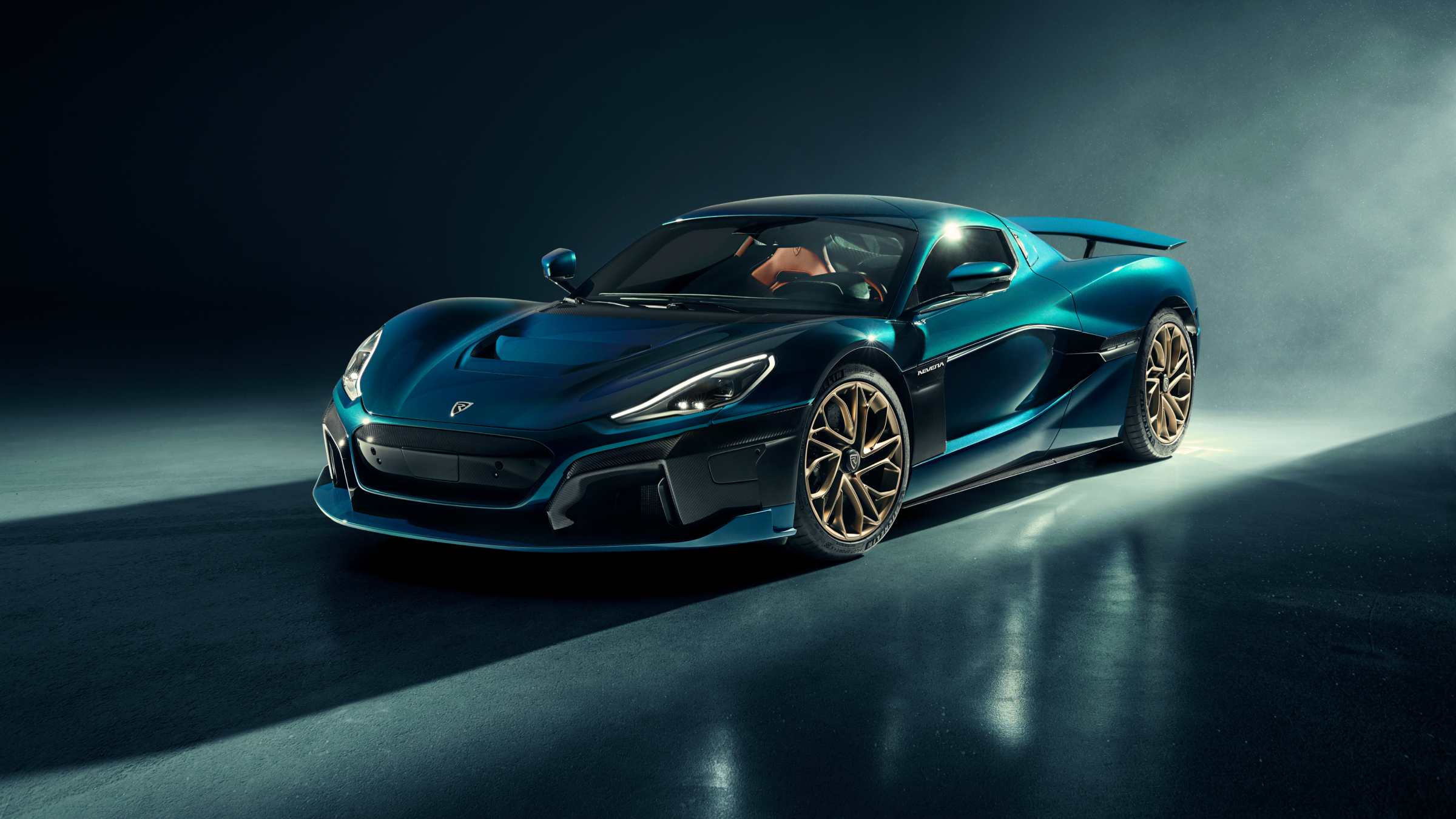
    Rimac and Bugatti as brands will remain separate — while Bugattis will be built to their exacting standards from their home in France while Rimac’s will be continued to made in Croatia. As of now, Rimac’s new electric hypercar, the Nevera will be sold separately from the Bugatti Chiron – but together, the JV is now home to two of the most powerful hypercars – one being based on hybrid technology with an internal combustion engine at its heart and the other one fully being propelled by batteries and electric motors.

    Rimac’s technology has attracted it to many automakers like Porsche and Hyundai which previously invested in it. Its technologies unit supplied parts and technology to some of the world’s biggest OEMs like Porsche, Aston Martin, Pininfarina, and of course Bugatti. In fact, the Rimac Nevera takes over the mantel of the world’s fastest hypercar from the Bugatti Chiron with its 1,888 bhp Nevera having the ability to achieve 0-100 km/h in less than 2 seconds.

    Rimac is also building a new headquarters in Croatia which will open in 2023 replete with its now test track and uniquely will be a fully open campus. Bugatti will most likely utilise Rimac’s technology to make a fully electric hypercar something which Mate Rimac hinted at. This will take time, though, with the new vehicle coming only by the end of the decade, so in the meanwhile, it will continue to sell its hybrid cars alongside fully electric Rimac branded vehicles.

    “This is a truly exciting moment in the short, yet rapidly expanding history of Rimac Automobili. We have gone through so much in such a short space of time, but this new venture takes things to a completely new level. Rimac and Bugatti are a perfect match in terms of what we each bring to the table. As a young, agile and fast-paced automotive and technology company, we have established ourselves as an industry pioneer in electric technologies,” Mate Rimac added.

    “We are combining Bugatti’s strong expertise in the hypercar business with Rimac’s tremendous innovative strength in the highly promising field of electromobility. Bugatti is contributing a tradition-rich brand, iconic products, a loyal customer base, and a global dealer network to the joint venture. In addition to technology, Rimac is contributing new development and organizational approaches,” said Oliver Blume, Chairman of the Executive Board at Porsche AG.

  • McLaren Reveals The Artura Hybrid Supercar

    McLaren Reveals The Artura Hybrid Supercar

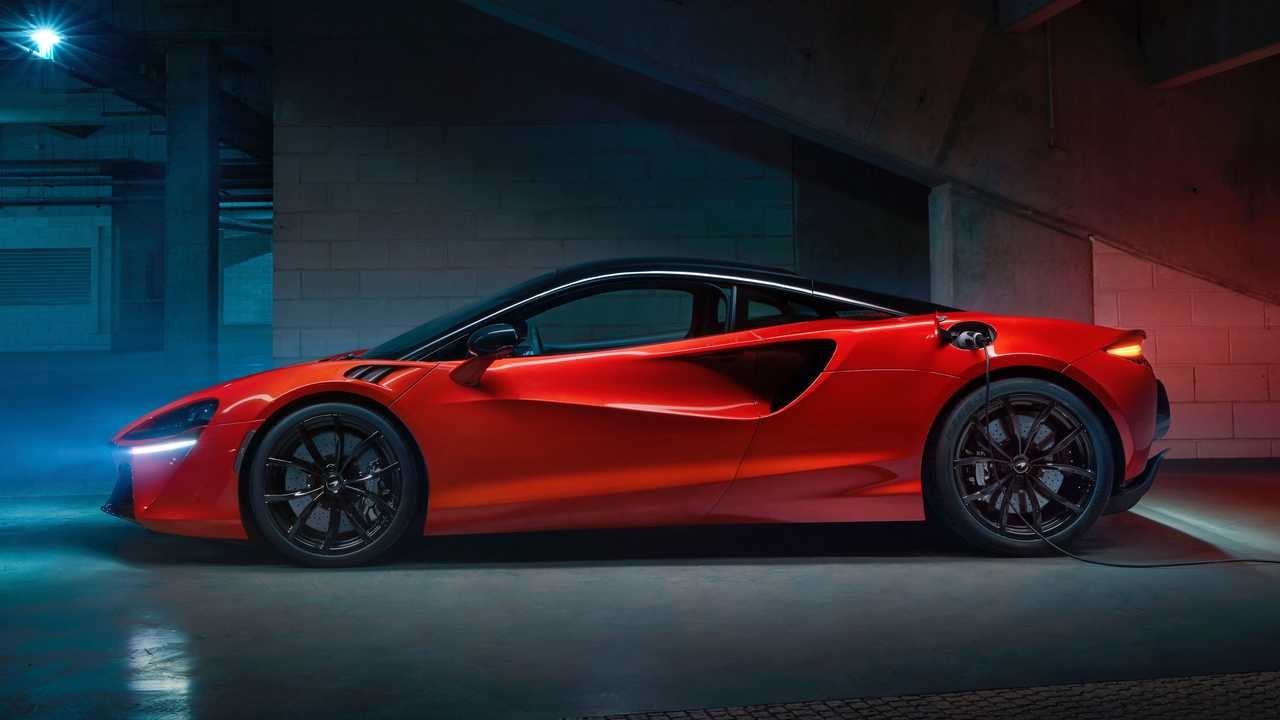
    After months of teasing the car, McLaren has finally revealed the Artura Hybrid supercar. It is McLaren’s first series-production High-Performance Hybrid supercar and is underpinned by the company’s philosophy of super-lightweight engineering. All-new from the ground up, the Artura presented McLaren engineers and designers with new opportunities to innovate, chief among these being how to preserve McLaren’s super-lightweight engineering philosophy when adding hybrid powertrain elements including an E-motor and battery pack.

    The Artura marks the debut of the new McLaren Carbon Lightweight Architecture (MCLA) – through the uniquely compact HPH powertrain system to the weight of cabling used in the electrical systems (where a 10 percent reduction was achieved), resulted in the Artura having the lightest dry weight of 1,395kg. The total weight of hybrid components is just 130kg (which includes an 88kg battery pack and 15.4kg E-motor), resulting in a DIN kerb weight of 1,498kg which is on par with comparable supercars that do not have hybrid powertrains, giving the Artura a super-lightweight advantage.

    At the heart of the Artura’s powertrain is McLaren’s all-new, 2,993cc twin-turbocharged V6 petrol engine. With a power output of 577 bhp – nearly 197 bhp per liter – and 585Nm of torque, the dry-sump aluminum engine is compact and lightweight; at just 160kg it weighs 50kg less than a McLaren V8 and is significantly shorter, enhancing packaging efficiency.

    The 120-degree v-angle of the engine, which allows the turbochargers to be positioned within the ‘hot vee’, delivers further advantages in packaging as well as contributing to a lower center of gravity. The 120-degree layout increases engine performance by reducing the pressure losses through the exhaust system and allows for a stiffer crankshaft that enables a rev limit of 8,500rpm, maximizing performance and driver engagement.

    Inside with the cockpit centered around the driver, the driving mode selection – which retains separate Powertrain and Handling controls – has been moved to the instrument binnacle

    Working in harmony with the new V6 is the Artura’s compact axial flux E-motor, located within the transmission bell housing. Smaller and more power-dense than a conventional radial flux E-motor, it is capable of generating 94bhp and 225Nm and boasts a power density per kilo 33 percent greater than the system used in the McLaren P1.

    The Artura can go from 0-100 kmph in just 3 seconds, 0-200 kph tales 8.3 seconds while the 300 km mark is achieved in 21.5 seconds. Top speed is limited to 330kmph. The dual propulsion systems are integrated via an engine disconnect clutch, driving an all-new, twin-clutch transmission, which has been developed specifically for the Artura.

    The E-motor is powered by a battery pack comprising five lithium-ion modules, offering a usable energy capacity of 7.4kWh and a pure EV range of 30km. The battery is refrigerant cooled using cooling rails, and the assembly – including a power distribution unit that transfers battery power from the rear of the vehicle to the ancillaries in the front – is mounted on a structural carbon fiber floor.

    The Artura is designed with full Plug-in Hybrid (PHEV) capability and can be charged to an 80% charge level in just 2.5 hours with a standard EVSE cable. The batteries can also harvest power from the combustion engine during driving, tailored to the driving mode selected.

    The Artura gets advanced driver-assistance systems (ADAS) including Intelligent Adaptive Cruise Control, Lane-Departure Warning, Auto High-Beam Assist and Road-Sign Recognition as well as Over-The-Air (OTA) software updates.

    On the design front, the Artura gets a low-nose, cab-forward, high-tail stance and the drama underlined by the signature McLaren dihedral doors – which open closer to the body and house mirrors that fold in more tightly – and further enhanced by the short wheelbase and low stance.

    Inside with the cockpit centred around the driver, the driving mode selection – which retains separate Powertrain and Handling controls – has been moved to the instrument binnacle, which is in turn mounted to the steering column and adjusts with the steering wheel to further enhance driving ergonomics. Consequently, the steering wheel is kept clear of unnecessary switches, however, the driver is still able to adjust driving modes without taking their hands away from the wheel.
  • BMW Previews Vision M Next Electric Sportscar

    BMW Previews Vision M Next Electric Sportscar

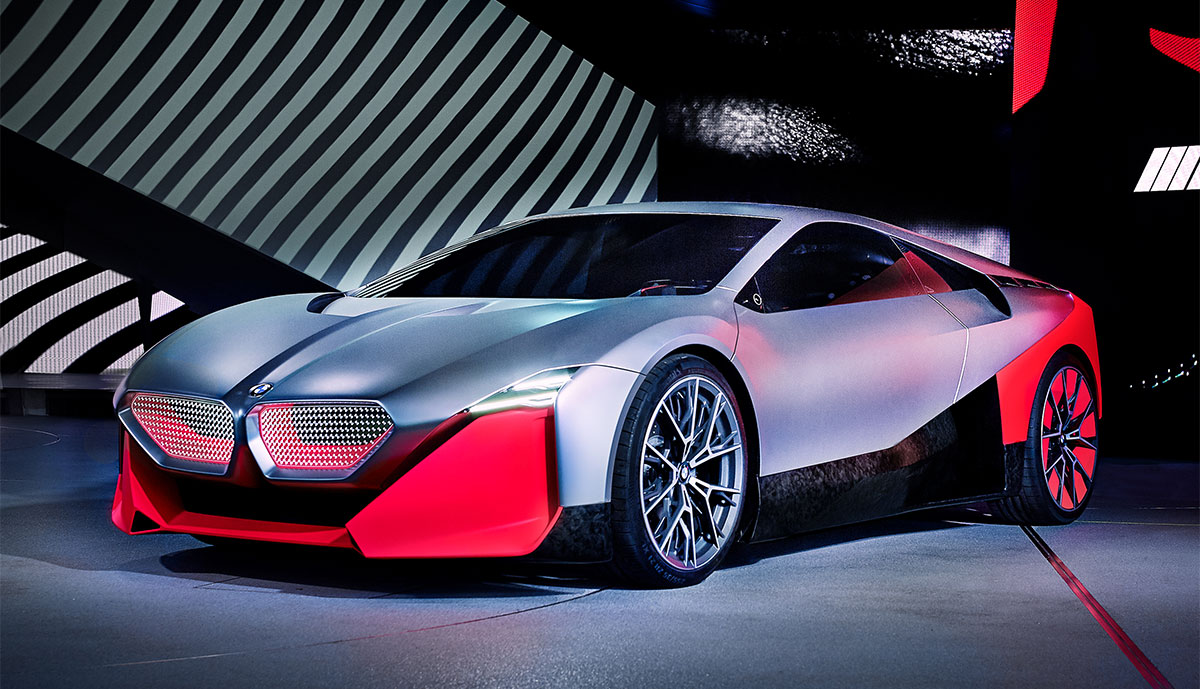
    BMW today previewed the Vision M Next which offers a foretaste of the BMW M brand’s electrified future and yes, this one places the driver right at the centre of all the action. Hosting the exclusive world premiere of the BMW Vision M NEXT is the new NextGen infotainment platform at BMW Welt. The BMW Vision iNEXT and BMW Vision M NEXT Vision Vehicles represent prototype versions of BMW’s future experience concepts ‘Ease’ and ‘Boost’. Ease encompasses all the experiences during a journey when the vehicle assumes the task of driving, so maximum comfort for users while Boost is all about the ultimate active driving experience.

    The BMW Vision M Next draws its inspiration from the iconic BMW Turbo and of course the i8 plug-in hybrid. It’s low-slung, has a wedge-shaped silhouette, gets gullwing doors and a striking colour scheme while maintaining its sports-car proportions. The front and rear ends are finished in the matt-neon shade orange, producing a vivid contrast against the exterior’s otherwise silver metallic paintwork.

    The signature BMW kidney grille is flanked on either side by triangular elements which are painted in orange. The triangular elements accentuate the air intakes at the sides and the integral headlights. The headlights are positioned on the outer edges of the front end, higher up than the kidney grille. Arranged one above the other rather than side by side and that gives it BMW’s classic four-eyed front end. The black side skirts are made from recycled carbon fibre and make the car look even lower on the road.

    Domagoj Dukec, Vice President BMW Design, said, “The BMW Vision M NEXT is a progressive hybrid sports car that makes a very clear and confident statement, in terms of both appearance and interaction. Where the BMW Vision iNEXT illustrated how autonomous driving is set to transform life on board our vehicles, the BMW Vision M NEXT demonstrates how state-of-the-art technology can also make the experience of driving yourself purer and more emotionally engaging. In both models, the focus is firmly on the people inside. Design and technology make the ‘EASE’ and ‘BOOST’ experiences more natural and more intense,”

    The Vision M Next offers the choice between electric all-wheel drive and pure rear-wheel drive, with either all-electric propulsion or the power of a turbocharged four-cylinder petrol engine. The output stands at 591 bhp and it has a top speed of 300 kmph. 0-100 kmph is done in just under 3 seconds. There is also a BOOST+ mode that puts extra power on tap at the push of a button. The maximum range when driving in all-electric mode is 100 km.

    The rear wheels on the BMW Vision M NEXT measure 22 inches in diameter, making them one inch larger than the front wheels (21 inches) and that gives the car a lovely stance. The design of the rear window takes its cue from the BMW M1. The three-piece louvres are made from glass and emphasise the horizontal focus of the rear-end styling. The rear lights feature the same Laser Wire technology used for the headlights. The two-dimensional reinterpretation of the distinctive pair of BMW roundels from the BMW Turbo and BMW M1 – a gift to BMW aficionados – gives them the impression of floating in the rear lights’ transparent lenses.

    There’s also facial recognition technology in the Vision M Next and his allows the car to unlock automatically as the driver approaches. Pressing the touch sensor on the gullwing doors prompts them to swing open. The cabin is minimalist and revolves entirely around the actively engaged driver, both stylistically and technologically. The seat shells form part of a seat sculpture with a flowing design. They are upholstered in a foam material with shape memory properties that moulds itself to, cushions and supports the body to optimum effect.

  • Most Affordable Bugatti Launched

    Most Affordable Bugatti Launched

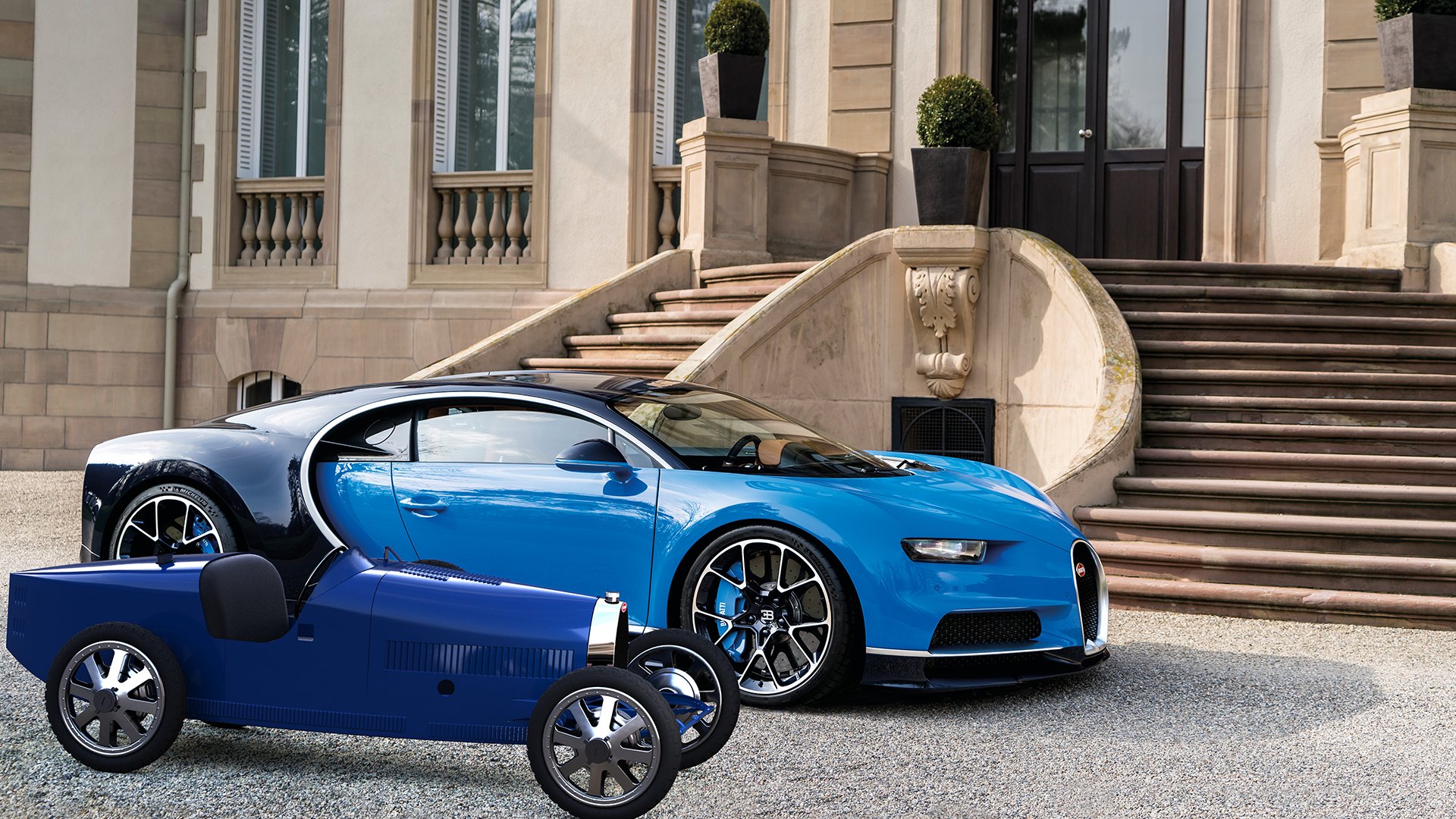
    If you thought this was a click-bait headline, we wouldn’t blame you for it. Bugatti and cheap or affordable rarely go together in a sentence and only even then, the figures resemble a small country’s GDP. This time, however, we actually mean it. Bugatti, the creator of hypercars like the Veyron and the Chiron, has launched its most affordable offering. This time though, it’s in the toy sector with its new Bugatti Baby II ride-on electric vehicle. Inspired from the Bugatti Baby I, the toy car can be driven by both kids and adults, and is priced at $34,000.

    The Bugatti Baby II is a modernised version of the half-scale Type 35 race car replica that the automaker’s founder Ettore Bugatti had built for his son nearly a century ago. While the original Baby I built between 1927 and 1936, was specifically for children, the Baby II is more accommodating and can be driven by adults too thanks to the larger proportions. The toy car gets an electric motor and with two power modes – child and adult. The child mode restricts the top speed to 20 kmph with power limited to 1.3 bhp, while the adult mode will let you top it out at 45 kmph. Much like the Chiron though, the Baby II also comes with a “speed key” that allows you to remove the limiter altogether unleashing all the 13 horses from the electric motor. The higher speed though, we reckon will come at the cost of battery life.

    The Bugatti standards of manufacturing apply to its most affordable offering as well. The cockpit is fitted with all plush materials including the aluminium dashboard, leather upholstered seat, an old-fashioned Type 35-style four-spoke steering wheel and a Bugatti instrument panel. You can also match the Baby II’s colour scheme with that of your Chiron, plus eight-spoke aluminum alloy wheels and fully functioning headlights can be added as optional extras. Definitely an upgrade over the toy cars sold at Hamleys.

    At $34,000, the Bugatti Baby II is not cheap. In fact, for those in the US, a couple of extra thousand dollars will get you a Tesla Model 3. But then again, this is for the ultra rich that may have a Veyron or a Chiron stacked up in a garage somewhere. The fact that only 500 of these will be made (just like the original), certainly makes them a lot more rare than we’d expect.