Tag: Springwise

  • Unique Airstream trailer pop-up store by Aether

    Unique Airstream trailer pop-up store by Aether

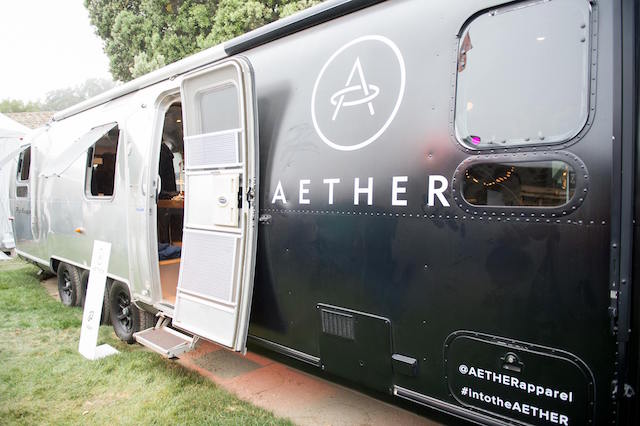
    High-end clothing company Aether has converted an Airstream trailer into a store that can travel and stop at locations chosen by customers.

    The mobile popup has already visited several cities near the brand’s home in Los Angeles.

    Trend monitoring website Springwise.com reports the fashion company wanted to find something which had the ease and portability of a pop-up, but was also reusable.

    Aether 2

    Working with designer Thierry Gaugain, the company created the Aetherstream, an Airstream trailer transformed into a travelling storefront complete with a wood burning stove, custom built sofas, furnishings and decorations from Parisian flea and antique markets.

    Destinations for the mobile store are selected by customers who are invited to email the company to suggest a stop.

    Springwise says the converted trailer is just one example of how small and independent companies are innovating to compete with online retail giants.

    “Other examples include modular, customisable street carts and a new gadget and platform that helps local shops rise to the top of area internet searches.”


  • Shoppers can create bespoke clothing online real-time

    Shoppers can create bespoke clothing online real-time

    New online made-to-order clothing shop Frilly allows customers to create bespoke clothing and see the effect in real-time.

    According to Springwise, the independent, innovation publisher, which scans the globe for the most promising innovations and new business ideas, Frilly is “an alternative for those who don’t want cookie-cutter clothing”. Unsurprisingly, it uses digital tools to transform a traditional service.

    Los Angeles-based Frilly allows customers to choose a piece of clothing and then customise almost everything about it – from hem length and color to material and style.

    Frilly co-founders Jeni Ni and Shangwei Ding were inspired to start the business while out shopping one afternoon. The pair realised that there was always one aspect of every garment that they were not happy with. They realised that if they could devise a system that would allow people to change those nagging details, then customers could be completely happy with every purchase.

    It took the pair three years designing the 3D simulation software to bring their dream to life. The Made to Measure Service uses an advanced AI algorithm to tailor garments to a client’s unique measurements. Customers choose and customise their pieces online, which are then handed over to a designer to create.

    As each variable is changed online, Frilly’s proprietary software allows the customer to see the effect in real-time on screen. A model gallery and a pop-up window provides recommendations from the designer, and demonstrates how to adjust each piece to achieve the exact look the customer wants, as well as offering a 360 degree view of the item’s details – from draping to the weave and texture of the fabric.

    Frilly’s made-to-order model also reduces waste and over-buys. Fabrics are chemical-free and the company is also committed to offering sustainable options, such as the use of recycled fabrics.

  • WeChat replaces waiters at Chinese restaurant

    WeChat replaces waiters at Chinese restaurant

    A Chinese restaurant in Beijing has replaced its front-of-house staff and diners use messaging app WeChat to order and pay.

    Diners at Renrenxiang Restaurant launch the app on their smartphone to browse the menu and place their order. They then pay for their meal using the messenger service, and are given an order number, reports Springwise.

    Their meal is prepared in the kitchen and their number called out over a loudspeaker when it is ready. The customer can then collect their food. After eating, they leave their crockery on a cleaning table.

    Customers do not even need to be in the restaurant to order. One frequent diner who works nearby says she orders while still in the office, then strolls to the restaurant. By the time she arrives, her meal is ready.

    Meanwhile, the noodle restaurant’s owner is looking at cutting his overheads even further, reports CNN.

    “There will be four ‘no’s in the restaurant – that is, no waitress, no cashier, no merchandiser and no chef,” says Renrenxiang founder Liu Zheng. “I did this because I’m following the technology development trend in China.

    “Thanks to the app, we can cut out unnecessary expenditure, simplify management and focus more on taste and quality.”

    The app also collects customer-related data – such as what dish is most popular, and what age groups visit more frequently. Renrenxiang uses the data to improve its marketing strategy. But despite its high-tech approach, the restaurant does not have its own website.

    Also, it is not the first restaurant to offer waiterless service. In 2007, a restaurant in Nuremberg, Germany, began to offer fully automated order and table services. There are also similar eateries in Japan and the US.

    Using robots to cook, serve and clean is also becoming more common in China.

  • Chilean vending machines model takes off

    Chilean vending machines model takes off

    In Chile, vending machines inside local stores are offering cash-strapped shoppers affordable staple items – without denting retailers’ profits.

    Trend monitoring website Springwise.com reports some 73 per cent of the population of Latin America lives on less than US$4 per day, but the prices of food and necessities in struggling areas rarely reflects this.

    Often, shops in areas such as Santiago in Chile offer products at prices up to 40 per cent higher than better off areas. Hoping to end this inequality, Algramo distributes vending machines containing staples such as beans, lentils, rice and sugar around Santiago. It installs the affordable alternatives in local stores and splits the profits with the shopkeepers.

    Algramo enable locals to purchase goods in bulk in reusable containers, lowering the price and encouraging a more eco-friendly retail model. Rather than setting itself up as a competitor to neighbourhood shops — which are an integral, social part of Chilean life — Algramo work with the shopkeepers to improve the economic climate of the area.

    The company developed their own vending machines, including one which dispenses washing powder and one which dispenses a variety of staple foods. All the machines can be installed easily and operated by customers.

    So far, Algramo has installed more than 300 machines in Chile and now plans to expand into Colombia.


  • Now consumers can ‘print’ clothes at home…

    Now consumers can ‘print’ clothes at home…

    A European entrepreneur has created a portable device that allows consumers to automatically create custom clothes from a digital file. Even at home.

    Springwise.com reports that the ‘makers movement’ has come to prominence in the past few years as new technologies such as 3D printing and DIY computers have given consumers better tools to create and produce their own designs and gadgets. Even the fashion industry has received a boost from such innovation, and we’ve already seen sneakers made with a 3D printer.

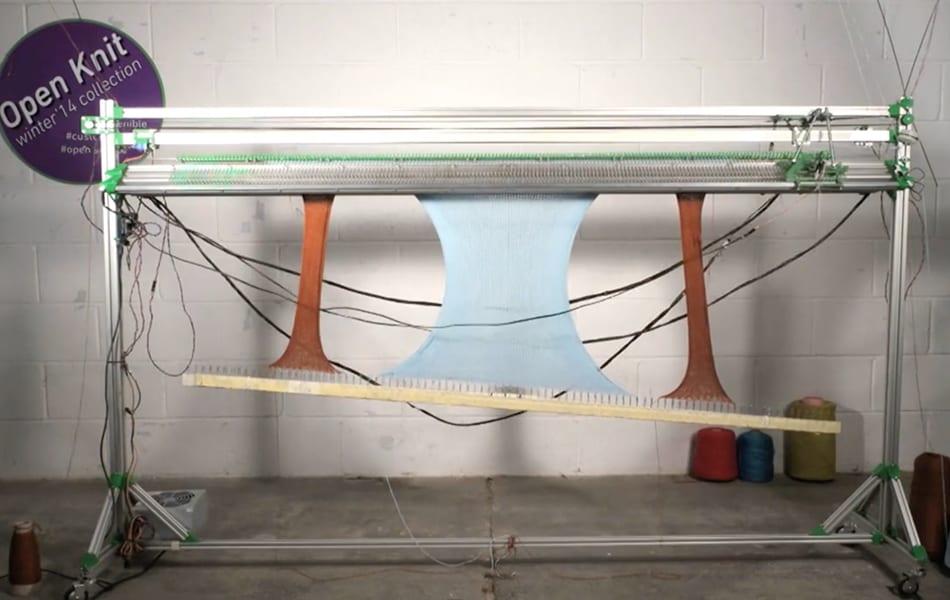
    Now the OpenKnit project has created a device that’s able to automatically create custom clothes from a digital file.

    The machine looks much like a traditional loom, except that it’s hooked up to a robot and computer. Users can either download or create their own design files for printing a garment. After uploading the file to the machine and loading the thread, a carriage moves from side to side to weave the item together using similar technology to a sewing machine.

    A sensor on the top keeps track of the needles and the position of the carriage to ensure the threads don’t get tangled. Using the system, a sweatshirt can be produced on the fly in roughly one hour. The OpenKnit machine is an open source design, and it costs under EUR 550 to build.

    “Since personalization is a key facet of fashion design, it’s easy to see how the possibility of consumers printing their own styles is an enticing one,” explains Springwise.com.

  • Retail ad only works when it rains

    Retail ad only works when it rains

    A unique retail advertising concept trialled in Hong Kong has grabbed attention for both its innovation and its relevance.

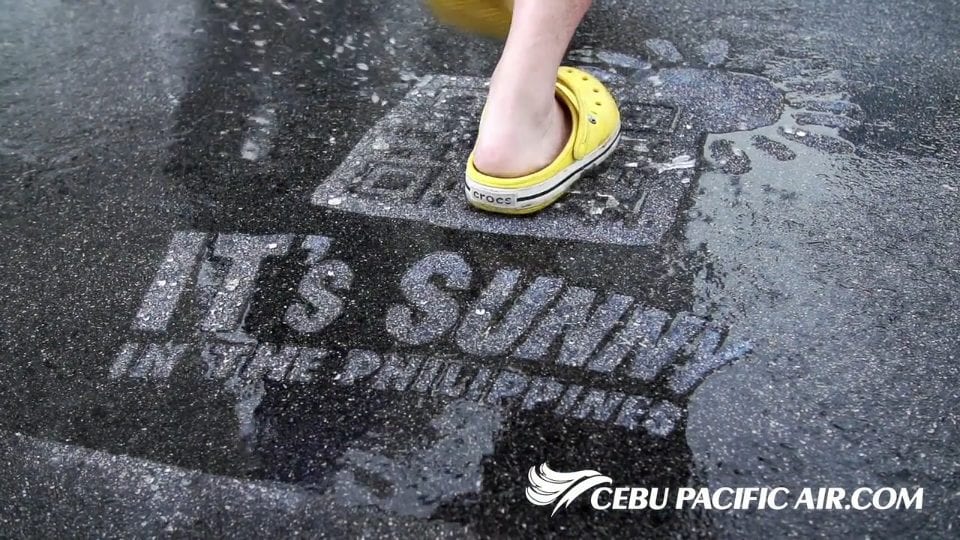
    Get caught in a rain shower when walking on the streets of Hong Kong and glance down you might just see one of the most unique advertising campaigns yet devised – an advertisement encouraging you to book a flight with Cebu Pacific Airlines to sun-soaked, rain-free Philippines…

    When monsoon season hits Hong Kong, rain showers are frequent – and frustrating. So what better than to tempt wet pedestrians to take a holiday in a tropical destination in the Philippines?

    Created by ad agency Ogilvy Asia, the campaign used a water-repellent spray stencilled onto the sidewalks in busy locations, according to a report by trend monitoring website Springwise.com. When the weather was dry, the ads weren’t visible. But when the rain fell, the message appeared as if by magic, spelling out the tagline ‘It’s Sunny in the Philippines’.

    The ad incorporated a QR code that offered more information and offered discounts on flights to the Philippines when scanned with a smartphone (providing you could use your smartphone without it getting wet!). According to the creators, the Cebu Pacific site saw a 37 per cent increase in bookings as a result of the campaign.