Tag: SsangYong Motor

  • Unit price of exported automobiles in Korea up on SUV sales

    Unit price of exported automobiles in Korea up on SUV sales

    The average unit price for exported automobiles last year reached a record high of $15,400, pushed up by the strong performance of sport-utility vehicles (SUVs), according to industry statistics Thursday. Monthly data from the Korea Automobile Manufacturers Association (KAMA) put total exports by five local carmakers last year at 2,447,903, down 3.2 percent from the previous year. The monetary sum from the shipments came to $37.68 billion, 1.6 percent less than the year before.

    Despite decreases in both, the unit price of each exported vehicle remained strong thanks to exports of relatively more expensive SUVs, the data indicated, increasing 1.6 percent from 2017.

    Local manufacturers shipped 1,386,539 SUVs last year, up 6.7 percent compared with the year before, setting a new record.

    “The export volume for vehicles shrank from dulled demand in the global market, but it’s fortunate that the export-unit price rose from increased shipments of high value-added cars,” a KAMA official said.

    By manufacturer, Renault Samsung Motors had the highest unit price, at $17,100.

    It was followed by SsangYong Motor, at $17,000. The unit price was $16,200 for Hyundai Motor, $14,900 for Kia Motors and $13,400 for GM Korea.

    Records showed that the unit price rose up to the mid-2010s, rising from $12,000 in 2010 to $14,800 in 2014.

    It pivoted down to $14,200 in 2015 and stayed in a lull in 2016 at the same level before going back up to $15,000 in 2017.

    In terms of export volume, the numbers have been going down since peaking at 3,166,000 in 2012.

  • SsangYong Motor narrows loss in last quarter of 2018

    SsangYong Motor narrows loss in last quarter of 2018

    SsangYong Motor, the Korean unit of Indian carmaker Mahindra & Mahindra, said Thursday its net losses narrowed for the October-December period from a year earlier on a strengthened lineup. Net losses reached 3.99 billion won ($3.59 million) in the fourth quarter from 30.25 billion won a year ago, the company said in a statement. Robust sales of the Rexton Sports sport-utility vehicle (SUV) and the Tivoli SUV helped improve the bottom line, it said.

    Operating losses stood at 3.48 billion won in the final quarter from 2.57 billion won a year ago. Sales rose 17 percent to 1.053 trillion won from 902.16 billion won during the same period.

    For 2018, net losses slightly improved to 61.84 billion won from 65.82 billion won the previous year. Operating losses remained almost unchanged at 64.18 billion won compared with 65.28 billion won.

  • Ssangyong teases new Korando

    Ssangyong teases new Korando

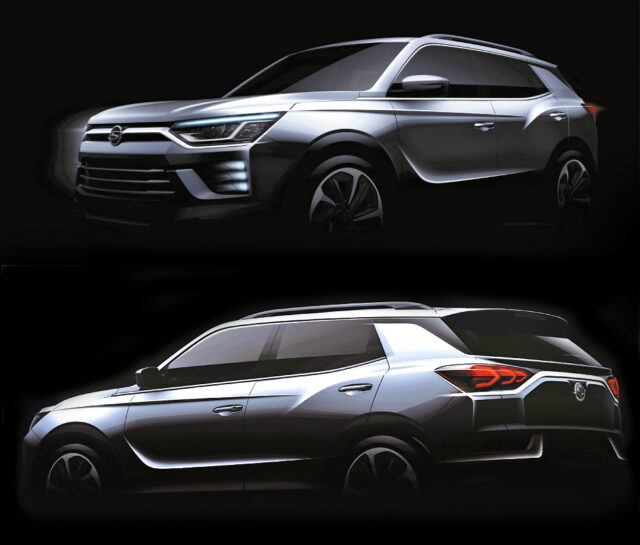
    SsangYong Motor said Monday it will release a brand new sport utility vehicle in March that will replace its current Korando C SUV. The fresh model, which has been developed under the project name C300, will simply be called the “Korando,” according to the carmaker. Korando is one of SsangYong’s oldest lineups, alongside Tivoli and Rexton. The company decided to retain the name, hoping that would boost sales.

    It is the first entirely new car in the Korando lineup in eight years, since the company rolled out the midsize SUV Korando C – since then, it has just been revamped versions of existing models. Cars sold under the Korando label include the Korando Sports, Korando Turismo and Korando C, which will be discontinued when the new Korando launches.

    SsangYong also unveiled three teaser images of the car on Monday. The carmaker said it used a low and wide design for the car’s body, following a global trend. The front of the vehicle resembles SsangYong’s popular compact SUV Tivoli.

    The automaker has added various driver assistant features to the car. With the SUV market expanding, SsangYong hopes to grow its market share in the local car market with the anticipated release.

    A spokesperson from SsangYong said the new car will be the “most fascinating and high-tech Korando-branded car in history.”

  • Hyundai sales ups a bit in December

    Hyundai sales ups a bit in December

    Hyundai Motor, Korea’s largest carmaker by sales, said Wednesday its December sales rose 0.4 percent from a year earlier on weak overseas demand. Hyundai sold 410,326 vehicles last month, up from 408,637 units a year earlier, the company said in a statement. Domestic sales jumped 22 percent to 64,835 units last month from 53,361 a year ago. Overseas sales fell 2.8 percent to 345,491 from 355,276 during the same period, the carmaker said.

    The slowing global economy and lower vehicle demand from China and the United States, the world’s two biggest auto markets, restricted monthly sales results, it said.

    To boost sales, Hyundai launched the all-new Santa Fe SUV and the face-lifted Tucson SUV in the United States and other markets last year. But the SUV models did not greatly boost overall demand for the carmaker.

    For all of 2018, sales gained 1.8 percent to 4.59 million autos from 4.51 million units a year earlier.

    Kia Motors said its December sales rose 6.3 percent from a year earlier on improved overseas demand for its vehicles.

    Kia sold a total of 241,199 vehicles in December, up from 226,875 units a year ago. Domestic sales fell 13 percent to 42,200 from 46,502 during the same period, while overseas sales rose 10 percent to 198,999 from 180,373, the company said in a statement.

    For all of 2018, sales gained 2.4 percent to 2.81 million units from 2.75 million in the year-ago period, it said.

    GM Korea, the Korean unit of General Motors, said its December sales fell 6.7 percent from a year earlier due to weak demand for its models.

    GM Korea sold 42,424 vehicles in December, down from 45,466 units a year earlier, the company said in a statement.

    Domestic sales declined 12 percent to 10,428 units last month from 11,852 a year ago. Exports were down 4.8 percent to 31,996 from 33,614 during the same period, it said.

    For all of 2018, sales dropped 12 percent to 462,871 autos from 524,547 a year earlier, the statement said.

    To revive sales, the carmaker plans to introduce 15 vehicles into the local market over the next five years. It launched the U.S.-made Equinox SUV and the upgraded Chevy Spark minicar last year.

    The Traverse SUV will be the next model to be added to its lineup.

    Renault Samsung Motors’ December sales plunged 30 percent from a year earlier on weaker overseas demand for its vehicles.

    Renault Samsung sold 18,462 vehicles in December, down from 26,515 units the previous year, the company said in a statement.

    Domestic sales rose 8.6 percent to 10,805 units last month from 9,953 units a year ago. But exports nosedived 54 percent to 7,657 autos from 16,562 during the same period last year, the statement said.

    For the whole of 2018, sales dropped 18 percent on year to 227,577 from 276,808, it said.

    The company’s current lineup includes the SM3 compact, the all-electric SM3 Z.E. sedan, the QM3 small SUV, and the SM5, SM6 and SM7 sedans.

    France’s Renault S.A. has an 80 percent stake in Renault Samsung

    SsangYong Motor sales fell 0.2 percent last month from a year earlier on weak exports.

    SsangYong Motor sold 14,177 vehicles in December, down from 14,208 units a year earlier, due to weak overseas demand for its vehicles, the company said in a statement.

    Domestic sales edged up 0.1 percent to 10,656 units in December from 10,647 a year earlier. But exports backtracked 1.1 percent to 3,521 units from 3,561 during the same period, it said.

    For the whole of 2018, the maker of the flagship G4 Rexton and compact Tivoli SUVs sold a combined 141,995 vehicles, down 1.2 percent from 143,685 a year earlier, the company said.

    Indian carmaker Mahindra & Mahindra owns a 72.85 percent stake in SsangYong Motor.
  • SsangYong Motor rehires 60% of its workers

    SsangYong Motor rehires 60% of its workers

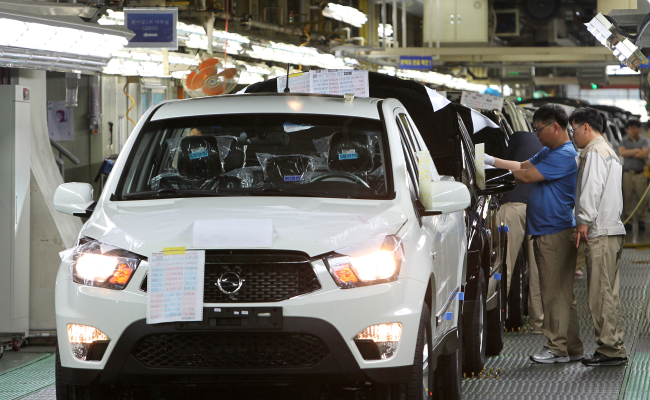
    SsangYong Motor said Monday that it has rehired 60 percent of workers who were sacked amid the carmaker’s restructuring efforts over a decade ago. The maker of the Rexton and Tivoli SUVs has been mired in protracted disputes with those who left the company against their will in 2009 after it was placed under court receivership. At that time, 900 workers who carried out a strike at the company’s main Pyeongtaek plant in Gyeonggi were ordered to choose between unpaid leave or voluntary retirement.

    Those who decided not to pick either option were later fired.

    In 2013, the 454 workers who had chosen unpaid leave were all reinstated, but the 165 fired workers were not permitted to return to work.

    After a series of negotiations in 2015, the company and its union agreed to gradually reinstate the fired workers, although some were left out of the agreement.

    In September 2018, the company and its union reached an agreement to rehire the remaining 119 fired workers by this year.

  • SUVs are selling more in Korea

    SUVs are selling more in Korea

    Korea’s domestic car market moved in two different directions this year. The rising popularity of large sedans and sport utility vehicles (SUVs) stood in sharp contrast to weaker demand for smaller vehicles, industry data showed Sunday. In the January-November period, Hyundai Motor, Kia Motors, GM Korea, Renault Samsung Motors and SsangYong Motor sold a combined 698,326 units, up 0.3 percent from 696,403 cars sold a year earlier, the data showed.

    Demand for medium SUVs, such as Hyundai’s all new Santa Fe, reached 207,269 units, up a sharp 29.5 percent from the same 11 months in 2017.

    The total so far is expected to push medium-sized SUVs to become the country’s top-selling vehicle type on an annual basis in 2018. This will mark the first time such crossovers have taken the top spot in Asia’s fourth-largest economy, where car buyers generally tended to favor mid- to large-size sedans.

    In regard to larger crossovers, the popularity of SsangYong’s G4 Rexton caused sales of such cars to jump 12.9 percent on year to 46,734 units, further pushing up overall SUV numbers.

    Industry watchers said the release of Hyundai’s three-row Palisade and a longer version of SsangYong’s G4 will further fuel sales going into 2019, with numbers likely to get a further boost once Kia releases its own large SUV that is expected to get the Telluride name.

    Besides SUVs, sales of large sedans, centered on Kia’s K9 luxury sedan, caused total numbers to rise a respectable 5.7 percent to 52,945 units up till November despite drop in demand for Hyundai’s luxury Genesis EQ900 falling off compared to the year before.

    On the other hand, sales of midsize and smaller vehicles dipped 0.9 percent on year to 481,542 units, with demand for small city cars dropping 7.5 percent to 115,647 units.

    “Vehicles like the Sante Fe clearly bolstered demand this year, with this trend likely to continue with the release of the Palisade and new versions of the G90 and G80 to further contribute to sales growth for bigger cars going into 2019,” an industry source said.