Tag: ssangyong

  • Unit price of exported automobiles in Korea up on SUV sales

    Unit price of exported automobiles in Korea up on SUV sales

    The average unit price for exported automobiles last year reached a record high of $15,400, pushed up by the strong performance of sport-utility vehicles (SUVs), according to industry statistics Thursday. Monthly data from the Korea Automobile Manufacturers Association (KAMA) put total exports by five local carmakers last year at 2,447,903, down 3.2 percent from the previous year. The monetary sum from the shipments came to $37.68 billion, 1.6 percent less than the year before.

    Despite decreases in both, the unit price of each exported vehicle remained strong thanks to exports of relatively more expensive SUVs, the data indicated, increasing 1.6 percent from 2017.

    Local manufacturers shipped 1,386,539 SUVs last year, up 6.7 percent compared with the year before, setting a new record.

    “The export volume for vehicles shrank from dulled demand in the global market, but it’s fortunate that the export-unit price rose from increased shipments of high value-added cars,” a KAMA official said.

    By manufacturer, Renault Samsung Motors had the highest unit price, at $17,100.

    It was followed by SsangYong Motor, at $17,000. The unit price was $16,200 for Hyundai Motor, $14,900 for Kia Motors and $13,400 for GM Korea.

    Records showed that the unit price rose up to the mid-2010s, rising from $12,000 in 2010 to $14,800 in 2014.

    It pivoted down to $14,200 in 2015 and stayed in a lull in 2016 at the same level before going back up to $15,000 in 2017.

    In terms of export volume, the numbers have been going down since peaking at 3,166,000 in 2012.
  • SsangYong Motor narrows loss in last quarter of 2018

    SsangYong Motor narrows loss in last quarter of 2018

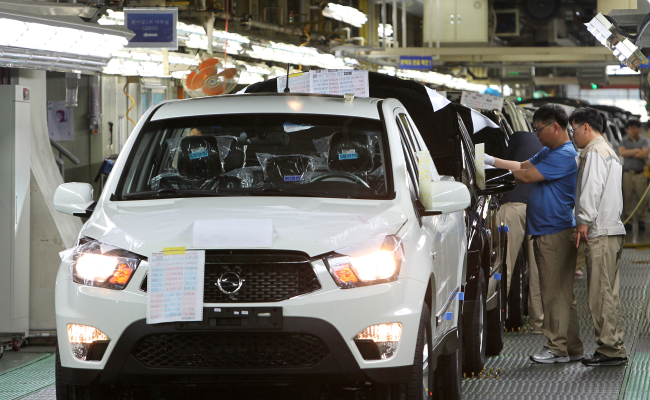
    SsangYong Motor, the Korean unit of Indian carmaker Mahindra & Mahindra, said Thursday its net losses narrowed for the October-December period from a year earlier on a strengthened lineup. Net losses reached 3.99 billion won ($3.59 million) in the fourth quarter from 30.25 billion won a year ago, the company said in a statement. Robust sales of the Rexton Sports sport-utility vehicle (SUV) and the Tivoli SUV helped improve the bottom line, it said.

    Operating losses stood at 3.48 billion won in the final quarter from 2.57 billion won a year ago. Sales rose 17 percent to 1.053 trillion won from 902.16 billion won during the same period.

    For 2018, net losses slightly improved to 61.84 billion won from 65.82 billion won the previous year. Operating losses remained almost unchanged at 64.18 billion won compared with 65.28 billion won.

  • Ssangyong teases new Korando

    Ssangyong teases new Korando

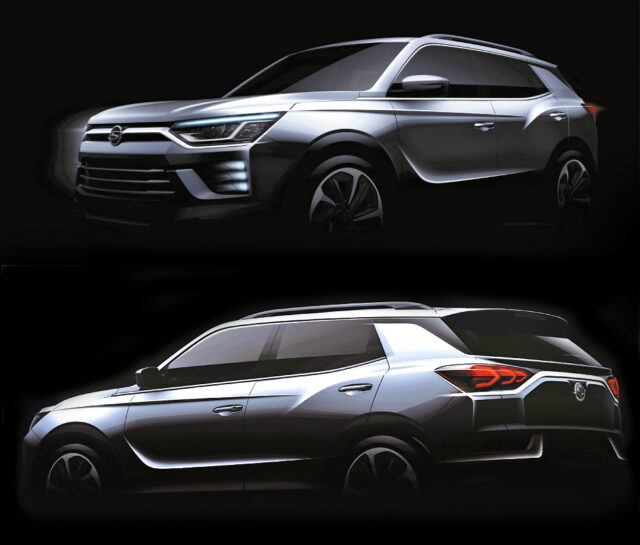
    SsangYong Motor said Monday it will release a brand new sport utility vehicle in March that will replace its current Korando C SUV. The fresh model, which has been developed under the project name C300, will simply be called the “Korando,” according to the carmaker. Korando is one of SsangYong’s oldest lineups, alongside Tivoli and Rexton. The company decided to retain the name, hoping that would boost sales.

    It is the first entirely new car in the Korando lineup in eight years, since the company rolled out the midsize SUV Korando C – since then, it has just been revamped versions of existing models. Cars sold under the Korando label include the Korando Sports, Korando Turismo and Korando C, which will be discontinued when the new Korando launches.

    SsangYong also unveiled three teaser images of the car on Monday. The carmaker said it used a low and wide design for the car’s body, following a global trend. The front of the vehicle resembles SsangYong’s popular compact SUV Tivoli.

    The automaker has added various driver assistant features to the car. With the SUV market expanding, SsangYong hopes to grow its market share in the local car market with the anticipated release.

    A spokesperson from SsangYong said the new car will be the “most fascinating and high-tech Korando-branded car in history.”

  • SsangYong launches Rexton Sports in Latin America

    SsangYong launches Rexton Sports in Latin America

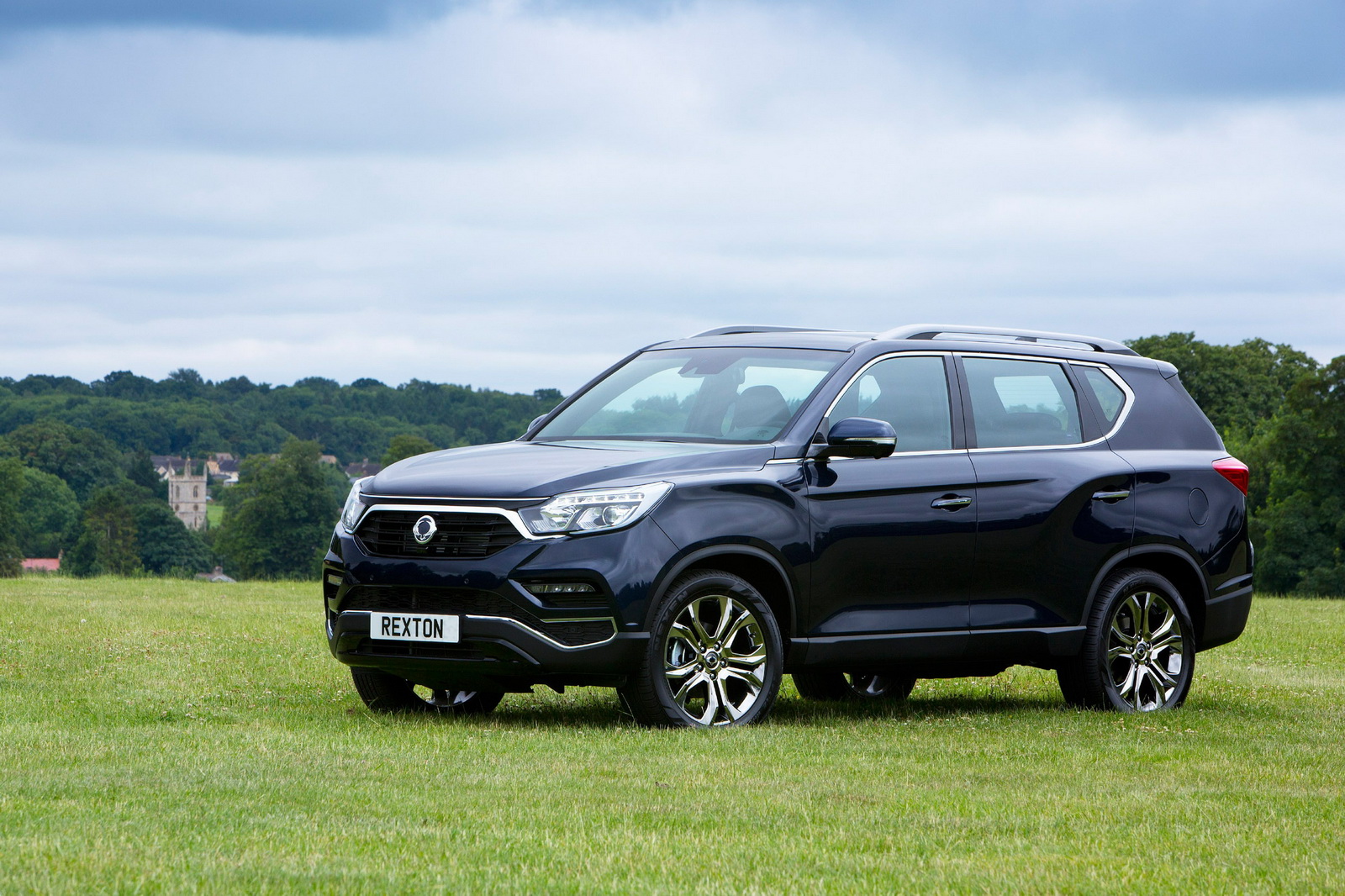
    SsangYong Motor, the Korean unit of Indian carmaker Mahindra & Mahindra, said Wednesday it has launched the Rexton Sports sport-utility vehicle (SUV) in Latin American markets to boost sales. SsangYong Motor launched the Rexton Sports SUV in Chile in September, Ecuador in October and Paraguay in November, following its launch in Europe in the second and third quarters.

    The carmaker plans to introduce the car in Africa and Middle Eastern markets in early 2019.

  • SsangYong expands to Australia

    SsangYong expands to Australia

    SsangYong Motor will establish its first overseas sales unit in Australia in November to take advantage of rising demand for SUVs there, the carmaker said Monday.

    The establishment of its first overseas sales unit will serve as a stepping stone for SsangYong Motor to further fortify its global sales, the carmaker said.

    SsangYong Motor, the Korean unit of Indian auto giant Mahindra & Mahindra, sold its cars in other countries before through partnerships with local dealerships. It has never operated its own sales unit outside of Korea before.

    “The Australian sales unit will be SsangYong Motor’s first overseas sales unit to be directly managed by the carmaker,” said CEO Choi Johng-sik in a written statement released on Monday. “It will help us to be more flexible in handling the local market, such as the marketing strategy.”

    SsangYong Motor currently exports cars to Europe, South America and the Middle East.

    Chile was the biggest export market for SsangYong Motor last year.

    When the Australian unit opens in November, SsangYong Motor is expected to launch a full range of models, including the Tivoli, G4 Rexton and Rexton Sports. SsangYong Motor said it hopes to eventually run 60 directly managed dealerships in Australia.

    SsangYong Motor stopped selling its cars in Australia in 2016. It had previously been selling vehicles to local dealerships.

    Its decision to resume sales is due to the sharp growth in Australian SUV sales. According to the carmaker, sales of SUVs accounted for 18 percent of vehicle sales in Australia in 2006, but they expanded to 39 percent last year. Sales of pick-up trucks, which SsangYong Motor also sells, rose by 70,000 vehicles during the same period.

    The unique Australian automobile market, which is completely reliant on imported vehicles, also factored into SsangYong’s decision to launch an overseas sales subsidiary.

    “While countries that have a homegrown brand tend to be hard to penetrate, Australia doesn’t have their own marque, which is why we thought the brand would have a better chance,” a SsangYong Motor official said.

    After launching its existing models, SsangYong Motor said it will continue to launch new models in Australia to secure its position in the market.