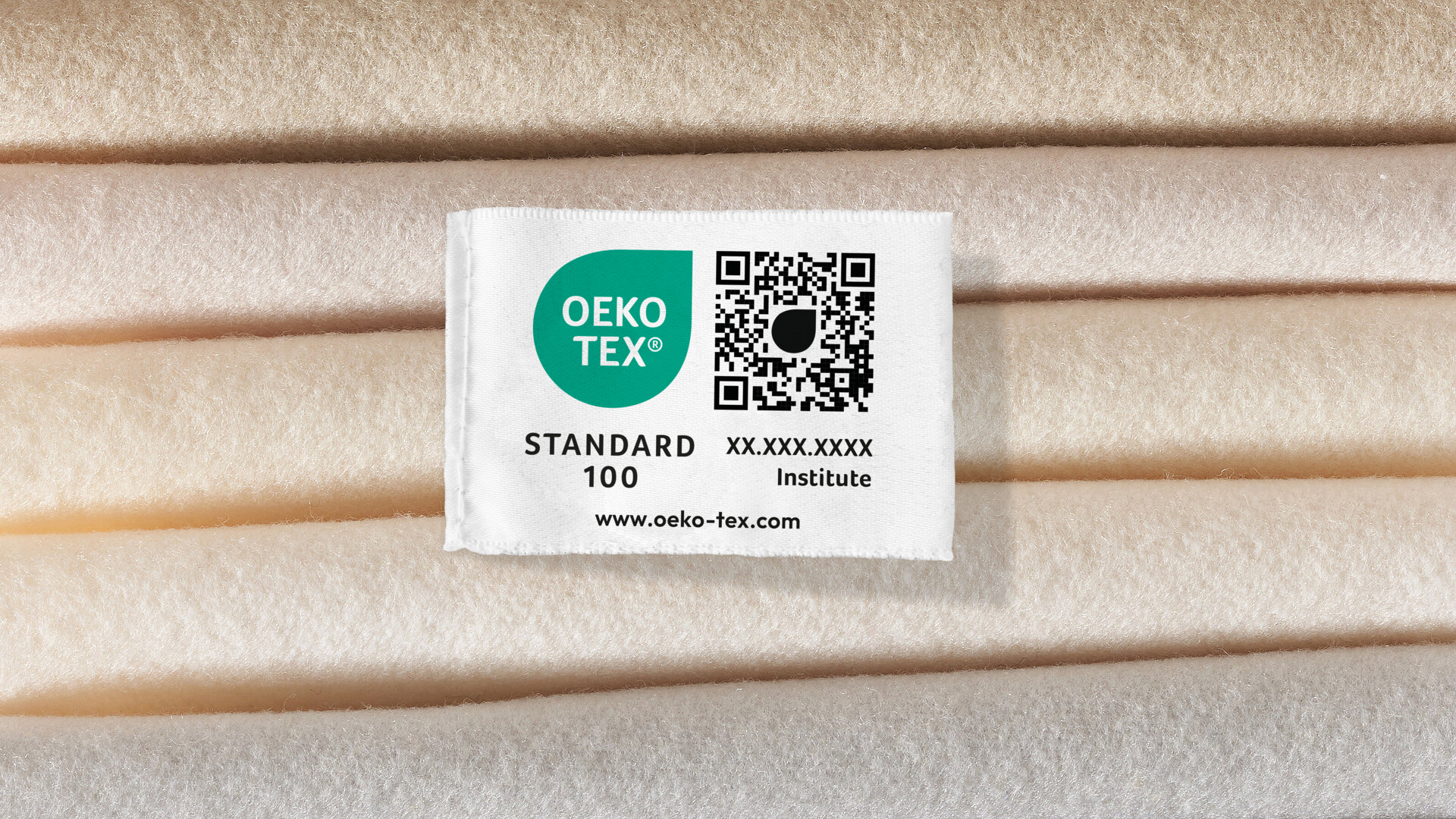
Oeko-Tex launched its Trust in Every Thread consumer campaign on Oct. 12 after the European Union introduced regulations restricting unverified sustainability claims across apparel and textiles.
Demand for the group’s Made in Green standard rose 13 percent during its 2025-26 fiscal year.
At the centre of the campaign is a 35-second film and consumer education drive. It directs shoppers to inspect garment tags and verify claims through digital traceability tools. The European Union’s Empowering Consumers for the Green Transition Directive took effect on Sept. 27. It outlaws sustainability labels lacking backing from public authorities or accredited third-party certification bodies. Private schemes must now maintain publicly accessible criteria, enforce third-party monitoring, and provide mechanisms to suspend non-compliant users.
Stricter verification rules for textile certification
Generic environmental buzzwords face outright bans under the new European framework unless backed by verified data. Brands can no longer present a single product characteristic as proof of whole-garment sustainability. Verification systems must also operate independently from scheme owners and commercial clients.
Standard 100, the core certification from Oeko-Tex, tests raw materials, intermediate goods, and finished items for more than 1,000 harmful chemicals. Criteria cover every component of a finished product, including sewing threads, zippers, and buttons. Limit values undergo mandatory annual reviews. The tightest thresholds apply to baby and toddler clothing up to three years of age.
Quality control procedures require retesting for 25 percent of all issued certificates each year. The group enforces compliance through unannounced site inspections and factory audits across its global network.
Supply chain transparency and chemical screening
The broader Made in Green certification links Standard 100 product testing with facility-level audits under the STeP program. That framework evaluates chemical management, working conditions, and environmental performance inside processing mills and cut-and-sew units. Each certified item carries a dedicated product ID and QR code. Shoppers can use them to track production stages back through the manufacturing chain.
Rival standards take different approaches. The Global Organic Textile Standard requires a minimum of 70 percent organic fibres, while Bluesign focuses on facility chemical management and specific inputs. Oeko-Tex designed its dual-track testing and facility tracking system to satisfy European regulators demanding end-to-end evidence.
Garment suppliers and global brands sourcing from manufacturing hubs across Asia face immediate compliance pressure. Exporters operating without accredited third-party verification risk regulatory fines and product suspensions at European ports of entry.
Governance overhaul and structural separation
Oeko-Tex revamped its operating structure ahead of the European directive to protect its certification status. In an announcement on Aug. 19, the organization separated standard-setting operations from conformity assessments. The restructuring introduced an independent oversight council and an anonymous whistleblowing platform for reporting compliance breaches.
Inga Bleyer, head of marketing and communication at Oeko-Tex, outlined the rationale behind the verification drive in an official statement:
“Trust is not a word you can put on a label. It is built in the places nobody looks: in the button, the zipper, the thread, in the limits we revise every year because the science moves, in a quarter of our certificates we go back and retest.”
What buyers and suppliers face next
Chief executive Alfred J. Beerli stated that independent verification remains the only mechanism to safeguard consumer trust under the new regulatory climate. The group’s digital Label Check portal lets retailers and shoppers enter certificate numbers to verify validity in real time.
European member states must now transpose and enforce national penalties under the directive as customs authorities inspect incoming shipments. Brand compliance audits across autumn and winter retail collections will test how strictly European regulators apply the documentation standards.