Local banks have invested an additional 345 billion won ($303.8 million) into start-up support. Based on past results, the latest funding could yield 11,000 jobs, D.Camp said on Wednesday. In 2012, 18 local banks teamed up to create and invest 500 billion won into D.Camp, a non-profit organization that supports early-stage start-ups. They decided to pour another 345 billion won into the non-profit in April.
A total of 320 billion won of the total is being allocated to a private investment firm, K-Growth, to create a fund specializing in local start-ups. K-Growth will pull in other investors to join the new fund, with the total size targeted at 1.6 trillion won.
The remaining 25 billion won will be utilized by D.Camp for the running of its co-working space and for the organization of various training and meet-up sessions for start-ups.
D.Camp analyzed the number of jobs created by start-ups that received investments from the non-profit and K-Growth in the past in order to calculate how many jobs the new investment is likely to create.
“K-Growth’s fund will produce 10,080 new jobs, while D.Camp’s support can add 960 to that figure, so the total will come to about 11,000” in the next three years, said D.Camp head Kim Hong-il at a press event in southern Seoul.
D.Camp began investing in and incubating early-stage start-ups in 2015. Among 121 start-ups it invested in, 86.4 percent, or 110 companies, managed to survive and expand from seed stage. This is higher than the local survival rate of 38.2 percent and the Organization for Economic Cooperation and Development’s average of 57.2 percent.
The enterprise value of the companies increased an average of 282 percent after receiving D.Camp investment. Among the 110 surviving today, 37.3 percent weren’t generating any revenue at the time the non-profit decided to participate.
Kim said a big factor in keeping D.Camp’s success rate high is its monthly demo day, in which start-ups compete and present their businesses in front of other start-up entrepreneurs and investment managers at D.Camp. For teams with good evaluation results, D.Camp recommends investment and support.
“D.Camp started out as something more like a social responsibility program, but today, we see it as a long-term investment for the country’s economy,” he said. “Start-ups nowadays offer services and products that even customers didn’t know they needed. That kind of innovation is something large-sized companies can’t do.”
Technology-related subsidiaries of LG hosted a fair on Monday in which 20 local start-ups presented their cutting-edge developments in areas such as autopilot technologies, artificial intelligence and big data. The small firms are seeking partnerships with and support from the fourth-largest conglomerate in Korea.
LG picked the start-ups jointly with the Korea International Trade Association (KITA), hoping to revitalize local start-up ecosystem.
The conglomerate is providing a venue for the fledgling firms to mingle with their larger counterparts and find new business opportunities.
LG subsidiaries participating in the event include LG Electronics, LG Display, LG Innotek, LG Chem, LG U+ and LG CNS.
Executives and researchers from those companies as well as KITA CEO Kim Young-ju paid a visit to the start-up fair, which took place at the LG Science Park in Magok, western Seoul, and had a closer look at technologies and services featured.
Funnel, for instance, has developed a voice-recognition system that automatically collects information from television broadcasts. The resulting database can be used for artificial-intelligence smart speakers and voice-command chat bots.
Venta VR owns a technology that is able to tape high-resolution 3D videos and calibrate the video images afterwards in a way that enhances the level of immersion and minimizes visual fatigue.
LG will offer some of the participating start-ups office and research space inside the LG Science Park as well as technology-related consulting and funds.
Companies under the LG umbrella have been increasing support for start-ups.
LG Electronics is backing four start-ups that are in the web operating system business, whereas LG CNS and LG Display have been running their own programs.
LG-led tech fairs aimed at locating and supporting promising local start-ups have been held in the United States, Germany, Israel and Russia.
With a German start-up discovered during a tech fair in Europe, LG developed a linear compressor technology for refrigerators.
LG says it will apply the cooperation system it developed overseas to Korean start-ups and smaller companies.
“Future cooperation with start-ups will propel their global outreach,” said an executive at the LG Science Park.
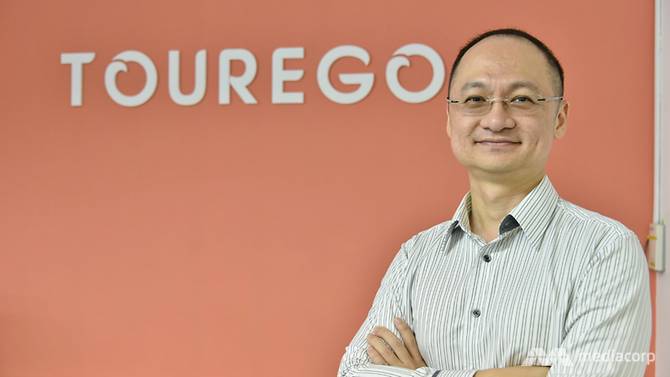
When Tan Tie Wee, 40, heard complaints from his colleagues in China about the hassle of filing for tax refunds overseas, he was motivated to start up something that can help simplify this process.
“Some said it was language difficulties. Some said they were pressed for time because they were in a tour group. So I suggested an app that could help them with the claims and they said if there was one, they would definitely use it,” Tan said.
He was working as PwC’s senior manager for indirect tax practice then, and he had spent two years working in China.
Tan was impressed by the country’s prevalent use of mobile payment apps and QR codes and figured that he could integrate it into his own venture.
He ended up quitting his job in 2015 so he could work on realising this ambition amidst other big players such as Global Blue, Premier Tax Free, and Global Tax Free in Singapore.
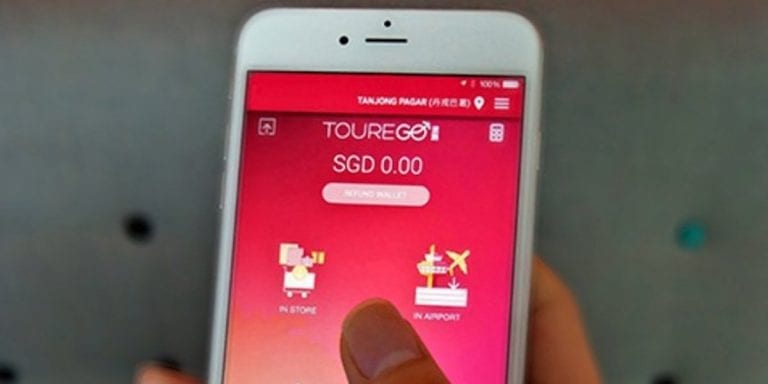
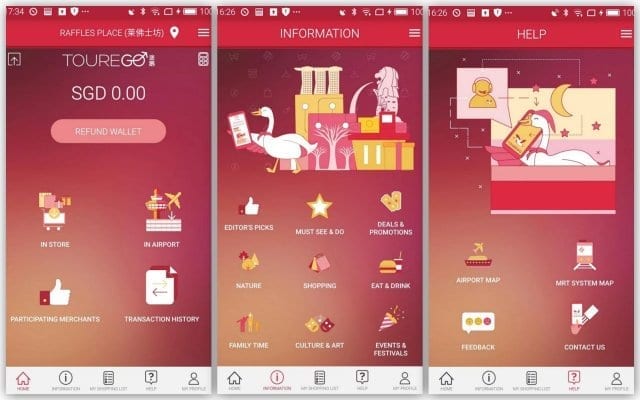
He then worked on developing Tourego (short for ‘tourist refund on the go’), an all-in-one app that acts as a mobile passport and e-wallet that stores tax refund tickets.
Launched just three months ago, the mobile app allows retailers to simply scan the QR codes which in turn generates digital tax refund tickets for tourists, replacing the current paper-based system.
This means that retail staff no longer need to take down the particulars of tourists when they issue tax refund tickets, which helps to effectively save time and manpower.
Senior Minister of State for Trade and Industry Sim Ann mentioned Tourego in her speech during the recent Committee of Supply debate, and said that such productive technologies allow staff to spend less time on routine or tedious tasks, and more time to provide better customer service.
On the other hand, tourists can also easily submit claims by scanning these e-receipts at the tax refund kiosks upon reaching Changi Airport.
With the digitisation of such process, tourists no longer need to worry about losing receipts when keeping track of their Goods and Services Tax (GST) refund claims.
Challenges On Starting Up
The traction of the mobile app has been enjoying positive traction so far.
Although exact user numbers weren’t disclosed, Tourego said that it has gotten 150 retailers – such as Robinsons, Zara, 1872 Clipper Tea Co, and RISIS – onboard since its launch.
But starting up the business wasn’t easy.
The process was much more tedious than he expected.
For starters, the startup needed to go through stringent checks before being given its license by the Inland Revenue Authority of Singapore (IRAS) last November.
According to IRAS, all central refund agencies that participate in the Electronic Tourist Refund Scheme (eTRS) have to meet necessary requirements to ensure that the GST refunds are properly administered, and that their systems are robust.
These include a technical certification process and IT audit.
But the start-up also managed to tap on Government schemes for support.
For instance, the Ministry of Trade and Industry’s Pro-Enterprise Panel facilitated cooperation with Government agencies to ensure Tourego’s solution complemented existing systems, said Ms Sim in her speech in Parliament.
The Singapore Tourism Board (STB) also featured Tourego on its VisitSingapore website and inbound trade newsletter, as well as displayed the start-up’s brochures at the Singapore Visitor Centre.
“With electronic payment platforms growing increasingly popular in Singapore, STB is pleased to support Tourego’s mobile application as it allows visitors to claim tax refunds in a more seamless and hassle-free manner in Singapore,” said STB.
The eTRS system in place right now already seeks to make Singapore’s tourist tax refund system less reliant on paperwork.
Since its roll-out in 2011, tourists no longer have to fill in different GST refund forms and queue at different counters to get the claims done.
Now, visitors can choose to swipe their chosen credit card at the self-help kiosks to retrieve records of their purchases. Alternatively, they can scan the eTRS tickets individually before indicating their preference for the tax refund method.
Competing Against Other Big Players
Other technology players also seem to have set their sights on this space.
China’s Alipay, for one, partnered Global Tax Free last year to allow Chinese tourists to make claims and have their tax refunds deposited directly into their Alipay accounts.
This instant tax refund service through the Chinese mobile and online payment platform, was made available in Singapore earlier this year.
Tourego App
As such, Tourego is working to roll out its other features that would eliminate the need for its users to present their passports at the point of purchase and allow them to skip the queue at the airport.
“We want everything to be done on the mobile phone,” said Tan.
“For registration, all you have to do is to scan your passport using our app. At the retail store, flash your QR code and a digital receipt will be generated automatically.
“Joining the queue at the airport is probably the most painful part of the refund process and we think this can be changed. My full solution will be to move the declaration process on to the app so that there will no need to stand in line at the various counters or in Singapore’s context, queue to scan your passport at a kiosk,” he added.
The start-up founder is also aiming to expand beyond Singapore though the navigation of various tax systems could be a hurdle.
“We have global ambitions to be a homogeneous global tax refund solution. It may be challenging but we will take one step at a time and first, we will show that it’s going to work here in Singapore.”
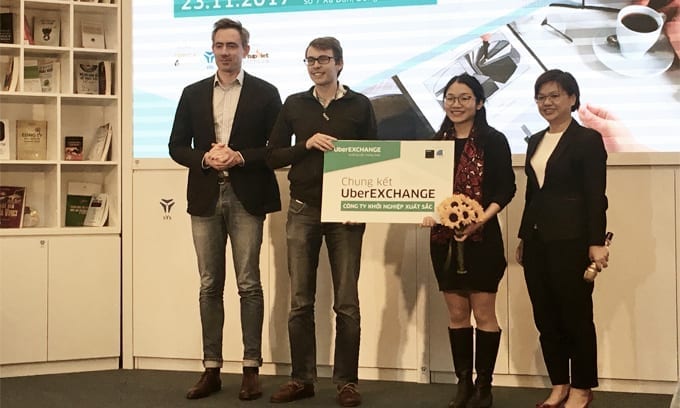
Ten aspiring Vietnamese start-ups went head-to-head on Thursday at the final of UberEXCHANGE, a nationwide competition offering a $4,400 prize and two tickets to visit Silicon Valley.
Logivan, a two-month-old start-up, emerged as the winner with its plan to ‘Uberise’ Vietnam’s road freight market.
“From my house I can see lots of empty trucks returning to their depots after completing their deliveries,” said CEO Linh Pham. “It’s a huge problem.”
The start-up already works with 300 trucks and ships up to 28,800 tons of freight per year.
Logivan hopes to step up in the giant market that will be worth an estimated $9 billion in 2017.
“If you bought something, a truck brought it!” the slogan says.
Last year, the Vietnamese government set a target of reaching one million new firms by 2020, turning the country into a start-up nation.
In the cozy conference room, both experts and competitors were positive about the country’s start-up scene.
“People say that Vietnamese start-ups are not tech-related, and that might have been true a few years ago when most people were focused on commercial start-ups,” Nguyen Thi Thu Van, said board member and vice president of the Vietnam Youth Union.
“But this year we’ve seen two clear tech trends: bio and information technology.
“I don’t think the government’s target is out of reach,” Van continued. “Since the plan was announced, remote provinces like Kon Tum have been the most supportive for start-ups.”
Diep Que Anh, head of communications for Uber Vietnam, shared Van’s optimistic view.
“We’ve seen a number of them reaching international markets in their very early stages,” Anh said. “So I think there’s a lot of reasons to be optimistic and excited about.”
Vietnam, particularly its biggest economic hub Ho Chi Minh City, has long been known to the global tech market as an outsourcing haven, but the nation is yet to register on the global startup map.
In the Global Startup Ecosystem Report 2017 released by U.S. research organization Genome, Ho Chi Minh City was not mentioned in its top 20.
Geektime, one of the biggest tech blogs that focuses on global innovation, estimated the number of tech start-ups in Vietnam stood between 1,400 and 3,000 in 2016, making the country the third largest ecosystem in Southeast Asia. However, around 95 percent of start-ups die within 3-5 years.
But Vietnam’s start-up spirit, its young, tech-savvy generation, and recently, ambitious leadership, make the country an attractive new ecosystem.
What Vietnamese start-ups are missing is access to experienced professionals.
“Even the best teams we’ve seen today don’t have the necessary presentational and persuasive skills,” said board member Van Nguyen.
“It helps to receive mentorship from successful startups to learn about management skills,” Van stressed.
Diep Que Anh, head of communications for Uber Vietnam, offered more advice.
“It’s always important to understand the landscape in which you are competing,” Anh said. “They need to look regionally and globally, not to solve just Vietnam’s problems.”
Despite all these problems, Phan Nguyen, CEO of another finalist, said it was a good start. “It’s good to see the quantity first, then the quality will improve.”
Uber’s Que Anh agreed.
“If these are the indications, then the future is very bright,” she said
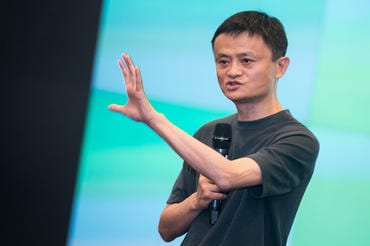
Jack Ma has some blunt advice to startups: “If it’s hot, forget it.”
“By that time everyone is doing it. It’s too late,” Ma told attendees of the Jumpstarter 2017 finale at the Hong Kong Exhibition and Convention Centre last night.
Ma, who shared the stage with Hong Kong chief executive Carrie Lam, was on hand to present US$1 million in funding to winning startups from medical, agricultural and energy sectors.
Ma encouraged startups to pursue their dreams.
“The advice is first you should be optimistic – a great entrepreneur is optimistic for the future. And you have to answer what problem will you solve. What way can you solve it which is different? Why are you better than anyone else?
“The second is that you have to find a group of people who can work together. Those people who have the same ambition. Those people coming to join you not just because it is a job, but because they believe in you and they believe in the mission.
“And the third is: What price are you going to pay for it. You don’t ask “What can I get?” You ask “What can I give?”. If you have a great idea, you may have to wait 10 years. If you think I will win this in three years, prepare for five years.”
Ma said when he conceived Alibaba 18 years ago and went out to raise money from venture capitalists, he was rejected by all of them.
“The first money I got from a capital fund was $50,000. I thought this would last 10 months. We even counted every cent we spent. But it lasted only four months. We were almost bankrupt.”
He also warned startup founders to be patient.
“Today if you are only a tractor, don’t try to put a Boeing 747 engine inside. It will destroy you. You should find the people who suit the company. I have hired a lot of vice presidents from big companies – they almost destroyed my company. I only had $5 million and a guy came in with a marketing plan $12 million. I said: How can you have $12 million? He said: “I have never made a plan below $20 million.
“Find the right person,” said Ma.
Tax breaks
He urged governments if they cannot fund startups, why not reduce the tax to them.
“I’m doing that,” interjected Lam, who has met with Ma four times since her election in July and enjoyed wide-ranging discussions on technology and business.
Both people said they were “very optimistic” about Hong Kong’s future as a base for startups.
Ma said that although the city is not a large market, Alibaba is interested in the talent that the city offers. Its capital and technology also appealed.
“The reason why Hong Kong has been so successful in the past 50 years is because Hong Kong is very open-minded, and accommodates all kinds of cultures. [Hong Kong] should also welcome people from all over the world,” he said.
“Young people in Hong Kong, don’t focus your eyes only on Hong Kong. America, Europe, anywhere there is opportunity, go there and build something and bring ideas back.”
Lam said Hong Kong needed to review immigration policies to encourage entrepreneurs to come to the city.
“We need more time to nurture local talent and [in the meantime] we need to bring in outside talent. Hong Kong remains very attractive to a lot of expatriates and people from the mainland,” she said.