Tag: stations

  • India’s 5g Infrastructure Surges With 6,400 New Stations: Reinforcing Digital Economy Growth

    India’s 5g Infrastructure Surges With 6,400 New Stations: Reinforcing Digital Economy Growth

    In September 2025, India significantly extended its 5G coverage, introducing over 6,400 new 5G base transceiver stations (BTS). This latest data was provided by the Department of Telecommunications (DoT), which also reported that the total count of nationwide 5G BTS has increased to 504,588 compared to 498,135 in August.

    Exponential Expansion of 5G Infrastructure

    The robust additions in September are an upward trend from the 5,615 sites incorporated in August, emphasizing India’s consistent growth in the expansion of next-generation mobile infrastructure. This steady rise, marked by monthly BTS additions consistently surpassing 4,000 since March 2025, is a clear indication of strong operator commitment to a nationwide 5G rollout.

    Key Industry Players

    Vodafone Idea (Vi) made a significant move in expanding its 5G reach by introducing services in Dehradun on September 17, 2025. This is part of Vi’s implementation across 17 priority circles where it aims to utilize its 5G spectrum assets to elevate customer experience and match the competitiveness of market leaders like Reliance Jio and Bharti Airtel.

    Bharat Sanchar Nigam Limited (BSNL), on the other hand, is advancing its focus on indigenous technology with the launch of its fully Indian-developed and manufactured Swadeshi BSNL 4G network. This network, which incorporates a core developed by C-DOT, Tejas Networks’ radio access solutions, and TCS integration, is now connected with over 22 million subscribers across 92,000 sites. The Ministry of Communications has hailed this achievement as a significant milestone in India’s self-reliance efforts for telecom infrastructure.

    Continued Growth and Future Prospects

    The DoT data points to a steady monthly growth in BTS deployments, which is anticipated to continue. As the India Mobile Congress (IMC) 2025 approaches, all major telecom operators are expected to enhance their network expansion and innovation efforts. It is expected that industry giants Reliance Jio, Airtel, and Vi will reveal new 5G and AI-driven solutions during the event.

    The robust expansion of India’s 5G infrastructure solidifies its position as one of the world’s rapidly growing digital economies. This growth lays the groundwork for enhanced connectivity, enterprise innovation, and a robust digital ecosystem.

    Questions & Answers

    What is the total number of 5G BTS in India as of September 2025?
    As of September 2025, the total number of 5G BTS in India is 504,588.

    How is Vodafone Idea (Vi) expanding its 5G reach?
    Vodafone Idea (Vi) is expanding its 5G reach by introducing services in Dehradun and other priority circles, using its 5G spectrum assets to improve customer experience and competitiveness.

    What is the significance of Bharat Sanchar Nigam Limited (BSNL)’s Swadeshi BSNL 4G network?
    The Swadeshi BSNL 4G network is significant as it is fully developed and manufactured in India, marking a major milestone in the country’s self-reliance efforts for telecom infrastructure.

  • Google Maps will no longer show gas stations for EV drivers

    Google Maps will no longer show gas stations for EV drivers

    Google makes changes to its apps all the time and Maps is no exception to what seems to be an unwritten rule. Whether these changes are good or not for users, it remains to be determined. We can only hope that any anti-consumer decision will be rectified by the companies providing many of the services that we use.

    One of the important changes that will affect Google Maps for Android Auto in the not-so-distant future involves gas stations, which apparently will be removed for those who drive electric vehicles.

    Google has already confirmed the information, so expect this to be reflected in your Maps for Android Auto very soon. According to Google spokesperson Pearl Xu, “to help people get the most relevant information when navigating, last year we added the ability for EV drivers to see a shortcut for charging stations instead of gas stations on Google Maps for Android Auto.”

    The ability to see gas stations for EV drivers can be disabled in favor of the option to see charging stations since last year, but with the new change, Google Maps will no longer show gas stations as a category while navigating in an EV using Android Auto.

    If you’re using Google Maps for navigation purposes while driving an electric vehicle, you’ll soon notice that the top item will now show EV charging stations. In any case, here are some of the EV-specific features offered by the app, as highlighted by Google:

    • Real-time charging port availability: Just search for “ev charging stations” in Google Maps and you’ll see the real time availability of charging ports at nearby stations so you don’t have to wait in line.
    • Charging speed filters: The ‘very fast’ charging filter will help you easily find stations that have chargers of 150 kilowatts or higher. For many cars, this can give you enough power to fill up and get back on the road in less than 40 minutes. You can also use the “fast” chargers which will show you stations with chargers 50kW or higher.
    • Plug type filters: You can also filter for stations that offer your EV’s plug type so you only see stations with plugs that are compatible with your car.
    • Adding charging stops to trips: On any trip that’ll require a charging stop, Maps will suggest the best stop based on factors like current traffic, your charge level and expected energy consumption.
    • Charging stations in search results: We’ll also show you in search results when places like a supermarket have charging stations on-site. So, if you’re on your way to pick up groceries, you can more easily choose a store that also lets you charge your car there.
  • Waze makes it easier to find EV charging stations on its map

    Waze makes it easier to find EV charging stations on its map

    Waze is adding new features to its navigation app almost every month. March is no exception to this unwritten rule, so if you own an electric vehicle, this month’s update has been specifically tailored for you. As the title says, Waze’s newly added feature makes finding charging stations for electric vehicles easier than ever before.

    Whether you’re using an Android or iOS device, starting today, you’ll be able to find relevant EV charging stations along your route. Despite saying that the feature will be available starting today, Waze also mentions that this will be rolled out globally over the coming weeks, so if you don’t see the option to find EV charging stations in your Waze app, give it some days and check again.

    The latest Waze update is important because it adds up-to-date EV charging information to its map. More often than not, charging station information is not exactly accurate or it’s downright outdated and unreliable, making the navigation experience disappointing for many owners of electric vehicles.

    According to Waze, in order to provide the most accurate information to the map, all EV data is reviewed and updated in real-time with the help of the local Map Editors from the community.

    Most likely the new EV-related feature is now available in North America, so if you drive an electric vehicle, you can plug type into the Waze app to find all relevant EV charging stations along your route. As far as the accuracy goes, its Waze users who will decide how reliable the new feature truly is, but considering it’s curated by the community, it’s safe to say that it’s going to be updated in real time.

    Here is hoping that the expansion of the new EV feature won’t take so many weeks as Waze suggests, especially since there are many electric cars in Europe and other regions of the world.

  • Ez4EV Launches EzUrja Mobile Charging Stations

    Ez4EV Launches EzUrja Mobile Charging Stations

    Ez4EV Private Limited, a battery storage & charger development company is all set to launch its innovative mobile charging solution EzUrja for electric vehicles to mitigate the range anxiety of EV owners and to instantly up the missing infrastructure for EV charging points in the country. These mobile charging stations follows an innovative EV ‘Charging-on-Demand’ approach and is managed as an Internet of Things (IoT) device, allowing for remote condition monitoring and organization of operations. Ez4EV plans to deploy multiple EzUrja’s servicing EVs in cities and highways of the country more so as a product for smaller towns by creating better EV connectivity.

    Satinder Singh, CEO, Ez4EV said, “EV development prerequisite is the charging point availabilities. In our country where customer delight is on a door-step delivery basis, we complement the same by providing India’s first Charging-on-Demand to ease the ride of an EV owner”.

    The fully charged EzUrja Mobile guarantees a seamless energy supply for the entire range of slow or fast chargers supporting two-wheelers to commercial vehicles to premium EVs. More importantly, it ensures stabilized flow of energy with zero variables or surges 24×7 on call.

    At the core the Lithium-Ion Manganese Phosphate battery provides the element to make a robust business case, which was not possible with other comparative battery chemistries. Ez4EV is introducing an innovative battery technology from C4V/iM3 New York, for initiating localization of ‘Battery Energy Storage Systems based on their success cases in USA’. Lighter weight, green chemistry characteristics and longer cycles makes the C4V cells as the most ideal battery fulfilling the clean India mandate.

  • Google Maps Adds Plug Type Filter For EV Charging Stations

    Google Maps Adds Plug Type Filter For EV Charging Stations

    Google Maps has received a new filter to classify the Electronic Vehicles (EV) charging stations based on plug type. There are different types of charging connectors used by several car manufacturers, for example, Nissan uses CHAdeMO, Tesla uses its instrumentation, and also the BMW and VW use CCS plug kind for charging their cars. Since the emergence of the EV search facility over Google Maps, the users were missing out on the ability to filter results based on the connector type, GizmoChina reported on Sunday.

    The recent update will surely a sigh of relief for the daily drivers, it will facilitate them to drive car on to the compatible charging station. To use the new feature, the users can head over to the Google Maps > Settings > Electric Vehicle Settings >Your Plugs > Choose and save.

    Google Maps has recently revealed that it has captured more than 10 million miles of Street View imagery – a distance that could circle the globe over 400 times. The company also announced that Google Earth now lets people browse more than 36 million square miles of high definition satellite images from various providers – covering more than 98 percent of the entire population – to see the world from above.

  • Hyundai Motor Joins European Electric Car Charging Venture Ionity

    Hyundai Motor Joins European Electric Car Charging Venture Ionity

    Ionity, the European electric vehicle charging joint venture of Volkswagen, BMW, Daimler and Ford, said on Monday that South Korea’s Hyundai Motor had joined as a shareholder.

    Ionity aims to install 400 high-speed charging stations across Europe by the end of next year in a bid to combat concerns about the range of electric vehicles, which is still considered a key factor limiting demand.

    So far, the venture has installed 140 stations in 14 European countries, while a further 50 are under construction.

    “The participation of new investors in Ionity is a clear signal of trust indicating that the work of our young company is already bearing fruit,” Chief Executive Michael Hajesch said in a statement.

    The announcement comes days before the Frankfurt Auto Show IAA, where sustainable driving and electric cars will take centre stage. Volkswagen will display its ID 3 electric vehicle, Porsche its Taycan electric sports car, and Mercedes-Benz its fully electric van.

    Carmakers are pouring much of their cash into developing electric vehicles, while energy providers hesitate to take on responsibility for the rollout, as long as electric car sales remain too low to provide a profitable customer base.

    Reporting by Christoph Steitz; Editing by Edmund Blair

  • Google Maps adds real-time info for EV charging stations

    Google Maps adds real-time info for EV charging stations

    There are so many reasons to love Google Maps right now, some of which have very little to do with the core functionality of the world’s most popular web mapping service or the numerous handy navigation features borrowed from Waze over the past few months.

    One extremely convenient thing you’ve been able to do since last fall with Google Maps is easily find electric vehicle (EV) charging stations around the world, and now the feature is further improved to save you some hassle and avoid wasting your time. In addition to just showing you nearby charging stations and helping you reach them by taking the fastest route, the wildly successful app can also provide real-time information on the availability of actual charging ports.

    No more waiting in line for “anywhere between minutes to hours”… unless, of course, you don’t mind taking your chance or don’t have much of a choice of EV charging stations in your area. But if you do, Google Maps will display exactly how many ports are actually available at any given time in stations from Chargemaster, EVgo, and SemaConnect networks. Keep in mind that the expanded functionality is only supported in the US and UK at the moment, with Chargepoint slated to join the aforementioned list of partners “soon.”

    As you can imagine, it’s incredibly easy to locate the closest electric vehicle charging station. You simply enter “ev charging” or “ev charging stations” in the app’s search box, which will bring up a list of relevant places from where you can access the number of available ports, their types and charging speeds, as well as other driver-provided info about a specific station, like photos, ratings, reviews, and questions.

    Don’t forget to update Google Maps on your Android handset or iPhone to the latest version published to Google’s Play Store or Apple’s App Store. The new feature should already be live for users of both mobile operating systems.

  • Australia launches fourth Mobile Black Spot round

    Australia launches fourth Mobile Black Spot round

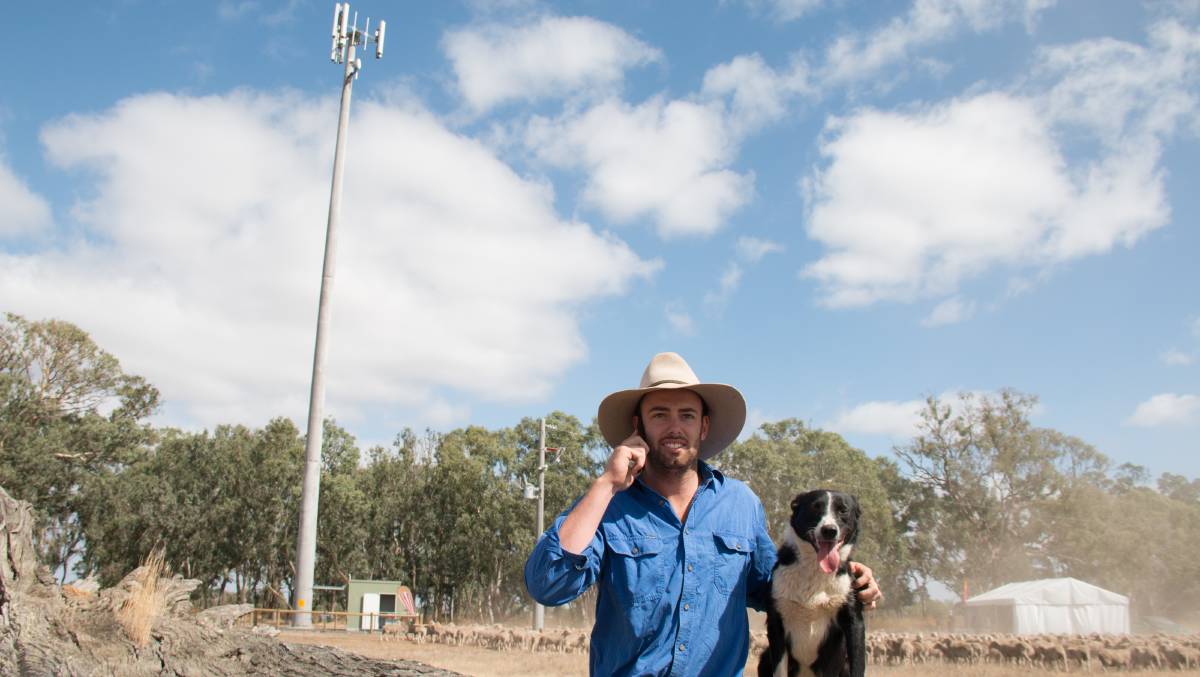
    The Australian government has opened applications for the fourth round of the national Mobile Black Spot program, designed to improve mobile coverage in regional and remote Australia. Mobile network and infrastructure providers have been given until December 10 to submit their applications for taking part in the program to install mobile base stations at designated locations. Construction is expected to commence early next year. The government has allocated A$25 million ($17.8 million) in funding for the latest round of the program, which is designed to subsidize the deployment of base stations in unprofitable areas.

    The program has a focus on public interest premises, including economic centers, emergency services, health and educational facilities, local government facilities, as well as community and non-profit organizations.

    Co-funding is provided by state and local governments, the market’s mobile operators Optus, Telstra and Vodafone, businesses and local communities.

    Locations for the deployment were nominated by local and state governments and federal politicians, but local communities can still seek funding for locations not on the database.

    Under the first three rounds of the A$220 million federal government program, 867 new base stations are being delivered at a total cost of A$680 million.

  • Apple explores charging stations for electric vehicles

    Apple explores charging stations for electric vehicles

    Apple is investigating how to charge electric cars, talking to charging station companies and hiring engineers with expertise in the area, according to people familiar with the matter and a review of LinkedIn profiles.

    For more than a year, Silicon Valley has been buzzing about Apple’s plan to build an electric car. Now the company appears to be laying the groundwork for the infrastructure and related software crucial to powering such a product.
    The moves show Apple responding to a key shortcoming of electric vehicles: “filling up” the batteries. A shortage of public charging stations, and the hours wasted in charging a car, could be an opportunity for Apple, whose simple designs have transformed consumer electronics.

    Apple, which has never publicly acknowledged a car project, declined to comment for this story. Neither the LinkedIn profiles nor sources said specifically that Apple was building charging stations for electric cars.
    But automotive sources last year told Reuters that Apple was studying a self-driving electric vehicle (EV), as the Silicon Valley icon looks for new sources of revenue amid a maturing market for its iPhone.

    Apple is now asking charging station companies about their underlying technology, one person with knowledge of the matter said. The talks, which have not been reported, do not concern charging for electric cars of Apple employees, a service the company already provides. They indicate that Apple is focused on a car, the person added.

    Charging firms are treading carefully, the person added, wary of sharing too much with a company they view as a potential rival.
    It is unclear whether Apple would want its own proprietary technology, such as Tesla Motors’ Supercharger network, or would design a system compatible with offerings from other market players.

    Several charging station suppliers contacted by Reuters declined to comment about any dealings with Apple, which typically requires potential partners to sign non-disclosure agreements.

    Arun Banskota, president of NRG Energy electric vehicle charging business, EVgo, did not respond directly to questions about Apple, but said repeatedly that his company was “in discussions with every manufacturer of today and every potential manufacturer of tomorrow.”

    Apple has hired at least four electric vehicle charging specialists, including former BMW employee Rónán Ó Braonáin, who worked on integrating charging infrastructure into home energy systems as well as communication between EVs, BMW and utilities, according to a LinkedIn review.

    As recently as January Apple hired Nan Liu, an engineer who researched a form of wireless charging for electric vehicles, for instance. Quartz earlier this month reported that Apple had hired former Google charging expert Kurt Adelberger.
    Electric vehicle charging stations are manufactured, installed and operated under varying business models. Players in the space include Car Charging Group and privately held ChargePoint, SemaConnect and ClipperCreek, infrastructure companies such as Black & Veatch and AECOM as well as General Electric, Siemens and Delta Electronics.
    The three largest utilities in California also have plans to install charging stations.

    CHARGER SHORTFALL

    The electric car industry has faced a chicken-and-egg paradox with the installation of charging stations. Property owners have been reluctant to install the stations before EVs hit the road en masse, and drivers are wary of buying EVs until charging stations are widely available.

    Apple’s home state of California by 2020 will need about 13 to 25 times the roughly 8,000 work and public chargers it currently has, to support a projected 1 million zero-emission vehicles on the road, according to an estimate by the National Renewable Energy Laboratory.

    Tesla recently goosed electric vehicle demand, unveiling its more affordable Model 3 sedan, generating hundreds of thousands of reservations from potential buyers and leading many experts to calculate the number of EVs will soon outstrip the charging station supply.

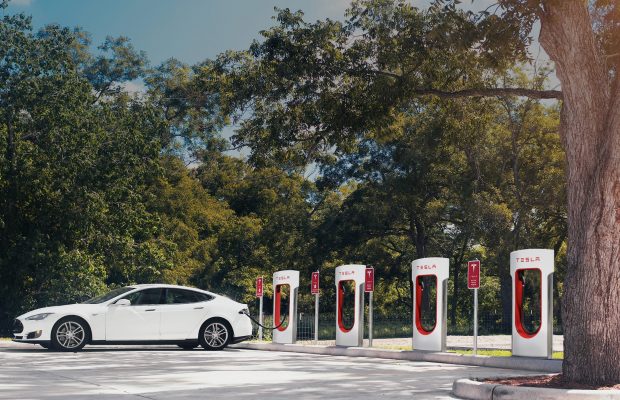
    Tesla has led the way with a proprietary network for customers, who also can use public chargers. Tesla’s more than 600 “Supercharger” stations juice up a car in about 30 minutes, more than twice as fast as the standard “fast charger,” called Level 2.
    One global engineering and construction firm already has reached out to Apple to offer its services, a person at the firm said.
    “It would be natural to assume if Apple is going to have a full battery electric vehicle that creates a seamless consumer experience the way Apple does, the charging infrastructure and its availability would be of paramount importance,” the source said.