Retail News CRM

Tag: steel tariffs

  • Vietnam wants exclusion from US steel tariffs

    Vietnam wants exclusion from US steel tariffs

    The Ministry of Industry and Trade (MoIT) has urged the US Government to consider excluding Vietnamese products from its newly announced tariff measures on imported steel and aluminium.

    The ministry stressed that Vietnamese steel and aluminium products sold to the US are intended for use in civil construction, not for infrastructure or security-defence purposes, thus not affecting the US goal of ensuring its national security.

    Moreover, Vietnam’s steel and aluminium products account for just a marginal proportion of US imports of those products, and neither cause nor threaten to cause damage to the US steel and aluminium industries, the MoIT said.

    The ministry will continue to keep close watch on the situation and consider subsequent actions to ensure the legitimate interests of Vietnamese enterprises, while maintaining the growing trend of the comprehensive partnership between Vietnam and the US.

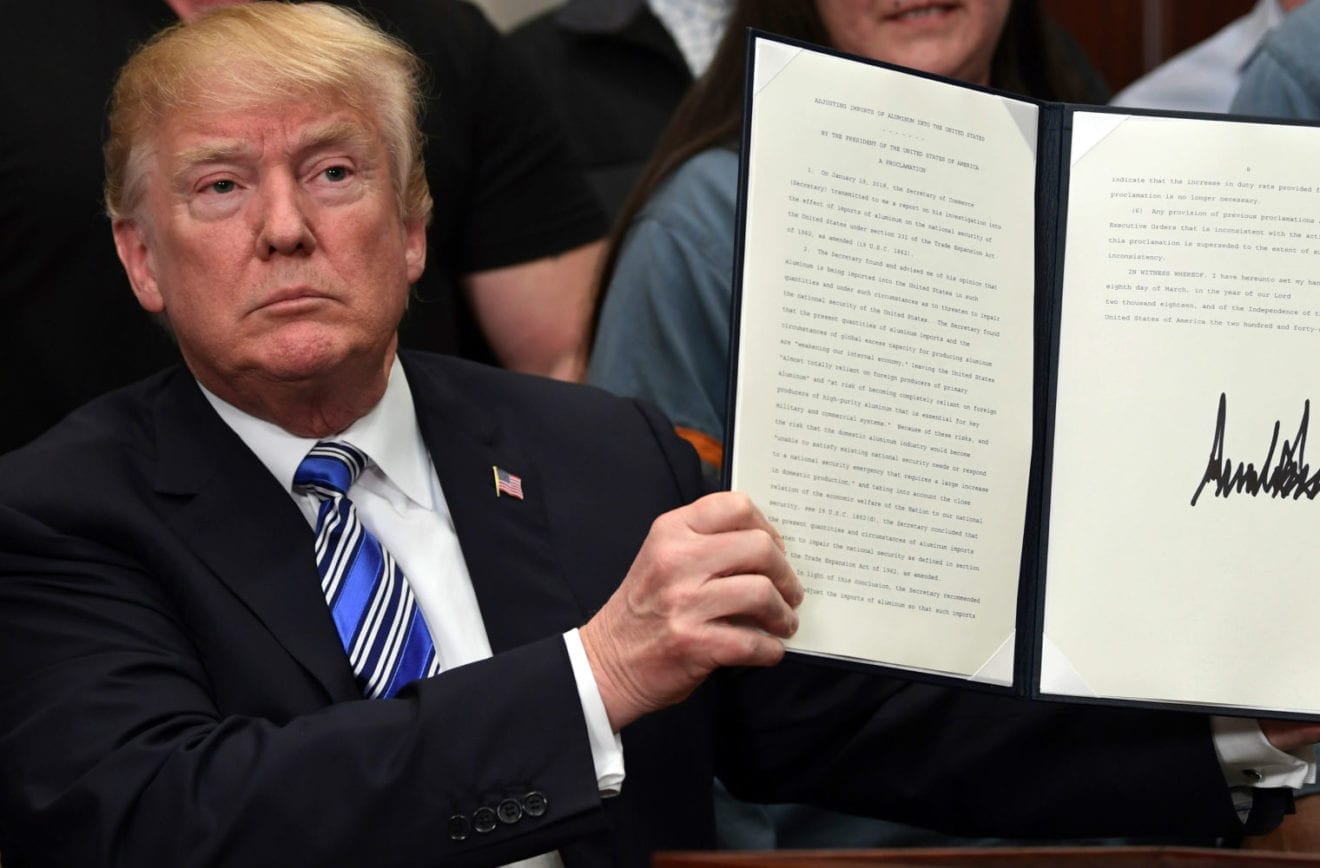
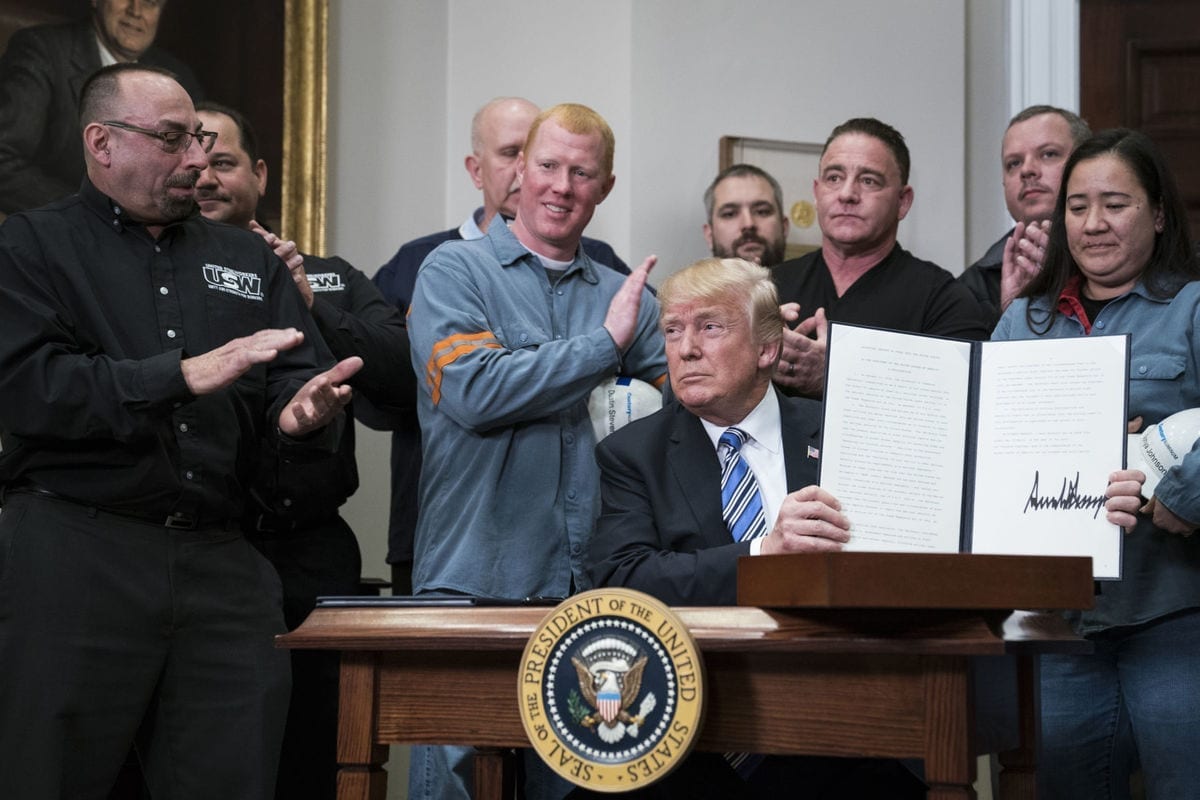
    US President Donald Trump, on March 8, signed proclamations to impose a 25 percent tariff on imported steel and a 10 percent tariff on imported aluminum.

  • Malaysia unfazed by US import tariffs on steel, aluminium

    Malaysia unfazed by US import tariffs on steel, aluminium

    While Malaysia may not see much of an impact from the United States’ move to go ahead with steel and aluminium import tariffs, the move is likely to trigger a surge in steel prices.

    US President Donald Trump signed off on the implementation of 25% tariff on steel imports and 10% for aluminium last week, fanning an outburst from industry players and critics from across the world and within the US alike.

    Maintaining his earlier stance, Malaysian Iron and Steel Industry Federation (Misif) president Datuk Soh Thian Lai said that the impact on Malaysia will be minimal given the relatively small volume of steel exports.

    Malaysian steel exports, which stood at about 96,000 tonnes, accounted for only 0.2-0.3% of the total US steel imports for 2017 of between 34 million and 37 million tonnes.

    Soh said Malaysia will still be able to find an alternate market to the US to export this 96,000 tonnes.

    “Most probably steel prices in US will increase fast enough in the near term and importers will still be able to import even with the 25% duty,” he added.

    In line with that, scrap prices are likely to see a rise, given that consumption of the material will become more domestic centric, hence limiting exports.

    “Scrap prices will increase because now the US could use more scrap internally instead of exporting. The US in actual fact is a net exporter of scrap, and with this trade act imposed, this could raise steel prices not only in the US but also countries importing scrap from them especially Malaysia and Asean countries,” he explained.

    Majority of Malaysia’s scrap, which could not be quantified, he said, is imported, with the US being one of the major importers.

    On the next course of action, Soh said Misif has written of its grouses to the US embassy and the Ministry of International Trade and Industry (Miti).

    “We will follow up with US Embassy and Miti on this. Since the US has allowed an exemption on Canada and Mexico. We will ask the government to bring this up to the US, for Malaysia to be exempted,” he added.

    Echoing Soh’s sentiment on surging steel prices, Barnabas Gan, economist at OCBC Bank, said while trade barriers will spike steel and aluminium prices, it could also result in job casualties for the steel and aluminium-consuming industries of the US.

    “Eventually, we note that the trade tariffs without exemptions will likely do more harm than good, both to the US economy as well as impeding global growth and trade activities. Even in the absence of trade retaliation, the tariffs would threaten many jobs in the US pertaining to aerospace, automobile, manufacturing and construction industries, while benefiting steel and aluminum makers,” he noted.

    Consumers would then face higher inflationary pressures, and thus adversely affect consumer spending and overall disposable income levels. Moreover, the bleaker outlook for the said industries could worsen investor confidence, and thus dissuade investment spending into the US,” he added.

    Meanwhile, Ambank Research said that the move could potentially reduce US steel imports by 13.3 million tonnes and Malaysia on its end could see a reduction of between 48,000 and 49,000 tonnes. Similar to Gan, the research house said the tariffs could have a knock-on effect on steel-consuming industries.

    In line with this development, AmBank noted that the US dollar is expected to weaken, working to strengthen the ringgit and heighten fears of possible trade war.

    The share price of Tatt Giap Group Bhd which exports steel products to the US, fell 3.33% to close at 14.5 sen on Friday, along with Mycron Steel Bhd, which fell 1.15% to 43 sen.

    Steel counters which saw gains at market close on Friday were Ann Joo Resources Bhd Resources, up 0.29% to RM3.47; Malaysia Steel Works (KL) Bhd, 1.05% to 96.5 sen; CSC Steel Holdings Bhd, 2.88% to RM1.43; and Atta Global Group Bhd, 0.55% to 92 sen.

    Leon Fuat Bhd was unchanged at 79.5 sen.
  • Brazil feels pain of US steel tariffs

    Brazil feels pain of US steel tariffs

    Brazilian iron and steel shares took a hit Friday, as markets weighed a potential trade war in response to Washington’s decision to impose hefty tariffs on foreign steel and aluminum.

    Brazil is the second biggest steel exporter to the United States after Canada — and the government is deeply worried about US President Donald Trump’s imposition of 25% tariffs on steel and 10% on aluminum.

    Foreign minister Aloysio Nunes and foreign trade minister Marcos Jorge shot back with a statement Thursday warning that Brazil “will resort to all necessary steps … to protect its rights and interests.”

    Nunes said Brazil was “greatly concerned” by the measure which would “bring severe damage to Brazilian exports and have a negative impact on the flow of bilateral trade.”

    On the Sao Paulo stock exchange Friday, Vale was down 1.33% in late-morning trading, Gerdau was down 1.72% and Usiminas 1.8%. Shares had already taken hefty hits the previous day after Trump’s announcement.

    US NAFTA partners Canada and Mexico are being exempted from Trump’s tariffs, but Brazil will be left wide open to the measures. Brazilian steel accounts for nearly 14% of US steel imports by volume, the US commerce department says.

    The US market accounted for 32.9% of all Brazil’s steel exports last year, the Brazilian government says.

    Blowback

    Brazil’s National Confederation of Industry (CNI) has gone further, blasting Washington’s “unjust, illegal” move which it says will cost Brazil some US$3 billion a year in lost steel exports and US$144 million in aluminum trade losses.

    Diego Bonomo from the CNI says the United States will get blowback because Brazil is the main importer of US carbon steel. Also, 80% of Brazilian steel exports to the United States are semi-finished products used by US industry, then sold on.

    Trump’s tariffs, due to take effect in 15 days, “will have two negative effects: first on exports of Brazilian steel to the North American market and secondly on US exports to Brazil,” Bonomo said.

    The fact that Brazil’s exporter rivals Canada and Mexico will not be under the same tariffs will further hurt Brazilian competitiveness, said Jose Augusto Coelho Fernandes, policy director at the CNI.

    “Brazilian industry regards this measure of President Trump with great worry. Firstly, since he excluded the NAFTA countries from the initial impact, it leaves Brazil as the most-affected country,” he said.

    “If Brazil doesn’t manage to get an exemption it will certainly file a formal complaint at the WTO along with the European Union and China,” Risk Brief consultancy said in a note to clients.