Retail News CRM

Tag: steel

  • Indonesia slaps anti-dumping duties on cold steel sheets imported from Vietnam

    Indonesia slaps anti-dumping duties on cold steel sheets imported from Vietnam

    The Indonesian Anti-dumping Committee has concluded that Vietnam is dumping cold steel sheets following a 16-month-long investigation.

    Indonesia will apply anti-dumping duties of 3.01-49.2 percent on imports from Vietnam. But some major exporters are set to get away with low duties, according to the Trade Remedies Authority of Vietnam.

    Hoa Sen Group will pay 5.34 percent and Ton Dong A Corporation will pay 3.01 percent.

    The Trade Remedies Authority of Vietnam said it has been informed by the committee that Vietnamese and Chinese cold steel sheets are being imported into Indonesia at a price lower than in those countries, hurting domestic companies.

    In August 2019, the Indonesian committee announced it was opening the anti-dumping investigation. In July last year, it made a preliminary conclusion that the item under investigation was indeed being dumped.

    Immediately TRAV sent a letter objecting to some unreasonable aspects of the preliminary conclusion. KADI decided to extend the investigation for six months.

    Its final conclusion was announced on February 17.

  • The giddy rise of Vietnam’s steel billionaire

    The giddy rise of Vietnam’s steel billionaire

    Tran Dinh Long, dubbed the “king of steel,” had no experience in the steel industry when he decided to enter it anyway in the mid-90s.

    “All I had at the time was passion and a lack of fear,” Long, founder and chairman of Vietnam’s biggest steelmaker, Hoa Phat Group, said in a recent interview.

    The company was, in the beginning, distributing machinery and equipment and furniture, but it was steel that ultimately took it to dizzy heights. Hoa Phat had a 32 percent share of Vietnam’s steel market as of August 2020, making it the biggest player in the industry, according to the Vietnam Steel Association.

    The name Hoa Phat cropped up again and again in the news in the past year when its HPG stock, listed on the Ho Chi Minh Stock Exchange (HoSE), chalked up some of the most impressive gains on the VN-Index, thanks to record profits despite the Covid-19 pandemic and a growing market share.

    On Monday, the share closed at VND44,600 ($1.94), more than three times up from its nadir in last March at the height of the Covid-19 crisis when most Vietnamese stocks hit the bottom, and its all-time high price.

    According to the Bloomberg Billionaires Index, HPG’s performance took the net worth of Long and his wife to $1.9 billion. He believes the stock is still not overvalued through its price-earnings ratio (P/E) is nearly at its highest level in 10 years.

    Long started his business in the early 1990s. In 1992, he and some friends set up the Hoa Phat Equipment and Accessories Co., Ltd. to sell machinery and equipment.

    In 1995 it diversified into furniture, becoming a distribution agent for imported products.

    It was in 1996 that Hoa Phat established its first steel unit, at first called Hoa Phat Steel Pipe Co., Ltd. and four years later becoming Hoa Phat Steel JSC.

    “A newly industrialized country has to build a lot of infrastructures,” Long said in an interview, explaining that was the reason he had bet on steel.

    By the time Hoa Phat was listed on HoSE in 2007, Hoa Phat Steel and Hoa Phat Steel Pipe accounted for more than 60 percent of the company’s revenues and profits.

    In the following years, despite a long slump in the housing market, steel still dominated HPG’s business in an overwhelming fashion.

    In 2017, when HPG had become the market leader, Long continued to bet on steel by building the Dung Quat Steel Production Complex at a cost of $2.6 billion in the south-central Quang Ngai Province.

    With the market growing, owning the entire value chain is helping Hoa Phat improve its profit margins. It also gives Long the wherewithal to engage in price wars when he wants to increase market share in new markets such as southern Vietnam.

    And if it cannot sell finished products to the market, Hoa Phat could instead sell billets to other manufacturers, he said.

    The pay-off from this strategy has been partly reflected in HPG’s performance in 2020. “Since the Dung Quat plant went on stream in the third quarter of 2019, HPG has been gradually gaining shares from other major steelmakers such as Posco SS, Pomina and VNSteel,” securities company FPTS said in a recent note.

    Thus, from 26 percent at the end of 2019, its market share rose to 32 percent by August last year.

    In 2020 it sold over five million tons for the first time, with sales of construction steel rising 22.5 percent to 3.4 million tons. Billets sold in the domestic and export markets accounted for 1.7 million tons.

    In the final quarter of the year, the company benefited from the government’s determination to increase spending on public infrastructure, Vietcapital Securities said.

    Hoa Phat plans to expand even further in the steel supply chain with the second phase of its Dung Quat Complex. Construction is set to begin in January 2022 and take three years. It will increase capacity by five million tons a year, with the main output being hot-rolled coil (HRC).

    “It is estimated that after completion Hoa Phat can supply five million tons of HRC per year, equivalent to about 50 percent of current domestic demand,” FPTS said.

    The focus on HRC is expected to increase the company’s income since it is an input in the manufacturing of steel pipes, a product with higher profit margins than construction steel. The segment itself also has plenty of room for Hoa Phat to grow, FPTS said.

    Long estimated that when the Dung Quat plant is fully operational, Hoa Phat’s revenues and profits could increase by 80 percent.

    “Vietnam ranks low in per capita steel consumption and has only taken the first steps in infrastructure development,” said Pham Mai Trang, associate director of research at fund manager Dragon Capital Group.

    “With the Dung Quat complex, Hoa Phat became the dominant player.” Dragon Capital Group owns a 6 percent stake in Hoa Phat.

    Though Vietnam’s steel industry has made great strides, it still has to import large volumes of finished steel and semi-finished products from China.

    Hoa Phat executives have confessed to being worried China could dump cheap steel on Vietnam if its exports continue to be hampered by U.S.-China trade tensions.

    In the first nine months of 2020 Hoa Phat reported a 40 percent year-on-year increase in revenues to VND65 trillion, and 56 percent increase in post-tax profits to VND8.85 trillion.
  • Steel exports to China multiplies 19 times

    Steel exports to China multiplies 19 times

    Vietnam’s steel exports to China surged 19 times to 2.07 million tonnes between January and August on the strength of rising demand in a recovering economy.

    This was nearly 35 percent of Vietnam’s total steel exports in the period, and its value rose 15 times to $844.5 million, according to Vietnam Customs.

    China’s customs data shows that steel imports in the first eight months rose 11 percent year-on-year to 759.9 million tonnes.

    The country, the largest steel producer in the world, became a net steel importer in June for the first time since the last global recession in 2009 as demand overshot supply in the rapidly recovering economy.

    The surge in domestic demand for steel has been driven by infrastructure projects and the property market, the report said, citing China’s commodity price reporting agency.

    Vietnam’s steel exports in the first eight months to all markets rose nearly 37 percent year-on-year to 5.96 million tonnes, with increases of 195 percent to Brazil and 143 percent to Germany.

  • Tata launches steel store for consumers

    Tata launches steel store for consumers

    Indian steel manufacturer Tata Steel has launched a steel retail store called Steeljunction in an attempt to create new paradigms in the industry for B2C consumers.

    The outlet will provide a “one-stop destination” for consumers intending to shop for the metal. It will showcase steel products catering to four consumer segments – Home Decor & Gifting, Home Building, Home Making, and Tools & Implements.

    The 6000sqft store promises a comprehensive product range, services, and in-store facilities. The firm’s investment is part of its strategy to build stronger customer relationships, distribution networks and brands that focus on value-added segments such as retail and help to strengthen the revenue profile.

    Apart from showcasing its own branded products, Tata Steel has also collaborated with its vendor partners to feature their premium branded products in the home-making space at this store. While the Steeljunction store will promote the look and feel of the products, customers can easily purchase them online through the Company’s e-selling platform Aashiyana, which made more than ₹100 crore (US$14.1 million) within one year of its launch.

    “Steeljunction is integral to our strategic focus on the retail segment,” said Tata Steel CEO & MD T V Narendran. “It is aimed at providing a differentiated steel purchase experience to discerning customers. Steel is the most sustainable metal and has diverse applications. This initiative will give a fillip to the consumption of steel, as products will be made available from more accessible locations.”

    The Company has a large retail business that leverages an extensive network of more than 200 distributors and 12,000+ dealers, as well as a strong portfolio of brands to sell branded steel across the country. This segment is relatively insulated from international cycles and provides strong cash flows.

    “The core purpose of Steeljunction has remained the same since 2005,” said Tata Steel VP steel marketing & sales Peeyush Gupta. “It is to provide a touch-and-feel experience to its consumers, including consultation on the right choice of product for their home building and home making needs.”

    Tata Steel’s branded products, retails and solutions business grew by 30 per cent YOY during the last fiscal year. Since inception, 1 million units of Tata Pravesh steel have been installed and more than 10,000 consumers have been served.

  • Steel production and their Basic Methods

    Steel production and their Basic Methods

    Steel is a durable material and the main structural material for engineering.  It represents an alloy of iron with carbon, the content of which in its structure contains 0.01–2.14%.  The composition also includes insignificant amounts of silicon, manganese and sulfur. This material has exceptional mechanical properties: hardness and malleability, thanks to which it is considered the main structural material in mechanical engineering.  It is difficult to imagine what could replace the steel. A wide variety of products are made of steel – from paper clips to the beds of multi-ton presses and construction pieces of ships. Let’s consider main methods of steel production to understand the process better.

    •       Open-hearth process  (Siemens-Martin process)

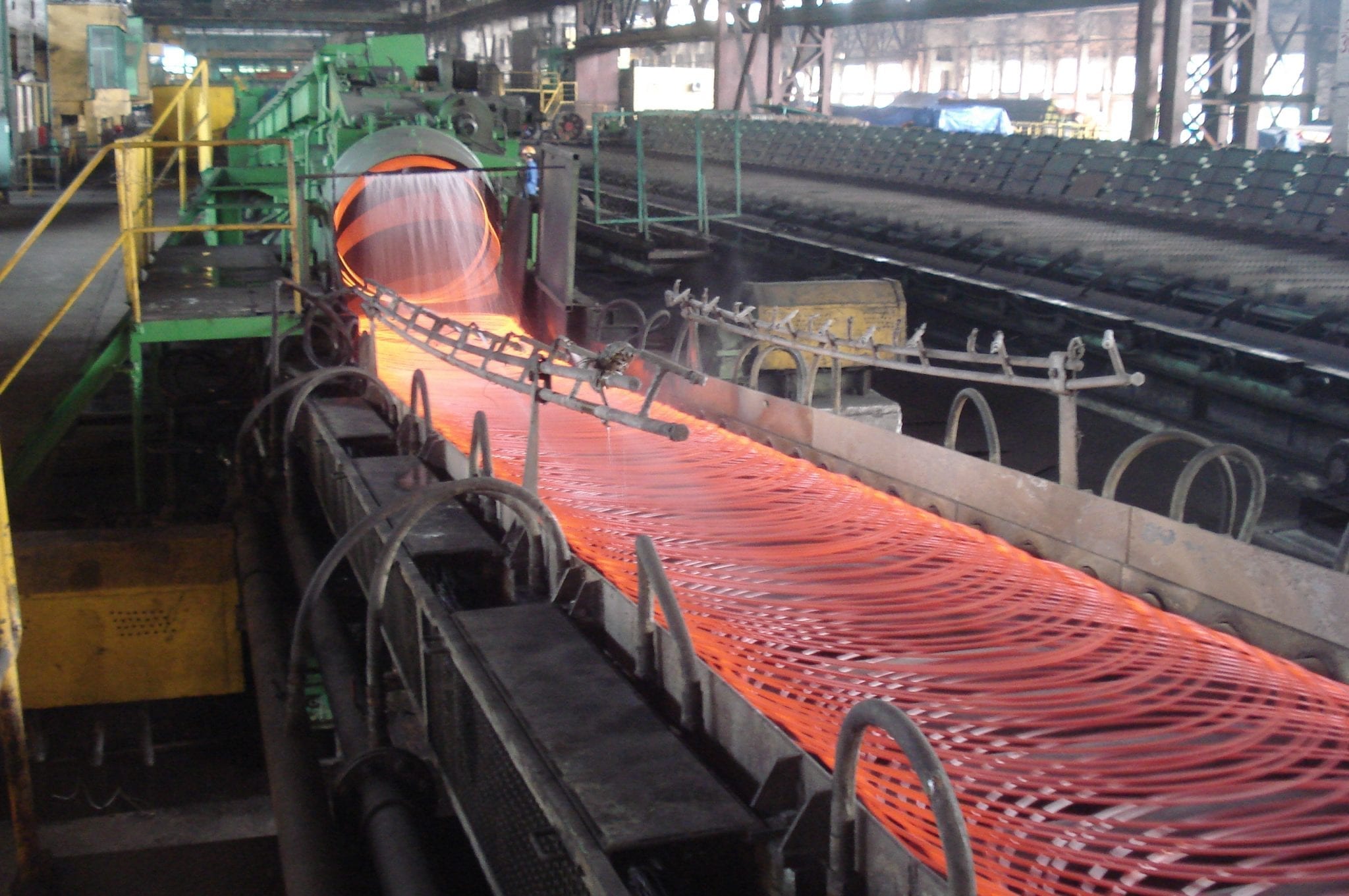
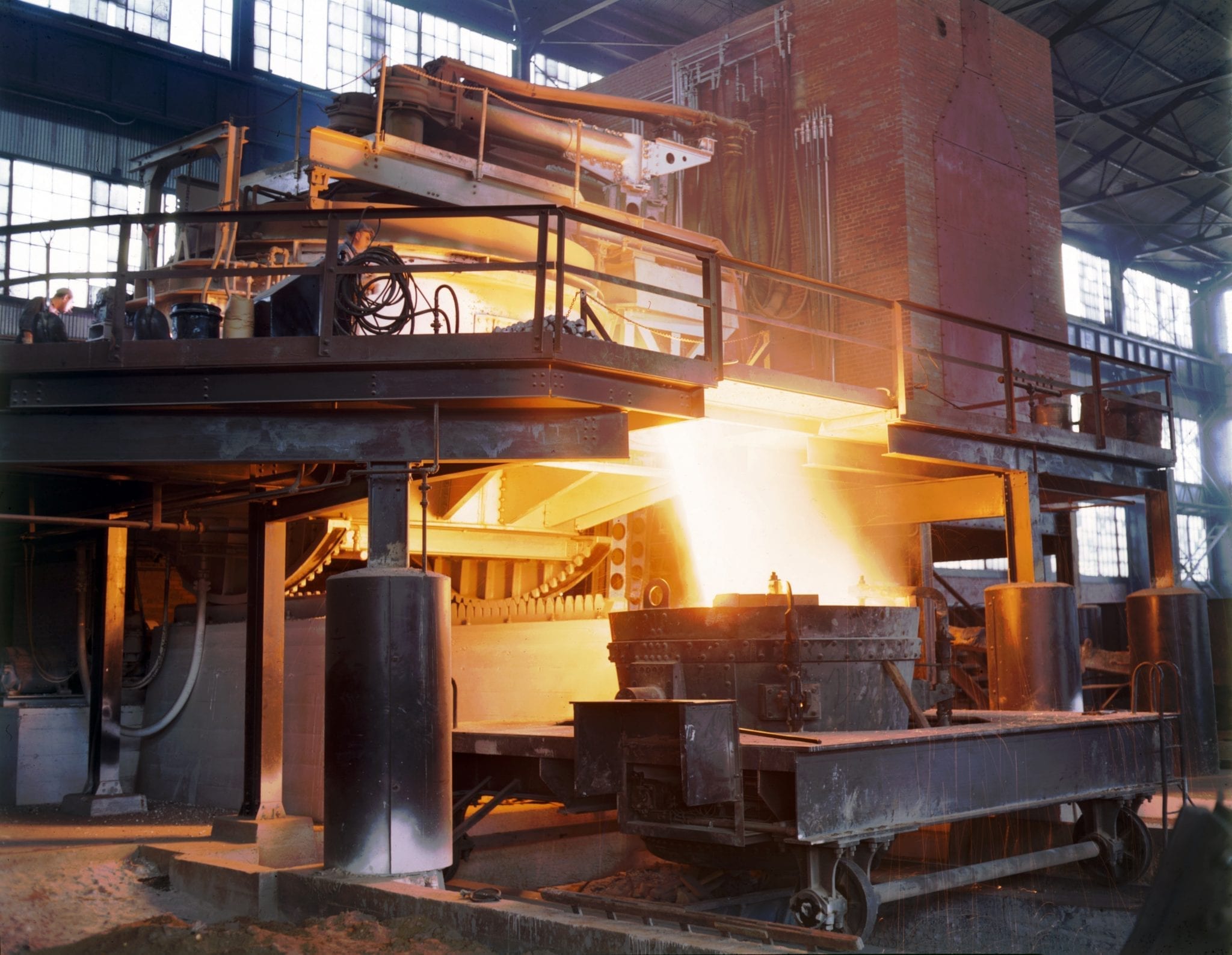
    This method is used for the production of high quality steels used in especially important parts of machines and precise mechanisms. At one time this method replaced the labor-intensive and inefficient crucible and pulping melts used before. The loading capacity of a single reflective furnace used in this method reaches 500 tons.  The peculiarity of the open-hearth method is the possibility of remelting not only pig iron, but also metallurgical wastes and scrap metal. The heating temperature of the liquid steel reaches 2 thousand degrees. The melting process takes 4 to 12 hours. In order to accelerate the melting process, the volume of injected oxygen exceeds demand, which increases the melting capacity by 20–30%.

    •       Bessemer converter method

     When it comes to this method, smelted steel is good for the production of automotive sheet, tool steel, welded structures and other steel billets.  By quality, it is inferior to an open-hearth method, and is used for the manufacture of less demanding products. It contains more impurities than in the open-hearth manufacture.  Due to the high volume of loading of one furnace up to 900 tons, the method is considered the most productive, therefore, it became widespread.

    The processing is transient and lasts up to 20 minutes.  During this time, the oxidation of carbon, silicon and manganese contained in the raw materials, happens, and they are further removed from the bath with the molten slag. The converter is a retort-shaped (pear-shaped) vessel, consisting of steel sheets with lining from the inside.  One hole is used for casting iron and producing finished steel; it also loads iron and scrap.

    •       Oxygen converter process (Linz–Donawitz-steelmaking)

    Steel production today is carried out mainly this way.  (You can buy steel for sale) The share of oxygen-converter production quite recently accounted for up to 60% of world steel production. However, this percentage is reduced due to the appearance of electric arc furnaces (EAF).  The furnaces are purged with pure oxygen (99.5%) under high pressure.

    •       Electric steelmaking method

    The production of steel by electric smelting has a number of undeniable advantages.  This method is considered to be the main one in the smelting of high-quality alloy steels.  High quality is achieved by the practical absence of phosphorus, sulfur and oxygen in the steels.  This method is also used for the production of a wide range of building steels.


  • Vietnam state steel company close to bankruptcy

    Vietnam state steel company close to bankruptcy

    In a recent letter to shareholders, Thai Nguyen Iron and Steel Jsc (TISCO) said it is facing “a financial crisis which could lead to bankruptcy if it is not saved by the government, banks and other authorities.” The charter capital of the company, one of the largest steel producers in Vietnam, was VND1.94 trillion ($83.6 million) last year but owner’s equity accounted for only 18 percent, which the company regards as a low ratio.

    With liabilities 4.65 times owner’s equity, TISCO said its capital structure is unstable.

    The company added it needs to increase owner’s equity and recover bad debts. The bad debts climbed to almost VND852 billion ($36.7 million) last year, of which the company said 46 percent could be recovered.

    One of the problems the company has been facing is the delay in a stop-start expansion project. The Government Inspectorate has listed it among 12 state-owned projects suffering major losses and with many violations of the law.

    The project first began in 2007 but stalled soon afterwards due to the global economic crisis. The original cost of expansion of VND3.84 trillion ($165.5 million) was increased to over VND8.1 trillion ($349 million) on the suggestion of Chinese contractors when it was restarted in 2009.

    But in 2012 it stalled again when TISCO faced a resources crunch, causing the China Metallurgical Group Corporation (MCC) to withdraw from the project.

    TISCO had paid MCC 92 percent of the contract value at the time, but much of the work was left incomplete, according to the Government Inspectorate.

    Machinery and equipment MCC delivered had rusted and become damaged after lying unused for long, the inspectors said.

    The government prohibited further investment of public funds in the company in 2016. Following this, sovereign wealth fund State Capital Investment Corporation (SCIC) pulled out its capital of VND1 trillion ($43.1 million) from the company.

    Following the long expansion delay, banks have slashed TISCO’s credit ratings and increased interest rates to 8 percent a year, worsening the situation.

    The company board said despite its petitions to authorities for a solution no progress has been made.

  • Renault wants Posco auto steel in Morocco

    Renault wants Posco auto steel in Morocco

    French carmaker Renault has asked Korean steelmaker Posco to enter the Moroccan market and supply automotive steel, a person familiar with the issue said last Thursday. Renault approached the world’s fifth-largest steelmaker by output in early 2017 as part of its strategy to diversify its supply of steel, the source said, who asked not to be identified because he was not authorized to speak on the record about internal discussions.

    Renault relies on ArcelorMittal, the world’s largest steelmaker, for automotive steel.

    Posco has told Renault that the two sides will delay formal discussions on the issue, noting that it has no immediate plan to enter the North African country, said the person, who is in a position to know about the situation.

    “Posco could use Morocco as a gateway for exporting its steel products to Europe without tariffs as Morocco has a free trade agreement with the EU,” the person said.

    Last year Maghreb Steel, a Moroccan maker of flat steel products, asked Posco to invest in it and provide necessary technology.

    A Posco spokesman confirmed that Renault made the request and Posco reviewed it, but said Posco has not moved forward, citing market conditions.

    The official said he had no knowledge on Maghreb Steel’s request for Posco investment, and asked not to be named, citing policy.

    Officials of Renault and Maghreb Steel were not immediately available for comment.

    In July, the EU said it would impose tariffs of 25 percent on 23 categories of steel products if imports exceed a three-year average.

    The provisional safeguard measures – which can remain in place for a maximum of 200 days – are meant to protect the EU steel industry against a surge of imports following the U.S. imposition of tariffs on imports of steel and aluminum.

    The European Commission plans to make a final decision by early 2019, at the latest, and said definitive safeguard measures may be imposed if all conditions are met.

    Posco declined to give any details on its steel exports to the EU.

    Renault is the third-largest customer of Posco’s automotive steel, according to the person.

    Renault Samsung Motors – whose 79.9 percent stake is held by the French carmaker – uses Posco’s automotive steel for 99 percent of auto production at its plant in Korea’s southeastern port city of Busan.

  • Trade wars to hit Malaysian steel sector

    Trade wars to hit Malaysian steel sector

    The Malaysian steel sector will be affected negatively in 2018 and 2019 due to the trade wars on the external front, said MIDF Research.

    “Changes in global trade policies, tepid global demand as well as the local steel mill cost structure will continue to impede any positive demand for the companies under our observation,” it said in a report.

    It expects the steel sector to experience more headwinds from the trade wars as China’s demand for steel is shaky, coupled with the slump in its construction industry.

    “The demand from China’s manufacturing sector takes up to 360 million metric tons annually, close to 60% of its annual consumption. But, the demand is expected to shudder further due to China’s environmental health and occupational safety policies,” MIDF Research said.

    It noted that steel players such as Ann Joo Resources, Lysaght Galvanised Steel, Southern Steel, SC Steel, Mycron Steel and Choo Bee Metal have reacted negatively to the announcements and influx of news on trade and tariff wars.

    It expects the trend to persist because globally, steel demand is projected to grow to 1,616.1 million metric tons this year and tepid growth will be plagued by low demand for 2019, growing to 1,626.7 million metric tons.

    “This means less demand for export for the local steel mill. Most of the local companies are affected by unwavering overhead costs and operational expenditure, making the sector unattractive,” said MIDF Research.

    Meanwhile, the government has announced the exclusion of sales and services tax for building materials and construction services, which would be a breather for the construction sector from the grim outlook of project cuts, it added.

  • Vietnam steel faces protectionism in Canada, EU

    Vietnam steel faces protectionism in Canada, EU

    The EU and Canada are taking safeguard measures to protect their steel companies from exports from Vietnam.

    The EU claimed it is taking the protective measures due to a surge in imports from many countries in recent years.

    Imports of steel products had been 18.8 million tons in 2013 but jumped to 30.5 million last year, according to the Official Journal of the European Nation published on July 18.

    Vietnam is listed among the developing countries which face provisional measures lasting 200 days starting July 19.

    Three of its products – non-alloy and other alloy cold-rolled sheets, metallic coated sheets and stainless cold-rolled sheets and strips — now attract a 25 percent additional tax.

    The Canada Border Services Agency (CBSA) said it is considering if Vietnamese carbon steel-welded pipes are being sold at unreasonable prices making it harder for local companies to compete.

    Other countries are also being investigated, including Pakistan, the Philippines and Turkey.

    The investigation, which began on July 20, came after Novamerican Steel Inc. in Montreal city alleged that local steel companies could not compete because of price undercutting by the countries listed subsequently.

    The CBSA will work with local authorities to investigate and expects to release its preliminary evaluation on October 18.

    Vietnam exported 4.71 million tons of steel worth $3.15 billion last year, 35.6 percent and 55.1 percent up from 2016 in terms of volume and value.

    ASEAN member countries are its main importers, accounting for 59.2 percent of exports, and the U.S. ranks second at 11 percent, a Vietnam Steel Association report said earlier this year.

  • China Probes Stainless Steel Imports From Indonesia, EU, Japan and Korea

    China Probes Stainless Steel Imports From Indonesia, EU, Japan and Korea

    China on Monday (23/07) launched an anti-dumping probe into stainless steel imports worth $1.3 billion, including from a privately owned Chinese mill with operations offshore, after complaints that a flood of product has damaged the local industry.

    The Commerce Ministry said on Monday the investigation will target imports of stainless steel billet and hot-rolled stainless steel sheet and plate from the European Union, Japan, South Korea and Indonesia, which nearly tripled last year.

    The move follows a complaint by Shanxi Taigang Stainless Steel, with backing from four other state-owned mills including Baosteel’s stainless steel division, which blamed cheap imports on falling prices, it said.

    China makes and consumes around half of the world’s stainless steel, which is used to protect against corrosion in buildings, transportation and packaging.

    While the complaint targets eight foreign producers, it also lists a number Chinese companies, including the Indonesian unit of one of the world’s top producers, Tsingshan Stainless Steel, and 19 traders who import product.

    Some private Chinese companies have opened or started building plants in Indonesia in recent years, drawing on its plentiful nickel resources and lower-cost of production.

    A significant portion of the new production has been sold in China, analysts say.

    The rapid increase in imports damaged the Chinese market, according to the complaint filed by Shanxi Taigang and released with the commerce ministry document.

    Almost two-thirds of China’s stainless imports came from Indonesia last year, up from 5 percent in 2016 and zero in 2015, the complaint said. That rose to as high as 86 percent in the first quarter, it said.

    Imported prices of the stainless steel products fell 23 percent to $1,867 a ton in 2017 from $2,436 a year earlier.

    “If we allow these products to continue to enter the Chinese market with low prices and take more market share, sales of China’s domestic products will continue to decrease,” the complaint said.

    Peter Peng, senior consultant at CRU in Beijing, said the investigation was “totally driven by an industrial dispute between SOEs [state-owned enterprises] and the fast-growing private mills.”

    “Due to their cheap production costs, it’s more competitive than Chinese products,” he said.

    Tsingshan opened a mill there last year with annual capacity of 3 million tons while Delong Holdings plans to start production there next year.

    Anti-dumping duties would force mills to find new markets for their product, adding to a global glut, Peng said.

    The European companies targeted by the probe include Spain’s Acerinox, Finland’s Outokumpu Oyj and Luxembourg-based Aperam.

    Among the Japanese companies are Nisshin Steel, Nippon Steel & Sumitomo Metal Corp and JFE Steel Corp. Indonesia’s Jindal Stainless and South Korean steelmaker Posco are also listed.

    China imported 703,000 tons of those products in 2017, up almost 200 percent from a year earlier, with 98 percent coming from the regions targeted by the investigation.

    Shanxi Taigang accounts for 25-35 percent of China’s stainless production.

  • Vietnamese steel, wood firms might gain from US-China trade war

    Vietnamese steel, wood firms might gain from US-China trade war

    The recent escalation of trade tensions between the U.S. and China could have a positive effect for some industries in Vietnam, but experts warn these gains could prove short-lived.

    U.S. President Donald Trump announced last week that he would push ahead with tariffs on $50 billion of Chinese imports starting July 6, and China retaliated by slapping the same amount of duties on commodities from the U.S.

    The U.S. would impose a 25 percent tariff on more than 800 strategically important imports from China including cars and oil, while China announced that it would slap a 25 percent tariff on 659 U.S. products, from soybeans to seafood.

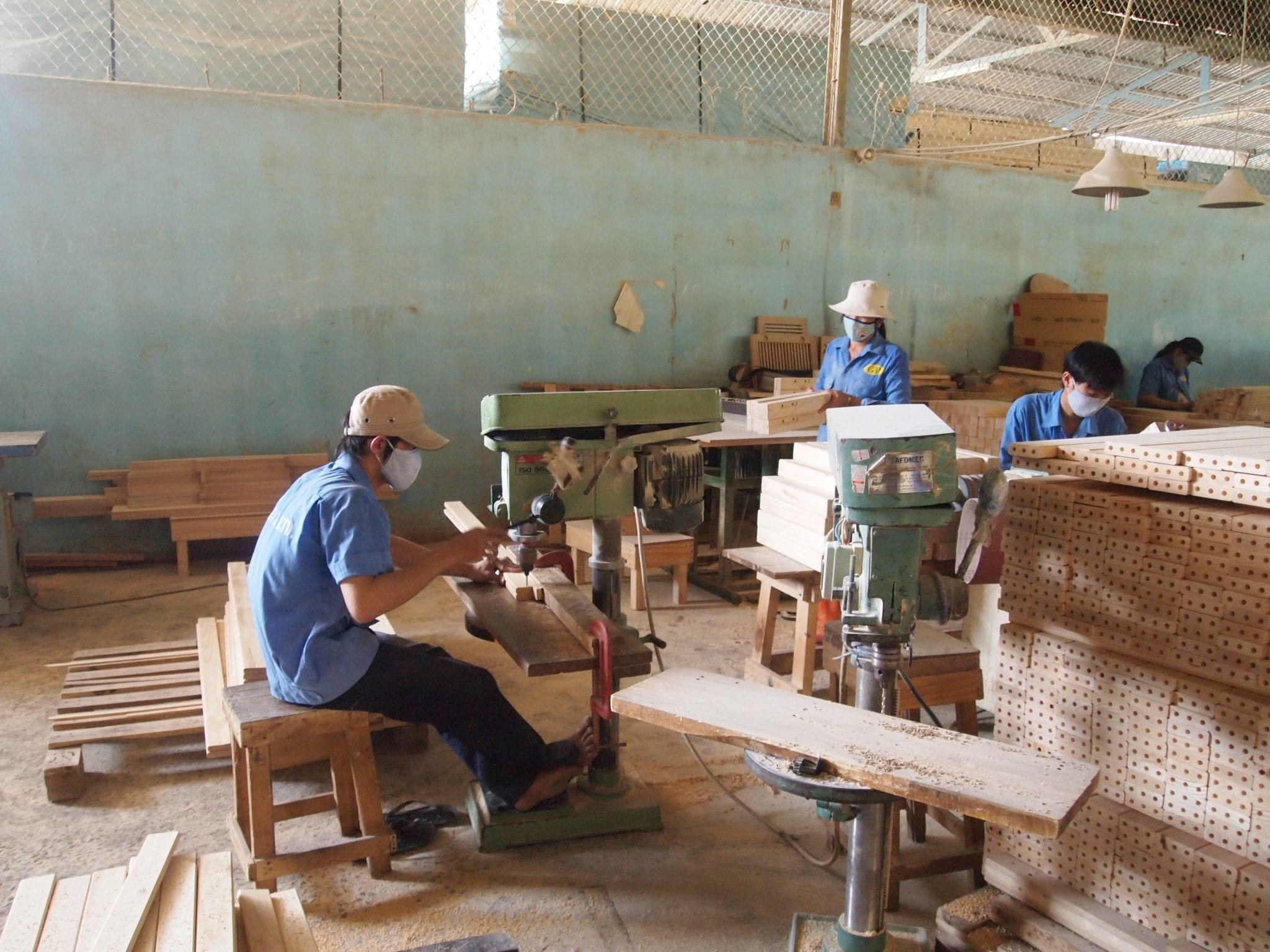
    Vietnamese wood businesses will be benefit from this trade war should the U.S. impose a heavy tax on Chinese wood starting this July, a representative of the Handicraft and Wood Industry Association of Ho Chi Minh City (HAWA) said.

    In the first two months this year, exports to the U.S. accounted for 39.7 percent of total wood export turnover, an increase of 14.6 percent from the same time last year, the source said.

    One of the reasons for this increase is the anti-dumping duties U.S. slapped on China at the end of last year, the source said.

    Vietnam is currently the fifth largest exporter of wood to the U.S., while China tops the list, according to HAWA statistics. If Vietnamese businesses can take this opportunity, growth can be much faster than now, the source said.

    Apart from wood, Vietnamese steel businesses would also enjoy a surge in steel exports to the U.S. if the latter ups its anti-dumping tariffs on China by 25-35 percent, Nguyen Huy Do, marketing director of Vietnam Italy Steel Jsc, said.

    However, industry insiders are warning that China might invest in manufacturing steel in Vietnam to have a ‘Vietnam label’ on products that will eventually be exported to the U.S.

    Last month, the U.S. Commerce Department slapped steep import duties on steel products from Vietnam that originated in China, finding that they evaded U.S. anti-dumping and anti-subsidy orders.

    After this, the Vietnam Steel Association has requested authorities to impose tighter controls on foreign investment in steel.

    Another risk is that China dumps its residual inventories on other countries in the region, including Vietnam, which will result in an unstable trade market, Dinh Tuan Minh, research director of market research firm Viet Analytics, said recently.

    Vietnam therefore needs to be careful amidst this trade war between the world’s largest economies and should not let itself be the target of steep tariffs, Minh said.

    “What the U.S. is doing to China can be done to Vietnam at some point,” he said.

  • Canada initiates dumping inquiry into steel imports from China, Vietnam, South Korea

    Canada initiates dumping inquiry into steel imports from China, Vietnam, South Korea

    The Canadian International Trade Tribunal (CITT) said on Monday it has initiated a preliminary dumping inquiry into steel imported from China, South Korea and Vietnam.

    The tribunal will investigate whether the alleged dumping and subsidizing of “cold-reduced flat-rolled sheet products of carbon steel” from these countries have harmed Canada’s steel industry.

    CITT, which operates in Canada’s trade remedy system and reports to parliament, said it will determine the results of the investigation on July 24 and will provide the reasons for the same on August 8.

    Canada’s steps follow U.S. actions from last week when the United States Commerce Department had slapped steep import duties on steel products from Vietnam that originated in China after a final finding they evaded U.S. anti-dumping and anti-subsidy orders.

    The global steel industry is struggling with a glut of excess production capacity, much of it located in China, that has pushed down prices.

  • US slaps heavy duties on Chinese steel shipped from Vietnam

    US slaps heavy duties on Chinese steel shipped from Vietnam

    The U.S. Commerce Department on Monday slapped steep import duties on steel products from Vietnam that originated in China after a final finding they evaded U.S. anti-dumping and anti-subsidy orders.

    The decision marked a victory for U.S. steelmakers, who won anti-dumping and anti-subsidy duties against Chinese steel in 2015 and 2016 only to see shipments flood in from elsewhere. The industry has argued that Chinese products are being diverted to other countries to circumvent the duties.

    U.S. customs authorities will collect anti-dumping duties of 199.76 percent and countervailing duties of 256.44 percent on imports of cold-rolled steel produced in Vietnam using Chinese-origin substrate, the Commerce Department said in a statement.

    Corrosion-resistant steel from Vietnam faces anti-dumping duties of 199.43 percent and anti-subsidy duties of 39.05 percent, it said.

    The department has said it would apply the same Chinese anti-dumping and anti-subsidy rates on corrosion-resistant and cold-rolled steel from Vietnam that starts out as Chinese-made hot-rolled steel.

    The duties will come in addition to a 25 percent tariff on most steel imported into the United States that resulted from the Trump administration’s “Section 232” national security investigation into steel and aluminum imports.

    Although the steel subject to the latest anti-dumping and anti-subsidy duties was processed in Vietnam to be made corrosion resistant or cold-rolled for use in autos or appliances, the Commerce Department agreed with the claims of American producers that as much as 90 percent of the product’s value originated from China.

    The global steel industry is struggling with a glut of excess production capacity, much of it located in China, that has pushed down prices.

    The decision followed a European Union finding in November that steel shipments from Vietnam into the EU also circumvented tariffs.

    The Commerce Department said that after anti-dumping duties were imposed on Chinese steel products in 2015, shipments of cold-rolled steel from Vietnam into the United States shot up to $215 million annually from $9 million, while corrosion-resistant steel imports rose to $80 million from $2 million.

    The case stems from a petition filed by U.S. producers ArcelorMittal USA, Nucor Corp, AK Steel Holdings Corp and United States Steel Corp alleging that Chinese producers began diverting their steel shipments to Vietnam “immediately” after the duties were imposed.

  • Vietnamese steel faces anti-dumping investigation in Australia

    Vietnamese steel faces anti-dumping investigation in Australia

    An Australian firm has accused Vietnamese manufacturers of manipulating market prices. Australia’s Anti-Dumping Commission (ADC) has initiated an anti-dumping investigation into steel rods imported from Indonesia, South Korea and Vietnam.

    The investigation was launched following a complaint lodged by OneSteel Manufacturing Pty Ltd, a manufacturer of steel coil in Australia.

    OneSteel said that that the goods are being exported to Australia at prices less than their normal value and that dumping has damaged the Australian industry through loss of sales, market share and profits.

    The products include hot rolled rods in coils that are not subject to export tax in Australia at present.

    OneSteel alleged that the dumping margin on products from Vietnam is at least 30.6 percent. The company said that the price of these products in Vietnam should not be used to calculate their global market value.

    Steel products from Indonesia, Taiwan and Turkey have also been subject to anti-dumping investigations in Australia, and both Indonesia and Turkey were slapped with anti-dumping taxes in 2015 for a year, while the same products from China were hit with a tariff in April 2016.

  • China upset at high Vietnam tariffs on steel imports

    China upset at high Vietnam tariffs on steel imports

    The Ministry said effective March 22, 2017, it will impose a 21.3% border tax for a period of one year followed by a 19.3% and 17.3% tax for years two and three to take effect on March 22, 2018 and March 22, 2019, respectively.

    The Decision to levy the border tax signed by the Prime Minister comes after a lengthy investigation by the Ministry that started on December 25, 2016, after complaints were lodged by Vietnamese domestic sector steelmakers.

    For years, Chinese steel products, along with other manufactured products in overcapacity segments of the economy have been at the centre of trade disputes between Vietnam and China, said the Ministry.

    It noted that on many occasions Vietnam private sector companies have lodged complaints that Chinese steelmakers were dumping products at prices below fair value, hurting the segment.

    Chinese steelmakers have voiced discontent at the high tariffs and insist their prices are fair and that they have violated no trade laws. The problems, they say, are rooted in sluggish demand, the weak global economy and poor quality product.

    The investigation showed that for ingots and long steel products, the import volume into Vietnam increased from 387,448 tons in 2012 to 665,679 tons in 2013 and 1,282,090 tons in 2015, over half of which originated in China.

    The Decision applies to steel ingots and long steel products imported from all countries with a de minimis exclusion for those from countries for which the import volumes are inconsequential.