Tag: Stella McCartney

  • LVMH to launch Stella beauty Maison with Stella McCartney

    LVMH to launch Stella beauty Maison with Stella McCartney

    Following a successful partnership with LVMH which began in 2019, Stella McCartney has collaborated with the LVMH Beauty division to develop her new skincare line, STELLA by Stella McCartney.

    After pioneering the conscious luxury fashion industry, Stella’s ambition is to offer an alternative to luxury skincare, an Alter-Care™.  A new approach that supports caring for ourselves and Mother Earth in perfect harmony.  Rooted in nature, with Stella’s vegan and cruelty-free principles at its heart, this ‘conscious luxury’ skincare line is natural, effective, and responsible.

    “I am delighted that Stella McCartney, after pioneering a sustainable and responsible luxury fashion, is now partnering with LVMH, committed to change the codes of cosmetics, the packaging and the ingredients. The launch of STELLA by Stella McCartney perfectly resonates with the Group’s longstanding commitment toward sustainability and we are proud to support it”, said Antoine Arnault, Image & Environment, LVMH.

    “We set out with an idea, and because we didn’t want to compromise – on outstanding results, the origin of our ingredients, and, of course, ensuring we minimised our impact on Mother Earth – we kept on trying.  We worked hard for almost three years with LVMH constantly evolving and aiming for what I felt was possible: rooted in nature, truly effective and responsible skincare. It’s a game changer and I want to share it with everyone.  I believe the consumer needs to know there’s another way, that they have a choice.”  said Stella McCartney.

    Based on Stella’s personal philosophy of using ‘only what you need’, the range consists of three essential products: Reset Cleanser, Alter-Care Serum and Restore Cream. The line-up is a culmination of three years’ worth of innovation and exploration with LVMH Recherche, the Group’s Beauty R&D unit. Offering impressive, clinically-proven results, this new range has been formulated to work in harmony with the skin, supporting its key functions of regeneration and protection.

    Each stage of the product lifecycle has been challenged to minimise its impact – from the ingredients to the packaging, to operations all the way through to consumer usage.  All product formulas are made with at least 99% natural-origin ingredients, and each is available in a unique eco-conscious refill.

    The line has a uniquely beautiful scent, ‘High Cliff’, created in collaboration with renowned perfumer Francis Kurkdjian, Founder and Artistic Director of Maison Francis Kurkdjian and Perfume Creation Director of Parfums Christian Dior.

    All the products will be available on www.stellamccartneybeauty.com and through a selection of UK retailers and boutiques including: the Stella McCartney UK flagship store on Old Bond Street from early September and Space NK from mid-September.

    Stella McCartney has chosen to support the conservation NGO Wetlands International, committing to donate 1% of the net sales of STELLA skincare.
  • Alibaba backs virtual showroom startup Ordre

    Alibaba backs virtual showroom startup Ordre

    Alibaba Group has bought a minority stake in Ordre, a European online luxury wholesale platform.

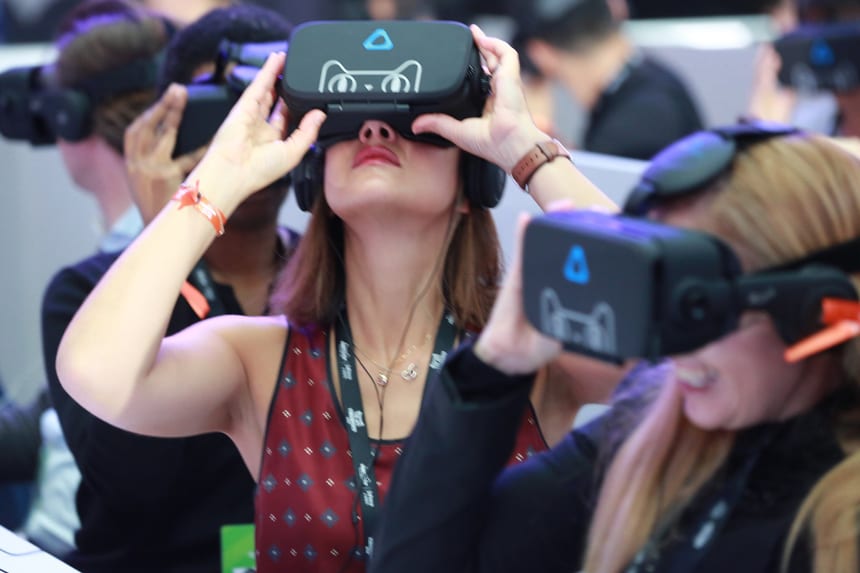
    Ordre, launched in 2015, allows fashion designers to show off their collections via 360-degree photography and virtual reality to interested wholesale buyers. The technologies make it more convenient for buyers, who aren’t always able to travel due to time and distance constraints, to build inventory each season. The reduced travel translates into lower carbon emissions at a time when sustainability is increasingly important to the industry, said Ordre.

    Dianne Von Furstenberg, Vivienne Westwood and Jason Wu are among the world’s leading designers who have established digital showrooms on Ordre. They also work with fashion brands such as Joseph.

    For Alibaba, the investment is a further push into the luxury sector, which is among its top strategic priorities, given the rising spending power and increasingly sophisticated tastes of Chinese consumers. The Hangzhou, China-based company plans to leverage Ordre’s technologies for consumers, however, delivering a more-enhanced shopping experience on platforms such as B2C marketplace Tmall.

    “Matching Ordre’s technology with Alibaba’s unique data insights and capabilities – of which our recently launched Luxury Pavillion is a great illustration—we can provide our consumers with a personalised and differentiated experience, helping brands develop a deeper engagement with them,” said Jessica Liu, president of Tmall Fashion and Luxury.

    The Luxury Pavillion, which lives within Tmall, was launched last August to deliver to China’s high-end consumers the same kind of brand exclusivity and tailored shopping experience online that they would expect at a brick-and-mortar store. About 50 brands, including l, offer products ranging from apparel and cosmetics to watches and luxury cars.

    The pavillion is driven by Alibaba’s New Retail technologies, which blend online and offline commerce to deliver a better buying experience for consumers. Simon Lock, founder and CEO of Ordre, said the company’s digital assets, including 360-degree images, 360 video and VR fashion shows and designer interviews, are in line with this strategy and could serve Tmall shoppers and brands.

    “Our 360-view allows consumers to understand every aspect and every view of a garment,” he said. “When you’re purchasing online, as much detail as can be provided is going to make your purchasing decision much more confident,” which can help drive down the product return rates.

    The companies are currently discussing a number of potential initiatives that would expand on these technologies. One of which would create new direct-to-consumer channels for Ordre’s partner brands by leveraging content to communicate their brand story and provide more information about products. For example, Ordre’s VR technology was able to recreate Stella McCartney’s Coachella-inspired 2018 fall show and the theatrical experience of Thom Browne’s latest showcase in Paris, so that buyers could watch fashion shows from the front row.

    Other potential collaborations include “fit avatars,” which allow buyers to see collections on models in 360-view and technology that allows buyers to remotely feel fabrics on a touch pad.

    Lock said he was also interested in Alibaba’s “See Now, Buy Now” technology, as well as the company’s artificial intelligence and cloud-computing capabilities.

    “We can work together to create the ultimate global fashion cloud,” he said.

  • Stella McCartney buys Kering’s 50% stake in her fashion label

    Stella McCartney buys Kering’s 50% stake in her fashion label

    Kering is selling its 50 per cent stake in fashion label Stella McCartney back to the namesake designer after a 17-year partnership.

    The news follows a report last month revealing that a formal transition process was already in motion with an announcement imminent.

    “It is the right moment to acquire full control of the company bearing my name,” says McCartney.

    “This opportunity represents a crucial patrimonial decision for me. I am extremely grateful to Francois-Henri Pinault and his family and everyone at the Kering group for everything we have built together in the past 17 years. I look forward to the next chapter of my life and what this brand and our team can achieve in the future.”

    Kering chairman/chief executive Pinault says it is the right time for McCartney to move to the next stage. “Kering is a luxury group that empowers creative minds and helps disruptive ideas become reality. I am extremely proud of what Kering and Stella McCartney have accomplished together.”

    McCartney had the option, expiring on Saturday, to buy back Kering’s shares in the label, according to the terms of their JV. Kering and Stella McCartney have previously acknowledged separation talks on more than one occasion over the course of their partnership.

    McCartney’s father, musician Paul McCartney, is said to have played a role in helping to finance the buyback, but this cannot be independently confirmed. A spokesperson for McCartney previously said that her father has never been involved with the business.

    The disposal of Stella McCartney comes at a time when Kering is streamlining its portfolio. It announced in January it would spin off German sportswear brand Puma to its own shareholders.

    The split comes after Kering announced its most profitable year on record, with group net profits soaring 120 per cent last year driven by “spectacular” growth at Gucci and Yves Saint Laurent as well as a strong performance by Balenciaga, the group’s fastest-growing brand in the fourth quarter.

    The conglomerate posted sales of €15.5 billion (about US$19.2 billion), up 27.2 per cent year on year. Revenues topped €10 billion for the first time, with Gucci crossing the €6 billion mark in sales.

    McCartney first made her mark at Richemont-owned fashion label Chloe, before launching her eponymous brand in partnership with Gucci Group (once a subsidiary of what is now Kering).

  • Stella McCartney-Kering ready to separate

    Stella McCartney-Kering ready to separate

    After a 17-year partnership, French luxury group Kering is selling its 50 percent share of Stella McCartney back to the namesake designer. The public announcement, originally slated for early January 2018, is imminent, according to a source with first-hand knowledge of the discussions.

    According to the source, the Stella McCartney HR team is preparing a booklet outlining the details of the separation to answer outstanding questions and ease employee concerns. However, both parties issued a joint statement saying nothing has been confirmed.

    “Kering and Ms Stella McCartney have been operating and growing the Stella McCartney brand since 2001 as a 50/50 joint venture. As already stated, as it is customary between stakeholders, there are regular discussions about the future of the partnership,” Kering and Stella McCartney said. “Any significant change to the current relationship would be made public at the appropriate time. Any piece of information circulating to this respect can only be considered as speculation.”

    To be sure, unravelling the partnership will be a time consuming, expensive process.

    According the source, Kering’s brands will be forbidden from hiring Stella McCartney employees during the transition process, which could take as long as two years.London-based retail strategy consulting firm Javelin, part of global advisory firm Accenture, is working with Stella McCartney to reorganise during the transition period, creating a blueprint for the newly independent Stella McCartney business.

    While Kering and Stella McCartney have acknowledged that there have been separation talks on more than one occasion over their 17-year partnership, the exact reasons for the break, and why it’s happening now, are not yet known. The reported split does come at a time when Kering is streamlining its portfolio and focusing its attention on blockbuster brands including Gucci, Saint Laurent and Balenciaga.

    In early January 2018, the group announced that it would spin off German sportswear brand Puma, inching the parent company further toward becoming a pure luxury player. In the fiscal year ending December 31, 2017, consolidated revenues were €15.5 billion, up 27.6 percent on a reported basis. Sales within the luxury group, which excludes Puma, Cobra and skate brand Volcom, were up 27.5 percent on a reported basis.

    Stella McCartney first launched as a joint venture with the Gucci Group in 2001. At the time, the Gucci Group was run by chief executive Domenico De Sole and Tom Ford, who designed both Gucci and Yves Saint Laurent. Alexander McQueen joined the group in 2000.

    Over the next two decades, McCartney and Kering built a global brand, driven not only by the designer’s exuberant sportswear but also by her commitment to animal-free fashion. McCartney’s faux-fur and faux-leather apparel and accessories helped to elevate the materials in the eyes of the consumer, serving as an example for other brands and a resource for Kering’s entire portfolio, which now also includes Balenciaga, Christopher Kane and Brioni. In 2016, Stella McCartney published its first environmental profit-and-loss account.

    Kering does not break out the revenues of its smaller houses, although in 2015 market sources estimated that Stella McCartney’s annual global sales were somewhere between $150 million and $200 million. However, the annual retail value of Stella McCartney products is likely significantly more thanks to branded collaborations with Procter & Gamble for beauty, Adidas for activewear and Bendon for lingerie. Her collection with Adidas, first launched in 2004, has become a brand in itself. McCartney then launched menswear in 2016.

    As for how Stella McCartney may transform under the founder’s absolute rule, a push to drive more direct sales could be in the cards.

    In May 2017, the company announced that it would open four new store locations, including a second store in Paris, one in Florence, in one Costa Mesa, California, and a second location in New York City.

    A year earlier, it also assumed control of store operations of its three Hong Kong stores, which were previously managed by a local partner. The brand’s retail store portfolio currently includes 52 locations, with another store on London’s Bond Street on the way.

  • MyTheresa.com takes aim at Korea

    MyTheresa.com takes aim at Korea

    European luxury online retailer MyTheresa.com is launching a Korean-language site.

    Selling luxury womenswear and accessories from such brands as Chloe, Gucci, Miu Miu and Stella McCartney, the e-tailer says it has seen “huge growth potential” in South Korea.

    “The Korean luxury market is moving quickly to digital. Ever since our first activities in Korea we have seen a massive consumer shift to digital and a triple-digit growth in the market,” says MyTheresa.com president Michael Kliger.

    The online fashion destination’s Korean website will offer free exchanges and returns within 30 days, including a free collection service, as well 72-hour deliveries. It aims to offer a more personalised service with a Korean-speaking customer care team.

    Korean customers will be able to pay in euros if using American Express, MasterCard or Visa.

    Launched in 2006, MyTheresa.com was acquired by American company Neiman Marcus Group in 2014. The German multi-brand retailer delivers to more than 120 countries with websites available in Arabic, Chinese, English, French, German and Italian.

  • New Louis Vuitton perfumes

    New Louis Vuitton perfumes

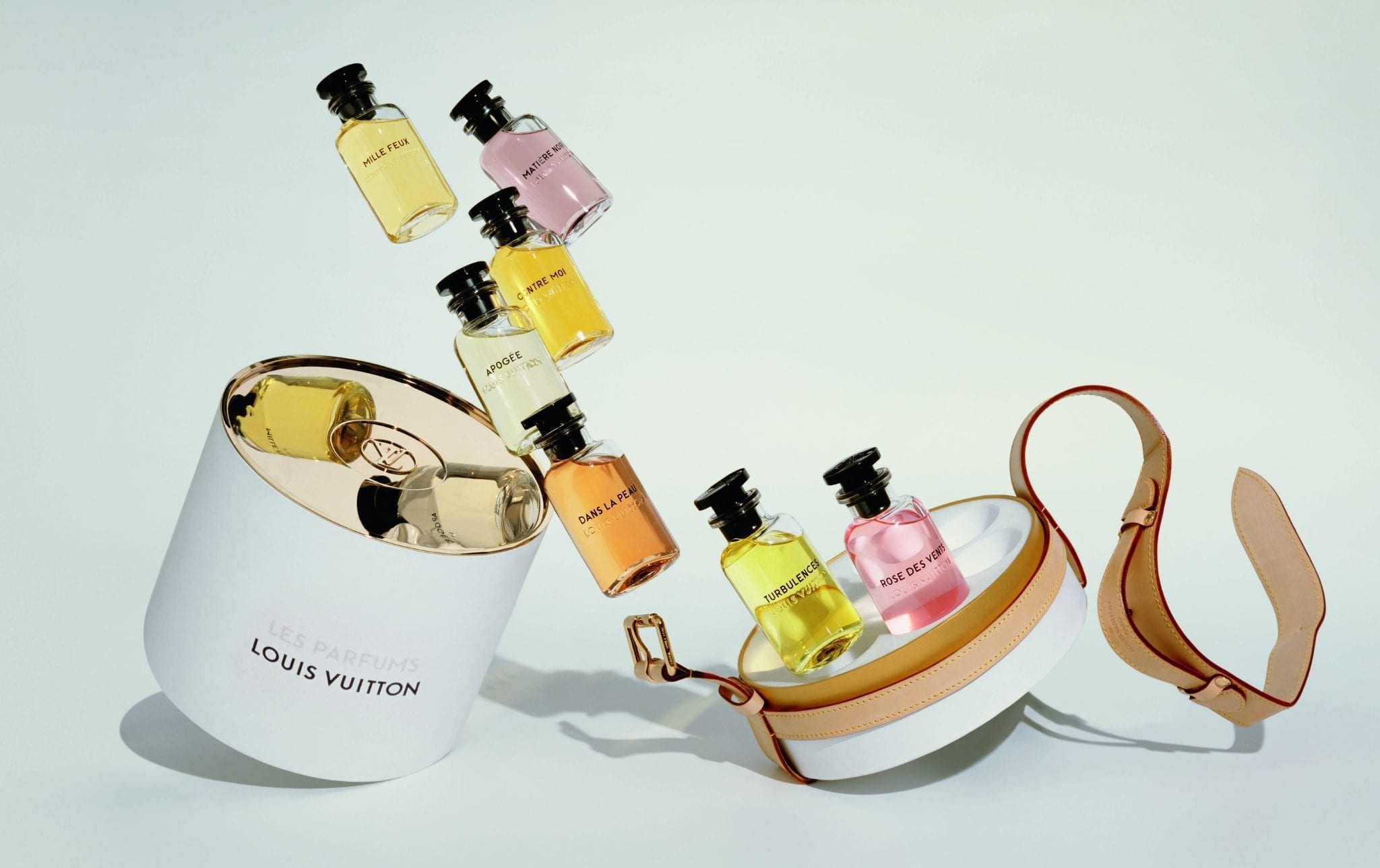
    Louis Vuitton perfumes are available again, with the French fashion house offering seven choices for its first fragrance launch in 70 years.

    Ingredients for the perfumes have been sourced internationally, including CO2 extractions from jasmine and May roses native to Grasse, the French town known as the world’s perfume capital. The extraction process is a first in the perfume industry.

    The 162-year-old label’s master perfumer, Jacques Cavallier Belletrud, whose creations include Issey Miyake’s L’Eau d’Issey and Stella by Stella McCartney, spent months travelling the five continents to seek out exotic and rare materials for the fragrances.

    “I wanted to surprise people who smell the perfumes – create emotion, bring them back to childhood or moments of pleasure,” says Belletrud, who is a native of Grasse.

    His new fragrances include elements from countries including China, France, Indonesia, Italy, Laos and Peru.

    For Rose des Vents, he blended a trio of roses, centifolia, Bulgarian and Turkish; with Apogee, he uses lily of the valley, Grasse jasmine and Chinese magnolia.

    While most of the scents are floral, the range also has the more masculine notes of leather and wood (in the perfumes Contre Moi and Matiere Noire).

    Louis Vuitton gave Belletrud the freedom to work without a deadline, and he took four years to produce the range. “The challenge was to create something that would last over the years,” he says.

    The fragrances will be available in Singapore next month at Louis Vuitton boutiques at Marina Bay Sands and Ngee Ann City.