Tag: stock exchange

  • Hanoi Stock Exchange earns record profit in 2020

    Hanoi Stock Exchange earns record profit in 2020

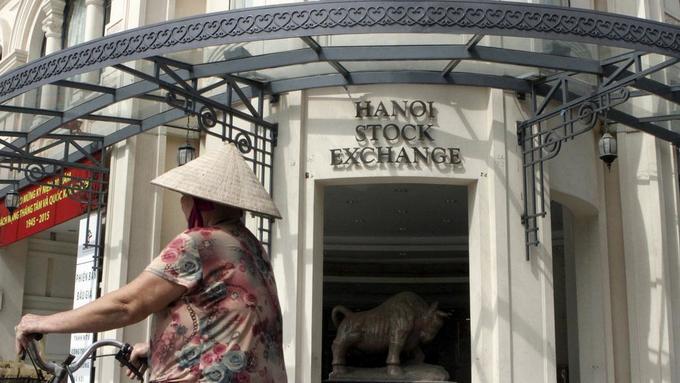
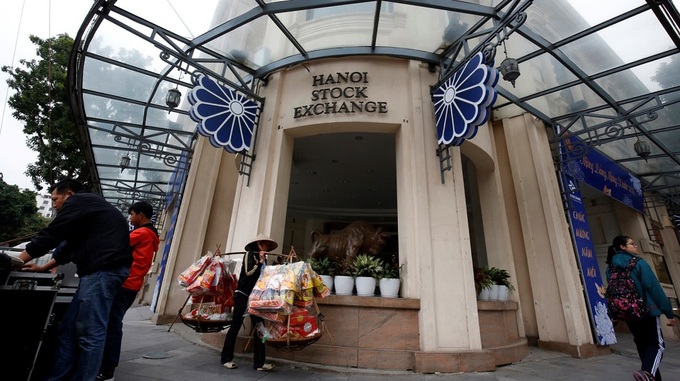
    The Hanoi Stock Exchange (HNX) posted VND399 billion ($17.3 million) in 2020 post-tax profit, a year-on-year increase of 28 percent.

    Its revenue rose 32 percent year-on-year to VND733 billion, 87 percent of which was from transaction charges.

    The exchange attributes its highest-ever revenue and post-tax profit earnings to the rise in corporate bonds issuance.

    According to HNX data, 2,408 corporate bond issues were registered last year, 92.5 percent of them successful. The value of bonds successfully issued by corporates in 2020 jumped 36 percent year-on-year to VND403.4 trillion.

    The exchange’s total assets were valued at VND1.35 trillion at end of 2020, up 6 percent year-on-year.

  • Asian shares rise as Trump boosts US-China talks

    Asian shares rise as Trump boosts US-China talks

    Asian stocks climbed Wednesday as US President Donald Trump said he could extend the deadline for a trade deal with China, appearing to boost the prospects of an agreement. Trump said “things are going well” at preliminary talks in Beijing, where top economic officials will gather Thursday seeking an accord to stop sharp US tariff hikes that could damage the global economy.

    “If we’re close to a deal, where we think we can make a real deal … I could see myself letting that slide for a little while,” the US president said of his March 1 deadline.

    He added that he expects a meeting with counterpart Xi Jinping to happen “at some point”.

    The comments all improved market sentiment on the likelihood of a deal to prevent US tariffs on $200 billion in Chinese imports more than doubling next month.

    Washington is demanding changes from Beijing on what it says are unfair commercial practices.

    Tokyo added 1.5%, Hong Kong rose 0.4% and Shanghai gained 0.2% on the news, following Wall Street’s lead.

    However, some analysts struck a cautious tone, noting that much work needs to be completed before a framework agreement is in reach.

    “The rally in stocks has been based on hope rather than any concrete agreements overnight,” warned Oanda senior analyst Jeffrey Halley, predicting short-term volatility to come as headlines emerge from Beijing.

    Sydney shed 0.3%, with calls for a snap election amid political tensions over refugees adding to underwhelming corporate earnings and subdued metal prices.

    Nonetheless, renewed global investor confidence saw a movement away from the greenback, which has enjoyed a strong rally in the past week, to riskier currencies.

    The pound moved upwards closer to $1.29, despite no-deal Brexit fears as Prime Minister Theresa May was accused by the opposition of “running down the clock” and “playing chicken” with Brussels over talks.

    Trump’s suggestion that another chaotic US government shutdown was now unlikely following a deal struck in Congress over border security further fuelled risk appetite.

    The deal to offer nearly $1.4 billion for construction of a Mexico border wall, as well as other security measures, fell far short of Trump’s demands but has been presented as a workable compromise.

    “I don’t think you’re going to see a shutdown,” said the president.

    Elsewhere oil continued its climb after heavyweight Saudi Arabia slashed output and exports fell in crisis-hit Venezuela.

  • SE Asia Stocks: Most end lower, Vietnam hits near 2-month high

    SE Asia Stocks: Most end lower, Vietnam hits near 2-month high

    Most Southeast Asia stock markets closed lower on Tuesday while Vietnam rallied for the second straight session to its highest level in nearly two months. Washington and Beijing will commence high-level trade talks this week to negotiate an end to their bitter trade dispute. Despite positive responses from both sides, the sailing of two U.S. destroyers near the disputed South China Sea, and China’s subsequent anger over the move appeared detrimental to negotiations.

    The Indonesian index fell the most in the region, closing 1.1 percent lower in its worst session this year, weakened by a slump in financial and telecom stocks.

    The country’s biggest bank by market value, Bank Central Asia, shed 0.6 percent, whereas Telekom Indonesia lost 2.8 percent.

    The Philippine benchmark slipped 0.6 percent, dragged by consumer and industrial stocks. Meanwhile, the country’s trade deficit narrowed in December as imports tumbled for the first time in a year.

    The stock index has outperformed other exchanges in the region so far in 2019, gaining about 7.3 percent.

    “We are mildly concerned about the surprise pullback in capital goods and raw materials. If this continues, this could show that recent aggressive tightening by the BSP (Bangko Sentral ng Pilipinas) is starting to bite into investment appetite, hampering the nascent investment-driven growth story that we have witnessed of late,” ING said in a note.

    Meanwhile, Vietnam benchmark rose for the second straight session and ended up 1.2 percent at its highest level since Dec. 17, with real estate and consumer stocks leading the gains.

    Property developer Vingroup JSC scaled 4.9 percent, while Saigon Beer Alcohol Beverage Corp jumped 1.9 percent.

    Vietnam was also chosen to host this month’s summit between U.S. President Donald Trump and his North Korean counterpart KimJong Un.

  • Bursa Malaysia’s Q4 earnings fall 6.2% to RM51.9m

    Bursa Malaysia’s Q4 earnings fall 6.2% to RM51.9m

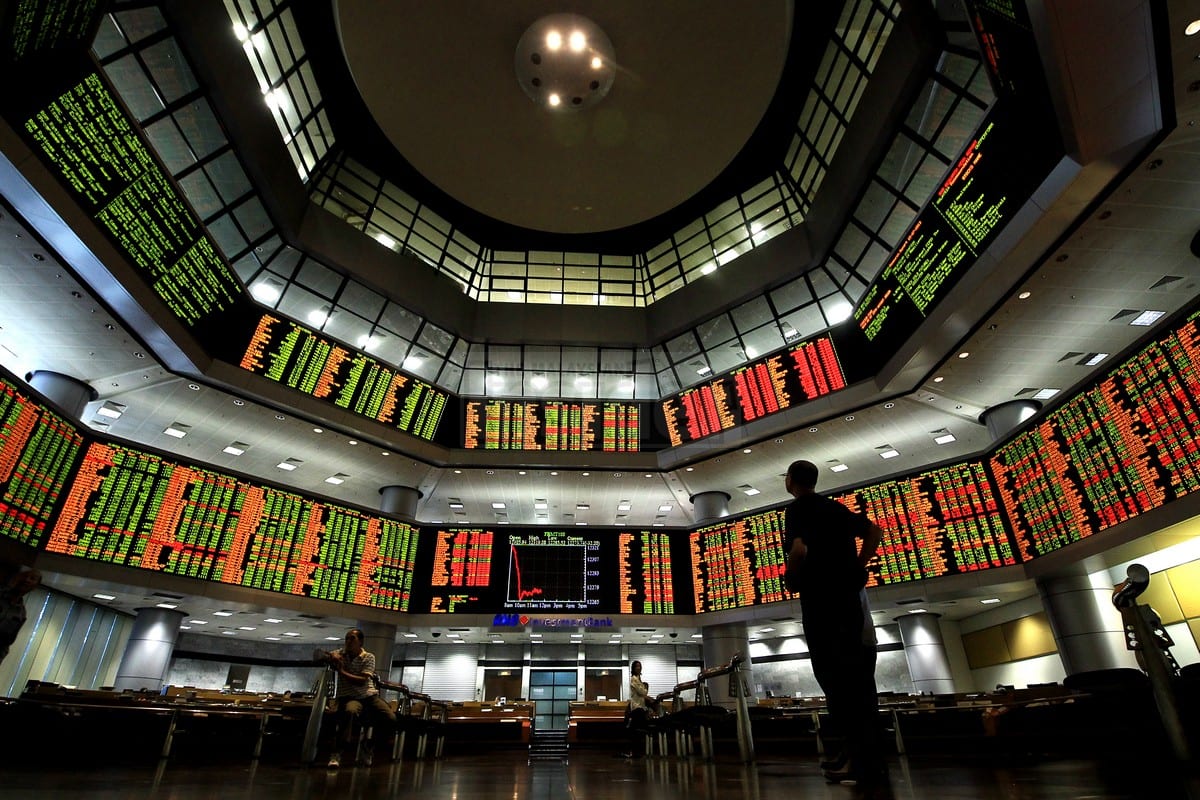
    Bursa Malaysia Bhd’s net profit in the fourth quarter ended Dec 31, 2018 (Q4FY18) was down by 6.2% to RM51.9 million, from RM55.27 million a year ago, mainly due to lower contribution from the securities segment.

    Revenue for the quarter declined 8.7% to RM128.9 million, compared with RM141.2 million in the previous corresponding quarter.

    The exchange has approved a second interim dividend of 11.6 sen per share for FY18, amounting to about RM93.7 million which is payable on Feb 28, 2019. With that, the total dividend (including special dividend) declared for the year amounts to 33.6 sen per share.

    Bursa’s full-year net profit was slightly up by 0.4% to RM224.04 million, from RM223.04 million a year ago, while revenue decreased by 1.2% to RM550 million, against RM556.8 million previously.

    For the year under review, securities market trading revenue increased 2.4% to RM265.8 million from RM259.6 million in FY17, mainly due to higher average daily trading value (ADV) for securities market’s on-market trades (OMT) in FY18.

    However, non-trading revenue saw a marginal decrease of 0.1% to RM165.9 million from RM166.1 million in FY17 due to lower listing and issuer services revenue.

    Bursa CEO Datuk Seri Tajuddin Atan said despite market volatility and challenging global economic environment, the exchange’s financial performance remained resilient.

    “Throughout the year, to create a more facilitative environment, we continued implementing initiatives to further enhance the vibrancy and liquidity of the market,” he added.

    At 2.35pm, Bursa’s share price was trading 7 sen or 0.9% lower at RM7.32 on 751,900 shares done.

  • Vietnam scraps plan to merge stock exchanges

    Vietnam scraps plan to merge stock exchanges

    The nation’s two bourses in Ho Chi Minh City and Hanoi will continue to operate independently under a new state-owned company. Ho Chi Minh City Stock Exchange (HoSE) and Hanoi Stock Exchange (HNX) will operate independently under the Vietnam Stock Exchange, which will be set up by the Ministry of Finance by 2020. The new company, to be headquartered in Hanoi, will have a charter capital VND3 trillion ($129 million), on the basis of combining the charter capital of both exchanges.

    The Vietnam Stock Exchange will issue regulations on stock listings and trading, monitor the stock market and supervise the two bourses. This new plan indicates that Vietnam has given up on an earlier plan to merge the two exchanges, owing to disagreement over where the combined one would be located.

    HoSE accounts for 93 percent of the two main exchanges’ total market capitalization of about $131 billion as of December. It is the main market, where blue chips such as Vietnam’s biggest private conglomerate Vingroup, dairy company Vinamilk and budget carrier Vietjet Air are listed.

    HNX, on the other hand, is home to smaller and mid-sized enterprises, bonds and derivatives.

  • Experts express cautious optimism for Vietnam stock market

    Experts express cautious optimism for Vietnam stock market

    Last year’s uncertainties and unclear future scenarios are reflected in more cautious assessments than number crunching for 2019. Nguyen Duy Hung, chairman of SSI, a leading Saigon broker, said that with a drop of over 20 percent from its peak, when the VN-Index climbed to 1,204 points on April 9, 2018, Vietnam’s stock exchanges have entered a bear market.

    The benchmark VN-Index on the Ho Chi Minh Stock Exchange lost 1.52 per cent to end Thursday at 878.22 points. On Friday afternoon, it rose to 880.9 points.

    Perhaps it will take between 8 to 11 months for the market to recover, Hung said. “Historical data suggests that it would take 21 months for a bear market to recover its old peak after hitting bottom.”

    But the SSI chairman said the main challenges facing the stock market in 2019 include worries posed by the escalation of the U.S.-China trade war, and increasing geopolitical risks.

    “At this point, no one can say how this war will unfold or predict how widespread the impact will be. Along with the decline in oil prices signaling difficulties of the world economy, the rise in geopolitical risks paint a picture of uncertainties for 2019,” Hung said.

    Also mentioning key challenges for 2019, Securities Commission chairman Vu Bang named the slowdown of Chinese and global economies, the escalating trade war and risks from expanding global debt.

    However, these challenges come with opportunities to be seized. The trade war, according to the SSI chairman, is a chance for Vietnam to increase its exports. This does not mean market share growth will happen immediately, he said, explaining that it was an opportunity to build a medium to long term strategy, innovating the country’s economic growth model based on production and commercial activities.

    Vu Bang also emphasized the advantages of macro factors, saying the continuous high growth rate in recent years was a factor that would increase the attractiveness of Vietnam’s market in the region.

    Vietnam’s GDP growth of 7.08 percent in 2018 retained its status as one of the best performing economies in the world. It was the highest growth the country has experienced since 2008 and compared with the median estimate of 6.9 percent in a Bloomberg survey of 12 economists.

    Offering a more optimistic view, Tran Le Minh, deputy general director of VietFund Management, said that the market in 2019 still holds several favorable factors, including the fact that the decline in VN-Index was relatively slower than in other parts of the world.

    “Why is the market declining more slowly? The reality must be seen in macro factors, growth and the fact that foreign institutional investors continue to invest in the market. Cash flow from foreign investors will continue to be a highlight this year,” said Minh, who predicted that the VN-Index will not fall below its current level by the end of 2019.

    Foreign direct investment disbursement in Vietnam reached a record $19.1 billion in 2018, a year-on-year increase of 9.1 percent, according to the Ministry of Planning and Investment.

    For the market players’ perspective, 2019 is not going to be an easy year, experts say.

    “With many unpredictable factors caused by geopolitical and commercial tensions, most analysts agree that the global economy is entering the end of a growth cycle and 2019 will be a difficult year for the stock market,” said an analyst team with Rong Viet Securities (VDSC).

    It will be difficult for Vietnam to buck the global trend, they felt.

    Bernard Lapointe, head of research of Rong Viet Securities said recently that he was optimistic but not too optimistic about the market this year. He expects the VN-Index to stay within the 900-1,000 points range until the end of 2019.

    Meanwhile, Michel Tosto, head of Institutional Sales and Brokerage of Viet Capital Securities, predicted that the VN-Index could reach 1,060 points at the end of 2019.

  • Indonesian Stock Exchange ends 2018 in the red

    Indonesian Stock Exchange ends 2018 in the red

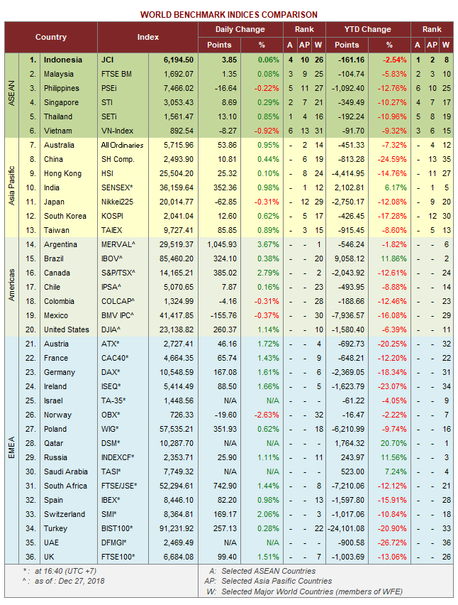
    Indonesia’s benchmark stock index declined 2.54 percent overall in 2018 amid a rough year for equities globally. Foreign investors sold a net Rp 50.75 trillion ($3.52 billion) in Indonesian stocks for the whole of 2018, compared with Rp 39.6 trillion in 2017. The market capitalization of Indonesia’s stock market meanwhile stood at Rp 7,023 trillion, compared with Rp 7,052 trillion a year earlier.

    The last trading day of 2018 on Friday last week saw the Jakarta Composite Index (JCI) closing 0.06 percent higher at 6,194.5.

    Inarno Djajadi, the new chief of the Indonesia Stock Exchange (IDX), said during Friday’s closing ceremony in South Jakarta, attended by President Joko “Jokowi” Widodo, that 57 companies listed their shares in 2018. This is a record high.

    Wimboh Santoso, chairman of the Financial Services Authority (OJK), expressed optimism during the event that the JCI would hit a level of between 6,500 and 7,000 next year.

    “We are still upbeat that the JCI has a chance to gain further. The OJK will provide stimulus to encourage more companies to list by offering various instruments,” he said.

    Wimboh said despite negative sentiment from external factors, such as the ongoing trade war between the United States and China, the business community remains optimistic about the Indonesian economy.

    Not Too Bad?

    President Jokowi also expressed optimism that the JCI may perform better next year. Citing IDX data, he said despite the 2.54 percent decline, the JCI was the second-best performer in Asia after India, which saw its benchmark stock index gain 6.17 percent this year overall.

    Jokowi said 2018 was not an easy year for the country’s economy, which was impacted by both external and internal factors.

    He said Indonesia’s large current-account deficit put pressure on the rupiah, which ultimately also affected the financial performance of listed companies. Meanwhile, normalization of US monetary policy, which caused capital outflows from emerging markets such as Indonesia, the US-China trade war and weak commodity prices also impacted Indonesian companies.

    “All of these have caused volatility in the JCI’s performance and dragged down the performance of listed companies,” he said.

    Jokowi said the government was fully committed to strengthening Indonesia’s stock market, as it should not only serve investors’ interests, but also function as a source of long-term funding for local companies to expand their business and help boost the country’s economy.

    According to Inarno, the number of registered investors on the IDX increased by roughly 222,000 to about 851,000, with 29 percent of them actively trading every day.

    The average daily trade for the whole year stood at Rp 8.5 trillion with an average frequency of 386,968. This is the biggest in Asia.

    Fundraising Down

    Fakhri Hilmi, deputy commissioner for capital market supervision at the OJK, said fundraising by Indonesian companies from capital markets in 2018 is estimated at Rp 163 trillion, which is 35.9 percent lower than last year.This figure includes initial public offerings, rights issuances and bond sales.

    “This year’s isn’t as much as last year; the value of IPOs were smaller,” he said.

    More Stocks Booking Losses

    More stocks booked losses in 2018 compared with last year. Of the 619 companies listed on the local bourse, 252 saw gains in their stock prices, while 327 booked losses. The remainder were stagnant.Of the shares that increased in value, 41 booked gains of more than 100 percent, while four increased by more than 1,000 percent.

    They are Super Energy, a company engaged in oil, gas and mining and petroleum transportation services, which saw its stock price rise by 1,450 percent this year, and financial services provider Pool Advista Finance, which saw its stock price jump 1,529 percent.

    The stock price of Prima Cakrawala Abadi, an exporter of fishing products, jumped 2,006 percent and Transcoal Pacific, a sea transportation and logistics service provider, saw its stock price skyrocket by a massive 3,714 percent.

    However, these are penny stocks. Indonesia’s shallow capital markets allow traders and brokers to trick the price of stocks that have low market values.

    Meanwhile, only 11 companies of Indonesia’s top 45 listed companies by market value, known as LQ45, booked gains in 2018.

  • VN-Index ends year 10 percent lower

    VN-Index ends year 10 percent lower

    The VN-Index closed the last trading day of 2018 at 892.54 points, down almost 10 percent from the year’s outset. This was a drop of 93 points from January 2, the first trading day of the year. The benchmark closed below the 900-point mark on Friday, a drop of over 25 percent from its peak at over 1,200 points in April. The VN30-Index, representing the 30 largest tocks in terms of capitalization, closed at 854.99 points, dropping 10.46 from Thursday, or 1.21 percent lower.

    Many stocks in the VN30-Index also ended in the red. Diary giant Vinamilk closed at VND120,000 ($5.2), 2.6 percent lower.

    Vietnam’s top petro importer and distributor Petrolimex fell 5.69 percent to VND53,000 ($2.3), while food company Masan dropped 1.9 percent to VND77,500 ($3.36).

    However, the HNX-Index on the Hanoi Stock Exchange and the UPCoM-Index for unlisted public companies ended in the green, up 0.24 percent and 0.46 percent respectively.

    Vietnam’s largest private firm Vingroup (VIC) ended the day at VND95,300 ($4.13), 6.93 percent lower. Vincom Retail’s VRE stock dropped almost five percent to VND27,000 ($1.17).

    Total market capitalization of all three stock markets, the Ho Chi Minh City Stock Exchange (HOSE), HNX and UPCoM, was VND4 trillion ($173.25 million).

    2018 has proved the most turbulent year for VN-Index since the 2008 crisis, ending an increasing run since 2016.

  • Gas Malaysia ups natural gas tariff

    Gas Malaysia ups natural gas tariff

    Gas Malaysia Bhd has announced a higher average effective natural gas tariff for the non-power sector in Peninsular Malaysia at RM32.92 per MMBtu, which is 0.7% higher than the current RM32.69 per MMBtu. The revision will be effective from Jan 1, 2019 to June 30, 2019.

    The group told the stock exchange that the government has issued an instruction for the company to effect the natural gas tariff revision starting early next year.

    The average base tariff will be set at RM32.69 per MMBtu.

    Under the gas cost pass through (GCPT) mechanism, a surcharge of RM0.23 per MMBtu will apply to all tariff categories for the period beginning Jan 1 to June 30, 2019. This translates to an average effective tariff of RM32.92 per MMBtu.

    However, for Category A (Residential), the effective tariff rate fell 0.34% to RM23.72 from RM23.80 per MMBtu.

    Gas Malaysia said while the tariff revision has no material impact on its business operations, it is expected to contribute positively towards its financial position for the financial year ending Dec 31, 2019.

    To note, the government has prescribed the Incentive-Based Regulation (IBR) framework which sets the base tariff for a regulatory period of three years from January 2017 and allows changes in the gas costs to be passed through via the GCPT mechanism every six months.

    Gas Malaysia shares closed 0.74% or two sen lower at RM2.69 with 547,300 shares transacted.

  • Asian stocks slump after Fed raises interest rates

    Asian stocks slump after Fed raises interest rates

    Tokyo led a rout of Asian shares today, mirroring big losses on Wall Street after the Federal Reserve (Fed) defied unprecedented pressure from US President Donald Trump and raised interest rates, sparking fears the move could choke economic growth.

    The Nikkei plunged to a 15-month low as investors took fright over the pace of monetary tightening, with a slump triggered by the Dow’s fall to its lowest level of 2018 gathering pace.

    The Fed raised rates for the fourth time this year – as expected – but markets reacted badly after chairman Jerome Powell said the bank would not shift course on reducing its balance sheet.

    Investors had hoped for a less aggressive approach amid concern that global growth is slowing, while Powell played down the impact of recent market turmoil on the US economy.

    “They think the Fed has completely misjudged the situation and now it’s just a matter of … trying to find an exit while you can,“ said Kyle Rodda, a market analyst at IG Group in Melbourne.

    “We’re probably entering a stage now where markets have got it (in) their head that we’re preparing for quite sustained downside going into 2019.”

    The Fed now projects only two interest rate increases, down from three previously, as it trimmed its forecast for US growth and inflation.

    Stephen Innes, head of Asia-Pacific trade at OANDA, said the “Fed delivered a dovish hike, but clearly, there wasn’t enough affirmation in the statement that the Fed was close to pausing or ending their interest rate hike cycle sooner than expected”.

    But some analysts urged caution.

    “The market overreacted to the Fed, I think,“ said Shane Oliver, head of invest-ment strategy at AMP Capital Investors in Sydney.

    “It is moving in a dovish direction and is on track for a pause in the first half of next year. Markets are being driven by fear rather than fundamentals.”

    But the spillover from the rate hike continued to rattle investors in Asia today, deepening concern over global growth prospects which are already facing headwinds from Trump’s trade war with Beijing, a slowing Chinese economy, and potential turmoil from Britain quitting the European Union.

    Japanese stocks also declined after the Bank of Japan left ultralow rates unchanged, with the threat of trade protectionism and slowing global growth casting a pall over the export-driven economy. A strong yen also put downward pressure on stocks with the dollar falling below ¥112.

    Nissan dropped more than 2% after a Japanese court rejected prosecutors’ request to extend the detention of former Nissan chairman Carlos Ghosn after his arrest for financial misconduct.

    Shanghai fell more than 0.5%, even after the People’s Bank of China said it would supply lower-cost liquidity for up to three years to banks willing to lend more to small companies, as policy makers aim to shore up the flagging economy.

    Sydney closed more than 1% lower while Hong Kong and Seoul were down 0.9% each.

    The equities slump spread to Europe. Around 1100 GMT, London’s benchmark FTSE 100 index was down 0.5% with losses capped by stronger-than-expected UK retail sales data and as traders looked ahead to the outcome of the Bank of England’s regular monetary policy meeting later today.

    In the eurozone, Frankfurt’s DAX 30 shed 1.0% and the Paris CAC 40 slumped 1.5%.
  • Vietnam stock hits fresh near 10 years high

    Vietnam stock hits fresh near 10 years high

    Vietnam shares gained 0.9 percent, with real estate developer Vingroup Joint Stock Company climbing 4.7 percent to an all-time peak.

    Global equities were largely muted as concerns of a delay in U.S. tax reform proposal and apprehension over Saudi Arabia’s rising tensions with Iran soured investor sentiment.

    “Markets seem unsure which way to go next – equity markets are largely becalmed…,” ING analysts said in a note.

    Most Southeast Asian stock markets were muted today, with Indonesia slipping from a record close, as investors took a breather in the absence of market-moving data.

    Indonesian stocks slumped 0.3 percent from a record close, dragged by the telecommunications sector, with Perusahaan Perseroan (Persero) PT Telekomunikasi Indonesia Tbk, down 1.7 percent.

    Singapore index was largely flat, with real estate giant CapitaLand Ltd down 1.1 percent and Keppel Corp Ltd giving up 0.9 percent.

    Philippine stocks edged 0.3 percent lower, with industrial stocks accounting for majority of the losses, as SM Investments Corp slumped 2.8 percent, and food processor JG Summit HoldingS dropped 1.2 percent.

    Real estate stock Ayala Land was the biggest drag on the index, declining 2 percent. Manila-based RCBC Securities analyst Fio De Jesus attributed the stock’s move to profit-taking after it rose 1.3 percent in its previous session on strong nine-month earnings.

    Thai shares pared early gains in the session to trade down 0.1 percent ahead of the Bank of Thailand’s rate decision due later in the day. The central bank is expected to leave its benchmark interest rate near record lows again, with the current level seen supporting the country’s economic recovery while inflation stays benign.

  • Indonesia Stock Exchange Opens More ‘Go Public Information Centers”

    Indonesia Stock Exchange Opens More ‘Go Public Information Centers”

    The new information service – Go Public Information Center – will present all necessary information to private firms about the steps and processes required to become a listed company in Indonesia (including information about underwriters). The center was first opened in Indonesia’s capital city of Jakarta (in June 2016), located at the ground-floor of the Indonesia Stock Exchange Building. Over the next couple of years the IDX plans to open information centers in 15 more cities.

    The IDX targets to see 35 companies conduct on IPO on the local bourse in 2016. However, this probably is a too ambitious target. So far this year only eight companies have been added to the IDX.

    Only 529 companies are listed on the Indonesia Stock Exchange (while there may be more than 60 million business units active in Indonesia; mostly small and medium sized enterprises). This figure is much lower compared to listed companies in Thailand (644), Singapore (766) and Malaysia (904). Being Southeast Asia’s largest economy, Indonesia is eager to top this ranking somewhere in the future. Meanwhile, in the advanced Asian nations, the number of listed companies is much higher.

    According to the IDX, costs of an IPO (paid to the bourse, auditors, underwriters, independent appraisers and legal counselors) is approximately 3.16 percent of the total funds raised in the IPO. Those companies that have existed for at least a year and have a minimum of IDR 5 billion (approx. USD $373,340) in net assets can undertake an IPO on the IDX. To make it more attractive to conduct an IPO, companies are offered several tax incentives, including a discount of income tax up to 5 percent.

    Advantages for a company to go public:

    • Generate fresh funds that can be used for business expansion or to pay off debt
    • Raise public awareness of the company/adding a new group of potential customers
    • Increase the company’s market share
    • Lucrative exit strategy for founding individuals
    • Improved management due to mandatory higher degree of financial and corporate transparency to the public

    Disadvantages for a company to go public:

    • Higher costs of complying with regulatory requirements
    • Adjust to a higher degree of financial and corporate transparency
    • “Market pressure” causes companies to focus on short-term instead of long-term growth

  • IDX Expresses Optimism in Economic Growth

    IDX Expresses Optimism in Economic Growth

    The Indonesian Stock Exchange (IDX) expressed optimism that the companies listed on the IDX would provide positive results as the national economy was predicted to grow by above 5 percent.

    “In 2015, more than 75 percent of stock issuers at the IDX booked profits. Indeed, some of them in the commodity sector recorded somewhat significant drop. Meanwhile in 2016, we believe that the economic growth will be above 5 percent,” IDX president director Tito Sulistio said in Jakarta on Wednesday, April 13, 2016. Tito added that the Bank Indonesia (BI) rate cut to 6.75 percent and the potential of capital inflow following tax amnesty policy were among the factors that would support the national economic growth.

    “Hopefully, the tax amnesty [policy] will work. Therefore, it is expected that Indonesia will see a capital inflow of about Rp 3,000 trillion (US$220.6 billion) to build infrastructures that are important for the economy. The fund could also be invested in the capital market,” Tito explained.

    He promised that he would encourage domestic companies to obtain funds for expansion by, for instance, holding IPOs. Tito added that the IDX would call on state-owned companies to conduct privatization through the IPO mechanism.

    Earlier, IDX director of corporation assessment Samsul Hidayat said that a number of regional development banks planned to hold IPO in order to increase their capital and distribute credit to wider consumers. In addition to banks, Samsul revealed that a number of state-owned construction subsidiary companies, such as PT Waskita Beton Precast, mulled to hold an IPO.

  • Indonesia’s Stockbit gets seed funding from Ideosource

    Indonesia’s Stockbit gets seed funding from Ideosource

    Stockbit is a financial analytics platform that helps Indonesian traders understand and share information about the local stock

    market in real-time. Earlier today it announced a seed investment of an undisclosed amount from local VC firm Ideosource.

    The startup was founded in 2012 by Wellson Lo, who previously worked for consulting firm KPMG Singapore and as a trader, and Johny Susanto, a full-stack engineer. Stockbit started out as a social network that attempted to bundle the discussion about Indoneisa’s stocks into one place. “Previously, it was scattered all across Twitter, forums, and blogs,” Wellson explains.

    At the end of 2013, Stockbit added analytics features. The data comes from public sources like the Indonesian Stock Exchange (IDX). The problem with the available data, Wellson says, is that it’s not standardized. Stockbit aggregates this data and makes access to it quicker and more reliable.

    At the same time, Stockbit started to monetize through a freemium subscription model. The price for a one-month subscription is IDR 200,000 (US$13.59). In comparison, professional tools like the Bloomberg Terminal cost US$2,000 per month, the firm says.

    Stockbit’s goal is to make life easier for independent or retail investors by giving them access to high-quality financial data and sophisticated analytics tools at an affordable price. The idea is to create a more level playing field between newcomers and institutional investors, including traders from banks, insurance companies, and pension funds.

    “I found that the information gap between retail investors and institutional investors is very big,” says Wellson. “It’s never going to reach the point where it’s really level, but with better tools to analyze and better collaboration, retail investors can make better trading decisions.”

    To date, Stockbit has 15,000 registered users, while paid subscribers are still in the hundreds. According to Wellson, the figures are a result of the small size of the addressable market.

    “In Indonesia there are only 400,000 registered investors, probably of those [only] 100,000 are retail investors,” he says. “That means more than 10 percent of the addressable market is already using Stockbit.”

    Stockbit targets a narrow market, and that’s the big reason founders faced difficulties raising funds until now. Ideosource’s decision to back the venture is based on a commitment by the Indonesian Financial Services Authority to increase the number of retail investors to five million by 2017.

    Wellson says there are government outreach programs that work with schools and companies that encourage more people to consider investing in the capital market.

    Stockbit has several competitors in Indonesia, including Idsaham, Indonesia-Investments, and Infovesta. However, those sites merely aggregate stock information and don’t yet offer analytics tools. Bareksa can be seen as a possible contender, as it offers a variety of financial analytics tools and also aggregates information about the IDX, among other functions. It also recently opened up its online platform for trading mutual funds.

    The Stockbit team plans to spend the fresh capital on building out the product, which includes making mobile apps for Android and iOS, as well as recruitment and marketing.