
Tag: Stockholm

  • Ericsson Beats Third-Quarter Core Profit Forecast at 10.1 Billion Crowns

    Ericsson Beats Third-Quarter Core Profit Forecast at 10.1 Billion Crowns

    Telecom gear maker Ericsson reported a third-quarter operating profit before amortisation and restructuring of 10.1 billion Swedish crowns on Thursday, beating market forecasts despite a year-on-year decline.

    The result exceeded the 7.87 billion crown mean analyst estimate provided by the company, even as core profit fell from 15.8 billion crowns a year earlier. Efficiency measures helped offset higher component costs.

    Margin Pressure From Memory Chips

    Organic sales climbed 7 per cent to 59.5 billion crowns, running ahead of expectations of 55.4 billion crowns. Adjusted EBITA margin fell to 17.0 per cent from 28.1 per cent a year earlier, though it cleared the 14.2 per cent analyst consensus.

    Chief executive Per Narvinger cautioned that rising component expenses will continue to squeeze profitability across upcoming reporting periods. “Looking ahead, the RAN (Radio Access Network) market is flat, geopolitical uncertainty remains elevated and component costs are a headwind to gross margin,” he said in a statement.

    Shifting Demand in Regional Networks

    Equipment suppliers face a split market as carrier spending diverges sharply by territory. North American business delivered a slight sales increase during the quarter, aided by the scheduled timing of customer network deployments.

    For network operators across regional markets, stagnant radio access investments limit near-term contract expansion. Rising server and memory prices divert capital expenditure into data centre capacity, leaving traditional cellular hardware vendors to protect margins through overhead reductions rather than volume growth.

    Supply Chain Spillover From Artificial Intelligence

    Surging procurement of high-bandwidth memory for artificial intelligence clusters has tightened semiconductor supplies across the broader electronics supply chain. Telecommunications hardware makers must now absorb these elevated silicon costs or attempt to pass them to network carriers that are already restricting infrastructure budgets.

    Hardware suppliers that delayed long-term component pricing contracts face immediate gross margin compression. With mobile service revenue growing slowly, telecom operators are resisting equipment price increases, shifting the financial burden back onto equipment manufacturers.

    Tracking Recent Financial Steps

    The latest quarterly update follows a warning delivered three months earlier. Ericsson cautioned in July that escalating memory chip costs tied to intense artificial intelligence demand would exert sustained pressure on hardware manufacturing margins.

    Investors and supply chain planners are now monitoring fourth-quarter inventory valuations and component purchase commitments to gauge the full margin impact entering next year.
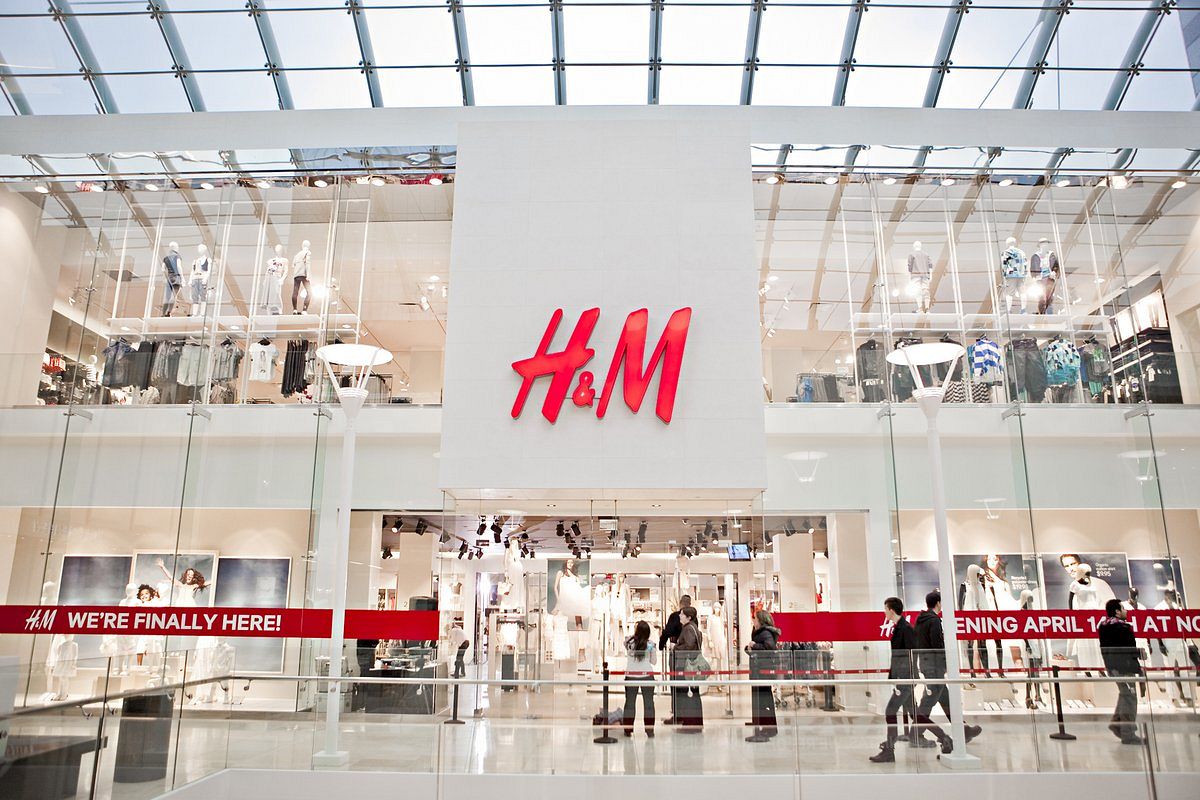

  • H&M Shrinks Asian Footprint to 886 Stores as Regional Sales Edge up 4 per Cent

    H&M Shrinks Asian Footprint to 886 Stores as Regional Sales Edge up 4 per Cent

    H&M Group closed 54 stores across Asia, Oceania and Africa over nine months to August. That trimmed its regional footprint to 886 locations. Regional sales for the quarter still rose 4 per cent.

    Group-wide revenue for the three months to August 31 reached SEK 57.2 billion ($5.8 billion). That was an increase of just 1 per cent in local currencies, as a stronger Swedish krona erased top-line gains.

    Operating profit climbed 23 per cent to SEK 6.04 billion, beating market forecasts of SEK 5.14 billion. The operating margin widened to 10.6 per cent from 8.6 per cent a year earlier. One-off refunds from US tariff payments accounted for 1.6 percentage points of that margin increase. The company confirmed those credits will not repeat in coming quarters.

    Pruning the Asian Store Network

    Physical retail space continues to shrink across Asia, Oceania and Africa. The regional network stood at 940 locations in November 2025 before net closures reduced the tally to 886 by the end of the third fiscal quarter.

    Management has paired store closures with selective rollouts for higher-margin labels. The group introduced COS to India in October 2025. It is betting affluent urban shoppers will back premium concepts as core H&M outlets leave marginal shopping centres.

    “We are able to get product from having a first rough idea to the customer in six weeks, and when we talk about shortening the lead times, it is about increasing the share that we buy in that way,” said chief executive Daniel Erver.

    Online transactions now generate more than 30 per cent of total sales. That growth has accelerated the push to refit existing flagships. The company has modernised a fifth of its 4,000 global stores rather than adding floor space.

    Rival Pace and Regional Margins

    H&M faces pressure from both ends of the fashion market in Asia. Zara owner Inditex reported a 9 per cent sales increase in constant currency in August, outpacing H&M through rapid stock turnover.

    Discount competitor Shein continues to capture budget market share across Southeast Asia and East Asia, squeezing the middle price bracket where H&M operates. Landlords in tier-two Asian malls face falling footfall. That drop leaves retailers with less bargaining power over fixed leases unless their sales density improves.

    Shifting logistics hubs has added further friction. A warehouse closure in Belgium disrupted stock flows into international distribution channels earlier this year. Transport bottlenecks in the Middle East compounded those freight delays.

    Decarbonising the Manufacturing Base

    Supply chain costs remain exposed to rising energy expenses across South Asia. Fuel price hikes in Bangladesh, a major manufacturing centre for the group, prompted H&M to push suppliers toward renewable power.

    Direct suppliers must complete the phaseout of coal-fired boilers by the end of 2026. This energy shift targets long-term operational resilience as regional fossil fuel tariffs fluctuate.

    European logistics operations are also expanding through 2027 with new facilities. These hubs aim to shorten shipping cycles and improve product availability across digital channels.

    The Next Trading Targets

    Recent store closures follow a difficult 2025 fiscal year. H&M shuttered a net 105 stores across Asia, Oceania and Africa during that period, driving a 7 per cent reported revenue drop in Swedish krona terms.

    Early autumn trading shows little acceleration. September sales are projected to grow 1 per cent in local currencies, matching the flat trajectory of the third quarter.

    Investors and retail partners are watching the fourth-quarter gross margin to see if shorter lead times can protect full-price sales without discounting once temporary tariff credits vanish.

  • Singapore Airlines swings in to Stockholm in Sweden

    Singapore Airlines swings in to Stockholm in Sweden

    Singapore Airlines has arrived in Sweden. On 30 May the Star Alliance carrier began five times weekly service from Singapore (SIN) to Stockholm Arlanda (ARN) via Moscow Domodedovo. The 9,651-kilometre route will be flown by the airline’s A350-900s. This is the first route to be served at the Swedish airport using this aircraft type. Jonas Abrahamsson, President and CEO of Swedavia, said: “The new route to Singapore is the result of several years of intense work, and it is a highly desired destination.

    The route is crucial in enabling business travellers to reach markets in Asia easily and also provides potential for greater cargo traffic between the two countries. It is a strategically important intercontinental route in Stockholm Arlanda’s development to be the leading airport in Scandinavia by 2020.” Singapore Airlines now serves 15 destinations in Europe across 11 countries.