Tag: stockings

  • Banana Sisters Boosts Global Expansion With Second Flagship Store In Southeast Asia

    Banana Sisters Boosts Global Expansion With Second Flagship Store In Southeast Asia

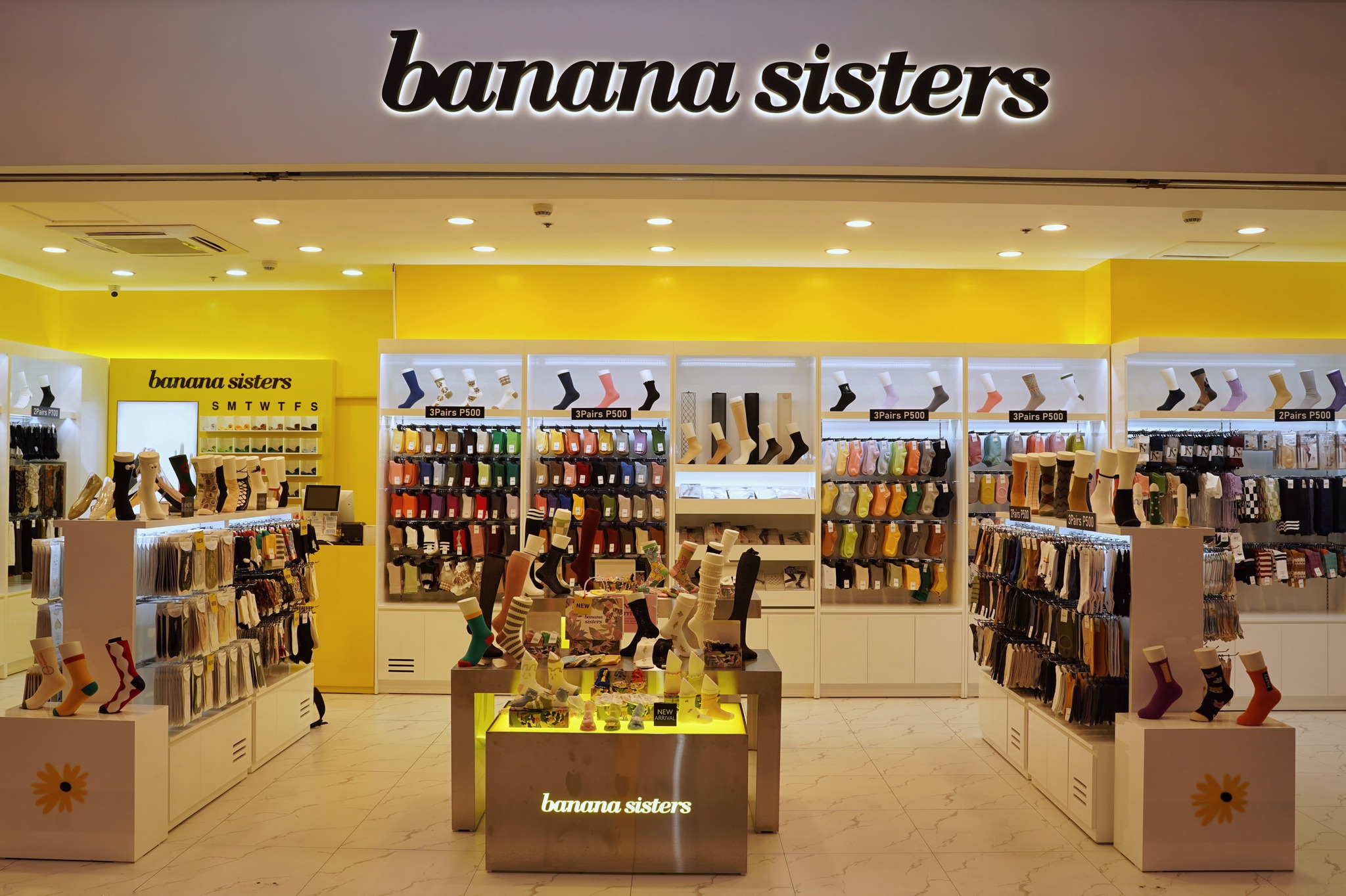
    Banana Sisters, a South Korean legwear brand, has broadened its global presence by launching its second international flagship store in the SM Mall of Asia. This move forms part of the company’s broader expansion plan in Southeast Asia.

    The new retail outlet occupies a 46-square-meter area situated on the third floor of the mall’s Entertainment section. Shoppers will find an impressive variety of approximately 300 different sock styles in the store. Additionally, the store boasts a range of branded merchandise such as T-shirts, caps, and a selection of eco-friendly bags.

    Banana Sisters is the umbrella company for several sub-brands. These include Banana Sisters, which caters to women, Banana Brothers for men, Biarritz offering chic styles, Bitz for sportswear, and Banana Kids for children’s wear.

    In addition to expanding through physical stores, Banana Sisters also plans to establish an e-commerce platform dedicated to the Philippines. This online venture is set to launch by the end of next year and will provide local payment options and nationwide delivery service.

    Yong Ju Jung, the CEO of Banana Sisters, affirmed that the store at the Mall of Asia will play a crucial role in expanding the brand’s presence in the region.

    Questions & Answers

    What is Banana Sisters’ recent strategic move in Southeast Asia?
    Banana Sisters, a South Korean legwear company, has launched its second international flagship store in the SM Mall of Asia.

    What can shoppers expect to find in the new Banana Sisters store?
    The store boasts approximately 300 different sock styles, as well as a range of branded apparel and accessories, including T-shirts, caps, and eco-friendly bags.

    What are Banana Sisters’ future plans besides expanding their physical stores?
    The company has plans to launch a dedicated Philippine e-commerce platform by the end of next year, offering local payment options and nationwide delivery.
  • Victoria’s Secret launches a World Tour – its new ‘catwalk show’

    Victoria’s Secret launches a World Tour – its new ‘catwalk show’

    It was December 2018 when the last Victoria’s Secret Fashion Show aired on CBS. A year earlier, the show garnered a billion viewers worldwide, but its size and success had blinkered the company to both the cultural shifts being brought about by a born-online generation that demanded to see itself reflected in advertising and the upstart competitors who were building inclusion into their business plans. Rihanna’s debut Savage Fenty show in the fall of 2018 made Victoria’s Secret’s reliance on an impossibly narrow conception of beauty—all razzle-dazzle push-up bras, highly exercised abs, and angel wings, along with the occasional culturally appropriative headpiece or another accessory—seem out of touch. Then there was its owner’s entanglements with alleged sex offender Jeffrey Epstein. On an earnings call in November 2019, it was official: The Fashion Show was canceled.

    In the years since, the company has undertaken a sweeping, ambitious rebrand, removing the architects of the original Fashion Show; swapping the Angels for a VS Collective that includes Megan Rapinoe, Priyanka Chopra Jonas, and Paloma Elsesser; and expanding its size range and developing the kind of products it had long neglected to make—nursing bras and mastectomy bras, for instance—because they didn’t fit its male-driven definition of “sexy.” Leslie H. Wexner, the founder of Victoria’s Secret parent company L Brands, also stepped down as Chairman and CEO, and sold his majority stake. Today, Victoria’s Secret remains the leader in the U.S. for the intimates category and on a rolling 12 month basis the brand experienced slight growth in 2022 compared to 2021.

    Now, in its biggest and most visible move yet, the brand is reinventing its annual show, producing a feature-length documentary film set to premiere in September. Though it’s a fairly radical rethink, the company is billing it as every bit as spectacular as the Victoria’s Secret Fashion Shows of old—there might even be wings.

    “There’s no need to explain ourselves anymore,” said Raul Martinez, EVP, head creative director of Victoria’s Secret, who is spearheading the project. “We’ve evolved and we’ve moved on, but it’s not that we’re leaving anything behind. We’re touching both the storytelling, which is about our advocacy and celebrating female voices, but also that full-on, fashion entertainment experience, because that was quite iconic.”

    Dubbed “Victoria’s Secret World Tour,” the new show will bring together a cast of international women creators from four cities across the globe. The “VS 20” includes filmmakers, musicians, artists, and other creatives, with a quartet of fashion designers at its center. Using Victoria’s Secret resources, London’s Supriya Lele, Lagos’s Bubu Ogisi, Tokyo’s Jenny Fax, and Bogota’s Melissa Valdes will each produce collections, the behind-the-scenes makings of which will be captured in the doc. All four narratives will come together with a filmed fashion show featuring a fifth segment of Victoria’s Secret-designed pieces.

    Margot Bowman, the London-based director that’s been trailing Supriya Lele and her team, avoided the Victoria’s Secret Runway Show in her youth. “I didn’t aspire to that experience because I knew I was excluded from it,” she said. “I was an overweight kid. But I still remember the images; for better or worse they were iconic images, powerful images. And for me, I see this as an opportunity to create a new set of images that more people can find themselves in.”

    The company was the subject of a Matt Tyrnauer documentary Angels and Demons last year that investigated its former owner’s ties to Jeffrey Epstein. And a book penned by former Business of Fashion journalists, Selling Sexy: Victoria’s Secret and the Unravelling of an American Retail Icon that is scheduled for an early 2024 release, seems poised to keep the brand’s problematic history in the news cycle. Then there’s the fact that new rivals have emerged as the company has been reimagining itself. Kim Kardashian launched Skims in 2019. It’s now valued at over $3 billion, and thanks to her influence it’s sparked a shapewear craze on the runways. Lizzo launched the rival brand Yitty last year with a tagline about “self-love and radical inner-confidence” that exemplifies how the lingerie industry is changing.

    When Victoria’s Secret announced on an earnings in March that it would be investing in a new version of its Fashion Show, the pop star took to Twitter: “This is a win for inclusivity for inclusivity’s sake,” she wrote. “But if brands start doing this only because they’ve received backlash, what happens when the ‘trends’ change again? Do the CEOs of these companies value true inclusivity? Or do they just value money?”

    Convincing people of Victoria’s Secret’s new agenda of female empowerment is where the VS20 comes in. Supriya Lele, who brings her Indian heritage to bear on her draped designs, sees synergies between her own brand and Victoria’s Secret. The VS Collective member Paloma Elsesser, whose voice can be heard in the teaser video released today, has walked Lele’s London runway. “That was one of the reasons why I felt that I can identify with some aspects of this now—previously maybe less so—but now I feel their language is becoming more and more modern,” she said. “And after meeting with the team, I understood that this was a big decision to really push this female-centered point of view forward and I felt that was a really great opportunity.” (The company won’t be commercializing Lele or the other designers’ collections, rather the World Tour is a showcase of their talents.)

    The Victoria’s Secret call took Lagos’s Bubu Ogisi by complete surprise. “To be honest, I kind of ignored it,” said the designer with a laugh. “My pieces are not really that fixated on lingerie, so I was a bit confused. But for this World Tour they’re experimenting, and the core element in my work is experimentation. So I thought, okay, it would be an amazing idea to confront how they normally create and how we can edit, modify, or change that structure.” Ogisi’s work showcases artisanal crafts from across Africa. “With this collection,” she explained, “everything is fixated on the idea of Yoruba and Edo mythology. Each person is going to be a divine being, a supreme higher entity, a quote/unquote goddess.”

    Note that Ogisi said goddess, not “sex goddess.” So, will the Victoria’s Secret World Tour be sexy? “Yes, absolutely,” said Martinez, but with a caveat. “We are looking at it through a female lens.”

    The main difference between the Victoria’s Secret Fashion Shows of old and the World Tour of 2023 would seem to be that women won’t just be objects for the delectation of viewers, they’ll be subjects too—the makers, each one with a different point of view about what’s sexy. “Obviously, there’s been a huge shift in representation, but I still think it’s rare to see women on screen presented in a recognizable way, especially in the framework of fashion,” observed Bowman, the director of the London portion of the documentary. “I just want people to watch it and be like, wow, there’s so many different ways that you can be a woman.”

  • Victoria’s Secret’s canceled annual fashion show

    Victoria’s Secret’s canceled annual fashion show

    Victoria’s Secret’s annual fashion show, where supermodels once walked down the runway wearing giant “angel” wings and elaborate lingerie sets, will not occur this holiday season.

    Stuart Burgdoerfer, CFO of the brand’s parent company L Brands, said on a call with investors on Thursday that Victoria’s Secret would be communicating with customers through social media and other platforms, but that it wouldn’t be “similar in magnitude to the fashion show”, which had been broadcast on network television in the US since 2001.

    “We think it’s important to evolve the marketing of Victoria’s Secret,” Burgdoerfer said.

    The news ends several months of speculation about the future of the fashion show after Victoria’s Secret said in May that show would not be part of network television this year, leaving open the possibility that it would be live-streamed online instead.

    But the show has been drawing a smaller audience for some time, as the brand’s “sexy” image has fallen out of favor with younger consumers and fashion trends have shifted towards bralettes and other less-padded styles.

    The fashion show was watched by 3.3 million Americans in 2018, compared with 12 million in 2001 when it was the first broadcast.

    The company also suffered a backlash last year when then-CMO Ed Razek told Vogue that the show wouldn’t have transgender models.

    L Brands posted a US$151.2 million operating loss in Q3 2019 on Thursday, which includes a US$284.7 million non-cash impairment charge related to Victoria’s Secret store and other assets, and a US$37.2 million charge to increase reserves related to ongoing guarantees for the La Senza business, which it sold in Q4 2018.

    Excluding these charges, its adjusted Q3 operating income was US$96.3 million and its adjusted net income was US$5.7 million.

    The retailer reported net sales of US$2.7 billion for the 13 weeks ended November 2, 2019, compared to US$2.8 billion for the prior corresponding period. Comparable sales were down 2 per cent in Q3 2019.

    The company is expecting a strong Q4, according to Reuters, and said its full-year adjusted earnings per share would be US$2.40, in line with its full-year guidance of between US$2.30 and US$2.60.

  • 6ixty8ight in Hong Kong opens new store at East Point City

    6ixty8ight in Hong Kong opens new store at East Point City

    6ixty8ight in Hong Kong has opened its 28th store, at East Point City.

    With its home base in Hong Kong, the now-international lingerie and casualwear label is continuing to expand its brick-and-mortar network.

    Having become one of the fastest-growing fashion brands in Asia since its launch in 2002, 6ixty8ight’s offering covers recent trends in lingerie, homeware, loungewear, casual wear and accessories.

    6ixty8ight now has more than 200 stores across Greater China, South Korea, Singapore and Malaysia.

    The company says it aims to create a seamless retail experience on its online platform and through its brick-and-mortar network.

  • Honey Birdette opens second US store

    Honey Birdette opens second US store

    Australian luxury lingerie retailer Honey Birdette has opened its second US store in San Diego, California, saying two more stores will be opened in the state in the coming months.

    The newly opened 74sqm store is located on the ground level of Westfield UTC and features Honey Birdette’s complete range of lingerie, bondage, latex, accessories and toys.

    The store has an ornate gold-tiled arch to welcome guests, with an individually cut-Italian glass mirrored storefront, and a salon inside.

    It includes two private dressing rooms fitted with ‘press for champagne’ buttons and custom-made whisky bar carts to offer customers a VIP experience.

    The new store also displays a limited-edition rose gold, rope and leather sex swing, which, according to the retailer, has not yet been seen at any other Honey Birdette boutique.

    “We are focused on creating individual design concepts for all of our future boutiques and each footprint will have its own unique element,” said Eloise Monaghan, Honey Birdette managing director.

    “Some might have a champagne bar for example, a private salon in one, a stage in another or a catwalk.”

    Two Honey Birdette stores will open in California soon and are currently under construction. One will be in Westfield Valley Fair and will open in July, and the other in Brea Mall will open in August.

    The retailer also announced they plan to open one more store in the state and another one on the East Coast but have yet to confirm the locations.

    Last year, the retailer said it will open 15 stores in the US over the next 12 to 24 months.

    The lingerie brand now has 57 stores across Australia, three in the UK and two in the US.

  • Calzedonia pays the price in Russell Street

    Calzedonia pays the price in Russell Street

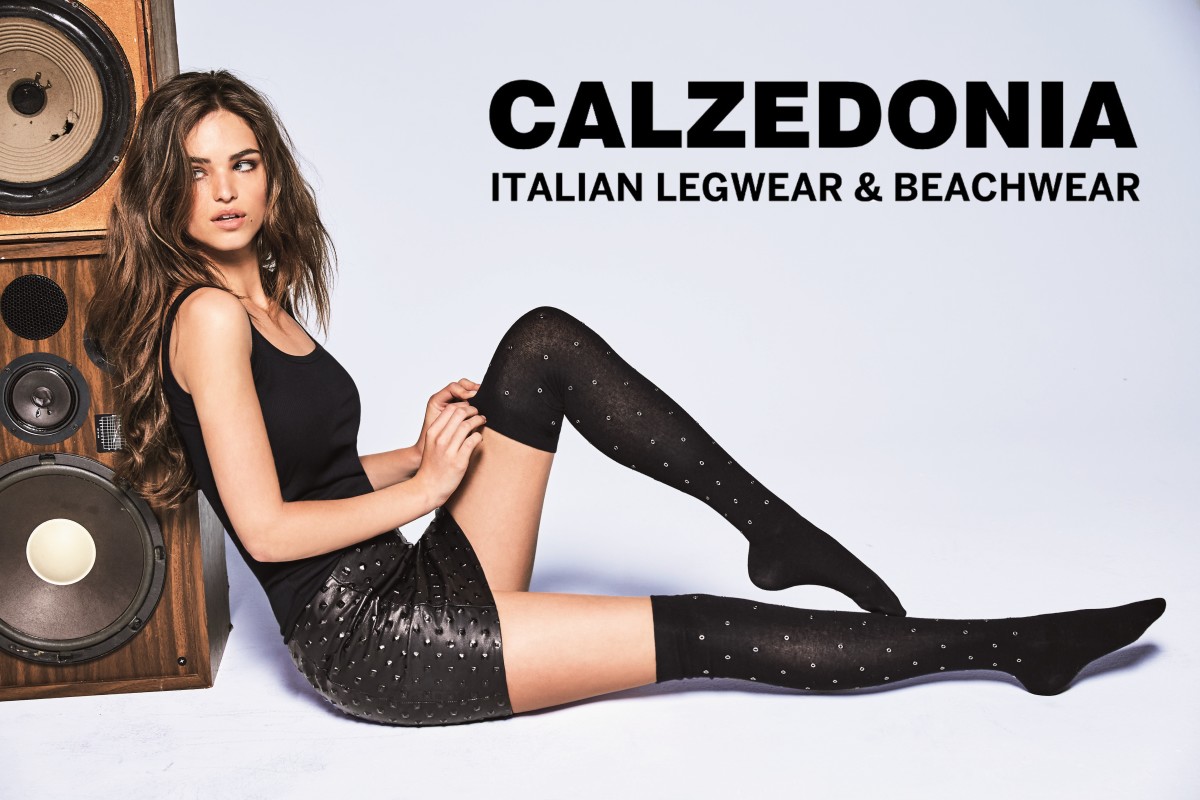
    Italian fashion brand Calzedonia has reportedly renewed its Causeway Bay lease at a 15 per cent increase.

    According to reports in business media, the firm re-signed for the 400sqft retail space with just a month to spare on its existing contract at a cost of HK$9 million (US$1.15 million) for one year on the world’s most expensive retail strip, Russell Street.

    The rental translates to $750,000 ($95,674) per month, a typical figure for the shopping street that demands pricier rentals than even New York’s 5th Avenue. The street is a must-see for big-spending luxury retail hunters from Mainland China.

    The opening of the new Hong Kong-Zhuhai-Macao bridge and high-speed Express Rail Link is expected to attract higher numbers of tourists and reverse the city’s trends of falling rentals, but to date the increases has not met expectations.

    Calzedonia operates 16 outlets in Hong Kong, including those for its Intimissimi and Falconeri brands.

    The opening of the new Hong Kong-Zhuhai-Macao bridge and high-speed Express Rail Link is expected to attract higher numbers of tourists and reverse the city’s trends of falling rentals, but to date the increases has not met expectations.

    Calzedonia operates 16 outlets in Hong Kong, including those for its Intimissimi and Falconeri brands.

  • Zivame Lingerie raises expansion capital to expand in India

    Zivame Lingerie raises expansion capital to expand in India

    Indian lingerie retailer Zivame has raised about US$8.6 million to fund expansion.

    The funds were raised through Allana Investment and Trading Company, in a round led by existing investor Zodius Technology and individual investors.

    The new capital will be used for store expansion, technology augmentation, product development and omnichannel strategy. Zivame now has more than 30 offline retail stores, and aims to expand to more than 60 in the next year.

    “The funding will enable us to further enhance our footprint and leadership in existing and newer markets as we continue to build on our mission to be the destination for women for all her intimate needs,” said Amisha Jain, Zivame CEO.

    “We continue to build the category as the Indian lingerie market is largely unorganised and under-served.”

    The company plans to a larger fundraising round in coming months.

    Founded in 2011 as a marketplace for lingerie brands, Zivame has expanded into fashion apparel, activewear, sleepwear, and shapewear as well as developed its private labels including Penny and Coucou.

  • American Eagle expands Aerie lingerie brand

    American Eagle expands Aerie lingerie brand

    Global apparel retailer American Eagle is boosting its Aerie lingerie brand, with plans to open 60 to 75 stores this year.

    The strategy, which coincides with rival brand Victoria’s Secret’s declining sales and series of store closures, involves both standalone locations and side-by-sides with American Eagle, predominantly in Texas and California. The company currently operates 1055 stores.

    “Aerie is a game changer by staying at the forefront of body positivity and women’s empowerment,” said Aerie’s global brand president Jennifer Foyle. “Our new cast of role models are even more inspirational. They embrace the Aerie lifestyle and were chosen for their influential voices, unique stories and commitment to increase the power and empowering our community.”

    The firm reported US$431 million in earnings for the last financial quarter, a 1 per cent rise over the previous year’s figures. Its total net sales also rose 1 per cent to $1.24 billion.

    “Strong execution by the teams drove a record fourth quarter and fiscal 2018, as we reached a milestone of $4 billion in annual revenue with increased operating profit,” said American Eagle’s CEO and chairman Jay Schottenstein.

    “Eagle and Aerie continued to deliver consistent performance by combining product innovation and great merchandise with an improved customer experience across channels. As we head into 2019, we will continue to leverage the strength of our brands, selling channels and the team’s commitment to continually raising the bar for our customers. The strength of our balance sheet and free cash flow enables us to make important investments in our business to fuel market share gains, future growth and returns to our shareholders.”

  • Victoria’s Secret opens first flagship store in China

    Victoria’s Secret opens first flagship store in China

    US brand Victoria’s Secret has opened its first flagship store in China as it taps into the growing appetites of mainland women for high-end lingerie.

    Fronted by an iconic pink glass facade, the four-storey, 2,500 square meter Victoria’s Secret store opened its doors on Thursday in Huaihai Road, one of Shanghai’s most upscale shopping streets.

    The new shop, which is the first to sell the brand’s full range of products attracted thousands of visitors on the opening day. Previously, Victoria’s Secret had only operated concept stores in China, selling accessories.

    “Chinese women are now ready for more sophisticated bras,” said Pascal Martin, a partner with OC&C Strategy Consultants.

    As Chinese women have increasingly adopted western fashion trends and brands, many locally-owned bra offerings at the cheaper end of the spectrum and paying little heed to design and brand appeal have popped up.

    The US lingerie giant, which entered China in 2015, has unveiled an aggressive expansion plan in the fast-growing Chinese market.

    Besides launching another flagship store in Chengdu in southwest Sichuan Province soon, Victoria’s Secret will move its high-profile annual fashion show to Shanghai at the end of this year.

    The retailer will charge mainland customers between 300 and 600 yuan (US$44 -87) for a bra, a little higher than in the US.

    Joey Chio, senior associate director of Savills Shanghai Retail, which helped Victoria’s Secret select the location for its new store, said the opening of the flagship shop would satisfy Chinese women’s “desire to keep up with the forefront of international fashion”.

    Luxury lingerie and high quality functional products are becoming increasingly popular among Chinese women, and a more frequent topic of discussion on social media.

    The female underwear market in China is expected to have a retail value of US$25 billion by 2017 – double that of the United States – and will grow to US$33 billion by 2020, according to Euromonitor.

    Top Italian luxury lingerie maker La Perla, which has eight stores in China, said it planned additional outlets in Chengdu and Chongqing and aims to open a men’s store in Beijing.

    Canadian yoga brand Lululemon entered the Chinese market by opening its first shop in Shanghai last December.

    The penetration rate of the bra sector in China is still under 10 per cent, compared with around 40 per cent in the US and 20 per cent in Japan, Martin said. Most of the bra brands currently in China are still focusing on the traditional department store channel rather than malls, indicating opportunities for brands like Victoria’s Secret, he added.

  • Lingerie Maker Victoria’s Secret Looks to Uncover Supply Chain Issues in Indonesia

    Lingerie Maker Victoria’s Secret Looks to Uncover Supply Chain Issues in Indonesia

    Lingerie giant Victoria’s Secret, famed for its racy bras and thongs, has pledged to trace the sources of its wood-based fabrics, joining the ranks of fashion companies addressing human rights and deforestation, its parent company said. In a new policy statement, parent company L Brands said it aimed to eliminate sources of wood pulp, used to make rayon, viscose and modal, that contribute to rainforest destruction or violate the rights of local people.
    L Brands is the latest in a growing number of US fashion companies to commit to investigate its supply chain for products from destructive regions and stop using those sources by the end of 2017, according to Rainforest Action Network (RAN). Ralph Lauren, whose designs are popular on Hollywood’s red carpets, adopted a similar policy earlier this month. “Our Forest Products Procurement Policy is written to reduce threats to ancient and endangered forests and to avoid products that contribute to deforestation or human rights abuses,” said L Brands’ policy statement published on its website.
    “We will report on our progress publicly.” Production of wood pulp can involve clearing forests to build eucalyptus plantations and taking land traditionally used by indigenous communities, campaigners say. The issue is particularly acute in Indonesia, a major producer of wood pulp. The Victoria’s Secret catalog features voluptuous models clad in tiny thongs, push-up bras and “cheekini” panties, and its top models who appear in its popular fashion shows are known as its Angels. It is one of several companies owned by L Brands. Its other well-known brands include Henri Bendel, Pink and Bath & Body Works. L Brands did not respond to a request for comment.
    RAN said the new policy was posted on the company website late on Wednesday. RAN, which helped develop the sourcing policies for L Brands and Ralph Lauren, has been waging an “Out of Fashion” campaign to publicize the impact of forest-based fabrics and call on major US brands to adopt stringent sourcing systems. “It’s encouraging to see brands beginning to take responsibility for their supply chains,” said Brihannala Morgan, senior forest campaigner with RAN. “
    L Brands’ commitments and actions, following right behind Ralph Lauren and among more than 60 other brands who have developed policies, can have a real positive impact for forests and the people that depend on them.” H&M, Zara, Levi Strauss & Co and British fashion designer Stella McCartney have adopted similar policies, RAN said. Last year Stella McCartney partnered with environmental non-profit Canopy to encourage clothing companies to stop sourcing fabric from ancient and endangered forests.