Tag: Submarine

  • Malaysia Boosts Digital Infrastructure with New SALAM Submarine Cable Network

    Malaysia Boosts Digital Infrastructure with New SALAM Submarine Cable Network

    Malaysia is making strides in its efforts to enhance digital connectivity within the country. The nation’s communications regulatory body is encouraging licensed telecommunications entities to consider participating in the construction of a new domestic underwater cable network.

    The Malaysian Communications and Multimedia Commission (MCMC) has prompted qualified license holders to indicate their interest in this groundbreaking project on July 16. They were also asked to present an initial Universal Service Plan for evaluation. The regulator requested draft proposals, however, they did not provide a final date for submissions.

    The planned network, named SALAM (Sambungan Kabel Dasar Laut MADANI), is projected to extend over 5,582 kilometers. It will consist of four submarine cable segments connecting ten landing stations scattered throughout the nation. SALAM’s primary objective is to bolster Malaysia’s internal communications infrastructure by creating a new underwater backbone that connects Peninsular Malaysia with Sabah and Sarawak.

    According to Communications Minister Fahmi Fadzil, the new network is expected to eventually replace the ageing SCREAM cable system. This system has been a significant domestic link for over a decade.

    With the introduction of SALAM, the MCMC plans to further augment domestic transmission capacity. It also aims to support multiple services and industries such as nationwide 5G expansion, broadband services, cloud computing, artificial intelligence applications, data centers, and other digital industries. Funded under Malaysia’s USP framework, SALAM will assist in financing communications projects in underserved regions, with contributions sourced from qualifying telecommunications license holders.

    Oscar Ling, a Sibu Member of Parliament, applauded the project, stating that it would enhance connectivity between Peninsular Malaysia, Sabah, and Sarawak. He also noted that it would help deliver more reliable internet services to communities in Sibu and across Sarawak.

    The progression of the project is contingent on the expressions of interest and draft Universal Service Plans submitted by eligible telecommunications companies. The MCMC has not yet announced when these submissions will be made public.

    Questions & Answers

    What is the aim of the SALAM network?
    The SALAM network aims to bolster Malaysia’s domestic communications infrastructure by creating a new underwater backbone that connects Peninsular Malaysia with Sabah and Sarawak.

    What services and industries will SALAM support?
    SALAM plans to support multiple services and industries such as nationwide 5G expansion, broadband services, cloud computing, artificial intelligence applications, data centers, and other digital industries.

    Who is funding the SALAM project?
    The SALAM project will be funded under Malaysia’s USP framework, which finances communication projects in underserved regions with contributions from qualifying telecommunications license holders.
  • LS Cable & System Spearheads Submarine Power Grid Expansion in Malaysia: Aims for Dominance in Booming Asia-Pacific Subsea Cable Market

    LS Cable & System Spearheads Submarine Power Grid Expansion in Malaysia: Aims for Dominance in Booming Asia-Pacific Subsea Cable Market

    The initiative’s main objective is to guarantee a reliable power supply by enlarging a 132kV-grade underwater power grid between the Malaysian peninsula and Langkawi Island, a well-known tourist hotspot.

    LS Cable & System prevailed over several international corporations to secure this second Langkawi venture, following an earlier project. The firm emphasized its capacity to manage intricate turn-key projects, supervising everything from design and material provision to installation and construction. This was over and above the basic cable supply, thus demonstrating its superior engineering proficiency.

    It is predicted that the worldwide underwater cable market will increase to KRW 34 trillion by 2030. The Asia-Pacific region, renowned for its abundant islands, is likely to be at the forefront of this surge with KRW 20 trillion. At present, Southeast Asia is diligently working on large-scale underwater power grid projects in an effort to set up the ASEAN Power Grid (APG). The primary goal of the APG is to interconnect national power infrastructures.

    LS Cable & System is poised to use this project as a stepping stone to boost its international order references and quicken its growth in the local market. The company plans to join forces with LS Marine Solution and other associates on large national projects. One example of such a project is the West Coast energy highway, for which a bidding notice is expected to be released in the first half of this year.

    LS Cable & System stated, “We are establishing credibility in the global market, built upon previous project implementation experience and our technical prowess. We are determined to strengthen our leadership in the underwater cable market by successfully executing domestic and international backbone network construction projects, leveraging our proven turn-key competencies.”

    Questions & Answers

    What is the primary goal of the project?
    The project’s main goal is to ensure a reliable power supply by expanding a 132kV-grade underwater power grid between the Malaysian peninsula and Langkawi Island.

    What is LS Cable & System’s role in the project?
    LS Cable & System is responsible for managing complex turn-key projects, including design, material supply, laying, and construction.

    What future plans does LS Cable & System have?
    LS Cable & System plans to use this project to enhance its international order references and accelerate its expansion into the domestic market. It also intends to collaborate with LS Marine Solution and other partners on large-scale national projects.

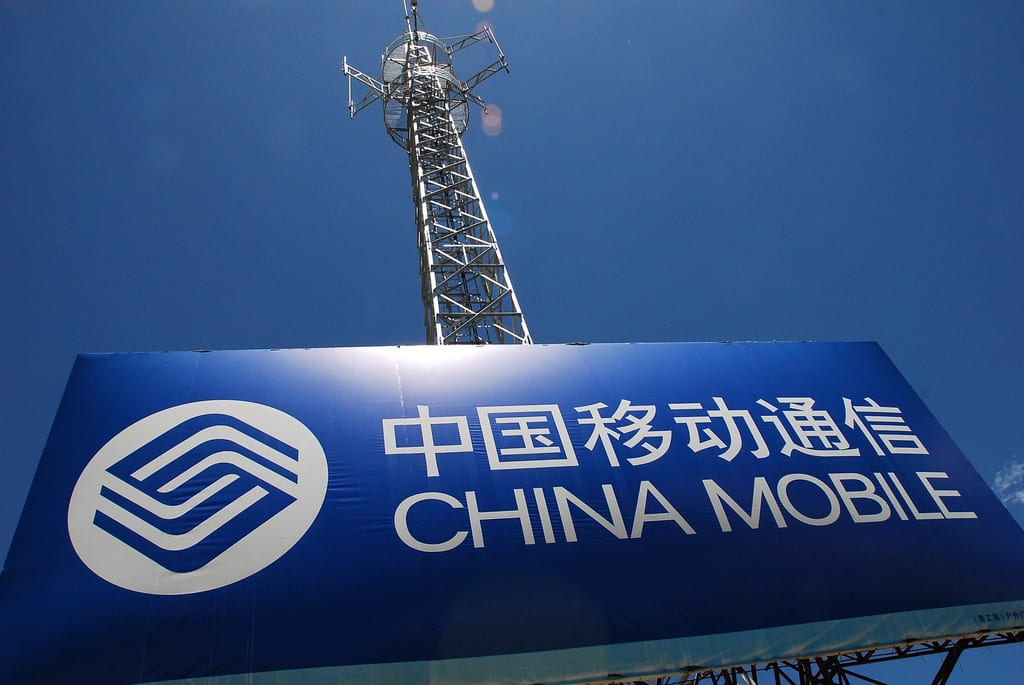
  • China Mobile Boosts Global Connectivity with Pioneering 2Africa and SEA-H2X Submarine Cable Initiatives

    China Mobile Boosts Global Connectivity with Pioneering 2Africa and SEA-H2X Submarine Cable Initiatives

    In the first half of November 2025, China Mobile achieved substantial growth in its underwater cable investments, strengthening its influence in promoting worldwide digital connectivity.

    China Mobile Activates 2Africa Submarine Cable

    In Nairobi, Kenya, China Mobile spearheaded a significant event to mark the activation of the 2Africa submarine cable’s eastern sections, connecting South Africa, Kenya, Djibouti, Marseille, and Egypt. The event aimed to showcase next-generation infrastructure and intelligent connectivity platforms, designed to speed up digital transformation for African service providers and businesses.

    Guo Haiyan, the Ambassador of the People’s Republic of China to Kenya, emphasized that digital cooperation is becoming a crucial component of collaboration between China and Africa. The activation of the 2Africa submarine cable’s eastern section and the introduction of China Mobile’s AI+ Cloud-Network Convergence Industry Solutions are a testament to the robustness of China-Africa digital collaboration.

    Furthermore, she noted that Kenya is a crucial ally for China in pursuing digital transformation and pledged to continue sharing expertise to bolster Africa’s digital economy. Guo expressed hope that both nations would intensify collaboration to create an open and inclusive digital governance ecosystem that encourages mutual growth and prosperity.

    Simultaneously, Hon. William Kabogo Gitau, Kenya’s Cabinet Secretary for Information, Communications, and the Digital Economy, hailed the 2Africa project as a significant achievement in China-Africa collaboration. He believed the activation of the eastern section would greatly improve East Africa’s international communications capacity and strengthen digital connections between China and Africa.

    Li Huidi, Executive Vice President of China Mobile, stressed that AI and 5G technologies are powering Africa’s economic transformation and expressed readiness to cooperate closely with Kenya and other African countries to establish an intelligent foundation by integrating 2Africa cable resources and enhancing AI computing capabilities.

    SEA-H2X Cable Reaches Hong Kong

    In another notable achievement, China Mobile successfully completed the landing of the Hong Kong segment of the Southeast Asia-Hainan-Hong Kong (SEA-H2X) international submarine cable, marking an important milestone in the construction of the high-capacity network system.

    As the principal initiator and primary investor of the SEA-H2X project, China Mobile oversaw the Hong Kong landing, ensuring its smooth and timely execution.

    China Mobile’s investment in the SEA-H2X project strengthens its core capabilities in digital communication in the Asia-Pacific region and improves its overall competitiveness in global telecommunications. This venture laid a robust network foundation for the long-term growth of the regional digital economy and injected sustained impetus into worldwide digital interconnectivity.

    Questions & Answers

    What is the significance of the 2Africa submarine cable’s activation?
    The activation of the 2Africa submarine cable’s eastern sections presents a crucial step in enhancing digital collaboration between China and Africa. It will significantly improve East Africa’s international communications capacity and strengthen digital connections between the two regions.

    What is the SEA-H2X international submarine cable?
    The SEA-H2X is a high-capacity network system connecting several strategic locations across Asia. China Mobile successfully completed the landing of the Hong Kong segment of the SEA-H2X cable, marking a key milestone in its construction.

    How does China Mobile’s investment in SEA-H2X impact the company and the region?
    China Mobile’s investment in the SEA-H2X project solidifies its core strengths in digital communication in the Asia-Pacific region, enhancing its competitiveness in global telecommunications. It provides a robust network foundation for the growth of the regional digital economy and boosts worldwide digital interconnectivity.

  • NEC completes construction of SACS cable

    NEC completes construction of SACS cable

    Japanese vendor NEC has announced it has completed the construction of the first subsea cable crossing the south Atlantic ocean for Angola Cables.

    The South Atlantic Cable System (SACS) has been deployed and is now ready for commercial service. The cable system spans between Angola with Brazil, connecting the African continent to Latin America directly for the first time.

    The system uses a four fiber pair configuration to deliver an initial design capacity of 40Tbps. In Angola, it will land at the existing Sangano cable landing station, while in Brazil it will land in a newly constructed data center constructed for SACS and another cable system connecting Brazil with the US.

    SACS was partly funded through a loan provided by the Japan Bank for International Cooperation to Angola state-owned development bank the Banco de Desenvolvimento de Angola.

    “NEC is honored to have been selected as a partner for SACS, the world’s first optical submarine cable system crossing the South Atlantic, directly connecting two Portuguese speaking nations of Angola and Brazil,” NEC GM for submarine networks Toru Kawauchi said in a statement issued on Monday.

    “Yesterday, all communication between the two continents had to go up north and cross the North Atlantic. From today, this new cable will bring information at the speed of light, improving the connectivity between the two nations and two continents.”

  • Submarine internet link completed

    Submarine internet link completed

    The Asia Pacific Gateway (APG) submarine fiber optic cable line has been put into operation after four years under construction.

    The APG, funded by VNPT, Viettel, FPT and CMC, aims to boost Vietnamese Internet speed.

    The operation of the network aims to reduce dependence on the Asia-America Gateway (AAG) as the AAG faced incidents three times last year, which affected not only individual users but also enterprises.

    The APG boasts a capacity of 54 Tbps, the highest of any network in Asia. With a total length of approximately 10,400km, the cable line connects mainland China, Hong Kong, Taiwan, Japan, the Republic of Korea, Malaysia, Singapore, Thailand and Việt Nam.

    Initiated in 2009, the APG is a partnership between Chunghwa Telecom (Taiwan-China), China Telecom (China), China Unicom (China), KT Corporation (RoK), NTT Communications (Japan), PLDT (the Philippines), Telekom Malaysia (Malaysia) and VNPT (Việt Nam).

    Viettel has also been investing in an Asia Africa Euro-1 (AAE-1) cable system, connecting countries in Asia, Africa and Europe. The cable line is expected to operate this year.