Retail News CRM

Tag: subscribers

  • Netflix subscribers are warned that they are the target of a dangerous SMS phishing campaign

    Netflix subscribers are warned that they are the target of a dangerous SMS phishing campaign

    It’s absolutely nuts to think that more than 13 years and five months ago we were telling you about the Netflix app becoming available for the Motorola DROID and DROID X from the Android Market. We’ve gone from Android 2 to Android 15, the Android Market is now the Google Play Store, Netflix now offers a wide range of original content, and Motorola is trying to recapture the magic that made it and HTC early leaders among Android phone manufacturers.

    One thing that we didn’t worry about too much back in 2011 that we worry about now is the possibility of getting scammed by phishing attacks. These are emails or texts that are made to look as though they were sent from a company you do business with asking you to reveal personal information. Cybersecurity researchers are reporting that hackers are running an SMS phishing campaign against Netflix subscribers that seeks to access their Netflix accounts and steal information about the credit cards used to pay for the service.

    “We will never ask you to enter your personal information in a text or email. We will never request payment through a 3rd party vendor or website”-Netflix statement

    These bogus texts make it appear as though a subscriber’s account was placed on hold and ask the subscriber to update his/her information by clicking on a link. Here’s the scary part. This link will take the victim to a website that looks remarkably like the real Netflix site with a prompt asking for login and credit card information. If the information they request is provided to them, the scammers will take over control of the victim’s Netflix account and will have the ability to use his/her credit card and wipe out the remaining credit available.

    Security experts are warning Netflix subscribers to be on the lookout for any texts or emails stating that their Netflix account is on hold or will soon be suspended. Other texts accuse the subscriber of not paying for the service and urgently demand payment by threatening to cancel the account. Do not press on any links that are included in the text or email. You might be able to tell that the text and website are fakes since they are usually loaded with grammatical and spelling errors.

    The phishing campaign was discovered by cyber security firm Bitdefender. The security firm says that it spotted this campaign running in 23 countries, including the United States, since September. If you do receive this text, ignore it and delete it.

  • Snapchat+ hits 1 million subscribers, announces new exclusive features

    Snapchat+ hits 1 million subscribers, announces new exclusive features

    Launched less than two months ago, Snap’s premium service has already amassed 1 million subscribers, the company announced today. Snapchat+ is available for $3.99/month and offers exclusive features that aren’t otherwise available.

    When it launched Snapchat+ back in June, Snap promised to add new features for premium users quite often. Today, the social network revealed a new batch of Snapchat+ features are now available for the service’s subscribers.

    First off, Snapchat+ subscribers are getting “Priority Story Replies,” meaning their replies will be more visible to Snap Stars. “Post View Emoji” is another new feature coming to the premium side of the service today. It allows paying customers to pick an emoji they want friends to see after they view their Snaps. Basically, it acts as a signature to sign-off you Snaps.

    Another interesting new premium feature coming to Snapchat+ is the ability to customize further Bitmoji backgrounds with “special backgrounds” like gleaming gold and a beach paradise. Last but not least, Snapchat+ subscribers are getting new icons for the app to put on their home screens.

    If you want to subscribe to Snapchat+, keep in mind that the service is only available in the United States, Canada, the United Kingdom, France, Germany, Australia, New Zealand, Saudi Arabia, United Arab Emirates, India, Kuwait, Qatar, Oman, Bahrain, Egypt, Israel, Sweden, Denmark, Norway, Netherlands, Switzerland, Ireland, Belgium, Finland, and Austria.

  • Reliance Jio gains wireless subscribers contrary to rival operators

    Reliance Jio gains wireless subscribers contrary to rival operators

    According to data issued by the Telecom Regulatory Authority of India (TRAI), total wireless subscribers reached 1,166.30 million at the end of October 2021, with the urban areas accounting for 637.44 million and rural areas totaling 528.86 million.

    As on 31 October, 2021, private access service providers held 89.99% market share of wireless subscribers, with the two PSU access service providers, namely BSNL and MTNL possessing a 10.01% market share.

    Reliance Jio had the largest market share at 36.58%, followed by Airtel at 30.35% and Vodafone at 23.07%.

    Reliance Jio reportedly added 1.7 million subscribers in October, bringing its subscriber base to 426.59 million. Airtel, however, has a subscriber base of 353.97 million after shedding some 0.48 million in the same month. Vodafone’s subscriber base also dropped, totalling 269.02 million after losing 0.96 million subscribers.

    Data published by TRAI previously revealed that Reliance Jio has the highest average data download speed of 24.1 MB/s among 4G service providers in India.

  • Netflix brings three new mobile games to its subscribers

    Netflix brings three new mobile games to its subscribers

    Netflix’s games program doesn’t work like traditional games services since it doesn’t require users to pay a monthly subscription. However, you do have to be a Netflix subscriber to have access to several mobile games in its library.

    When it launched early last month, the program offered to Netflix subscribers a pretty short list of mobile games they could play for free: Stranger Things: 1984, Stranger Things 3: The Game, Shooting Hoops, Card Blast, and Teeter Up.

    Less than two weeks ago, Netflix added two new games to the lineup: Gameloft’s Asphalt Xtreme and Bowling Ballers. Today, three new games are added to the roster: Dominoes Café, Knittens, and Wonderputt Forever.

    Although these might not be as appealing as the previous titles, they’re free to play and don’t include ads, additional fees or in-app purchases. If you want to play any of the games offered by Netflix and you’re using an Android device, you can do so via the dedicated games row and games tab.

    On the other hand, members on an iOS device will see a dedicated games row where they can select any game to download.

  • Disney+ blows past 100 million subscriber milestone even as its growth starts to slow down

    Disney+ blows past 100 million subscriber milestone even as its growth starts to slow down

    As heated as the battle for global supremacy in the crowded video streaming space may have seemed just a couple of years ago, it has become increasingly clear in recent months that the market is largely headed for a duopoly.

    That’s because the likes of Apple TV+, HBO Max, and Peacock are not really going anywhere while Disney+ is practically going everywhere, growing at a Netflix-threatening pace quarter after quarter.

    As expected at the end of last year, the late 2019-released streaming service has concluded the first quarter of 2021 well above the 100 million subscriber mark. Namely, Disney Plus counted a grand total of 103.6 million users around the world as of April 3, up from “just” 94.9 million subscribers on January 2, 2021.

    That’s a huge number for the ever-expanding Walt Disney Company no matter how you look at it, inching closer to Netflix’s industry-leading 208 million paid subscriber base last updated in April for Q1 2021.

    While the gap between the two streaming giants may seem substantial (because it is), Disney+ has impressively managed to eat away at the global champ’s advantage ever since it made its debut back in November 2019. This year’s first quarter is no exception, although for the first time since the beginning of the COVID-19 pandemic, both Netflix and Disney+ failed to meet the expectations of industry pundits.

    Following 29 and 28 percent surges in worldwide subscribers in Q3 and Q4 2020 compared to their previous quarters, Disney+ had to settle for the aforementioned 8.7 million sequential growth, equating to less than 10 percent, which was still more than enough to outpace Netflix’s modest 4 million or so gain during Q1 2021.

    If current projections hold up, Disney+ could reach anywhere between 230 and 260 million paid global subscribers by the end of 2024, which is when the streaming platform’s parent company originally expected the service to sit at no more than 90 million users.

    In comparison (although it’s obviously not a very fair one), Netflix broke the 100 million barrier at some point in 2017 after being founded in 1997 and branching out from the DVD sales and rental business to the online world in 2007.

    Meanwhile, in case you’re wondering, mum’s the word on the paying subscriber figures of Apple TV+, which pretty much tells you everything you need to know about the much-hyped platform that essentially saw daylight at the same time as Disney+.

  • South Korea boasts of hitting almost four million 5G subscribers

    South Korea boasts of hitting almost four million 5G subscribers

    The Ministry of Science and ICT in South Korea reports the country is close to hitting the milestone of four million 5G subscribers.

    While it’s often debated whether South Korea or the US was first to launch a commercially available 5G network, both countries were among the first.

    This leadership makes South Korea closely watched by industry observers for how their 5G rollout is progressing, including the pace of adoption.

    5G adoption is happening fast in South Korea. As of October, the ministry reports that 5G networks across the country had 3.98 million subscribers.

    In September, the ministry says 516,000 more people subscribed to 5G services. In fact, a minimum of half a million new 5G subscribers have been added every month since networks launched in April.

    If that pace continued throughout October and November, it’s likely the four million 5G subscribers milestone has already been exceeded. While Christmas in South Korea isn’t as present-oriented as in the West, the holiday may also provide some further uptick in adoption in December.

    To date, the highest rise in subscribers was in August when Samsung launched its Galaxy Note 10 5G smartphone.

    SK Telecom has the most 5G subscribers with 1.77 million, followed by KT’s 1.21 million and LG Uplus’ 1 million.

    Traffic growth has also been substantial. In October, the ministry notes a total of 105,000 terabytes of traffic was recorded on 5G networks. Users consumed an average of 28 gigabytes of data that month.

    In a bid to handle the exploding amount of traffic, South Korea plans to double 5G spectrum allocation by 2026.

    While 5G networks in South Korea are currently not standalone and use 3.5GHz spectrum, the country plans to develop standalone 2.8GHz spectrums early next year.

  • South Korea discloses number of 5G subscribers

    South Korea discloses number of 5G subscribers

    Consumers have however filed some complaints related to the coverage and speed of 5G. The main problem was that mobile devices were displaying a 5G symbol when users on LTE were near base stations compatible with 5G. The Ministry confirmed that facing such issues is very normal given that operators are still building base stations and upgrading software.

    A total of 54,202 5G base stations have been deployed so far, an increase of 7 per cent from 22 April, however coverage in the country was still restricted to urban and more populous areas.

    Korea has been pioneering the journey to 5G deployment, being one of the first in the world to offer 5G to mobile consumers. Operators in the country had also launched commercial 5G services to businesses using mobile routers.

    Out of the 260,000 subscribers, KT, the country’s second largest operator, has announced it secured 100,000 subscribers so farm whereas SKT and LG Uplus are yet to reveal their figures.

  • Google Calendar update adds Dark Mode for Android users

    Google Calendar update adds Dark Mode for Android users

    Google has just announced that the long-awaited dark mode is now rolling out on Android for two of its apps: Calendar and Keep. Ahead of Android Q’s release, Google has decided to bring dark mode to many apps. We learned last week that Google Keep will be getting the feature, but Calendar is a bit of a surprise.

    The announcement contains a couple of screenshots showing both Calendar and Keep apps with dark mode enabled. If you want to start using it on Google Calendar, you should head to Settings / General / Theme, and select Dark mode. It’s much easier to enable it in Google Keep; simply go to Settings and choose Enable Dark Mode.

    Now, it’s worth mentioning that dark mode for Calendar is only supported on device running Android Nougat and higher. Also, if you have Android Q preview installed on your phone, you’ll be able to set the entire OS in dark mode by default. The same goes for Google Keep with one exception, dark mode will work on all devices powered by Android Lollipop and later.

    According to Google, the update that brings dark mode to Calendar and Keep apps will be rolled out to compatible Android devices over the course of 15 days. The rollout has already begun on May 16 for Google Calendar, while Google Keep will get it starting today, May 20.

  • KT subscribers jump ship after fire accident

    KT subscribers jump ship after fire accident

    KT’s week has taken yet another turn for the worse as the fire that caused major telecommunications disruptions in Seoul and the surrounding area has likely left the company with a hefty compensation bill and subscribers looking to take their business elsewhere.

    According to data from the Korea Telecommunications Operators Association on Tuesday, the number of KT’s mobile service subscribers has been shrinking since a fire broke out at the carrier’s Ahyeon telecommunications switching center in Seodaemun District, western Seoul, on Saturday.

    On Saturday, the total number of subscribers to the country’s second-largest mobile carrier fell by 828 people compared to the previous day. This means that the number of people that left KT was larger than those who newly subscribed to the carrier that day.

    On the contrary, subscribers to SK Telecom increased by 246 people and LG U+ 582 people on the day of the accident.

    On Monday, the number of KT subscribers again dropped by 678 people. During the two operating days, KT lost a net 1,506 subscribers.

    Before the accident, the number of KT subscribers was on the rise. On Thursday, KT’s pool of subscribers increased by 69 people and by 83 people on Friday, but that trend was reversed after the fire.

    The troubled company said most fire-affected services have returned to normal on Tuesday, but analyst Kim Hyun-yong from eBest Investment & Securities said, “KT’s sales and brand image can be damaged if the situation is not fixed quickly considering the long hours and broad scope of disruptions [caused by the accident,]” in a report.

    SK Telecom also suffered from problems in its mobile communications services in April and LG U+ last year, but disruptions were resolved in a matter of hours, not days.

    Analysts estimate KT will have to spend at least 23.2 billion won ($20.5 million) in compensation to individual customers as it decided to waive a month’s phone bill for KT subscribers residing in the affected regions. The amount is roughly 1.6 percent of KT’s projected operating profit for this year according to Yang Jong-in, a research fellow from Korea Investment & Securities, Tuesday.

    “We made our assumptions based on KT’s market share in the five affected districts in Seoul,” Yang said.

    Another analyst Kim Joon-sop from KB Securities estimated the amount of compensation to be larger, at around 31.7 billion won.

    As compensation plans for the business losses of small and microbusiness operators have not yet been laid out by the mobile carrier, the amount of compensation could snowball.

    The accident comes at a tragic time for KT, as it was just a week before the carrier expected to introduce its first 5G network-based services. Korean carriers have been preparing to launch their first 5G services in dongle-type devices from December and had scheduled large press briefings this week prior to the official launch.

    KT has now delayed its event. On Monday, the mobile carrier sent notices saying “we decided to cancel our scheduled event to quickly fix telecommunications disruptions caused by the fire,” to reporters.

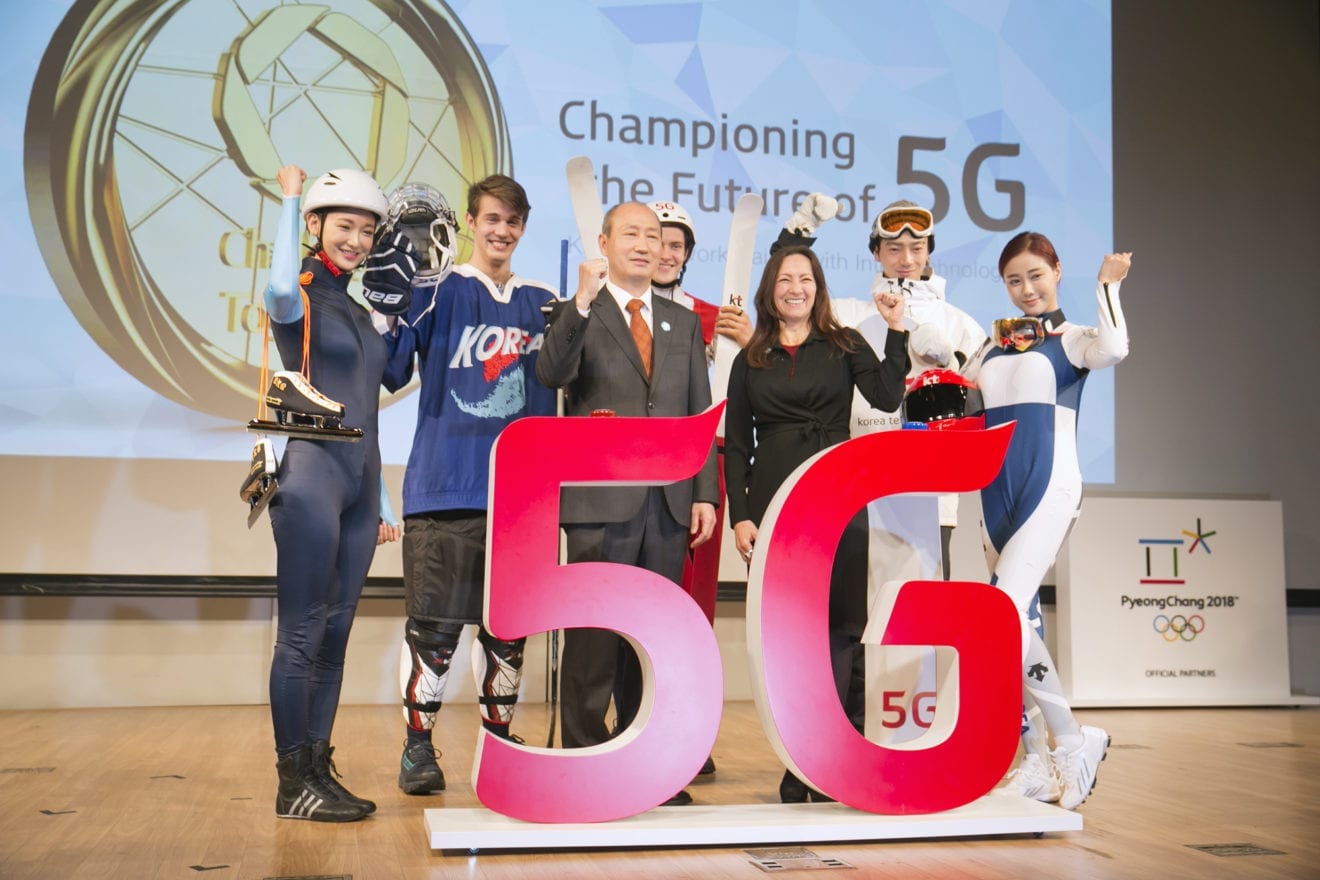
    The 5G network has been KT’s key focus and Chairman Hwang Chang-gyu had promised in September to invest a whopping 9.6 trillion won into its 5G business over the next five years. The company had also cemented its image as a leading 5G service provider by serving as the official telecommunications partner at the PyeongChang Winter Olympic Games earlier this year.

    The latest incident, however, has hampered KT’s latest bid to take a bigger share of the local telecommunications market, which has been in a similar shape for the last decade: SK Telecom taking 50 percent, followed by KT with 30 percent and LG U+ 20 percent.

    “SK Telecom, which boasts a well-established image of offering quality mobile services, and LG U+, which bets on cost-effective services, are likely to take advantage of the latest accident,” an industry insider said.

    Still, KT is trying its best to restore the disrupted network.

    According to KT, 96 percent of its mobile communications service has been restored, while 99 percent of landline internet and 92 percent of fixed-line phone services are repaired as of 11 a.m. Tuesday.

    KT said microbusiness operators still suffering from telecommunications disruptions are those that depend on copper cables rather than more modernized fiber optic cables. While 99 percent of fiber optic cable-based landline phone services are back to normal, only 10 percent of the copper cable-based services have been restored.

    “Copper cables are heavy and thick so they cannot be taken out through manholes for restoration,” KT said in statement. “They can only be recovered after our people are allowed into the tunnel where the fire broke out.”

    To minimize damage to copper-cable users, KT said it will offer 1,500 wireless LTE routers to shop operators so they can use electronic card payment systems. KT is also offering 300 wireless payment devices to convenience stores after discussions with the various franchise headquarters. The carrier has also been rushing to convert copper cables to fiber optic ones in areas with a large number of shops since Monday.

    From the government’s side, the Ministry of Science and ICT created a task force on Tuesday consisting of related government officials and representatives from mobile carriers to discuss how to manage low-level telecommunications facilities like the Ahyeon facility, which was graded D in terms of importance.

  • Over 1m new mobile internet subs to be added daily

    Over 1m new mobile internet subs to be added daily

    The telecoms industry is on track to attract more than 1 million new mobile internet subscribers per day between now and 2022, according to the latest Ericsson Mobility Report.

    The report predicts that there will be 2.6 billion new mobile broadband subscribers added through 2022, with LTE set to become the dominant access technology in 2018, making it the fastest growing mobile technology in history.

    Ericsson noted that it has taken just five years for LTE to cover 2.5 billion people, compared to eight years for 3G. There were 250 million new LTE subscriptions added in the first quarter of 2017 alone.

    Total traffic over mobile networks meanwhile grew 70% over the 12 months ending in Q1 – the fastest year-on-year mobile data growth globally since 2013 – and is set to increase to eight times its current level by 2022, the report predicts. Recent growth has been driven by explosive increases in consumption in India.

    Global growth in demand for mobile data will also drive 5G deployment. The report predicts that there will be more than 500 million 5G subscriptions globally by 2022, not including IoT connections. By this time, 5G is expected to cover around 15% of the world’s population.

  • China Mobile 4G sub reaches 510m in November

    China Mobile 4G sub reaches 510m in November

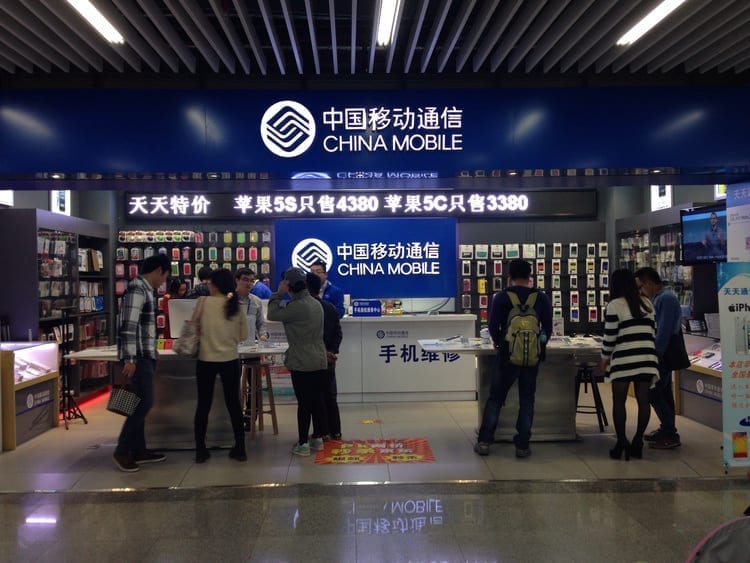
    China Mobile, the country’s largest mobile carrier, said its 4G subscriber base reached almost 510 million in November. This represents more than 30% of the world’s total 4G subscribers.

    Compared to a net increase of 16.6 million 4G users in October, China Mobile added over 12.5 million TD-LTE subscribers only last month, its slowest monthly growth this year.

    By comparison, China Unicom added over 5 million 4G customers in November, taking its 4G LTE subscribers base to 99 million. Smallest rival China Telecom added 4.3 million 4G users in November, bringing the total 4G subscriber base to 117.3 million. The operator added 58.84 million 4G customers in the last 11 months.

    Together the three Chinese mobile carriers had over 720 million 4G subscribers in November.

    In a separate announcement, China Mobile has signed a letter of intent with Vodafone, Ericsson and Lenovo to cooperate on the development of IoT.

    China Mobile will connect its IoT connection management platform with Ericsson’s DCP platform and Vodafone’s IoT platform to provide its enterprise customers with a unified global network access, portal experience and Service Level Agreements (SLAs).

    This will help drive China Mobile’s overseas market expansion and enhance the company’s service capabilities, the operator said.

    The partnership with Lenovo will see the Chinese PC maker launch a range of notebooks with built-in 4GLTE modules to offer customers with China Mobile’s high-speed 4G mobile internet services.

    China Mobile said there are currently almost 100 million devices connected to the operator’s IoT platform and the number is expected to double to 200 million by the end of 2017.

  • Global 5G subscribers to reach 500m by 2022

    Global 5G subscribers to reach 500m by 2022

    Global 5G subscriptions will grow rapidly once the technology is available, Ericsson has forecast, with the vendor predicting that subscriptions will reach 500 million by 2022.

    North America is expected to lead the way in 5G uptake, with 5G projected to account for 25% of subscriptions in the region by 2022. But APAC will be the second fastest growing region, with 5G accounting for 10% of subscriptions.

    Ericsson’s latest Mobility Report also projects that global mobile subscriptions will grow to 8.9 million, with 90% of these for mobile broadband, and 6.1 billion unique subscribers in 2022.

    As of the third quarter of this year, there were 84 million new mobile subscriptions being added per quarter, for a total of 7.5 billion. India had the most net additions for the third quarter of 15 million, followed by China’s 14 million, Indonesia’s 6 million and Myanmar and the Philippines’ 4 million each.

    By the end of 2016 there will be 3.9 billion smartphone subscriptions worldwide, Ericsson said, with nearly 90% of these registered on WCDMA/HSPA and LE networks. This is expected to grow to 6.8 billion and 95% of subscriptions by 2022.

    The report also shows that mobile video is projected to grow by 50% annually through to 2022 to account for nearly 75% of all mobile data traffic. Increased use of live video streaming to contact friends, family and followers is meanwhile expected to contribute to a 39% annual growth in social media traffic.

    Finally, the report suggests that IoT will account for around 18 billion of the 29 billion connected devices forecast by 2022.

  • Singtel extends free WiFi offer to fiber subscribers

    Singtel extends free WiFi offer to fiber subscribers

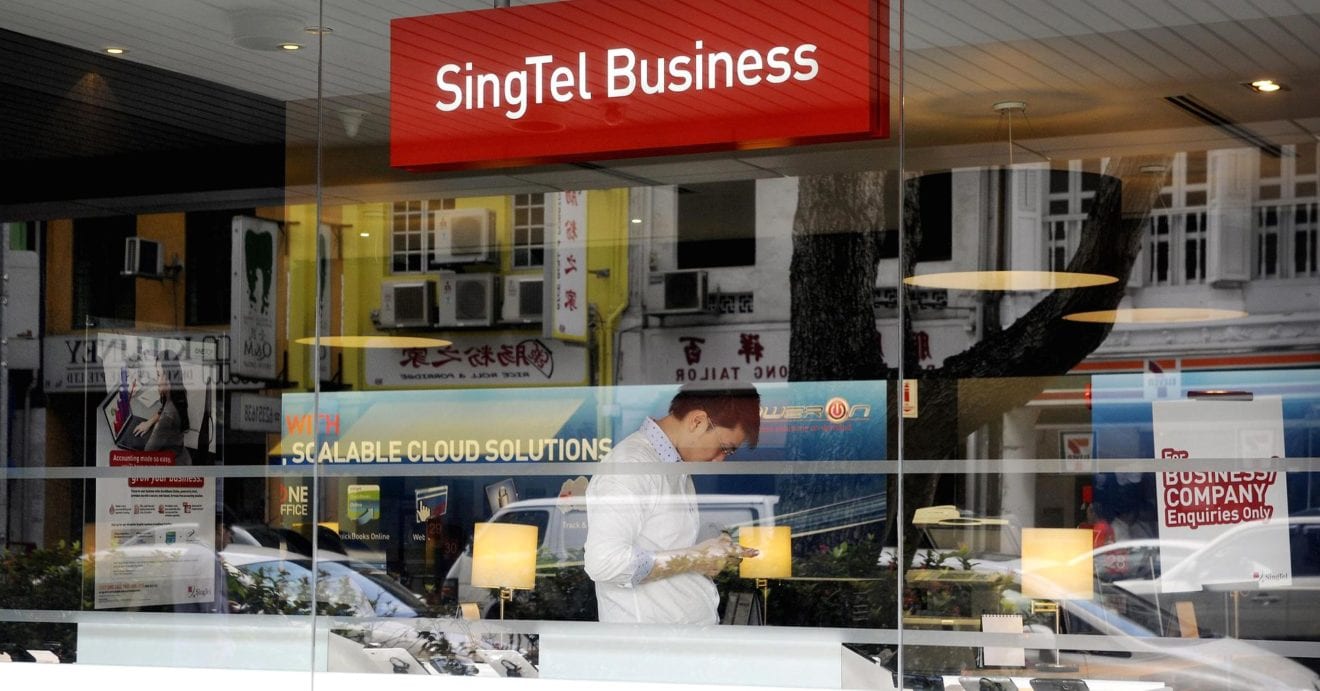
    Singtel has revealed plans to extend its free unlimited out-of-home WiFi offer to new and existing fiber broadband customers.

    The operator has been providing Singtel WiFi services for free for the operator’s mobile customers, and has decided to expand access to the service based on its popularity with mobile subscribers.

    Fiber broadband subscribers will be eligible for unlimited data usage at Singtel’s more than 900 WiFi hotspots island-wide. The company said the unlimited usage offer will last until the end of September 2017.

    Customers will be able to access the network on any WiFi-enabled device. After a one-time activation the service offers seamless logins at all WiFi hotspots.

    Singtel asserts that its WiFi network offers five times faster speeds compared to conventional WiFi services. Hotspots have been deployed across the island, including in MRT public transport stations and McDonald’s restaurants.

    “We are pleased to offer our fiber broadband customers extra value on their plans and affordable options to stay connected,” Singtel managing director of home consumer Singapore Goh Seow Eng said.

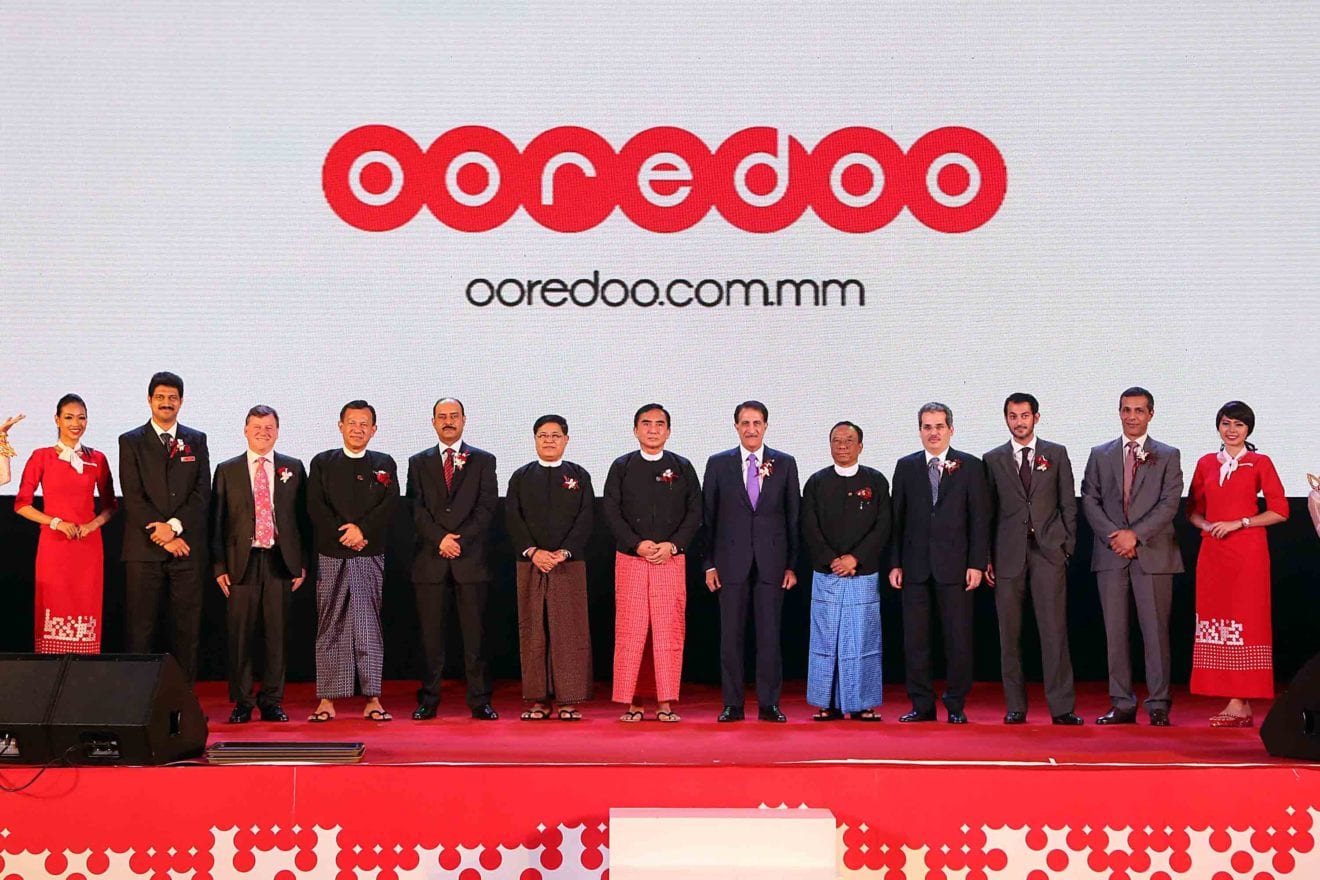
  • Ooredoo Myanmar reaches 500,000 LTE subs

    Ooredoo Myanmar reaches 500,000 LTE subs

    Ooredoo Myanmar has signed up 500,000 LTE users since launching 4G services in May and is pushing ahead with the operator’s ambitious rollout plans.

    The operator’s CEO Rene Meza told that the operator now has a total 4G population coverage of 4.6 million people in Yangong, Mandalay and Nay Pyi Taw.

    The company is concentrating its 4G rollout efforts on urban areas. It has a target of covering half of Yangon’s townships, all of Mandalay and about 90% of Nay Pyi Taw.

    Main rival Telenor Myanmar has been later to offer 4G. The operator launched in Nay Pyi Taw in July and is at the testing phase in Yangon and two other cities.

    Telenor is also taking a different strategy of focusing its rollout efforts away from heavy usage areas to minimize the impact on existing 3G services.

    Both Telenor and Ooredoo’s 4G networks are currently data-only, and neither operator currently charges a premium for 4G. Meza noted that 80% of the operator’s Myanmar customers are now using mobile data.

    But both operators’ 4G ambitions will be dependent on the acquisition of more mobile spectrum. The government plans to auction 40 MHz in the 2600-MHz band in mid-October and to auction 1800-MHz spectrum by the end of the year.

  • Myanmar orders all SIMs registered by March

    Myanmar orders all SIMs registered by March

    Myanmar’s Directorate of Telecommunications has instructed the nation’s mobile operators to complete the registration of all SIMs by next March.

    The telecom regulator has revealed that any unregistered SIMs still operating by that time will be temporarily suspended.

    SIMs will need to be registered based on users’ national registration cards, student identity cards, drivers’ licenses or passports for foreign citizens, the report states, adding that the order is aimed at stimulating mobile banking and m-commerce in the nation.

    There are around 48 million SIM cards in Myanmar, a market where mobile penetration has increased by 35 percentage points over the past year to more than 89%.

    While there’s no data on how many of these are unregistered, the Directorate has stated that “many” SIM cards were sold to buyers who did not supply the required documents.

    With the order Myanmar is joining a growing number of APAC nations requiring SIM registration, including most recently Bangladesh.

    Thailand began cutting off unregistered SIMs last year, while Chinese regulators began ramping up efforts to crack down on unregistered SIMs.