Retail News CRM

Tag: subsidies

  • Malaysia Contemplates Axing Fuel Subsidies for Wealthier Citizens: A Strategic Move Towards Economic Resilience

    Malaysia Contemplates Axing Fuel Subsidies for Wealthier Citizens: A Strategic Move Towards Economic Resilience

    The Malaysian government is currently evaluating a proposal aimed at revising petrol subsidies for the country’s high-income households. This proposition was initially presented roughly four weeks ago and has been under close scrutiny by the respective authorities over the past three weeks.

    Government’s Standpoint on the Proposal

    Malaysia’s Prime Minister, Anwar Ibrahim, disclosed that a final resolution has not yet been reached on the matter. Although, he emphasized that fundamentally, the government concurs with the necessity to reassess the subsidy system for higher-income Malaysians. The government is expediting efforts to finalize the proposal at the earliest.

    The consideration of this revision comes in response to increasing demands for the realignment of the nation’s fuel subsidy policy. The goal is to ensure that aid is appropriately directed towards the deserving recipients.

    Public voices are advocating for the exclusion of high-income groups from receiving subsidies on RON95 petrol. They suggest that this support should be redirected towards middle- and lower-income groups who are feeling the brunt of escalating living expenses.

    The Need for Proposal in Present Economic Climate

    The proposal is seen as a critical requirement in the prevailing economic environment. It is expected to aid in effectively utilizing national resources and bolstering the country’s resilience against global economic uncertainties.

    Questions & Answers

    Why is the Malaysian government considering a revision of petrol subsidies for high-income earners?
    The government is considering the revision in response to increasing calls for a realignment of the fuel subsidy policy, aiming to ensure aid is properly directed towards deserving recipients.

    What are some of the reasons driving the demand for this revision?
    Public voices have been advocating for the exclusion of high-income groups from receiving subsidies on RON95 petrol. They suggest that this support should be redirected towards middle- and lower-income groups who are comparatively more affected by the rising cost of living.

    What is the expected outcome of this proposal?
    The proposal is expected to aid in the effective utilization of national resources and strengthen the country’s resilience against global economic uncertainties.

  • Singapore Eateries Appeal for Increased Subsidies and Rent Control Amid Skyrocketing Business Closures

    Singapore Eateries Appeal for Increased Subsidies and Rent Control Amid Skyrocketing Business Closures

    Amid numerous business closures, the restaurant industry in Singapore is urging the government for additional labor cost subsidies and measures to control excessive rental hikes for the food and beverage sector. This appeal was recently put forward by The Restaurant Association of Singapore, which suggested an increase in subsidies under the Progressive Wage Credit Scheme to 75% for 2026 to 2028, a notable rise from the current 50%.

    The Impact on Singapore’s Food Scene

    As patrons review menus outside a local restaurant in a Singaporean shopping center, the underlying struggles of the industry are far from view. The association has proposed numerous changes, including the elimination of foreign worker levies, reducing the wait time for Progressive Wage Credit Scheme payouts, and allocating additional funding to support employees’ parental leave.

    The restaurant industry in Singapore is weathering what the association refers to as a “perfect storm” of escalating costs, labor shortages, and evolving consumer habits. The situation has led the association to seek government intervention to enhance cost predictability and stimulate domestic demand in the food and beverage sector.

    According to government data, the food scene in Singapore suffered 2,431 closures within the first ten months of the previous year, with 63% of these businesses failing to make it past the five-year mark. With the sector’s contraction in 2024 and record-breaking business closures, the association warns of potential threats to the long-term sustainability of food and beverage businesses, especially small and medium-sized enterprises (SMEs).

    Addressing High Rental Costs

    Another key focus of the association’s proposal is rental stabilization. Maintaining a consistent rental cost is a significant issue for the industry, as it represents a major fixed expense for businesses. The association asserts that providing “essential cost predictability” would equip businesses with the necessary information to make informed, long-term financial decisions.

    The association has suggested policy interventions to address exorbitant rental renewal increases. These include introducing caps on increases or linking them to macroeconomic indicators such as gross domestic product growth.

    In an effort to further support local businesses, the association is advocating for stronger measures, including raising foreign worker quotas and simplifying licensing fees.

    Benjamin Boh, President of the association, stated, “A vibrant and thriving food and beverage industry is crucial to making Singapore an attractive place to live and visit for both residents and tourists.” He emphasized that the proposed measures would offer business owners and operators a much-needed “breathing room” to fortify their business structures while managing external market pressures.

    Since its establishment in 1980, the Restaurant Association of Singapore has represented over 500 members and roughly 800 brands, covering more than 5,000 outlets.

    Questions & Answers

    What is the Progressive Wage Credit Scheme?
    This is a government initiative in Singapore designed to subsidize labor costs in various sectors, including food and beverage.

    What policy interventions has the Restaurant Association of Singapore proposed to address high rental costs?
    The association has suggested measures such as introducing caps on rental increases or linking them to macroeconomic indicators like gross domestic product growth.

    What was the impact of business closures on Singapore’s food scene last year?
    The food scene in Singapore witnessed 2,431 closures within the first ten months of the previous year, with 63% of these businesses failing to survive beyond five years.

  • Malaysia to Trim Fuel Subsidies as Prices Remain Southeast Asia’s Most Affordable

    Malaysia to Trim Fuel Subsidies as Prices Remain Southeast Asia’s Most Affordable

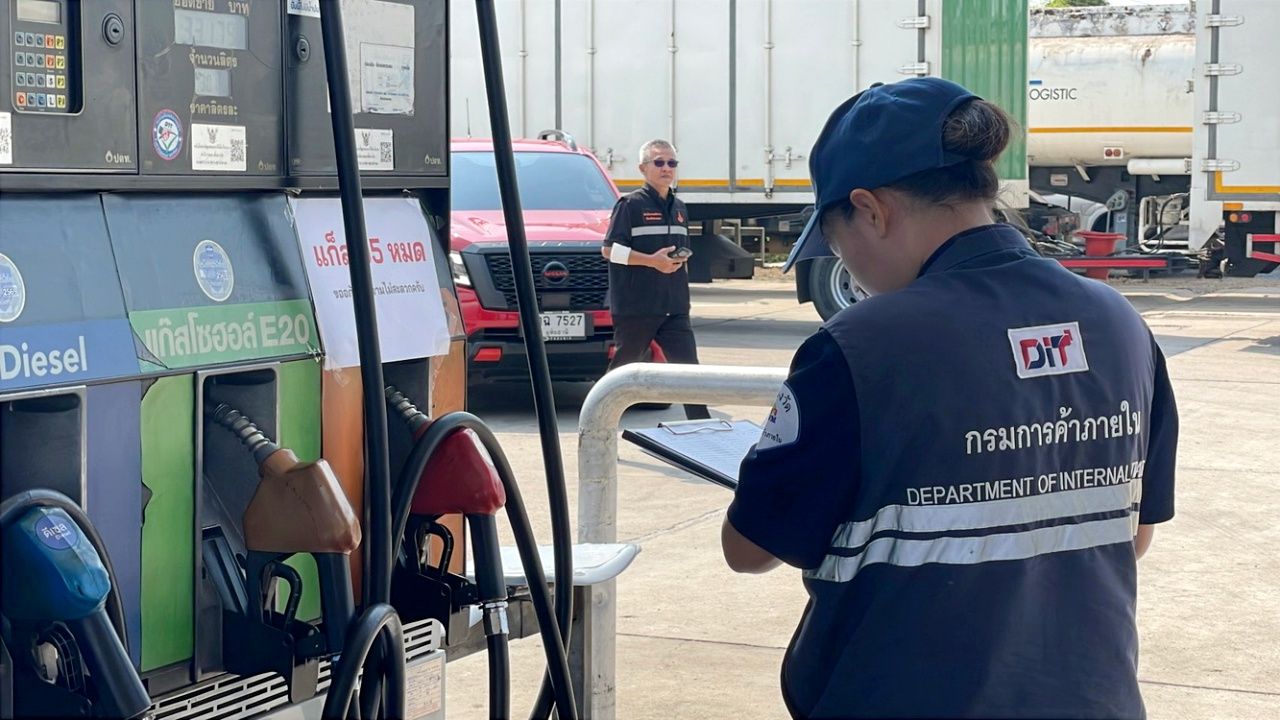
    Malaysia is taking a significant step toward fuel subsidy rationalization, with the government aiming to optimize resources for the benefit of lower-income groups. Prime Minister Anwar Ibrahim affirmed this decision on Monday, clarifying that it is designed to protect the majority of Malaysians while targeting affluent individuals and foreigners who account for a striking 40% of total subsidy usage.

    Subsidy Cuts Target Affluent Consumers

    With current fuel prices at an astonishingly low 2.05 ringgit (approximately 50 US cents) per liter for RON95 gasoline, Malaysia boasts some of the most affordable fuel in Southeast Asia—thanks to longstanding government support. However, concerns are bubbling up as the public fears that upcoming subsidy cuts, potentially coming as early as July, could ignite inflation, particularly in a nation where the number of vehicles rivals its population.

    Tax Expansion and Economic Pressure

    This fuel subsidy shift coincides with the government’s plan to widen the Sales and Service Tax (SST) starting July 1, which is expected to strain household budgets further. A new 5% to 10% sales tax will apply to non-essential items like king crab and luxury racing bikes, although essential goods will remain tax-exempt. The SST’s expansion into more sectors, from rentals to private healthcare, has raised alarms among retailers, who are already grappling with rising operating costs.

    Stan Singh, a council member of the Malaysia Retail Chain Association, expressed the challenge faced by businesses: “We can no longer absorb these increasing costs. Eventually, consumers will feel the pinch.” Coupled with a rising minimum wage and new contract-related charges, the pressure to pass costs onto consumers seems inevitable.

    Inflation Forecast and Economic Indicators

    While the economic landscape appears rocky, economists suggest that the broader scope of the SST might not heavily impact average consumers. Analysts from CGS International Research predict a temporary price increase, with inflation expected to rise to 2.2% year-on-year in July before peaking at about 2.4% in September. Despite these projections, the research firm has maintained its full-year Consumer Price Index (CPI) forecast at 2%, attributing stability to subdued global commodity prices, especially oil and palm oil.

    Over time, blanket fuel subsidies have aided Malaysians in managing the cost of living. Still, they have also resulted in overconsumption and smuggling, often favoring wealthier groups. Dr. Mohamad Idham Md Razak, a coordinator at Universiti Teknologi Mara’s Malaysian Academy of SME and Entrepreneurship Development, advocates for this targeted subsidy approach. He believes it improves fiscal efficiency and ensures that those most affected by rising prices receive the necessary support, confusing the issue of cross-border arbitrage.

    In a nutshell, it’s a bold move as Malaysia navigates the fine line between supporting its citizens and managing fiscal responsibility. Let’s just hope the country’s wallet doesn’t feel too light along the way!

    Questions & Answers

    What is the main goal of the fuel subsidy rationalization in Malaysia? The primary goal is to ensure that government resources are targeted toward benefiting lower-income groups while reducing the burden of subsidies on the nation’s budget.

    When are the upcoming subsidy cuts expected to take effect? The cuts may come as early as July, coinciding with the expansion of the Sales and Service Tax (SST).

    How will the expanded SST impact consumers? While the SST aims to generate additional revenue, it may lead to price increases for non-essential items, though essential goods will remain tax-exempt, helping to mitigate the impact on average consumers.

  • German Decision On Tesla Subsidies Expected By End Of Year

    German Decision On Tesla Subsidies Expected By End Of Year

    Germany will probably decide by the end of the year how much state aid U.S. electric vehicle maker Tesla will receive for its planned battery cell factory near Berlin, an economy ministry spokesperson said on Sunday. The European Union in January approved a plan that includes giving state aid to Tesla, BMW and others to support the production of electric vehicle batteries and help the bloc to reduce imports from industry leader China.

    The EU’s approval of the 2.9 billion euro ($3.45 billion) European Battery Innovation project, which includes more than 40 companies, follows the launch in 2017 of the European Battery Alliance to support the industry during the shift away from fossil fuels.

    The European Union in January approved a plan that includes giving state aid to Tesla, BMW and others to support the production of electric vehicle batteries.

    Tesla plans to invest 5 billion euros in its battery cell factory at Gruenheide near Berlin to complement its nearly finished electric car factory at the same location, according to estimates from the German economy ministry.

    The unusually high investment volume means that the U.S. car manufacturer can count on German state subsidies of 1.14 billion euros, Tagesspiegel newspaper reported on Sunday.

    This chimes with a February report by Business Insider, which said Tesla stands to receive at least 1 billion euros in public funding from Germany for setting up its battery cell factory near Berlin.

    The economy ministry spokesperson said there was no final sum yet because talks with the carmaker and the European Commission are ongoing, adding that a final decision is likely before the end of the year.

    Tesla Chief Executive Elon Musk last month said he hoped the first cars at its planned gigafactory in Gruenheide could be built in October or soon afterward.

    Tesla CEO Elon Musk last month said he hoped the first cars at its planned gigafactory in Gruenheide could be built in October or soon afterward.

    Tesla has pushed back the expected opening of the gigafactory to late 2021, blaming German bureaucratic hurdles. The plant has also faced local resistance because of environmental concerns.

    Economy Minister Peter Altmaer last Thursday said that carmaker Opel will receive a 437 million euro government grant for its battery cell factory in Kaiserslautern as part of the wider European initiative to create a homegrown battery industry.