Tag: subsidy

  • JD Revenue Underwhelms Amid Subsidy Shrinkage and E-Commerce Rivalry in China

    JD Revenue Underwhelms Amid Subsidy Shrinkage and E-Commerce Rivalry in China

    Chinese e-commerce giant JD has recently reported quarterly revenues that fell short of the market’s expectations. This underperformance has been attributed to tough competition and dwindling advantages from government subsidies, which have impacted the company’s demand.

    China’s Consumer Demand Weakness

    In recent years, consumer demand in China has seen a significant decrease. This downturn can be traced back to a range of contributing factors such as the ongoing crisis in the property sector, concerns over employment, and geopolitical tensions. All of these have placed a strain on the growth of China’s economy, which is the second-largest globally.

    These challenges have made a significant impact on retailers like JD, currently the country’s largest home appliances seller. As consumers have been forced to reduce their discretionary purchases, this has directly affected the company’s revenues.

    The Impact of Government Subsidies

    In past quarters, JD was able to leverage government subsidies to boost its performance. However, the benefits from these subsidies are fading, particularly as year-on-year comparisons are becoming increasingly challenging.

    In an effort to drive sales, the company has been capitalizing on other product categories and exploring new revenue streams. This includes its instant retail business and advertising division.

    JD’s CEO, Sandy Xu, commented during a recent conference call with analysts that “Our growth drivers are becoming more diversified. The general merchandise category maintains a healthy growth trend, while service revenue, including advertising, will sustain rapid growth momentum.”

    E-commerce Competition and Future Outlook

    Despite these efforts, JD still faces stiff competition, particularly from e-commerce rivals such as Alibaba and PDD Holdings that have been increasing their discounts on China-based platforms. These aggressive promotions and price cuts have greatly affected profit margins.

    JD’s fourth quarter revenue rose by 1.5%, reaching 352.3 billion yuan (US$51.12 billion). However, this figure was below the average analyst estimate of 353.86 billion yuan, according to data from LSEG.

    As for JD’s future plans, Xu indicated that investment in the food delivery business is expected to decrease in 2026 compared to 2025. Furthermore, she predicted that the electronics and home appliances category might experience pressure in the upcoming first quarter due to a high base. However, growth could potentially accelerate in the second half of the year and exceed the first.

    Questions & Answers

    What factors have contributed to the decreased consumer demand in China?

    A prolonged crisis in the property sector, employment concerns, and geopolitical tensions have all significantly weighed on China’s economic growth, thereby decreasing consumer demand.

    How is JD addressing the challenges it’s facing in the current economic climate?

    JD has been seeking to diversify its growth drivers and explore new revenue streams, such as its instant retail business and advertising unit, to sustain its growth momentum.

    What are the company’s expectations for the future?

    JD’s CEO anticipates that the electronics and home appliances category will face pressure in the first quarter due to a high base. However, she expects growth to potentially accelerate in the second half of the year and exceed the first.
  • EU Regulators Stoke Action Against Temu: Chinese Subsidy Probe Targets Dublin HQ

    EU Regulators Stoke Action Against Temu: Chinese Subsidy Probe Targets Dublin HQ

    Last week, EU regulators conducted an unannounced raid on the Dublin-based European headquarters of Temu, an online retailer and subsidiary of China’s e-commerce titan, PDD Holdings. The action arose from concerns regarding potential Chinese state subsidies extended to the company.

    As of yet, Temu has not issued a response to the matter.

    This event coincides with escalating concerns within the EU about an influx of inexpensive Chinese imports. The surge has come via low-value e-commerce shipments, largely due to a customs exemption on packages valued under 150 euros. European retailers argue that this waiver gives e-commerce platforms such as Temu and Shein an undue competitive edge. To address this, the EU executive intends to eliminate this duty exemption by year-end.

    The Foreign Subsidies Regulation (FSR)

    The European Commission’s Foreign Subsidies Regulation (FSR) has been enacted to address this issue. Its purpose is to curb competition from non-EU companies that receive subsidies from their respective governments. The FSR empowers the Commission to levy penalties equating to 10% of a company’s aggregated yearly turnover for any infractions.

    The Commission confirmed it executed an unannounced inspection on an EU-based e-commerce business under the FSR. However, they have not disclosed the identity of the company or the location of the raid.

    Temu’s Global Success and Troubles with EU Authorities

    Temu has amassed a global customer base in the tens of millions via its online store. The e-commerce platform sells a wide range of items from smartphones to duvet covers and leggings at incredibly low prices. This has even prompted Amazon to introduce its rival service, ‘Amazon Haul’.

    Under the tagline “shop like a billionaire”, Temu has attracted approximately 116 million average monthly users in the EU, according to its most recent transparency report. This is an impressive feat considering it only expanded into the European market in April 2023.

    EU regulators typically conduct raids when they have evidence of regulatory violations, which can originate from whistleblowers or their own investigations. These actions often result in companies offering concessions or cooperation in exchange for reduced penalties.

    However, this is not Temu’s first encounter with EU authorities. The Commission initiated an investigation into Temu under the Digital Services Act, a regulation overseeing online platforms, last year. In July, the Commission released preliminary findings claiming that Temu has not done enough to prevent the sale of illegal products on its platform.

    Foreign subsidies may come in various forms such as zero-interest loans, below-cost financing, tax breaks, or preferential tax treatment, among others.

    In November, China’s trade surplus exceeded US$1 trillion for the first time, with manufacturers rerouting more goods to non-US markets due to tariffs, resulting in an export boom to Europe, Australia, and Southeast Asia.

    Questions & Answers

    What spurred the raid on Temu’s headquarters by EU regulators?
    The raid was prompted by concerns regarding potential Chinese state subsidies to the online retailer.

    How does the EU’s Foreign Subsidies Regulation (FSR) aim to address competition from non-EU companies?
    The FSR aims to curb competition from non-EU firms that receive government subsidies. The regulation allows the Commission to impose fines of up to 10% of a company’s annual aggregated turnover for breaches.

    What were the findings of the European Commission’s previous investigation into Temu?
    The Commission’s preliminary findings suggested that Temu was not taking sufficient actions to prevent the sale of illegal products on its platform.

  • Indonesia Introduces $9 Wage Subsidy Aiming to Support Low-Income Workers

    Indonesia Introduces $9 Wage Subsidy Aiming to Support Low-Income Workers

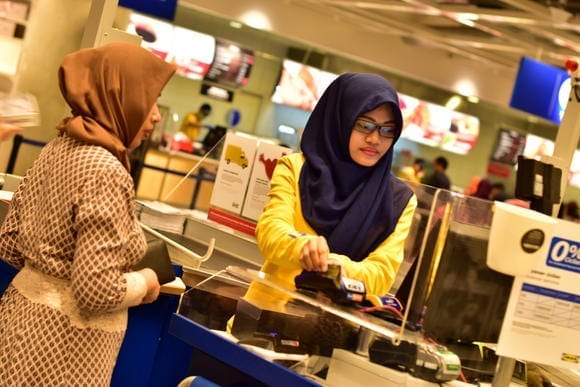
    The Indonesian Government is on the brink of launching an ambitious wage subsidy program aimed at supporting low-income workers. Set to provide IDR150,000 (approximately US$9.23) monthly, this initiative targets those earning less than IDR3.5 million. It’s an essential step amidst the ongoing global economic challenges.

    A Stimulus for Economic Resilience

    This new subsidy is slated for rollout as part of a broader economic stimulus package in the second quarter of 2025. Chief Economic Affairs Minister Airlangga Hartarto revealed on May 26 that discussions are ongoing with relevant ministries, with the program expected to kick off on June 5.

    The timing of the subsidy couldn’t be more crucial, aiming to bolster public purchasing power just as households are gearing up for increased spending during the school holidays.

    A Multifaceted Approach

    This wage support forms part of an expansive stimulus plan dubbed the Incentive Package, which also includes discounts on electricity tariffs, food aid, subsidies for airline tickets, and various social protection measures. In conjunction with the wage subsidy, the government will reintroduce electricity bill discounts for low-power households starting the same day.

    For the earlier part of this year, a substantial IDR13.6 trillion has been allocated to provide a 50% discount on electricity bills for customers using between 450 volt-amperes (VA) and 2,200 VA, benefiting around 81.4 million households. This multifaceted approach illustrates the government’s commitment to cushioning citizens from economic shocks.

    In a world where financial surprises lurk around every corner, it’s a relief to know that support is on the way—let’s hope it arrives faster than the average delivery pizza!

    Questions & Answers

    What is the purpose of the wage subsidy program?
    The program aims to support low-income workers by providing financial assistance to help sustain their purchasing power amid global economic challenges.

    When will the wage subsidy take effect?
    The wage subsidy program is scheduled to launch on June 5, 2025.

    What additional measures are included in the Incentive Package?
    The Incentive Package includes electricity tariff discounts, food aid, airline ticket subsidies, and other social protection programs designed to support various segments of society.