Tag: suit

  • Singha Beer Heiress Withdraws Ungrateful Child Suit Amidst Family Scandal

    Singha Beer Heiress Withdraws Ungrateful Child Suit Amidst Family Scandal

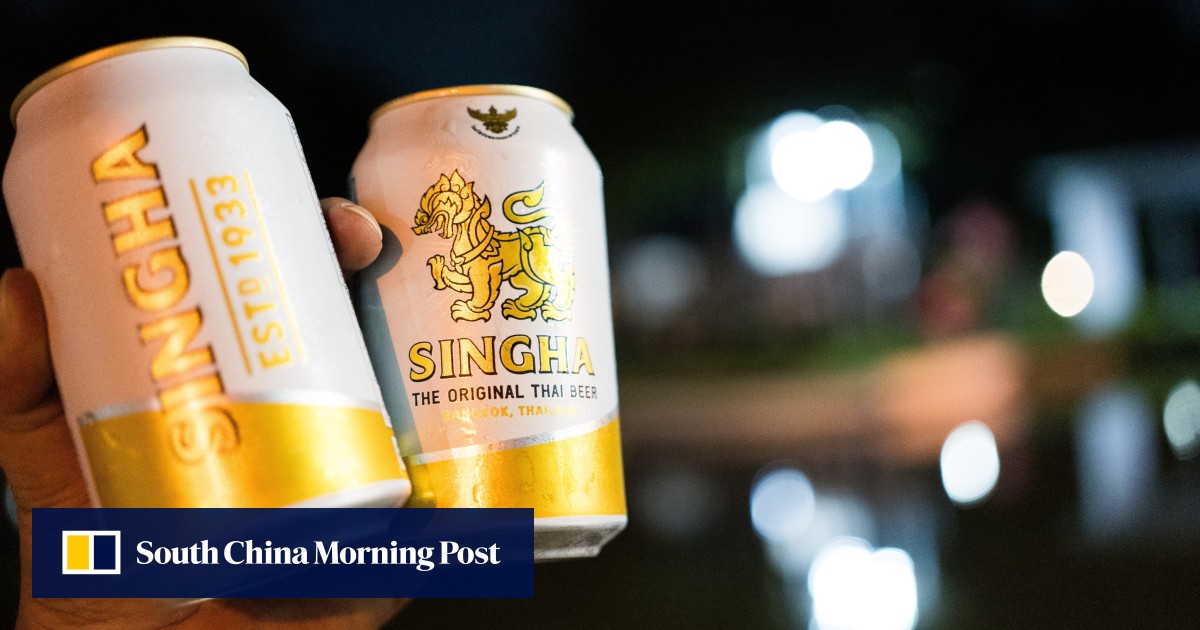
    On Wednesday, a mother from one of Thailand’s wealthiest families officially withdrew the lawsuit she lodged against her son under the “ungrateful child law.” The litigation stemmed from accusations her son, Siranudh “Psi” Scott, made against his older brother of sexual abuse. The mother, Jeeranuch Bhirombhakdi, is part of the billionaire family that founded Thailand’s Singha beer empire.

    The Ungrateful Child Law and Its Implications

    The “ungrateful child law,” invoked by Jeeranuch in February, provides parents the right to revoke gifts if their children are deemed ungrateful, abusive, neglectful in their later years or if they cause significant reputational damage. Triggered by the lawsuit, Siranudh disclosed in May that he had suffered sexual abuse at the hands of his elder brother, Sunit, and his babysitter.

    Jeeranuch contended that Siranudh’s accusations tarnished the family’s reputation. As a result, she sought to reclaim land valued in the millions that his late grandfather had bequeathed him. Despite the case withdrawal, Siranudh reported to journalists outside the courtroom, “Even though they withdrew the case, my life is still shattered.”

    Family Dispute Publicized

    Approximately 20 of Siranudh’s advocates assembled near the court, bearing paper flowers and photographs of him. Siranudh expressed that he could not consider the lawsuit withdrawal a victory, as the case should never have been initiated. He insisted, “I’ve never been ungrateful to anyone.”

    Parnthep Pourpongpan, Siranudh’s representative, informed reporters that Jeeranuch’s filing suggested resolution within the family due to the dispute’s familial nature. In a Friday-dated statement, Jeeranuch declared her willingness to converse, provided it was conducted with “love and genuine goodwill.” Jeeranuch also indicated her readiness to “respect and accept” the judicial process concerning the issue between her sons. She expressed her hope that “the truth will come to light and fairness will be served to both of my children.”

    Denying the allegations against him, Sunit admitted to roughhousing between the siblings. Singha’s parent company, Boonrawd Brewery, terminated Sunit’s executive role in May. According to Forbes, the Bhirombhakdi family ranks as Thailand’s 15th richest, with a net worth of approximately US$1.75 billion.

    Questions & Answers

    What is the “ungrateful child law”?
    The “ungrateful child law” is a measure that allows parents to revoke gifts to their children if they are deemed ungrateful, physically abusive, neglectful in old age, or responsible for serious reputational harm.

    Why did Jeeranuch Bhirombhakdi file a lawsuit against her son, Siranudh?
    Jeeranuch filed the lawsuit under the “ungrateful child law” after Siranudh accused his older brother of sexual abuse, which she claimed had damaged the family’s reputation.

    What happened to Sunit, the elder brother accused of sexual abuse?
    Sunit denied the allegations against him and was subsequently dismissed from his executive role at the family’s business, Boonrawd Brewery.

  • Coupang Triumphs In Court: Dismissal Of Shareholder Fraud Lawsuit Bolsters South Korean Giant

    Coupang Triumphs In Court: Dismissal Of Shareholder Fraud Lawsuit Bolsters South Korean Giant

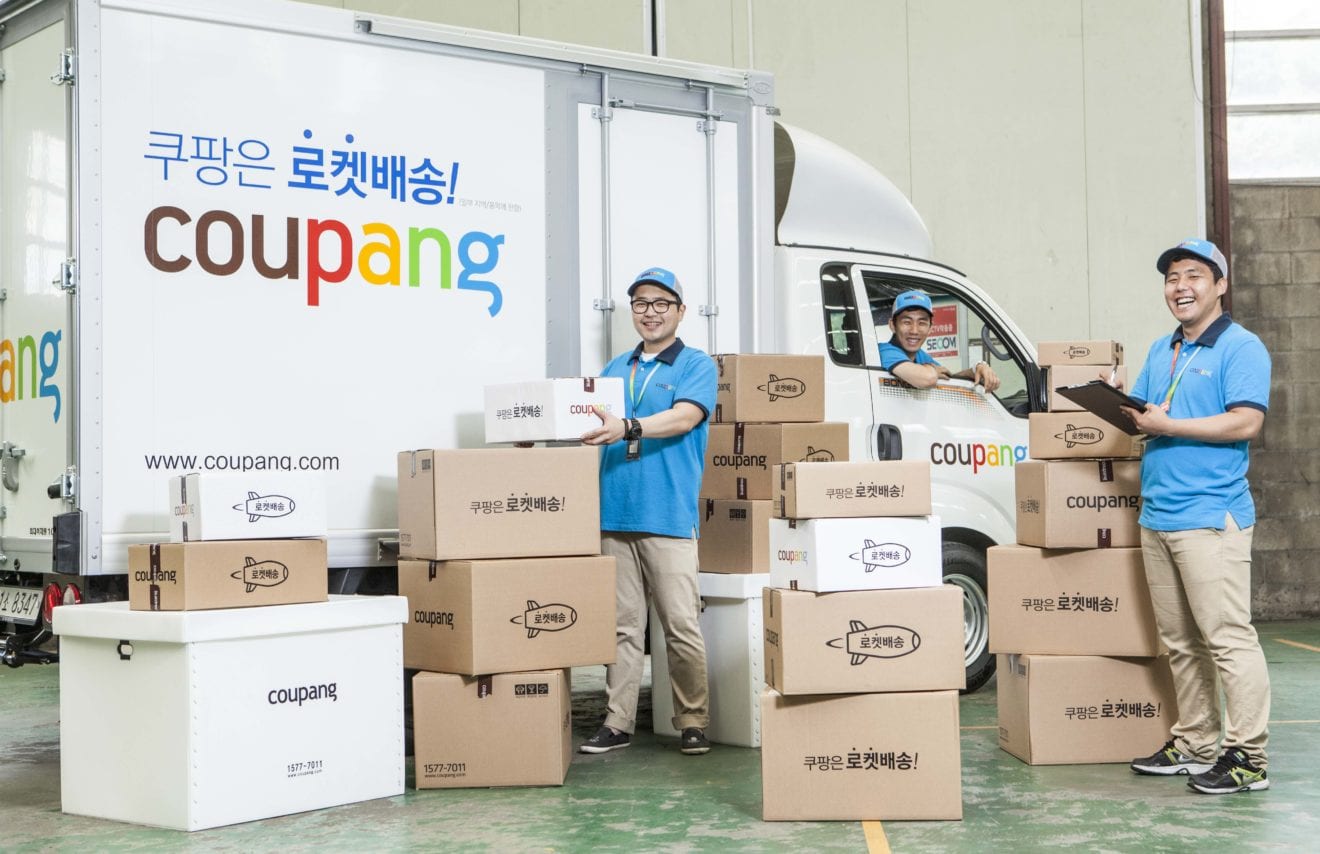
    Coupang, often referred to as South Korea’s Amazon equivalent, successfully dismissed a lawsuit on Wednesday that alleged the company had defrauded shareholders during and following its 2021 initial public offering (IPO), the most significant IPO by a foreign entity on Wall Street in over six years.

    Details of the Lawsuit

    The lawsuit was filed by US District Judge Vernon Broderick in Manhattan on behalf of shareholders spearheaded by a group of New York City public pension funds. The shareholders claimed that Coupang and its executives intended to deceive them, made materially misleading comments, and neglected to address evident discrepancies that rendered their public declarations false.

    Allegations against Coupang included concealing hazardous working conditions in its warehouses, manipulating search results, directing employees to write product reviews favoring its private-label brands, and pressuring suppliers to inflate prices on competitor platforms for products it would then automatically price-match.

    The shareholders pointed out that the share price of Coupang plummeted by over half within a year of its March 2021 IPO, following revelations that included multiple investigations by South Korea’s Fair Trade Commission and a large warehouse fire.

    Judge’s Decision

    In a comprehensive 83-page decision, Judge Broderick stated that many of Coupang’s assertions about working conditions were either too vague or “aspirational” to be misleading. Similarly, comments about its supplier relationships were deemed overly unspecific, initially truthful, or amounted to “puffery.”

    Broderick further noted that the shareholders failed to establish “with particularity” the circumstances surrounding Coupang’s alleged price manipulation. He also recognized that the company had acknowledged its employees were writing the reviews.

    Additionally, the judge dismissed all allegations against the IPO’s underwriters, including Goldman Sachs, JPMorgan Chase, and Allen & Co. The lawsuit was dismissed with prejudice, therefore prohibiting it from being refiled.

    Reaction to the Decision

    The legal representation for the shareholders and New York City Comptroller Brad Lander—who oversees the pension funds—did not provide an immediate response to requests for comment.

    “We believed from the start that the claims were baseless, and today’s decision confirms that belief,” a Coupang spokesperson said in a statement.

    Coupang, founded in 2010 by billionaire Bom Kim and originally based in Seoul, relocated to Seattle after going public but continues to operate in several countries, including South Korea.

    With the financial support of Softbank Group, Coupang secured US$4.6 billion through its IPO, marking the largest IPO by a foreign company on Wall Street since the Chinese e-commerce company Alibaba went public in September 2014.

    Questions & Answers

    What were the allegations against Coupang?
    Shareholders accused Coupang of concealing hazardous working conditions, manipulating search results, directing employees to write favoring product reviews, and pressuring suppliers to inflate prices on competitor platforms.

    What was the outcome of the lawsuit filed against Coupang?
    The lawsuit was dismissed with prejudice, indicating that it cannot be brought again. This followed Judge Broderick’s decision that several of Coupang’s statements were too broad, aspirational, or amounted to “puffery” to be considered misleading.

    What was the financial impact of Coupang’s IPO?
    Backed by Softbank Group, Coupang raised US$4.6 billion in its IPO, making it the largest IPO by a foreign company on Wall Street since Alibaba in 2014.

  • Suit accuses Apple of profiting from illegal gambling

    Suit accuses Apple of profiting from illegal gambling

    Hearing that Apple is being sued is not a surprise since it seems to happen often. Every attorney has the phone number of Apple General Counsel Katherine Adams in his or her Rolodex. Today, a lawsuit against Apple was filed in the U.S. District Court for the Northern District of California. The complaint alleges that Apple is making money and profiting from illegal gambling.

    The suit, focuses on free-to-play casino apps that allows users to buy in-game currency using real money. These so-called “social casino apps” allow smartphone and tablet owners to experience Vegas-style gambling using virtual slot machines. However, Chips won can only be used by players to continue playing the virtual slot machines. While players can’t make real money, Apple is since it gets 30% of in-app purchases including those for casino chips. The complaint says, “By utilizing Apple for distribution and payment processing, the social casinos entered into a mutually beneficial business partnership.”

    The lawsuit points out that through the App Store, Apple helps in the distribution of these apps, gives developers data and other info on users, and uses its in-app payment platform to process in-app payments. The plaintiffs argue that Apple ends up with a cut that is higher than what the house earns in a real-life casino.

    The plaintiffs also state that “The result (and intent) of this dangerous partnership is that consumers become addicted to social casino apps, maxing out their credit cards with purchases amounting to tens or even hundreds of thousands of dollars.” According to the filing, $6 billion was spent by consumers on virtual casino chips last year. The lawsuit seeks class-action status adding that Apple is in violation of California law which bans slot machines. It also accuses Apple of racketeering and collection of unlawful debts.

    The plaintiffs, Donald Nelson, and Cheree Bibbs, spent at least $15,000 each in virtual casino currency both of whom are social casino users who have spent “at least $15,000 each” in virtual casino currency. The plaintiffs want Apple’s actions to be ruled unlawful. They also want damages in the number of their losses and want the court to order Apple to give up its “ill-gotten gains.”

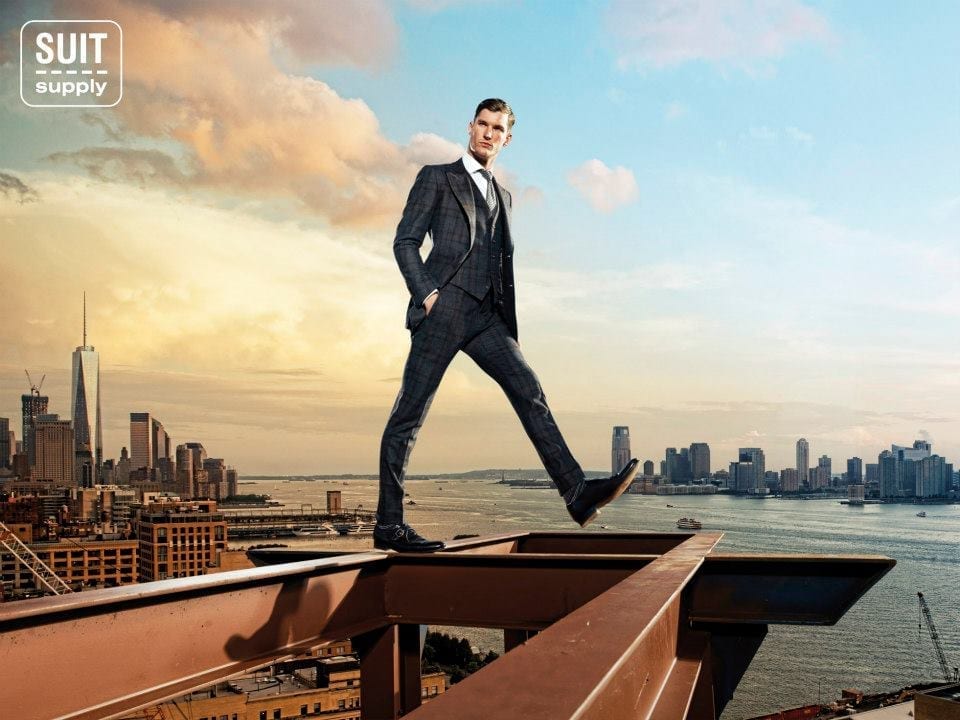
  • Why Dutch tailor Suitsupply thinks it can beat Hong Kong’s retail slump

    Why Dutch tailor Suitsupply thinks it can beat Hong Kong’s retail slump

    Retailers in Hong Kong’s Central business district have endured more bad news than good over the past year, but the area still has cachet with international brands looking to enter the Hong Kong market.

    In early December, Dutch tailor Suitsupply opened its first boutique in the city, taking a large space on Ice House Street. The move is a statement of confidence in Hong Kong retailing, according to the company’s founder and chief executive, Fokke De Jong.

    “We’ve looked at Hong Kong for a long time and we’re confident. Our online business here is very strong so that’s a good indicator,” he says.

    Suitsupply’s arrival is a stark counterpoint to the departure, actual or pending, of big fashion retailers from Central such as American giants Coach and Abercrombie & Fitch, the latter set to vacate its Pedder Building premises with their HK$7 million-a-month rent. Suitsupply’s Ice House Street location is impressively large at 6,700 sq ft, making it one of the biggest high-fashion store openings anywhere in Hong Kong in 2016.

    The store has a small ground-floor entrance but opens out into a sprawling first floor that features sections for bags, shoes, evening wear and made-to-measure tailoring. De Jong says locating the store away from street level and making it less obvious and visible is deliberate and part of its “location-based” strategy.

    “By that I mean we have huge stores in out-of-the-way places. People will go out and find us,” says De Jong. Some of these “crazy” locations De Jong mentions include lofts spaces, rooftops and even a full villa.

    Suitsupply, which eschews all traditional forms of glossy fashion advertising, relies instead on its retail experience, which is both old and very new. For example, De Jong says the brand has tailors at all the company’s stores, who can provide tailoring services within half an hour. He says that few other quality menswear brands offer such immediate service.

    As well as challenging the traditional tailors in the city and fast fashion retailers such as Zara and Massimo Dutti, Suitsupply is a direct challenge to higher-end luxury menswear brands with its accessible pricing – an alterable Italian-style grey wool suit can cost as little as HK$3,000, several thousand dollars less than some of the more stellar Italian and British menswear brands.

    “We bring quality, hand-crafted clothes and the best materials all for a more attainable price,” says De Jong of the brand’s appeal.

    How is Suitsupply able to provide such high quality at relatively low prices? De Jong says the key is the “vertical” nature of the company: “We design, manufacture and sell … everything is in our own hands.”

    Having out-of-the-way locations which cost less to rent and relying on social media instead of traditional advertising keep expenses down too, he adds.

    Suitsupply was established by De Jong in 2000, during his time at university, when he would travel to Italy buying up suits and then selling them on campus. De Jong became so successful at it, he quit his studies and began selling clothes full-time, although scaling up Suitsupply was fraught with challenges.

    “Nobody wanted to sell their fabrics to me at first,” says De Jong, who insisted on using the best Italian fabric mills for his suits. He says it took a great deal of time and effort to build relationships with Vitale Barberis Canonico and Reda, two of the more famed mills from the Biella region which supply the likes of Ermenegildo Zegna. Today, Suitsupply is one of the Biella region’s biggest customers and De Jong says his company has helped secure jobs in the area.

    Returning to the theme of opening in Hong Kong during a dip in retail fortunes, De Jong says Suitsupply has always taken a different path to traditional retailers. Though the Hong Kong store has only been open a short while, De Jong is confident Suitsupply’s offer will resonate with Hong Kong men.

    “We bring new energy to tailoring, we’re not pretentious or serious. We bring fun to menswear and make it less intimidating,” he says.

  • Fiat Chrysler, Cummins reject diesel cheating suit

    Fiat Chrysler, Cummins reject diesel cheating suit

    Fiat Chrysler Automobiles NV and Cummins Inc said on Monday they will fight a class-action lawsuit filed against the companies accusing them of cheating on diesel emissions tests.

    On Monday, lawyers representing owners of older 2500 and 3500 Dodge Ram trucks filed a class-action lawsuit in U.S. District Court in Detroit, asserting the companies “conspired to knowingly deceive consumers and regulators of illegally high levels of diesel emissions in their vehicles.”

    The suit accuses the automakers of fraud, violating the Racketeer Influenced and Corrupt Organizations Act and consumer-protection laws by intentionally misleading the public, concealing emissions levels and illegally selling noncompliant polluting vehicles.

    The suit filed by Seattle lawyer Steve Berman said the emissions catalysts are not durable and do not meet emission standards, and that at times emissions are nearly 10 times legal limits.

    The class action suit comes as Fiat Chrysler and Cummins are fighting over the costs of an emissions recall involving a different, newer population of trucks.

    Fiat Chrysler said in a statement it “does not believe that the claims brought against it are meritorious” and the company “will contest this lawsuit vigorously.”

    Cummins spokesman Jon Mills said the lawsuit “has no merit. We are obviously disappointed in the effort to tarnish our image and we plan to vigorously defend ourselves.”

    The suit covers owners of 2007–2012 Dodge Ram 2500 and 2007–2012 Dodge Ram 3500 pickup trucks.

    Reuters reported on Oct. 10 that Fiat Chrysler and Cummins Inc have been fighting over the $200 million estimated cost for a recall of 130,000 newer 2500 Ram pickup trucks equipped with Cummins diesel engines that could exceed U.S. pollution limits.

    The U.S. Environmental Protection Agency and California Air Resources Board have demanded a recall of 2013-2015 model year Ram 2500 pickup trucks with 6.7L Cummins diesel engines because moisture can lead to the deactivation of the selective catalyst reduction system, causing excess nitrogen oxide emissions, Cummins said.

    Fiat Chrysler has sued Cummins to recover the $60 million it has spent to date repairing 42,000 trucks at its own expense, a company lawyer said in court documents. Settlement talks are ongoing.

    Cummins counter-sued, saying Fiat Chrysler would not cooperate in the recall “for one reason – money” and said the automaker was “holding both Cummins and its own customers hostage.”

    When the emissions system fails, the warning light goes on and if the vehicle isn’t fixed soon the vehicles go into “limp mode” that allow them to only be driven very slowly.