Tag: sumatra

  • President Jokowi calls for better transportation between Sumatra and Java

    President Jokowi calls for better transportation between Sumatra and Java

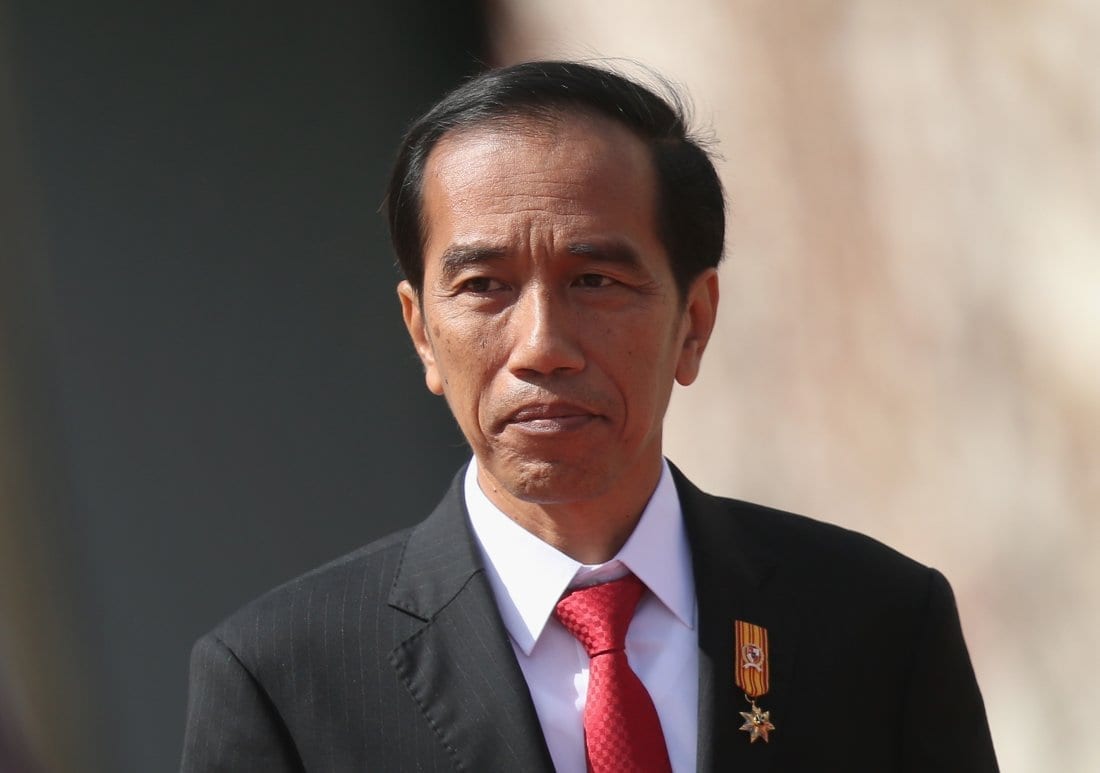
    President Joko Widodo (Jokowi), during a closed-door meeting on Monday, emphasized the need for improving transportation services between the islands of Sumatra and Java by operating better ferries.

    “We are concerned about the operation of the toll road from Lampung Province to Palembang, which leads to vehicle queues in Merak-Bakauheni crossing lane,” the Lampung Governor M Ridho Ficardo stated here on Monday.

    Jokowi and Vice President M. Jusuf Kalla (Jokowi), along with Ricardo and other officials, held a meeting in the Presidents Office to discuss the National Strategic Project and Prioritized Program.

    Ficardo stressed that the transportation authority should deploy several ferries of better quality to improve cargo transportation between Merak and Bakauheni ports that connect Sumatra and Java islands.

    According to Ficardo, the authority should operate ferry trips every hour to transport cargo and passengers.

    He reiterated that the authority can increase the ticket price to provide better services and deploy faster ferries.

    “The improved toll road should be offset by better crossing access. It is fine to increase the price to provide better services,” Ficardo pointed out.

    The meeting also discussed the development of industrial areas in Tanggamus District that builds maritime industry, Mesuji District, and Waypisan District.

    The governor added that the industrial area in Mesuji District could be developed, because the region has a mine of low calorie coals that can supply fuel for power plants.

    The Trans Sumatera toll road has entered the second phase of construction with the development of toll road of 250 kilometers. The government is targeting its completion in 2018.
  • Indonesia ships first containers of timber under EU legality scheme

    Indonesia ships first containers of timber under EU legality scheme

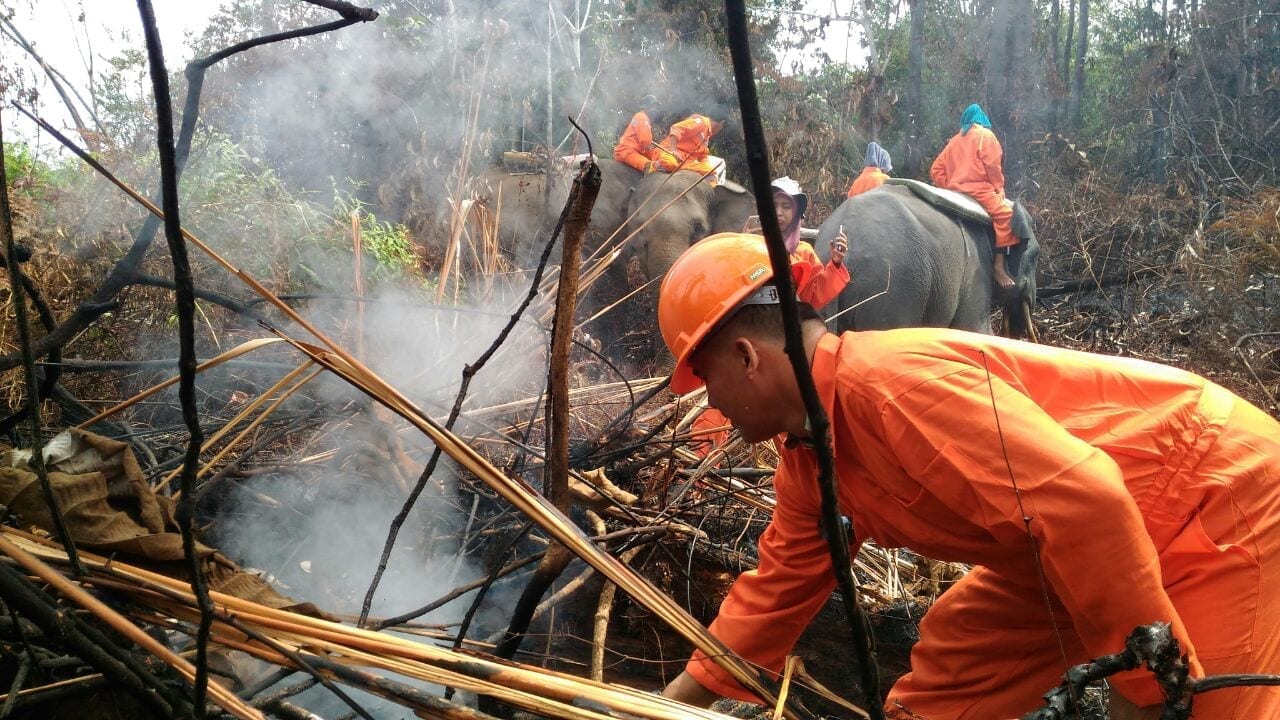
    Tesso Nilo National Park, Riau Province, Indonesia. This patch of forest is supposed to provide a habitat for tigers and elephants, but is constantly under threat of fire, illegal logging and encroachment. Image:

    The first containers of plywood certified as legal under the EU’s anti-illegal-logging action plan were shipped out of the Indonesian capital on Tuesday, a milestone in the fight against blackmarket timber in one of the world’s most heavily forested countries.

    Of the 15 nations that have agreed to take part in the scheme, Indonesia is first to succeed in establishing a national system for verifying the legality of its timber — a considerable achievement for a country where unscrupulous loggers pocketed a presumed $60.7-81.4 billion from illicit sales between 2003 and 2014, according to the nation’s antigraft agency. Indonesia lost nearly $9 billion in state revenue from unreported timber sales during the same period.

    “This signifies Indonesia’s commitment to combat illegal logging and the illicit timber trade,” said Rufi’ie, a director at the Ministry of Environment and Forestry.

    Rufi’ie, who like many Indonesians goes by one name, added that 36 certifications had already been issued under the scheme, known as Forest Law Enforcement, Governance and Trade (FLEGT). He said he hoped Indonesia’s compliance with the program would increase the value of its exports.

    With the adoption of the scheme, EU timber importers will not have to perform their own due dilligence on certified shipments from the archipelago country, increasing the competitiveness of Indoensian timber vis-a-vis other producers.

    Vietnam appears likely to be the second country receive the EU’s blessing to issue FLEGT licenses.

    A board member of the Indoesian Wood Panel Association (Apkindo), Gunawan Lim, said he expected plywood exports to jump 20 percent next year on the strength of the new certification, largely because not just Europe but other developed countries were also concerned with legality.

    Aida Greenbury, the head of sustainability at Asia Pulp & Paper, Indonesia’s largest pulp and paper company, agreed: “As nations around the world from Japan to Australia look to tackle illegal logging, Indonesia will benefit from major first-mover advantage for buyers looking for legal products.”

    The focus now shifts to maintaining the credibility of Indonesia’s Timber Legality Assurance System (SVLK), on which the issuance of FLEGT licenses is based.

    Indonesia is home to hundreds of thousands of forestry enterprises, many of which operate informally and on a small scale, and which can be difficult to monitor.

    Large companies break the law, too. On Wednesday, the Supreme Court convicted PT Merbau Pelalawan Lestari of logging outside the boundaries of its permit area on Indonesia’s main western island of Sumatra.

    NGOs called on the Indonesian government to make sure the scheme was properly enforced and monitored.

    Faith Doherty, forest campaign leader at London-based the Environment Investigation Agency, urged the EU to “swiftly [follow] up information on illegal timber trade entering the EU, including information submitted by independent investigators.”

    The WWF urged greater transparency, calling on the Indonesian government to ensure that civil society groups “will be granted full access to information including relevant data and planning documents,” Aditya Bayunanda said. “Holding up such information would greatly decrease the credibility and transparency of the system.”

  • Demand for North Sumatra`s rubber shrinking

    Demand for North Sumatra`s rubber shrinking

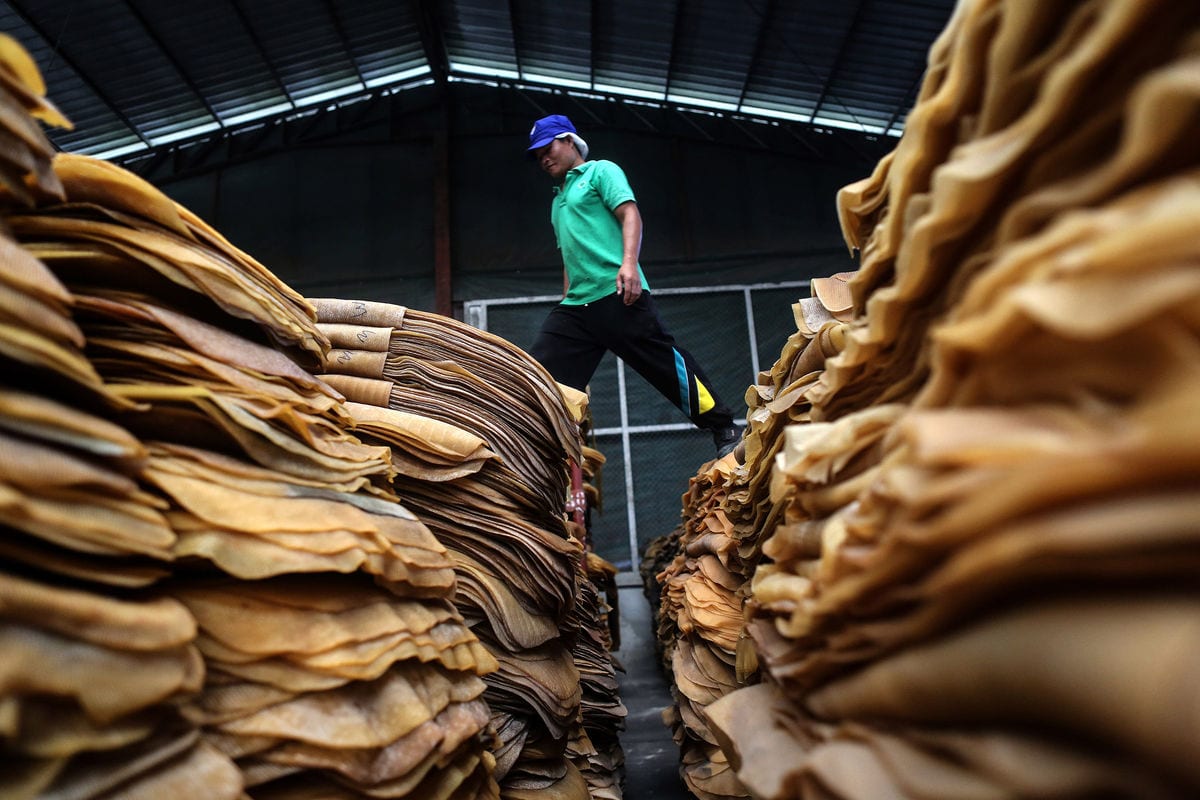
    North Sumatras exports of natural rubber has continued to shrink, down 8.23 percent in volume to 137,826 tons in the first four months of the year from 150,194 tons in the same period in 2015.

    “The decline in exports was on weak demand and as a result of an agreement by worlds largest producers to cut exports,” executive director of the North Sumatra branch of the Indonesian Association of Rubber Companies (Gapkindo) Edy Irwansyah said here on Sunday.

    Thailand, Indonesia and Malaysia which are grouped in the rubber cartel International Tripartite Rubber Council (ITRC), had decided to cut exports in a bid to drive up the commodity price.

    The three Asean countries, which account for around 80 percent of the worlds production of natural rubber decided to cut exports by 615,000 tons to be shared proportionally by the three ASEAN countries. Indonesia is to cut exports by 238,736 tons.

    The ITRC said it was optimistic the export cuts would drive rubber market to recovery after six years of being in deep slump.

    The price of natural rubber has remained low to follow the oil price fall.

    Edy said the export volume would likely fall lower not only because of the ITRC agreement but also because of weaker demand.

    The price of the commodity on May 13 was US$1.4 per kg for delivery in July down from US$1.417 for Junes delivery.

    The price of latex in North Sumatra has also dropped to around Rp13,477 per kg Rp13,477 – Rp14,201 per kg.

    However, reports said earlier that the price of rubber in othyer areas of the country had been picking up .

    In Lebak regency of Banten , the price rose in the fourth week of April reaching Rp21,500 poer kg of slab.

    “I think the price rise would encourage the rubber farmers,” said Rulyy Yanrila, head of the marketing section of the district Forestry and Plantation Office.

    The increase in price would at least help cover the production cost, Rulyy Yanrila said .

    Many rubber farmers have been on the brink of bankruptcy after years of slump, he said, adding some farmers already stopped tapping as the result was not worth the work.

    Jayadi (55),a rubber farmer in the village of Leuwidamar, said rubber production declined over the past several weeks as most of the rubber trees have been too old and on poor maintenance.

    In Kalimantan, Chairman of the South and Central Kalimantan branch of the Indonesian Association of Rubber Companies (Gapkindo)Andreas Winata said the price of natural rubber from that region has increased to Rp16,000 per kilogram from Rp12,000 earlier.

    Andreas said the cut in exports apparently has caused panic in international market on shortage in supply, resulting in surge in price. In addition, supplies from other countries also declined on long drought, he said.

  • Halal tourism in West Sumatra

    Halal tourism in West Sumatra

    The Indonesia Ministry of Tourism will develop Halal tourism in West Sumatra, a province that has a potential for such a concept just as West Nusa Tenggara province, known for similar tourism.

    “West Sumatra has a potential for Halal tourism development as culturally, it is known as a religious province,” the Deputy Assistant of Business and Government Market Segment Development, the Ministry of Tourism, Tazbir, said here on Saturday (April 2).

    He explained that Halal tourism is a universal concept which includes serving healthy food, providing clean accommodation and hospitability. Therefore, all the people find it suitable.

    “We want West Sumatra achieve a similar status as West Nusa Tenggara which has been awarded the Worlds Best Halal Tourism Destination award,” he said, adding that demand for Halal products is from the world community.

    Tazbir remarked that during his visit to a religious area, the hotel where he stayed did not inform him about the direction of Qibla in the bedroom, while hotels in Singapore provide such a facility.

    “Therefore, we need Halal standards for hotels, restaurants and tourist attractions,” Tazbir said.

    He added that the Ministry will continue to push for a campaign projecting Halal tourisms great potential in Indonesia, especially in West Sumatra.

    Nowadays, the concept of Halal tourism is being developed in Aceh, West Sumatra, West Nusa Tenggara, South Kalimantan and Gorontalo, he said.

    Meanwhile, Head of Tourism Office of West Sumatra, Burhasman Bur, assessed that there were no significant obstacles to implementing Halal tourism in the province.

    The tour players just have to follow the administrative procedures. For example, eateries will have to serve Halal meat certified by the authorities.

    He said a regulation needs to be put in place supporting the implementation of the Halal tourism concept and improving services for the guests.