Tag: Sunglass Hut

  • Sunglass Hut underpaid employees

    Sunglass Hut underpaid employees

    Sunglass Hut underpaid hundreds of its part-time workers by about $2.3 million over more than five years.

    Luxottica Retail Australia Pty Ltd, trading as Sunglass Hut, has avoided prosecution by the Fair Work Ombudsman after entering a court-enforceable undertaking to repay the cash and agreeing to a $50,000 “contrition” payment.

    Between 2010 and 2016, Sunglass Hut failed to reach an agreement with part-time workers as required by the General Retail Industry Award.

    As a result, the company failed to pay $2,294,496 in overtime rates for work performed outside regular hours, to 620 employees at 253 stores across the country.

    Fair Work Ombudsman Sandra Parker said the undertaking was appropriate as the company had committed to overhauling workplace practices and rectifying all underpayments.

    “Sunglass Hut breached workplace laws and their conduct falls short of lawful obligations to their employees, and community expectations,” Ms Parker said.

    Sunglass Hut has already back-paid $1,485,590 to 457 staff, with $815,391 outstanding.

    As a gesture of contrition, Sunglass Hut must also hand over $50,000 to the National Association of Community Legal Centres.

    “This matter highlights that if employers incorrectly apply award conditions, it can have extensive and expensive consequences across the business for years to come,” Ms Parker said in a statement.

    “This outcome should also serve as a warning to all businesses that they need to actively check that they are paying their staff correctly.”

    Sunglass Hut must call in external auditors to check pay and conditions for workers every year until the undertaking ends in 2022.

    Luxottica must also issue a letter of apology to each of the affected workers.

    The company has been contacted for comment.
  • Luxottica sales hit by China restructure

    Luxottica sales hit by China restructure

    Luxottica announced a decrease in first-quarter sales for fiscal 2018, hurt by a slump in European revenues due to bad weather, and distribution restructuring in China.

    The maker and distributor of luxury eyewear said first-quarter revenue plummeted 10.7 percent to 2.13 billion euros, compared with 2.39 billion euros in the same period the previous year. With the effect of currency swings, sales were down 0.8 percent.

    For the three months ended March 31, the Italian firm’s wholesale channel recorded an 11.1 percent to 830 million euros, or 4.2 percent at constant exchange rates, hurt by bad weather in Europe, which delayed orders by several weeks.

    For the quarter, retail sales were down 10.4 percent to 1.3 billion euros, but grew 1.3 percent at constant exchange rates, while comparable-store sales decreased 0.6 percent, said the firm.

    By region, Asia-Pacific sales declined 9.3 percent to 279 million euros, representing 13 percent of total sales for the quarter.

    The dive was driven by China’s negative performance, as Luxottica continues to restructure its distribution channel, taking it to a more direct-to-consumer model.

    The overall China downfall was offset by Australia, Japan and India, as well as travel retail, benefitting from stellar retail performances at Sunglass Hut at OPSM in Australia and LensCrafters and Ray-Ban stores in China.

    By comparison sales in North America were down 13 percent to 1.19 billion euros, accounting for 56 percent of total revenues; Europe retail sales decreased 5.5 percent to 489 million euros, after twelve consecutive quarters of growth; and sales in Latin America decreased 9.8 percent to 131 million euros.

    Looking ahead, the Italian company confirmed its full-year guidance and remains in the process of merging with French lens maker Essilor. The merger has been cleared by antitrust authorities in 18 separate countries but awaits approval from China still.

    Luxottica is licensed to make eyewear frames for luxury fashion brands such Armani, Michael Kors and Prada, and is the owner and maker of sunglass brands Ray-Ban, Oakley and Oliver Peoples.

  • Sunglass Hut Opens New Store In Hangzhou

    Sunglass Hut Opens New Store In Hangzhou

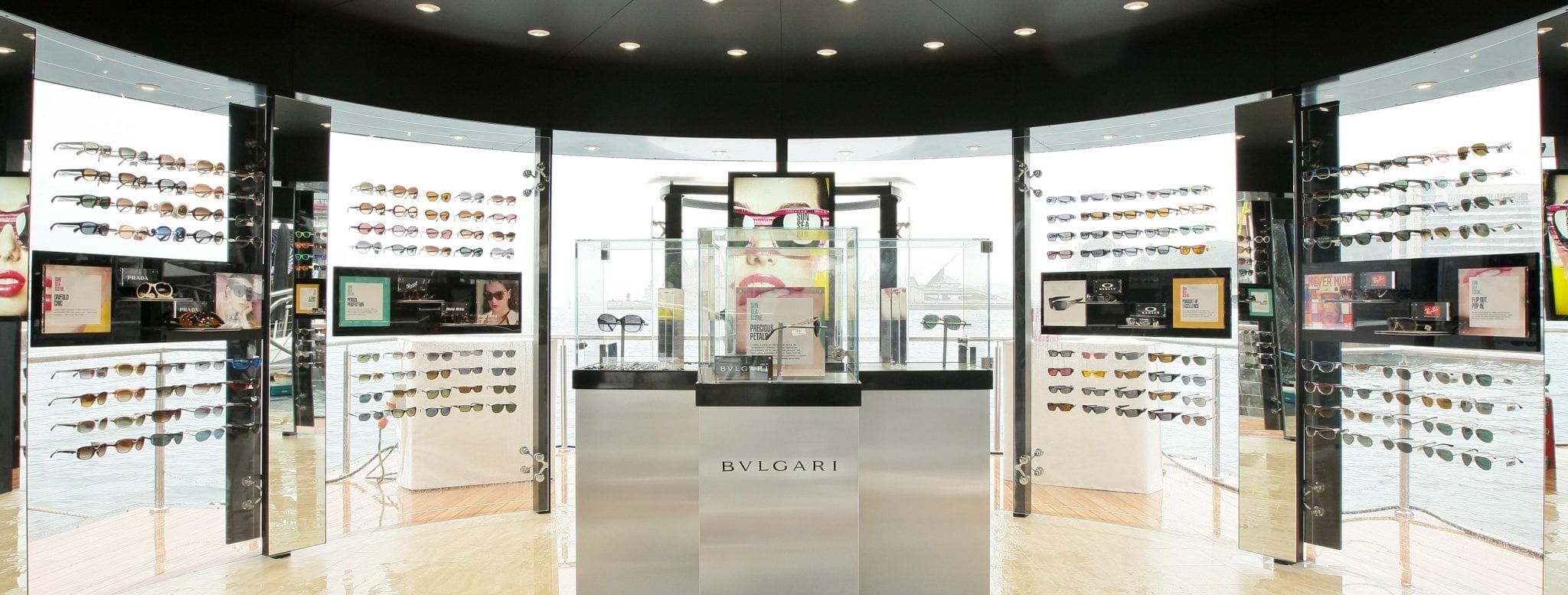
    International sunglasses retailer Sunglass Hut opened a new store in Hangzhou’s Intime Wulin store, which is the brand’s third store in the city following the ones in Hangzhou Kerry Centre and Hangzhou Bailian Outlets.

    Sunglass Hut has reached cooperation with many first-tier brands, including Ray-Ban, Prada, Dolce & Gabbana, Burberry, Tiffany & Co., and Coach.

    It started as a small independent store in Miami in 1971 and it developed 100 chain stores in Miami by 1986, reaching annual sales of USD24 million. By 1991, Sunglass Hut’s annual sales exceeded USD100 million and by 1996, the company seized 30% share of the American sunglasses market.

    By the end of 2016, Sunglass Hut already opened 3,269 retail stores in 28 countries and regions around the world, including 3,104 retail stores in North America, Asia Pacific, Europe, South Africa, and Latin America; and 165 authorized retail stores in Middle East and India.

    For the Greater China region, Sunglass Hut had nearly 40 retail stores, including 13 in Hong Kong, seven in Shanghai, and three in Beijing.

  • DLF Brands quits luxury sector

    DLF Brands quits luxury sector

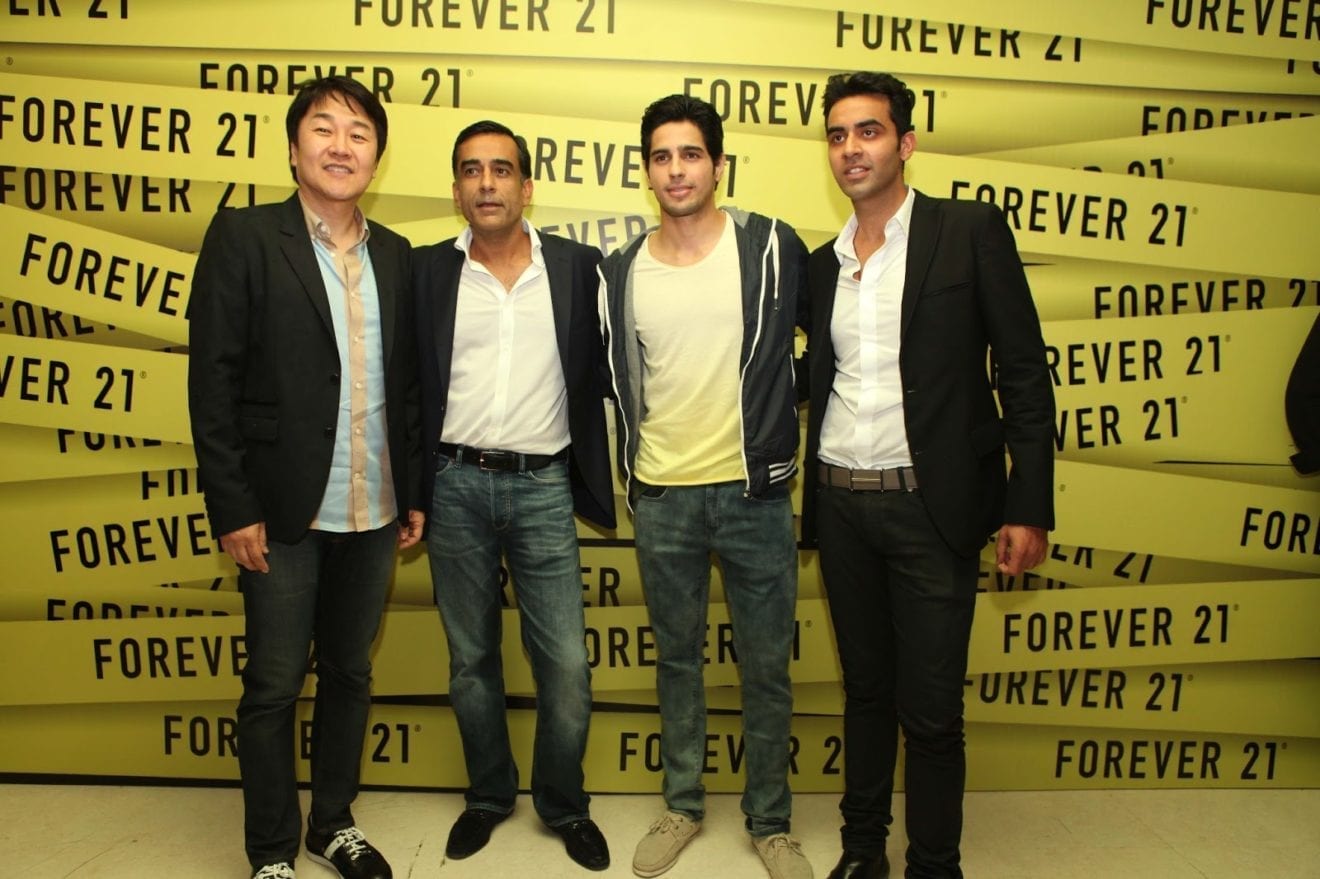
    India’s DLF Brands, which runs high-street fashion brands mall Emporio in Delhi, is quitting the luxury business.

    It has just shut down two of the seven stores of US fashion brand DKNY after parting ways earlier with such brands such as Giorgio Armani, Mango, Salvatore Ferragamo and Sephora.

    “We don’t have any plans to open more DKNY stores,” says DLG Brands MD Timmy Sarna. “And we don’t want to be in the high-fashion business. It’s difficult to scale up that business because there aren’t too many locations in the country where you can sell luxury.”

    Instead, DLF Brands, the retail arm of real-estate company DLF, wants to focus on mass brands. “We have profitable businesses in Kiko, Mothercare and Sunglass Hut,” says Sarna.

    DLF Brands has bought the franchise rights of UK-based Mothercare for 15 years, and plans to launch smaller stores, even in community-based markets, selling value-added products.

    “From 109 stores at present, we want to increase the number to 300. A major part of production is happening here now, so prices will eventually come down,” Sarna says. “Apart from this, our other brands such as Sunglass Hut, Claire’s and make-up brand Kiko are doing extremely well and are profitable.”

    DLF Brands started its exit from the luxury market in 2012, quitting its joint ventures with Ferragamo and Giorgio Armani. In 2014, it shut down stores of Italian menswear brand Boggi Milano, then last year parted with LVMH’s make-up and skincare brand Sephora, which was taken over by Arvind Lifestyle Brands.

    “You can either be in the fashion business or in the mass-brand business. You cannot have your finger in too many pies,” says Sarna.