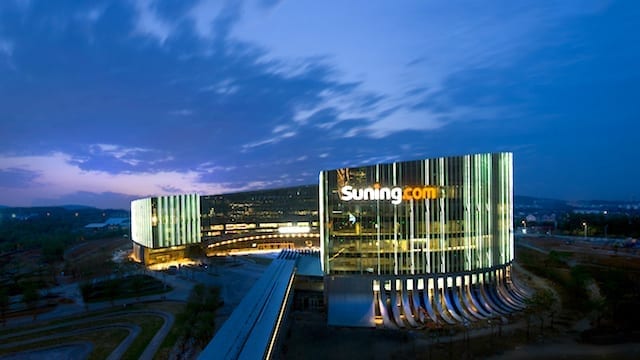
Tag: Suning.com

  • Suning.com Listed on China’s 500 Most Valuable Brands with a Brand Value of 23 Billion RMB

    Suning.com Listed on China’s 500 Most Valuable Brands with a Brand Value of 23 Billion RMB

    Suning.com, a Fortune Global 500 company owned by Suning Holdings Group (“Suning”) was listed on the 15th China’s 500 Most Valuable Brands, with a brand value of 23 Billion RMB, ranked No.13 on the list and No.1 among the retail industry.

    The list of China’s 500 Most Valuable Brands is released by World Brand Lab, the leading independent consultancy of brand valuation and marketing strategy in the world. It evaluates brand value based on three dimensionsfinance performance, customer impression and brand awareness. The total value generated by the 2018 listed brands is RMB 1.844 trillionDue to its strong growth in revenue and brand awareness, Suning.com has achieved a brand value of RMB 23 billion, up 19% year-on-year.

    Suning.com saw a strong financial growth in 2017, obtained an operating revenue of RMB 187 billion, with a year-on-year increase of 24.67%. In the first quarter of 2018, Suning.com has achieved Omni-channel sales of RMB 69.33 billion, up 46.33% year-on-year.

    “Innovative technologies such as AI, Big-data and block-chain bring new opportunities to the growth of brand value,” commented by the chairman of World Brand Laboratory and Nobel laureate and economist, Robert Mundell.

    Suning put forward its ‘Smart Retail’ strategy in 2017, which revolves around Smart Sourcing, Smart Selling, Smart Services, Smart Logistics and Smart Business Models. The strategy meets and beats consumers’ expectations by providing personalized goods and services in diversified consumption scenarios to improve shopping experience. During the past 6.18 Shopping Festival, Suning gained a 121% sales increase in total, reflecting the increasing brand reputation among customers and embodying the success of Smart Retail.

    Meanwhile, Suning has been actively working on corporate social responsibility programs. By the end of 2017, Suning has contributed over RMB 1.1 billion to public welfare regarding disaster relief, education, poverty alleviation, environmental protection and other fields.

    China has entered a new era of quality consumption, which provides a broad market for local brand’s development,” said Sun Weimin, vice chairman of Suning.com, “As a leading retail brand, Suning is proud to be listed among the China’s 500 Most Valuable Brands and will continuously undertake the responsibility to enhance Chinese brands competitiveness.”

  • Suning.com Sees 500% Rise in Net Profits for 2017

    Suning.com Sees 500% Rise in Net Profits for 2017

    Chinese smart retailer Suning.com has turned in its best performance since embarking on its O2O business model in 2009.

    Its omni-channel sales of RMB243.2 billion (about US$38.4 billion) last year rose nearly 30 per cent year-on-year, while the net profit attributable to equity shareholders of the company was RMB4.21 billion – an increase of 497.66 per cent.

    The retail subsidiary of Suning Holdings Group, Suning.com focuses on traffic management, merchandising and affiliate marketing, optimising customer experience and improving omni-channel capabilities.

    During the reporting period, total online physical trading volume for the company was RMB126.6 billion (tax inclusive), up 57 per cent, while the number of monthly active Suning.com app users has grown by 106 per cent since the start of the year. In December, the number of orders generated by the app reached more than 89 per cent of the total online.

    At the end of December 2017, Suning had 3867 physical stores with a total area of 5.09 million square metres.

    Still improving

    Through internet technology application, data-oriented management and strong quality control, the business performance of Suning stores continues to improve, says the company. Sales revenue grew 4.17 per cent in the firm’s Mainland China stores with the efficiency of direct-sale stores jumping 34.9 per cent.

    By the end of this year, with a strategic partnership with 300 real-estate developers domestic and abroad such as Evergrande, Sunac and Wanda, Suning plans to add a further 5000 physical stores to its portfolio, all connected to its online presence and covering diversified consumption scenarios including Suning cloud stores, direct-sale stores, fresh-food supermarkets and convenience stores, Redbaby (maternal and child supplies stores), Suning Sports and Suning Cinemas. It says 15,000 internet-connected stores will open within three years for a total of 20,000 by 2020.

    As well as the substantial growth of its retail subsidiary, the logistics and financial services arms of Suning also continued rapid growth. Suning Logistics revenue (excluding Tian Tian Express) grew 135.76 per cent last year. It now has a total area of 686 million square metres of warehousing, with 20,871 express outlets. Suning Financial Services (payment business, supply-chain finance) saw transactions increase by 130 per cent in size overall.

    Founded in 1990, Suning has two public companies, in China and Japan respectively.

  • Sa Sa profits dive

    Sa Sa profits dive

    Sa Sa profits took a hit of 37.3 per cent for the six months to September 30.

    The Hong Kong-listed beauty products retailer’s interim results show turnover easing by 4 per cent to HK$3.628 billion (US$467.7 million) for the period, with retail sales in Hong Kong/Macau decreasing by 3.6 per cent to HK$2.9032 billion.

    Profit fell from $153 million to $96 million with its gross profit margin dropping from 42.9 to 41.2 per cent.

    During the six months, the group rationalised its retail network from 291 to 283 – six fewer Sasa stores and two fewer single-brand stores/counters.

    While sales fell in Hong Kong/Macau, the number of transactions rose by 0.2 per cent for local customers and 4.4 per cent for Mainland Chinese tourists. The value of each transaction, however, fell by 6.3 and 6.6 per cent respectively.

    Retail sales in Hong Kong continued to be weak, mainly because of average transaction values being lower. The company says the underlying reasons were a change in consumer preferences, a strong Hong Kong dollar and a depreciating yuan. Also, the policy change limiting Shenzhen residents’ multiple-entry permits to one visit a week has had a “significant” impact.

    However, Sa Sa reports an uptick toward positive growth in July as the company adapted with faster product launches, shorter product cycles and cheaper trendy products.

    Korean swing

    As an indication of market change, Sa Sa’s Korean product mix grew from 16.7 per cent of total sales to 23.5 per cent, and the parallel-imported product mix increased from 29.1 to 31.7 per cent. Sales for house brands dropped from 41.5 to 38.5 per cent.

    Overall turnover for Mainland China decreased by 4.3 per cent to $135 million, while same-store sales fell 5.1 per cent. The loss for the period amounted to $13.7 million. Profitability was impacted by the relocation of warehouses.

    Turnover for Singapore at $101.3 million was a drop of 11.1 per cent. As well as weaker sales, management issues impacted performance. While turnover was high, this created difficulties in retaining the knowledge base. However, a restructuring process has drawn on the resources of the relatively strong Malaysian management team.

    Malaysia’s turnover was down 19.1 per cent to $163.4 million, though same-store sales rose 11.2 per cent. Retail sales growth exceeded other markets thanks to the group’s strong retail network and effective marketing campaigns.

    Turnover in Taiwan fell by 23.1 per cent to $98.3 million, with same-store sales tumbling 19.5 per cent because of weak consumer sentiment and ongoing restructuring of the management team.

    Logistics problem

    In eCommerce, Sasa.com turnover reached $193 million, a dip of 0.1 per cent. Sales were affected by the appointment of a new logistics provider in April with the aim of increasing scalability. However, changeover difficulties resulted in a decision to return to the original service provider.

    “Significant numbers of orders had to be cancelled, and further costs were incurred by moving inventory back and forth as well as the running of two warehouses in parallel during the period,” says the company.

    Building on the growth of mobile internet use, the company launched a mobile app and started a collaboration with eCommerce platform Kaola in addition to its partnership with JD.com, Suning.com and T-Mall.

    On the mainland, the dynamics of the cosmetics market are changing with internet retailing growing at a rapid pace, says the company. Because of these challenges, it is continuing to strengthen management and recruit staff.

    “We are also seconding experienced staff from Hong Kong to improve the attractiveness of our product offerings and strengthen inventory management.”

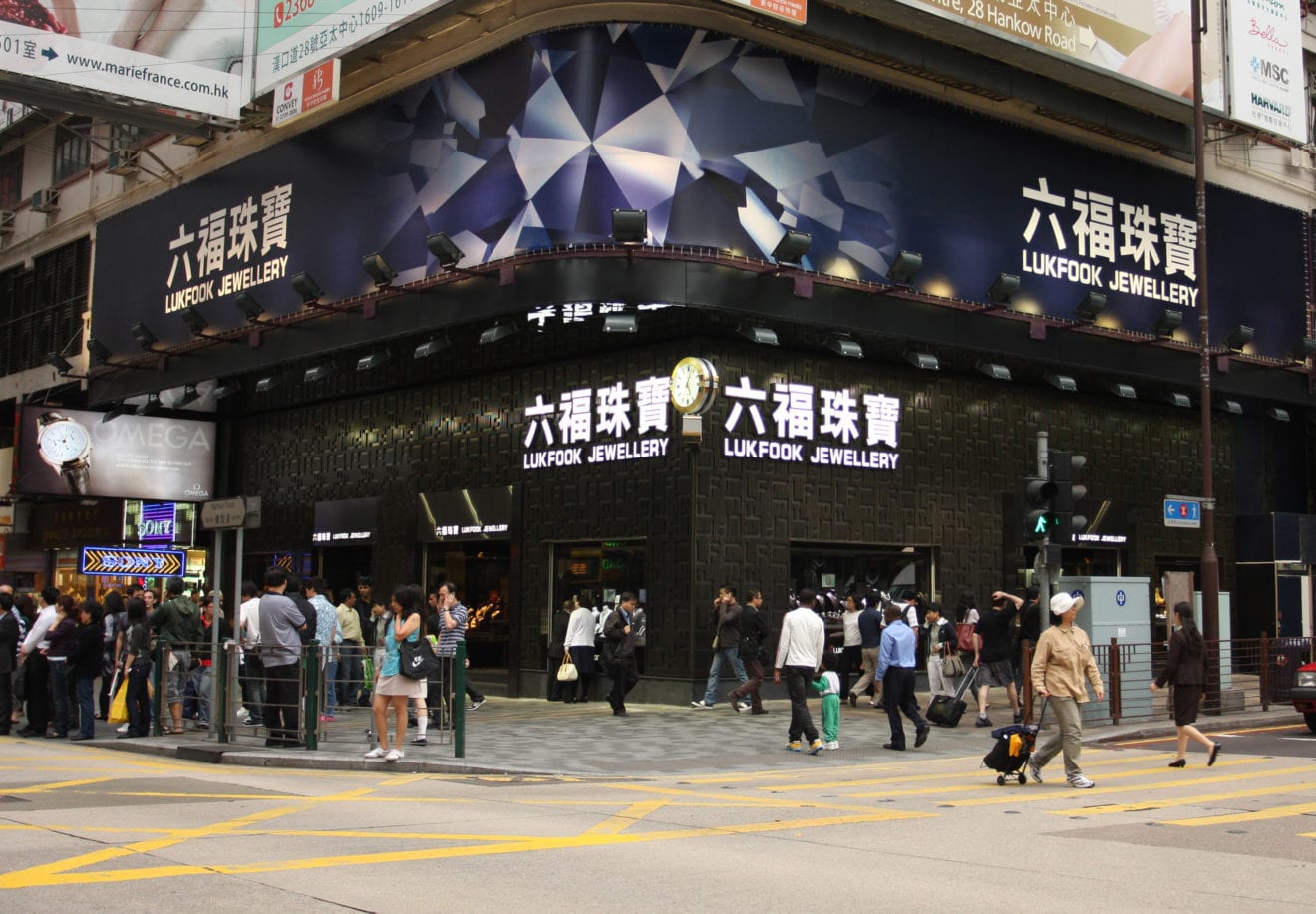
  • Hard half-year for Luk Fook Holdings

    Hard half-year for Luk Fook Holdings

    Revenue plunged by 21.5 per cent for jeweller Luk Fook Holdings (International) to reach HK$5.5 billion (US$709 million) for the six months to September 30.

    Its interim results also show a drop of 31.5 per cent in overall same-store sales for the period.

    However, its overall gross margin improved by 5.3 points to 28 per cent as a result of a relatively high gold price and higher gemset jewellery sales mix. Because of this, the gross profit decreased by only 3 per cent to HK$1.5 billion.

    Mainland China accounted for 54.6 per cent of total profits, an increase of 12.8 points.
    With a lacklustre market, retail revenue in Hong Kong plunged by 33.4 per cent to $2.642 billion, while the wholesale business shot up by 51.1 per cent to $361.6 million because of an increase in scrap gold sales as well as wholesale rough diamonds.

    Luk Fook says a relatively high gold price saw gold sales fall more than expected.

    During the six months, the group added 27 Lukfook shops worldwide, including 24 in China (nine of them licensed shops), a self-run shop in both Macau’s casino district and New York,and  a licensed shop in Seoul. This brought its total to 1455 Lukfook shops (up from 1412 at the same time last year), spanning Australia, Canada, China, Hong Kong, Korea, Macau, Singapore and the US, as well as nine 3D-Gold shops (up from four) on the mainland.

    The group says it has been striving to diversify its product mix, and since 2010 has been trying to expand its mid- to high-end watch business. At the end of September is was the authorised dealer of 34 watch brands including Audemars Piguet, Bulova, Burberry, Bulgari, Emporio Armani, Eterna, Frederique Constant, Longines, Omega, Oris, Rado, Tag Heuer, and Victorinox Swiss Army.

    For the six months, the watch business contributed revenue of HK$104.49 million down from HK$119.39 million for the same period last year, representing 1.9 per cent of the group’s total revenue, a 12.5 per cent decrease.

    Looking ahead, the group aims to continue to develop its eCommerce business and to further strengthen cooperation with eCommerce platforms in China. At the end of September, the group had 15 online sales platforms in China, including JD.com, Suning.com, Tmall.com and VIP.com.