Tag: Suning

  • Huawei sells Honor to consortium of resellers including Suning

    Huawei sells Honor to consortium of resellers including Suning

    Huawei Technologies Co Ltd is selling its budget brand smartphone unit Honor to a consortium of over 30 agents and dealers in a bid to keep it alive, the company and the consortium said on Tuesday.

    The deal comes after U.S. government sanctions have restricted supplies to the Chinese company on grounds the firm is a national security threat – which it denies. The consortium issued a statement on Tuesday announcing the purchase, which will be made via a new company, Shenzhen Zhixin New Information Technology. Huawei will not hold any shares in the new Honor company after the sale, the statement said.

    In Huawei’s statement, the company said its consumer business has been under “tremendous pressure” due to the “persistent unavailability of technical elements” for its phone business.

    “This move has been made by Honor’s industry chain to ensure its own survival,” Huawei said.

    The change of ownership will not impact Honor’s development direction, both statements said. Sources with knowledge of the matter say U.S. government restrictions have forced the world’s second-biggest smartphone maker – after South Korea’s Samsung Electronics – to focus on high-end handsets and corporate-oriented business. One source said on Tuesday the U.S. government will have no reason to apply sanctions to Honor after it separates from Huawei.

    Honor sells smartphones through its own websites and third-party retailers in China, where it competes with Xiaomi, Oppo and Vivo in the lower-priced handset market. It also sells phones in Southeast Asia and Europe, and ships 70 million units annually, according to the Huawei statement.

    Electronics products and appliance store Suning.com is listed among the buyers, which include several state-owned investment firms in Huawei’s hometown of Shenzhen.

    Honor will look for more investment partners in the future, with the possibility of an eventual listing, the source said.

    Reuters reported earlier this month that Huawei was in talks to sell Honor in a 100 billion yuan ($15.2 billion) deal to a consortium led by handset distributor Digital China and the Shenzhen government.

    Digital China was not part of the final buyer group, the source said.

    Huawei has said its higher-end smartphone line is also under threat from the U.S. sanctions, with the head of its consumer business saying in August that it would be unable to continue making the Kirin chips that power its premium models.

    Offloading Honor will give Huawei some “breathing room” on the sourcing side for its premium business while it focuses on developing its proprietary HarmonyOS for smartphones, said Nicole Peng, vice president of mobility at industry research consultancy Canalys.

    The sale will help to sustain the brand, while allowing the possibility of buying Honor back some day, said Will Wong, an analyst at IDC.

    “It will be easier for Huawei to make a potential buyback in the future from this consortium, which might not be so easy if they sell it to other smartphone or electronics makers,” he said.
  • Suning opens ‘smart-retail experience centre’ in Nanjing

    Suning opens ‘smart-retail experience centre’ in Nanjing

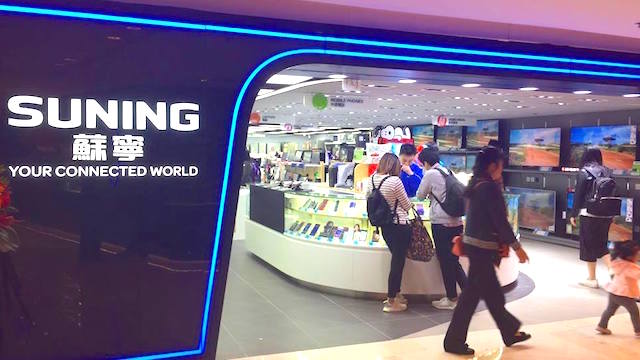
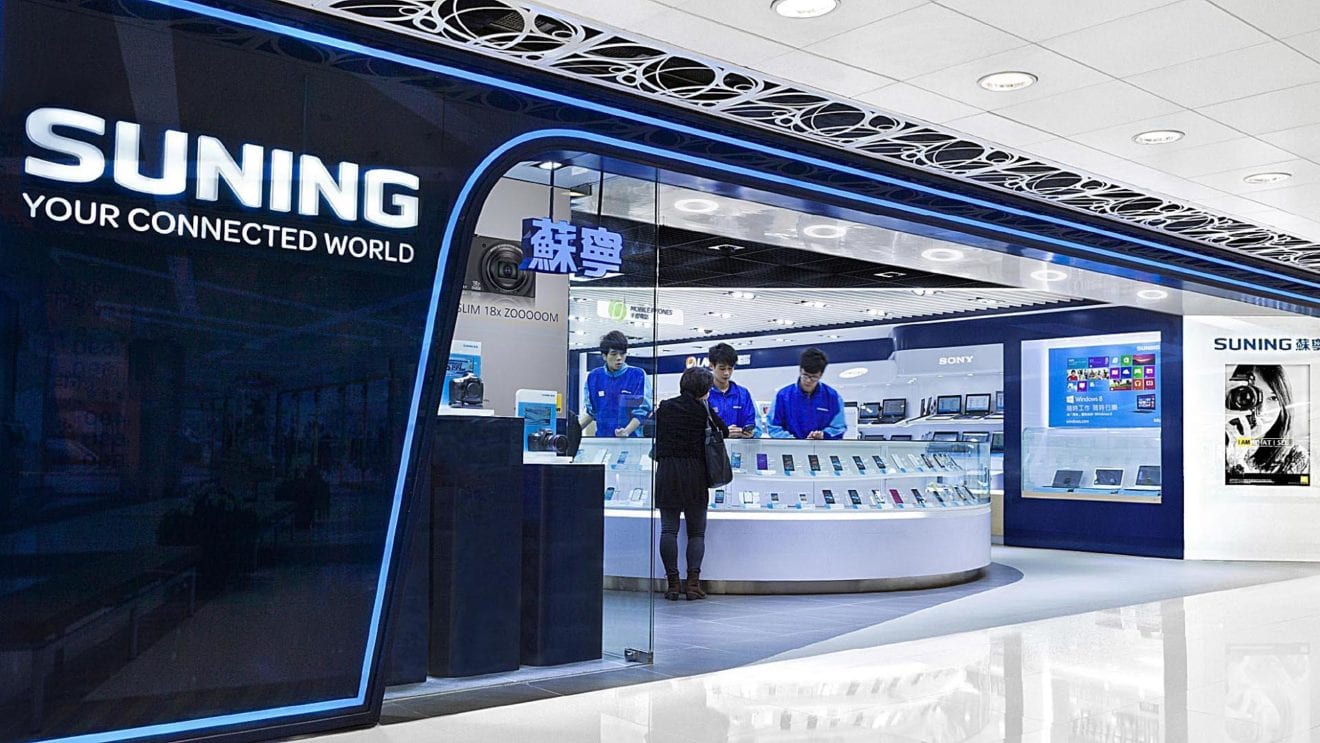
    Chinese retail giant Suning has launched a smart-retail experience centre in Nanjing.

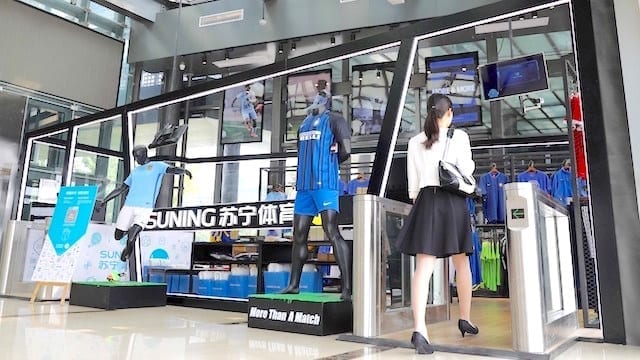
    The venue is the first of its kind for the brand, opening in Suning.com Plaza as an upgrade of the Suning.com flagship store and what it describes as a new benchmark for its strategic retail development. Offline shopping is “considered optional” in the store, and product experience is core to differentiating the concept from traditional shopping outlets.

    The new flagship achieved a gross merchandise volume of RMB10 million (US$1.4 million) within 58 seconds of opening for trading and hit RMB100 million ($14 million) in just 13 hours.

    According to a statement from the company, the store is conceived as a way to “accelerate the promotion of consumption, optimize consumption structure, and improve the quality of economic development”.

    The new store will allow 24-hour sampling across all categories and consumers will be able to purchase products from a smart screen “virtual shelf”, providing an O2O channel that allows shopping experiences via internet tools such as applets, communities, and live streaming.

    The store’s hi-tech showroom features a 400sqm L-shaped interactive LED screen, mainly reserved for product launches and PR events.

  • Suning to open 10,000 new China stores next year

    Suning to open 10,000 new China stores next year

    Chinese O2O retailer Suning plans to open 10,000 new stores next year, capitalizing on ‘consumption upgrade’ in China.

    Founder and chairman Zhang Jindong said the company will invest 40 billion RMB (US$5.7 billion) to support its expansion spree, estimated to create 8000 new jobs.

    According to the company, the increase in consumer spending with the emergence of new, more aspirational and affluent consumer groups is driving the consumption upgrade in China. The increased purchasing power in China’s lower-tier cities is also emerging as an investment magnet.

    The expansion is part of the company’s ‘open from 1 to N and integration from N to 1’ strategy.

    “Opening from 1 to N refers to how Suning is opening up its core business of retail through multi-channel, full-scenario categories to empower the industry and society at large. Integrating from N to 1 refers to the integration of Suning’s scenarios and supply chain, converging online and physical retail to focus on consumer experience and providing diversified services of a consistent quality for every consumer,” it says.

    Earlier this year, Suning acquired 37 Wanda department stores and bought an 80-per-cent stake in Carrefour’s Chinese operations. The company is recognized as one of the top three among the top 500 non-state-owned enterprises in China.

  • E-commerce platform Suning.com boosts sales

    E-commerce platform Suning.com boosts sales

    Chinese O2O retailer Suning.com says sales from its online platforms and physical stores rose by 24.27 percent in the third quarter, reaching RMB 171.43 billion (US$24.4 billion).

    The company closed the quarter with 470 million registered members and the number of active monthly users rose by 48 percent. Suning.com now hosts 8407 self-operated and franchised stores.

    Net income attributed to shareholders was RMB 11.9 billion ($1.7 billion)

    The company expects to receive a significant boost from the acquisition of an 80-per-cent share in the Carrefour China operations in late September, adding to the previously acquired Wanda department store network. It describes the move as part of a mission to create a multi-platform retail business for China, spanning third-party marketplaces, its own physical stores and its own online offer.

    Following the Carrefour deal, Suning.com has now formed a network comprising Suning supermarkets, offline Carrefour supermarkets, SuFresh boutique supermarkets and Suning Xiaodian (neighborhood convenience stores). More than 200 Carrefour stores will launch a full upgrade by the end of the year.

    “The introduction of Carrefour’s supply-chain capabilities will effectively leverage the advantages of large-scale procurement, and help establish an efficient warehouse allocation system to promote the rapid development of Suning.com’s FMCG categories,” the company said in a statement.

    In the prior three quarters, Suning.com increased investment in logistics, technology and in building out other core capacities to lay a solid foundation for growth over the next decade.

  • Suning.com to open 200 stores inside Carrefour China hypermarkets

    Suning.com to open 200 stores inside Carrefour China hypermarkets

    Suning.com plans to open more than 200 stores inside Carrefour China hypermarkets later this month.

    The store rollout follows Suning.com’s acquisition of an 80-per-cent controlling interest in the Carrefour China business last June, a deal approved by Chinese regulatory authorities last month.

    Analysts say the store openings represent a strategic push by Suning.com to ramp up the loss-making Carrefour business by giving consumers more reason to visit the store – and hoping they will shop at Carrefour while they are there.

    The move comes just five months after Carrefour China revealed plans to partner with Chinese retail group Gome opening 200 stores-in-stores by July. That deal is now over and the stores that had opened under the Gome banner are being converted to Suning.com.

    The new shops will sell smartphones and consumer appliances. A spokesman for Suning.com told Chinese media that the stores will be tailored to local communities.

    Carrefour China has 210 hypermarkets and 24 convenience stores across the mainland.

  • Suning.com ranked China’s most-valuable retail brand

    Suning.com ranked China’s most-valuable retail brand

    Suning Holdings’ retail subsidiary Suning.com has been ranked China’s most valuable retail brand, finishing 13th on World Brand Lab’s 16th “China’s 500 Most Valuable Brands” list.

    This was the second consecutive year Suning finished in 13th place with its brand value totaling RMB269.198 billion (US$39.093 billion), an increase of 17 percent compared to last year. Its listed brand value has increased by a factor of six since 2009.

    In the past year, Suning.com announced operational revenue of RMB244.96 billion ($36.479 billion), up 30.35 percent year on year; and a sales volume of RMB336 billion ($50.16 billion), an increase of 38.39 percent.

    By the end of March this year, the company owned 12,329 offline brick-and-mortar stores in Mainland China, Hong Kong, Macao and Japan, covering diversified consumption scenarios that include Suning Retail Cloud Franchise Stores, SuFresh (fresh food supermarkets), Suning Xiaodian (providing neighbourhood products and services) and Redbaby (maternal and child supplies stores).

    Last February, the company announced the acquisition of 37 Wanda department stores nationwide and in June, it acquired 80 percent of Carrefour China to improve its full-scenarios ecosystem and expand its all-categories merchandise retailing by reinforcing its market competitiveness in fast-moving consumer goods operations.

  • Suning presents it’s Technology at CES Asia

    Suning presents it’s Technology at CES Asia

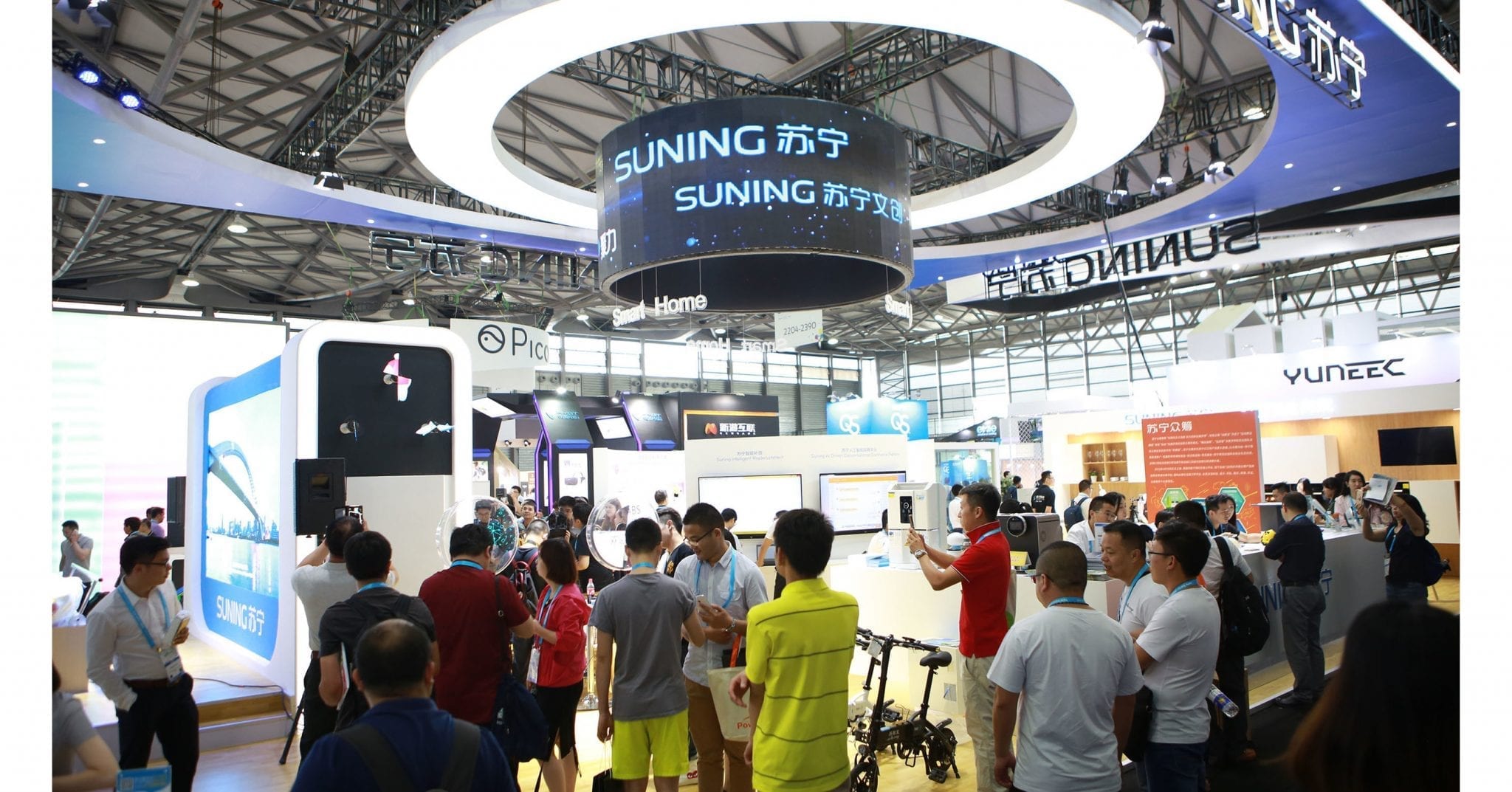
    Chinese retailer Suning will present its latest smart technologies at this year’s CES Asia.

    Suning will be demonstrating its smart home appliances based on its proprietary Biu OS system, which aims to create an open platform for sharing resources across the smart home appliance industry. Products include Biu refrigerators, air conditioners, washing machines, automatic washing machines, new fans, and smart security kits.

    The company intends to release its BiuLink Open Agreement at a press conference held on June 12, through which Suning will work with partners to explore cross-brand connectivity.

    “Nowadays, an increasing number of SME in the retail industry is facing crucial challenges,” said Suning Technology Group COO Dr Jack Jing. “As the leading omni channel smart retailer, Suning has deep insights into how technology is reshaping retail. Suning is willing to share its technology and experience to enable refined internal management and accelerate the digitalisation of the retail industry.”

    As the largest omni-channel retailer in China, Suning will also be showcasing its core smart retail technology innovations at CES, including a self-service cash register, weighing rack, off-hook system, commodity heat, and track heat, which aim to help increase retail operation efficiency and improve customer experience.

    The firm will also demonstrate its four cloud solutions designed to enable retailers to access its basic technology tools to increase industry efficiency.

  • Suning.com’s Online Sales Soars

    Suning.com’s Online Sales Soars

    Suning.com’s first-quarter online sales soared 40.87 per cent as the company’s smart-retail strategy continues to drive the rapid growth.

    Operating income of RMB 62.2 billion (US$9.2 billion), represented a 25.44 per cent increase on the same period last year. First-quarter net profit was RMB 136 million.

    In a statement, Suning.com said during the first quarter of this year, the overall domestic consumer market in Mainland China still exhibited potential for growth.

    “Despite the softer market environment, Suning’s online and offline businesses maintained relatively rapid growth.”

    Off-line, Suning continued its large-scale expansion, its network comprising 9758 self-owned stores and 2571 franchise stores as at March 31. A standout was the Redbaby store, whose sales increased by 15.7 per cent year on year.

    “In the online market, with the enhanced industrial synergy and the improved efficiency brought by resource integration, the growth rate of Suning’s sales clearly outpaced the industry average,” the company said.

    During the quarter, the company set up five major product groups including household appliances, consumer electronics, FMCG, clothes and accessories, and international items to streamline product management.

    In the FMCG sector, Suning strengthened its brand and achieved dual online-offline growth through centralised procurement, purchasing directly from the manufacturer and strategic cooperation, which helped grow its network of offline stores.

    “In the same period, Suning has further optimised the supply chain management of online and offline stores through the acquisition of 37 Wanda stores, marking a significant success for Suning’s all-categories product portfolio operational strategy.”

  • Suning develops omnichannel smart retail through Wanda department stores

    Suning develops omnichannel smart retail through Wanda department stores

    Suning.com, the Fortune Global 500 retailer owned by Suning Holdings Group, one of the largest commercial enterprises in China, recently announced the establishment of its Department Store Group. It will focus on professional operations of fashion department store business to strengthen its full-scenarios development in online-and-offline smart retail and improve the shoppers’ experience.

    The Company will also acquire nationwide all Wanda Department Stores, belonging to Wanda Group, the large Chinese commercial real estate developer, to expand its bricks-and-mortar retail portfolios and facilitate the all-categories merchandise supply chain to satisfy more local consumers and boost Chinese retail market profits.

    As the leading omni-channel smart retailer in China, Suning.com has always been committed to building a full-scenarios retail ecosystem both online and offline to create diversified shopping experiences visible and ready to serve consumers anytime and anywhere. The establishment of the new group with acquisition of Wanda Department Store is expected to further reinforce Suning.com’s offline advantages, improving its overall retail network resources and increasing the business potential of the Company to develop new business opportunities of all-categories merchandise operation, especially of fashion, lifestyle products and fast-moving consumer goods.

    The 37 Wanda Department Stores are located in first- and second-tier cities in China, with more than 4 million registered customers. Through the deal, Suning.com will also bring its powerful technology capabilities such as data learning, artificial intelligence, IoT to accelerate the digitization of operation management for traditional department stores to increase the overall service experience and profitability of the industry.

    Zhang Jindong, Chairman of Suning Holdings Group said: “The prosperity of the physical retail industry must not only rely on the traditional model and experience. It needs to embrace innovative technology and market concepts to continuously create quality and customized services for consumers.”

    Suning and Wanda has built a strategic cooperation since 2015 and strengthened the partnership in 2018 with the former’s acquisition of a tiny stake in the latter’s commercial management subsidiary.

  • High Suning profit increase reported

    High Suning profit increase reported

    Chinese O2O retailer Suning has posted RMB172.97 billion (US$24.79 billion) in operating revenue in its third quarter performance report. The result shows a 31.15 per cent year-on-year increase on the reported figure during the first three quarters this year. The company also generated a net profit of RMB6.127 billion ($878 million), an increase of 812.11 per cent over the same period last year.

    The company credits the result to the strength of Suning’s fast-growing online sales comparative to other e-commerce platforms.

    Suning currently has more than 382 million registered users. It operates 6292 direct-sale physical stores and 1453 Suning retail cloud franchise stores.

    Suning says it will provide free delivery in the days approaching the holiday the 11.11 Singles Day shopping spree and will not raise its delivery fees on the day.

  • Singles Day 2018 faces delivery challenges

    Singles Day 2018 faces delivery challenges

    Alibaba and its partner retailers will face a massive challenge ensuring flawless delivery of millions of parcels all over China and beyond given the expectations of further growth on Singles Day 2018 next week.

    “As the event grows, the logistics challenge becomes bigger and bigger,” observes retail analyst Pascal Martin, partner at OC&C Strategy Consultants.

    “During last year’s event 812 million parcels were delivered just on Tmall. Observers are betting that this year’s milestone might be more than 1 billion parcels.”

    And, says Martin, although brands don’t like to talk about it, there is also a huge challenge in taking care of large quantities of returned goods.

    “11.11 is a massive test bed for Alibaba’s backbone infrastructure: the network of partners that make it all possible, from payment to delivery to data management, as well as AI and cloud technologies that are put to work to ensure a successful event.”

    Alibaba’s Cainiao Smart Logistics Network says it has upgraded its technology to cope with the expected increased volumes from 11.11 this year. The company boasts more than 30 million sqm of warehousing worldwide and a logistics field force of more than 3 million people.

    Domestically, Cainiao has opened a new robotic warehouse, expanded its Internet of Things (IoT) systems and built out its platform’s last-mile reach. For cross-border deliveries, more than 1000 shipping containers and 51 charter planes are booked, ready to speed orders across the world.

    Cainiao VP Ben Wang says while nobody knows how many orders Singles Day 2018 will generate, the logistics company needs to keep upgrading systems, anticipating growth and seeking higher efficiency, because of customer expectations.

    “It was only five years ago that parcel orders surpassed 100 million for the first time. Back then it took nine days to deliver the first 100 million parcels,” said Wang. “Last year, it took less than three days (2.8 days) to deliver the same number of parcels. Consumers increasingly want faster, better delivery, so that’s what we’re doing. This year, we’re striving to achieve a new high, leveraging the beauty of scale and technology.”

    Delivery “within minutes”

    Cainiao’s preparations this year also reflect the changing demands of logistics in the New Retail era. For the first time, goods ordered during 11.11 will be delivered directly from stores to customers during the Festival – sometimes within minutes. Short-distance delivery services will be available in more than 280 cities.

    “Cainiao is the logistics backbone of Alibaba’s New Retail strategy,” Wang said. “We are providing an online and offline, cross-platform supply-chain solution to merchants and enabling them to cut inventory costs, while increasing operating efficiency, especially around 11.11 ­– the busiest season of the year. Ultimately, consumers will enjoy a brand-new shopping experience, as delivery service will always be on-demand.”

    Martin expects Singles Day 2018 to include more partners, not only online but also offline, leveraging Alibaba’s New Retail ecosystem. For example, Tmall 3000+ convenience stores, Hema and RT Mart supermarkets, Suning and Auchan, will be fully integrated into the event.

    The event will also be expanding beyond China through Lazada, the Southeast Asia online platform owned by Alibaba.

    “We expect to see participation of an increasing number of international brands that are taking advantage of the Tmall Global platform – number one by far among Chinese cross-border platforms – to get introduced to Chinese consumers without any direct presence in China for many of them.”

    And diversification will be another key factor in this year’s event, he says.

    “It’s not just about purchasing products, it’s also increasingly about purchasing a variety of services, from videos on Youku to mobile games on UC, theatre tickets on Taopiaopiao, music on Xiami music, travel on Feizhu, etc… All of this will not happen without challenges.”

    Yet another test, says Martin, is for Alibaba to expand the event beyond its group companies.

    “Right now, most of the non-Tmall companies participating in the 11.11 event are Alibaba Group companies. Getting non-group companies to embark on the 11.11 band wagon will be the next step to sustain continued growth of the event in future years.

    “Finally, to keep the event fresh and exciting, Alibaba will need to continue to surprise increasingly demanding Chinese consumers with entertainment and festivals to delight them around the event. 11.11 has become much more than a commercial fair, it is now a major annual milestone in China’s cultural calendar.”

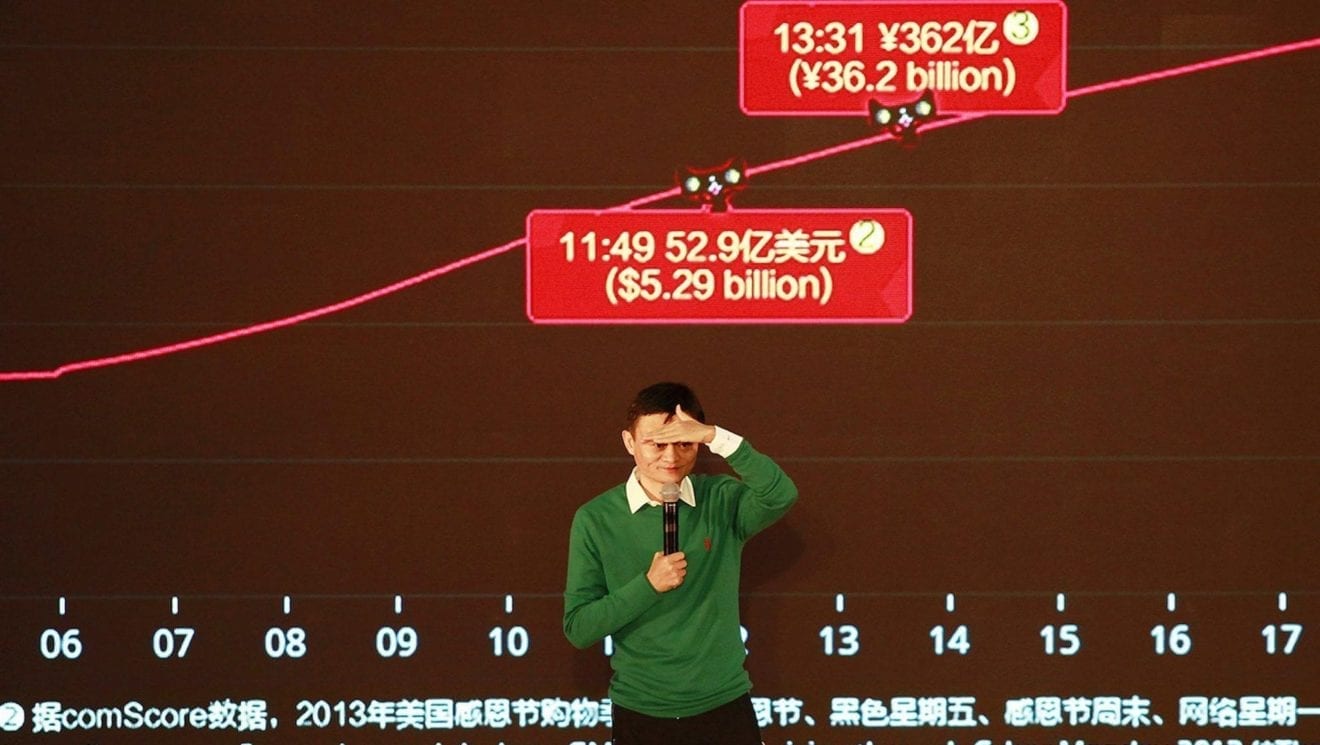
    Last year’s 11.11 event saw GMV reach 254 billion RMB (US$36.6 billion) including 168 billion RMB on Tmall alone. That turnover represented a 43.5 per cent increase over the 2016 GMV.

    Singles Day 2018 will mark the event’s 10th anniversary.

  • Suning, SAP partner over smart retail

    Suning, SAP partner over smart retail

    Chinese e-commerce giant Suning has signed a memorandum of strategic cooperation with German software company SAP to conduct technology cooperation in retail, logistics and sports sectors.

    The two parties will conduct joint research in artificial intelligence, Internet of Things, big data, cloud computing and other frontier technologies to promote the development of the digital economy, according to a statement released by Suning.

    They plan to build a smart retail service platform to empower China’s retail sector as well as a logistics platform to improve operational efficiency and user experience.

    The two companies also aim to establish a digitalized platform for Chinese football clubs and youth training systems to support the development of the sport in China.

    The Chinese e-commerce platform saw sales of German brands reach 1.5 billion euros last year. It now has about 1,000 types of German products on its overseas shopping platform.

  • Suning.com Listed on China’s 500 Most Valuable Brands with a Brand Value of 23 Billion RMB

    Suning.com Listed on China’s 500 Most Valuable Brands with a Brand Value of 23 Billion RMB

    Suning.com, a Fortune Global 500 company owned by Suning Holdings Group (“Suning”) was listed on the 15th China’s 500 Most Valuable Brands, with a brand value of 23 Billion RMB, ranked No.13 on the list and No.1 among the retail industry.

    The list of China’s 500 Most Valuable Brands is released by World Brand Lab, the leading independent consultancy of brand valuation and marketing strategy in the world. It evaluates brand value based on three dimensionsfinance performance, customer impression and brand awareness. The total value generated by the 2018 listed brands is RMB 1.844 trillionDue to its strong growth in revenue and brand awareness, Suning.com has achieved a brand value of RMB 23 billion, up 19% year-on-year.

    Suning.com saw a strong financial growth in 2017, obtained an operating revenue of RMB 187 billion, with a year-on-year increase of 24.67%. In the first quarter of 2018, Suning.com has achieved Omni-channel sales of RMB 69.33 billion, up 46.33% year-on-year.

    “Innovative technologies such as AI, Big-data and block-chain bring new opportunities to the growth of brand value,” commented by the chairman of World Brand Laboratory and Nobel laureate and economist, Robert Mundell.

    Suning put forward its ‘Smart Retail’ strategy in 2017, which revolves around Smart Sourcing, Smart Selling, Smart Services, Smart Logistics and Smart Business Models. The strategy meets and beats consumers’ expectations by providing personalized goods and services in diversified consumption scenarios to improve shopping experience. During the past 6.18 Shopping Festival, Suning gained a 121% sales increase in total, reflecting the increasing brand reputation among customers and embodying the success of Smart Retail.

    Meanwhile, Suning has been actively working on corporate social responsibility programs. By the end of 2017, Suning has contributed over RMB 1.1 billion to public welfare regarding disaster relief, education, poverty alleviation, environmental protection and other fields.

    China has entered a new era of quality consumption, which provides a broad market for local brand’s development,” said Sun Weimin, vice chairman of Suning.com, “As a leading retail brand, Suning is proud to be listed among the China’s 500 Most Valuable Brands and will continuously undertake the responsibility to enhance Chinese brands competitiveness.”

  • Suning Holdings to open its first office in Milan

    Suning Holdings to open its first office in Milan

    China’s Suning Holdings will open an office in Milan within the next two months, to be followed by offices in the UK, France and Germany by the end of the year.

    In its latest sourcing plan, the firm has set aside RMB10 billion (US$1.5 billion) to source products on the Continent over the next three years.

    Suning announced the move during Milan Design Week, where it has been exploring deals with overseas designers to help it create products for its new Suning Jiwu (“ultimate creation”) stores. It aims to introduce stylish, high-quality home and fashion products from Europe into China.

    The new format features popular brands, original designs, life essentials and creative interactions. The first store, covering 400sqm, opened in Nanjing last month, with more than 300 set to open throughout China within the next three years, including at least 50 large-scale flagship stores.

    Suning International VP Steven Zhang says Jiwu caters for a “personalised consumption culture”.

    Already the company has partnerships with Italian brands across different industries including Furla, San Benedetto, TechnoGym and Versace Home. Its new sourcing plan in Europe highlights luxury fashion, health, household and FMCG products. Representatives of Chateau D’Ax, Cova, Kartell, Kiko, Versace and YNAP were among the guests at its opening event at Milan Design Week.

    Suning already has an established network covering Hong Kong, Japan and the US. The group expects 30 per cent of its revenue will come from international business by 2020.

  • China’s e-commerce giants to buy Dalian Wanda malls

    China’s e-commerce giants to buy Dalian Wanda malls

    Three Chinese e-commerce giants led by Tencent are buying into shopping centres as part of an alliance that will help fund property magnate Wang Jianlin’s HK$30 billion (US$3.8 billion) plan to take his Dalian Wanda Group private.

    Jianlin describes it as the world’s biggest single alliance between the new economy and bricks-and-mortar businesses as he vows to turn his flagship commercial property unit into an online-to-offline service provider.

    After shedding properties in Australia, China and the UK to help reduce debt, he is now selling off nearly 14 per cent of Dalian Wanda Commercial Properties to some of the mainland’s biggest internet and retail players.

    An investor group led by Tencent, along with e-commerce heavyweight JD.com, electronics retailer Suning and Wanda partner Sunac China Holdings, the stake is being sold for RMB34 billion (US$4.36 billion).

    On its website, Wanda presents the share sale as part of a transformation of the company from a real-estate developer with nearly 240 shopping centres across China into a commercial management company focused on integrating online and offline consumption.

    As part of the deal, Dalian Wanda Commercial Properties will be renamed Wanda Commercial Management Group.

    However, the new partners may lead the financing of new malls, with the website statement noting “Tencent, Suning and other investors will use their financial prowess to continuously support Wanda Commercial to speed up its growth, helping the company to achieve its goal of 1000 Wanda Plazas in China as early as possible”.in

    Wanda says the partners are keen to relist the commercial real-estate unit, still privately held after a 2016 buyout led by Wang, “at the earliest opportunity”.

    Also, the new group will use the online resources of Tencent, Suning and JD.com as well as its own offline commercial assets to “carry out various collaborations, jointly building a new consumption model in China that will integrate both online and offline services”.

    Wanda Commercial’s total debt at the end of June was RMB279 billion, according to ratings agency S&P.

    Tencent’s investment of RMB10 billion gives it a 4.12 per cent stake, while Suning and Sunac’s twin outlays of RMB9.5 billion will them a 3.91 per cent stake each, and JD.com’s RMB5 billion yields a 2 per cent stake.

    Meanwhile, WeChat owner Tencent last week said it might buy into French retailer Carrefour’s China business, along with local retailer Yonghui Superstores. This follows Amazon’s acquisition of Whole Foods for US$13.7 billion.