
Tag: superapp

  • Grab Soars Past Quarterly Revenue Projections, Fueled by Consumer Adoption of ‘Superapp’ Services

    Grab Soars Past Quarterly Revenue Projections, Fueled by Consumer Adoption of ‘Superapp’ Services

    Grab Holdings Inc. surpassed projected revenues for the third quarter, thanks to strong consumer spending on its ride-hailing and food delivery services. The increase in user numbers can be linked to the company’s efforts in expanding its platform.

    Grab’s Superapp Transformation

    Grab’s initiative to transform into a “superapp” by integrating food and grocery delivery, ride-hailing, and financial services has proven successful. These integrated services offer consumers a comprehensive solution for their daily mobility and lifestyle requirements amidst an unpredictable economic climate. The concept’s popularity has surged, especially in regions where tariffs have reshaped the economy.

    In addition to offering standard services, Grab has been emphasizing more cost-effective options in ride-hailing and food delivery. This strategy aims to appeal to budget-minded consumers and provide a safety net against potential declines in consumer spending.

    According to CFO Peter Oey, approximately one-third of new monthly users in the deliveries segment are drawn from these affordable channels. Furthermore, about 40% of these users have subsequently upgraded to standard products. Oey noted, “We’re observing increased engagement from these saver platforms or these affordable products, and simultaneously, users are spending more frequently as we successfully upsell them.”

    Expansion into Autonomous Vehicles

    As the service sector in Southeast Asia becomes increasingly competitive, Grab is exploring new avenues for growth. One such venture involves leveraging its ride-hailing platform to penetrate the autonomous robotaxis market. Industry analysts predict that this sector will witness considerable growth in the near future.

    The company has also raised the lower limit of its annual revenue forecast from $3.33 billion to $3.38 billion, while the upper limit remains at $3.40 billion. Grab’s revenue for the period stood at $873 million, marginally beating analysts’ average estimate of $872.9 million.

    Additionally, the company has updated its yearly adjusted earnings before interest, taxes, depreciation, and amortisation (EBITDA) forecast. The new range is set between $490 million and $500 million, up from the previous projection of $460 million to $480 million.

    The third-quarter revenue for Grab’s deliveries segment stood at $465 million, slightly under the estimated $470 million.

    Questions & Answers

    What is Grab’s strategy for attracting cost-conscious consumers?
    Answer: Grab has introduced more affordable options in its ride-hailing and food delivery services to attract budget-minded consumers.

    How is Grab planning to expand amidst increasing competition in Southeast Asia’s service sector?
    Answer: Grab is planning to leverage its ride-hailing platform to expand into the autonomous robotaxis market.

    What has been the impact of Grab’s transformation into a “superapp”?
    Answer: The transformation has been successful, as it provides consumers with a one-stop solution for their daily mobility and lifestyle needs in the midst of an unpredictable economic landscape.

  • AirAsia Super App launches Bangkok food service as it expands across ASEAN

    AirAsia Super App launches Bangkok food service as it expands across ASEAN

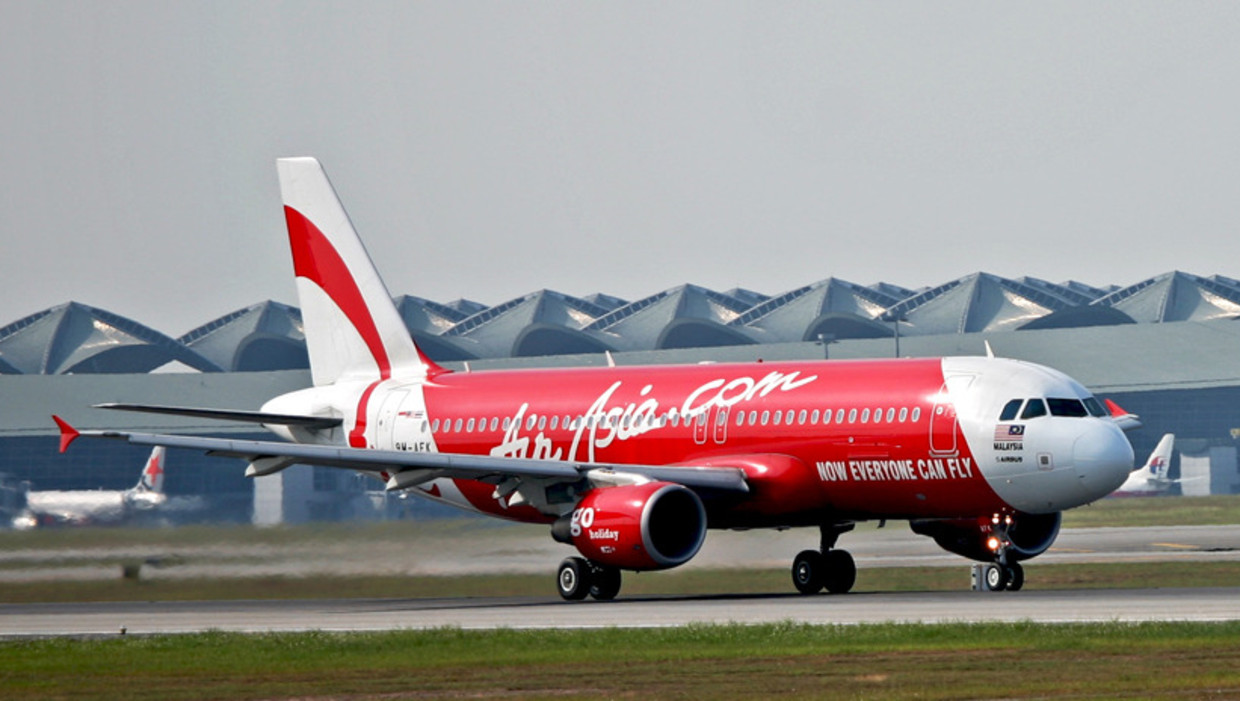
    AirAsia Group’s digital arm has launched a food-delivery service in Thailand as it ramps up its non-airline business operations to mitigate falling demand for travel during the Covid crisis.

    AirAsia Digital operates Super App that has already been downloaded more than 50 million times and the company says it now has 75 million people using it across Singapore, Malaysia and Thailand.

    Last month, the company bought the Thai operations of Indonesian ride-hailing app Go-Jek which gave it instant market share in passenger transport and delivery services in the market.

    At that time, Air Asia CEO Tony Fernandes said the company had already created a complete digital economy ecosystem. “We have successfully established over 15 different non-airline products and lifestyle services on our digital e-commerce platform in Malaysia. Now it’s time to take it to the next level. In response to overwhelming regional demand, we are setting our sights on bringing our Super App offerings to all of our key markets, following the successful rollout in Thailand.”

    Other features of the app include digital motor vehicle insurance, financial services, travel, lifestyle and rewards, flight and accommodation bookings, beauty, health, and content services.

    With the Thai launch this month, the Super App is offering 30,000 free meals for 30 days for users in four parts of Bangkok: Din Daeng, Chatuchak, Lat Phrao, and Huai Khwang. Partners in that program include McDonald’s, Flash Coffee and Cafe Amazon.

    The app plans to expand service delivery across more areas of Bangkok during the coming weeks.

    “AirAsia food marks the beginning of our digital revolution in Thailand, and we are currently preparing for courier, grocery, ride-hailing and beauty services, which will be launched in coming weeks,” said Amanda Woo, AirAsia Super App CEO.

    “The Covid-19 pandemic has permanently reshaped our everyday lives, food delivery and take-outs have undeniably become an integral part of our consumption behaviour. The key goal of AirAsia Super App is to be the best value one-stop travel and lifestyle application for everyone and every need.

    “AirAsia Super App aims to rise as the e-commerce marketplace of choice for everyone in ASEAN, be it for travel, food delivery or logistics.”

  • AirAsia ‘super app’ to help struggling airline rebound from pandemic

    AirAsia ‘super app’ to help struggling airline rebound from pandemic

    AirAsia Group Bhd chief executive officer, Tan Sri Tony Fernandes, said the global pandemic and country lockdowns that ensued last year served as a great opportunity for the company to work on growing its “super app”.

    The group’s website airasia.com has already been providing airline and travel-related services. However, in October last year, it unveiled the rebranding of the “super app”, combining 15 types of products and services under three pillars — travel, e-commerce and fintech.

    According to Japan’s NHK World’s interview with Fernandes recently, the app now has 16 million users a month.

    He said the airline is in a good position to succeed given its growing know-your-customer (KYC) data and wants a non-airline business to rival his airline business in a few years’ time.

    “One of the greatest assets of an airline is data. It’s KYC. It’s passport information. We have ID information. We have strong loyalty card information. People who fly have a bit more money, so there is also credit card information.

    “If you take a Grab or a GoJet, they are generally transacting at a lower value, they may not have as much information as we do over the last 19 years. So knowing what you want, we can personalize a lot of things and I think that’s one of our advantages,” he said in the video interview dated Feb 1.

    The airline industry has been hit the hardest in the wake of the Covid-19 pandemic as many flights are forced to be halted and plane fleet temporarily grounded, plummeting business performance and forcing many to be out of job.

    Fernandes said his aim is for the airline to continue attracting customers at a low price while making money, and then take the opportunity to sell other things digitally to the customers. He added that he hopes to hire back all the staff that had to be let go during the pandemic.

    The budget airline saw its worst quarter during the second quarter of last year at the peak of lockdown measures in Malaysia and around the region, as revenue dipped 96% to RM118.96 million as of June 30, 2020 compared with RM2.92 billion in the previous year while it registered a net loss of RM992.8 million versus a net profit of RM17.3 million a year earlier.