Tag: supercars

  • Mercedes-AMG Cars Will Be Electrified From 2021

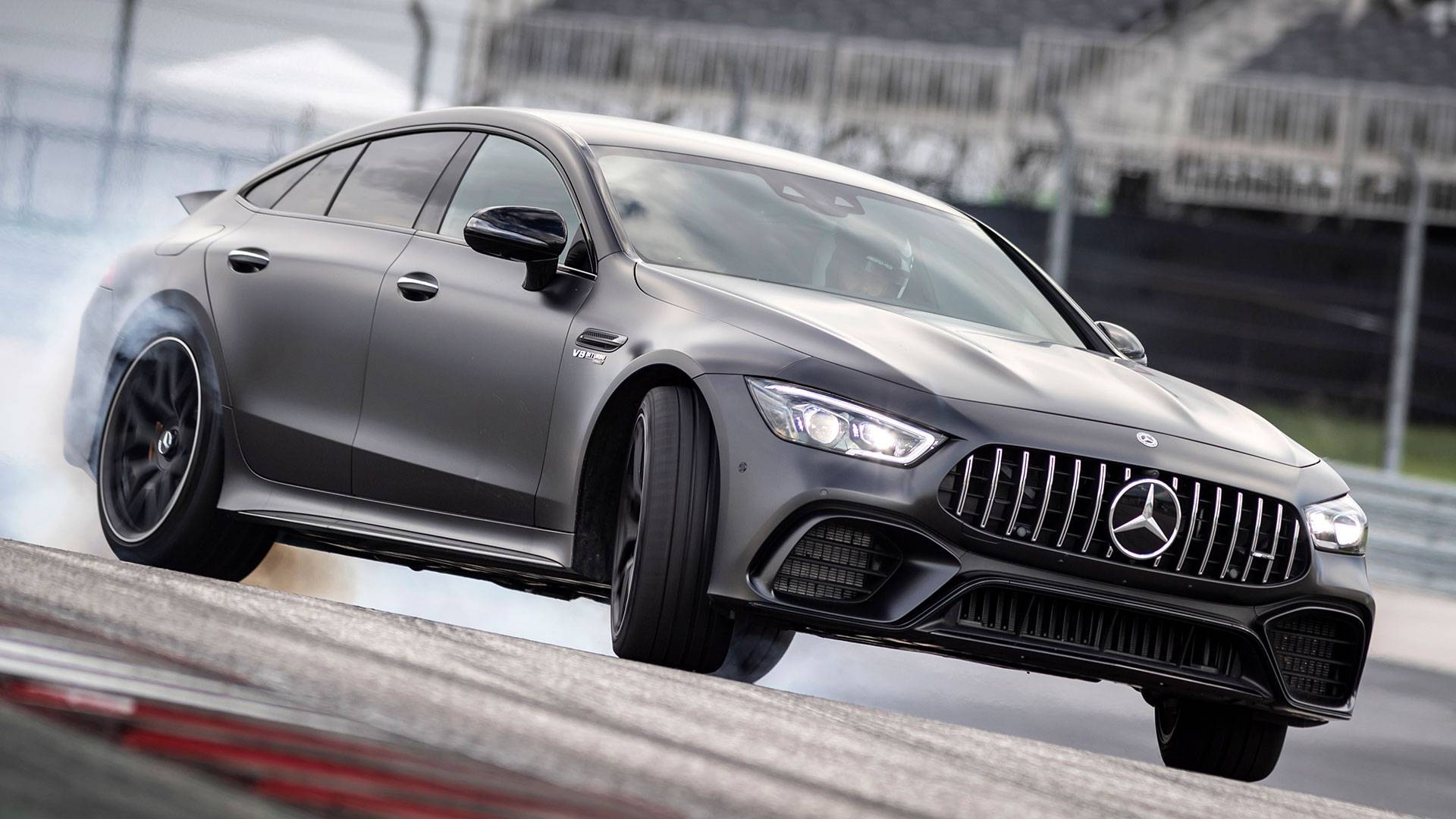
    Mercedes-AMG Cars Will Be Electrified From 2021

    Electric performance car is not an alien concept anymore. In fact, prominent carmakers like Automobili Pininfarina and Rimac are into the business of making only electric supercars. Electric Mobility is also believed to be the future of automobiles and this stands true even when we talk about performance cars. Mercedes is also thinking in this direction and has said that all its AMG cars will be electrified 2021 onwards.

    According to news reports, Tobias Moers, Head – Mercedes-AMG said that Mercedes-AMG models will be using an electrified V8 drivetrain in the future. The 4.0-litre V8 engine which powers a range of Mercedes-AMG cars will be coupled with a 48-volt electric motor which has been developed indigenously by the team. Initially, Mercedes was planning to use the new powertrain in the 63 engine only in the GLE and GLS SUVs. However, it will play a major role in the future as from 2021 all AMG cars will be launched with an electrified powertrain. Mercedes also believes that the share of electrified powertrains will be higher in the performance segments in 2025.

    We already know that AMG is also working on a high-performance hybrid system for its upcoming hypercar. The Mercedes-AMG One hypercar will use an electric motor driving its front wheels just like the AMG GT four-door concept. Moers also said that the setup will be offered in the 65 series AMG models and will replace the 6.0-litre V12 engine. However, the 2.0-litre, four-cylinder, turbocharged AMG engine won’t be converted into a hybrid system.
  • Vietnamese willing to Spend huge Amounts of Money on Super Cars

    Vietnamese willing to Spend huge Amounts of Money on Super Cars

    As many as  8,670 luxury cars of different kinds were sold in Vietnam in 2017, a decrease of 15 percent from 2016, according to one report. However, the amount of money spent on the cars was VND20 trillion.

    According to Choi Duk June, CEO of Mercedes Benz Vietnam, 150 Maybachs were delivered to Vietnamese buyers in 2017. The sales of Maybach in Vietnam are the highest in Southeast Asia.

    This is a luxury model of Mercedes-Benz with three versions in distribution in Vietnam, including Maybach S 400 priced at VND6.899 billion, Maybach S 500 VND10.999 billion and Maybach S 600 VND14.169 billion.

    When launching Maybach S 600 into the market in January 2015, Mercedes Benz then hoped it could sell 10 products a year. However, to its surprise, over 50 products were sold in the year.

    The figure was over 100 in 2016, and Vietnam remained the biggest buyer of Maybachs in 2017, leaving Indonesia, Thailand, Malaysia and Singapore far behind.

    It is estimated that over 300 Maybachs are rolling on Vietnam’s streets.

    The other luxury models also had very good sales. Over 500 S-Class products, priced at VND4-10 billion, were sold in 2017.

    However, the highest growth rate belonged to mid-end luxury models, priced at VND1.5-3 billion. A record number of 2,500 GLCs priced at VND1.939-2.209 billion was sold in 2017, placing GLC as one of the 15 best sellers in the market.

    The other luxury models which sold very well in 2017 included BMW’s Seri 3 and Seri 5, Audi’s A4 and Q5 and Lexus’ ES 250 and NX 200T.

    Car dealers in Vietnam say there is a switch in consumption from common products to mid-end products. A survey by Mercedes Benz found that car buyers tend to be younger.

    In 2014, the average age of car buyers was 42, while it was 39 in 2016 and 38 in 2017.

    Boston Consulting Group’s (BCG) survey showed that Vietnam is getting wealthy thanks to the strong rise of the middle class which has been growing more quickly than any other place in South East Asia.

    Those who have monthly income of $714 and more are classified as middle class. Vietnam expects to have 33 million middle class people by 2020.

    According to the Vietnam Automobile Manufacturers’ Association (VAMA), a total of 272,750 automobile units were sold in 2017, down 10 percent yearly.

  • Chinese demand for supercars races ahead at full-speed

    Chinese demand for supercars races ahead at full-speed

    Chinese demand has helped boost supercar sales around the globe to double-digit growth, according to a new report by automotive market research company Jato. While the United States remains the largest market for ultra-luxury car sales, China is close behind at number three, with demand last year jumping 54 percent to about 4,400 units. To compare, the second biggest market, the UK, only saw a 15.6 percent growth.

    Jato cites Forbes’s swelling billionaire list as evidence for the increasing demand for ultra-luxury automobiles around the globe—overall, supercar sales are up by 16 percent in 2016 from the previous year. China added 65 billionaires for a total of 400 to the list last year, the most of any country on the list, and its role in the supercar market reflects this.

    Supercars, which include brands like Aston Martin, McLaren, Bentley, and Ferrari, have long been valued by Chinese consumers for boosting their status quo, but the report notes that supercar brands are increasingly innovating to respond to changing consumer needs. For example, many of the automakers have recently introduced luxury SUVs to their lineup, of which have witnessed a major market in China as families are getting larger. There is also more demand for sustainable vehicles, especially in China, where environmental concerns like pollution are rampant. Luxury car brands have been quick to respond—out of the 10 brands featured in Jato’s report, nine of them have announced plans for releasing electric or hybrid automobiles.

    While supercar brands are no doubt having good luck with the Chinese consumer in general, many are also now having to consider how the emerging affluent in China are getting younger and more digitally savvy. Maserati, an ultra-luxury brand that wasn’t on Jato’s list, made an effort to reach this market by opening a Tmall store, but others have room to grow when it comes to bridging their online presence with call to actions to bring customers into their showrooms. And with surging demand, the opportunity to reach China’s digital natives is likely only growing wider.