Tag: Suppliers

  • Us Clothing Brands Brace For Impact As Tariffs On Asian Textile Suppliers Soar

    Us Clothing Brands Brace For Impact As Tariffs On Asian Textile Suppliers Soar

    The US retail clothing and footwear industries are contending with increased tariff pressure as the government announced levies on numerous countries, including key Asian textile suppliers such as Vietnam and Indonesia. The tariffs are expected to be between 25 and 40 per cent.

    Impact Analysis on US Brands

    Here’s a look at how these tariffs might affect several key US clothing and footwear companies, based on their manufacturing locations.

    Ralph Lauren

    Ralph Lauren, which sources most of its goods from overseas, gets approximately 19 per cent from Vietnam and 15 per cent from China. Despite potential disruptions, the company remains confident in the diversified nature of its supply chain.

    Nike

    Nike imports about 43 per cent of its goods into the US. Its sports footwear production is split between Vietnam (50 per cent), Indonesia (27 per cent), and China (18 per cent). The brand’s sports apparel production is primarily sourced from Vietnam (28 per cent), China (16 per cent), and Cambodia (15 per cent). Nike plans to reassign its production in response to the new tariffs.

    Skechers

    Skechers sources roughly 40 per cent of its products from both China and Vietnam. The company is shifting its import sources away from China and relocating some of its production bases.

    Capri

    The majority of Capri’s Michael Kors line is produced in Asia, while Italy is the primary production location for Jimmy Choo. The company has been increasing production in Vietnam, Indonesia, and Cambodia.

    Tapestry

    Tapestry primarily manufactures in Vietnam, Cambodia, and the Philippines, which combined account for about 70 per cent of its production.

    American Eagle

    American Eagle primarily sources from Asia and plans to reduce its dependence on China by 2025.

    Abercrombie & Fitch

    Abercrombie & Fitch’s sourcing is split between Vietnam (35 per cent), Cambodia (22 per cent), India (12 per cent), China (7 per cent), and other locations (25 per cent).

    Lululemon

    Lululemon’s fabric sourcing is divided between Taiwan (35 per cent), China (28 per cent), and South Korea (11 per cent). Its manufacturing operations are in Vietnam (40 per cent), Cambodia (17 per cent), Sri Lanka (11 per cent), Indonesia (11 per cent), and Bangladesh (7 per cent).

    Puma

    Puma sources 30 per cent of its goods from China, 26 per cent from Vietnam, 13 per cent from Cambodia, and 12 per cent from Bangladesh.

    Questions & Answers

    What is the potential tariff exposure for US clothing and footwear companies?
    These companies could be exposed to new tariffs ranging from 25 to 40 per cent on imports from numerous countries.

    How are companies like Nike and Ralph Lauren responding to these tariffs?
    Companies are responding by diversifying their supply chains, relocating production, and reassigning production to manage the impact of the tariffs.

    Which countries are major sources for these US companies?
    Vietnam, China, Cambodia, Indonesia, and Taiwan are among the major sources for these US companies.

  • Apple suppliers need 103,000 workers in Vietnam this year

    Apple suppliers need 103,000 workers in Vietnam this year

    U.S. tech giant Apple’s contract manufacturers in Vietnam plan to hire over 103,000 workers this year, mostly for their factories in northern Bac Giang Province.

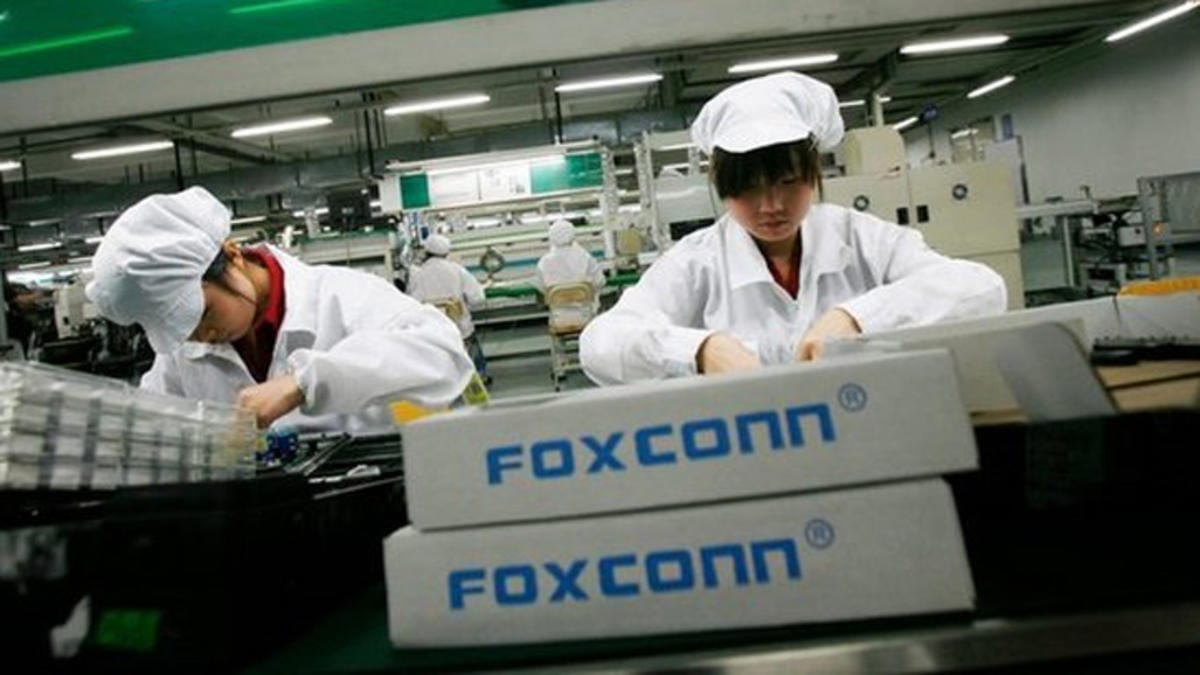
    Foxconn, Apple’s biggest supplier, needs 15,000 workers for its plants in the Dinh Tram and Quang Chau industrial parks (IPs) in the first half of the year, and 12,000 in the second.

    New Wing Interconnect Technology, a Foxconn subsidiary based in the Van Trung IP, will hire 27,000 workers this year, including 6,000 in the next two months.

    Fukang Technology, another Foxconn unit with a plant in the Quang Chau IP, needs 13,600 more workers this year.

    Another Apple supplier, Luxshare-ICT, plans to hire 47,300 workers at its plants in Quang Chau and Van Trung IPs.

    It will hire 200-300 people a month in February and March before increasing it to 7,000-9,000 after June or July when it expects to receive more orders.

    All these factories require workers aged 18 to 40 who have graduated high school and are in good health.

    Foxconn is even willing to take in applicants who have only completed the sixth grade.

    All the companies will pay a basic salary of VND5 million (US$203.8), social insurance contributions and other benefits, according to Nguyen Van Hue, director of the Bac Giang Province Job Center.

    They usually attract and retain workers mainly through other benefits such as housing rent and meal allowances and overtime work, which take workers’ incomes to VND8-9 million a month, he said.

    Factories simultaneously hiring en masse makes it difficult to find enough people quickly, he said.

    In contrast to the mass layoffs early last year, factories are trying to maintain their workforces this year since they have massive orders.

    “Many companies’ human resources personnel have even traveled to small villages in the northern mountains and central region to hire people, and ask existing employees to introduce relatives and friends.”

    Bac Giang has over 7,600 businesses that employ around 306,000 workers.

    Its real estate market has been thriving for the last five or six years and several industrial zones have been built or expanded.

    Business upscaling and a surge in new orders has led to soaring demand for labor here.

    Foxconn has been present in Vietnam since 2007 when it established plants in Bac Ninh and Bac Giang provinces before expanding to several other northern provinces.

    It is a critical cog in Apple’s supply chain.

  • Apple adds 4 companies in Vietnam to supplier list

    Apple adds 4 companies in Vietnam to supplier list

    Apple has added four new suppliers in Vietnam for the 2021 financial year, bringing the total to 25 out of its 190 suppliers worldwide.

    The most popular Apple suppliers in Vietnam include Foxconn and Luxshare and subsidiaries of Samsung, Intel and LG.

    The only supplier it excluded from the list was Foster Electric with factories in Binh Duong and Da Nang.

    China remains the most significant manufacturing hub for Apple, accounting for half of all manufacturers.

    The biggest company in the world by market cap is said to be increasing its manufacturing activity in Vietnam, and is set to produce Apple Watch and Macbook in the country.

    Vietnam will make 65% of Apple wireless AirPods by 2025 as the U.S. tech giant continues to shift its production away from China, JP Morgan analysts have forecast.

  • Foxconn suppliers resume operations in coronavirus hotspot Bac Giang

    Foxconn suppliers resume operations in coronavirus hotspot Bac Giang

    Two electric component manufacturers for Foxconn in Bac Giang resumed operations Friday following a temporary suspension due to the coronavirus crisis.

    Fuhong Precision Component and New Wing Interconnect Technology, located inside two industrial parks, were allowed to resume operations as they satisfy Covid-19 prevention standards. Both firms produce electric components for Taiwanese electronics contract manufacturer Foxconn, a major assembler for several Apple products.

    Both firms have to abide by Covid-19 prevention protocols like maintaining distances between workers, providing them accommodation and testing them for Covid-19.

    As originally planned, eight firms in four industrial parks across Bac Giang were supposed to resume operations Friday. But only four firms filed documents to have their production process evaluated, and only two among them, Fuhong and New Wing, made the cut.

    Nguyen Xuan Ngoc, deputy head of the management board of Bac Giang industrial parks, said it would take weeks before all local industrial zones could resume operations due to strict evaluation procedures.

    Bac Giang, home to 13 Samsung suppliers and Apple partners Foxconn and Luxshare, is the most severely hit locality in Vietnam’s latest Covid-19 wave, recording 1,927 cases over the past month. It is followed by neighbor Bac Ninh with 736 cases.

    Bac Giang had to shut four local industrial parks: Van Trung, Quang Chau, Dinh Tram and Song Khe-Noi Hoang starting May 18 after the province recorded a staggeringly high number of new coronavirus cases due to the parks’ large scale and high number of workers. The province has around 240,000 people employed at its six industrial parks.

  • Australia’s nbn selects FTTC supplier

    Australia’s nbn selects FTTC supplier

    Australia’s nbn – the company building the National Broadband Network – has selected NetComm Wireless to supply equipment for the fiber to the curb (FTTC) proportion of the rollout.

    NetComm Wireless will supply the distribution point units for the deployment, which will be one of the world’s first wide-scale rollouts of FTTC technology.

    FTTC involves delivering fiber to the telecoms pit outside a building, using existing copper lines from the pit to the home. This technique brings fiber closer to the end-user than FTTN.

    NetComm Wireless, a Sydney-based equipment supplier, appears to have beaten out global vendors such as existing NBN partner Nokia for the contract.

    The agreement follows successful trials of FTTC in Sydney and Melbourne conducted by nbn, which achieved end-user speeds of 100/40Mbps using VDSL vectoring technology.

    “nbn is delighted to bring NetComm Wireless on board as a technology partner. We have tested FTTC over the past year and we’re confident we can now deploy the technology in areas where it makes better sense from a customer experience, deployment efficiency and cost perspective,” nbn Chief Network Engineering Officer Paul Ryan said.

    “Delivering FTTC will not only allow us to deliver speeds of up to 100/40Mbps using VDSL but will also allow us to offer even faster speeds in the future with some of the new technologies that are becoming available.”

    But industry groups such as Internet Australia have been sharply critical of the current government’s decision to switch from a planned all-FTTP deployment for the vast majority of the network to a multi-technology mix making use of existing copper last mile connections.

    Critics of the decision have argued that the multi-technology mix model will require further expense to upgrade rapidly aging copper with fiber for the last mile in 10-15 years if not sooner.

  • Woolworths’ Christmas threat to suppliers

    Woolworths’ Christmas threat to suppliers

    Woolworths buyers have told suppliers their products could be pulled from shelves just days before Christmas if they refuse to fund the supermarket giant’s new Cheap Cheap advertising campaign.

    “I was asked for a contribution of almost $1 million, and when I refused to pay I was told a ‘range review’ was under way and I would be informed of the outcome early next week,” said the sales manager of one of Australia’s leading health product companies. “The implied threat is that some of my products will no longer be stocked if I don’t pay up.”

    Woolworths staff have also been accused of telling suppliers the payment requests had the “endorsement” of the Australian Consumer and Competition Commission – a claim that the consumer watchdog rejects.