Tag: Supreme

  • Revolutionizing Intimacy: Skyn Unleashes ‘Supreme Feel,’ Claimed as World’s Thinnest Non-Latex Condom

    Revolutionizing Intimacy: Skyn Unleashes ‘Supreme Feel,’ Claimed as World’s Thinnest Non-Latex Condom

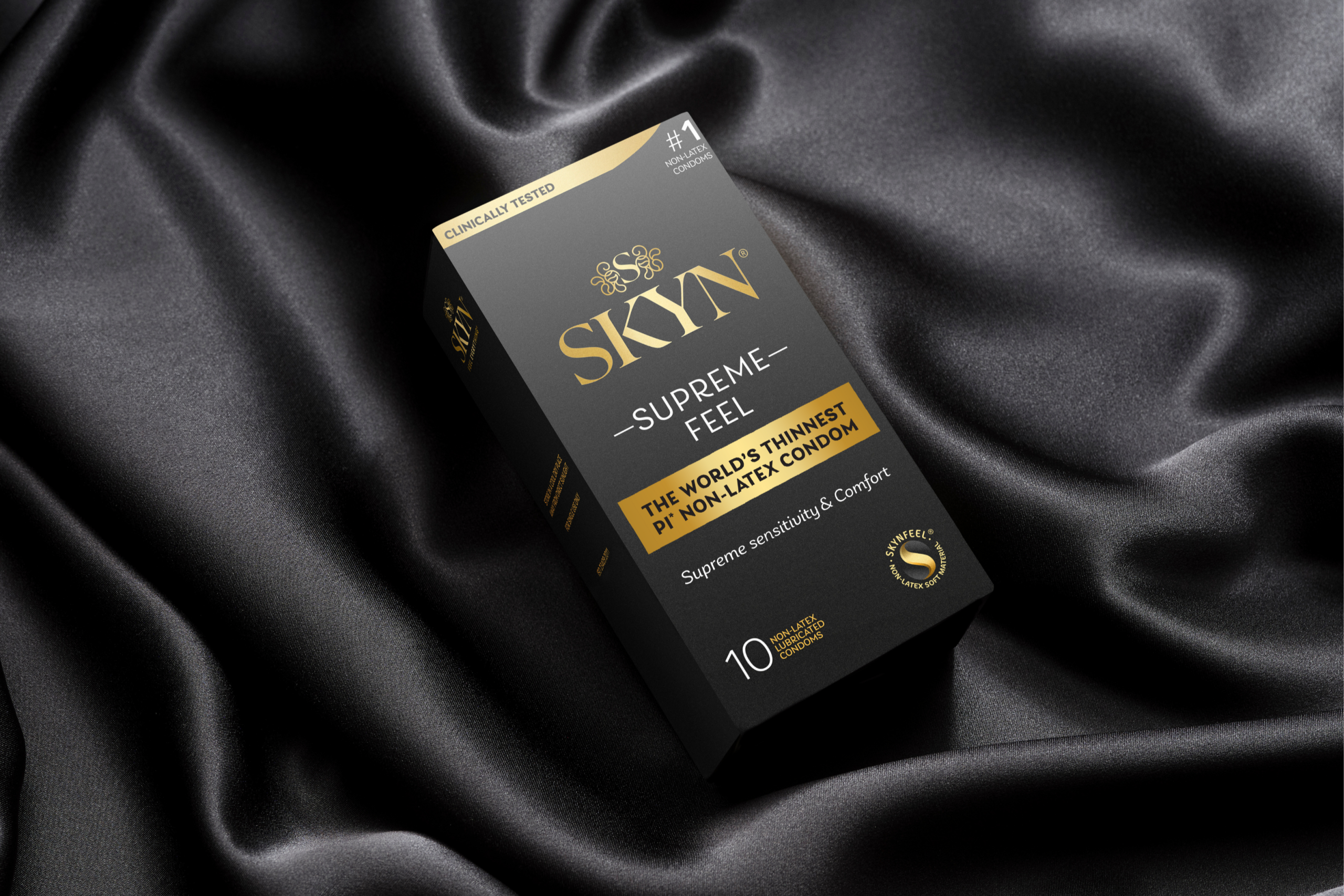
    LifeStyles Healthcare Australia has recently introduced its latest product, Skyn Supreme Feel, a non-latex, polyisoprene condom. According to the company, it’s the most ultra-thin condom of its variety currently available on the market.

    The Innovation Behind the Supreme Feel Condom

    The Supreme Feel condom is produced using a unique, patented material. This innovative polyisoprene material is completely latex-free, which makes it an ideal choice for those with latex allergies or sensitivity.

    Lifestyle Healthcare asserts that this non-latex synthetic material is not only soft and smooth but also boasts superior stretchability. This combination provides a more natural and comfortable experience, without compromising safety or effectiveness.

    The company has conducted comprehensive clinical testing to measure the performance of the Supreme Feel against other leading ultra-thin latex condoms. The results suggest that the Supreme Feel delivers a comparable, if not superior, performance.

    Availability and Price

    The Skyn Supreme Feel is now available for purchase at retailers across the country. The pricing remains competitive, despite the industry-wide uptick in condom prices speculated to be influenced by global events, such as the ongoing conflict in Iran.

    Questions & Answers

    What is the Skyn Supreme Feel condom made of?
    The Skyn Supreme Feel condom is made from a patented polyisoprene material. This non-latex synthetic offers a soft, smooth, and stretchy alternative to traditional latex.

    How does the Skyn Supreme Feel condom compare to other ultra-thin condoms?
    According to LifeStyles Healthcare, the product has undergone rigorous clinical testing against leading ultra-thin latex condoms. The results indicate that the Supreme Feel provides an equivalent or superior performance.

    Where can consumers purchase the Skyn Supreme Feel condom?
    The product is available at various retailers nationwide. Despite industry-wide price increases due to global events, LifeStyles Healthcare ensures that the Skyn Supreme Feel remains competitively priced.

  • Franchise Industry Jolted: Korean Supreme Court Orders Pizza Hut to Refund Billions Amid Unlawful Fee Controversy

    Franchise Industry Jolted: Korean Supreme Court Orders Pizza Hut to Refund Billions Amid Unlawful Fee Controversy

    The franchise industry in South Korea is preparing for potentially significant legal and financial repercussions following a recent Supreme Court of Korea mandate. The court has ordered Pizza Hut Korea to reimburse billions of won in illicitly charged fees to franchise owners. This verdict could potentially initiate a chain reaction of similar lawsuits across various sectors, including food, retail, and service chains.

    Reimbursement of ‘Margin Franchise Fees’

    Earlier this week, the court upheld previous rulings necessitating Pizza Hut to refund 21.5 billion won (approximately US$16 million), termed as “margin franchise fees”. These fees were amassed from 94 franchisees between 2016 and 2022.

    The controversial charges surrounded markups included in the prices of ingredients and supplies sold by the franchisor. The fees were declared unlawful because they were not explicitly agreed upon in the franchise contracts. This was in addition to separate royalties and advertising fees charged by Pizza Hut.

    Potential Implications of the Ruling

    Legal experts and industry officials have speculated that this ruling could have far-reaching effects. Around 20 brands, spanning major fried chicken, burger, and coffee chains, are presently facing lawsuits from franchisees demanding reimbursement of similar margin-based expenses. As store owners re-examine older contracts inked before the disclosure rules were strengthened, more cases are anticipated.

    The court discovered that Pizza Hut had been charging a fixed royalty of 6% of gross revenue in addition to advertising fees of around 5%. Moreover, the company was also making undisclosed profits on compulsory supplies. The franchise agreements did not explicitly authorize these margins, leading the court to conclude that the company had been unjustly enriched.

    Pizza Hut began disclosing margin rates in its information statements starting in 2020. However, the courts ruled that disclosure alone did not equate to consent. In the absence of clear disclosure for several years, judges accepted estimated rates derived from subsequent data. This was due to Pizza Hut’s failure to fully comply with the orders to produce documents.

    Concerns and Criticism

    Franchise operators have cautioned against universally applying the Pizza Hut precedent. Some have argued that different brands do not charge royalties or have varying contractual structures. Hence, the specific circumstances of each case should be evaluated independently.

    Moreover, South Korea had revised its franchise law in 2024 to mandate explicit disclosure of margin-based fees in contracts. This could potentially protect more recent agreements from challenges.

    Nevertheless, industry groups are apprehensive about a potential influx of retrospective claims targeting older contracts. Historically, many franchisors have relied on supply margins rather than transparent royalties for their profits. According to a government survey from last year, over 60% of franchisors either solely depended on margin fees or combined them with royalties.

    Critics argue that the ruling has brought to light the longstanding lack of transparency in the sector. Hwang Yong-sik, a business professor at Sejong University, has advocated for a gradual transition towards clearer, royalty-based models, which are more prevalent in the United States.

    At present, the verdict has increased uncertainty within South Korea’s franchise industry. Companies are assessing potential liabilities, and franchisees are contemplating whether the Pizza Hut verdict could provide a blueprint for recovering past payments.

    Questions & Answers

    What was the ruling of the Supreme Court of Korea in the Pizza Hut Korea case?
    The court ordered Pizza Hut Korea to reimburse billions of won in improperly charged ‘margin franchise fees’ to 94 franchisees, collected between 2016 and 2022.

    What are the potential implications of this ruling?
    The verdict could lead to similar lawsuits across various sectors, including food, retail, and service chains. Around 20 brands are currently facing similar lawsuits. More cases are expected as store owners reassess older contracts.

    What changes have been suggested for the franchise industry in South Korea?
    Some critics, including business professor Hwang Yong-sik, have called for a gradual shift towards clearer, royalty-based models. This would increase transparency in the franchise sector and align it more closely with practices common in the United States.

  • Chinese Firms Reign Supreme in APAC Investment Banking: Rapid IPO Rise and Offshore Bonds Fuel 2025 Success

    Chinese Firms Reign Supreme in APAC Investment Banking: Rapid IPO Rise and Offshore Bonds Fuel 2025 Success

    In 2025, prominent positions in Asian investment banking fee generation were predominantly filled by Chinese corporations, spearheaded by a surge in offshore bond issues and a remarkable initial public offering (IPO) boom in Hong Kong.

    Leading Positions Dominated By Chinese Companies

    Citic Securities, based in Beijing, took the lead in investment banking fees generated in the Asia Pacific region (excluding Japan) for 2025, raking in $1.45 billion. This figure represented a 5.8 percent share of the total fees generated across the region. Citic Securities was trailed in the ranking by fellow Chinese counterparts, including China Securities, Bank of China, China International Capital, and Guotai Haitong Securities. Notably, Morgan Stanley, headquartered in New York, filled the sixth slot.

    Chinese investment banks asserted their dominance throughout the industry’s regional positions. This success was largely credited to their robust performance in issuing yuan-denominated dim sum bonds and in orchestrating mainland listings in Hong Kong.

    The Global Market Share

    In a broader perspective, investment banking fees across the Asia Pacific region witnessed a 19 percent year-on-year increase in 2025, amassing a total of $24.9 billion. This accounts for 18 percent of the global total fees earned, in contrast to 55 percent from the Americas and 21 percent from Europe.

    The investment banking fees referenced in this report encompass a range of activities including equity capital markets, debt capital markets, mergers and acquisitions (M&A) advisory, and syndicated lending services.

    Questions & Answers

    Who was the leading generator of investment banking fees in the Asia Pacific region in 2025?
    Beijing-based Citic Securities led the pack in 2025, generating $1.45 billion in investment banking fees.

    What factors contributed to the success of Chinese investment banks in 2025?
    Chinese investment banks benefitted significantly from strong performances in the issuance of yuan-denominated dim sum bonds and mainland listings in Hong Kong.

    How much of the global total of investment banking fees did the Asia Pacific region account for in 2025?
    In 2025, the Asia Pacific region accounted for 18 percent of the total global investment banking fees.

  • Supreme Court Allows Reassessment of Vodafone Idea’s AGR Dues: A Win for 200 Million Consumers

    Supreme Court Allows Reassessment of Vodafone Idea’s AGR Dues: A Win for 200 Million Consumers

    Vodafone Idea (Vi) recently experienced a substantial win in the Supreme Court after the government agreed to revisit its request for additional adjusted gross revenue (AGR) dues from the corporation. The government’s decision is expected to be in accordance with the law.

    Government’s Interest in Vi

    Tushar Mehta, the Solicitor General representing the Union government, presented the case before a bench chaired by Chief Justice of India B.R. Gavai. Mehta noted an extensive shift in circumstances since the most recent AGR litigation involving Vi in the Supreme Court.

    He informed the Court of the government’s significant 49% equity investment in the company, suggesting that the government’s interests were now tightly intertwined with those of the company and, in turn, the public. He added that the company’s decisions directly affect its 200 million consumers, and the government intended to thoroughly examine any issues, such as over-invoicing, to ensure they are adequately addressed.

    Entering the “Policy Domain”

    According to the Court, the matter has transitioned into the “policy domain” due to the government’s substantial equity investment and the involvement of 200 million customers. The Court had no objections to the government’s decision to revisit its demand for additional AGR dues for the fiscal year 2016-2017 and to make an appropriate decision that would serve the larger public interest.

    Vi’s Appeal to the Supreme Court

    Vi had approached the Supreme Court to contest the additional AGR demand issued by the Department of Telecommunications (DoT) for the 2016-2017 period. The corporation argued that the liabilities had already been calculated and shouldn’t be altered or increased. It sought the Court’s dismissal of the additional DoT demand and requested a comprehensive reassessment and reconciliation of AGR dues up until FY 2016-17.

    Previous Rejections

    This most recent litigation follows only months after the Supreme Court denied earlier appeals by Bharti Airtel, Vi, and Tata Teleservices. These companies were seeking relief from paying interest on dues, penalties, and interest on penalties related to their AGR liabilities, citing significant financial constraints.

    In its May verdict, the Supreme Court labelled their pleas as “misconceived.” The Chief Justice had previously stressed the necessity for a conclusion in the AGR litigation. About a year ago, the Supreme Court rejected a curative petition filed by telecom companies, including Bharti Airtel and Vi, against the court’s October 2019 ruling that upheld the DoT’s move to recover approximately INR 92,000 crore in AGR from them.

    Questions & Answers

    What is the government’s stake in Vi?
    The government holds a significant 49% equity investment in Vi.

    What significant shift in circumstances was noted by the Solicitor General Tushar Mehta?
    Tushar Mehta observed a major change in circumstances since the last AGR litigation involving Vi in the Supreme Court, particularly the government’s large equity investment in the company.

    What was Vi’s argument to the Supreme Court against the additional AGR demand?
    Vi argued that the liabilities had already been calculated and should not be altered or increased. The company sought a comprehensive reassessment and reconciliation of AGR dues up until FY 2016-17.

  • All behind the new (fake) “Supreme” store opening in Shenzhen

    All behind the new (fake) “Supreme” store opening in Shenzhen

    There are 11 Supreme stores in the world: two in New York, one in Los Angeles, one in London, one in Paris, and six around Japan. There are none in China. So what’s the deal with the new “Supreme” store opening in Shenzhen, China that no one knows about?

    The fake store has gone to extremes to replicate the original Supreme store experience, with identical interior fixtures, hip-hop playing, and even the same plastic bag. The only giveaway is the small logo affixed to the end of the Supreme mark, which may look like a registered trademark logo to the untrained eye, but upon closer inspection is a custom mark that reads “NYC,” further differentiating the counterfeit brand from the bona fide bogo. This mark extends to everything from the store signage to even the hangers.

    Why would a bootleg brand go through the trouble of adding an extra, inaccurate detail? Probably because the label owns the copyright to the “Supreme NYC” name in China.

    To clarify China’s unusual legal stance on trademarks, we spoke to lawyer Julie Zerbo of The Fashion Law. “In addition to the Chinese government’s relatively lax stance on instances of infringement of non-native [foreign] brands’ intellectual property rights by native [Chinese] entities, the way that trademark law operates in China allows for instances like [the fake Supreme store],” Zerbo explains. “Unlike in the United States and most other countries, where trademark rights are gained by actual use of a trademark, in China an individual gains rights merely by being the first to file a trademark application.”

    In other words, if you’re fast enough to register a trademark before anyone else, the trademark is yours.

    Unlike real Supreme stores, this one currently sells only hoodies. The wares come in an oatmeal gray, several colorblocked versions. Supreme’s “motion logo” hoodie is also aped in black and white versions. The retail price is 880RMB—roughly $130 USD. The price is pretty steep for fake goods, but it appears the brand is trying to peddle its Supreme NYC label as a middle-of-the-road alternative between expensive resell prices on legit supreme, and low-quality knockoffs that generally cost half the price.

    There are even more curious differences in how Supreme NYC brands its goods. Unlike Supreme’s 100% cotton fleece hoodies manufactured in Canada, the dubious brand makes its hoodies from a cotton/polyester blend, and denotes the clothing as manufactured in China.

    What do you think of this example of counterfeit culture? Let us know in the comments.

  • Supreme and Nike sneaker collaboration is launched

    Supreme and Nike sneaker collaboration is launched

    Supreme and Nike have teamed up to release one of the highest-profile sneaker collaborations this year.

    The cross-branded release updates Nike’s road racing Air Streak Spectrum Plus, originally released back in 2003, with a new version in black with lime and blue flames “Black/Volt”. Another variant is the original white and red colourway “White/Habanero-Red”.

    Both designs are upgraded with a mesh upper, Phylon midsole, and a mesh tongue carrying the Supreme logo. The insoles are dual branded.

    The Supreme x Nike Air Streak Spectrum Plus Spring 2018 collection will be released on June 14 (June 16 in Japan) exclusively at Supreme stores and on its website.

  • James Jebbia is Menswear Designer of the Year at 2018 CFDA Awards

    James Jebbia is Menswear Designer of the Year at 2018 CFDA Awards

    Supreme’s James Jebbia is one of the big winners, walking away with the Menswear Designer of the Year award.

    Jebbia was up against strong competition in the category, beating out Raf Simons for Calvin Klein, Virgil Abloh for Off-White, Thom Browne, and Tom Ford.

    Since 1981, the CFDA Fashion Awards have recognized those making the biggest impact in the fashion industry every year.

    Notable winners this year included Ralph Lauren (Members Salute), Kim Kardashian West (Influencer Award), British Vogue‘s Edward Enninful (Media Award), and Naomi Campbell (Fashion Icon Award).

    Calvin Klein’s Raf Simons walked away with the Womenswear Designer of the Year gong.

  • supreme’s new brooklyn store features a giant skate bowl

    supreme’s new brooklyn store features a giant skate bowl

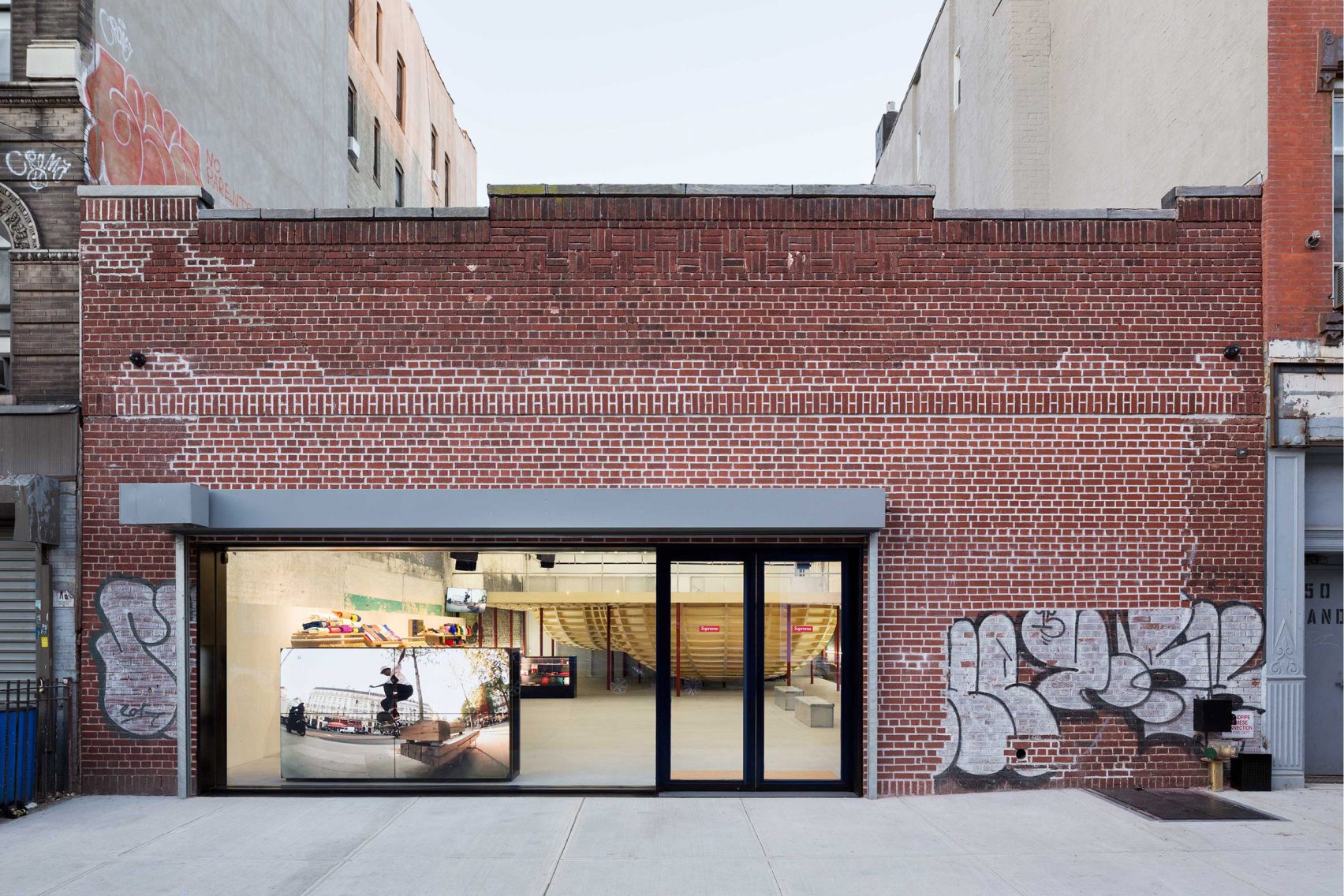
    The new Supreme Brooklyn store features a free-standing skate bowl, merging leisure and retail for the famous streetwear brand.

    The space was designed by New York firm Neil Logan Architect and is located inside a retrofitted warehouse, once used for parking delivery trucks, as reported.

    As Dean Kaufman’s photographs show, the architects left the brick walls exposed and large industrial-style skylights bathe the space in natural light.

    Supreme is an edgy skate, fashion and apparel brand founded in New York in 1994, which gained massive international brand exposure in a collaboration with Louis Vuitton last year.

    The Supreme Brooklyn store store-cum-skatepark spans 2938sqft, with an open-plan retail area at the front, and a section for storage and skateboarding towards the rear.

    The free-standing skate bowl was designed by Steven Bladgett of American art collective Simparch and custom-built with Baltic birch plywood. The structure is supported by a series of red poles around its perimeter, providing enough height for skateboarders to drop into the bowl and for fitting rooms to be housed underneath.

    Images of the store can be viewed below :


  • LVMH hits up record revenue in 2017

    LVMH hits up record revenue in 2017

    It has been another record year for luxury products group LVMH Moet Hennessy Louis Vuitton.

    Revenue increased by 13 per cent year on year to reach €42.6 billion (US$52.9 billion), while organic revenue growth was 12 per cent.

    All business groups recorded double-digit organic growth with the exception of wines and spirits, where second-half growth was hit by supply constraints.

    Profit from recurring operations reached €8.2 billion, up 18 per cent. Operating margin reached 19.5 per cent, while the group share of net profit was €5.1 billion, growth of 29 per cent.

    Describing the performance as “excellent”, LVMH chairman/CEO Bernard Arnault says the record year was partly because of a buoyant environment but above all a result of the creative strength of the group’s brands “and their ability to constantly reinvent themselves”.

    Key highlights of last year listed by the group include:

    ● Record revenue and profit from recurring operations.

    ● Growth in Asia, Europe and the US.

    ● The success of both iconic and new products at Louis Vuitton, “whose profitability remains at an exceptional level”.

    ● The acquisition of Christian Dior Couture.

    ● Growth at Fendi and Loro Piana.

    ● The first year of integration of Rimowa luggage.

    ● Strong momentum at Parfums Christian Dior, driven by product innovation.

    ● An excellent year for Bulgari and good progress at Hublot and Tag Heuer.

    ● Growth at Sephora.

    ● Free cashflow of €4.7 billion, up 20 per cent.

    “Significant” growth in China helped Hennessy cognac volumes grow by 8 per cent, with 7.5 million cases shipped despite the second-half supply constraints.

    In fashion and leather goods, key events of the year were products arising from collaborations with artist Jeff Koons as well as the Supreme brand, the launch of the brand’s first smartwatch and the inauguration of the Maison Louis Vuitton Vendome in Paris.

    There was rapid growth in Asia for the perfumes and cosmetics segment, and growth was particularly strong in Asia for Bulgari. Asia again shone in the selective retailing group with Sephora continuing to gain market share.

    LVMH says the year was a positive turning point for DFS, with new stores in Cambodia and Italy continuing to grow sales.

    Despite unfavourable currencies and geopolitical uncertainties, LVMH says it is well equipped to continue its growth momentum across all business groups this year.

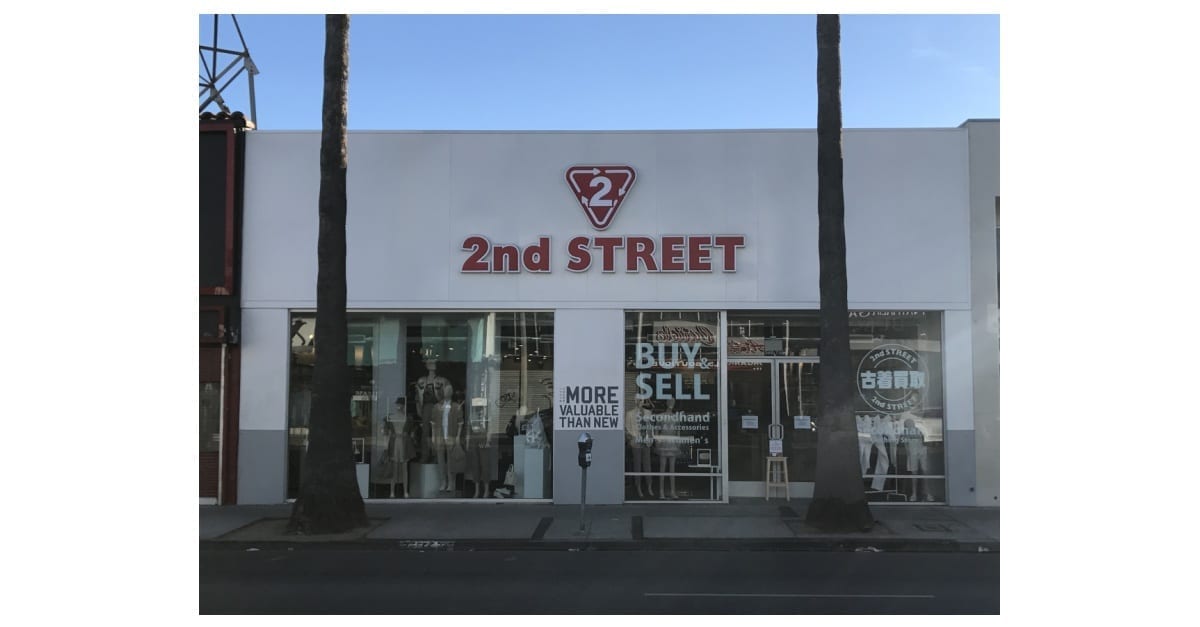
  • 2nd STREET USA to Launch Its First US Store

    2nd STREET USA to Launch Its First US Store

    Japanese used-clothing market 2nd Street USA has set up shop in the US.

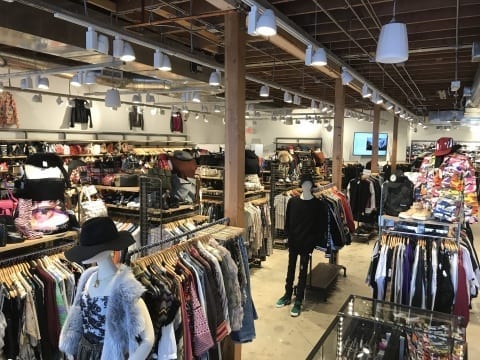
    A subsidiary of Tokyo-based GEO Holdings, 2nd Street USA has opened on Melrose Avenue in Los Angeles. Selling and buying goods, it offers men’s and women’s clothing as well as accessories.

    Among the assortment are designer labels like Burberry, MCM and Supreme, along with “big-in-Japan” brands A Bathing Ape, Comme des Garçons and Porter. There is also Kurofine, a clothing line produced by Kyoto Montsuki which recycles used clothing items with a special dyeing process.

    It is 2nd Street’s first venture outside of Japan, where it has 578 stores. The company plans two more stores for California by March next year, and aims to expand to 10 stores in the US by 2020.

    CEO Masahiro Kikuchi says all goods are carefully chosen for quality, and the store offers attentive service.

  • E-commerce trend as highlight at Luxury China report

    E-commerce trend as highlight at Luxury China report

    Luxury brands have started embracing e-commerce in China, says the Luxury China report released by digital marketing company L2.

    It says 91 per cent of luxury brands in China had gone online by June last year, more than double the 43 per cent using e-commerce 12 months earlier.

    This comes as Chinese millennials and generation Z are set to become the dominant driver of luxury consumption over the next decade, according to the 2017 Chinese Luxury E-Commerce Whitebook report from high-end e-commerce platform Secoo and data company Tencent.

    The average age of the online shopper of luxury goods in China is now 25, 15 years younger than the average age of European luxury consumers, and 20 years younger than those in the US. These young consumers are stepping up their buying of minority brands – as opposed to high-profile labels – in a quest for more personalised and less mainstream experiences. For example, the streetwear trend has gradually become more mainstream, leading to more young people embracing such brands as Supreme and Vetements.

    “Consumers are no longer too loyal to one specific brand, but want luxury brands that speak for themselves,” says a Deloitte global luxury consumption survey about millennium consumers. “They are more willing to pay attention to trendy brands with stories.”

    Secoo has announced partnerships with niche brands including Corto Moltedo, Maison Kistune and Mr&Mrs Italy, which has been popularised by a South Korean TV series. Corto Moltedo is known for its entirely handmade bags.

    Corto Moltedo and Mr&Mrs Italy have signed exclusive co-operation agreements with Secoo, and all their collections are sold simultaneously across the world at the same prices.

  • Supreme to become the coolest streetwear brand

    Supreme to become the coolest streetwear brand

    It was 1994, when James Jebbia opened the doors to his Supreme skate store on Lafayette Street in downtown Manhattan, in its own way also an incredible NY moment.

    Without realizing it, Jebbia managed to bottle the energy of the city and the style of the streets with his skate and fashion brand.

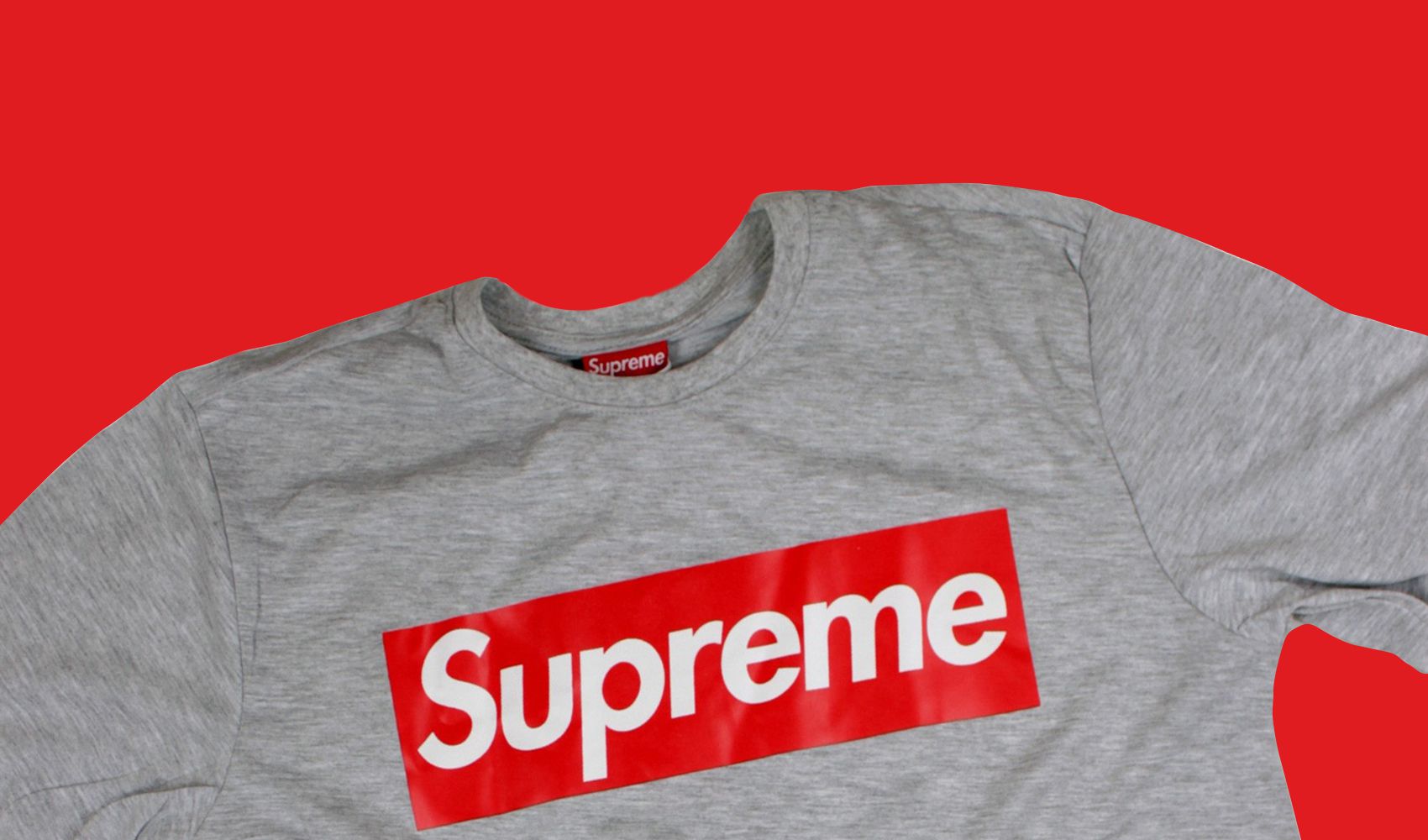
    Throughout its 18 years, Supreme has defined and refined what it means to be cool. The brand’s effortless logo – a Barbara Kruger-influenced red box surrounding a white block typeface – is an iconic emblem for a worldwide gang as recognizable as the LV Monogram or Hells Angels’ rocker for those who know.

    Jebbia’s personal style is understated, neat and crisp, today’s outfit being a grade-four buzz cut, worn with a button-down Oxford shirt and dark jeans. His accent has a transatlantic shade, yet is still resolutely British. Born in the States to a British mother and American father who worked in the US Air Force, James and his family moved to Britain when he was just 18 months old, before he gravitated back to New York aged 19.

    “I came over here with $100; it was 1983 and I just ended up staying. New York at that time was very inexpensive and it was very easy to get a job. We lived on Staten Island and you could get cheap rent. It was a good time to be in New York,” James said.

    Sitting behind his desk in the Supreme office in Soho, James’ work space is bright and airy, with KA WS artwork and a framed photo of the Godfather of Soul, James Brown, sitting on the bonnet of his silver ghost Rolls Royce with an MVP license plate hanging on the walls. On the floor in the corner sits a collection of new boot samples and a pair of legendary rapper and graffiti artist Rammellzee’s 3-D tracers pieces.

    James’ office is located above the space where he first found work in fashion: a store then known as Parachute, where he was taken under the wing of its owner, Morgan. “He was a good boss, a real mentor. Parachute was a bit futuristic, it was kind of cool; Gary Numan came in and Michael Jackson wore the leather jacket with the big epaulettes. It was a great time but I just wanted to do more,” he told GQ.

    With his girlfriend at the time, James started a market stall on Broadway and West 4th, making and selling backpacks. In 1989, he opened his first seminal store, Union, on Spring Street.

    The key stores then around the Downtown area were X-Large, Stüssy, Triple Five Soul and Union. While James was trying to stock Stüssy, a chance meeting with Shawn Stüssy led to James running the Stüssy store on Prince Street. “I wouldn’t be doing what I’m doing without what Shawn has done,” James admitted.

    Shawn Stüssy was the forefather of what would become streetwear as we now know it.

    With an eye on the skate and surf cults, Shawn created a style with Stüssy that was coveted globally not just as clothing but as a way to join Shawn’s posse, the Stüssy World Tribe. Setting up teams in NY, London, LA and Tokyo, his collaborators included the brains and brilliance of designers Paul Mittleman, Hiroshi Fujiwara and distributor Michael Kopelman. From hip-hop kids to ravers, surf dudes and grebos, they were all drawn to Shawn’s baggy denims and signature hand-written emblems.

    When Shawn moved on from Stüssy and sold his share of the business, Jebbia made the decision to launch Supreme.  Everybody who worked in the store was a skateboarder. And there were a lot of young people starting to skate and they would gravitate towards the store because of the crew who worked there, so the store became like a hangout.

    The architecture of the Supreme stores and their sales assistants have always played a crucial role in establishing the brand identity, with the staff bringing the ubiquitous, middle-finger-to-the-world attitude. The shop kids were gnarly and raw and generated an intimidating, real vibe where skate videos played all day and the freshest hip-hop mixtapes blasted -out on to the sidewalk. But such intimidation never discouraged customers from visiting.

    Gravitating to the store were a host of locals and downtown rebels. There was Justin Pierce (Casper in Kids), skateboarders including Harold Hunter and Jason Dill, artist and illustrator Gio Estevez (who was also the store manager) and Aaron Bondaroff, CEO of the anything brand, co-founder of the OHWOW art collective and model in this feature.

    There was also the art and photography crowd, such as Ari Marcopoulous, Kenneth Cappello and Terry Richardson. Ari and Terry’s photography established an identity for Supreme, their images becoming synonymous with the brand. Ari’s documentation of the mid-Nineties scene forms a collaged backdrop at Supreme’s stores in Tokyo and London, while Terry and Kenneth have shot lookbooks for the brand and fly-poster campaigns and T-shirts that have seen the legendary box-logo tee worn by Lou Reed, Kermit the Frog, The Diplomats, Raekwon, Lady Gaga, Mike Tyson and the latest with rappers Three 6 Mafia.

    The word-of-mouth excitement among guys interested in stylish clothes is – in this day and age – breath-taking to see. The customers know that each product comes in such limited quantities that once a particular item has gone that is it.

    The Supreme look is delivered between the styles continuously appropriated by the hip-hop and skate worlds: Ivy League, collegiate, military and sports­wear themes, denim, checks, plaids and stripes, alongside a classic workwear influence. The collection weighs in with a referenced knowledge that goes into fabric, cut, details and durability, making each piece often feel and look like perfectly preserved vintage.

    Over the years, Supreme has collaborated with (among many others) Levi’s, Vans, The North Face, Nike, Comme Des Gargons, Adam Kimmel, Malcolm McLaren, A Bathing Ape and W Taps on their fashion – and skateboard graphics with Damien Hirst, Jeff Koons, Takashi Murakami, Harmony Korine and most recently Jake and Dinos Chapman.

    As James expands the business with additional stores around the world, (LA, London, Nagoya, Osaka, and Fukuoka, with the third Tokyo store recently opening in Shibuya), he is quick to establish that his ambition for his company is to maintain its integrity. “If I was to stop working tomorrow, I would be like, OK. I did what I wanted to do; I did what I liked, what I really believe in, and I’m fine with that. In an ideal world, we can just remain a small but tight business that grows naturally.”

    James’ philosophy behind Supreme is straightforward: “We just want to make really great-looking clothes that are well-made, fit well that you can skate in.”
  • Louis Vuitton x Supreme draws queues

    Louis Vuitton x Supreme draws queues

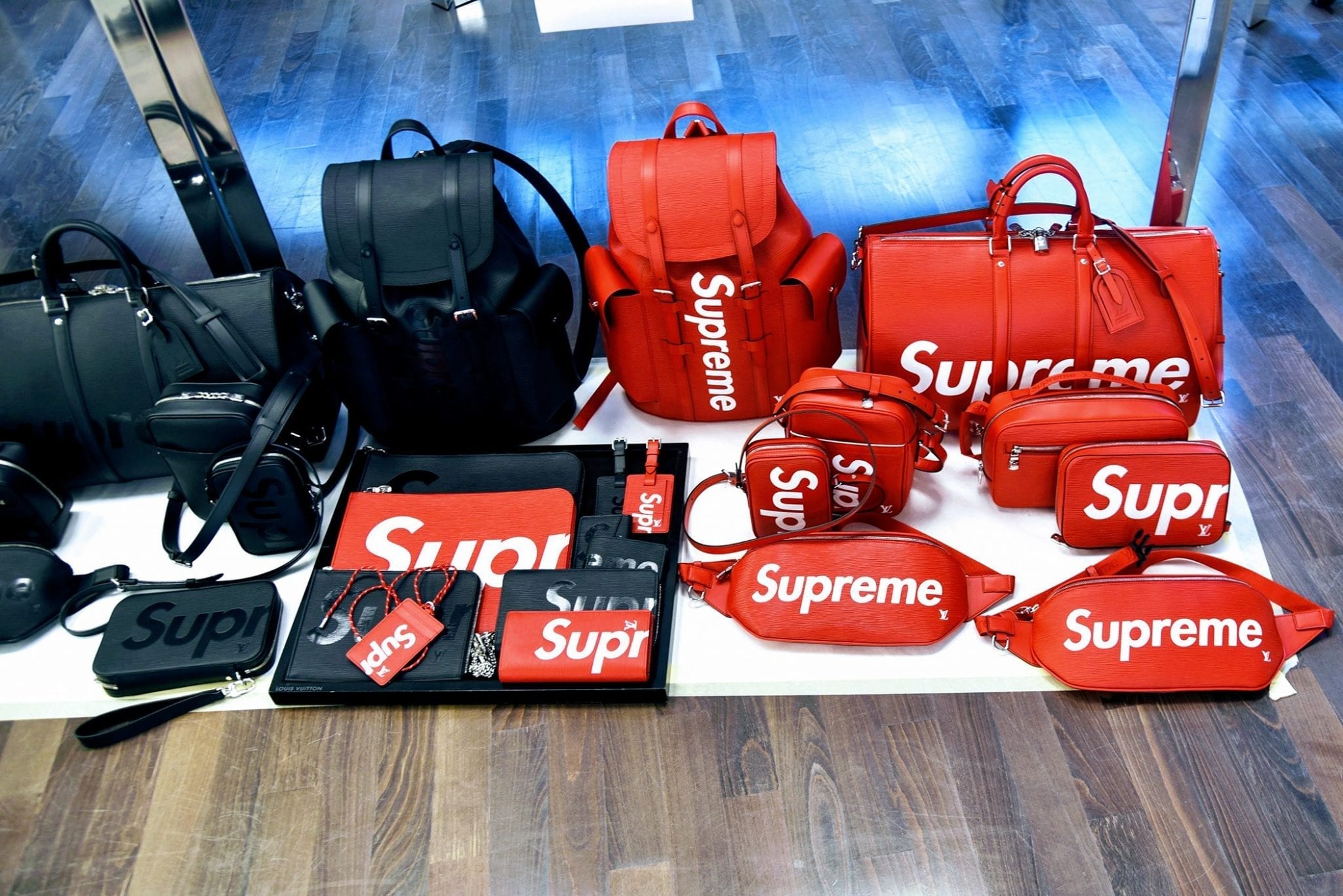
    Louis Vuitton’s heavily-hyped collaboration with streetwear label Supreme has gone on sale in Hong Kong – and elsewhere around the world – with long queues.

    The products in the Louis Vuitton x Supreme collection range from a HK$565,000 luxury red trunk and a $445,000 skateboard to more affordable items like sneakers – and even a bumbag at $18,200.

    Such was the demand for the streetwear range, Louis Vuitton organised appointments for would-be buyers, limiting each person to one, non-transferable visit and a maximum purchase of two items.

    In Singapore, people queued for more than 48 hours, with some shoppers hiring queue-sitters and swapping shifts to be sure of getting in the door. On Friday, there were still short queues outside some Louis Vuitton outlets in Hong Kong. Louis Vuitton customers wanting to browse other items were allowed in via other entrances.

    The Louis Vuitton x Supreme range – which has a strictly limited volume – was pre-launched on June 30 in Beijing, Miami, Seoul, Los Angeles, Tokyo and several other cities via pop-up stores, which have since closed.

    In China, Louis Vuitton launched a WeChat campaign for fans to register to get their hands on the collection.

    Despite Louis Vuitton’s efforts to limit purchases per customer, the Louis Vuitton x Supreme items are already being resold online at a premium. A box logo hoodie was reportedly being advertised at US$25,000.

  • Louis Vuitton and Supreme to host first collaboration pop up in Sydney

    Louis Vuitton and Supreme to host first collaboration pop up in Sydney

    The long-awaited collaboration between Louis Vuitton and Supreme has finally come, and the two labels announced the location of the first collaboration pop up shop.The LVxSupreme collaboration debuted in January at the Louis Vuitton fall 2017 show.
    Louis Vuitton and Supreme fans in Sydney, Australia will be happy to hear that the world’s first LVx Supreme pop up will be located at 95 Roscoe St in Bondi Beach, and the pop up will be open from June 30 through July 13, 2017.

    The fashion world went into frenzy in January when the LVxSupreme collaboration collection debuted at the Louis Vuitton fall 2017 show in Paris.

    Rumors of a New York City pop up began circulating and looked real for a period of time, until a Manhattan community board unanimously voted against the idea, citing preparedness concerns. The board felt that those manning the event would not be ready for the number of shoppers that would line up for the pop up, which was originally planned to be located at 25 Bond Street.

    Since the possibility of a New York City pop up has been shut down, Sydney will host the first pop up for the collaboration, and more pop up locations are to be announced soon.