Retail News CRM

Tag: surf

  • Australia’s Surf Giants Face Competitive Surf as Retail Powerhouses and Newcomers Ride the Wave

    Australia’s Surf Giants Face Competitive Surf as Retail Powerhouses and Newcomers Ride the Wave

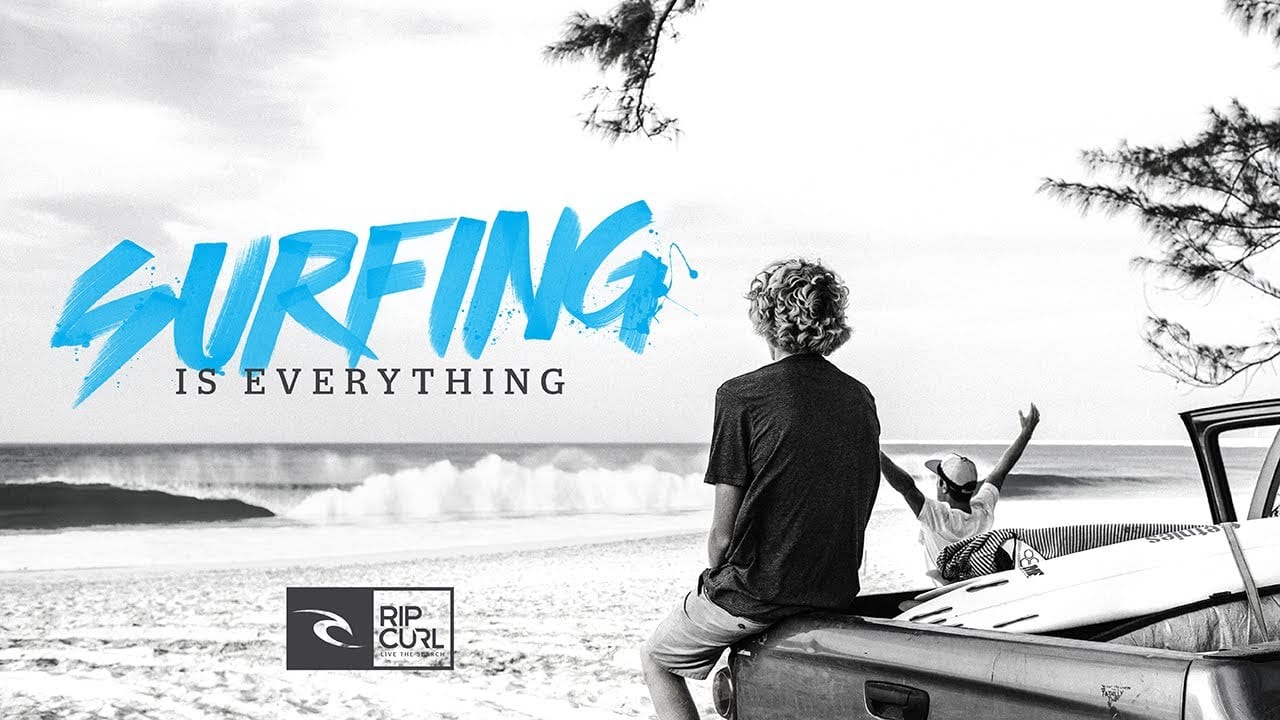
    As surfers hit the waves off Torquay on August 17, the challenges that lie ahead for the Australian surfing industry seem as vast as the ocean itself. Among the leading names in surfing gear—Rip Curl, Quiksilver, and Billabong—there is an unmissable concern: how to appeal to both die-hard surf enthusiasts and the casual fans of the surf lifestyle.

    Chasing the Cool Factor

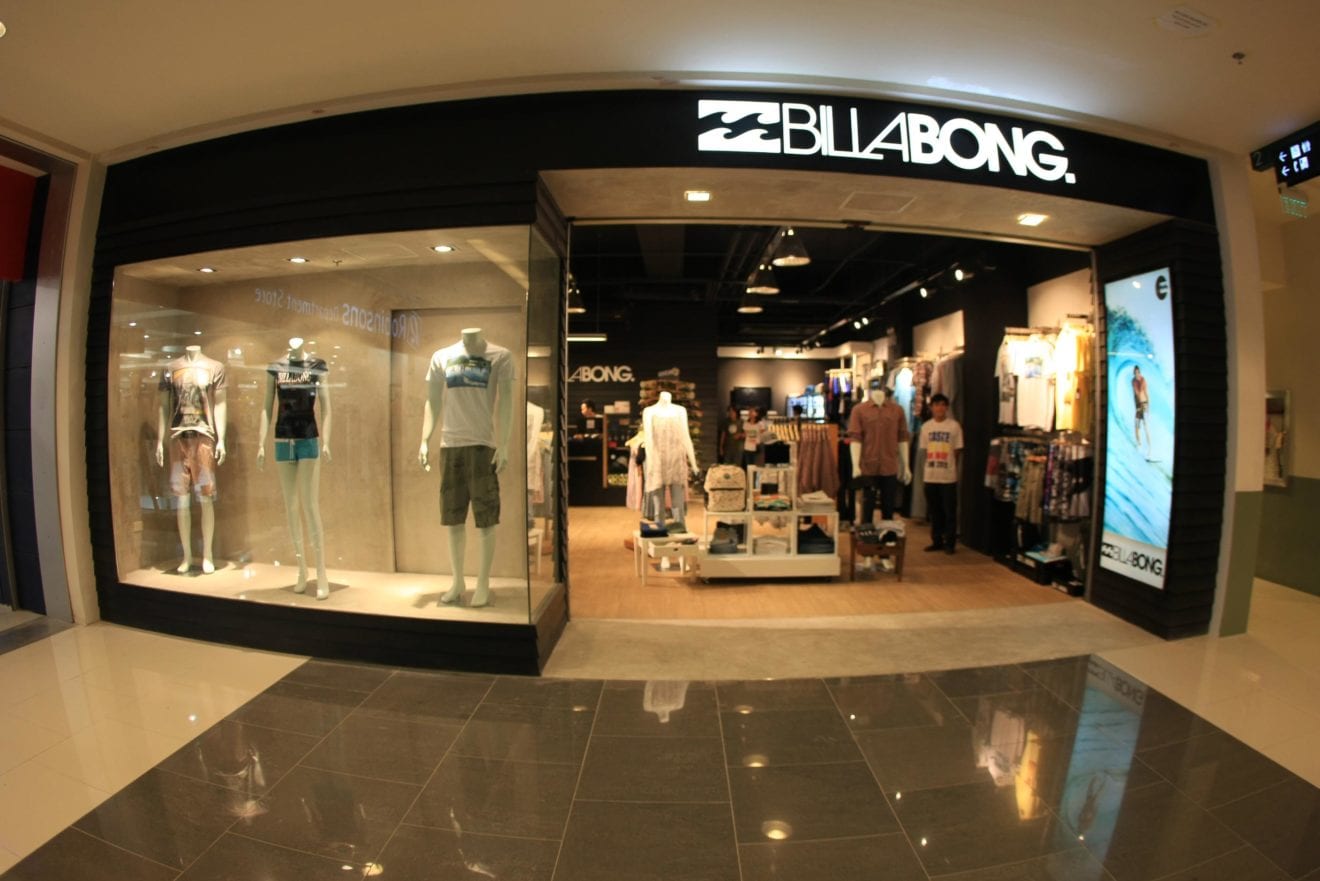
    These iconic brands find themselves at a crossroads, pivoting their strategies to remain relevant in a rapidly evolving market. Some analysts suggest that Rip Curl, Quiksilver, and Billabong are becoming more synonymous with shopping malls than with the beaches they once epitomized. As their products fill shelves in retail outlets across Asia, the surf culture they represent risks losing its edge and allure.

    Market Dynamics in Asia

    In Asia’s burgeoning retail landscape, these brands are not just competing against one another but also with local surfwear companies that have learned to tap into regional trends. The challenge is exacerbated by a consumer base that is increasingly discerning, preferring authentic experiences over mere labels. Traditional marketing strategies, once effective, now seem inadequate in an environment where social media influence reigns supreme.

    Rediscovering Authenticity

    To combat this dilution of identity, brands are attempting to strike a dynamic balance between maintaining a hardcore surfing ethos and catering to the mainstream consumer. Limited-edition product lines, collaborations with local artists, and a focus on sustainability are some of the strategies being employed to reconnect with their roots and recapture that coveted “cool” factor. After all, who could resist a surfboard made from recycled materials, adorned with a stunning local design? That’s the kind of storytelling that can reel in consumers.

    The Path Forward

    Retail experts suggest that understanding the different segments of the audience—serious surfers versus aspirational shoppers—will be critical as these brands navigate their next moves. As competition heats up in both retail spaces and social media, only time will tell if the big three can adapt without losing their soul. Surfers, after all, crave authenticity. And let’s be honest, surfing gear that screams “beach vibes” yet looks great in a café doesn’t hurt either!

    Questions & Answers

    How are traditional surf brands adapting to changing consumer preferences?
    These brands are introducing limited-edition collections and collaborating with local artists to maintain relevance while staying true to their roots.

    What challenges do these brands face in the Asian market?
    They are vying for attention not only from one another but also against emerging local companies tapping into regional trends, which puts their traditional marketing strategies to the test.

    Is there still a market for hardcore surfing culture among casual consumers?
    Indeed, balancing appeals to both hardcore surfers and casual fans is essential for growth; authenticity remains a vital piece in keeping the surf culture alive.


  • Samsung finally brings one of the most requested features to its Internet browser

    Samsung finally brings one of the most requested features to its Internet browser

    Even though it misses some important features, Samsung’s Internet browser is becoming better with each update. We reported early this month that Samsung is testing a couple of features with the beta version of the browser, but there was no way to tell when exactly these would be made available to everyone.

    It looks like today is the day that Samsung Internet users are getting what we knew it came since the beginning of the month. Spotted an MSPU reader, the update brings one of the most requested features: the ability to move the URL bar at the bottom of the screen.

    Coincidentally, the UI layout strongly resemble that of the Safari in iOS 15, but the important thing that the feature is there, and Samsung users can take advantage of it. But this is not the only change included in the latest update.

    The official changelog also reveals a few other important features that either improve the usability or security of the browser. For example, the Smart Anti-Tracking feature has been enhanced to block tracking by using small pixel images. The same goes for the search experience in URL bar, which now provides search suggestions while you enter search keywords into the URL bar.

    If you own a Samsung smartphone, you should be able to download the latest update via the Galaxy Store, but the app is listed in the Google Play Store as well.

  • TRAI releases consultation paper on satellite gateway

    TRAI releases consultation paper on satellite gateway

    Telecom Regulatory Authority of India (TRAI) has extended an invitation to industry stakeholders to gather inputs on a framework for satellite gateways in India. This will facilitate the launch of satellite communication services in India.

    Prior to this, the Department of Telecommunications (DoT) has requested TRAI to furnish recommendations on licensing framework for establishing a satellite gateway. DoT has requested TRAI to address existing limitations in satellite gateway operations as there is no provision regarding the use of gateway by service providers established by a satellite constellation operator.

    The regulator is called to look into factors and make recommendations on entry fee, license fee, bank guarantee, NOCC charges, and other issues which may concern LEO, MEO and HTS systems.

    TRAI has since released a consultation paper to garner inputs by 13 December.

  • Time is running out for Google to fix frustrating Chrome OS bug found on Android apps

    Time is running out for Google to fix frustrating Chrome OS bug found on Android apps

    Google is racing against the clock to get a bug fix out in time because in just three days, Chrome OS 87 is to be released on the Stable channel. Android apps have never fared well on Chrome OS and now this bug is greatly slowing down the input speeds that a user deals with when typing on the keyboard while running an Android app on Chrome OS 87. The keyboard input slows down to a crawl forcing the user to wait for the previous line he typed to hit the screen before typing the next line. The issue has been affecting users on the Beta, Dev, and Canary channels on Chrome OS 87.

    Even though the slowdown doesn’t affect the Stable channel at the moment, that could change because after the aforementioned three days, Chrome OS 87 starts running on the Stable channel bringing the keyboard input bug to those who are used to a relatively bug-free experience on that channel. Chrome OS users have been complaining about the issue on the Google support page. One member with the user name of Mattev writes, “Some apps are very slow to type into. What I mean is, if I’m typing stuff like this, the characters lag and take a few seconds to appear on the screen. The Chrome browser works fine. The problem happens in other apps like Opera browser. I’m on the beta channel. Another problem is that when hovering over a tab in Chrome browser, some other tabs flicker light/dark. I don’t know if it’s related.”

    A Diamond product expert named Jim Dantin, considered to be at the top of those helpers that browse through Google support communities seeking to answer questions, had some solutions for a short-term fix. He wrote “The usual cause of “slow” issues, is one or more extensions causing problems, flags that you may have altered, too many tabs open, you haven’t completely turned off your Chromebook recently, you are low on storage space, or you have too many extensions installed.

    • Reboot your Chromebook, don’t just close the lid, every night.
    • Reset all flags. Flags are really intended for the Google engineering/development team, not end users.
    • Delete or disable unneeded extensions. Or, do a Browser Reset to disable them all.
    • Keep the number of open tabs to a minimum, especially if you are doing something where performance matters.
    • Make sure that you have adequate (more than just a few GB) of available space on your internal storage.

    Check your internet speed. I like speedof.me or speedtest.net as a test. Compare to what you should be getting from your internet provider.”

    There is no question that creating documents or just generally typing with this latency bug is frustrating. Last month, Chrome OS users had another issue taken care of. To make sure that Android apps can be readable on Chrome OS, they were universally scaled to be 25% larger. The problem with this is that in the process of scaling these apps, content appears to be too big on the screen resulting in the cutting off of content. Another problem was that users with a digital pen discovered that the tip of the pen was not matching up with where the “ink” was starting from on the display. In other words, the “ink” trailed the tip of the digital pen making it hard for users to draw since the lines were off to the bottom right. Users would be forced to guess when they put the pen’s tip on the display, where the actual drawing was going to show up. And since there was no way to shut off uniform scaling, some workarounds were suggested such as the use of an app called Activity Launcher.

    1) Install the app, launch it, and search for “display.” 2) Click on com.android.settings. DisplaySettings to launch hidden display settings.3) Click on “Advanced” and then “Screen Size.” 4) Move the display size to “small” bymoving the slider to the left.You must repeat these instructions from step two to four every time you log out or restart your Chromebook. Following this workaround will return the apps to the way they looked before uniform scaling was first tried on Chrome OS.

  • Kathmandu shareholders decided to acquire Rip Curl

    Kathmandu shareholders decided to acquire Rip Curl

    More than 99.9 percent of Kathmandu shareholders voted to approve the outdoor-wear retailer’s acquisition of surf brand Ripcurl at a special shareholder meeting on Friday.

    According to the business, the acquisition’s completion is expected to occur on 31 October 2019 following the vote.

    “Rip Curl is an iconic and authentic global action sports brand,” Kathmandu chairman David Kirk said at the meeting.

    “Similar to Kathmandu’s core outdoor products category, the surf products market has a stable, committed core customer, with steady growth in participation and spending.

    “The acquisition of Rip Curl is an opportunity for Kathmandu to considerable diversify its geographic footprint, channels to market and seasonality profile, and creates a NZ$1 billion outdoor and action sports company anchored by two iconic Australasian brands.”

    The acquisition will further broaden Kathmandu’s roster of brands, after it acquired Oboz footwear for $97 million in April 2018.

    It also gives the outdoor group a foothold in the South American, Middle East and South African, as well as South-East Asia markets, where neither Kathmandu or Oboz trade.

    Kathmandu’s intention is to retain Rip Curl’s brand identity and cultural values, allowing business leaders to retail operational ownership of the business.

    Kathmandu initially announced the acquisition in early October, which was funded through a combination of $138 million from institutional investors and $220 million in new debt, as well as the placement of $31 million in new Kathmandu shares to the founders and CEO of Rip Curl.

  • Wave House moves away from Sentosa after 10 years

    Wave House moves away from Sentosa after 10 years

    Wave House Sentosa is set to celebrate its 10th year anniversary with a line-up of activities and promotions – and a new home.

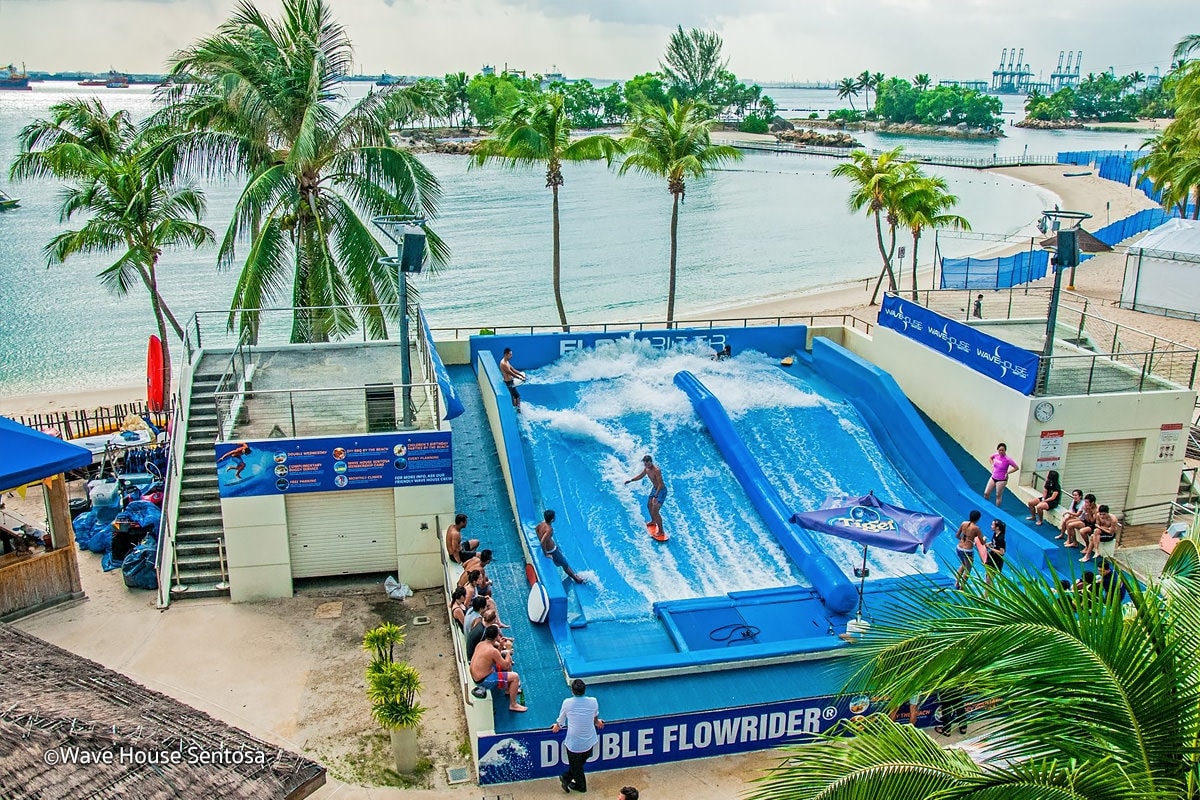
    Wave House was one of Singapore’s first integrated surfing-and-lifestyle destinations. The facility, which includes an enclosed surfing space, eatery and surfwear store, will be relocating to the main island of Singapore after 10 years on Sentosa.

    Wave House made a splash in Singapore back in October 2009, featuring high-adrenaline flow boarding and 10-foot Flowbarrel wave rides. A large population of local Singaporean surfers, skaters and skimboarders flock to Wave House Sentosa every year.

    “We are proud to celebrate a decade as Wave House Sentosa has always been the top location choice for surfers as well as the ultimate beach front dining, drinks, parties and event space venue in Singapore,” said Wave House Sentosa cofounder Tan Xu Teng.

    “Wave House Sentosa has established a reputation for delivering world-class thrills with a Singapore touch. Over time, it has also evolved into an iconic lifestyle attraction and recreation space for both locals and tourists.”

  • Nike planning to sell off Hurley surfwear brand

    Nike planning to sell off Hurley surfwear brand

    Nike is considering the sale of its Hurley surfwear brand, according to a Reuters report.

    A general downturn in the sector has pushed other industry players within the space into significant difficulties, including rival brand Quiksilver – which filed for bankruptcy in 2015. Nike’s potential sale of its Hurley brand is reportedly likely to be a reaction to the same trends and an indication that the surfwear segment is not showing signs of recovery.

    “The surf/skate market has been soft,” said NPD Group VP and senior industry adviser of sports Matt Powell. “Hurley has not been a growth story for some time.”

    Nike’s potential sales price for the brand has not been disclosed.

  • DHL Express Australia extends partnership with Surf Life Saving Australia

    DHL Express Australia extends partnership with Surf Life Saving Australia

    DHL Express remains committed to deliver safer beaches, by extending its partnership with Surf Life Saving Australia for another three years, till 2021. This year marks 15 years of continued support from DHL Express for Surf Life Saving Australia (SLSA). Since 2003, DHL Express has featured prominently on the uniforms of more than 42,000 surf lifesavers each patrolling season, alongside the iconic red and yellow flags that guide beach-goers to safe swimming zones.

    Gary Edstein, CEO and Senior Vice President at DHL Express Oceania said, “At DHL Express we are incredibly passionate about connecting people and improving lives – and we are proud to support Surf Life Saving Australia in doing exactly that for many years to come.”

    Graham Ford AM, President, Surf Life Saving Australia said, “On behalf of Surf Life Saving Australia I would like to thank DHL Express for their ongoing commitment and enthusiasm to the movement. As an organisation, we aim to form partnerships that echo our own values and vision for the future and indeed DHL Express do this, bringing to life the shared values of speed, passion and a can do attitude.”

    Since the establishment of the partnership there have been 2.2 million Surf Life Saving members, performing more than 14.4 million preventive actions and 180,000 rescues. In addition to surf lifesaving services, SLSA works to educate children and the greater community on coastal safety awareness.

    “From the beginning, our partnership has been built on a strong foundation of shared core values that make our missions a success. Surf lifesavers around Australia display the four key attributes our own DHL employees uphold – passion, speed, pride in getting things right first time and a can-do spirit. This, combined with Surf Life Saving’s advocacy for cultural diversity, collaboration and empowerment make a winning formula for success,” Edstein concluded.

  • Boardriders appoints new Billabong management

    Boardriders appoints new Billabong management

    BillabongBillabong International’s new owner Boardriders Inc is clearing the decks, appointing 17 new senior leaders that will oversee a turnaround of the company’s ailing global operations.

    Under the changes Billabong’s chief executive Neil Fiske will depart, alongside CFO Jim Howell, general counsel Tracey Wood, HR chief Mara Pagotto and GSM Operations GM Paul Burdekin.

    Boardriders chief executive Dave Tanner announced the management shake up over the weekend, appointing the parent company’s president, Greg Healy to lead the Asia Pacific arm of the business, which includes Australian operations for the Billabong, Element, RVCA, Von Zipper and Xcel brands.

    Healy will also serve on Billabong’s new board alongside Shannan North, who will also step in as Billabong’s global president of retail strategy.

    Former Bebe stores finance principal financial officer Joseph Scirocco has come on as chief financial officer, while Boardriders COO Julie Ott will also serve as operations chief for Billabong International.

    The appointments are effective 24 April, the day that the transaction of Billabong finalises.

    Tanner said the leadership team combines seasoned boardriders talent and expertise from outside of the organisation.

    This team will lead the integration of two great companies, creating the world’s leading action sports company. I am particularly excited to announce the elevations of Greg Healy and Shannan North, who bring significant industry experience and will be instrumental in leading our global growth with their new Board responsibilities,” he said.

    “We want to thank Neil Fiske, Peter Myers, Tracey Wood, Jim Howell, Mara Pagotto, Paul Burdekin and the Billabong Board of Directors for their dedication to the success of Billabong, its people and heritage,” Tanner added.

    Full list of Billabong appointments

      • Greg Healy, Global President, President APAC, Board of Directors responsibilities.
      • Shannan North, Global President, Billabong and Retail Strategy, Board of Directors responsibilities.
      • Joe Scirocco, Chief Financial Officer.
      • Thomas Chambolle, President EMEA.
      • Jean Louis Rodrigues, General Manager Wholesale EMEA.Nate Smith, President Americas.
      • Dan Levine, Chief Brand Officer.
      • Garry Wall, Global General Manager Quiksilver.
      • Emilie Souvras, Global General Manager Roxy.
      • Mike Jensen, Global General Manager DC Shoes.
      • Kevin Meehan, Global General Manager RVCA.
      • David Brooks, Global General Manager Element.
      • Ilene Eskenazi, Chief Human Resources Officer and Global General Counsel.
      • Julie Ott, Chief Operating Officer.
      • Mike Yerkes, Chief Logistics Officer.
      • Nico Foulet, Chief Information Officer.
      • Sonia Lapinsky, Chief Integration Officer.