Tag: sustainable fashion

  • Kering Partners with Reliance Brands to Bring Generation Award to India

    Kering Partners with Reliance Brands to Bring Generation Award to India

    Kering is launching its Generation Award in India with Reliance Brands this week. The initiative seeks startups working on circular fashion and resource protection.

    The R|Elan Circular Design Challenge will serve as the exclusive nominating partner, connecting a local innovation network with the global luxury group.

    An awards ceremony is planned in Delhi on October 13, giving emerging businesses a route to wider visibility and industry relationships.

    How the Partnership Operates

    Under the agreement, the R|Elan Circular Design Challenge vets and nominates applicants from across India. Finalists will present solutions addressing raw material conservation, textile recycling and low-impact processing.

    Winners receive industry mentorship alongside commercial visibility across Kering’s portfolio houses. The structure links local research facilities and young apparel designers directly with procurement teams in Paris and Milan.

    What It Means for Indian Apparel

    For Reliance Brands, the tie-up deepens relations with a key European partner. It also positions its R|Elan synthetic and recycled fabric arm at the center of sustainable textile development. Reliance already operates joint ventures and distribution pacts with several luxury labels across major Indian metros.

    Luxury operators across South Asia now treat certified sustainable supply chains as an operational priority rather than a marketing exercise. Sourcing circular materials domestically cuts logistics lead times. It also helps brands meet European Union material traceability standards before raw garments ship abroad.

    Earlier Expansion Steps

    Kering established the Generation Award in China in 2017 to discover material science ventures before expanding the format into other manufacturing territories. The Indian rollout is the first time the programme has integrated directly with an industrial conglomerate’s existing design competition.

    A joint jury will review shortlisted startups through September. The Delhi presentation on October 13 will reveal the winning enterprises and confirm their initial mentoring schedules.
  • The personal care company start using refillable containers

    The personal care company start using refillable containers

    On a trip to Thailand in 2017, serial entrepreneur Brian Bushell went diving for the first time and expected that the water would be pristine. Instead, it was filled with trash. “We were about to dive off the back of the boat, and all of the sudden we’re surrounded by junk plastic containers,” he says. That night, he went back to his hotel room and looked at the products he had sitting on the bathroom counter. “I realized that I was part of the problem.”

    Bushell, who had recently left Baked by Melissa, the chain of successful New York City-area cupcake bakeries he co-founded, started researching the challenge of plastic waste.

    “We learned that a third of all the single-use plastic products in landfills are personal care products,” he says. “So we decided that personal care was really an important nut to crack.”

    With co-founder Joshua Goodman, he started working on By Humankind, a new line of personal care products that launched today. Each product eliminates single-use packaging.

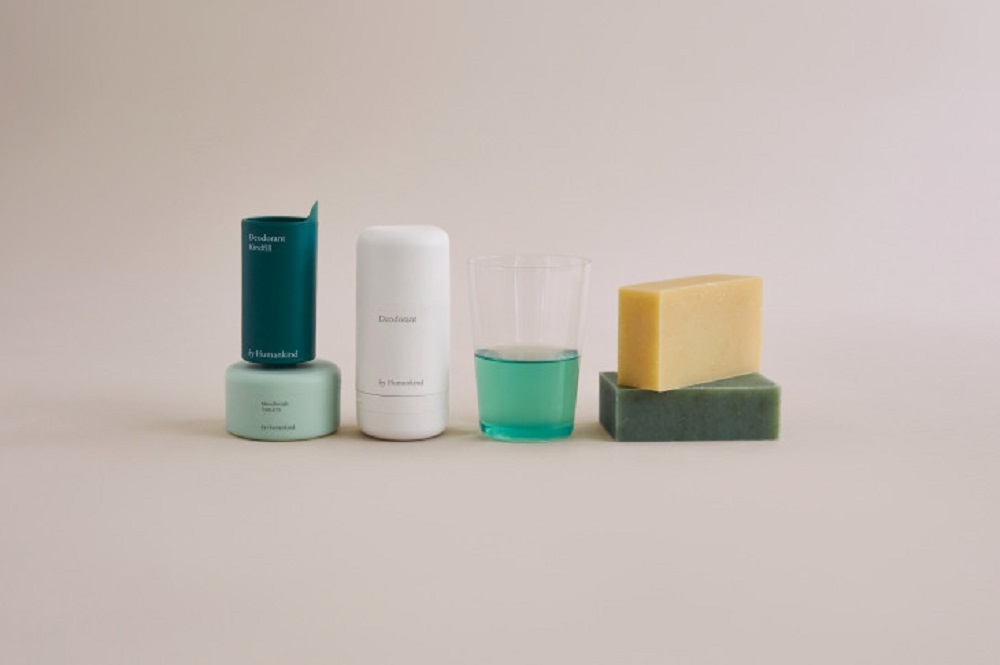
    A new type of deodorant, made from natural ingredients that the company says are formulated to kill bacteria more quickly than other natural products, comes in a reusable container the first time you order. (The reusable container is plastic; the founders say they believe that plastic is not inherently bad, but it needs to be designed in a way that it doesn’t immediately land in the trash.)

    In the next order, the product shows up in a paper pod that pops into the original package and then twists out like a typical deodorant. The company’s mouthwash comes in tablets that customers drop in water, eliminating the need for a plastic bottle. Its shampoo comes in a bar form wrapped in paper instead of liquid in a bottle.

    Unlike Loop, a new experiment from major brands that will sell products like deodorant in packaging that is sent back to manufacturers for reuse, the startup thought that it made more sense to make packaging that consumers would keep and reuse themselves.

    “We didn’t think that customers were going to want to do the work to send it back,” Bushell says. “And there’s also an additional cost in that reverse or return logistics.”

    With the first three products, available online, the startup has calculated that in a year, an average American consumer can keep five pounds of plastic out of the environment. The company will also donate $1 for ocean plastic cleanup for each first purchase of a product. It plans to continue adding new personal care products.

    “Our whole thesis is, what if you could help save the world from single-use plastic just by getting ready in the morning?” he says. “And so anything that’s within that morning routine is within our target.”

  • Chanel to stop using exotic skin in its collection

    Chanel to stop using exotic skin in its collection

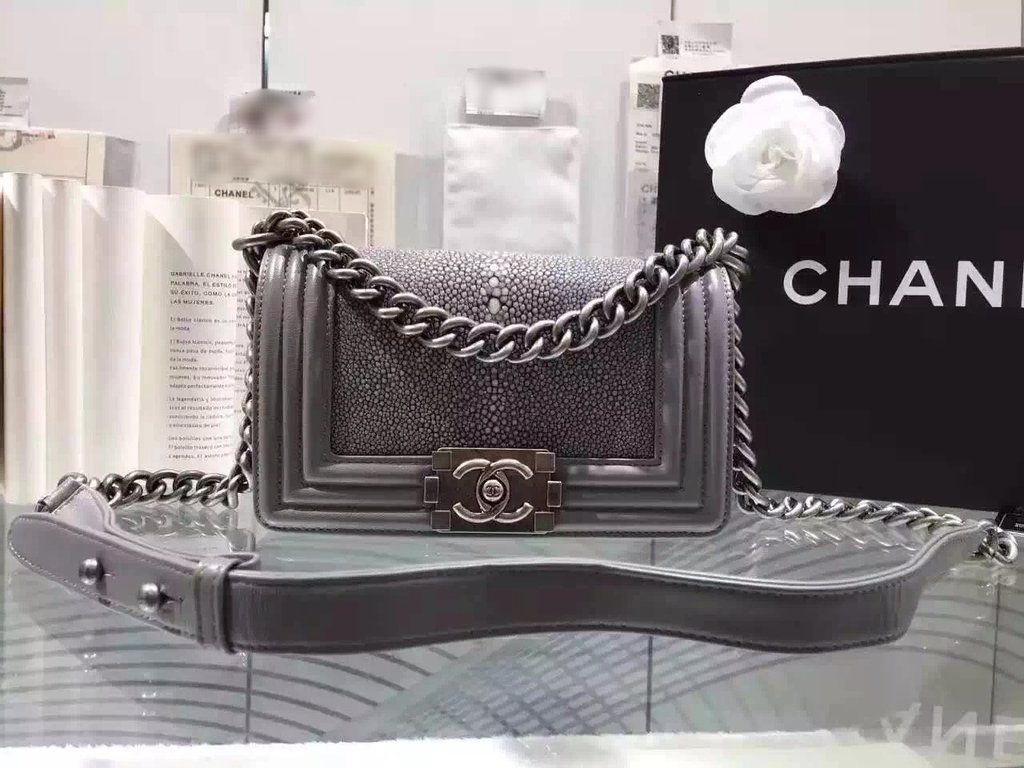
    Ahead of its pre-fall 2019 Métiers d’Art show in New York’s Metropolitan Museum of Art, Chanel has said it will “no longer use exotic skins in [its] future creations”. The exotic skins in question include crocodile, lizard, snake, stingray and fur, of which Chanel uses very little.

    The decision is down to the fact it is becoming increasingly difficult to source skins that meet the house’s quality and ethical standards. “There is a problem of supply and that was not Chanel’s business anyway,” Bruno Pavlovsky, president of Chanel fashion and president of Chanel SAS, commented. “We did it because it’s in the air, but it’s not an air people imposed to us. It’s a free choice.”

    The brand’s attention will shift to the research and development of materials and leathers generated by “agri-food” industries.

    “The future of high-end products will come from the know-how of what our atelier is able to do,” Pavlovsky continued. It will, however, take time for existing goods containing exotic skins to leave Chanel’s distribution network entirely.

    Chanel is the first luxury brand to join labels, including Asos, Nike, H&M, Puma, Arcadia Group and L Brands, which have already banned exotic skins from their product offering.

    The likes of Armani, Coach, Versace, Michael Kors, Gucci, Burberry and John Galliano have pledged to halt the use of fur, however, they have not made the leap to include skins in their entirety.