Tag: sustainable

  • Lululemon Revives Like New Resale Program in Hong Kong, Pioneering a Sustainable Fashion Ecosystem

    Lululemon Revives Like New Resale Program in Hong Kong, Pioneering a Sustainable Fashion Ecosystem

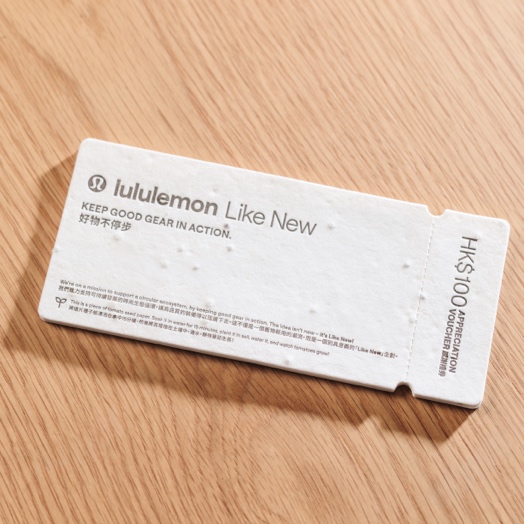
    Lululemon, the renowned athletic apparel company, is reinitiating its Like New programme in Hong Kong, in collaboration with Redress, a local NGO. This endeavour aims to give a second life to pre-owned clothes and is part of Lululemon’s broader sustainability strategy.

    A Take-Back Scheme with a Difference

    The Like New programme, which was first piloted last year, is a comprehensive approach to keep used clothes in circulation by reselling, donating, or recycling them. Between July 2 and September 30, customers can bring their gently used Lululemon or non-Lululemon items to any of the six participating stores in Hong Kong, which includes Queen’s Road Central, Pacific Place, Times Square, Cityplaza, Elements, and New Town Plaza outlets.

    Once collected, Redress will sort the items. Those appropriate for resale will be listed accordingly, while others will be donated or recycled. Donations will be made via the charity Crossroads and other local organizations.

    Joey Chan, regional director of Lululemon Hong Kong, Macau, and Taiwan, expressed her pride in bringing Like New back to Hong Kong. “This initiative reflects our ongoing commitment to prolonging the lifespan of our products, as well as furthering our collaboration with partners and local communities to advance circularity,” he shared.

    Pop-Up Shop and Design Competition

    The program will reach its high point in November with a temporary Like New pop-up, where consumers will be able to buy a collection of pre-owned Lululemon items. More details about the pop-up, such as its location and opening dates, will be revealed in due course.

    In a related development, Lululemon has joined forces with the Hong Kong Polytechnic University for the launch of Re:Form, a circular design competition. This contest aims to instill circular design principles in fashion students and nurture the industry’s future talent.

    Questions & Answers

    What is the Like New programme?
    It is a take-back and resale initiative by Lululemon, where gently used items can be dropped off at selected stores for resale, donation, or recycling.

    Who is Lululemon collaborating with for this program?
    Lululemon is partnering with the NGO Redress for this initiative.

    What is the Re:Form circular design competition?
    Re:Form is a circular design competition launched by Lululemon with the Hong Kong Polytechnic University. This event aims to promote circular design principles among fashion students and foster the growth of future industry talent.

  • 10 Ways to Save Money Using Free Apps and Online Tools

    10 Ways to Save Money Using Free Apps and Online Tools

    Saving money doesn’t always mean giving up the things you enjoy. Whether you’re shopping online, streaming your favorite content, or exploring digital entertainment such as Jili games, making smarter financial choices can help you get more value from your budget. Thanks to a wide range of free apps and online tools, it’s easier than ever to track expenses, find discounts, and manage everyday spending.

    The best part is that many of these solutions are completely free to use. Whether your goal is to reduce monthly expenses, stay on top of your finances, or simply spend more wisely, these practical tools can help you save money without sacrificing convenience. Here are 10 effective ways to make the most of free apps and online resources.

    1. Track Your Spending with a Budgeting App

    One of the easiest ways to save money is to know where it is going. Budgeting apps that are free help you keep track of your income and expenses, categorise purchases, and monitor your monthly spending habits.

    When you can see where your money goes, you can spot expenses you don’t need to be paying and make better financial decisions, but still be free. 

    2. Search for Coupons Before You Buy

    Take a few minutes to look for coupon codes or promotional offers before you buy something online. Many free browser extensions and coupon websites automatically find and apply available discounts at checkout.

    Even small discounts add up over time, especially if you shop online regularly. 

    3. Compare Prices Across Multiple Stores

    Never jump at the first price you see. Price comparison websites are useful for comparing different retailers before you buy.

    If you’re shopping for electronics, household goods or everyday necessities, price comparisons can help you get better deals and not overpay. 

    4. Set Price Alerts

    Thinking about buying something but waiting for a better deal? Many shopping sites and price-tracking tools let you set alerts for specific products.

    No need to check prices every day, you’ll get a notification when the price drops, this helps you to buy at the right time. 

    5. Use Cashback and Rewards Platforms

    Cashback sites and rewards apps allow you to earn points or a cut of your purchase back when you shop with participating retailers.

    Even if the savings on one purchase seem small, the regular use can result in considerable savings over the year. 

    6. Organize Bills and Payment Reminders

    Late payment fees are an avoidable expense that you can often avoid.

    Free calendar apps and reminder tools help you remember when to pay bills, subscriptions and recurring payments: This means you can better manage your monthly finances and not get charged penalties. Being organized… 

    7. Cancel Unused Subscriptions

    There’s still a lot of people paying for streaming services, software or memberships they hardly ever use.

    Subscription management apps can help you find recurring charges and see what you’re actually using. Cancelling one or two unnecessary subscriptions can release some extra cash every month. 

    8. Use Free Cloud Storage and Productivity Tools

    Use free cloud storage, document editors, spreadsheets and collaboration tools online instead of paying for pricey software.

    These services provide everything many users need for work, school, or personal projects without the need for expensive subscriptions. 

    9. Take Advantage of Free Learning Resources

    You don’t have to pay for expensive courses to learn new skills.

    There are many trustworthy sites that provide free tutorials, online courses, educational videos, and digital libraries on topics such as personal finance, technology, design, business, languages, and more. You could even get better career opportunities without any additional educational costs by improving your skills. 

    10. Choose Entertainment That Fits Your Budget

    Entertainment is important, but it doesn’t have to be a financial burden.

    Many digital entertainment platforms offer welcome offers, loyalty programmes, free content, or special promotions that enable users to get more value. So before signing up for any platform, be sure to compare available features, understand the terms and select services that fit your interests and your budget.

    For online gaming and digital entertainment, it is also worth choosing licensed platforms that encourage responsible play via functions such as deposit limits, time management tools and self-exclusion options. Responsible entertainment ensures that having fun stays fun and affordable. 

    Tips for Saving Even More Money Online

    Free apps are only part of the equation. Building smart financial habits can help you maximise your savings over the long term.

    Here are some simple practices to adopt:

    • Review your monthly expenses.
    • Look up prices before you buy something big.
    • Avoid impulse buying by waiting 24 hours before making non-essential purchases.
    • Instead of running after every bargain, look for legitimate promotions.
    • Protect your personal information using trusted websites and strong passwords.
    • Don’t fall for deals that sound too good to be true.

    Small changes to your daily habits can add up to the biggest savings over the long run. 


  • Unlocking Sustainable Growth in Southeast Asia: The Power of Multi-Channel Logistics for Brands

    Unlocking Sustainable Growth in Southeast Asia: The Power of Multi-Channel Logistics for Brands

    The e-commerce sector in Southeast Asia is witnessing significant growth, with its Gross Merchandise Value (GMV) projected to reach around US$350 billion by 2030 and escalate to US$630 billion by 2035.

    For businesses aiming to tap into this growth, achieving success is no longer merely about attracting customers. It is equally critical to ensure a consistent customer experience, regardless of where the consumers decide to make their purchases. This applies to all sales channels, whether consumers purchase through online marketplaces, direct-to-consumer websites, social commerce platforms, or physical stores. They anticipate a seamless shopping experience, speedy and dependable delivery. This demonstrates that logistics isn’t just a back-end operation anymore; instead, it significantly influences the customer’s buying experience and impacts their perception and interaction with a brand, both online and offline.

    To cater to these expectations, logistics providers are rethinking the traditional fulfillment styles centered around specific platforms. They are investing in more comprehensive solutions that can meet customers’ expectations on a larger scale.

    Challenges in Managing Multi-Channel Operations in a Diverse Region

    In Southeast Asia, brands are broadening their omnichannel presence. The region’s diverse market landscape poses unique operational challenges. Brands need to handle different consumer expectations, various levels of infrastructure maturity, unique regulatory environments, and diverse operational requirements across multiple markets.

    Brands also must manage inventory across various sales channels and logistics providers. Separate warehousing arrangements, fragmented stock pools, and disconnected fulfillment systems can directly impact the customer experience, leading to delayed deliveries, inaccurate stock information, and inconsistent service across channels. These gaps can lead to increased costs, reduced stock visibility, and complicate demand planning.

    A Streamlined Approach to Scaling through a Unified Fulfillment Infrastructure

    Lazada Logistics acknowledged the growing need for more integrated fulfillment solutions and introduced its Multi-Channel Logistics (MCL) offering. The MCL enables brands to streamline fulfillment operations across channels through a single logistics network.

    The MCL is available across several countries in Southeast Asia, including Singapore, Thailand, Vietnam, Indonesia, the Philippines, and Malaysia. It combines Lazada Logistics’ proprietary regional infrastructure with an extensive third-party logistics network to provide comprehensive inventory management, warehousing, and fulfillment services on a larger scale. This allows brands to rapidly respond to fluctuating consumer demand while maintaining consistent service standards across the region.

    Thanks to MCL, brands can optimize logistics costs without compromising service quality, allowing them to concentrate resources on customer acquisition, product development, and market expansion. With a simplified fulfillment structure and more efficient inventory utilization, businesses can strike a balance between cost management and customer experience objectives.

    Questions & Answers

    How is the e-commerce market in Southeast Asia growing?
    The e-commerce sector in Southeast Asia is expanding significantly, with its Gross Merchandise Value (GMV) projected to hit around US$350 billion by 2030 and increase to US$630 billion by 2035.

    What challenges do brands face in managing multi-channel operations?
    Brands must deal with various consumer expectations, different levels of infrastructure maturity, unique regulatory environments, and diverse operational requirements across multiple markets. Additionally, they need to handle inventory across various sales channels and logistics providers.

    How does Lazada Logistics’ Multi-Channel Logistics (MCL) help brands?
    The MCL offering by Lazada Logistics enables brands to consolidate fulfillment operations across channels through a single logistics network. It helps brands optimize logistics costs without compromising service quality, allowing them to concentrate resources on customer acquisition, product development, and market expansion.

  • Besi APac Partners with DHL Express to Slash Greenhouse Emissions through Sustainable Aviation Fuel

    Besi APac Partners with DHL Express to Slash Greenhouse Emissions through Sustainable Aviation Fuel

    Besi APac Sdn. Bhd., the Malaysian unit of top semiconductor assembly equipment manufacturer BE Semiconductor Industries N.V., has entered into a partnership with DHL Express by joining their GoGreen Plus programme. This programme aims to lower the emissions generated from Besi APac’s urgent global deliveries through the utilization of sustainable aviation fuel (SAF). The partnership is projected to result in a reduction of over 400 tonnes in Well-to-Wheel (WTW) CO₂e emissions.

    Reducing Emissions Through Responsible Practices

    Besi APac is dedicated to the energy transition and acknowledges the importance of decreasing operational emissions through responsible business operations. Henk Jan Jonge Poerink, Managing Director of Besi APac and Senior Vice President of Global Operations at Besi N.V., stated that the company’s sustainability strategy extends to its supply chain activities. They are striving to incorporate environmental considerations into their procurement processes. SAF is seen as one of several methods that can assist in reducing aviation-related emissions. The company eagerly anticipates the opportunity to support the expansion of renewable alternatives.

    Introduced in 2023, GoGreen Plus allows its clients to utilise SAF to decrease their indirect Scope 3 emissions, which arise from upstream and downstream transportation and distribution. This service is made possible through numerous SAF contracts that DHL has signed with its partners.

    SAF, which is made from sustainable feedstocks like used cooking oil and other residues, can lower lifecycle greenhouse gas emissions by approximately 80% compared to standard jet fuel. The ‘book & claim’ approach enables DHL to replace fossil fuels with sustainable fuels within its network directly and assign the associated lifecycle emission reductions to clients like Besi APac.

    Besi APac’s Commitment to Sustainability

    Besi APac’s subscription to GoGreen Plus is applicable across its international trade routes, covering major markets in the Asia Pacific, Europe, Americas, and Middle East. The initiative is aligned with the company’s 2025-2029 strategic plan, which includes minimising its environmental impact as a primary goal. Besi APac has significantly reduced its Scope 1 & 2 emission intensity ratio, fuel consumption intensity ratio, and increased electricity usage from renewable sources since 2019.

    Alex Lee, Vice President of Commercial at DHL Express Malaysia, stated that DHL is committed to increasing the availability of emissions-reduced logistics solutions. Partnerships like this one showcase the practical application of this commitment.

    DHL is one of the largest global users of SAF. The company increased the percentage of SAF in its own aircraft fleet to 10 percent in 2025, a significant increase from the 3.5 percent the previous year. DHL currently uses SAF at airports worldwide.

    Questions & Answers

    What is Besi APac’s strategy to reduce emissions in their operations?
    Besi APac is committed to decreasing operational emissions through responsible business practices. This includes integrating environmental considerations into their procurement processes and using SAF to reduce aviation-related emissions.

    How does DHL’s GoGreen Plus programme help to reduce emissions?
    GoGreen Plus allows its customers to utilise SAF to reduce their indirect Scope 3 emissions arising from upstream and downstream transportation and distribution. It replaces fossil fuels with sustainable fuels within its network, attributing the associated emission reductions to its customers.

    What progress has Besi APac made in reducing its environmental impact?
    Besi APac has made significant strides in reducing its environmental impact. The company has greatly reduced its Scope 1 & 2 emission intensity ratio and fuel consumption intensity ratio. Additionally, it has increased its electricity usage from renewable sources to 99 percent since 2019.

  • Reliance Retail Bolsters Beauty Portfolio with Acquisition of Sustainable Skincare Brand Pahadi Local

    Reliance Retail Bolsters Beauty Portfolio with Acquisition of Sustainable Skincare Brand Pahadi Local

    Reliance Retail, a major Indian retail company, has successfully acquired the skincare and wellness brand, Pahadi Local. Pahadi Local, established in 2018, is well-regarded for its clean ingredient formulations, ethical sourcing practices, and sustainable product offerings. The company is known for its Himalayan ingredients, especially Gutti Ka Tel (Apricot Kernel Oil), which has gained widespread recognition and consumer loyalty.

    The Acquisition & Future Plans

    Reliance Retail’s acquisition of Pahadi Local aligns with its strategic goal to invest in promising Indian brands across multiple sectors, including beauty, wellness, fashion, and lifestyle. The retail giant has plans to foster Pahadi Local’s next growth phase by broadening its retail presence, strengthening its digital footprint, and fast-tracking innovation.

    The founding team of Pahadi Local will remain integral to the company’s operations post-acquisition, playing a crucial role in shaping the brand’s creative direction, product development, and overall philosophy.

    Comment from Reliance Retail

    Isha Ambani, executive director of Reliance Retail Ventures, commented on the acquisition, emphasizing the company’s focus on curating brands that blend authenticity, innovation, and significant consumer relevance. Ambani praised Pahadi Local’s commitment to Himalayan wellness traditions and responsible sourcing, making it a valuable addition to their beauty brand portfolio.

    Reliance Retail is a subsidiary of Reliance Retail Ventures, the umbrella corporation for all retail companies within the Reliance Industries group.

    Questions & Answers

    What is the main product offering of Pahadi Local?
    Pahadi Local is known for its skincare and wellness products primarily made from Himalayan ingredients, with Gutti Ka Tel (Apricot Kernel Oil) as its standout product.

    What are Reliance Retail’s plans for Pahadi Local post-acquisition?
    Reliance Retail plans to expand Pahadi Local’s retail presence, strengthen its digital footprint, and accelerate innovation to foster the brand’s next phase of growth.

    How will the founding team of Pahadi Local be involved in the brand post-acquisition?
    The founding team will continue to play a critical role in shaping the brand’s creative direction, product development, and overall philosophy.

  • Vietnam Targets $11.5B from Seafood Exports in 2026: A Sustainable Growth Strategy

    Vietnam Targets $11.5B from Seafood Exports in 2026: A Sustainable Growth Strategy

    Vietnam has set its sights on exporting more than 10 million tonnes of seafood, valued at $11.5 billion, in the course of the current year. This anticipated export volume signals a slight increase of 0.6% as compared to that of 2025, according to Pham Quang Toan, the deputy director general of the Department of Fisheries and Fisheries Surveillance who spoke at a recent conference.

    Understanding the Figures

    The forecast suggests that exports from capture fisheries may experience a slight decrease of 2.1%, landing at roughly 3.75 million tonnes. However, the aquaculture sector is projected to see an increase of 2.2%, amounting to approximately 6.25 million tonnes.

    The director general of the department, Tran Dinh Luan, shared insights into the future direction of Vietnam’s seafood sector. According to him, the sector is poised to progressively scale back capture fisheries while concurrently enhancing aquaculture practices. This transition is intended to be sustainable and resilient to climatic changes in order to boost competitiveness.

    Luan also emphasized a strategic shift from a production-oriented approach to a fisheries economy perspective. Moreover, the focus will be on moving from singular value growth towards integrated multi-value development.

    A Look at Past Performance

    Based on data from the Department of Fisheries and Fisheries Surveillance, the total output of seafood in 2025 was 9.95 million tonnes. This represents an increase of 3% from the previous year. Of this, capture fisheries contributed 3.83 million tonnes, which was almost identical to the volume in 2024. In contrast, the output from aquaculture rose by 5.1% to reach 6.1 million tonnes.

    The revenue from seafood exports was more than $11 billion last year, marking an impressive increase of 12.7%.

    Questions & Answers

    What is the projected seafood export volume for Vietnam in the current year?
    The anticipated seafood export volume for Vietnam is over 10 million tonnes.

    What changes are expected in the export volumes of capture fisheries and aquaculture?
    Capture fisheries exports are expected to decrease by 2.1%, while aquaculture exports are projected to increase by 2.2%.

    What was the seafood export turnover for Vietnam in 2025?
    The seafood export turnover for Vietnam in 2025 was estimated at over $11 billion.

  • Singapore to Implement Up to $32 Sustainable Fuel Levy on Flights from 2026: What Travelers Need to Know

    Singapore to Implement Up to $32 Sustainable Fuel Levy on Flights from 2026: What Travelers Need to Know

    Air travellers departing from Singapore will be subject to a sustainable aviation fuel levy starting October 2026. The levy, whose rates will vary between S$1 to S$41.60 (US$0.77 to US$31.92), applies to tickets sold from April 1, 2026, onwards for flights departing on or after October 1, 2026, as stated by the Civil Aviation Authority of Singapore.

    Detailed Breakdown of the Levy

    The exact levy amount is contingent on the travel class and destination. The destinations are divided into four geographical bands, with the levies increasing progressively.

    Passengers travelling to destinations in Band 1, which encompasses Southeast Asia, will incur an additional charge of S$1 for economy or premium economy tickets and S$4 for business or first class tickets.

    For Band 2, which includes Northeast Asia, South Asia, Australia, and Papua New Guinea, travellers will face an added fee of S$2.80 for economy class and S$11.20 for business class.

    Travellers to destinations in Band 3 – Africa, Central and West Asia, Europe, the Middle East, Pacific Islands, and New Zealand – will incur additional levies of S$6.40 and S$25.60 respectively.

    Lastly, passengers flying to the Americas, falling under Band 4, will be charged an extra S$10.40 for economy class and S$41.60 for business class.

    Exceptions and Special Cases

    Passengers merely transiting through Singapore will not be subjected to the above levies. For multi-stop flights, the fee will be determined by the next destination after departing Singapore.

    Moreover, the levy will also extend to cargo, with rates ranging from S$0.01 to S$0.15 per kilogram. This calculation will follow the same geographical bands as those used for passenger flights.

    The levy will also be applicable to general aviation, which includes private, non-commercial flights, and business aviation, such as private jets and chartered flights.

    Origins and Impact of the Levy

    The levy was first introduced in 2024 as a component of the Singapore Sustainable Air Hub Blueprint, which aimed to achieve net-zero aviation emissions by 2050.

    Han Kok Juan, the director-general of the aviation authority, emphasized the commitment of Singapore, as a global air hub and an International Civil Aviation Organisation council member, to its environmental responsibilities. He reiterated that the country would take necessary steps to contribute to the cause while maintaining the competitiveness of the Singapore air hub.

    Unlike green fuel mandates or incentive programs prevalent in other countries, this levy operates on a “fixed cost envelope.” This means that regardless of fluctuations in sustainable aviation fuel prices in 2026, the levy will remain unchanged.

    Questions & Answers

    When will the aviation fuel levy take effect?
    The aviation fuel levy will take effect from October 2026.

    Will passengers transiting through Singapore be charged with the levy?
    No, passengers only transiting through Singapore will not be charged the levy.

    What is the goal of the Singapore Sustainable Air Hub Blueprint?
    The Singapore Sustainable Air Hub Blueprint aims to achieve net-zero aviation emissions by 2050.

  • Lilysilk Marks 15th Anniversary With Debut Hong Kong Store, Championing ‘conscious Elegance

    Lilysilk Marks 15th Anniversary With Debut Hong Kong Store, Championing ‘conscious Elegance

    Renowned silk clothing retailer, Lilysilk, recently launched its debut store in the Harbour City of Hong Kong, situated in the bustling shopping region of Tsim Sha Tsui.

    Gateway Arcade Welcomes Lilysilk

    Located on the second floor of the Gateway Arcade, the grand opening of the store coincided with Lilysilk’s 15th anniversary celebrations. The store brings a fresh shopping experience for locals and tourists alike, offering a plethora of clothing, accessories, homewares, and bedding. The merchandise, made predominantly from mulberry silk and other organic materials, highlights the brand’s commitment to sustainability and ‘conscious elegance.’

    Lilysilk’s Commitment to Sustainability

    Lilysilk ensures its fabrics are not only luxurious but also sustainable. The company prides itself on promoting ‘conscious elegance,’ a philosophy rooted in sustainable and environmentally-friendly practices. This is reflected in its commitment to using organic materials and ensuring its products are certified for sustainability.

    Celebrating a Significant Milestone

    David Wang, the CEO of Lilysilk, expressed his exhilaration about the significant milestone. “The opening of our very first flagship store in Asia is not just a milestone, but the start of an exhilarating new journey,” Wang stated.

    Since its inception in 2010, Lilysilk has established a strong foothold in North America and Europe. It ventured into the Chinese market in 2022 and earlier this year, the brand launched its first concept store in New York’s Meatpacking District.

    Questions & Answers

    Where is the new Lilysilk store located in Hong Kong?
    The new Lilysilk store is located on the second floor of the Gateway Arcade in the Harbour City of the Tsim Sha Tsui shopping district.

    What kind of products does the Lilysilk store offer?
    The store offers an array of products including clothing, accessories, homewares, and bedding. All products are predominantly made from mulberry silk and other organic materials.

    What does the philosophy ‘conscious elegance’ mean to Lilysilk?
    The philosophy ‘conscious elegance’ implies Lilysilk’s commitment to sustainability and environmentally-friendly practices. They ensure their fabrics are not only luxurious but also sustainable, using organic materials and obtaining necessary sustainability certifications.

  • The personal care company start using refillable containers

    The personal care company start using refillable containers

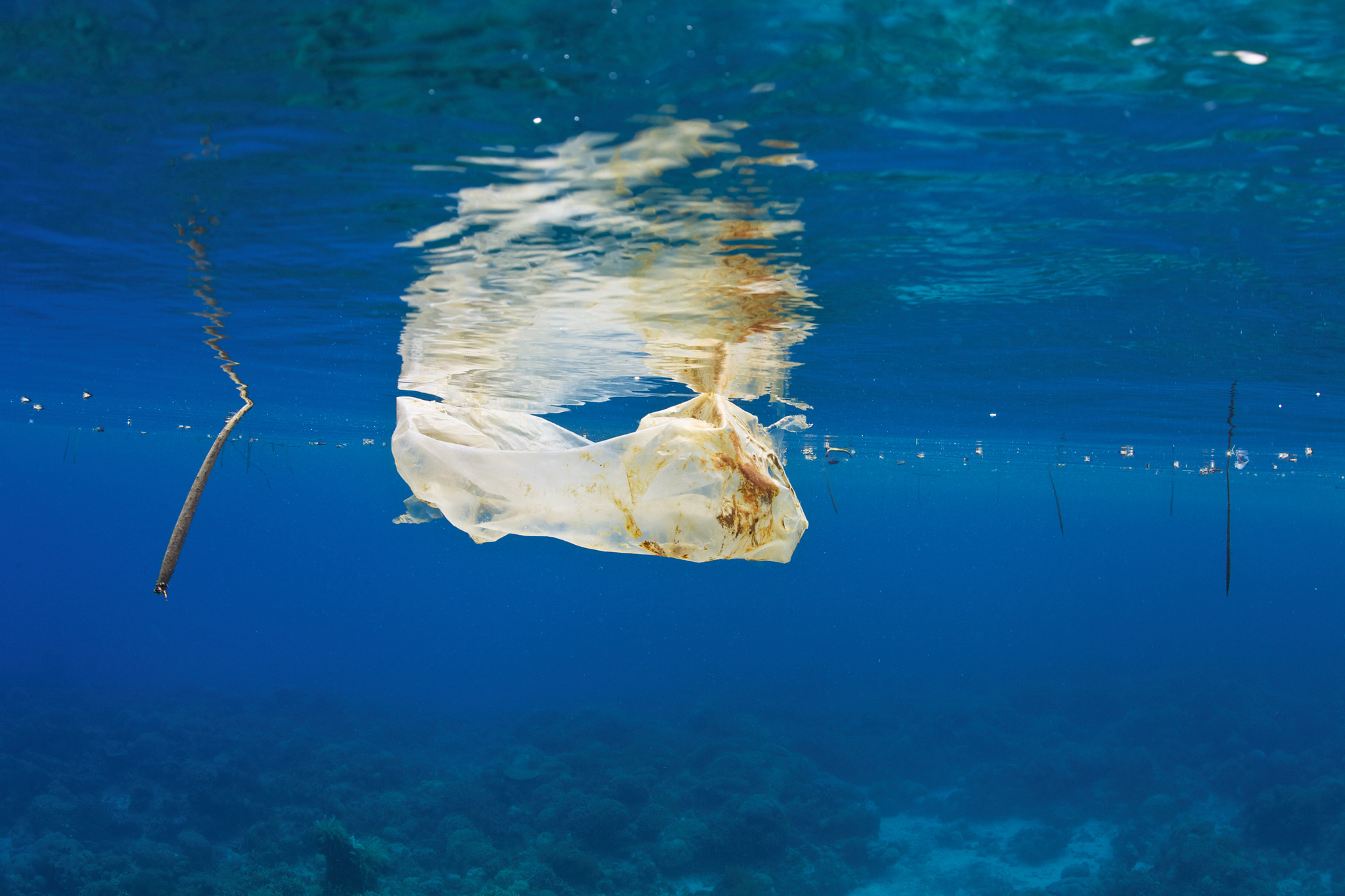
    On a trip to Thailand in 2017, serial entrepreneur Brian Bushell went diving for the first time and expected that the water would be pristine. Instead, it was filled with trash. “We were about to dive off the back of the boat, and all of the sudden we’re surrounded by junk plastic containers,” he says. That night, he went back to his hotel room and looked at the products he had sitting on the bathroom counter. “I realized that I was part of the problem.”

    Bushell, who had recently left Baked by Melissa, the chain of successful New York City-area cupcake bakeries he co-founded, started researching the challenge of plastic waste.

    “We learned that a third of all the single-use plastic products in landfills are personal care products,” he says. “So we decided that personal care was really an important nut to crack.”

    With co-founder Joshua Goodman, he started working on By Humankind, a new line of personal care products that launched today. Each product eliminates single-use packaging.

    A new type of deodorant, made from natural ingredients that the company says are formulated to kill bacteria more quickly than other natural products, comes in a reusable container the first time you order. (The reusable container is plastic; the founders say they believe that plastic is not inherently bad, but it needs to be designed in a way that it doesn’t immediately land in the trash.)

    In the next order, the product shows up in a paper pod that pops into the original package and then twists out like a typical deodorant. The company’s mouthwash comes in tablets that customers drop in water, eliminating the need for a plastic bottle. Its shampoo comes in a bar form wrapped in paper instead of liquid in a bottle.

    Unlike Loop, a new experiment from major brands that will sell products like deodorant in packaging that is sent back to manufacturers for reuse, the startup thought that it made more sense to make packaging that consumers would keep and reuse themselves.

    “We didn’t think that customers were going to want to do the work to send it back,” Bushell says. “And there’s also an additional cost in that reverse or return logistics.”

    With the first three products, available online, the startup has calculated that in a year, an average American consumer can keep five pounds of plastic out of the environment. The company will also donate $1 for ocean plastic cleanup for each first purchase of a product. It plans to continue adding new personal care products.

    “Our whole thesis is, what if you could help save the world from single-use plastic just by getting ready in the morning?” he says. “And so anything that’s within that morning routine is within our target.”

  • Positive result from anti-plastic campaigns by Starbucks, 7-Eleven

    Positive result from anti-plastic campaigns by Starbucks, 7-Eleven

    Starbucks Korea and 7-Eleven Thailand have announced positive results for their respective anti-plastic campaigns. A report revealed that the local Starbucks subsidiary has seen consumption of single-use straws cut by half in the months since introducing strawless lids on drinks without whipped cream or that do not need stirring. The initiative, introduced last November, has resulted in the monthly average of 15 million straws used across its coffee chain stores drop to 7.5 million per month. The company now only provides straws to customers who request them.

    Aiming to further reduce straw usage by up to 70 per cent, Starbucks Korea is planning an online event to offer rewards to customers who upload pictures of drinks taken without using straws. It has also introduced paper straws for usage in some beverages.

    7-Eleven saves 169 million bags

    Meanwhile, in Thailand, more than 169 million plastic bags have remained unused over the past two months at 7-Eleven stores, according to a report in local news site The Thaiger, the result of a management initiative to phase out their use. The move, which has been supported by local celebrities, encourages shoppers to refuse plastic bags or bring reusable bags to the store.

    The reductions are reported to have saved the chain more than 33 million baht, which operator CP All Public Company will donate to a local hospital.

    All about perception?

    Despite these reports, there have been growing concerns among critics in the media regarding the perceived environmental benefits of similar plastics initiatives worldwide.

    The sippy cup lid adopted in Korea is identical to the design used in North American stores, which was shown in a Reason magazine report last year to use more plastic than the previous lid design and straw put together.

    Plastic shopping bag initiatives similar to the one adopted by 7-Eleven have provoked skepticism among observers who point out that of all single-use plastic packaging used throughout supermarkets and convenience stores, the shopping bag is the only item that tends to be reused in the home.

    A 2017 report in Australia’s journalism hub The Conversation called getting rid of plastic bags a windfall for supermarkets without much perceptible benefit to the environment. It reasoned that most alternatives that were recyclable ended up in landfills anyway.

  • Korea firm to use greener packaging for this holiday’s gift set

    Korea firm to use greener packaging for this holiday’s gift set

    For many in Korea, Lunar New Year is a time to meet relatives and exchange elaborately-packaged gift sets that could contain anything from fruits and raw meat to cans of Spam. But one side effect to this approach to gift giving is the excessive waste – especially those originating from gift set packaging – which has been brought up as a major concern by Korea’s environment authorities in recent years.

    With growing government pressure and awareness about the environmental issues caused by excessive packaging, department stores and grocery franchises are trying to take the lead in adopting greener alternatives this year.

    Colored Styrofoam and gel-based ice packs, which are notoriously difficult to recycle, are the first things to get scrapped.

    Hyundai Department Store and Lotte Mart have both announced that they are replacing colored Styrofoam in gift sets with a plain white alternative starting from this holiday season. Previously, the companies added color to the material to add visual appeal. Colored Styrofoam materials are difficult to recycle because more money and manpower is required to create new Styrofoam products from them, making them unattractive to recycling companies.

    Lotte Mart Thermal Bag

    Lotte Department Store is chilling gift sets of meat and fish with ice packs filled with water instead of gel-based ones for the first time this year.

    Competitor Shinsegae Department Store is also ditching the hard-to-recycle wooden boxes and cloth wrapping it had previously used to package gift sets. It will use paper boxes instead.

    Other retailers are collecting ice packs – both gel- and water-based – and recycling them themselves.

    Department store chain AK Plaza said it will collect ice packs from AK Plaza-bought gift sets across all its stores until Feb. 10 for recycling and disposal.

    Hyundai Home Shopping is taking it one step further and accepting ice packs regardless of their place of purchase. This year, it teamed up with Gangdong District office in eastern Seoul to install collection bins in 18 locations to allow customers to drop off used ice packs after the holidays.

    “We’ve collected ice packs from our online shopping members in the past and decided to install public ice pack collection bins this holiday season,” said a Hyundai spokesperson. “We will send out the ice packs that we collect to our partners in the food industry so they can be reused.”

    Lotte Mart is focusing on making gift bags more attractive and practical to encourage customers to use them even after the holidays end.

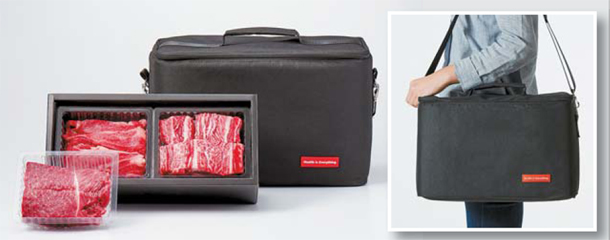
    The thermal bags that come with its beef gift sets now have shoulder straps and a sleek black design, making them practical and user-friendly. While the thermal bags have always been reusable, they were previously covered with large Lotte brand logos and difficult to carry around.

    The grocery chain is also going to package more fruit gifts this year in what it calls “recycle boxes.” The boxes, first introduced during last year’s Chuseok (harvest festival) holidays, are made of sturdy paper that can easily be reassembled into mini storage boxes.

    “We didn’t register any copyright for our fruit ‘recycle box’ design so that other retailers can also participate in recycling and reducing disposable waste,” a Lotte spokesperson explained.

    The businesses’ green initiatives follow the government’s consistent calls to reduce packaging and other waste during the Lunar New Year holidays.

    As has become customary every holiday season, the Environment Ministry announced last month that it will work together with local governments to inspect gift sets being sold across retailers in the country and fine violators up to 3 million won ($2,700) if they do not comply with packaging rules.

    Current regulations stipulate that gift sets can only be wrapped two times and that the volume of packaging must not exceed 25 percent of the product’s total volume.

    Last Lunar New Year, the Environment Ministry fined the manufacturers of 49 products that were in violation of these rules. The total fine combined came to 52 million won ($46,000).

    “We have seen a small decline in the number of products that violate excessive packaging regulations over the years,” said an Environment Ministry official in the recycling division. “The participation of companies to reduce packaging and comply with inspection is always a big help.”

  • Strategies that will differentiate leaders in Indian retail in 2019

    Strategies that will differentiate leaders in Indian retail in 2019

    Indian retail industry has seen tremendous transformation and growth in the last few years and has become one of the most favourable market for global investment. The vibrant industry, hugely shaped by changing policies and consumer behaviour is adopting technology not only to understand changing consumer preferences but also to enhance shopping experiences. Innovations have defined a gradual shift in how companies approach retail altogether.

    Technology disruptions have taken all industries in its stride and the cash and carry business is no exception, despite it dealing with B2B customers. Technology has been a pivot for the creation of personalised, ‘instant’ buyer experiences. The players who leverage technology well will be industry leaders of the next decade.

    As we have stepped in 2019, here are some retail trends that will make news this year.

    Integrated Omnichannel presence for retail analytics – Omnichannel in retail has been a high talk point and some retailers have successfully expanded their presence across platforms. However, integration is the key to success in this game. Unless the platforms are integrated, they will present an inconsistent experience to the customers, creating confusion about the product, pricing and promotions.

    Besides ensuring an unswerving experience, a bigger advantage of an integrated Omnichannel approach would be to share and cross-leverage customer behaviour data. For instance, if a customer has a specific purchasing pattern for a product offline, the retailer can use these insights for targeted marketing on various digital platforms. It will not only help the shopper find what they need but also help the retailer generate higher sales through relevant product suggestions and repeat business.

    Shaping in-store experience through proximity marketing – Internet of Things has transformed many industries and has the potential to enable real-time interaction between retailers and consumers, providing them with a truly connected experience. It not only brings about a seamless experience but also enable guided discovery and shopping, using a network of beacons in store. These beacons can help retailers in marketing, mapping the consumer movement patterns and time spent at various sites, in-store messaging, building consumer loyalty etc. This will offer the opportunity to revolutionise in-store experience for consumers.

    Increasing focus towards sustainability – The consumer dynamics have evolved considerably over the last few years. They feel connected to a company or a brand that helps them contribute to social and environmental issues. The inclination of Indian consumers towards building a sustainable future will provide an edge to brands operating sustainably.

    The dynamic regulatory environment and shifting consumer preferences are making it imperative for retailers to decrease the social and environmental impact of their operations. Companies will be seen instituting practices and initiatives to address this need, and, the players who will ace this, will be the most preferred brands for consumers in the future.

    Decreasing wastage, promoting recycling and energy conservation will be certain immediate outcomes of bringing sustainable practices within business operations. Over a longer period, the impact of sustainability will run much deeper, with local community engagement and expected economic benefits.

    Employing Blockchain to enhance credibility through responsible and ethical sourcing –Blockchain technology helps retailers with core functions including supply chain management, inventory management, authenticity verification, auto-renewal and subscription services, customer data and loyalty programmes. However, the key benefits that the technology is delivering to retailers are to ensure authenticity and improve accuracy in tracing the origin of any product swiftly.

    Incorporating blockchain technology will enable retailers to track data right from sourcing stage to customer purchase while ensuring authenticity for their customers. It will also help establish sustainable sourcing practices being followed by the company, making a stronger connect with the millennial consumer.

  • Western Australia to stop using plastic bags

    Western Australia to stop using plastic bags

    The ban on the use of plastic bags in Western Australia has started as of January 1, 2019, with retailers no longer be able to provide customers with lightweight plastic bags when shopping in their stores. Retailers who fail to comply with the new laws will face substantial fines and disruptions to their business operations. The National Retail Association (NRA), which has partnered with the state government to assist the sector to make a smooth transition ahead of the ban, has issued a statement to consumers earlier reminding them to be prepared for the change when they shop starting the new year.

    David Stout, NRA manager of Industry Policy, said the bag ban applies to all retailers operating in Western Australia regardless of size or type – ranging from newsagents to food outlets, to pharmacies and petrol stations.

    Stout said shoppers need to make sure that they have alternative options in place, like reusable bags, to safeguard against any inconvenience.

    “The NRA has visited thousands of retailers in all parts of the state over the past few months to ensure that retailers are as ready as possible,” Stout said.

    He added that the NRA will continue to assist retailers with any teething issues after the ban comes into effect.

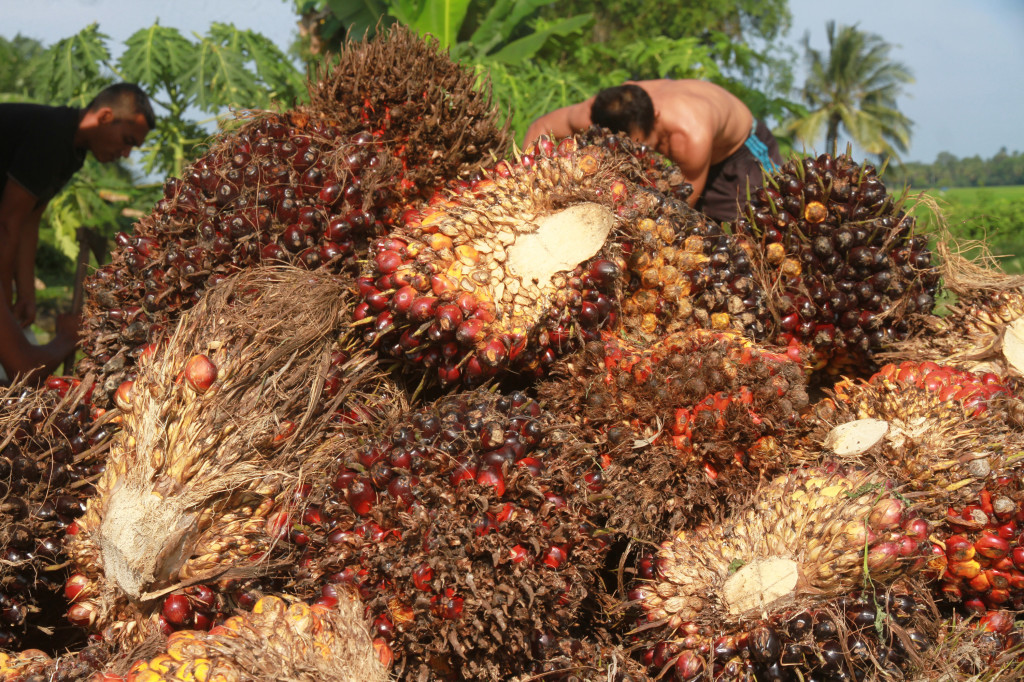
  • Sabah to produce more sustainable palm oil

    Sabah to produce more sustainable palm oil

    Deputy Chief Minister of Sabah Datuk Seri Wilfred Madius Tangau said during his closing address at the 16th Annual Roundtable of Sustainable Palm Oil Conference today, the state is committed to having more palm oil produce to achieve both the Roundtable of the Sustainable Palm Oil (RSPO) and the local Malaysian Sustainable Palm Oil (MSPO), concurrently.

    In 2017, Sabah produced more than 5.2 million metric tons (MT) of crude palm oil (CPO) accounting for more than 30% of total Malaysian palm oil produced.

    Between January and October this year, Sabah produced some 1.55 million MT of CPO of which 28% were certified.

    About 400,000ha of plantations are RSPO certified, of which 3,960ha belonged to smallholders. Sabah has some 623 small players.

    “Therefore Sabah can play an important role in the sustainable palm oil industry. Sabah is one of the largest producer of RSPO certified palm oil,” said Tangau.

    On assisting smallholders in the state, he said while incentives such as grants for planting comes from the federal government, land titles fall under the state government’s purview.

    On the government’s move to make MSPO certification mandatory by end of 2019, Tangau welcomed the move.

    “We will assist in whatever (way) we can. I’m happy the federal government is spending money to do that, but whether we achieve that target, is another story,” he added.

    Sabah saw an economic growth of 8% last year and palm oil has played a part in it. Tangau said one of the biggest challenge in this country is the high dependence on foreign labour as it is difficult to get locals to work in plantations.

    The state government is also looking towards stepping up downstream activities instead of just being active exporters of CPO.

    On another note, RSPO co-chairman Datuk Carl Bek-Nielsen said the challenge lies on bridging the gap between supply and demand of sustainable palm oil as the uptake for certified palm oil globally stood only at 65%.

    “This is as disappointing as wet gunpowder and it sends a discouraging, hypocritical message of “do as I say but not as I do. And I will be clear, the growers expect action and whilst the grower fraternity has just shown a willingness to change, to innovate, to now halt deforestation, to now stop any new plantings on peat soils, they also expect that the NGOs, CGM, retailers alike, including the Secretariat of RSPO now direct just as much attention and energy towards improving uptake and not just pursuing higher standards for the growers,” he said in his closing remark.