Tag: Suvarnabhumi airport

  • Thai Airways Shares Slide 3.3% as Bangkok Floods Disrupt Airport Operations

    Thai Airways Shares Slide 3.3% as Bangkok Floods Disrupt Airport Operations

    Thai Airways International shares fell 3.31 per cent on Wednesday. Severe ground handling failures at Suvarnabhumi Airport left 5,600 passenger bags stranded across three days.

    That drop followed a 1.63 per cent slide on Monday. Acute staff shortages wiped out market value while triggering flight delays, cancellations, and intense public backlash.

    Chief executive Chai Eamsiri publicly apologised for the operational breakdown and set a 72-hour target to clear the backlog. Severe flooding across Bangkok prevented staff from reaching Suvarnabhumi. That crippled ground operations, leaving thousands of travellers without luggage while official communication stalled.

    Ground handling breakdown rattles investors

    Flight capacity was curbed for two to three days while Thai Airways managed the baggage backlogs. Krungsri Securities analyst Dithanop Vattanawakin warned the disruption will generate immediate one-off expenses. These include passenger compensation, overtime wages, and outsourced ground staff fees, alongside revenue losses from grounded aircraft.

    Yuanta Securities analyst Teerat Taranapipnun noted the incident hurts near-term equity sentiment. However, the direct financial drag will stay contained if flight operations normalise quickly as floodwaters recede across the capital.

    High season window tightens for flag carrier

    For regional airlines, the final three months of the calendar year generate crucial passenger revenue as tourism peaks across Southeast Asia. Carriers typically run fleet maintenance during the slower second and third quarters. That ensures every available aircraft enters service in October.

    A prolonged breakdown puts Thai Airways at a sharp disadvantage against regional competitors like Singapore Airlines and low-cost carriers expanding capacity into Bangkok. If baggage chaos and crew shortages persist, international tour operators and business travellers will divert traffic to rival regional hubs.

    Back-office weaknesses surface after restructuring

    Operational bottlenecks exposed persistent structural vulnerabilities inside the carrier as it handles peak-season traffic volumes. Suwat Sinsadok, managing director and head of research at Globlex Securities, pointed out that lingering state-enterprise administrative rigidities continue to hamper rapid adjustments during external shocks.

    Broader weather-related transport disruptions across central Thailand have compounded the luggage crisis. Thai Airways had already suspended cargo intake earlier in the week after floodwaters disrupted supply chains and hit automotive manufacturing facilities outside Bangkok.

    Deadlines for operational recovery

    Aviation analysts give the airline a one-to-two-week window to restore service stability before booking patterns for the critical fourth quarter suffer permanent harm.

    Management must now clear the remaining stranded bags and restore scheduled ground shifts before international flight schedules expand for the winter peak.

  • Suvarnabhumi Airport Adds 122 Automated Gates in Bangkok

    Suvarnabhumi Airport Adds 122 Automated Gates in Bangkok

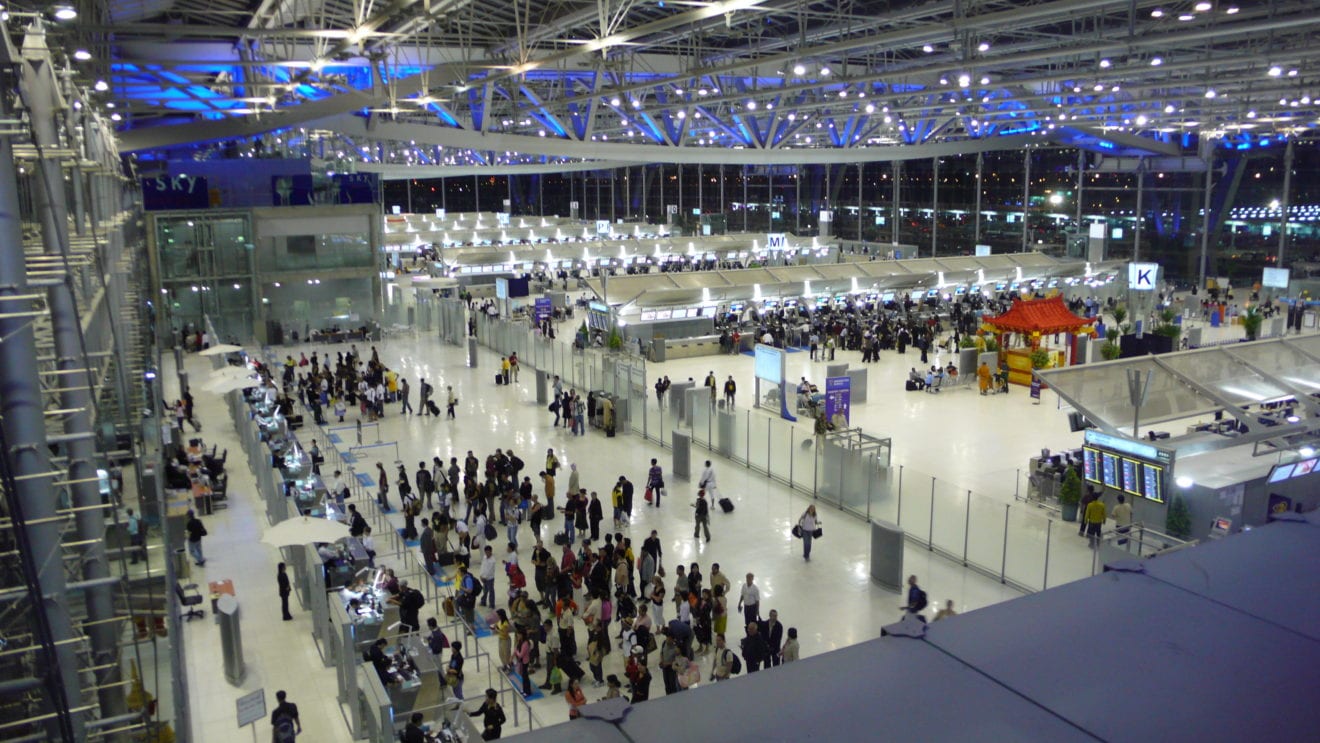
    Bangkok’s Suvarnabhumi Airport is installing 122 automated immigration gates for arriving and departing travelers to cut terminal congestion, airport director Kittipong Kittikachorn confirmed.

    The project lifts the gateway’s total automated clearance points from 106 to 228 gates. That extra capacity serves a hub that handled 59,626,075 passengers across the first 11 months of fiscal year 2026. Passenger volume rose 2.43 percent compared to the prior year.

    Expanding Automated Terminals

    Engineers are deploying the new gates across both departure and arrival corridors. Suvarnabhumi handled 346,905 commercial flights operated by 118 scheduled airlines during the 11-month period ending September 30. That is up 1.83 percent year on year. Terminal upgrades go beyond border control. The airport operator is adding over 200 device charging stations across waiting areas. Crews are also renovating core information desks, passenger restrooms, children’s zones, co-working spaces, and digital park seating.

    Hardware installation follows revised border clearance rules that expanded automated arrival gates to 33 nationalities, up from two. Returning visitors from approved jurisdictions bypass manual immigration booths. Those destinations include Singapore, Japan, South Korea, the United Kingdom, and the United States. First-time visitors must still complete manual biometric capture upon arrival. They gain automated gate access on subsequent trips.

    Commercial Impact on Transit Retail

    Shorter immigration lines shift how passengers spend time across Suvarnabhumi’s airside commercial space. Long 45-minute queues eat into retail spending. Discretionary time inside duty-free stores, restaurants, and specialty shops quickly disappears. Swift border checks convert standing lines into active foot traffic. That movement lifts average spending across airside concessions.

    Retailers now face changing foot traffic patterns rather than customs bottlenecks. Concessionaires depend on predictable passenger flow to secure sales before boarding calls. Brands that fail to capture these faster-moving travelers risk lower sales conversion. Dwell time can easily shift toward boarding lounges instead of shopping arcades.

    Shifting Airport Bottlenecks

    Regional hubs across Southeast Asia face similar processing pressures as passenger counts climb. Singapore’s Changi Airport and Kuala Lumpur International have deployed biometric and passport-free clearance to handle peak hours. Suvarnabhumi handles 140,000 to 150,000 arrivals daily during peak travel seasons. Hourly rushes bring several thousand travelers at once.

    Funneling 53 percent of inbound arrivals through automated lanes helps solve tight space limits inside the main immigration hall. Automated gates take up less floor space than manned booths. They boost passenger flow per square meter without requiring structural terminal expansions.

    Operational Milestones Ahead

    These equipment upgrades coincide with Suvarnabhumi entering its third decade of operations. Airport managers have reconfigured the immigration hall layout to ready the terminal for winter flight schedules. Staffing models have also shifted across peak operational shifts.

    Contractors will focus next on completing physical gate installations and connecting systems to national security databases before full fiscal year 2026 operational figures land in October.

  • Thailand tightens disease control measures at Suvarnabhumi Airport

    Thailand tightens disease control measures at Suvarnabhumi Airport

    The Department of Disease Control (DDC) under Thailand’s Ministry of Heath has tightened disease control measures at Suvarnabhumi International Airport regarding an outbreak of an unknown illness in Congo, its Director General Doctor Panumas Yanwetsakul has said.

    Currently, no suspected cases of this disease have been identified in Thailand. Nevertheless, the DDC has enhanced surveillance, prevention, and control measures, including stricter screening protocols at the Suvarnabhumi International Airport.

    Travelers arriving from Congo are required to undergo temperature checks and provide their addresses and contact numbers in Thailand, along with details of their departure from Congo.

    Additionally, those who have traveled from Congo within the last 21 days must complete a health reporting form and adhere to the guidelines on the Health Beware Card issued by health officials.

    People who have been in Congo within the past 21 days should monitor for initial symptoms such as fever exceeding 38 degrees Celsius, headache, sore throat, muscle pain, fatigue, or exhaustion. If these symptoms worsen, they must seek medical attention immediately and inform doctors of their travel history for diagnosis and treatment to prevent disease transmission, Dr. Panumas advised.

    As of Feb. 19, the World Health Organization (WHO)’s data indicated that the outbreak in Boloko and Bomate villages in Equateur province of Congo had resulted in 955 cases and 60 fatalities, reflecting a 6.3% fatality rate.

    Laboratory tests confirmed that the illness was not caused by the Ebola or Marburg viruses.

  • Ten airports introducing Alipay for travellers

    Ten airports introducing Alipay for travellers

    Ten international airports will be offering Alipay for travellers by the end of next month.

    First up in Alipay’s new “Future Airport” program are Munich Airport, Singapore Changi Airport, Narita International Airport in Tokyo, Kansai International Airport in Osaka, Seoul Incheon International Airport, Auckland Airport in New Zealand, Suvarnabhumi Airport in Bangkok, Hong Kong International Airport, Taoyuan International Airport in Taipei and Macau International Airport.

    “We see more Chinese tourists passing through our airport every year as they visit Japan, so becoming part of Alipay is a critical tool for our merchants,” says Kansai Airport executive officer Akihisa Tabe.

  • King Power duty free sales +47% in Thailand

    King Power duty free sales +47% in Thailand

    Forward bookings from airlines and indicators from leading travel agents suggest that Chinese arrivals to Thailand will reach record levels in 2015, as the King Power International Group reports sales up by 47% this year.

    Speaking to TRBusiness in a detailed interview this month, she said: “With the exception of the tragic bombing in August, 2015 to date has been a very good year for the group. Traffic to Bangkok particularly has increased very significantly.

    “Overall traffic at Suvarnabhumi is up 19.16%, to the end of August, and traffic at Don Muang is up 65%. Within those overall traffic numbers there are specific nationality changes that have generally had a very positive impact on sales.

    “Total Chinese traffic at Suvarnabhumi is up 151% to 5,651,591 passengers. Indian passengers are another very important customer group for us and the traffic with them is up by 20% – and of the other key customer groups, Korean and Japanese traffic levels are up 38% and 13.3% respectively.”

    She added that these positive increases have offset the decrease in Russian passengers (-49.8%) and Thai nationals, who are down by 14.73%. more happily she said: “Overall group sales are up 47%, versus the same period last year.”

    Whelan pointed to an outstanding +72% sales performance by the cosmetics and skincare category, followed by watches (+76.68%), Jewellery (77.05%), tobacco (+ 30.08%) and leather goods(+ 30.94%).

    She says this impressive growth has been driven by a combination of factors, including organic passenger growth and aforementioned rises in high spending overseas visitors.

    An interview with Susan Whelan appears on page 30 of the October Cannes exhibition issue of TRBusiness and also on pages 81-85 in the bonus retail section of the Top 10 International Retailers 2015.