Tag: switzerland

  • FINMA Approves Switzerland’s First Retail Bitcoin ETF

    FINMA Approves Switzerland’s First Retail Bitcoin ETF

    Swiss financial market regulator FINMA has approved the country’s first retail exchange-traded fund that invests directly in Bitcoin. Under Swiss law, the watchdog categorized the product as an “other fund for alternative investments” with a specific risk profile.

    Approval required a formal waiver from standard risk diversification requirements, which FINMA granted because of Bitcoin’s established trading history and high trading volume relative to other digital tokens.

    Managers offering the product must comply with specific operational and custody risk mitigations set out in regulatory guidance published on 12 January 2026. The approval places heavy emphasis on consumer protection mechanisms under the Financial Services Act, known as FinSA.

    Custody Rules and Retail Conduct

    Distributors must enforce strict point-of-sale conduct rules, including rigorous investor suitability assessments. Supervised entities selling the fund must deliver explicit risk warnings covering cryptocurrency volatility and the potential for substantial capital loss directly to end buyers.

    Regulatory Foundations and Prior Filings

    FINMA first authorized a crypto basket fund for qualified investors in 2021, restricting that early product to institutional and high-net-worth accounts. The new decision extends direct spot exposure to everyday consumers while shifting regulatory enforcement toward broker-dealer disclosures and fund documentation transparency.

    Other fund providers have already submitted or announced competing applications for Swiss Bitcoin ETFs, leaving FINMA to review a pipeline of identical retail offerings.

  • Oeko-Tex Records 13 Percent Rise in Made in Green Demand

    Oeko-Tex Records 13 Percent Rise in Made in Green Demand

    Oeko-Tex launched its Trust in Every Thread consumer campaign on Oct. 12 after the European Union introduced regulations restricting unverified sustainability claims across apparel and textiles.

    Demand for the group’s Made in Green standard rose 13 percent during its 2025-26 fiscal year.

    At the centre of the campaign is a 35-second film and consumer education drive. It directs shoppers to inspect garment tags and verify claims through digital traceability tools. The European Union’s Empowering Consumers for the Green Transition Directive took effect on Sept. 27. It outlaws sustainability labels lacking backing from public authorities or accredited third-party certification bodies. Private schemes must now maintain publicly accessible criteria, enforce third-party monitoring, and provide mechanisms to suspend non-compliant users.

    Stricter verification rules for textile certification

    Generic environmental buzzwords face outright bans under the new European framework unless backed by verified data. Brands can no longer present a single product characteristic as proof of whole-garment sustainability. Verification systems must also operate independently from scheme owners and commercial clients.

    Standard 100, the core certification from Oeko-Tex, tests raw materials, intermediate goods, and finished items for more than 1,000 harmful chemicals. Criteria cover every component of a finished product, including sewing threads, zippers, and buttons. Limit values undergo mandatory annual reviews. The tightest thresholds apply to baby and toddler clothing up to three years of age.

    Quality control procedures require retesting for 25 percent of all issued certificates each year. The group enforces compliance through unannounced site inspections and factory audits across its global network.

    Supply chain transparency and chemical screening

    The broader Made in Green certification links Standard 100 product testing with facility-level audits under the STeP program. That framework evaluates chemical management, working conditions, and environmental performance inside processing mills and cut-and-sew units. Each certified item carries a dedicated product ID and QR code. Shoppers can use them to track production stages back through the manufacturing chain.

    Rival standards take different approaches. The Global Organic Textile Standard requires a minimum of 70 percent organic fibres, while Bluesign focuses on facility chemical management and specific inputs. Oeko-Tex designed its dual-track testing and facility tracking system to satisfy European regulators demanding end-to-end evidence.

    Garment suppliers and global brands sourcing from manufacturing hubs across Asia face immediate compliance pressure. Exporters operating without accredited third-party verification risk regulatory fines and product suspensions at European ports of entry.

    Governance overhaul and structural separation

    Oeko-Tex revamped its operating structure ahead of the European directive to protect its certification status. In an announcement on Aug. 19, the organization separated standard-setting operations from conformity assessments. The restructuring introduced an independent oversight council and an anonymous whistleblowing platform for reporting compliance breaches.

    Inga Bleyer, head of marketing and communication at Oeko-Tex, outlined the rationale behind the verification drive in an official statement:

    “Trust is not a word you can put on a label. It is built in the places nobody looks: in the button, the zipper, the thread, in the limits we revise every year because the science moves, in a quarter of our certificates we go back and retest.”

    What buyers and suppliers face next

    Chief executive Alfred J. Beerli stated that independent verification remains the only mechanism to safeguard consumer trust under the new regulatory climate. The group’s digital Label Check portal lets retailers and shoppers enter certificate numbers to verify validity in real time.

    European member states must now transpose and enforce national penalties under the directive as customs authorities inspect incoming shipments. Brand compliance audits across autumn and winter retail collections will test how strictly European regulators apply the documentation standards.

  • Gen Z Collectors Outspend Older Generations with $347,000 Average Art Outlay

    Gen Z Collectors Outspend Older Generations with $347,000 Average Art Outlay

    Wealthy Gen Z collectors spent an average of $347,000 on fine art in 2025. That outlay topped every older demographic group by more than two to one.

    Spending rose 19 per cent from the previous year. That finding comes from survey data published by Art Basel and UBS, covering 3,100 high-net-worth individuals across 10 major markets.

    Baby Boomers aged 62 to 80 ranked second in spending, followed by Millennials aged 30 to 45. Gen X respondents aged 46 to 61 posted the lowest average outlay at $79,000 per collector. That is less than a quarter of the Gen Z total.

    Family Wealth Powers Million-Dollar Acquisitions

    Inherited capital among younger ultra-wealthy buyers drove the surge, rather than retail enthusiasm. Gen Z buyers made up 9 per cent of the 3,100 collectors polled. Yet they represented nearly half of all buyers who bought artworks priced above $1 million during 2025 and the first half of 2026.

    During the first half of 2026, 13 per cent of Gen Z respondents spent more than $1 million on fine art, against 3 per cent across the wider sample. About 37 per cent of Gen Z respondents reported their wealth came primarily from family sources. Another 40 per cent cited family influence as their entry point into collecting.

    Across the full sample, average fine-art spending rose 13 per cent year on year in 2025 to reach $124,265. Gen Z spending in the first six months of 2026 alone beat their full-year 2025 average.

    Traditional Mediums Retain Buyer Loyalty

    Purchases remain concentrated in classic categories rather than digital assets or non-traditional formats. Painting and sculpture dominate transaction volumes across every surveyed generation.

    “Some aesthetic preferences remain more consistent across generations than is often assumed,” Paul Donovan, chief economist at UBS Global Wealth Management, said in the report.

    Buyer motivations also diverge from institutional tastemakers. Nearly half of all surveyed buyers said an artwork’s rarity and uniqueness carried more weight in purchase decisions than critical acclaim from curators or commercial dealers.

    Digital Discovery and Direct Studio Sourcing

    Younger collectors are altering transactions across primary and secondary channels. Commercial galleries face changing habits as buyers bypass intermediaries to purchase directly from artist studios or independent platforms.

    Artificial intelligence tools are gaining traction in collector research. The proportion of collectors using AI to research potential art purchases rose from 4 per cent in 2024 to 22 per cent in 2026.

    Gallery operators and luxury auction houses must adapt digital-native marketing to clients who favor traditional tastes. Family offices managing intergenerational transfers are directing capital toward blue-chip physical inventory rather than speculative emerging categories.

    Intergenerational Wealth Transfer Shapes Market Baseline

    Survey qualification required respondents to hold at least $1 million in investable liquid assets, excluding primary residences and privately held business equity. This baseline separates the cohort from general retail consumers and highlights the mechanics of wealth preservation.

    Earlier surveys conducted after 2020 pointed to falling transaction counts among older institutional patrons. The latest data shows younger heirs are buying higher-value individual lots, maintaining dollar volume across top-tier international sales.

    Auction houses and private dealing desks now look to late-2026 auction totals to see if direct artist purchases continue to eat into dealer commission revenue.

  • Freitag Launches Premium Reference Handbag Line Across 30 Stores

    Freitag Launches Premium Reference Handbag Line Across 30 Stores

    Freitag launched a four-bag collection called Reference on Thursday. The line pushes its upcycled truck-tarp business into higher price tiers across 30 company stores and 200 retail partners worldwide.

    The Swiss brand sells its accessories primarily in European and Asian markets. In those regions, its store network also functions as a return, repair and resale ecosystem.

    Higher production costs and monochrome sourcing

    European manufacturing partners assemble each Reference handbag in small runs using single-color truck tarpaulins. The monochrome look departs from the company’s multi-colored aesthetic to target shoppers seeking minimalist design. Every bag includes a detachable repair kit made with matching tarpaulin, thread and lining to allow repairs decades later.

    Circular production economics remain tough. Markus Freitag co-founded the brand with his brother Daniel in 1993. He confirmed that preparing used tarps costs roughly three times more than purchasing new raw material. The company collects tarpaulins across Europe, inspects each piece, strips the material by hand and washes it before cutting begins.

    The retail calculation for Asian store networks

    For department store landlords and franchise partners across East Asia, the Reference line offers a way to lift average transaction values without increasing volume. Freitag has built concentrated followings in Tokyo, Seoul and Shanghai. The company avoids chasing unit growth, choosing instead to elevate product tiers and protect margins squeezed by labor and cleaning costs.

    Consumer willingness to pay luxury prices for industrial waste poses the primary commercial risk during a broader luxury slowdown. Freitag frames monochrome tarps as equal to traditional luxury leathers. Shoppers in key Asian retail hubs may scrutinize whether stripped-back upcycled items command premium price tags when competing against established designer leather goods.

    Two decades of architectural and circular retail

    The release coincides with the 20th anniversary of Freitag’s flagship store in Zurich, constructed in 2006 from 19 stacked freight containers. Swiss authorities made the temporary structure permanent in 2014. In 2025, the company added a dedicated Repair Kiosk to the site to handle product servicing.

    Chief executive Janine Weiz-Bühler said the business aims to broaden its demographic reach without abandoning its environmental mandate. “We prove that upcycling and elegance are not a contradiction,” Weiz-Bühler said. She noted that the company views the elevated collection as an expansion of its existing lineup rather than a structural rebrand.

    Road-testing circular tarpaulins and mono-materials

    Freitag is also running road tests on prototype circular tarpaulins developed with industrial partners. These materials are engineered to undergo mechanical or chemical recycling into fresh base materials once removed from commercial trucks.

    Management is monitoring customer adoption of its Mono backpack. Recyclers can shred the bag directly into nylon granules without disassembly because it is constructed entirely from a single polyamide grade.

  • Rolex Tops Asia Brand Advocacy Ranking as Wholesale Revenue Hits $13.38 Billion

    Rolex Tops Asia Brand Advocacy Ranking as Wholesale Revenue Hits $13.38 Billion

    Rolex took the top spot in Asia’s inaugural Brand Conviction Index, outranking regional retail competitors as its brand valuation jumped 36 per cent to US$18.8 billion.

    Morgan Stanley and Luxe Consult estimate the Geneva-based watchmaker generated wholesale sales of just over US$13.375 billion in 2025, taking market share even after trimming production volume for two consecutive years.

    Advocacy outpaces actual purchasing power

    The index evaluated consumer sentiment across three primary metrics: current purchasing activity, willingness to recommend the brand to peers, and future purchase intent. Rolex led the regional table because its advocacy extends far beyond its active customer base.

    Most respondents who recommend Rolex across Asian markets do not own one. A substantial share of shoppers who stated an intention to buy a piece have never completed a transaction with the company, giving the brand unmatched mental real estate across the region.

    Disciplined output maintains secondary pricing

    For multibrand luxury retailers and department store operators across Hong Kong, Singapore and Tokyo, this dynamic protects floor productivity. While Swiss competitors flooded wholesale channels during the post-pandemic correction, Rolex restricted supply allocations to authorized dealers, keeping secondary market premiums intact.

    The deliberate scarcity shifts inventory risk away from retail partners and onto aspiring buyers who remain on multi-year waiting lists. Department store landlords in key Asian shopping districts continue to prioritize Rolex boutique footprints because the footfall generated by unfulfilled demand feeds surrounding luxury concessions.

    Artificial intelligence mirrors human consensus

    Machine learning platforms reflect the same concentration of consumer desire. A recent survey evaluating how leading artificial intelligence engines answer luxury watch recommendations showed all major systems named Rolex more frequently than any competing manufacture.

    Brand Finance’s 2025 Luxury and Premium 50 ranking confirmed the financial momentum, listing the company’s valuation gain among the steepest in the personal luxury goods sector.

    Sustained strategy through sector pullbacks

    Executive leadership has maintained this positioning through broader market downturns. In 2024, Rolex chief executive Jean-Frederic Dufour rejected discounting and short-term volume expansion during an industry-wide sales contraction, keeping retail distribution tight across Asia and North America.

    Industry attention now turns to upcoming Swiss export data and secondary watch price indices for the final quarter of 2026, which will reveal whether Rolex can sustain its wholesale margins as wider luxury demand moderates.

  • Nestlé Sells Holistic Health Supplement Business to Yellow Wood for $1.4 Billion

    Nestlé Sells Holistic Health Supplement Business to Yellow Wood for $1.4 Billion

    Nestlé has sold its mainstream vitamins, minerals and supplements unit, Holistic Health, to private equity firm Yellow Wood Partners for $1.4 billion. The transaction transfers brands including Nature’s Bounty to the consumer-focused buyout firm for US$1 billion in cash.

    The Swiss food and beverage group is pruning product lines that fall outside its core high-margin categories. Management described the divestment as a necessary step in realigning capital toward divisions where the company holds stronger global pricing power and manufacturing advantages.

    Portfolio refocus at Swiss food group

    Chief executive Philipp Navratil pointed to changing dynamics across consumer health channels as the rationale for exiting mainstream supplements. Dedicated specialist owners are better suited to run broad-market dietary brands as grocery and pharmacy retail channels fragment.

    Yellow Wood Partners focuses on corporate carve-outs in personal care, beauty, and consumer health. The private equity buyer plans to run the acquired supplement portfolio as an independent platform operating across global retail networks.

    Divestment strategy in global retail

    Consumer goods giants across the Asia-Pacific region and western markets have spent the past two years shedding slower-growth divisions to protect margins against inflation. Nestlé itself has pursued selective acquisitions in medical nutrition while trimming commoditised lines from its health science roster.

    Regulators will review the sale before formal closing, with transfer of manufacturing assets and brand distribution agreements expected in the coming quarters.

  • Weleda Expands Skin Food Line into Clinical Skincare and Daily Care

    Weleda Expands Skin Food Line into Clinical Skincare and Daily Care

    Swiss natural beauty producer Weleda plans to expand its flagship Skin Food franchise into medical-grade skincare and daily personal care across global markets. The century-old product line generates approximately 20 per cent of Weleda’s global turnover, led by sales in Australia, Japan, the United States, and the United Kingdom.

    First formulated in 1926 using chamomile, calendula, rosemary, and viola tricolor, the original multi-use cream remained unchanged for decades. The company has since adapted the blend into night creams, body oils, lip care, and face serums. A dedicated eye cream recently joined the range, with a hand wash and hand lotion scheduled to roll out in the first quarter of 2026.

    New Categories and Clinical Formulations

    Weleda is collaborating with professional makeup artists to refine formulas for high-definition photography and screen production. Beyond cosmetic skin prep, the group has initiated longer-term research and development targeting chronic dermatological conditions.

    Over the next five to ten years, Weleda plans to test Skin Food formulations for acne, rosacea, eczema, and psoriasis. Jayn Sterland, Country Manager for the UK and Ireland, noted that product development will hinge on regulatory compliance across different jurisdictions. The company is also working on mineral UV protection formulations, though executives confirmed those products remain in testing.

    Packaging Shifts and Digital Demand

    Supply chain adjustments accompany the product rollout. Weleda has transitioned its packaging back to aluminium tubes, replacing temporary post-consumer recycled plastic with 100 per cent recycled aluminium worldwide.

    In Asian retail channels, where multi-step skincare routines dominate department stores and specialty beauty chains, multi-purpose European heritage creams have found a distinct niche. While traditional drugstores stock the core green tubes, growth in Japan and Southeast Asia is shifting toward digital platforms. Social media campaigns on TikTok have drawn younger consumers who bypass brick-and-mortar shelves entirely.

    Regulatory filings for the first wave of therapeutic claims across international beauty registries will determine how quickly Weleda can clear its clinical skincare line for retail distribution.

  • BNP Paribas Switzerland Pivots to Wealth Management, Targeting Swiss Entrepreneurs and High-Value Lending Market

    BNP Paribas Switzerland Pivots to Wealth Management, Targeting Swiss Entrepreneurs and High-Value Lending Market

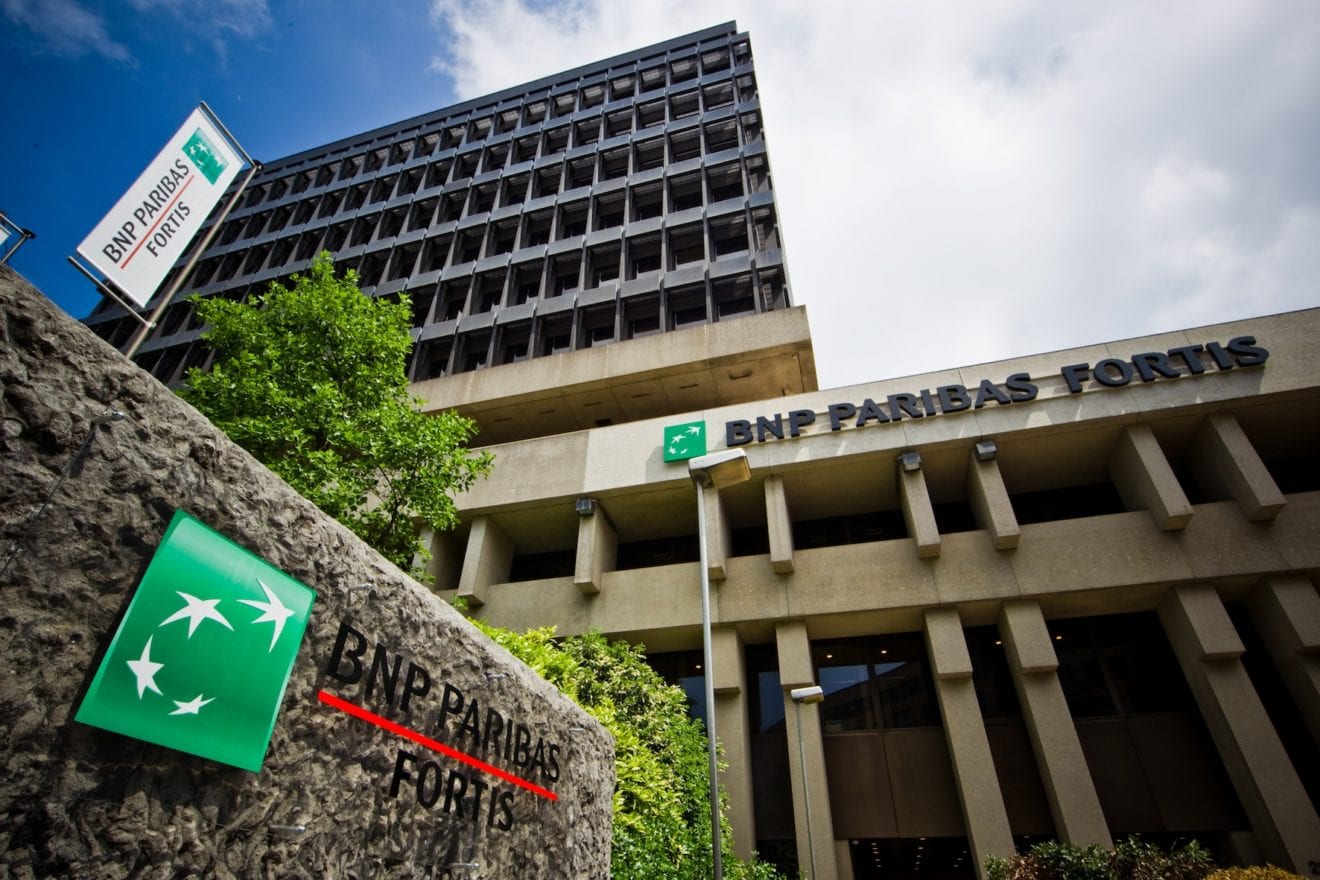
    BNP Paribas, the French multinational bank, has recently finished the restructuring of its Swiss operations, with a primary emphasis on Wealth Management. From this point onwards, the bank’s primary concern will be to expand its wealth management sector, focusing especially on Swiss entrepreneurs. A key component of this strategy is the lending business.

    Aligning the Swiss Operations

    Over the years, BNP Paribas has been realigning its operations in Switzerland. Today, Wealth Management and entrepreneurial services form the bedrock of their strategy. Since May 2025, the Swiss unit has been operating as a branch of BNP Paribas Paris. As a result of this change, separate financial figures will no longer be made public. Enna Pariset, Swiss head of BNP Paribas, stated, “The retreat from commodity trade finance was finalized in 2022, and we concluded 2025 positively, intending to continue our growth.”

    Swiss Client Growth

    The bank intends to concentrate primarily on Swiss entrepreneurs. Pariset mentions that “Four years after the launch of the initiative, roughly 30% of the assets under management are from Swiss clients.”

    The Corporate and Investment Banking (CIB) unit is another important aspect of the company. In 2024, revenues from Swiss clients totaled €1 billion globally and saw further growth in 2025. According to the new growth plan, these figures are projected to increase to approximately €1.5 billion by 2030.

    Lending as a Key Strategy

    Lending forms a fundamental part of the Wealth Management strategy. BNP Paribas positions itself as a purveyor of intricate financing solutions for entrepreneurs and affluent private clients. Yusuf Savmaz, CEO of Wealth Management Switzerland, stated, “Not many banks offer a €150 million single-stock loan in Switzerland. Owing to our robust balance sheet and expertise, such transactions are integral to our core operations.”

    Another area of focus is the expansion of the mortgage franchise. Pariset explained, “This is a relatively new business for us. We see immense potential here, especially considering that our collaboration with AXA Investment Managers has enriched our knowledge of the real estate market in Switzerland.”

    AXA Investment Managers Integration

    BNP Paribas anticipates additional momentum from integrating AXA Investment Managers, which currently manages CHF 75.5 billion in assets for Swiss clients, including CHF 52.4 billion in Switzerland. The Swiss asset management business of AXA IM will maintain its independence, with its own CEO. However, Pariset assured that they will collaborate closely to offer clients a wider range of products.

    Private Banking Positioning

    In classic private banking, the entry threshold in Switzerland is approximately CHF 5 million. BNP Paribas adopts a tailored approach based on the client segment. For Swiss clients, the entry threshold is somewhat lower, while for new relationships with Middle Eastern clients, it’s higher due to increased regulatory requirements, explained Savmaz.

    Artificial Intelligence Initiatives

    A key aspect of BNP Paribas’ model is its integration with Corporate and Investment Banking. This deep understanding of firms through Corporate and Investment Banking helps them assess risks, noted Savmaz.

    While BNP Paribas utilizes traditional strategies in the investment management area, digital assets currently do not play an active role. Pariset stated, “We are not the right bank for that.” However, the bank is investing in new technologies and is working with Zurich fintech Unique on several AI projects.

    Questions & Answers

    What is the focus of BNP Paribas in Switzerland?
    BNP Paribas is focusing on expanding its Wealth Management sector, especially serving Swiss entrepreneurs.

    What is BNP Paribas’ approach to private banking in Switzerland?
    In private banking, BNP Paribas adopts a differentiated approach based on the client segment with an entry threshold of approximately CHF 5 million.

    Does BNP Paribas have plans to invest in digital assets?
    Currently, BNP Paribas does not see an active role for digital assets in its investment management area.

  • Venezuela’s Billion-Dollar Gold Exodus: Uncovering the Secret Shipment of 100 Tons to Switzerland

    Venezuela’s Billion-Dollar Gold Exodus: Uncovering the Secret Shipment of 100 Tons to Switzerland

    Between 2013 and 2016, Venezuela sent 113 metric tons of gold to Switzerland, as per data from customs authorities. This gold, valued at approximately 4.14 billion Swiss francs, or US$5.20 billion, reportedly originated from Venezuela’s central bank. This substantial transaction occurred in the early years of Nicolas Maduro’s presidency, a period when the Venezuelan government was selling gold in an effort to bolster its struggling economy.

    Understanding the Situation

    During the years from 2012 to 2016, the Venezuelan central bank engaged in significant distress selling. According to Rhona O’Connell, a markets analyst at StoneX, much of the sold gold likely ended up in Switzerland. After its arrival, the gold may have remained with financial sector counterparts, been re-sold as small bars to Asian markets, or distributed elsewhere globally.

    The customs data revealed a noticeable halt in gold exports from Venezuela to Switzerland starting in 2017. This cessation coincided with the introduction of European Union sanctions and continued until at least 2025. O’Connell from StoneX posited that this drastic reduction in exports was likely a result of the Venezuelan central bank exhausting its gold reserves.

    Recent Developments

    In more recent events, Maduro was apprehended by U.S. special forces during a raid in Caracas on January 3, and is currently facing drug-related charges in a New York court. In response to these events, Switzerland took action on Monday by freezing the assets held within the country by Maduro and 36 of his associates. However, Swiss authorities have not disclosed any details regarding the value or origin of these impounded funds.

    Questions & Answers

    Why was Venezuela selling gold to Switzerland?
    The Venezuelan government was selling gold in a bid to shore up its struggling economy during the early years of President Nicolas Maduro’s leadership.

    What happened to the gold after it arrived in Switzerland?
    Post-arrival, the gold might have remained with financial sector entities in Switzerland, been sold as small bars to Asian markets, or distributed globally.

    Why did the gold exports from Venezuela to Switzerland stop in 2017?
    The halt in gold exports coincided with the enforcement of European Union sanctions against Venezuela. Additionally, it’s speculated that the Venezuelan central bank may have depleted its gold reserves, contributing to the cessation in exports.

  • Swiss Innovation Meets Asian Fintech: Spotlight on Switzerland at Singapore Fintech Festival 2025

    Swiss Innovation Meets Asian Fintech: Spotlight on Switzerland at Singapore Fintech Festival 2025

    Switzerland is set to be a focal point at the Singapore Fintech Festival 2025, which will mark the country’s ninth consecutive year of participation. The Swiss Pavilion is a testament to how Swiss innovation, trust, and cooperation continue to significantly impact Asia’s rapidly transforming fintech and digital finance sector.

    Switzerland’s Stalwart Presence

    Since its initial appearance at the Singapore Fintech Festival, the Swiss Pavilion, facilitated by Switzerland Global Enterprise and the Swiss Business Hub South East Asia + Pacific, has become a fundamental aspect of the event. The combination of Switzerland’s extensive financial expertise and avant-garde technology offers a one-of-a-kind value proposition for global partners.

    The Pavilion, themed ‘Innovation Meeting Trust,’ underscores the nation’s leadership in digital assets, AI-driven finance, and secure financial infrastructure.

    Switzerland’s Deep Tech Prowess

    “Switzerland has become a beacon for deep tech capabilities, bolstered by its capacity to innovate with integrity,” stated Renée Koh, Deputy Head of the Swiss Business Hub South East Asia + Pacific.

    She indicated that Switzerland could serve as a connecting bridge for Asia’s vast deep tech ambitions, linking ecosystems through trust, expertise, and a shared vision.

    Establishing Connections Among Innovation Hubs

    The Pavilion, part of Switzerland’s broader global innovation strategy, which includes its forthcoming participation at Expo 2025 Osaka, emphasizes the country’s dedication to sustainable, trust-based innovation.

    Given the rapidly growing fintech scene in Asia, Swiss institutions are positioning themselves as trustworthy partners for research, venture scaling, and digital transformation efforts.

    Koh highlighted the Swiss collaborative model that underpins their global success, “Our innovation infrastructure is intended for partnerships, be it through talent acquisition, R&D alliances or venture scaling.”

    Showcasing Swiss Excellence

    The 2025 Pavilion congregates an impressive variety of Swiss companies and institutions pushing the frontiers of global finance. The participants, including the Swiss National Bank, Securosys, ti&m, Chartered Investment, QAI Ventures, Scenario-X, Unique.ai, and Zweyberg, showcase Switzerland’s strengths in secure technology, asset tokenization, AI, and wealth management innovation.

    The exhibits represented at the Pavilion, ranging from tokenized investment structures to AI-based identity verification, reflect the expanse of Switzerland’s fintech ecosystem. The Swiss National Bank’s involvement, in particular, underscores the central role of innovation in contemporary central banking and digital currency research.

    A Platform for Collaboration

    The Singapore Fintech Festival, the world’s largest fintech gathering, is organized by the Monetary Authority of Singapore (MAS) in partnership with The Association of Banks in Singapore. The Festival brings together policymakers, technologists, and financial leaders, providing an excellent platform for Switzerland to bolster its reputation for stability, integrity, and superior quality innovation.

    Switzerland’s consistent presence via the Swiss Pavilion not only highlights the country’s fintech leaders but also strengthens cross-border collaboration with Asia’s financial juggernauts.

    This year’s participation emphasizes Switzerland’s message: that innovation, trust, and global collaboration are the core pillars of the digital economy.

    Questions & Answers

    What is Switzerland’s theme for the Singapore Fintech Festival 2025?
    Switzerland’s theme for the festival is ‘Innovation Meeting Trust,’ which highlights its leadership in digital assets, AI-driven finance, and secure financial infrastructure.

    What is the role of the Swiss Pavilion at the Singapore Fintech Festival?
    The Swiss Pavilion demonstrates Switzerland’s extensive financial knowledge and cutting-edge technology, offering a unique value proposition for global partners. It also showcases a variety of Swiss companies pushing the boundaries of global finance.

    What does Switzerland’s consistent presence at the Singapore Fintech Festival signify?
    Switzerland’s ongoing presence highlights the country’s financial technology leaders, while also strengthening cross-border collaboration with Asia’s financial powerhouses. It underlines Switzerland’s commitment to innovation, trust, and global collaboration.


  • Switzerland and Singapore to Teamup on Fintech

    Switzerland and Singapore to Teamup on Fintech

    Switzerland and Singapore, the often called Switzerland of Asia, are looking towards financial sector digitalization. A conference slated for June in Zurich seeks to do just that.

    The Point Zero Forum» intends to bring public sector leaders together with top private sector counterparts in businesses and finance, from June 21 to 23 in Zurich, Switzerland’s State Secretariat for International Financial Matters (SIF) announced on Monday.

    The event will feature a high-caliber lineup, including Swiss Federal Councillor Ueli Maurer and Singapore’s Deputy Prime Minister Heng Swee Keat, who will open the event. The President of the Swiss National Bank (SNB), Thomas Jordan , and UBS Group CEO Ralph Hamers, will also be in attendance, according to the program from the website.

    The directors of the respective financial supervisory authorities, Ravi Menon from the Monetary Authority of Singapore (MAS) and Urban Angehrn from the Swiss Financial Market Supervisory Authority (Finma) will also join the conference.

    Deputy Prime Minister Heng Swee Keat, who also serves as Coordinating Minister for Economic Policy,  sums up the need for such an endeavor.

    Digital technology has enormous potential to change the world for the better, especially through finance. To unleash the potential, we need to seek new ways of working together, address key global challenges in partnership, and seize the new opportunities.

  • Crypto Bank Raises Money for Foreign Expansion

    Crypto Bank Raises Money for Foreign Expansion

    Seba is raising nearly $120 million, in a bid to fuel its expansion outside of Switzerland. Zug-based Seba raised 110 million Swiss francs ($118 million) from a host of new and existing investors, it said in a statement on Wednesday. The round was significantly oversubscribed, with demand far exceeding the initial funding target, the fledgling bank said. It didn’t disclose a valuation of itself, as rivals have done.

    Seba said it will use the funds to keep hiring and to expand into new markets. Investors in this round included Altive, Ordway Selections, Summer Capital, DeFi Technologies, Alameda Research, and Julius Baer.

    This comes just days after rival Sygnum raised $90 million in Asia-focused fundraising. The two banks were both granted licenses in Switzerland 28 months ago.

  • UBS Extends Partnership With Private Equity Fintech

    UBS Extends Partnership With Private Equity Fintech

    Switzerland’s largest lender is expanding its partnership with the iCapital Network platform to serve wealthy clients in Switzerland and Asia.

    UBS global wealth management is strengthening its ties to iCapital Network to gain access to the technology company’s data and analytics platform for private markets, according to a statement Thursday.

    Details of the deal were not announced.

    The platform, which automates the lifecycle of private market investments, enables UBS wealth managers to access data related to private equity, private debt, and real assets.

    The two parties, engaged in a strategic partnership since 2017,  expect the appetite for the asset class among high net worth individuals to grow, the statement says.