Tag: T mobile

  • System errors spare T-Mobile customers their price surge

    System errors spare T-Mobile customers their price surge

    T-Mobile recently announced what it called “pricing updates” that were applied almost universally and made customers’ bills go up. However there is a subset of T-Mobile users that have been spared these price hikes — probably not for long — due to system errors that have failed to push billing updates.

    These price hikes were, understandably, unanimously disliked. This is especially true for legacy customers who saw pricing changes on their old plans that T-Mobile had once marketed as price locked.

    After people walked out of T-Mobile stores in protest of the T-Life app these pricing updates served as another irritant for customers. In response users dug up old T-Mobile ads about price locked plans and some people left T-Mobile for alternatives. All in all the entire situation has been a difficult time to be a T-Mobile customer or employee.

    But there are apparently T-Mobile customers who are receiving the same bill despite having been informed of a price increase. These people are relatively very few but system errors on T-Mobile’s end seem to have worked brilliantly in their favor. If they’re very lucky then T-Mobile will never spot their outdated billing information though that seems very unlikely to me.

    Since the whole pricing updates fiasco T-Mobile has introduced a new price lock guarantee. Unlike previous guarantees that promised lifelong price locks this new one is only valid for 10 years. However after everything that has happened I’m not falling for T-Mobile’s new price lock plan and neither should anyone else.

    The “un-carrier” is hardly the only telecom company currently facing controversy. AT&T soured relations with employees recently and is having a service outage in Los Angeles that will last a whopping two months. On the other hand Verizon is having a pricing crisis as the company struggles to define a strategy for itself after a year of very few new signups compared to competitors.

    If you’re one of those lucky few T-Mobile customers whose bill has remained unchanged despite a notification to the contrary, consider yourself blessed. And keep your fingers crossed that your plan doesn’t get updated too soon.

  • T-Mobile brings its 5G Home Internet service to Puerto Rico

    T-Mobile brings its 5G Home Internet service to Puerto Rico

    T-Mobile is ending February with a big announcement for customers in Puerto Rico. The Un-carrier is expanding 5G Home Internet to Puerto Rico, thus allowing customers with an eligible address and qualifying voice line to sign up for the service for just $50 a month with AutoPay through their retail store.

    Arguably the fastest growing home internet provider in the United States, T-Mobile now offers customers in Puerto Rico a handful of benefits when going to its 5G Home Internet service.

    • A flat, monthly price: T-Mobile 5G Home Internet is $50 a month with AutoPay and a voice line and that’s it. There are no added taxes on qualifying accounts, monthly fees or equipment costs.
    • Simple setup: Pick up a gateway from a store, plug it in, download the app and get connected in less than 15 minutes.
    • A worry-free trial: Test drive 5G Home Internet worry-free for 15 days. When it’s time to make the switch, T-Mobile will pay up to $750 to cover any early termination fees from other internet service providers.
    • Price Lock: Lock in your monthly rate and enjoy peace of mind knowing that if T-Mobile ever raises your rate, you can get your last month of service refunded.

    Initially, 5G Home Internet will be available to T-Mobile customers in Puerto Rico in locations that have network capacity to provide a great experience to all customers. According to the carrier, network capacity will continue to be increased, so the 5G Home Internet service will expand to more people in the coming months.

  • T-Mobile subscribers can make hands-free calls using the Alexa digital assistant

    T-Mobile subscribers can make hands-free calls using the Alexa digital assistant

    Back in 2020, AT&T subscribers could use the Alexa digital assistant on their Echo smart speaker and smart display to make and take phone calls over the AT&T network. These calls could be going out to numbers in the U.S., Canada, and Mexico, or coming in from callers in those countries. A year later, Verizon subscribers were allowed to link their phone numbers to the Alexa digital assistant on their smart speakers allowing them to make or take hands-free calls.

    T-Mobile subscribers are now able to connect their phone numbers with Alexa allowing subscribers of the nation’s second-largest carrier to make or take calls hands-free through Alexa. A tip  The Mobile Report (formerly The T-Mobile Report) received included an image showing a cartoonish T-Mobile subscriber saying “Alexa, make a call.”  The rest of the copy on the promo says, “Link your T-Mobile number to your Alexa speaker to connect to the people & places that matter most-with the same hands-free convenience you’ve come to expect from Alexa.”

    T-Mobile has put up a support page explaining how to set up Alexa to make calls. First, to link your T-Mobile account to Alexa you will need the following:

    • A T-Mobile account with a Voice line
    • A T-Mobile ID
    • An Amazon/Alexa account
    • Alexa Speakers
    • iOS 14 or Android 8.0 or newer smartphone to pair via Alexa app
    To link using the T-Mobile with Alexa skill, open the Alexa app on your phone and go to More > Settings > Communication. Under accounts, select T-Mobile and follow the directions on linking your T-Mobile account.
    To link using the settings in the Alexa app, follow these directions:
    1. Download and sign in to the Alexa app.
    2. Select More > Skills and Games.
    3. Select the Search icon in the top-left corner and enter “T-Mobile”, then select T-Mobile with Alexa.
    4. Select Enable Skill.
    5. On the T-Mobile login page, enter the phone number or email address and password you used to create your T-Mobile ID, then select Sign in. You will be prompted to verify your account via text message with a T-Mobile verification code.
    6. Once verified, select the line you’d like to use for calling on Alexa and confirm your address for 911 calls.

    To unlink your T-Mobile account from Alexa, open the Alexa app and go to More > Settings > Communications. Under accounts, go to T-Mobile > Disable Skill. Follow the directions.

    To make a phone call, Say, “Alexa, call [contact name or phone number]” When there is an incoming call, Alexa will ring and announce the call / caller ID. Say “Alexa, answer call” or “Alexa, decline”. To make an emergency call, Say, “Alexa, call 911.” Alexa will share your e911 address with the operator prior to the operator answering the phone call.
    When you’re home in a room where you have one of your Amazon Echo speakers or screens, using Alexa sure is a convenient way to make or take calls without having to reach for your phone.
  • T-Mobile’s Scam Shield service has blocked 21 billion scam calls in 2021

    T-Mobile’s Scam Shield service has blocked 21 billion scam calls in 2021

    T-Mobile released its 2021 Scams and Robocalls report, and it says that its Scam Shield service managed to block 21 billion scam calls, which translates to 700 calls identified or blocked every second. The gathered data by T-Mobile shows an over 116% increase in scam call attempts from 2020.

    According to the T-Mobile scam call report, the most frequent scam was related to fake vehicle warranties, which accounted for 51% of all the call scams. In other popular scams, the scammers were posing as Social Security office workers (up to 10%) and wireless providers (up to 9%). Scammers also pretended to be employees of car insurance companies (6%) or package delivery companies (4%). There were also cases in which scammers posed as health insurance or health providers, the IRS, or workers from credit card companies.

    In its scam call observation, T-Mobile observed that the scammers were working mostly from Monday to Friday, and on the weekends, they didn’t work as hard. It seems that the scammers enjoy some time for themselves on the holidays. This year, Easter (April 4) had the lowest scam attempts of the year. T-Mobile also reported that starting on December 23, the number of call scams began to decline.

    Another piece of information that T-Mobile reports in its scam call report is that scammers are more likely to target some areas of the United States more than others. Scammers favored Texas, Florida, Arizona, and Georgia. And the most targeted area codes were in the Dallas/Fort Worth area.

    In the summer of 2020, T-Mobile released its Scam Shield service. The goal of the Scam Shield was to protect all of T-Mobile’s customers from scam call attacks for free. By using AI to analyze call behavior, T-Mobile constantly improves the protection of its network against scam call attacks.

    One of the features that Scam Shield has is scam detection. If Scam Shield detects a scam threat, the customer will be notified immediately. The Scam Shield service gives you the ability to turn off scam calls via Scam Block. Your phone will not even ring if Scam Block is enabled and Scam Shield detects a potential scam call. For more information about T-Mobile’s Scam Shield, visit T-Mobile’s website.

  • T-Mobile isn’t the only U.S. carrier with a nationwide 5G network

    T-Mobile isn’t the only U.S. carrier with a nationwide 5G network

    Move over T-Mobile, you’re no longer the only nationwide 5G network in town. AT&T announced Thursday that it has added 5G in 40 more markets; as a result, the country’s second-largest wireless provider now covers 205 million Americans with its 5G signal. Helping AT&T speed up the process so quickly was the launch last month of dynamic spectrum sharing (DSS) in parts of Florida and Texas. DSS responds in real-time to demand on AT&T’s network for either 4G LTE or 5G spectrum. Thus the use of the word “Dynamic” in DSS.

    With DSS, the same channel can be employed for 4G and 5G users at the same time. The technology is “traffic-aware” so 4G LTE and 5G resources are allocated based on the makeup of the traffic. Using its 850MHz low-band spectrum, AT&T’s coast-to-coast 5G can be found in 395 markets. T-Mobile’s nationwide 5G uses the carrier’s 600MHz low-band spectrum and can be accessed by 225 million people, 20 million more than AT&T. Besides offering 5G over its low-band spectrum, in limited parts of 35 markets, AT&T’s 5G+ service employs its faster mmWave spectrum.

    On August 7th, AT&T will offer its 5G service to customers of its least expensive unlimited plan at no additional cost. The Unlimited Starter postpaid plan costs $140 for 4 lines ($35 per line/per month). Customers on more expensive unlimited plans already had 5G service. The wireless provider’s prepaid customers will also have access to 5G via the Unlimited Plus plan, which costs $75 per month or $50 with autopay. That service also begins on August 7th.

    Chris Sambar, Executive Vice President of Technology Operations said, “Our strategy of deploying 5G in both sub-6 (5G) and mmWave (5G+) spectrum bands will provide the best mix of speeds, latency and coverage that are needed to enable revolutionary new capabilities to fuel 5G experiences for consumers and businesses. Our competitors are still working to provide that same mix, which for them could take months or even years. What we offer is available to consumers and businesses today, and we’re not slowing down.”

    5G phones that AT&T sells include the Samsung Galaxy Note10+ 5G, the Galaxy S20 series, the Galaxy A71 5G, and the LG V60 ThinQ 5G. The LG Velvet 5G is now available and orders for the Galaxy Z Flip 5G will start shipping on August 7. Customers of AT&T’s Cricket Wireless prepaid brand will be able to activate 5G service on a Samsung Galaxy S20+ 5G starting on August 21st.

    While all three major carriers plan on using low-band, mid-band, and high-band spectrum to build-out their 5G networks, right now T-Mobile is the only one using mid-band airwaves for 5G thanks to the 2.5GHz spectrum it took control of after closing on the Sprint merger. Keep in mind that the merger was always about obtaining those assets from Sprint. Verizon is focusing on its mmWave spectrum which is why it is taking so long for it to complete. You see, the 600MHz and 850MHz airwaves used by T-Mobile and AT&T respectively, travel farther and penetrate structures better than mmWave spectrum. The latter, though, delivers faster data speeds and can handle larger amounts of traffic than low-band spectrum.

    While mid-band spectrum is rare in the states, all three carriers will take part in an auction of Priority Access Licenses (PALs) for 3.5GHz spectrum that is shared with the Navy in the Citizens Broadband Radio Service (CBRS). However, purchasing a PAL will allow a carrier to have first crack at using the spectrum.

    AT&T also announced today that it spent $1 billion to buy new spectrum that will be used for its 5G network. At the same time, the company said that it lost 151,000 postpaid subscribers during the second quarter. But that figure includes 338,000 subscribers that AT&T counts as a lost subscriber because they didn’t pay their bills. But AT&T continued to deliver service to these accounts during the quarter because of the Keep America Connected Pledge that the wireless firms agreed to in March. Under the pledge, customers who could not pay their bill were not given the boot, late charges were waived, and non-customers had access to a carrier’s mobile hotspot. The Keep America Connected Pledge expired on June 30th, the last day of the third quarter.
  • T-Mobile to launch 5G prepaid 5G next year

    T-Mobile to launch 5G prepaid 5G next year

    T-Mobile’s prepaid brand will launch 5G services at roughly the same time the operator launches the technology for its main T-Mobile brand, according to carrier executives.

    T-Mobile’s Chief Technology Officer Neville Ray said the carrier’s pending 5G launch will be sold through all of the operator’s outlets, including its prepaid brand.

    T-Mobile is using equipment from Ericsson and Nokia to build a 5G network across the carrier’s 600 MHz, 28 GHz and 39 GHz spectrum in 30 cities—including New York, Los Angeles, Dallas and Las Vegas—during 2018. However, T-Mobile’s Ray said earlier this year the operator won’t be able to offer compatible smartphones for the service until early 2019.

    And yesterday, T-Mobile rebranded its prepaid service MetroPCS as Metro by T-Mobile. The action is partly an attempt by T-Mobile to tell customers the brand is powered by T-Mobile’s network.

    In conjunction with the rebranding effort, T-Mobile’s prepaid service is also refreshing its pricing options to include Google One cloud storage services and an Amazon Prime account with its $60-per-month unlimited option.

    T-Mobile’s 5G launch in the US will be relatively unique, at least based on operators’ initial commentary around their 5G launch plans. Specifically, T-Mobile plans to primarily use its 600-MHz spectrum for its initial 5G build-out.

    The carrier spent roughly $8 billion on those licenses during the FCC’s recent incentive spectrum auction of TV broadcasters’ unwanted spectrum licenses. To be clear, though, T-Mobile has also said it will use other spectrum bands including its millimeter-wave spectrum holdings for its forthcoming 5G service.

    The upshot for T-Mobile is that low-band spectrum like 600-MHz will allow the carrier to quickly cover large geographic areas of the US with 5G due to the propagation characteristics of the spectrum.

    Meantime, Verizon is initially using its 28-GHz spectrum for its own 5G efforts. Indeed, the operator’s newly launched 5G Home service uses 28-GHz spectrum.

    AT&T also plans to use its own millimeter-wave spectrum holdings for 5G, though the operator has hinted that it will refarm its midband holdings for 5G as well. And Sprint has said its 5G launch will primarily use its vast 2.5-GHz holdings.

  • T-Mobile and Sprint announce merger plans

    T-Mobile and Sprint announce merger plans

    US operators T-Mobile US and Sprint have announced an agreement to merge in an all-stock combination. The combined company will be named T-Mobile, will initially serve some 127 million customers, and will be led by current T-Mobile US CEO John Legere.

    The deal is an important step toward 5G for both companies, which were facing some big capex bills if they tried to do it alone. While the integration of the two companies’ networks will be quite a task, the fact that they can combine their 5G buildout efforts at an earlier stage will surely help a lot.

    Well, it will if the deal gets approved relatively quickly. So now that the companies have made up their minds, all eyes will turn toward the Trump administration’s regulators and, umm, twitter. The last time T-Mobile US and Sprint were close to a deal, regulators threw ice water on the concept. There are reasons to expect the situation to be different this time, but there is plenty of uncertainty in just what the response will be.

    As for the deal, each Sprint shareholder will receive 0.10256 T-Mobile share per Sprint share, which puts the total enterprise value of the combined company at $146 billion. DT’s share of the company will be about 42%, while Japan’s Softbank would own 27%, the rest being publicly traded. Synergies of about $6 billion in annual cost savings are anticipated.

    One sector that probably would in some ways have preferred to not have a deal is the metro fiber infrastructure space, which would understandably like to build out four 5G backhaul networks rather than three. But on the other hand, what they might see is one effort start earlier with the funding to do it right rather than two efforts trailing the field and cutting corners.

  • Nokia drives T-Mobile’s 5G plans

    Nokia drives T-Mobile’s 5G plans

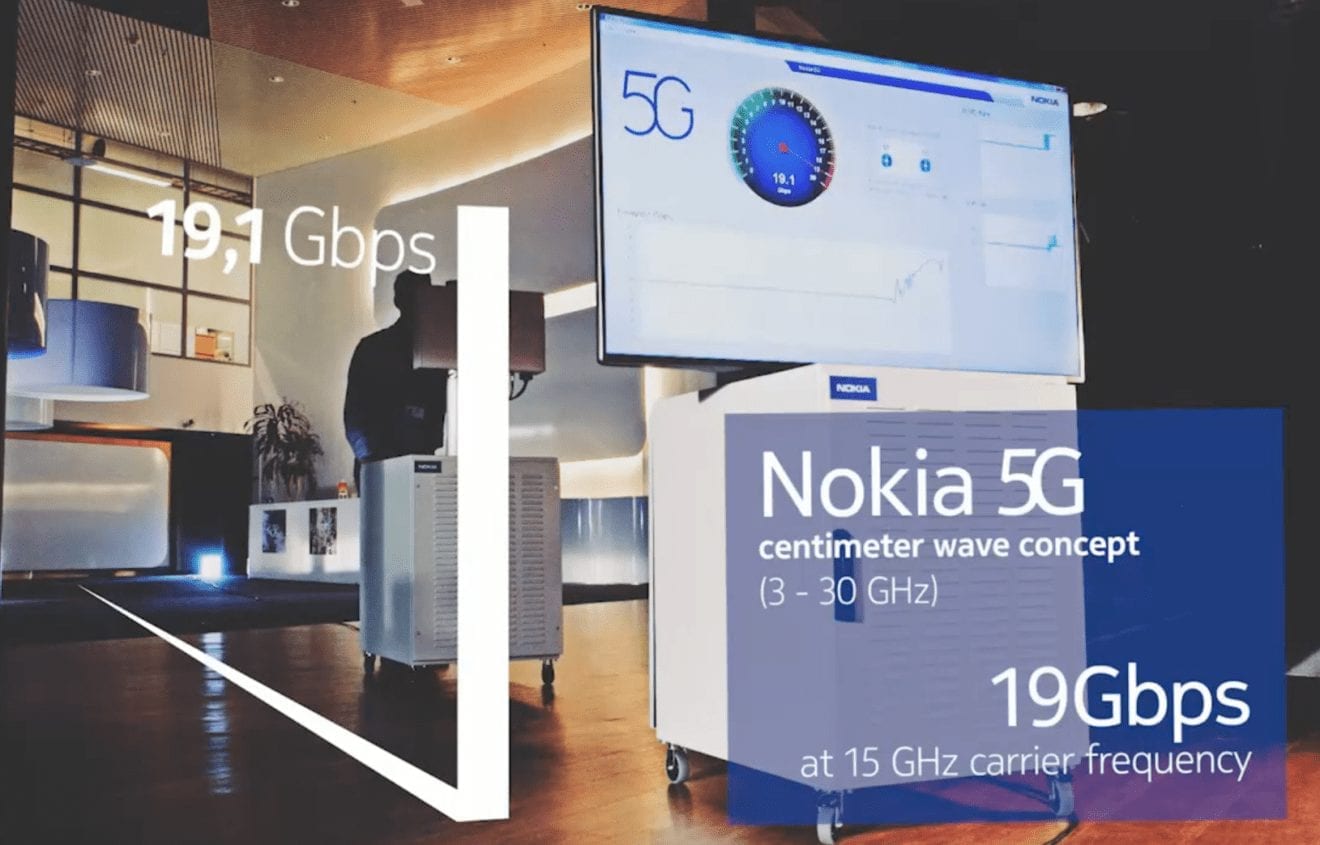
    Nokia said it was playing an integral role in T-Mobile’s plans to launch nationwide 5G coverage in the United States by 2020.

    Forthcoming 5G networks will bring many benefits to service providers and consumers, with exponential increases in bandwidth and massive throughput, along with advancements in vertical industries and new entrants — just a few of the myriad possibilities of these next-generation networks.

    T-Mobile’s announced plans to use all of its spectrum resources align strongly with Nokia’s strategy of multi-radio platforms and advanced antenna technologies.

    Specifically, this will bring 5G radio air interface improvements — particularly spectral efficiency — to low bands such as 600MHz, thus allowing for enhanced coverage benefits. Additionally, Nokia will look to enable the 5G network capabilities where 600MHz spectrum is the preferred coverage layer.

    One of the key benefits of 5G is enhanced mobile broadband that will allow users to consume content when and where they desire. Nokia, along with T-Mobile, will provide a multi-layer, cross-spectrum blueprint for how the networks of the future will come into existence.

    “Nokia and T-Mobile share a vision of innovating in mobile networks to deliver real benefits to consumers,” said Marc Rouanne, president of mobile networks business group for Nokia.

    “This collaboration to maximize spectrum is a very exciting development, and is a strong example of Nokia’s commitment to supporting its customers’ ambitions to create new capabilities to make 5G a reality, connecting everything to everything,” said Rouanne.