Tag: taobao villages

  • Chinese ‘Taobao villages’ turning poor communities into huge online retail hubs

    Chinese ‘Taobao villages’ turning poor communities into huge online retail hubs

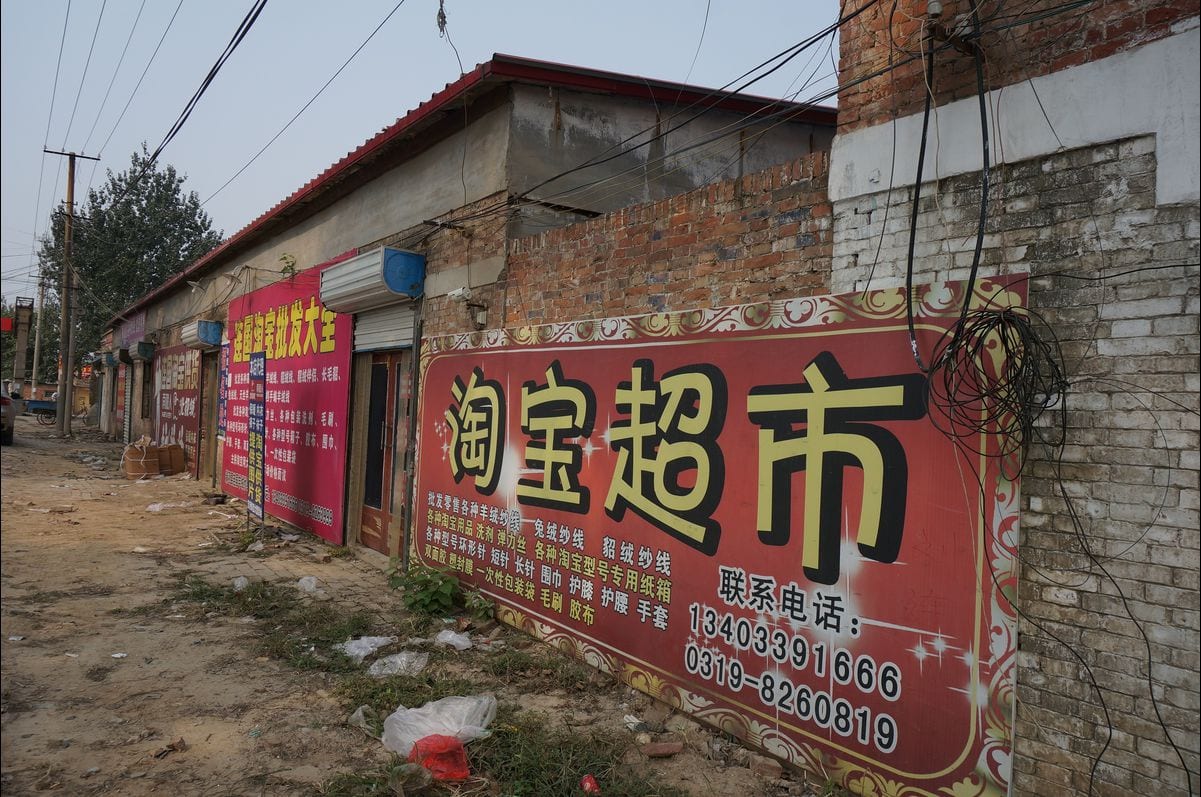
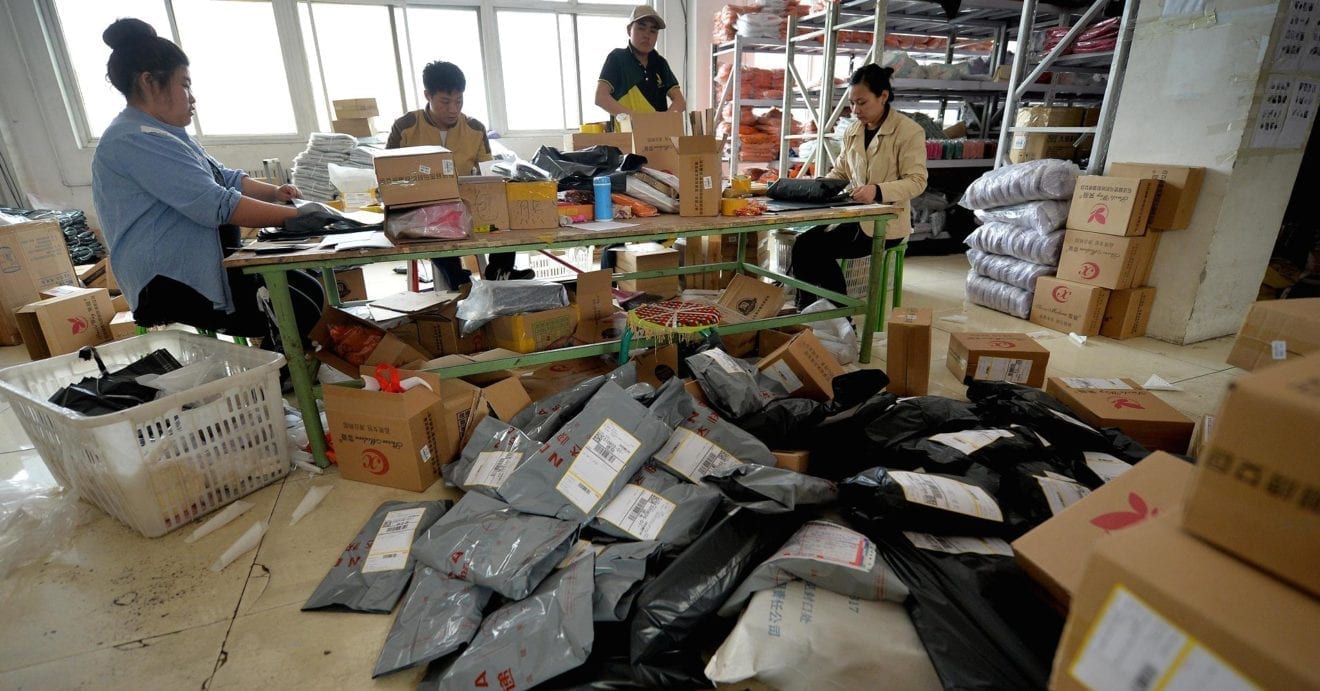
    Thanks to the rapid development of China’s e-commerce industry, over 1,000 “Taobao villages” across the country are turning poor communities into huge online retail hubs, creating more than 840,000 job opportunities.
    These villages are so-named because at least 10 per cent of the population living in these rural communities makes its living by selling products online-mostly on Taobao.com, the Alibaba-owned consumer-to-consumer marketplace. The e-commerce annual turnover of each village is no less than 10 million yuan.

    By selling crafts online from their hometown of Wantou Village, Boxing county in east China’s Shandong Province, villagers made online sales of over 300 million yuan ($43.5 million) last year.

    Similarly, villagers of the Shuanglongqiao Village in Nanchong, southwest China’s Sichuan province, have allured flocks of tourists, including foreigners, to stay and experience the star-level accommodation at their houses, via e-commerce platforms.

    These villages offer a glimpse into how e-commerce industry spurs the rural economic growth and the farmers’ benefits.

    Online retail sales of China’s farm produce are estimated at 220 billion yuan ($32 billion) in 2016, up over 46 per cent over the previous year, the Ministry of Agriculture said.

    The latest figures from Aliresearch showed that there were 1,311 Taobao villages across China, and over 840,000 jobs were created by the clusters.

    Experts said that popularity of Internet and improvement of rural infrastructure have to some extent removed the bottlenecks restraining their information communication and logistics. The market potential and demands of the central and western part of China, especially those remote areas, was leveraged as a result.

    They added that rural areas have been constrained by labour outflow, poor infrastructure, low incomes and lack of competitive advantages, while an e-commerce development will help optimise market environment, upgrade industrial structure and absorb more labours.

    The profitability of e-commerce has attracted a rising number of rural residents to return home, according to statistics. Thanks to the development of e-commerce, about 12 million people left for brighter futures have come back to build up the local economy.

    The development of e-commerce, as experts believe, can be attributed to favourable policies and the rising market demand.

    The recently-released first policy statement from the central authorities for 2017, usually an indicator of policy priorities, emphasised the importance of supply-side structural reform in the agricultural sector, urging the development of e-commerce industry in rural areas.

    At the same time, e-commerce and traditional businesses have cast their eyes to the rural areas. So far, Alilbaba has expanded its services to over 23,000 villages nationwide.

    Days earlier, a strategic cooperation agreement to boost rural e-commerce was inked by Sichuan province, Alibaba Group and Ant Financial Services Group, the mobile payment affiliate of Alibaba.

    Alibaba CEO Jack Ma said that his company hopes to offer a training on e-commerce and Taobao villages to those county officials of the province, explaining that their rising awareness to develop e-commerce will guarantee the business success of the province.

    Du Yifei

  • China’s Taobao villages show e-commerce can transform rural India

    China’s Taobao villages show e-commerce can transform rural India

    Narendra Modi’s Digital India is a scheme that includes connecting all Indian villages with broadband. He says this will empower rural Indians, without spelling out all the details. He should learn from China’s Taobao villages, which have been transformed by e-commerce.

    China’s e-commerce giant, Alibaba, has pioneered rural e-commerce through its rural arm, Taobao, claiming this has created 280,000 rural jobs in 2014 alone. The Chinese government has picked 55 poor counties for grants to develop industries using e-commerce. Taobao villages have risen from 20 in 2013 to 211 in 2014, and the trend continues. These villages now cover 70,000 rural producers.

    Some of the output of rural industries and farms is destined for big cities. But a lot is also consumed in other villages. E-commerce provides Chinese villagers the huge choice of goods enjoyed by urban folk. India’s rural market is booming, but e-commerce India is associated almost exclusively with urban distribution. We need rural e-commerce for Indian Taobaos.

    Indian villages desperately need low-end manufacturing to create jobs for youngsters who have no interest in farming. Large industries cannot do the job. What’s needed is infrastructure plus marketing and financial linkages that enable rural entrepreneurs to start small-scale industries.

    Alibaba defines a Taobao village as a cluster of rural e-tailers where at least 10 per cent of village households engage in e-commerce or at least 100 online shops have been opened by villagers, and transaction volume is at least RMB 10 million ($1.6 million). Indian Taobao equivalents will have to start with more modest targets: they have limited purchasing power and limited production capacity . But, as in China, they have access to the cheapest rural labour, giving them the potential to compete, provided they overcome logistical disadvantages.

    City manufacturers have the best infrastructure and marketing networks, and so dominate in most countries. Alibaba has shown that Taobao villages can use the e-commerce route to overcome their logistical disadvantages. Encouraging the clustering of rural units has helped create the minimum trade volume needed to attract trucking and financing services. Alibaba itself has a financing arm. None of this requires government subsidies. But government investment in rural roads, electrification and broadband is necessary .

    In effect, Taobao villages transform villages into towns. The first Taobao village, Dongfeng, became a centre for low-cost furniture production by over 1,000 households. With access to cheap local timber and labour, they were able to quote competitive e-prices.They immediately got orders, which in turn stimulated supporting services. By 2014, the Dongfeng region had 40 logistics companies providing transport.

    CNBC reported last year on Beishan, another Taobao village, that once specialized just in breadmaking. It now has a company with annual sales of $8 million worth of camping gear, such as sleeping bags, beating big brands.
    India has long tried to promote rural industries through its Khadi and Village Industries Commission, which operates through state khadi departments. KVIC runs a wide network of “Khadi Gram Udyog” shops. The results are unsatisfactory despite substantial subsidies and reservation of various products (like saris) for handlooms. The ethos of KVIC is Gandhian, not commercial. A women’s group like Lijjat Papad has been far more successful, because it is commercially oriented, and not run by bureaucracies.

    The curse of every rural area is the huge gulf between what the farmer or rural artisan gets, and he much higher price paid by urban consumers. To some extent this is justified: the cost of quality con rol, grading, transport, wholesaling and retailing is substantial. Nevertheless, e-commerce holds the promise of slashing the logistical costs and linking he producer directly to consumers, helping the rural producer get a better price even as the consumer gets a lower price.

    This indeed was the original aim of ITC’s echoupal, which got much publicity but achieved only limited success. Eliminating the middleman was again the theme of “farm-to-fork” giant retailers like Reliance. Here too, the results have been modest, even in states that abolished compulsory sales through government mandis.

    E-commerce has the potential to beat e-choupals and retail chains. It can go far beyond agriculture to rural manufacturing. But it will require supporting investment in rural roads, electrification and broadband. This cannot be done by state KVIC departments. Rather, chief ministers will have to push for good rural infrastructure, plus a climate where doing business becomes easy. Once that is done, small industries and transport companies will quickly come up on their own. E-commerce companies will rush in, just as Alibaba has in China.

    Modi won the general election promising millions of jobs for villagers. Critics say this is a pipe dream. But China has shown that the Taobao route can indeed create millions of rural jobs. So can India.