Retail News CRM

Tag: Taobao

  • Alibaba Revamps Ele.me to Taobao Instant Commerce in Bold Retail Ambition

    Alibaba Revamps Ele.me to Taobao Instant Commerce in Bold Retail Ambition

    Alibaba, a renowned Chinese multinational conglomerate, recently unveiled a new name for its popular food delivery service, previously known as Ele.me. This rebranding, which transforms Ele.me into Taobao Instant Commerce, marks a significant shift in the company’s strategy.

    From Ele.me to Taobao Instant Commerce

    The name Ele.me, which held the status of being China’s top local services brand, will no longer be associated with Alibaba’s food delivery service. Utilizing a home-delivery model, the company was initially bought by Alibaba in 2018 at an astounding price of $9.5 billion.

    As of late, significant financial losses have been recorded by companies in the food delivery sector, including the former Ele.me. These losses arise mainly from the high costs involved in subsidizing discounted products, a common practice by these companies to capture a larger market share.

    The Competitive Landscape

    The business environment is becoming increasingly competitive in China, especially within the instant retail services sector. This increasing competition has led to significant investment from businesses, all vying for dominance in the market.

    Alibaba’s decision to rebrand Ele.me as Taobao Instant Commerce is a strategic move aimed at bolstering its position in the market. This bold step is seen as a direct challenge to the current sector leaders, Meituan.

    The Transition and User Experience

    The digital transformation from Ele.me to Taobao Instant Commerce has already been experienced by some users. It is expected that the rebranding will be fully implemented and universally adopted in the upcoming weeks, marking a new chapter in Alibaba’s journey in the food delivery industry.

    Questions & Answers

    Why did Alibaba decide to rebrand Ele.me?
    Alibaba rebranded Ele.me to Taobao Instant Commerce in a strategic move to improve its market position and take on current industry leaders.

    What was the main reason for the financial losses incurred by Ele.me?
    The main reason for Ele.me’s financial losses was the company’s practice of subsidising discounted products to gain a larger market share.

    When is the full implementation of the rebranding expected?
    The complete transition to Taobao Instant Commerce from Ele.me is expected to occur universally in the coming weeks.
  • Taobao Thailand Sees 60% Surge in User Registrations After Launching Localized App Experience

    Taobao Thailand Sees 60% Surge in User Registrations After Launching Localized App Experience

    Taobao, the renowned online shopping platform under Alibaba Group, is witnessing an impressive surge in user registrations in Thailand following the launch of a localized version tailored for this vibrant market. According to reports from Alibaba International Digital Commerce Group (AIDC), the number of new users registering has soared by 60% year-on-year within just a month of the launch, which took place at the end of May.

    Record-Breaking Sales During 618 Shopping Festival

    In a testament to its successful adaptation, Taobao’s Thai platform achieved remarkable sales during its midyear 618 shopping festival, showing significant growth in gross merchandise volume across various categories, including clothing, consumer electronics, and home furnishings. Notably, the local gross merchandise volume for women’s shoes has doubled compared to last year, report AIDC and Zhao Jing, manager of Taobao Thailand. It seems Thailand’s consumers are ready to step up their shoe game!

    Localized Features Driving Engagement

    One factor fueling this growth is the use of Alibaba’s innovative AI translation technology. This allows Thai users to navigate the app comfortably in their native language, and make payments in baht, creating a seamless shopping experience. This localized effort is part of Alibaba’s broader strategy to expand its customer base across Southeast Asia, complementing the existing Chinese and English interfaces available on Taobao.

    Global Ambitions Amid Domestic Challenges

    The move to localize and grow in Thailand is also aligned with Alibaba’s aggressive overseas expansion strategy, a response to slowing domestic demand and intensifying competition from rivals such as PDD Holdings’ Pinduoduo and ByteDance’s Douyin. Just last month, Taobao announced plans to expand its free global delivery service to 12 countries and regions, marking a significant step in its globalization efforts, as noted by ChinaDaily.

    Last September, Taobao made headlines when it launched its English version in Singapore and Malaysia—its first foray into non-Chinese languages—with a swift rollout into additional markets afterward. With these strategic initiatives, Taobao is clearly gearing up to conquer new frontiers in the bustling Asian retail landscape.

    Questions & Answers

    What factors contributed to the 60% increase in user registrations on Taobao in Thailand?
    The 60% increase is largely attributed to the launch of a localized app version that uses AI translation technology, allowing users to navigate in their native language and make payments in baht.

    What categories saw notable sales growth during Taobao’s 618 shopping festival in Thailand?
    Sales growth was particularly strong in categories such as clothing, consumer electronics, and home furnishings, with women’s shoes seeing a remarkable doubling of gross merchandise volume year-on-year.

    How is Taobao adapting its offerings to compete globally?
    To enhance its international presence, Taobao has introduced localized versions in different languages and expanded its free global delivery service to 12 countries, positioning itself against competitors in the global e-commerce arena.

  • Taobao creates 10-yuan store for online bargain hunters

    Taobao creates 10-yuan store for online bargain hunters

    Alibaba Group’s marketplace Taobao Deals launched a 10-Yuan Store this week for China’s bargain hunters seeking daily necessities.

    Goods are priced below RMB10 (US$1.57) each at the digital stores, which are similar in concept to dollar stores in the US or pound shops in the UK.

    Taobao Deals also unveiled 100 Store, a marketplace for higher-value products, ranging from cosmetics, fashion accessories to kitchen utensils and toys, but still at a more affordable price point than many name brands.

    The launches are part of Taobao Deals’ efforts to appeal to a variety of shoppers in China’s lower-tier cities in China while streamlining supply chains. In both of the new store concepts, the platform is directly involved in sourcing, quality control, storage and delivery.

    Established in 2020, Taobao Deals had 280 million annual active users in the 12-months ended Dec. 31 last year. Paid orders on the platform grew over 100 per cent year-on-year in the third quarter, according to the group’s latest earnings report.

    “We’ve already reached many consumers in lower-tier cities…our mission is to serve consumers’ needs and create value for consumers,” said Wang Hai, president of Taobao Deals, at an online event held on Wednesday.

    The platform has three product categories: fresh produce sourced directly from farms, daily essentials and household items direct from factories, and trendy apparel direct from brands. 10-Yuan Store and 100 Store on Taobao Deals. Photo credit: Alibaba Group

    Powerful Partnerships

    Taobao Deal’s unique production model is best seen in an ultraviolet toothbrush head sanitizer now available on the 100 Store.

    As sales of electric toothbrushes surged in lower-tier cities in China, the operation team at Taobao Deals reached out to a manufacturer. It partnered to design a sanitizer that uses ultraviolet to sterilize the toothbrush.

    These devices tap the consumption upgrade wave washing across lower-tier cities and rural areas, which masses of merchants are surfing with the help of bargains app Taobao Deals.

    Most of the sellers that co-design products with Taobao Deals are top suppliers from Alibaba’s B2B purchasing and wholesale marketplace 1688.com. They hand over all the sales, marketing, storage and delivery work, cutting operational costs and thus passing this discount on to customers.

    “We pooled our strength to create products that cater to consumers’ needs…while manufacturers are good at production, we have consumer insight and a strong fulfillment network,” said Wang.

    More than 500,000 factories and two million merchants from China’s major manufacturing bases are collaborating with Taobao Deals as of December 2021.

  • Alibaba makes Taobao app more user-friendly for elderly shoppers

    Alibaba makes Taobao app more user-friendly for elderly shoppers

    Alibaba Group’s online marketplace Taobao this week rolled out a new version of the shopping app that’s more accessible for senior users.

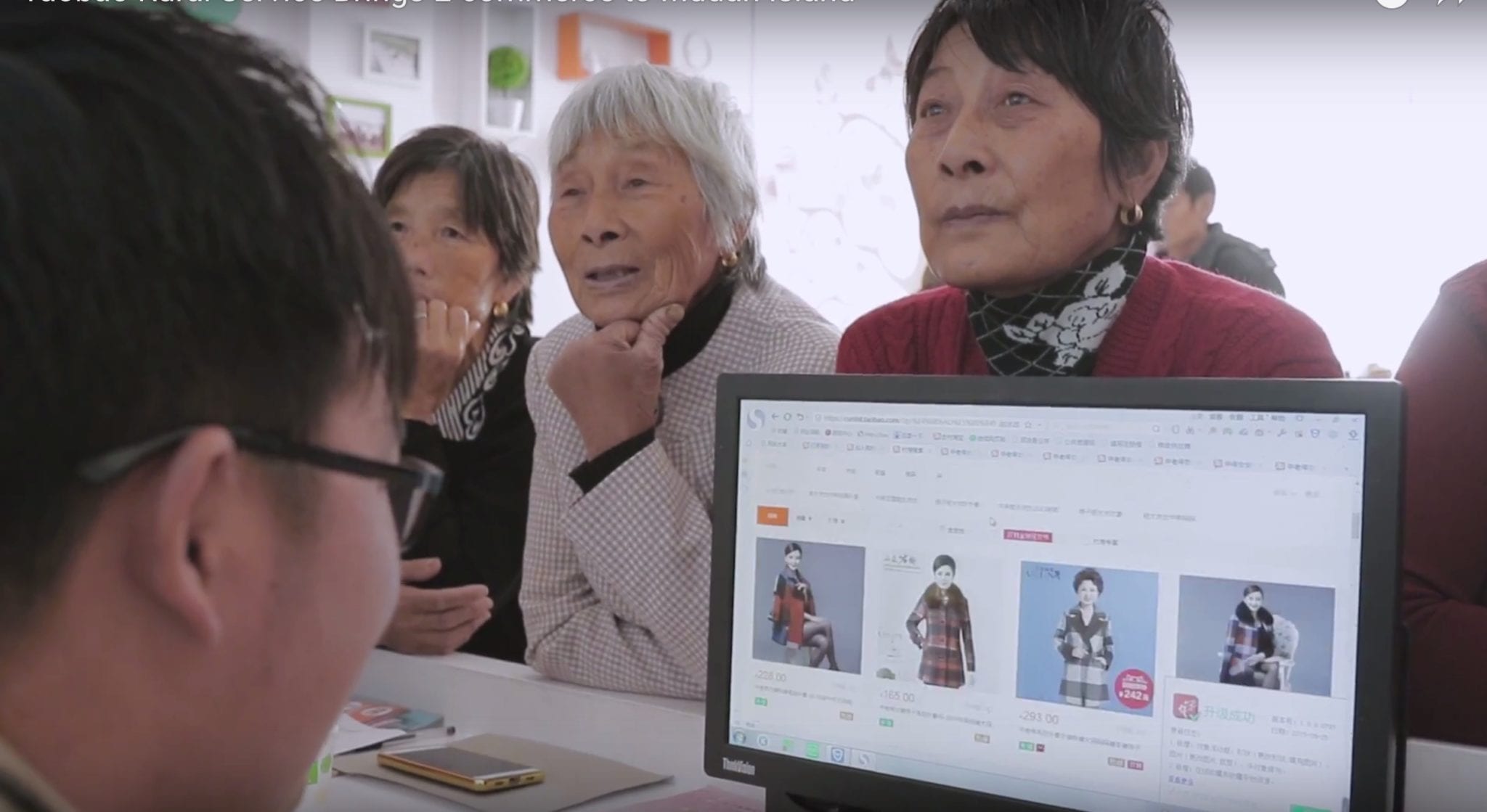
    Piloted ahead of China’s 11.11 Global Shopping Festival, Taobao’s “senior mode” features larger text and icons, simplified navigation and voice-assisted technology, which allows senior citizens to search for products using voice commands.

    The homepage highlights games that have been popular among elderly users, including the Baba Farm program where users tend virtual crops to unlock discounts for agricultural produce.

    “In the future, we will explore new ways to make online shopping easier for seniors, such as functions that allow their children to help them browse and select products,” said Shao Xi, the project manager overseeing the new service.

    China has the world’s largest elderly population. Per China’s latest census published in May this year, the country had more than 264 million people aged 60 or over in 2020 – making up 18.7% of the population.

    Alibaba’s digital tools became an integral part of everyday life for seniors during the coronavirus pandemic. Orders made by users over the age of 51 increased by 125% on delivery platform Ele. me last year, while Alipay’s elder-oriented “care version” recorded a 6.6-times jump in visits year-on-year in the first half of 2020.

    Covid-19 concerns may now be fading in China, but elderly users remain a priority across the Alibaba ecosystem. Last month, Ele.me introduced an elder-friendly mode within its app featuring a simple homepage with large fonts and buttons to make ordering food and grocery easy.

    This isn’t the first time that Alibaba has enhanced its platforms and services for the silver market, which was estimated to be worth RMB3.79 trillion (US$588 billion) in 2020 by the China National Committee on Ageing.

    In 2018, Alibaba launched the “Taobao for Elders” channel to make account registration and app navigation more accessible to seniors. It includes a peer-to-peer chat function allowing family members and friends to easily share products and consult each other, as well as a “pay-for-me” option to pay for another’s purchases.

    Within the Taobao app, senior users can find how-to guides and training programs for everything from online shopping and payments to ride-hailing and booking online doctor’s appointments, as well as a dedicated customer service hotline.

    Improved accessibility features benefit a range of people. In 2018, Taobao debuted an advanced artificial intelligence that reads text written on images, improving the shopping experience for blind and partially sighted users. The shopping platform estimates that roughly 300,000 visually impaired shoppers use the AI tool to browse 2 million products each day

  • Alibaba’s Taobao to exit Taiwan over political tensions

    Alibaba’s Taobao to exit Taiwan over political tensions

    Taiwan on Monday gave the domestic branch of Alibaba Group Holding Ltd’s e-commerce site Taobao six months to re-register as a Chinese investment rather than a foreign one, or leave, in the government’s latest shot against Chinese firms.

    Amid growing political tension, Taiwan has stepped up oversight of Chinese investment and the operations of Chinese tech firms on the island.

    Last week it said it planned to stop local sales of Chinese internet television streaming services, though it does not plan to block them.

    The investment commission of Taiwan’s Economics Ministry said Taobao Taiwan was operated by a British-registered company called Claddagh Venture Investment, an investment firm that was in effect controlled by Alibaba.

    The commission was also concerned about information security as user data was sent back to China, it said, adding that Taobao Taiwan had been fined T$410,000 ($13,960) and had six months to either withdraw its investment, or re-register.

    “We do not consider the company as foreign investment,” commission spokesman Su Chi-Yun told Reuters. “They will have to decide whether to disinvest or rectify their investment.”

    The company should have registered as a Chinese investment, but came in as foreign investment instead since “it’s more convenient,” he added.

    Taiwan treats investment from foreign countries differently than that from China, with far more stringent rules.

    Su said even if Taobao chose to register as Chinese investment in Taiwan, it could still fall afoul of rules barring Chinese companies from sectors vital to its business model, such as third-party payments or advertising.

    Claddagh’s Taiwan office expressed regret at the move and said it had received no formal notification from the government, but that it respected the decision and would “carry out rectification as soon as possible.” It did not give details.

    Taobao Taiwan, launched last year, has previously said it was an entirely different platform from Taobao China.

  • Taobao looks to boost young entrepreneurs showing originality talent

    Taobao looks to boost young entrepreneurs showing originality talent

    Chinese social commerce platform Taobao has inaugurated a new rating system to reward deserving young creators and small enterprises with broader market exposure on the fifth anniversary of the firm’s Taobao Maker Festival.

    The exposure is designed to bring more attention to outstanding creativity and better promote products to the platform’s 840 million users.

    Taobao’s new system is the latest example of the firm’s content-driven commerce strategy that has been part of its promotional apparatus since 2016, transitioning the platform from being primarily transactionally driven to a broader social-commerce playbook.

    “The new rating system promotes and celebrates originality and creativity,” said Alibaba Group CMO Chris Tung. “It will enable merchants to leverage their participation in the Taobao Maker Festival into a source of year-round benefit for growing their business and customers.”

    “We continue to leverage our unique content-driven strength to help young entrepreneurs and small businesses win market traction and bringing a better experience to consumers,” said the head of Taobao operations Kaifu Zhang.

  • Alibaba urges offline retailers to livestream on Taobao Live

    Alibaba urges offline retailers to livestream on Taobao Live

    Alibaba Group’s live streaming channel Taobao Live wants to attract more than 200,000 businesses to its platform this year.

    The firm hopes brick-and-mortar retailers such as traditional wholesale markets will enhance the shopping experience of customers with the assistance of the platform.

    Against the backdrop of the Covid-19 pandemic, the firm waived service fees for platform onboarding in February, increasing the number of merchants using Taobao Live by 719 percent.

    Recent figures have shown gross merchandise volume (GMV) generated by the platform swelled by 150 percent for the last three years running, with consumers spending more than 350,000 hours per day on the site. The surge had continued during the coronavirus outbreak period.

    “The current healthcare crisis is a wakeup call for retailers,” said Taobao’s senior director of e-commerce content Yu Feng. “It has prompted many to accelerate their digital makeovers so that their businesses become more dynamic and resilient.”

  • Alibaba’s Taobao opens retail store in Malaysia

    Alibaba’s Taobao opens retail store in Malaysia

    Alibaba Group will launch a Taobao retail store at Mytown Shopping Centre in Kuala Lumpur.

    The new outlet is opening in partnership with Mytown and local retailer Lumahgo New Retail, and follows the brand’s first Southeast Asian store in Singapore’s Funan mall.

    The launch was preceded by a pop-up held over the weekend previewing products from local brands that will be traded in the store, including Redtick, BigboxAsia, Vivid Malaysia, DirectD Malaysia and Deep Furniture.

    “The opening of our latest Taobao store demonstrates our commitment to local shoppers and brands, as we further localize services and experiences for the Malaysian market,” said Tmall World Malaysia marketing manager Jess Lew. “We are excited to share a glimpse of this upcoming space as part of our 11.11 celebrations this year, emphasizing how we will integrate local brands and merchants with our New Retail vision.

    “Having a physical space means shoppers will be able to touch and feel a variety of products in person before making a purchase on the Taobao app simply by scanning a QR code, with the help of our staff at the store,” said Lumahgo New Retail CEO Fabian Kong.

  • Alibaba hosts the fourth Taobao Maker Festiva

    Alibaba hosts the fourth Taobao Maker Festiva

    Chinese e-commerce platform Taobao has kicked off its fourth Taobao Maker Festival.

    The signature offline event within the Alibaba ecosystem celebrates the maker spirit of China’s young entrepreneurs. The event continues to expand in scale, with this year’s festival held at two different Hangzhou venues. It will showcase more than 1000 new and creative products, along with the most exciting avant-garde designs at the Broken Bridge Fashion Show, which opens the two-week festival.

    “The Taobao Maker Festival offers a creative and exciting experience for both our makers and visitors,” said Alibaba Group’s chief marketing officer Chris Tung. “Taobao has increasingly become the go-to platform for incubating new concepts, new designs and new products. The products that premier during this year’s Festival will have a strong appeal among young people, especially the Generation Z, who long for new experiences.”

    Featured new products will include a vegan meat launched by Hong Kong social enterprise GreenMonday, powered exoskeletons launched by C-Exoskeleton, a virtual-reality headset launched by HTC and simultaneous translation technology launched by iFlytek, among many others.

    “Brands and merchants will not only have the opportunity to showcase their innovative products and interact with users in the Alibaba ecosystem during the event, but they can also leverage social and content tools embedded in Taobao and Tmall to increase the impact after the Festival,” said Tung.

    In the coming three years, Taobao plans to incubate 200,000 merchants with more than RMB5 million (US$706,300) each in annual sales. Taobao statistics released in July this year showed that new merchants who joined Taobao over the past three years achieved a total turnover of nearly RMB500 billion ($70.63 billion) in the current fiscal year. As of the end of last year, there were nearly 50,000 independent designers running their business on Taobao, most of whom are in their 20s and early 30s.

  • Taobao helps Brands with Omni Channel Sales

    Taobao helps Brands with Omni Channel Sales

    Taobao has teamed up with local retailers to launch a brick-and-mortar, multi-label store to host independent clothing brands that sell on the Alibaba Group-owned online marketplace.

    Piloting at the Hangzhou Kerry Center shopping mall, the “Taostyle” store currently offers about 350 items from a rotating selection of 20-plus brands. The first batch of partners features some of the most popular and fastest-growing brands on the e-commerce site, such as Lamps, Roaringwild, Ayuko, and Thessnce.

    Taostyle’s fashion buyers determine which brands and products to sell based on a mix of market knowledge and consumers insights drawn from Alibaba’s platforms, refreshing offerings and introducing new products at least twice a month.

    Frequent product reshuffling is only one of the ways that Taostyle is bringing e-commerce shopping experiences offline. Each garment has a unique QR code, which customers can scan with their phones to access its product page on Taobao, find out the price, get detailed product descriptions and customer reviews. The store even allows consumers to place orders online in addition to buying in-store, as it receives the same commission for both online and offline transactions made through Taostyle.

    “We don’t just want to open a traditional shop to sell clothes. We want to explore a new way of merging online with offline,” said Xia Yu, GM of Hangzhou Shunhong, which operates Taostyle.

    Xia said rich visual content, also a common feature when shopping on Taobao, sets Taostyle apart from traditional stores. Large LED screens showcase featured brands, while across every clothing rack, there are smaller screens for brands to display their product images and videos. Xia also built a booth inside the store, where livestreamers, merchants and Taostyle staff promote and sell their products via live streaming.

    “For us, the business doesn’t stop when the mall closes. Using live stream, we’re able to interact with consumers all day, especially between 8pm and 2am when young people are most actively shopping online,” Xia said.

    Jingjing Liu, leasing director at the Hangzhou Kerry Center, said partnering with the experimental store helps the department store engage young, trendy female shoppers, who make up the majority of its customers.

    “We have high hopes for Taostyle,” Liu said. “There has been a lot of buzz around online-to-offline and New Retail, but as a veteran in the retail business, I haven’t been fully convinced by any models before working with Taostyle. This is the closest to the concept that we’ve seen.”

    From Online to Offline

    Most of the showcased brands either got their start on Taobao or scaled up thanks to the platform. Taostyle offers them an offline channel to improve the experience for existing fans and reach new customers, as well as the chance to test the waters before committing to their own brick-and-mortar stores, said Xia.

    “Without strong interactions, it is difficult for brands to build emotional connections with consumers through a screen,” he said, adding that merchants are interested because physical stores complement the limitations of an online store, satisfying the consumer need for immediacy and to check the feel and try on products before they buy.

    Cathy Xu, the founder of indie menswear label Thessnce, said she wants to leverage Taostyle to reach the brand’s target consumers — men that like high-quality, minimalistic styles — who don’t shop on Taobao that often.

    “There are some experiences we can only give consumers through an offline channel, like saving them the wait [for shipments to arrive], so they could instantly try on and feel our designs,” she said.

    The current trend for online shops is to expand offline, Xu noted. But the right tools, such as payments and inventory technology, can be hard for small businesses to attain.

    “Alibaba provides that tech infrastructure here, which would have been very difficult to build on our own,” she said.

    Her brand launched in March last year, and by year-end had totaled RMB20 million in sales. The annual sales goal for this year is 70 million, Xu said.

  • Taobao Leverages Live Streaming to Boost Rural Development

    Taobao Leverages Live Streaming to Boost Rural Development

    Taobao will leverage its livestreaming technology to help incubate 1,000 key opinion leaders in China’s countryside in an effort to boost rural development. By helping farmers go online, Taobao aims to enable farmers to find new markets and customers from their homegrown products.

    Taobao’s target is to boost the livelihood of 1,000 farmer livestreamers from 100 counties in Chinan by helping them each generate over RMB10,000 in monthly income. The idea is to drive online sales of local agricultural products via livestreams conducted by the newly minted rural KOLs – the farmers, themselves. To promote this new initiative, Taobao plans collaboration with countylevel governments to highlight local points of interest and expand the popularity and recognition of various villages participating in the livestreaming.

    “Our rural livestream program aims to empower local livestreamers to boost business for povertystricken areas, while enabling farmers to manage their own livestream e-commerce channels. It’s Taobao’s devotion to poverty relief by leveraging e-commerce and livestreaming via creative digital technologies.” said Chen Lei, director of e-commerce content at Taobao. Last year, Taobao hosted more than 150,000 agriculture-themed livestreams, which drew over 400 million viewers. Taobao innovated the “Live on the Farm” model, featured with agriculture livestreamers, KOLs, and even local government officials from counties to join livestream sessions and promote their local goods. In January 2019, Taobao’s “Live on the Farm” sevenday online sales campaign generated over RMB9.35 million in sales, right ahead of Chinese New Year, a prime gifting period in China.

    Many agriculture livestreamers tasted their first success on the platform last year, including Chen Jiubei, who has helped farmers in her hometown in Hunan province sell up to 2 million kilograms
    of previously unsaleable oranges in just 13 days last winter. Taobao also coordinated with county-level governments to provide a suite of livestreaming marketing services, including seeking out and training livestreamers, as well as identifying local selling points. With more than 60,000 distinct livestreams on agricultural products every month,

    Taobao is committed to driving RMB 3 billion in sales for the sector in 2019. This month, Taobao will roll out livestreams that introduce the source of a range of agricultural products, helping viewers discover the local landscape and customs where their products come  from. In addition, Taobao also plans to partner with CCTV, Hunan Television and Zhejiang Television to develop livestreaming shows that invite popstars and celebrities to participate in poverty-relief activities, aiming to generate more public awareness for underprivileged areas. More on Taobao Livestreaming Taobao livestreaming is an emerging marketing channel that started in 2016 and has rapidly grown into a proven marketing strategy. Powered by advanced technologies from across the Alibaba Group, KOLs and livestreamers provide both indoor and outdoor livestreaming to customers. During these livestreams, they introduce and recommend different products across diverse areas ranging from clothing, cosmetics and jewelry, to agriculture goods and plus-sized clothes. In 2018, 81 livestreamers notched over RMB 100 million in sales, respectively.

    Across all industries and sectors in China, brands and sellers are already transforming their digitalncapabilities to stimulate business development through Taobao livestreaming. L’Oréal’s flagship store experienced a nearly 20% increase in purchases after Viya and Jiaqi Li, Taobao’s most recognized livestreamers promoted the brand’s signature goods via livestream. Among the top female clothing brands, more than 30% of sales are driven by live streaming. In certain industries such as jewelry and jade, flowers and plants, the penetration rate of brands using Taobao livestreaming is close to 50%, bringing great changes to the previous online marketing mix that was adopted.

    Livestreaming serves as an efficient tool to empower traditional industries and drive sales. During the “Double 12 Shopping Festival” in 2018, Taobao organized a 12-day livestreaming event from once-booming industrial belts to rejuvenate traditional businesses with cutting-edge technologies and powerful new modes of retail operation. Livestreamers were everywhere from an agricultural products base in Sichuan and porcelain production firm in Jingdezhen to a home textiles mall in Nantong and leather factory in Haining, bringing a growing number of young customers to forgotten industrial towns. In order to inject more renewed energy into traditional industries, Taobao also launched plans at the recent summit to incubate and develop 10 offline traditional retail markets. The aspiration is to help them reach annual revenues of over RMB 100 million. Other initiatives that are being rolled out to maximize the influence of livestreaming includes developing 10 professional PGC (Professional Generated Content) organizations with over RMB 100 million revenues, creating 10 super programs with more than 100 million views and promoting over 100 regional television stations to collaborate with Tao Live, an app focused on PGC area.

  • Home-and-living brand Jiyoujia debuts in Singapore

    Home-and-living brand Jiyoujia debuts in Singapore

    Alibaba’s e-commerce platform Taobao has launched its home-and-living channel, Jiyoujia in Singapore.

    Marking the brand’s first foray into an overseas market, products are on show at Taobao Home store at NomadX store.

    “Singapore is an important market for Taobao, and we continue to witness strong and sustained demand for the home-and-living category here by shoppers,” said Mickey Xiong, country director for Southeast Asia, at Taobao.

    “In fact, the home-and-living category is our fastest-growing segment here.”

    Jiyoujia also launched its Home Lab portal, one week after its debut in China. Using the portal, curated sets of Jiyoujia products are recommended to customers, promoted through interactive digital showcases. Surfers can hover over each item for more information.

  • Alibaba Group sales jumps high

    Alibaba Group sales jumps high

    Alibaba Group sales soared 41 per cent in the December quarter as its customer based neared 700 million. The Chinese company’s turnover for the three months reached US$17.057 billion and its net income attributable to shareholders $4.807 billion. “Our resilient operating and financial performance is a direct reflection of our persistent focus on better serving our growing base of nearly 700 million consumers across retail, digital entertainment and local consumer services,” said CEO Daniel Zhang. “Our growth is also driven by the power of Alibaba’s cloud and data technology that helps expedite the digital transformation of millions of enterprises.”

    Alibaba group sales from core commerce increased 40 per cent to $14.958 billion, while the cloud-computing division posted 84 per cent growth, turning over $962 million. The digital media and entertainment division achieved 20 per cent growth to reach $944 million.

    In a statement, Alibaba said its Taobao platform achieved “robust user growth and enhanced engagement”. Last December, its China retail marketplaces had 699 million mobile monthly average users, representing a quarterly net increase of 33 million. The annual active consumers on its China retail marketplaces was 636 million for the 12 months ended December 31, compared to 601 million for the 12 months ended September 30 last year, “reflecting successful user acquisition programs, such as referrals through the Alipay app”.

    More than 70 per cent of the increase in annual active consumers was from third-and-lower tier cities.

    Tmall thrives

    Alibaba said GMV on its Tmall business grew 29 per cent year on year in the December quarter, outpacing the industry.

    “This robust growth was driven by strength in the fast-moving consumer goods (FMCG), apparel and home furnishing categories,” the company said.

    During the quarter, Tmall signed up new brands to the platform including Valentino, Ermenegildo Zegna, Stuart Weitzman and Sergio Rossi which opened flagship stores and joined the Tmall Luxury Pavilion.

    Meanwhile, Alibaba’s proprietary grocery retail chain Freshippo (formerly Hema) continued to expand its footprint, “optimise its stores and introduce new initiatives that improve customer experience”. As of December 31, there were 109 self-operated Freshippo stores in China, primarily located in tier 1 and tier 2 cities, which continued to achieve “robust same-store sales growth” through the quarter.

    ‘Robust’ Lazada growth

    Alibaba’s Southeast Asian e-commerce platform Lazada achieved what the company described as “robust growth” in GMV. The company upgraded Lazada’s technology, which resulted in boosting the number of active users and achieved greater user engagement on Lazada’s mobile app.

    “We continue to invest resources to integrate Lazada’s business and technology operations into Alibaba with the aim of building a strong foundation for us to extend our offerings in Southeast Asia.”

  • Alibaba develops new technology to help the blind shop online

    Alibaba develops new technology to help the blind shop online

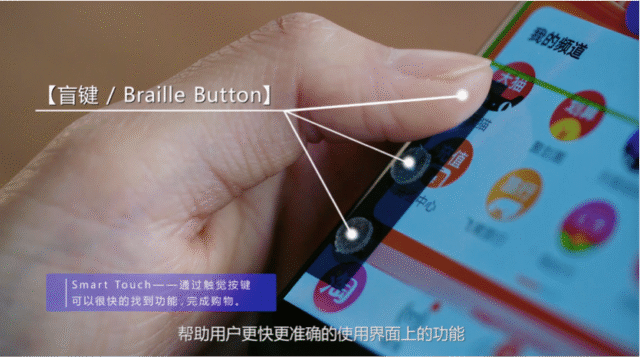
    E-commerce giant Alibaba has developed new technology to make it possible for blind and partially sighted people to shop online, according to an article on Alibaba’s news site Alizila. Alibaba plans to launch Smart Touch, an affordable silicone sheet that goes on top of smartphone screens, later this year. The plastic film includes three mini buttons on each side that sensory-enabled. Pressing on each one will trigger a different command, such as “go back”, “return to homepage” and “confirm”.

    Depending on the app, the buttons can lead to different destinations, such as “My Shopping Cart,” “Tmall Global,” and “Tmall Supermarket” in the Taobao app.

    Smart Touch is a joint effort of Alibaba’s Damo Academy and China’s Tsinghua University to improve the smartphone experience for the blind.

    The technology also has an “ear touch” feature, which gives blind and visually impaired users a simple way to listen to text clearly and privately in public, without the need for headphones. It senses when the users is holding the phone to their ear and automatically routes the sound output from the loudspeaker to the earpiece speaker.

    In October last year, Alibaba added Optical Character Recognition (OCR) technology to the pages of its online marketplace Taobao, an artificial intelligence-driven feature that reads text written on images.

    Before adopting OCR, Taobao’s 300,000 daily active users who are blind or have reduced vision would have used screen-reading software that simply announced “image” as it scanned the page. By early December, OCR was being used to read close to 100 million images per day, Alizila reported.

    “Images are becoming ever more important in the shopping experience,” said Wang Yongpan, algorithm specialist who led the OCR upgrade.

    “A typical product page on the site contains about 40 images, and most product specifications and descriptions are often found within images, rather than typed out in plain text.”

    Yongpan said that while Alibaba has been using OCR for many years in various capacities, the technology’s accuracy in reading images has grown exponentially due to advances in machine learning.

    According to Taobao president Jiang Fan, making the platform more inclusive, user-friendly and a home for creativity is part of its larger strategy.

    “If I had to do one thing this year, that would be to make Taobao simpler and bring [us] back to our original purpose,” he said.

    “Alibaba is famously known by its motto, ‘To make it easy to do business anywhere’.”

    The OCR launch was driven by Alibaba’s “Barrier-Free Lab”, which started with a handful of employees in 2011 and has since grown to hundreds of volunteers, ranging from programmers to user-experience designers.

    Now, similar tools can be seen across Alibaba’s ecosystem, expanding from Taobao to B2C e-commerce site Tmall, payments affiliate Alipay, online delivery platform Ele.me, enterprise chat app Dingtalk, navigation firm Amap, music streaming app Xiami and internet browser UC Web, from desktop to mobile.

  • Online retailer Taobao endorses physical store in Malaysia

    Online retailer Taobao endorses physical store in Malaysia

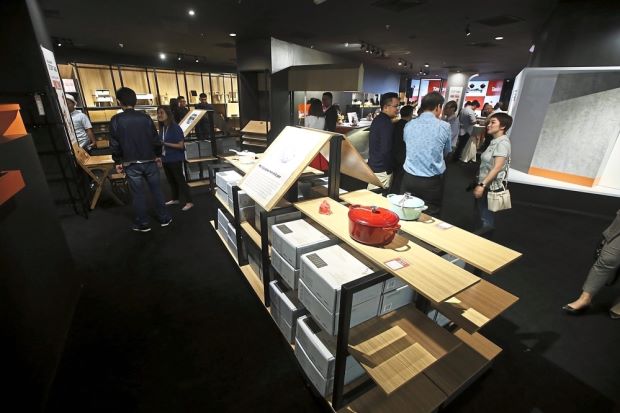
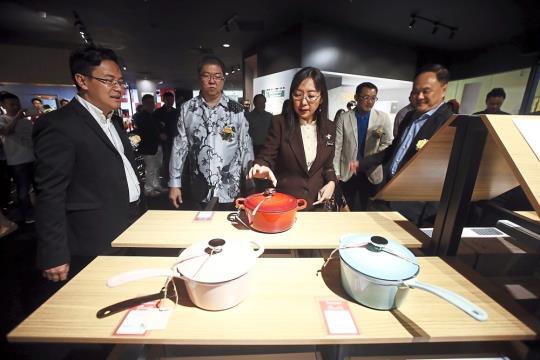
    Chinese online retailer Taobao is endorsing a spin-off physical store in Malaysia. The 5000sqft Taobao Selection store in Kuala Lumpur’s Viva Home Shopping Mall is the first in Southeast Asia, opening in collaboration between local operator Lumahgo, Taobao spinoff Tmall World, and lifestyle furniture retailer Lorenzo. It retails curated products from Tmall.com selected for the Malaysian market alongside furniture offerings.

    Lumahgo CEO Fabian Kong said: “We are developing a new retail system that caters to Malaysians, which will bring a new retail technology experience to local retailers … We are helping Tmall World to sell the selected products in Malaysia for customers who do not know how to shop online”.

    A reported 98 per cent of furniture purchases are made offline in Malaysia.

    Taobao’s owner Alibaba Group is contributing to the project by providing big-data tools and a technology platform. The collaborating partners will open a second Taobao Selection store will open in Sabah early next year.