Tag: Tapestry

  • Singapore Attracts over 50 Consumer Brand Investments as Regional Hub

    Singapore Attracts over 50 Consumer Brand Investments as Regional Hub

    Singapore secured more than 50 new consumer company investments between 2022 and September 2025, drawing global brands seeking a regional operating base for Asia.

    Danish jeweller Pandora opened its regional headquarters in Singapore in November, adding roughly 50 corporate positions to support 62 stores and 400 retail and office staff across Asian markets.

    Headquarter hubs and flagship rollouts

    Pandora Chief Commercial Officer Massimo Basei said the Singapore hub focuses on market development, digital operations, and marketing across both mature markets like Japan and South Korea and expansion targets including India and Indonesia.

    Swiss sportswear maker On and activewear brand Alo opened flagship locations at Jewel Changi Airport and The Shoppes at Marina Bay Sands in July and August. South Korea’s Lotte Shopping plans to open its international headquarters in Singapore in 2026 to direct its Southeast Asian store network.

    Global consumer groups increasingly treat Singapore as an operational bridge between headquarters in Europe or the United States and fragmented retail markets across Southeast Asia. Establishing central merchandising and supply chain teams in the city reduces the risk of running decentralized Asian market entries.

    American dining brands brave high failure rates

    Food and beverage chains from North America are also expanding their footprint in the city despite intense local competition. Fast food operator Chick-fil-A opens its first Asian outlet in Singapore on 11 December, following Blue Bottle Coffee, which launched its debut local cafe on 3 April.

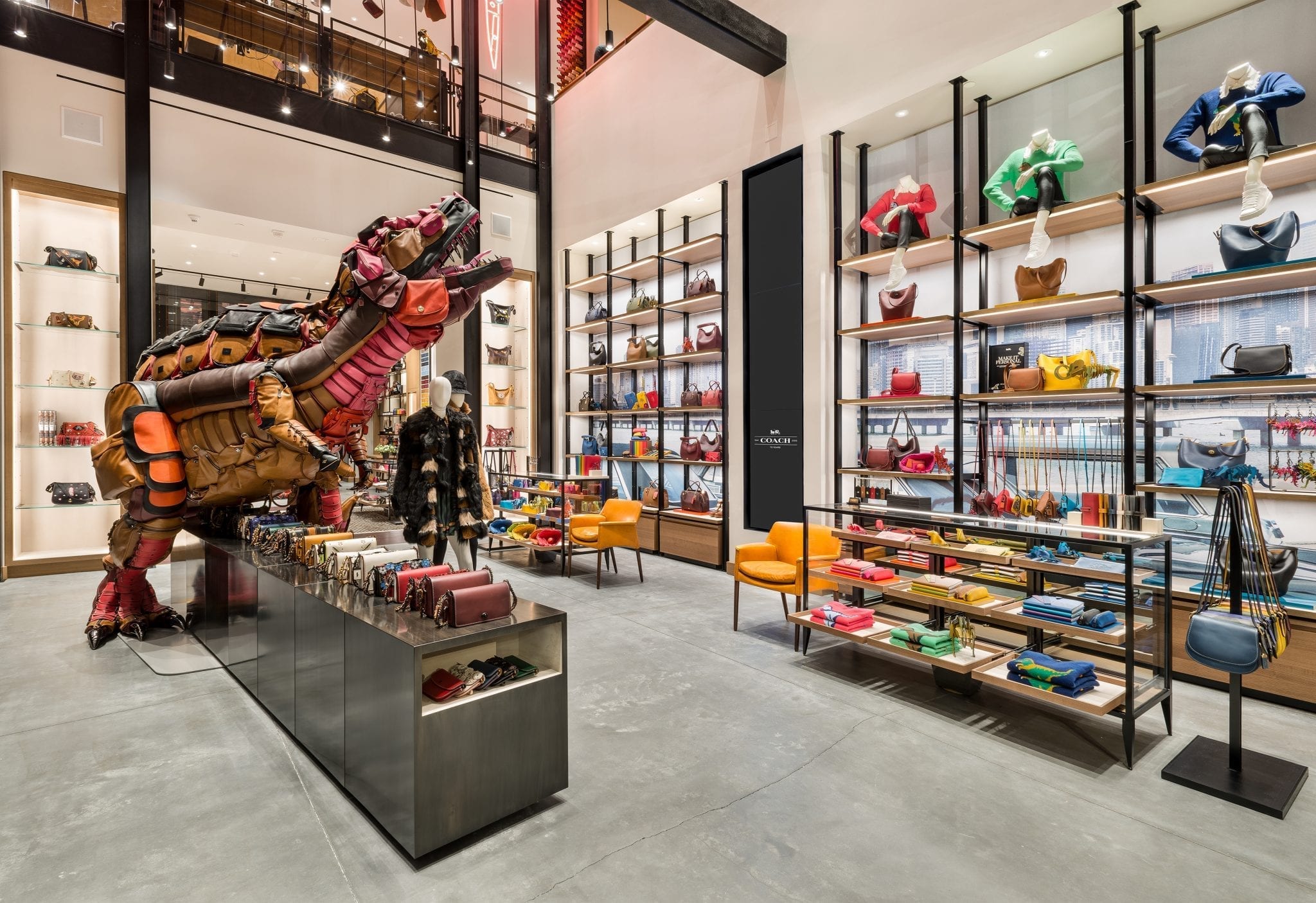
    Tapestry broadened its luxury label Coach into hospitality with the Coach Cafe in 2023, followed by a Coach Coffee Shop and the woodfire-focused Coach Restaurant. In grocery retail, US potato supplier Lamb Weston rolled out retail frozen fries across FairPrice, FairPrice Xtra, and FairPrice Finest stores in November.

    The expansion runs counter to tough local operating conditions. Over 60 per cent of Singapore food businesses closed within five years between January and October 2025, and 82 per cent operated without a profit, according to parliamentary figures from Deputy Prime Minister Gan Kim Yong.

    US chain Chipotle Mexican Grill opens its first Singapore restaurant in 2026, while Lotte prepares its international headquarters for operation the same year.

  • Tapestry CEO dumped as share price plunges

    Tapestry CEO dumped as share price plunges

    New York-based luxury accessories and lifestyle house Tapestry has ousted its CEO suddenly due to the company’s poor sales results and plunging share price.

    Tapestry – parent of Coach, Stuart Weitzman and Kate Spade – has lost more than half of its value within the last year, from US$50 to $20.44 on Tuesday.

    The company announced overnight that CEO Victor Luis would leave both his executive role and his seat on the board with immediate effect. He has been replaced by Jide Zeitlin as CEO, the board’s current chairman who will continue in that role as well.

    The company has also named Susan Kropf, a current member of the Tapestry board, as a lead independent director.

    Luis has led Tapestry for five years and in its announcement, Zietlin paid tribute to Luis’ achievements.

    “Early in his tenure, he was a critical part of Coach’s development outside of North America, first as president and CEO of Coach Japan and then assuming responsibility for the brand’s entire international organization. Over the past five years as CEO, Victor was instrumental in the successful transformation of Coach and the establishment of Tapestry as New York’s first house of modern luxury lifestyle brands.”

    Luis oversaw the acquisition of luxury footwear brand Stuart Weitzman. However, three weeks ago Tapestry disappointed shareholders and analysts after its latest add-on Kate Spade, showed weak growth. Fourth-quarter profit fell from $212 million to $149 million on sales of $1.5 billion.

    Zeitlin said the board remains committed to Tapestry’s multi-brand model while recognizing the need to sharpen its focus on execution,

    “Given the continued strength and momentum at Coach – the largest brand at Tapestry – our top priority remains driving significantly improved performance at our acquired brands.”

  • Coach & Kate Spade power Tapestry sales

    Coach & Kate Spade power Tapestry sales

    One year into its major push to become an American luxury conglomerate, things appear to be moving in the right direction at Tapestry, which recently posted first-quarter results that topped expectations across the board. The firm — parent of Coach, Kate Spade and Stuart Weitzman — said its Q1 sales advanced 7 percent to $1.38 billion, driven mostly by the flagship Coach brand but also helped by Kate Spade, which it acquired in 2017.

    “Results were driven by continued growth at Coach, where global comparable store sales rose 4 percent, led by outperformance in digital, and reflected our compelling offering across categories and channels,” said Tapestry CEO Victor Luis. “Kate Spade contributed to our overall performance, as we made continued progress on our integration efforts, including the realization of synergies and the execution of strategic initiatives.”

    Trends at Stuart Weitzman, improved from the prior quarter, according to Luis, but results continued to be negatively impacted by development and delivery delays, which pressured sales and margins.

    “Production levels and shipments have now stabilized, reflecting the investment in talent and processes, as well as added manufacturing capacity. As a result, we remain on track to achieve profitable sales growth in the holiday quarter,” Luis added.

    Overall, the company reversed the prior year’s losses, posting profits of $122 million, or 42 cents per diluted share. Adjusted profits were $142 million, or 48 cents per share, topping analysts’ bets for 45 cents per share.

    By brand, net sales at Coach rose 4 percent to $961 million, Kate Spade’s sales surged 21 percent to $325 million, and Stuart Weitzman fell 1 percent to $95 million.

    “Our first-quarter performance and progress on our strategic priorities to date give us confidence in our ability to achieve the goals we’ve set out for fiscal 2019,” said Luis.

    “We continue to expect to deliver strong revenue and operating income growth, while making investments to support our long-term vision and drive a return to both double-digit operating income and earnings-per-share growth in fiscal 2020.”

    To that end, the firm lifted its profit outlook for the fiscal year and now projects earnings per diluted share in the range of $2.75 to $2.80, compared with the previous range of $2.70 to $2.80. It continues to expect revenues to increase at a mid-single-digit rate to $6.1 billion to $6.2 billion.


  • Coach boosts Tapestry growth

    Coach boosts Tapestry growth

    Tapestry growth continues to be boosted by the inclusion of Kate Spade.

    The US apparel retailer has reported fourth-quarter revenue of US$1.48 billion and a net income of $211.7 million. A 31 per cent uplift in sales is the result of the acquisition of the Kate Spade business subsequent to the fourth quarter of the previous financial year.

    However, this is the final quarter during which the sales line will be flattered by this anomaly, which means the next fiscal year will present a much truer picture of underlying growth.

    For this quarter, the results are generally good – but mostly thanks to Coach which has driven the whole business forward. The numbers from Stuart Weitzman and Kate Spade are less impressive. The latter is understandable given that the brand remains in transition, but the former is somewhat disappointing as it is the result of operational missteps.

    Looking at Coach in more detail, total revenue increased by a solid 5.1 per cent, with a supporting rise of 3 per cent on a comparable basis. This is a very respectable result which, once again, underlines the return to full health of a brand that once suffered from ubiquity and excessive discounting. The performance in the US was particularly strong, aided in large part by the more robust consumer economy which has spurred spending on luxury products. However, Coach deserves credit for securing a slice of this growth – something that not all higher-end brands have been able to accomplish.

    Within Coach, the Signature line has been a particular success and has helped to drive both sales and interest in the brand. The development of smaller leather goods in this range has helped to expand the number of products consumers can buy and has created some good gifting options which should help the company in the all-important holiday quarter. We are encouraged by this development as it suggests that Coach has now found a sweet spot in terms of balancing a premium positioning with accessible products that help maximise sales.

    Another win for the company is the men’s range, where an expanded offer has helped to boost sales. While men’s remains a small component of the sales mix, we are heartened by a good performance over Father’s Day and a growing awareness of this part of the assortment. In our view, this part of the business has good potential and will likely be a driver of future growth.

    Kate Spade rebuilding 

    Kate Spade has now been part of Tapestry for a year. Over that time the group has taken a disciplined approach to rebuild brand equity, including pulling back on excessive promotional activity and reducing exposure to unfavourable wholesale channels. This effort is now almost complete and while global comparable sales were down 3 per cent, margins are strengthening and top-line revenue is starting to look more favorable. The brand is now in a better position and should start making a solid top and bottom line contribution over the next fiscal year.

    Stuart Weitzman continued its run of poor performance with a slip in sales and margin. Most of the issues at Stuart Weitzman still stem from production problems, which delayed key seasonal styles. Not only did this reduce sales of those products, it also weakened overall interest in the brand which meant core products had to be discounted to stimulate demand. Unfortunately, these second-half issues undid most of the advancement during the first quarter.

    Looking ahead, we believe Tapestry is in good shape. It should have a successful holiday quarter which will boost the first-half of its new fiscal year. And now that Kate Spade is in order, we do not preclude further acquisitions in the year ahead.

  • Coach boosts Tapestry’s sales results

    Coach boosts Tapestry’s sales results

    Luxury fashion giant, Tapestry, has posted solid third quarter growth, boosted by strong sales from its Coach brand.

    Tapestry posted a 33 per cent increase in net sales for the quarter ending March 31 to $1.32 billion compared to the previous corresponding period, and relatively strong results from Coach where overall sales rose six per cent.

    Same-store sales for its Kate Spade brand, however, plunged nine per cent in the quarter because of a decline in online revenue. The company also posted its Stuart Weitzman’s profit margin was hurt by production delays and weaker sales of older shoes.

    The company’s operating income for the quarter was $159 million on a reported basis, while operating margin plunged 12.0 per cent compared to the 15.2 per cent in the prior year. On a non-GAAP basis, operating income was $184 million, an increase of 14 per cent from the previous year, while operating margin was 13.9 per cent from the 16.3 per cent in last year’s third quarter.

    Victor Luis, Tapestry chief executive, said their solid third quarter performance was consistent with their expectations, as they achieved double-digit increases in sales and earnings per share.

    “Results were driven by continued growth at Coach, where comparable store sales rose, led by outperformance in North America, and reflected our strong offering, including the successful global relaunch of Signature in retail,” Luis said. “We leveraged these sales gains, tightly controlling costs, and delivered operating income growth ahead of the top line increase.”

    During the quarter, the company has completed the buybacks of the Coach business in Australia and New Zealand as well as the Stuart Weitzman business in Northern China, while also taking operational control of the Kate Spade joint ventures for Mainland China, Hong Kong, Macau and Taiwan.

    Tapestry also gave an updated guidance that offered reason for optimism about Kate Spade. It now expects that acquisition to create $45 million in synergies, up from the $30 to $35 million it outlined in previous guidance. The company has also stated it now also expects Kate Spade to contribute $145 million in operating income for the year, higher than the $130 to $140 million in earlier guidance.

    According to Neil Saunders, managing director of GlobalData Retail, the bounce in Tapestry’s results that comes from Coach where sales growth accelerated to 5.9 per cent on a total basis and three per cent on a global comparable basis is encouraging,

    “In our view, this indicates that the Coach brand continues to gain ground across the demographic spectrum,” Saunders said. “From our own brand tracking, we are particularly encouraged to see growing interest among younger consumers – something that is helping to fuel strong numbers in the e-commerce division.”

    Saunders said on the product front, they believe that the current range is compelling.

    “The recent relaunch of the Signature collection – which features an interlocking ‘C’ motif – has been particularly successful, with popular products like the Charlie Carryall tote doing well. In our opinion, the popularity of the iconic ‘C’ signature design shows how much the brand image of Coach has strengthened over the past year or so,” he said.

    He added that looking ahead, they think that the economic environment will continue to be supportive into the next quarter, as residual tax refunds and bonuses come through.

    “However, thereafter these benefits will wane, putting some downward pressure on growth,” he said. “However, as the underlying fundamentals of Coach remain strong, growth will remain good – with a possible boost in fall thanks to an expanded collaboration with Selena Gomez.”

    Overall, he said, Tapestry is currently a mixed bag of businesses.

    “However, all are headed in the right direction and this gives us confidence the group will fulfil its ambition of becoming a strong luxury lifestyle company.”

  • Tapestry takes back Kate Spade China business

    Tapestry takes back Kate Spade China business

    Tapestry, the fashion retailer formerly known as Coach, has taken back operational control of its Kate Spade China joint ventures in Hong Kong, Macau, Taiwan and the mainland.

    CEO Victor Luis described the move as “an important business development initiative” and part of a plan by the group to assume greater direct control over its international distribution.

    The company has also entered into a purchase agreement to acquire the Stuart Weitzman business in Northern China from its distributor.

    “These transactions are in keeping with our strategic priority to maximise the opportunity with Chinese consumers globally across our brands,” said Luis.

    “In addition, we are excited to announce the buyback of the Coach business in Australia and New Zealand from our distributor, with an expected closing in the third fiscal quarter. As a result, we will be creating a Tapestry hub and center of excellence in Sydney to drive growth across our portfolio, further unlocking the value of a multi-brand operating model.”

    The news was included in the company’s second quarter results announcement in which Tapestry revealed a 35 per cent increase in sales, largely fuelled by the addition of the Kate Spade operations to its figures after its acquisition last July.

    Net sales totalled $1.79 billion for the second quarter, up from $1.32 billion in the prior year, while net income was $63 million.

    Luis said the second quarter performance exceeded the company’s expectations, with a return to growth for Coach, improved sales at Stuart Weitzman and the contribution of Kate Spade which continued to make progress after its integration into the business.

    A “significant step forward”

    Neil Saunders, MD of GlobalData Retail, said after removing the Kate Spade data from Tapestry’s comparable sales numbers, a modest growth rate of 2.2 per cent was achieved, which was still a “a significant step forward for the group”.

    “Most pleasing is the return to growth of the Coach brand which has, for some time, seen revenue slide as the result of a pullback from a number of sales channels, including department stores. The 2.2 per cent increase signals that this period of painful adjustment is mostly over and that Coach has a stable platform from which to expand. A more disciplined approach to discounting and promotions helped margins at the brand, which flowed through to some healthy gains in operating income. In short, Coach’s game plan of becoming less ubiquitous and selling more at higher price points is now delivering.”

    Saunders said Coach deserves credit for an on-trend holiday line up, a compelling marketing campaign, and great in-store execution.

    “However, we also believe that gains were aided by a confident consumer and flattered by a very soft prior year comparative. Both factors were particularly influential in the key North American market.

    This leads us to be a bit more cautious about prospects over the upcoming quarters, especially as comparatives become tougher and gifting sales are less significant.”

    But he said any softness in the North American market can be offset by a more aggressive and coordinated approach to international expansion.

    “On this front, we are encouraged that Tapestry is taking back direct control of the Coach business in Australia and New Zealand and believe that this will help to improve the brand’s presence and influence in the region.”

    Looking beyond Coach, Tapestry’s newest brand, Kate Spade performed less well. Global comparable sales declined by 7 per cent over the period, driven in part by a fall in e-commerce.

    “As much as this looks disastrous, the dip is mostly the result of a deliberate change in strategy, with Tapestry pulling back from the flash sales and heavy discounting that Kate Spade previously used to drive revenue. Predictably, this has resulted in a dramatic volume decline and waning interest among some consumer segments.

    “The intention is clear: Tapestry wants to take Kate Spade through the same process used to rebuild Coach. This is a necessary step to bolster brand value as Kate Spade had become too value-oriented and overly reliant on excessive, and margin depleting, promotions to drive results. We are conscious that weaning Kate Spade off the discounting drug will be far from easy and better numbers will only come through over the medium to longer term.”

  • Stuart Weitzman taps Gigi Hadid for footwear range

    Stuart Weitzman taps Gigi Hadid for footwear range

    Supermodel Gigi Hadid has partnered with Stuart Weitzman on two exclusive footwear styles for launch this fall.

    Hadid, face of the F/17 ad campaign has created the Eyelove and Eyelovemore ranges, pointed-toe mules which represent the first project for Stuart Weitzman’s new creative director Giovanni Morelli.  With hadid, he modified an existing brand silhouette to “reflect her sleek style and strong affinity for the mule”.

    Hadid says she was inspired by her personal connection to the mystical symbol the “evil eye” in creating the Eyelove, which comes in ballet suede and deep indigo suede. Reflecting her minimalistic design aesthetic, the shoes feature one “evil eye” symbol on just the right foot of each silhouette.

    The Eyelovemore, available in frosted suede, illustrates her playfulness with its bold multi-eye pattern on both shoes.

    Morelli says Hadid’s designs easily transition from season to season – the inside of each toe-box is lined with shearling. Packaged in a signature Gigi Hadid box with a matching dust bag, the shoes are available exclusively at Stuart Weitzman retail locations and global websites as well as Moda Operandi and Lane Crawford in Hong Kong, Singapore and Mainland China.

    “I’ve really been into slides lately and wanted a pair that can take me into fall… no more cold toes!,” exclaimed Hadid. “The evil eye is a powerful symbol meant to protect those who wear it from negative energies. It’s emotionally comforting and beautiful and captivating to look at. The bright colors are fun and remind me why we designed these shoes – they represent our commitment to build three additional schools with Pencils of Promise. Look Good, Do Good.”

    A short film The Season for Loving, starring Hadid, will kick off the Gigi Mule’s global retail debut on the brand’s online store. The film was directed by Cameron Duddy – a music video director who has worked with Bruno Mars and Jennifer Lopez, and bassist of country trio Midland. The film combines beautiful cinematography with edgy color treatments and strikes a perfect balance between the real and surreal – all while showcasing the shoes.

    Stuart Weitzman is part of the Tapestry Group, formerly known as Coach.

  • Tapestry sales report

    Tapestry sales report

    The leather goods company formerly known as Coach Inc., Tapestry, has reported earnings for the first time since the name change.

    Tapestry, which is in the midst of a major rebranding, posted a 24.2 per cent increase in revenue to $1.29 billion and a net loss of $17.7 million compared with a profit of $117.4 million the previous year.

    Same store sales dropped two per cent for the Coach brand.

    Neil Saunders, managing director at GlobalData Retail, said the current period is one of transition for Tapestry, which changed its name from Coach last month as it grows into a multibrand lifestyle company following the acquisitions of accessories retailer Kate Spade and shoemaker Stuart Weitzman.

    “The inclusion of Kate Spade flatters the overall revenue number, which rose by almost 24 per cent,” Saunders said. “However, if this is excluded, a weaker picture emerges with sales down by 1.7 per cent over the prior year. This is solely the result of the continued revenue slide at Coach where overall sales dipped by 2.8 per cent, including a two per cent decline in comparables.”

    The pullback from department stores and other channels that Tapestry considers to be detrimental are part of the reason for the slide in Coach’s numbers. Saunders said this is not an unusual pattern.

    “However, we feel that there is an additional softness in this quarter’s results and that they indicate a slight worsening of performance since the prior period,” he said. “Fortunately, much of this appears to be down to transitory factors such as a shift in the Chinese Mid-Autumn festival and natural disasters in the United States. Even so, they serve as a reminder of the fickleness of demand when it comes to higher-end brands – which is why Tapestry wants to move away from being reliant on just one label.”

    Saunders said their recent store visits to Coach has led them to believe that the holiday quarter will be a positive one.

    “The collection is looking strong with some good gifting stories; merchandising is compelling and engaging,” he said. “Our consumer data also indicates that perceptions of Coach continue to rise and its status as a brand that people want to receive and to gift have both improved since last year.”

    Tapestry’s newest addition, Kate Spade, also suffered a sales decline, with comparables down by 9 per cent.

    “While this is a less than auspicious start, it is the result of deliberate action by Tapestry to wean the brand off its reliance on discounting and flash sales,” Saunders said. “Predictably, this had a negative impact on volumes, especially online where global e-commerce declined by 600 basis points.”

    As much as this is beneficial to gross margins, the shift put severe pressure on the bottom line.

    “Thanks to this, and the disruption and expense of the acquisition, Kate Spade fell firmly into the red,” Saunders said. “However, we are not overly concerned by this as we believe Kate Spade needs to take two steps back before it can move forward.”

    With Tapestry’s two leading brands in negative sales territory, it fell to Stuart Weitzman to try and make up some lost ground. The division duly delivered with a 10.2 per cent uplift in sales. Better collections in store coupled with improved demand for footwear drove the results.

    “We are confident that this uptick will continue into the holiday quarter and beyond, bolstered by the much-awaited collection from Giovanni Morelli,” Saunders said.

    According to Saunders, as important as the performance of the individual brands is, it is the way in which Tapestry will bring them together that will determine business performance. “Here, despite the negative revenue growth and this quarter’s net loss of $17.7 million, we are encouraged by the progress,” he said. “Synergy savings from the Kate Spade integration are ahead of schedule, which allowed the company to beat its earnings forecast. Moreover, Tapestry has increased its targeted savings out to 2019 from $50 million to $115 million.”

    Saunders added that all of this suggests that the current period is one of transition for Tapestry and that better numbers will come through over time.

    “Overall, we have confidence in the general direction and strategy of the group.”

  • Luxury retailer Coach rebrands to ‘Tapestry’

    Luxury retailer Coach rebrands to ‘Tapestry’

    To better incorporate all of the brands it now owns, luxury goods company Coach of New York is changing its name to Tapestry.

    The company that came to prominence in the Mad Men era now owns brands like Stuart Weitzman and Kate Spade & Co as well.

    Chief executive Victor Luis said on Wednesday the name Tapestry is more inclusive.

    Coach acquired Stuart Weitzman in 2015 in a deal valued up to US$574 million. It spent US$2.4 billion for Kate Spade this year, seeking to broaden its appeal.

    The Coach brand of bags and other goods is alive and well, but it becomes one of three brands sold by the company that will be called Tapestry.

    “Three years ago we laid out our vision to transform Coach and announced our intention to grow beyond the Coach brand,” said Victor Luis, CEO of the luxury firm in a statement.

    “Through the execution of our strategic plan and with the acquisitions of Stuart Weitzman in 2015 and Kate Spade & Company just this summer, we have realised these goals.

    “We are now at a defining moment in our corporate reinvention, having evolved from a mono-brand specialty retailer to a true house of emotional, desirable brands, all leveraging our strong operational foundation.”

    Luis said each of brand under the new Tapestry label has a unique proposition and fulfils “different fashion sensibilities and emotional needs within the very attractive and growing $80 billion global market” for premium handbag and accessories, footwear and outerwear.

    “In Tapestry, we found a name that speaks to creativity, craftsmanship, authenticity and inclusivity on a shared platform and values.

    “As such, we believe that Tapestry can grow with our portfolio and with our current brands as they extend into new categories and markets.

    “Most importantly, we are establishing a strong and distinct corporate identity, which enables our brands to express their individual personalities and unique language to consumers.”

    A website with the new name, which becomes official at the end of the month, is up and running.

    The change is part of Coach’s pursuit of younger shoppers who may not feel the same draw to store windows on Manhattan’s 5th Avenue.

    Coach began as a small workshop in Manhattan in 1941, and became a fashion powerhouse in the early 1960s though innovate designs.

    Coach Inc will also be changing its ticker symbol on the New York Stock Exchange from “COH” to “TPR”.