Tag: tcl

  • TCL Affiliate RayNeo Launches GT and iO Smart Glasses Across 40 Markets

    TCL Affiliate RayNeo Launches GT and iO Smart Glasses Across 40 Markets

    RayNeo launched its GT Series and iO smart glasses across 40 retail markets on September 4, 2026. Pricing ranges from US$329 to US$549.

    The Chinese hardware maker held a 23.7 per cent global market share in the first quarter of 2026. That made it the world’s largest consumer augmented reality vendor.

    Hardware Pricing and Regional Distribution

    Sales started immediately through Amazon and the company’s direct web store. Distribution spans 40 countries and territories, including Singapore, Malaysia, Thailand, Vietnam, Japan, Australia, New Zealand, Saudi Arabia, the United Arab Emirates, the United States, Canada, Mexico, the United Kingdom and the European Union.

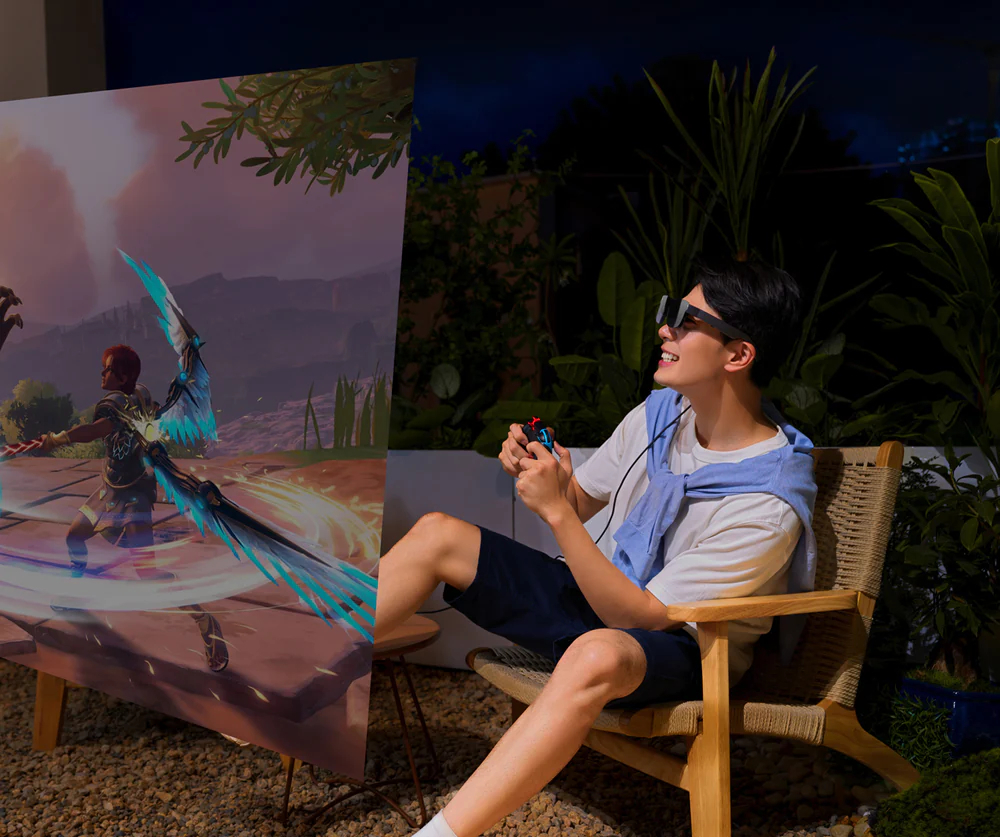
    Products fall into two distinct hardware tiers. The 33-gram RayNeo iO operates as a heads-up display for navigation, teleprompting, live translation and voice recording summaries. It costs US$499 with a standard case, or US$549 with a charging case bundle. For entertainment, the RayNeo GT retails at US$329, and the GT Max costs US$429. Both GT models feature audio co-tuned with Danish specialist Bang & Olufsen. They also support Dolby Vision playback when paired with the companion RayNeo Pocket TV Pro accessory.

    Competitive Shift in Consumer Wearables

    For electronics retailers and distributors in Southeast Asia, the rollout signals a shift from crowdfunding campaigns to volume consumer retail. At an entry price of US$329, the TCL-backed company takes direct aim at portable monitors and external displays rather than bulky mixed-reality headsets.

    Hardware margins in this segment stay tight. That puts pressure on companion accessories, such as the Pocket TV Pro and optical prescription inserts, to generate operating profit. Ecosystem lock-in presents the main commercial risk. Smart glasses still rely heavily on external host processing and content partnerships to attract buyers beyond early adopters.

    From Domestic Lead to Global Retail Footprint

    RayNeo built up to the Berlin release with several hardware announcements earlier in 2026. It debuted eSIM-enabled glasses at CES in January and introduced the Air 4 Pro at Mobile World Congress in March. Tracking databases from IDC, RUNTO, CINNO Research and AVC all ranked the company first for shipments in China.

    Demonstrations and executive interviews run through September 8 at Hall 21A at IFA 2026 in Berlin. Buyers can access introductory promotional discounts of US$30 during this opening sales window.
  • TCL Sues Samsung in US Court over Alleged Mini LED Television Claims

    TCL Sues Samsung in US Court over Alleged Mini LED Television Claims

    Chinese electronics manufacturer TCL sued Samsung in Los Angeles federal court, accusing its South Korean competitor of falsely marketing standard screens as Mini LED televisions.

    The complaint targets Samsung’s M Model line, which launched in March at price points below TCL’s entry-level display range. TCL claims the rival sets contain conventional LED hardware rather than the smaller, high-contrast diodes required for true Mini LED performance.

    Dispute Over Screen Technology

    According to the filing, TCL held the lead in US Mini LED television sales between 2023 and 2025 after pricing its units below Samsung’s premium lines. TCL attorney R.C. Harlan stated that Samsung peddled a recycled product line as a supreme tier model to claw back retail buyers.

    Samsung rejected the claims on Tuesday. The company said it intends to vigorously defend itself in court and stands fully behind the accuracy of its product specifications.

    Fight for US Market Share

    Chinese display makers have steadily squeezed South Korean rivals by scaling up advanced panel manufacturing in mainland factories, driving down retail prices across Western markets. While Samsung built its dominance on premium OLED and Quantum Dot hardware, TCL used competitive Mini LED pricing to erode Samsung’s volume share in major retail chains.

    TCL is asking the court for an injunction to halt Samsung’s Mini LED marketing claims alongside unspecified monetary damages. The case now moves toward initial procedural hearings in the Central District of California.

  • BlackBerry, TCL sign smartphone licensing agreement

    BlackBerry, TCL sign smartphone licensing agreement

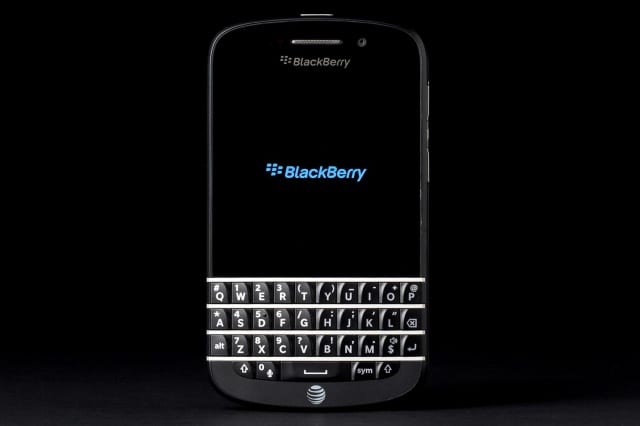
    BlackBerry has agreed to license its brand to China-based handset manufacturer TCL Communications.

    The companies entered a licensing agreement last week which will allow TCL to design, manufacture and distribute BlackBerry-branded phones globally going forward. The devices made by TCL will be coupled with BlackBerry’s security software and service suite.

    “BlackBerry will continue to control and develop its security and software solutions, serve its customers and maintain trusted BlackBerry security software, while TCL will manage all sales and distribution and serve as a global distributor of new BlackBerry-branded mobile devices along with dedicated sales teams,” the company said on Thursday.

    The agreement is the struggling Canadian smartphone maker’s first licensing deal since its announcement to transition to a software company.

    BlackBerry said in September that it would stop producing its smartphone hardware and concentrate on software, a decision which followed a year-long review of the potential profitability of the company’s hardware business by CEO John Chen.

    The new agreement will give TCL, the fourth-largest handset maker in North America, the right to make and sell BlackBerry-branded smartphones in all countries except India, Sri Lanka, Nepal, Bangladesh and Indonesia, where BlackBerry has already struck local licensing deals.

    Prior to this licensing deal, BlackBerry launched two smartphones – the Android-based DTEK50 and DTEK60 – in September and November respectively, which were made under an agreement with TCL.

    Industry watchers said this deal might be a boost for BlackBerry from a short-term financial standpoint by reducing BlackBerry’s operating risk, working capital requirements and potential R&D spend which would have otherwise gone into designing new phones.

    While the deal has an upside, it also exposes BlackBerry to a different kind of a security risk that might drive security-conscious consumers away from the brand and eventually hurt sales.

  • Harman partners with TCL to boost retail, product collaboration

    Harman partners with TCL to boost retail, product collaboration

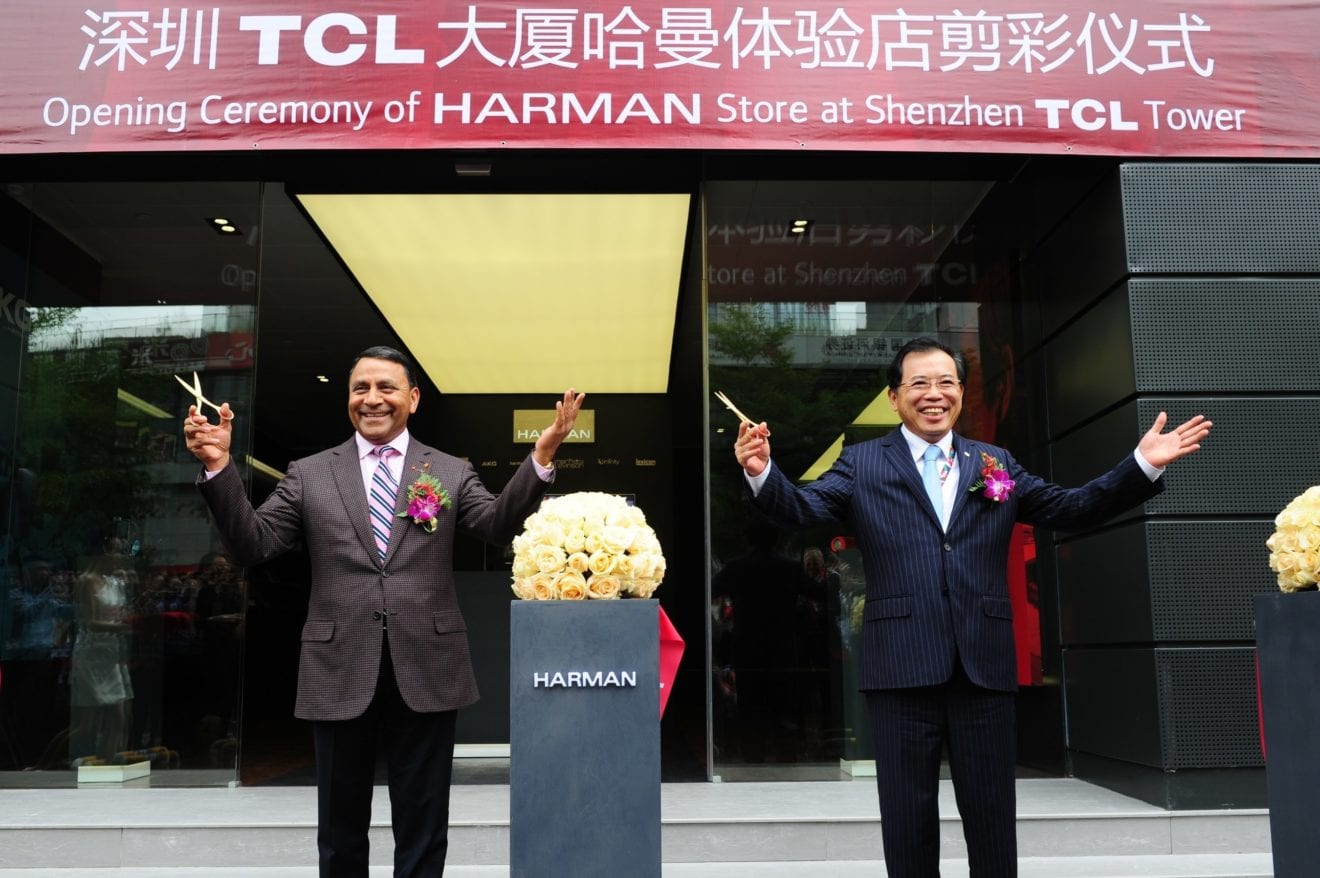
    Chinese audio and infotainment company Harman International opened its flagship store on 23 April at the TCL Tower in High-tech Industrial Park of Shenzhen. Its sister store, the TCL O2O flagship store was also set up the same day. TCL Corporation’s Chairman Li Dongsheng and Harman International’s Chairman Dinesh Paliwal attended the ceremony together, representing the start of a comprehensive partnership between the two corporations.

    Harman develops and produces professional audio electronic products and infotainment systems for various markets, ranging from auto markets, consumer markets, to professional audio markets. Over the past few years, Harman has already established a strong partnership with TCL Corporation, a global manufacturer of smart products and provider of internet application services. With the firm presence in TV and communications industries for years, TCL Corporation was the first TV manufacturer of China to engage in an all-round brand collaboration with Harman Kardon, a noted section of Harman International.

    The comprehensive partnership between TCL and Harman is mainly in the form of retail collaboration and product collaboration. Harman plans to create an online flagship store bearing its name on TCL’s e-commerce platform and identify TCL as its only e-commerce partner. Harman will also provide on-site product supports in 100 high-quality TCL stores. And in terms of product collaboration, Harman will provide diversified product customization services for TCL products.

    According to Li Dongsheng, the two corporations had always maintained a deep collaboration, with substantial progress being made between Harman and TCL’s four business areas including TV, cellphone, Tonly OEM, and O2O