Tag: Teavana

  • Starbucks expands Teavana in Korea

    Starbucks expands Teavana in Korea

    Starbucks is expanding Teavana in South Korea. According to the Korea Herald, The number of Starbucks’ premium Reserve-branded coffee houses serving Teavana drinks has expanded from 13 to 52.

    The tea has grown in popularity within the territory since it was introduced in 2016, with Teavana sales growing 20 percent annually. One tea blend is now the chain’s third most frequently ordered beverage among younger customers, perhaps due to a heightened awareness of health consciousness in that demographic.

    During the first three months of this year, sales of green tea-based drinks rose 35 percent compared with the same period last year.

    Starbucks acquired US-based Teavana Holdings in December 2012, a “super-premium tea” product it said brought “exotic blends, great flavors, wellness and innovation” to customers globally. At that time it was a standalone retailer, however, Starbucks closed all of the stores and integrated the brand and its products into selected coffee stores.

  • Starbucks China remain confident after sales slip

    Starbucks China remain confident after sales slip

    Starbucks China sales slipped 2 per cent on a same-store basis in the latest quarter, but the company will persevere with its expansion plan.

    The number of transactions in China and Asia Pacific slipped 3 per cent.

    “We remain confident in our global growth strategies, in the sustainability of our leadership position around all things coffee and tea and in our leadership teams around the world to navigate our next phase of growth,” said CEO and president Kevin Johnson.

    While global sales growth was a modest 1 per cent – driven by a 3 per cent increase in the average transaction value, it was still a record for the coffee retailer. Consolidated net revenue rose by 11 per cent to US$6.3 billion in the three months to July 1, in part thanks to store openings, selling its Tazo division and closing Teavana mall stores in the US.

    In China-Asia Pacific, net sales grew 46 per cent year on year, to US$1.229 billion, primarily driven by taking over ownership of the Starbucks East China business, a net increase of 746 stores year on year and favorable foreign currency translation. That was partly offset by the absence of revenue following the sale of the Singapore retail operations to Hong Kong-based Dairy Farm International subsidiary Coffee Concepts and a 1 per cent regional decrease in same-store sales.

    Another highlight of the quarter was a 14 per cent increase in the number of active Starbucks Rewards members in the US, to 15.1 million customers.

    Starbucks opened 511 net new stores in the quarter and now operates 28,720 stores across 77 markets.

    CFO Scott Maw said Starbucks’ record revenues and profits for the quarter reflected the underlying strength of the Starbucks business and brand all around the world.

    “We continue to grow share in virtually every market and channel in which we operate at the same time that our streamline initiatives are enabling us to sharpen our focus – and leverage our resources – against our highest value, long-term growth opportunities.”

  • Starbucks opens new Hong Kong flagship

    Starbucks opens new Hong Kong flagship

    The first Starbucks Hong Kong flagship has formally opened in Causeway Bay.

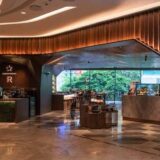
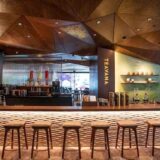
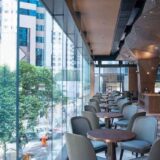
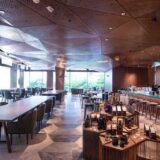
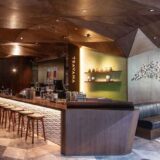
    The new store is located on level one of Lee Garden Three. As previously reported, the store features the city’s first standalone Teavana Bar and a ‘Mixology Bar’ where coffee-inspired alcoholic beverages are served, along with premium coffee and an expanded food menu.

    The 5500sqft store is positioned as “an urban retreat within the bustling city” and what Starbucks describes internationally as “a Third Place” for customers to socialise with family and friends. (First and second places are home and work).

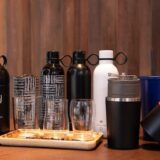
    The Starbucks Hong Kong flagship opened on Friday and boasts more than 50 new food and beverage items, as well as branded homewares and merchandise, including items exclusive to the store.

    The Starbucks Reserve coffee bar is built with marble in deep green shades inspired by coffee plantations. Staff will guide customers through the flavours of different coffee origins, and through various coffee brewing methods including nitro cold brew, siphon, pour over, coffee press, Chemex and Black Eagle Espresso.

    The Starbucks Hong Kong flagship features a coffee tree-inspired centre pillar that extends through the store ceiling, made with 370 pieces of geometric wooden panels shaped like coffee leaves.

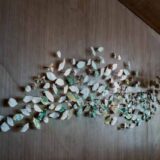
    Local designers Fa and Jun from Kanvas Studio created a feature art piece for the flagship made with 250 pieces of handcrafted ceramics inspired by the natural form of coffee and tea leaves.

    The Teavana Bar will feature five Hong Kong-exclusive teas among 15 new menu items at the Starbucks Hong Kong Flagship to offer consumers an alternative to coffee.

    The Teavana Bar will launch the first cold foam-tea series, bringing the foaminess customers of hot beverages to iced beverages with matcha latte with cold foam and black tea with Earl Grey jelly and cold foam.

    Food options at the new Starbucks Hong Kong flagship include gourmet toasts (bacon, Nurnberger sausage & scrambled eggs, avocado & scrambled eggs and soft-boiled egg & smoked salmon, for example). The menu also features a salad bar, flatbreads and pancakes.

    The full pictures of the new flagship store can be viewed below :

  • Starbucks Hong Kong to ban plastic utensils

    Starbucks Hong Kong to ban plastic utensils

    Starbucks Hong Kong will stop displaying disposable plastic utensils in all stores from July 4 and will launch the policy at its new Causeway Bay store this month.

    All disposable plastic utensils will be removed from the condiment bar and will be provided only upon request. The new sustainable living policy will apply to both in-store and takeaway orders.

    Meanwhile, Starbucks is billing its new Lee Garden store as the territory’s first flagship.

    The 5500sqft ‘Third Place’ experience will open on June 22 in Lee Garden Three. It will be the largest single-story Starbucks cafe in Hong Kong, featuring the city’s first Teavana Bar, an expanded food menu and Starbucks Reserve coffee selection.

    The Teavana Bar is described as “a modern tea experience re-interpreted by Starbucks through an artful combination of the finest tea and botanicals”.

    The broader store’s interior design has been inspired by a coffee plantation.

    Following the successful launch of coffee-infused craft beers at the Starbucks IFC Mall store in March, a coffee-inspired cocktail will make its debut at the flagship-exclusive Mixology Bar.

    From June 21-27 a Starbucks cup installation will be set up at Lee Garden One on the ground floor facing the pavement by the taxi station. Limited-edition dock coasters will be given away at the pop-up.

  • Shanghai is home for world’s largest Starbucks Reserve Roastery

    Shanghai is home for world’s largest Starbucks Reserve Roastery

    The world’s largest Starbucks Reserve Roastery opens in Shanghai tomorrow, a store the company also describes as its “most beautiful”.

    At 2700sqm (nearly 30,000sqft) the store is twice the size of the Seattle Starbucks Reserve Roastery flagship. It features three coffee experience bars, the largest 27m long. The coffee bar was handcrafted by premiere Chinese artisans and references the unique roasting curve of individual coffee beans.

    Starbucks Reserve Roastery - Shanghai 1

    China is Starbucks’ fastest-growing market with a new store opening every 15 hours. The US coffee chain has been in China for more than 18 years and now has more than 3000 stores across 136 cities. More than 600 of those  are in Shanghai.

    Starbucks Reserve Roastery - Shanghai 2

    Starbucks Reserve Roastery - Shanghai 11

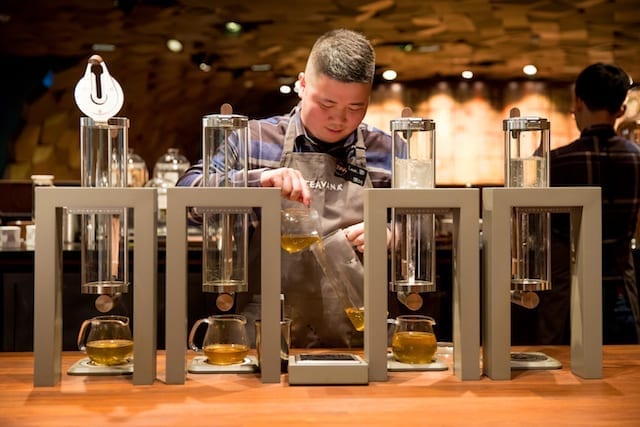
    The ambitious store expands Starbucks’ core offer, with more than 100 beverages on the menu, including Teavana tea infused with nitrogen and a new take on tea brewing with the Steampunk, which uses steam to extract unique flavors from each tea leaf.

    Starbucks Reserve Roastery - Shanghai 3

    Starbucks says the design is unique and will not be repeated elsewhere. Key design features include a ceiling consisting of 10,000 handmade wooden hexagon-shaped tiles inspired by the locking of an espresso shot on an espresso machine.

    Starbucks Reserve Roastery - Shanghai 4

    At the store’s entrance, mirroring the signature copper cask at the inaugural Starbucks Reserve Roastery in Seattle, customers will be greeted by the sight of a two-story, 40-ton copper cask adorned with more than 1000 traditional Chinese chops, or stamps, hand-engraved to narrate the story of Starbucks and its Reserve concept. The cask has a practical purpose, as well – connecting to the three coffee bars with pneumatic copper piping, replenishing all the roasted Starbucks Reserve coffee silos.

    Starbucks Reserve Roastery - Shanghai 8

    New bars and AR

    Besides the coffee experience bars, the new store features Asia’s first Princi bakery and cafe, with more than 30 Chinese bakers and chefs baking 80-plus menu items fresh onsite daily, based on artisanal recipes created by Italian baker Rocco Princi.

    Starbucks Reserve Roastery - Shanghai 9

    And it features China’s first Teavana Bar. Made entirely from 3D printed recycled material, the bar’s light jade colouring was inspired by ancient green clay teapots and the stains formed by brewing over time. Starbucks will continue China’s brewing tradition alongside tea curators as they practice mixology with the help of the Steampunk system’s nitrogen flavor extraction.

    Starbucks Reserve Roastery - Shanghai 10

    Designed by Starbucks, and powered by Alibaba, the Shanghai Roastery will become the first Starbucks location, and the first-of-its kind in China, to seamlessly integrate a real-time, in-store and online customer experience. Roastery customers are invited to immerse themselves in the first Starbucks augmented reality (AR) experience by simply pointing their phones at key features around the Roastery to bring to life information about the Starbucks bean-to-cup story. Guided through the space by a custom-designed AR “tour-guide,” customers can unlock virtual badges and a unique Roastery filter to commemorate their visit.

    “The affinity we have built with our partners (employees) and customers over the past 18 years in China is special and we knew we must bring the Reserve Roastery, our boldest, most premium store ever, to Shanghai, China’s bustling metropolitan hub and one of the world’s most dynamic retail destinations, as well as a gateway to customers from across Asia and the world,” said Howard Schultz, executive chairman of Starbucks Coffee Company. “We’ve created a space that both recognises and celebrates our 46-year history of coffee leadership and retail innovation with China’s rich, diverse culture.”

    Here’s a video from Starbucks showing some of the interior (no sound):

  • Simon sues Starbucks over Teavana closures

    Simon sues Starbucks over Teavana closures

    US shopping mall owner Simon Property is taking coffee chain Starbucks to court over its planned Teavana closures.

    In late July, Starbucks announced it would shutter all 379 of its Teavana stores, including 78 in Simon-managed malls, because they were “under-performing”.

    In documents filed with the Marion Superior Court, Simon accuses Starbucks of “shirking its contractual obligations at the expense of Simon’s shopping centres and the dozens of communities they serve and support,” not to mention breaching its lease agreements.

    The landlord is seeking temporary and permanent injunctions preventing the Teavana closures.

    Starbucks paid US$629 million to buy the tea-store chain in December 2012, promising at the time “to do for the tea market what Starbucks had done for coffee”. While it will close all retail outlets, Starbucks plans to maintain the Teavana brand in its own cafe network and has been actively rolling it out Teavana-branded drinks in Asia during the last two years.

    Simon says Starbucks has advised it will close all its Teavana stores in Simon malls by the end of 2017, despite some leases due to run as long as January 2027.

    “In order to successfully operate its shopping centers, Simon depends upon each tenant fulfilling the covenants in their respective leases,” the company said in court documentation. “Crucially, each of Simon’s tenants promises that it will open and operate continuously for the entire term of its lease.”

    Simon acknowledged in the suit that a lot of retailers have been closing stores in its malls in recent years because of financial stress – including Gap, Ralph Lauren, Sears, Macy’s, Rue 21 and American Eagle.

    “Those retailers, at least, claimed closure was necessary to avoid bankruptcy, and that staying open and fulfilling their leases would cause them financial ruin,” Simon said. “That obviously is not the case with Starbucks, which is one of the largest and most recognised companies in the world.”

    The landlord also claimed Teavana was not losing money, arguing it wasn’t growing fast enough to fit with Starbucks’ business plan.

    “Starbucks’ decision to close its Teavana stores is simply an effort to further increase its economic gains at the expense of others,” Simon said. “Starbucks does not contend that Simon breached any lease or that Starbucks cannot remain viable if it continues to honor its promises in its leases for stores in Simon’s shopping centers. Instead, Starbucks simply believes it can make more money if it violates the leases than if it honored its contractual promises and obligations.”

    Teavana stores were described by Simon as “a valuable contribution to the synergistic mix of tenants” in its malls.

    “A shopping center is not merely a random collection of stores. Rather, it is a co-dependent ecosystem of tenants with a complex system of governance that ensures its wellbeing. Tenants depend on a mix of a certain types of retailers. Accordingly, Simon enters into long-term leases with its tenants to provide stability in Simon’s occupancy rate and tenant mix.”

    Starbucks has not yet commented on the lawsuit.

  • Starbucks Coffee Korea sales booms

    Starbucks Coffee Korea sales booms

    Starbucks Coffee Korea said its annual sales topped the 1 trillion won (US$884.17 million) mark for the first time ever last year.

    The local franchise of the US coffee giant, which is operated by retail conglomerate Shinsegae, debuted in South Korea in 1999.

    Annual sales rose 29.6 per cent from the 773.9 billion won of 2015.

    Operating profit also increased 81.2 per cent year-on-year to 85.4 billion won in 2016.

    As at the end of February, Starbucks operated 1008 shops across the country.

    Industry observers said Starbucks’ record is astonishing as annual sales of other players such as Twosome Place and Angel-in-us Coffee are averaging between 100 and 200 billion won.

    “Starbucks gained popularity among women in their 20s and 30s who are attuned to the latest consumer culture of the United States,” an analyst said, adding that Starbucks has constantly launched new menus.

    Starbucks acquired tea retailer Teavana in 2012 and has since rolled out various tea menus along with bakery products.

  • TWG Tea makes debut in Canada

    TWG Tea makes debut in Canada

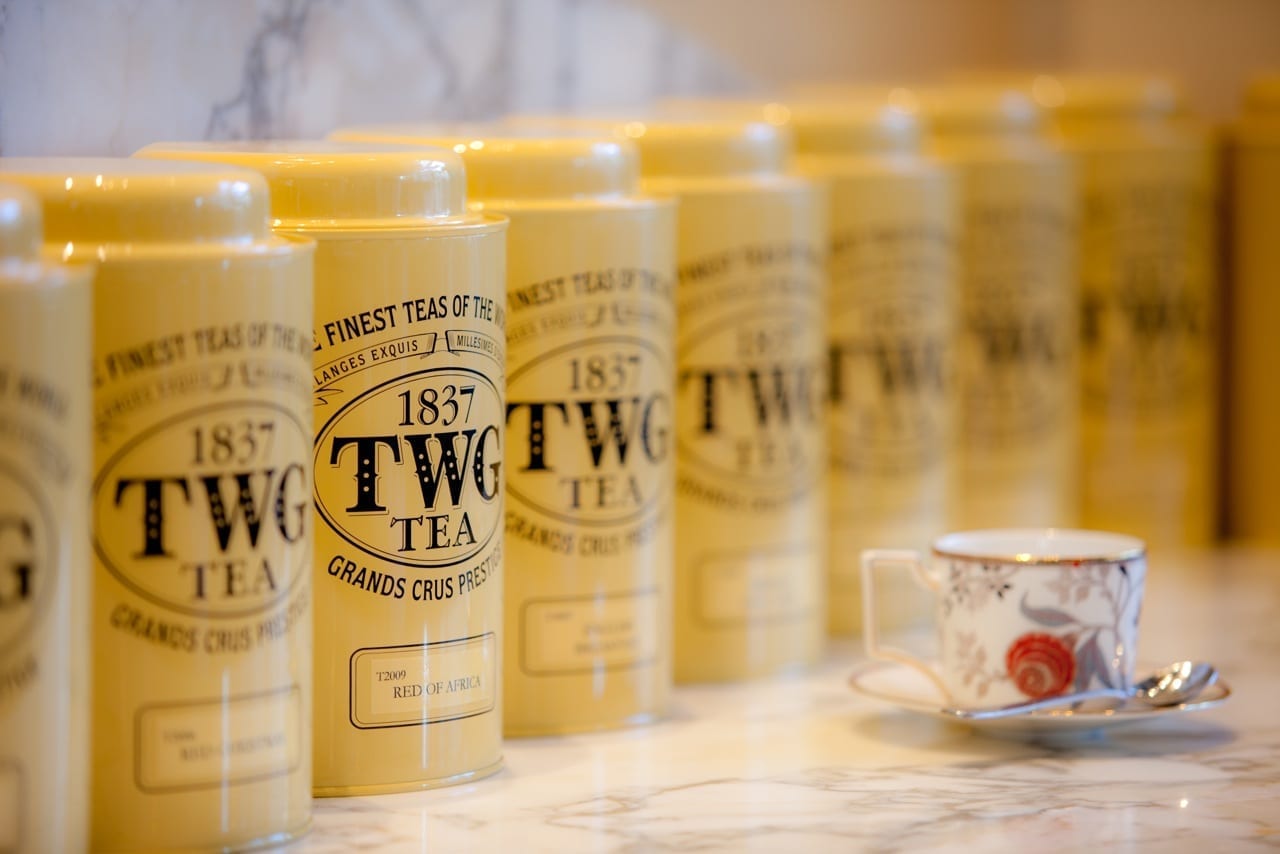
    Singaporean brand TWG Tea has entered the North American market with a store in Vancouver.

    In its eight years, TWG Tea has opened 56 owned and franchised boutiques and salons in 17 cities including Dubai, London and Shanghai.

    In Canada, its franchise and distribution rights have been bought by Tom and Karinna James, who previously owned Urban Tea Merchants in Vancouver. The city is ideal for TWG’s North American debut because of its tea culture, large Asian population and local appreciation for niche and artisanal beverages.

    “Our Asian population are very sophisticated tea drinkers,” says Tom James, thanks to the introduction of tea concepts such as Davids Tea and Starbucks’ Teavana.

    Tea sales in Canada reached $1.3 billion last year, with 40 per cent growth by 2020 predicted.

    Tom and Karinna James opened luxury tea house Urban Tea Merchant in 2004. The shop has been closed and will reopen as TWG next month with a boutique, salon and small wholesale component focussing on hotels and gourmet stores.

    Tea will be served in 18-carat gold-plated teapots, says James, who plans to open several stores in Canada.

  • Starbucks Asia rolls out Teavana

    Starbucks Asia rolls out Teavana

    Starbucks Asia is rolling out Teavana in 6200 stores across its 16 Apac markets.

    Four tea beverages prepared in-store will be offered to the 16 countries, with two or three expected to be sold in each market, the choice up to each one.

    Starbucks acquired US-based Teavana Holdings in December 2012, a “super premium tea” product it says brings “exotic blends, great flavors, wellness and innovation” to customers globally.

    The Asian launch began with China at the end of last month, with Korea and Indonesia following at the beginning of this month. The majority of Asian markets will see the new lines in mid-September, with a Japan launch scheduled for October and India later this year.

    Vera Wang, director, product line innovation at Starbucks China and Asia Pacific said the teas have been developed especially for Asian tastes.

    “We recognise Asian consumers are developing sophisticated taste preferences.”

    While a premium product, pricing will be left to the determination of each market, she said.

    “Pricing (of all Starbucks lines) is determined product by product and market by market.”

    She declined to discuss the company’s expectations for Teavana’s share of Starbucks sales in the region.

    “I’m not at liberty to talk about that. But tea definitely has huge potential for us and we have a lot of confidence going into Asia with Teavana.”

    Starbucks Korea staff promoting Teavana at the Starfield Hanam GL store.

    Besides fresh-brewed tea in cafes, Teavana full-leaf tea sachets will also be sold for take-home use.

    The four launch lines of Teavana in Asia are Matcha & Espresso Fusion (a matcha tea blended with a shot of espresso), Black Tea with Ruby Grapefruit and Honey, Iced Shaken Green Tea with Aloe and Prickly Pear; and Iced Shaken Hibiscus Tea with Pomegranate Pearls.

    Wang said, those core lines would be complemented by other blends selected on a market-by-market basis in the future, depending on customer feedback.

    John Culver, group president of Starbucks global retail said in a statement Teavana represents “a tremendous opportunity to leverage the company’s expertise in creating best-in-class retail experiences, handcrafting custom beverages, and sourcing the finest ingredients, to become a leader in a new category for us”.

    “Just as we’ve done for coffee, this is tea reimagined at Starbucks.”

    Last year, Starbucks’ tea business in the US grew by 12 per cent with all tea categories posting strong growth, led by iced tea at 29 per cent. Building on this and the success of Teavana to date in other parts of the world, Starbucks aims to increase its global tea business to US$3 billion over the next five years.

    Starbucks Teavana will be launched in all stores in Australia, Brunei, Cambodia, China, Hong Kong, India, Indonesia, Japan, Korea, Malaysia, New Zealand, The Philippines, Singapore, Taiwan, Thailand and Vietnam.
  • Starbucks India helping Tata Group internationally

    Starbucks India helping Tata Group internationally

    Strengthening their partnership, Coffee retailer Starbucks India is helping lift international exposure for India’s Tata Group brands.

    Starbucks is introducing Tata’s single-origin coffee in the US and its mineral water in Singapore, and helping develop a signature Indian tea blend. In return, Tata group is introducing Starbucks coffee on Vistara flights and launching its specialty tea brand Teavana in India.

    Starbucks will sell single-origin, premium coffee from India at its Starbucks Reserve Roastery and Tasting Room in Seattle, says chairman/CEO Howard Schultz said after meeting Tata chairman Cyrus Mistry at the iconic store. Starbucks will be opening a similar outlet in Shanghai next year.

    Tata-Starbucks will also introduce Kenyan and Sumatran coffees at Starbucks stores across India, says the company, and Starbucks coffee will be available on Vistara, a full-service airline, later this year. Vistara is a joint venture between Tata Sons and Singapore Airlines, and has more than 457 flights weekly to 17 destinations.

    Following the success of the tea category in its US stores, Starbucks will extend its Teavana specialty tea brand to India in December. The joint venture is also collaborating on the development of a signature Indian tea blend for Starbucks stores in India.

    India has become Starbucks’ fastest-growing market since the first cafe opened in 2012 in a partnership with Tata Global Beverages. The chain has expanded to 84 locations across six cities.

    The company’s China and Asia-Pacific unit generates about 13 per cent of its total revenue, and Starbucks plans to open about 900 outlets in the region this fiscal year, compared with 700 store additions in the Americas and 200 in Europe, the Middle East and Africa. It has more than 2000 cafes in China alone and plans about 500 new stores a year in the country.

    Starbucks also plans to expand the availability of Himalayan Mineral Water, bottled by Tata Global Beverages, beyond Starbucks stores in India to Singapore this year. It is also exploring opportunities to introduce the brand to stores across Starbucks China and Asia-Pacific region.