Tag: Technologies

  • Turbocharging Indonesia’s Digital Journey: GSMA Calls for Heightened Investment in 5G and AI Technologies

    Turbocharging Indonesia’s Digital Journey: GSMA Calls for Heightened Investment in 5G and AI Technologies

    The GSMA has highlighted the need for a more robust, investment-focused strategy to expedite Indonesia’s digital transformation and stimulate innovation, according to its recent findings published in the reports GSMA Digital Nations 2025 and ASEAN Consumer Scam 2025.

    Moving Towards a Digital Future

    The GSMA has proposed a feasible strategy to facilitate the unlocking of private capital and hasten the roll-out of 5G spectrum, fiber backhaul, and AI-optimized data centers. This strategy is underpinned by policy consistency and cooperation across sectors. There is a strong inclination among Indonesian businesses towards digital transformation.

    Indications of such enthusiasm were evident in a recent GSMA Intelligence survey where over 580 firms spanning across ASEAN were surveyed. The results revealed that Indonesian companies intend to dedicate an average of 10% of their revenues to digital transformation between 2025 and 2030, exceeding both the ASEAN (10.4%) and global (9.8%) averages. Two-thirds of the participants prioritized AI in their top three expenditure areas, with over half deeming 5G-powered Internet of Things (IoT) vital for future growth. This underscores Indonesia’s ambition to capitalize on cutting-edge technologies to fortify its competitive edge and security.

    Economic Impact of 5G

    GSMA Intelligence anticipates that the ensuing wave of 5G investments in Indonesia could inject an extra USD 41 billion into the country’s GDP between 2024 and 2030, underlining the transformative economic potential of digital connectivity. Since 2015, mobile operators have pumped nearly USD 29 billion into Indonesia’s network infrastructure and services. Given the right investment conditions, the sector, including operators and ecosystem partners, is projected to inject an additional USD 16 billion from 2024 to 2030, primarily targeting 5G proliferation.

    Julian Gorman, Head of Asia Pacific at the GSMA, expressed his thoughts on the matter, highlighting the unique opportunities presented by Indonesia’s significant scale, entrepreneurial vigor, and youthful, tech-savvy population. The focus now should be on targeted investment in areas such as affordable, dependable spectrum; robust backhaul; and AI-compatible, sustainable data centers, coupled with clear consumer protections.

    Assessing Progress and Challenges

    The GSMA’s Digital Nations report evaluated the advancement of Asia Pacific nations in five key areas: infrastructure, innovation, data governance, security, and people. It provided insights into where investment could yield the highest returns.

    Indonesia ranked midway among the 21 nations assessed. The report underscored Indonesia’s advantages in terms of its population, digital skills, and cybersecurity, while also pointing out areas in need of enhancement, particularly in innovation and investment. Potential obstacles to progress include delays in mid-band spectrum allocation, inconsistent rural coverage, and limited AI-ready capability. Consumer trust is also a matter of concern.

    Findings from the ASEAN Consumer Scam Report 2025 indicate that Indonesia mirrors the wider ASEAN trend, with 45% of adults admitting to having been scammed at some point, and 68% of victims losing money. In Indonesia, scam contacts are predominantly mobile-oriented, with over-the-top (OTT) messaging (50%) and voice calls (44%), both exceeding the ASEAN average.

    Preventing Fraud and Enhancing Security

    On a brighter note, 81% of Indonesians endorse operators sharing minimal, purpose-specific network signals such as SIM-change and number-verification during high-risk instances to prevent fraud, thus setting the stage for a broader application of GSMA Open Gateway anti-fraud APIs. Indonesia’s three primary mobile operators, Telkomsel, Indosat, and XL Axiata, have teamed up to shield customers from scams and other cybersecurity threats by collectively adopting Open Gateway APIs, such as SIM swap, number verification, and device location, to secure payments and logins.

    Questions & Answers

    What approach does the GSMA recommend to accelerate Indonesia’s digital transformation?
    The GSMA suggests a more robust, investment-focused strategy to expedite Indonesia’s digital transformation. This includes unlocking private capital and hastening the roll-out of 5G spectrum, fiber backhaul, and AI-optimized data centers.

    What potential economic impact could the next wave of 5G investment have on Indonesia?
    GSMA Intelligence anticipates that the ensuing wave of 5G investments in Indonesia could inject an additional USD 41 billion into the country’s GDP between 2024 and 2030.

    How are Indonesia’s major mobile operators responding to cybersecurity threats?
    Indonesia’s three major mobile operators, Telkomsel, Indosat, and XL Axiata, have formed an alliance to protect customers from scams and other cybersecurity threats by jointly adopting GSMA Open Gateway anti-fraud APIs, such as SIM swap, number verification, and device location, to secure payments and logins.


  • Japan’s Telecom Titans: Pioneering Global Connectivity with Next-Gen Technologies

    Japan’s Telecom Titans: Pioneering Global Connectivity with Next-Gen Technologies

    As the international telecommunications sector experiences significant changes, companies from Japan are harnessing the power of emerging technologies, their established brands, and strategic partnerships to establish a foothold in the Asia Pacific and various emerging global markets. The Japanese approach is a blend of innovative thinking, collaboration, and long-term strategic planning, all aimed at enhancing regional connectivity.

    Japan’s Telecom Landscape

    In Japan, over 150% of the population owns a mobile phone. However, as the population ages and decreases in size, telecom operators are finding fewer opportunities to attract new subscribers within the country. As a result, they are looking beyond the Asia Pacific for growth opportunities. In terms of global positioning, Japan’s leading telecom companies hold strong. The NTT Group is ranked fifth worldwide with a brand value of $37.1 billion USD, SoftBank sits at 11th with $13.9 billion USD, and au by KDDI is 14th with $10.9 billion USD. These rankings illustrate the robustness of Japan’s telecom sector and highlight the need for these companies to penetrate new markets to maintain their growth. While domestic innovation will persist, international projects, consultations, and partnerships will drive Japan’s global initiatives.

    Leading the Charge in 6G and Intelligent Network Development

    Japan is at the forefront of the development of next-generation wireless technology, making it a primary focus for exports. Leading companies such as NTT DOCOMO, SoftBank, and KDDI are spearheading the profitable development of 6G technology. In December 2024, NTT DOCOMO announced a new 6G initiative following approval from the 3GPP Madrid meeting. Supported by 56 global companies, the project aims to standardize 6G technology, align with UN objectives, and accelerate AI-powered connectivity.

    In July 2025, SoftBank and Nokia conducted Japan’s first 7 GHz 6G outdoor trial, testing centimeter-wave frequencies in Tokyo. The project aims to compare 6G and 5G urban coverage, thereby providing key insights before the ITU-R WRC-27 discussions. Additionally, KDDI Research and Samsung signed a MoU to further AI-driven innovations for 6G. The partnership’s goal is to enhance D-MIMO systems, boost speeds, and broaden coverage using AI. The companies share a vision of a user-centric, AI-integrated 6G network.

    Technology as a Tool for Regional Leadership

    In 2024, Japan demonstrated its leadership in advanced communications with a significant Beyond 5G/6G research project, spearheaded by top firms and selected by the National Institute of Information and Communications Technology (NICT). This project aims to create seamless user connections across cloud data centers, improve fault tolerance, and advance all-photonics networks in rural areas, thereby bolstering Japan’s global standing in next-gen ICT.

    In the same vein, SoftBank unveiled a new AI system for wireless signals in 2025 based on the Transformer model. This AI system, part of the Artificial Intelligence Radio Access Network (AI-RAN) project, boosted 5G speeds by 30% in live tests, thus enhancing Japan’s role in developing AI-powered telecom and next-generation networks.

    Japan’s New Role in the Telecom Ecosystem

    Japan’s leading telecom companies are transitioning from being local market leaders to regional connectivity influencers. By exporting technology, expertise, and ethical standards, they are shaping Asia’s digital landscape. Japan’s influence, powered by 6G innovation, rural networking, and global collaborations, extends beyond its borders, fostering the development of smart, interconnected societies.

    The success of these regional strategies hinges on balancing ambition with caution, and innovation with teamwork. Japan’s telecom industry has set its sights on larger goals, aiming to connect Asia and beyond by focusing on quality, trust, and ongoing innovation.

    Questions & Answers

    What is the current state of Japan’s telecom industry?
    Japan’s telecom industry is robust and globally recognized, with leading telecom companies like NTT Group, SoftBank, and au by KDDI holding strong positions worldwide. However, due to Japan’s aging and declining population, these companies are looking for growth opportunities beyond the Asia Pacific.

    How are Japanese telecom companies advancing 6G technology?
    Japanese telecom companies such as NTT DOCOMO, SoftBank, and KDDI are spearheading the development of 6G technology. They are undertaking numerous initiatives, from standardizing 6G technology to conducting outdoor trials to comparing 6G and 5G urban coverage. They are also focusing on using AI to improve network systems, speed up connectivity, and broaden coverage.

    What is the future outlook for Japan’s telecom industry?
    Japan’s telecom industry is set to evolve from a domestic leader to a regional influencer, shaping Asia’s digital landscape and extending its impact beyond its borders. The industry is also aiming to connect Asia and the rest of the world by focusing on quality, trust, and ongoing innovation. The balance of ambition with caution and innovation with teamwork will be key to the success of these strategies.

  • Zebra expands global ISV strategy

    Zebra expands global ISV strategy

    Zebra Technologies Corporation announced a global independent software vendor (ISV) initiative designed to increase collaboration and expand engagement with the wider developer community.

    New independent software vendor initiatives to expand solutions that help customers make smarter decisions with real-time visibility.

    Zebra also announced the appointment of James Pemberton as the global lead of this initiative, which will help our customers make smarter decisions with products, software and services that build visibility that’s visionary.

    The new initiative will increase market penetration with ISV partners and enable enterprise application development through a revamped developer community portal. Zebra’s global ISV program reflects the global nature of software businesses. Partners can join in multiple regions simultaneously; they can register and be recognized for projects globally.

    Zebra offers powerful, go-to-market tools to promote ISV partners’ apps, such as AppGallery, an online and mobile Android app-distribution and management platform. AppGallery is pre-installed on Zebra’s enterprise Android devices, including a global demo capability and virtual shop-window for ISV Partners’ apps.

    Key facts

    • The new program includes global Influence Rewards. These recognize and reward ISVs who influence customers – through their software – to buy Zebra products anywhere globally. They receive free demo kits and financial rewards for registering projects.
    • Zebra’s active developer outreach campaign includes engagement at events such as Andevcon, AppsWorld and DroidCon. Plans are also underway for Zebra’s own global enterprise developer event series, “AppForum2017”.
    • Pemberton’s work with teams across Zebra will create a common approach for ISVs to be more integrated in product development that feeds into Zebra’s enterprise asset intelligence solutions and go-to-market activities.
    • Since 2005, Pemberton has focused on developing, improving, marketing and managing the EMEA ISV program at Symbol Technologies, Motorola Solutions and Zebra. He previously worked in several retail and e-commerce software companies.

    Bill Cate, Vice President, Channel Strategy and Operations, Zebra, said: “The launch of this initiative demonstrates Zebra’s commitment to the channel and clear recognition of the importance of the ISV partner and develop communities. James’ proven dedication to building strategic relationships with these important groups is key to leading Zebra’s renewed efforts to further engage them in building solutions that help our customers know more about their business.”
    James Pemberton, Global ISV Strategy Director, Zebra, said: “Innovation driven by the ISV partner and developer communities strategically aligns with the industry leading product portfolio Zebra offers to its customers, and we are poised to successfully reach more developers focused on enterprise projects than ever before. I’m excited to see this developer outreach and our ISV partner collaboration yield new opportunities, profitability and simplicity to benefit all parties involved.”

  • Capillary Technologies raises $45m for expansion

    Capillary Technologies raises $45m for expansion

    Singapore-based Capillary Technologies has secured $45 million in new funding to expand its back end services to multichannel retailers.

    Capillary Technologies offers a cloud-based platform which powers end-to-end customer engagement, loyalty and social CRM solutions for more than 170 major brands across 20,000 stores, serving over 150 million consumers primarily in Asia, including India, South East Asia, China and the Middle East.

    Customers include industry leaders such as Pizza Hut, KFC, Puma, United Colors of Benetton, Pantaloons, Arvind Brands, Madura Garments, Red Tag, Bata, Courts, Lee and Timberland.

    The company says it has raised $45 million in a series C funding round led by an affiliate of private equity firm Warburg Pincus. Existing investors Sequoia Capital and Norwest Venture Partners also participated.

    Capillary will use the capital infusion to expand its offerings to enable clients to develop an omni-channel view of their customers, both organically by broadening its product suite, as well as inorganically via the acquisition of MartJack, Asia’s leading multi-channel commerce provider.

    Capillary’s cloud-based platform, which can integrate into virtually any point-of-sale device, offers a one-stop solution for retail marketers to engage with their customers, by capturing and analysing customer data, and enabling targeted customer communications to increase loyalty and engagement. By combining big data with a robust analytics engine, Capillary optimises the relevance and profitability of personalized offers to consumers in real-time, significantly increasing both loyalty and sales.

    “Warburg Pincus needs no introduction for the kind of strategic direction and commitment they bring to the table, in addition to the investment. This funding round validates our model and vision of enabling retailers to harness the power of the cloud and to provide a deeper connect for consumers across channels. It also puts us on the path to being one of Asia’s true product bellwethers, which will establish us as a strong contender on the global map of Enterprise SaaS solutions,” said Aneesh Reddy, co-founder and CEO of Capillary Technologies.

    “The retail sector in Asia is undergoing a significant transformation, as organised retail develops in tandem with eCommerce, and as retailers invest in tools to drive consumer loyalty and retention across online and offline channels,” said Nitin Nayar, MD of Warburg Pincus.

    Concurrent with the capital raising, Capillary has also expanded its portfolio in areas of multi-channel commerce enablement, online-to-offline, predictive analytics and customer experience to expand its product and customer service capabilities.

    MartJack is Asia’s leading multi-channel commerce platform serving over 250 companies, including major global brands such as Walmart, Unilever, Future Group, Lulu, Clarks, Body Shop and Aramex, who use its cloud platform to develop online storefronts enabling digital commerce with shoppers.

    Its ready-to-use software platform provides a one-shop digital commerce solution to brands across Asia, featuring 30+ payment partners, 10+ logistics partners and 70+ service partners (e.g. digital marketing, web development, catalog management, design services).

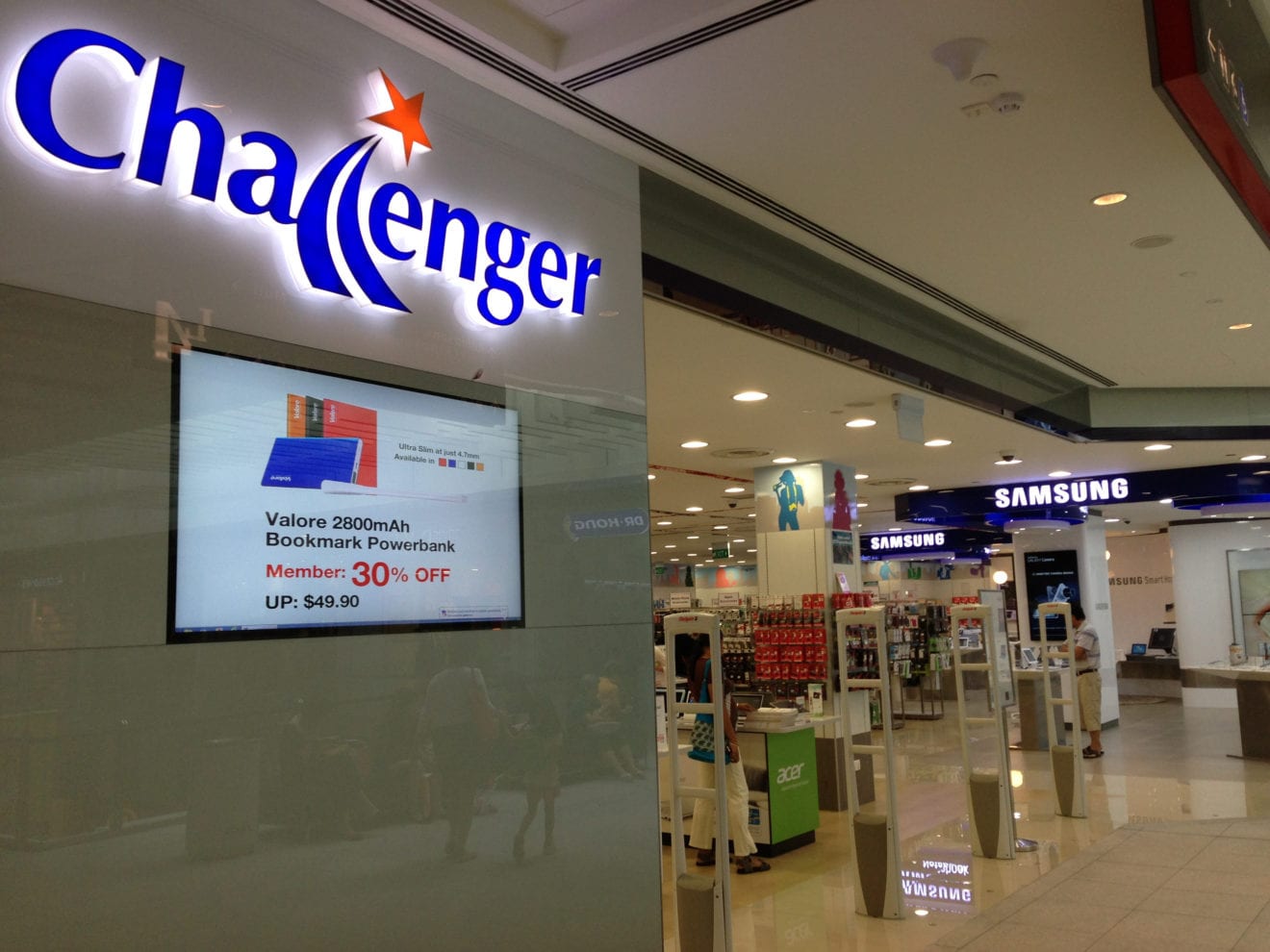
  • Challenger Singapore shrugs off retail gloom

    Challenger Singapore shrugs off retail gloom

    Listed IT chain Challenger Singapore plans to open new stores this year as sales increase despite the city’s retail malaise.

    Challenger currently operates 45 stores in Singapore, a flagship megastore, 22 superstores and 22 small format stores. The company says it will continue to expand its retail footprint with three new stores planned for the second half of this year. Some stores which are not performing up to expectation will be downsized or closed when their current leases expire.

    Challenger Technologies, Singapore’s largest retailer of IT products and services, has reported a three per cent increased in second quarter sales to $84.7 million.

    It says sales were buoyed mainly by an increase in trade show activities as well as full-year operations for retail stores opened since the second half of 2014.

    These were partially offset by loss of revenue that resulting from its exit from Malaysia in the first half of last year.

    Net profit jumped 21 per cent to $3.5 million, boosted by reduced rental and operating expenses that resulted from the Malaysia exit.

    CEO Loo Leong Thye said although the company had improved its net profit, the IT retail business in Singapore continues to be challenging due to weak consumer spending power.

    “We also face higher operational costs and difficulty in hiring more staff to serve our customers to an expected level of satisfaction.”