Tag: teens

  • Facebook launches new privacy tools to protect teens

    Facebook launches new privacy tools to protect teens

    Facebook is taking another step toward strengthening teens protection by introducing a new set of privacy tools. The social app announced today some updates to its policy of protecting young people from harm. After releasing similar features last year to restrict adults from messaging teens they aren’t connected to, this year Facebook plans to introduce new ways to protect teens from messaging suspicious adults they aren’t connected to.

    As per Facebook’s statement, a “suspicious” account is one that belongs to an adult that may have recently been blocked or reported by a young person (among other things). Additionally, Facebook introduced another layer of protection by removing the message button on teens’ Instagram accounts when suspicious adults view them. Both these features are now being tested by Facebook and will be made generally available if they prove to be efficient.

    New safety tools have been announced too, in the form of notifications which will prompt teens to report accounts after they block someone, as well as safety notices that contain information on how to navigate inappropriate messages from adults.

    More importantly, Facebook released new privacy defaults for teens using its social app. Starting today, Facebook users under the age of 16 (or under 18 in certain countries) will be defaulted into more private settings when they join the service. Those who are already on the app are encouraged to use these more private settings for:

    • Who can see their friends list
    • Who can see the people, Pages and lists they follow
    • Who can see posts they’re tagged in on their profile
    • Reviewing posts they’re tagged in before the post appears on their profile
    • Who is allowed to comment on their public posts

    Finally, Facebook announced that it’s working with the National Center for Missing and Exploited Children (NCMEC) to create a global platform for teens who are worried intimate images they made might be shared on public online platforms without their consent.
  • Percentage of teens looking to buy an iPhone is close to a record high

    Percentage of teens looking to buy an iPhone is close to a record high

    Investment house Piper Sandler released the results of its 43rd semi-annual Taking Stock With Teens survey. The latest results show that the number of American teenagers planning to purchase their first iPhone is close to a record high. Piper Sandler analyst Harsh Kumar says that 87% of the teens responding to the firm’s latest survey plan on purchasing an iPhone. Coincidentally, the survey showed that 87% of the teens responding already own an iPhone.

    We said that the 87% of teens who said that their next phone will be an iPhone was close to a record high. That’s because, during the Spring 2021 survey, 90% of teens were saying that their next phone would be running iOS while 88% of teens said that they already owned an iPhone in that survey. Kumar said that the results were encouraging for Apple.

    And in a boost for Apple’s large Services unit, teens’ favorite money transfer app is now Apple Pay which toppled previous leader Venmo in the latest survey. The analyst sees the results forecasting growth in the Services unit which took in $68 billion during fiscal 2021. Apple’s Services unit includes the App Store, Apple Pay, Apple Care+, Apple Music, Apple Arcade, Apple Card, Apple TV+, Apple News+, Apple Fitness+, iCloud, iTunes Store, and more.

    With over 1 billion active iPhones, Apple has a large number of possible buyers ready, willing, and able to spend on Services including recurring subscriptions. It’s that word “recurring” that brings a smile to the face of Apple CEO Tim Cook.

    As for the specifics of the survey, 7,100 teens responded to survey with an average age of 16.2 years. 44 different states were represented and they live in households with an average income of $69,298. 39% of the teens are employed part-time. Either they live in a household that is well off, or they are able to afford to buy the iPhone using their own paycheck.

    Piper Sandler’s Kumar rates Apple overweight and has a $200 target on the stock. For those not familiar with Wall Street talk, an overweight rating has nothing to do with Eddy Cue’s eating habits. It simply means that in calculating your portfolio, Apple shares should comprise a larger percentage of your portfolio compared to the rest of your holdings.

    The latest survey of teens has pretty similar results to the previous Taking Stock With Teens

  • Google makes its apps safer and more private for teens and pre-teens

    Google makes its apps safer and more private for teens and pre-teens

    Google announced today some changes made to give teens and pre-teens more control over some of Google’s most popular apps. Over the next few weeks, Google will debut a new policy that enables anyone under 18 years old or their parent or guardian to request the removal of the child’s image from Google Image results including Search. As Google itself points out, “Of course, removing an image from Search doesn’t remove it from the web, but we believe this change will help give young people more control of their images online.”

    Over the next few weeks, the following changes are coming to Google apps for those under 18. YouTube will change the default upload settings for those 13-17 to the most private option available. Some useful digital wellbeing features will be promoted by Google and Google will provide safeguards and educate teens about commercial content from the app. Those 13-17 will have autoplay turned off by default while bedtime and break reminders will be enabled by default.

    As the Alphabet subsidiary says, “We regularly engage with kids and teens, parents, governments, industry leaders, and experts in the fields of privacy, child safety, wellbeing, and education to design better, safer products for kids and teens. Having an accurate age for a user can be an important element in providing experiences tailored to their needs.

    Yet, knowing the accurate age of our users across multiple products and surfaces, while at the same time respecting their privacy and ensuring that our services remain accessible, is a complex challenge. It will require input from regulators, lawmakers, industry bodies, technology providers, and others to address it – and to ensure that we all build a safer internet for kids.”

    Teens using Google Search can be protected by SafeSearch which prevents the kids from seeing search results not meant for their eyes when enabled. It is on by default for users under 13 whose accounts are managed by Family Link. With the latter, parents can decide at what time their kid’s device shuts off for the day. Google plans in the coming months to turn SafeSearch on by default for existing users under 18 and make it the default setting for teens setting up new accounts.

    When it comes to teens using Google Assistant, the company says, “We’re always working to prevent mature content from surfacing during a child’s experience with Google Assistant on shared devices, and in the coming months we’ll be introducing new default protections. For example, we will apply our SafeSearch technology to the web browser on smart displays.”

    Children using supervised accounts don’t have the option of turning on Location History which is turned off by default for all accounts. Soon, Google will prevent users under 18 globally from being able to turn on Location History. In addition, a new safety section for the Play Store will allow parents to know which apps meet Google’s Family policies. Apps will also have to disclose how they use the data they collect in greater detail allowing parents to decide whether to allow their kids to install the app.

    Google will also prevent age-sensitive ad campaigns from being shown to teens and those under 18 will not be allowed to be targeted by advertisers based on age, interests, and gender. New digital wellbeing tools will allow parents to “block news, podcasts, and access to webpages on Assistant-enabled smart devices.”

    Anne Collier, executive director of the Net Safety Collaborative stated, “Being mindful about tech use is key to everyone’s wellbeing. These new defaults for teens are protective; they increase safe, mindful tech use by making teens think about what they want to see and who they want seeing their content.”

  • The TSA bans use of TikTok over national security threat allegations

    The TSA bans use of TikTok over national security threat allegations

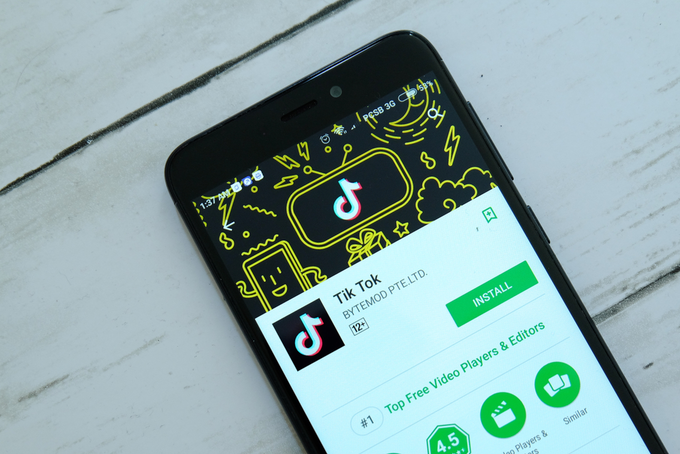
    The United States Senator for New York Charles E. Schumer has been concerned about national security risks posed by China-owned social media platform TikTok and other similar platforms operating in the US since October last year. He has now reached out to the Transport Security Administration’s (the TSA) Administrator David Pekoske, expressing his concern over the use of the platform by the agency.

    In consequence, the TSA has banned the use of TikTok by its employees. The agency has stopped allowing its employees to use the platform on Sunday. National security experts have been concerned about TikTok’s collection and handling of user data and personal information. Additionally, concerns regarding the fact that Chinese companies have to work in accordance with the Chinese Communist Party’s demands have also been raised. According to Schumer’s press release, those companies do not possess means to decline requests made by the Chinese government.

    Since October 2019, multiple governmental organizations, including the US Army, the Marines, the Navy, as well as the Air Force and the Coast Guard, have banned or imposed hard limitations on the usage of the app. They are also encouraging personnel to avoid the app even in regard to personal use.

    Although TikTok’s parent company ByteDance has not specifically commented on those issues, it maintains the position that it is a trusted and responsible corporate citizen of the US.

  • Telcos not connecting with Singapore teens

    Telcos not connecting with Singapore teens

    Only 8% of teenagers in Singapore (versus 12% globally) feel that telecoms service providers understand their lifestyle and offer services to match it, according to research from Vanson Bourne.

    But at the same time, only 18% (30% globally) report experiencing poor customer service from their service provider over the past year, while 46% (same as globally) say that as a result, they will not use the same provider again. Significantly, a 41% of respondents shared this information with family and friends.

    The study, which was commissioned by Amdocs, covered 4,250 respondents (15-18 years) from the United Kingdom, United States, Canada, Brazil, India, Germany, Russia, Mexico, the Philippines and Singapore.

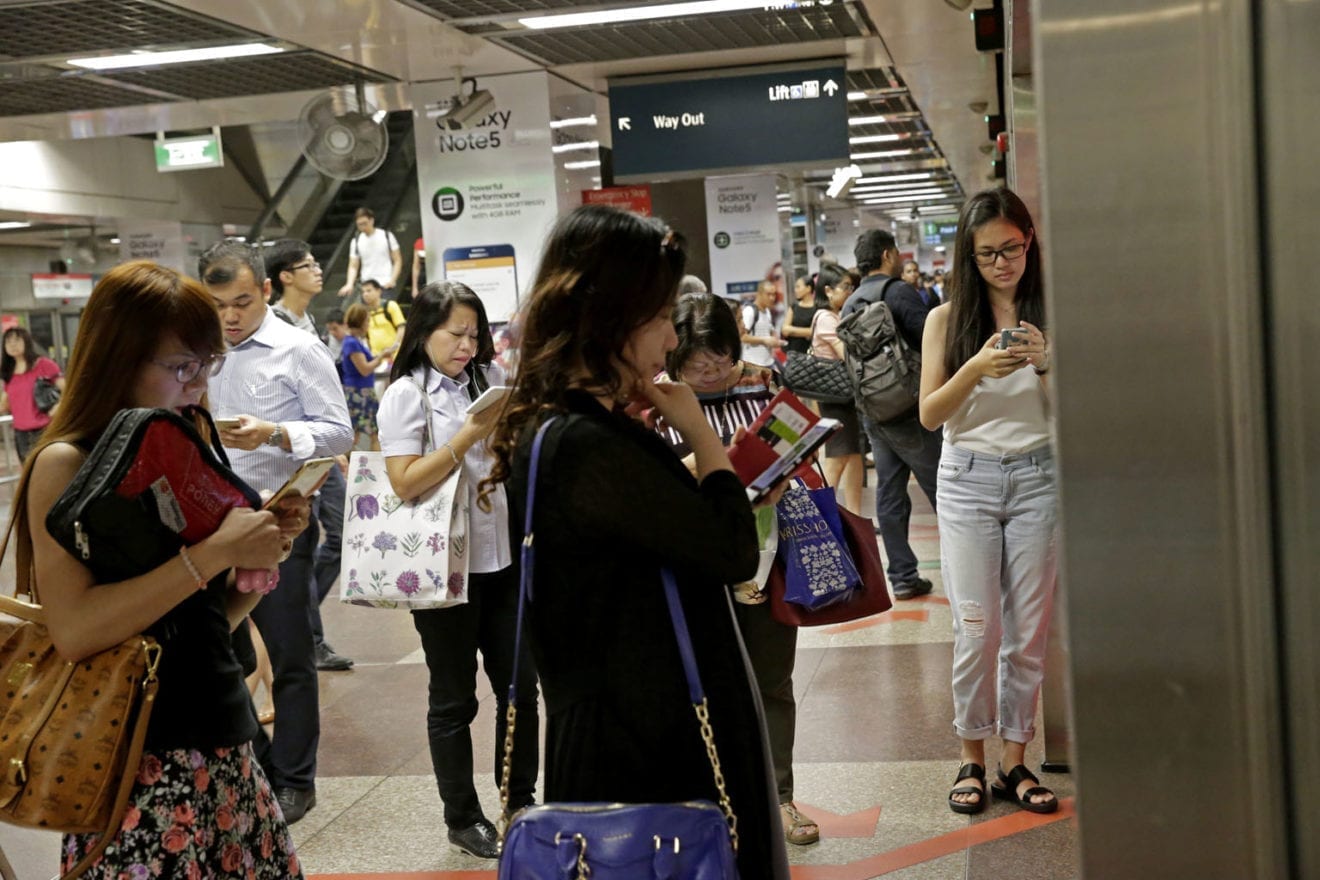
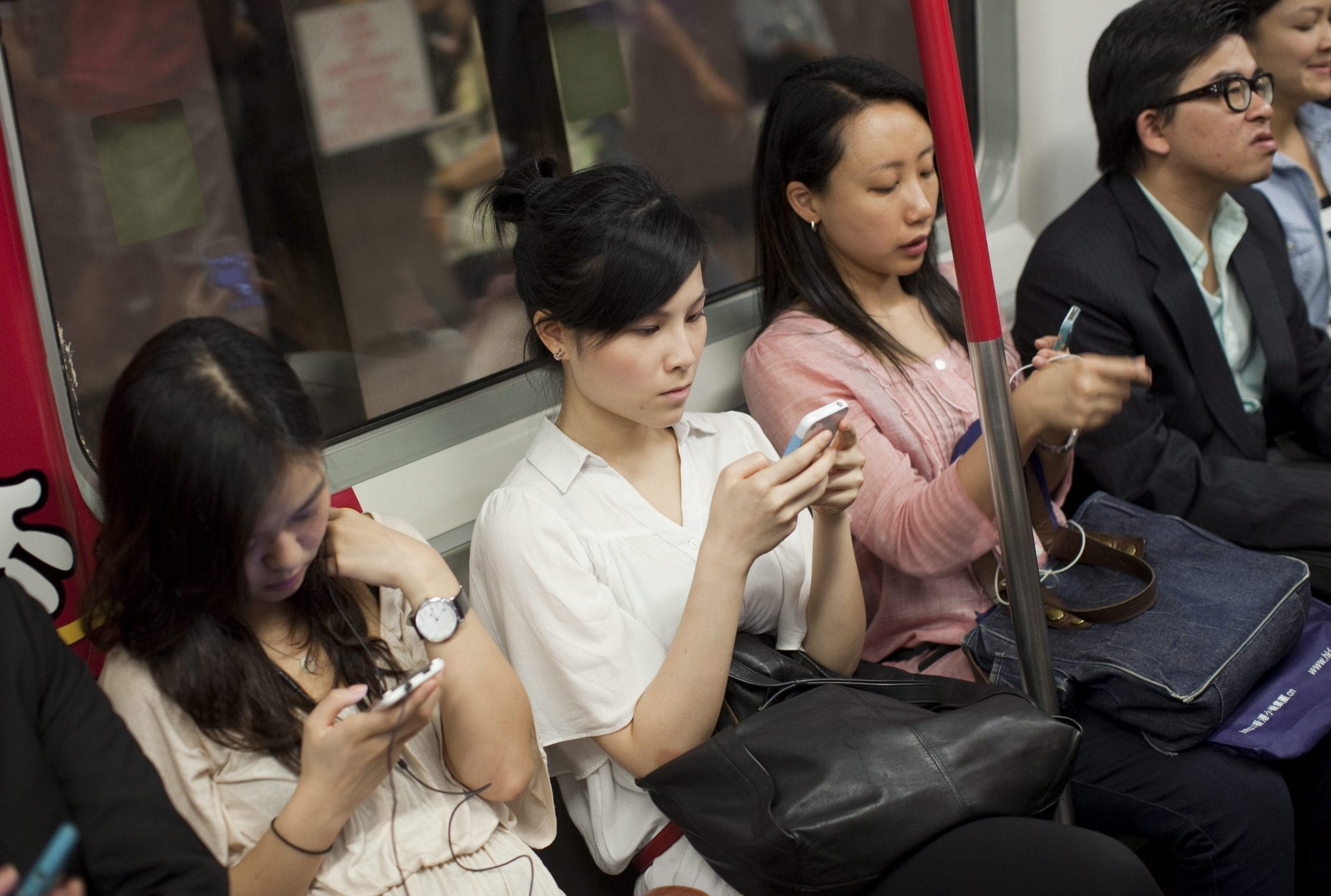
    Among respondents in Singapore, 49% (43% globally) believe their smartphone makes them smarter and “cooler”, while 55% (52% globally) check their social media accounts first thing in the morning. Almost half (31% globally) say they would probably not meet someone again if they didn’t have a WhatsApp account.

    Also, 56% say they prefer using emojis (47% globally) to sending emails, as they feel it allows them to express their feelings more clearly than words. A similar number said the same about posting photos (45% globally).

    In addition, teens demand constant internet connectivity, with 68% (56% globally) saying they are likely to feel anxious and alone if separated from the internet than if separated from family (51% versus 52% globally). The value of internet access is so significant that 56% (55% globally) strongly believe fast Internet access to be a human right.

    Further, 59% (61% globally) stream videos, compared to 20% (14% globally) who download.

    For TV, 47% (51% globally) stream versus 18% (11% globally) who download, while for music, 41% (46% globally) stream, compared to 37% (28% globally) who download. And they are typically doing so for free, with less than a third saying they ever pay for content.

    The study also found that teens perceive content and app providers as “service providers” and love them more, they want to harness technology to design their own experiences, and they expect future technology to allow them to become digital beings as much as human beings.